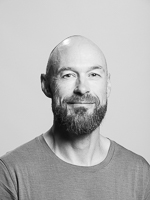
Prof. Heike Wiese holds the chair of German in Multilingual Contexts at Humboldt University of Berlin within the Faculty of Language, Literature and Humanities, Department of German Studies and Linguistics. Previously, she was a professor at University of Potsdam and held visiting positions at Yale University and Brandeis University. She is a distinguished member of the Academia Europaea and of the German Council for Migration, as well as the speaker of the Centre 'Language in Urban Diversity'. Her research focuses on the dynamics of multilingual settings, with particular attention to grammatical developments, monolingual ideologies, linguistic discrimination, and empowerment. Her primary research interests include: Urban contact dialects (including 'Kiezdeutsch' in Germany) Linguistic practices of heritage speakers Turkish-German language contact phenomena Grammatical-pragmatic interfaces and linguistic architecture (V2 and V3 word order in Germanic) Mass and count nouns, numeral constructions, and focus particles Discourse markers and emoji as linguistic elements Linguistic discrimination and empowerment in society and education Prof. Wiese's recent scholarly work demonstrates a sophisticated integration of theoretical linguistics with sociolinguistic and educational perspectives. Her publications from 2021-2025 reveal a consistent focus on language variation in multilingual contexts, particularly examining how linguistic systems interact across language boundaries. She has made significant contributions to understanding urban contact dialects, especially Kiezdeutsch in Berlin, and German-speaking communities in postcolonial settings like Namibia and Australia. Her research challenges monolingual ideologies and advocates for linguistic diversity through both theoretical analysis and practical applications. Her scientific recognition includes: Membership in the prestigious Academia Europaea Leadership role as speaker of the Centre 'Language in Urban Diversity' Through extensive outreach activities, Prof. Wiese collaborates with multilingual communities, kindergartens, schools, educational policymakers, and museums. She has developed practical materials for teachers to address linguistic diversity in classrooms and challenge linguistic discrimination. Her research methodology emphasizes 'language situations' - a technique to elicit comparable, naturalistic data across registers, languages, and speakers, recognizing the complexity of multilingual repertoires. Prof. Wiese leads research in the Multilingualism, Interculturality and Language Lab (CU.mil), where her team investigates language variation in urban contexts and develops methodologies for studying linguistic diversity. Her work bridges theoretical syntax with sociolinguistics, psycholinguistics, and educational linguistics, with important implications for language policy, teacher education, and public understanding of linguistic diversity in increasingly multicultural societies.