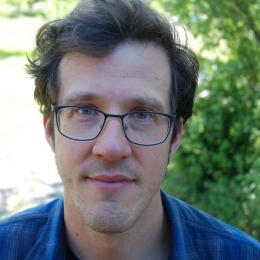
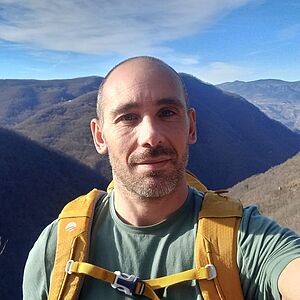
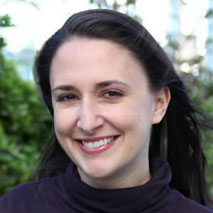
Dr. Bert Le Bruyn is an Associate Professor at the Department of Languages, Literature and Communication (TLC) within Utrecht University's Faculty of Humanities. As a semanticist, his expertise spans cross-linguistic variation, second language acquisition, and the study of referentiality and tense/aspect phenomena. He has pioneered the Translation Mining methodology through collaborative projects like Time in Translation (2017–2021, NWO Free Competition, €750k) and The semantics and acquisition of referentiality (2014–2017, NWO VENI, €250k). Research Focus : Semantics, cross-linguistic variation, tense/aspect systems, and second language acquisition mechanisms Methodologies : Corpus analysis, experimental offline studies, and translation mining frameworks Recent Research Trends show a strong emphasis on comparative studies across Romance, Germanic, and Sino-Tibetan languages. His work explores how definiteness and perfect tense constructions vary across languages and how these differences inform semantic theory. Notably, his Translation Mining approach leverages multilingual corpora to decode implicational hierarchies in temporal reference and partitivity. Scientific Contributions include methodological innovations in corpus-based translation studies and theoretical advancements in weak referentiality. He has served as editor for Languages (2022) and Belgian Journal of Linguistics (2009).
David Wheatcroft is a Lecturer in the Department of Zoology at Stockholm University, specializing in Ethology. He leads the Wheatcroft Group research team, focusing on animal behavior, particularly bird populations and evolutionary biology. His work examines how climate change and habitat alterations impact bird populations and ecosystem services. Dr. Wheatcroft's research spans multiple areas of animal behavior and evolutionary biology, with a particular emphasis on avian communication, song learning, and the effects of environmental changes on animal populations. His work combines field studies with genetic and neurobiological approaches to understand the mechanisms behind behavioral adaptations. He has made significant contributions to understanding how birds respond to anthropogenic noise, how geographic variation shapes vocal communication, and how climate change affects bird population dynamics. His publication record demonstrates a consistent focus on evolutionary processes, particularly in songbirds and fish models. The research shows a trajectory from basic behavioral observations to more complex integrations of genomics, neurobiology, and ecological modeling. His recent work increasingly examines the intersection of human environmental impacts with natural evolutionary processes. Dr. Wheatcroft leads the Wheatcroft Group, which conducts research on long-term changes in Swedish bird populations with a focus on climate and habitat changes. The group investigates the mechanisms behind observed changes in bird populations and their implications for ecosystem services.
Paolo Mairano is a Lecturer in English Phonetics at the University of Lille , affiliated with the Department of English Studies within the Faculty of Languages, Culture and Societies . He works with the UMR 8163 - Laboratory, Knowledge, Language Texts . His research interests include: Acquisition of phonetics/phonology in L2 Orthographic effects on pronunciation Prosody and rhythmic typology Speech synthesis technologies Corpus-based linguistic analysis Recent publications focus on: Italian regional consonant variation Orthographic-phonologic interactions L2 vowel category overlap metrics Rhythmic priming in speech production Gemination stability in migrant speech Prosodic effects on segmental accuracy He develops tools for: Phonetic transcription training Minimal pair analysis Emotional speech modeling
Professor Artemis Alexiadou is a distinguished linguist serving as Director of the Leibniz-Centre General Linguistics (ZAS) and holding an S-Professorship in General Linguistics at the Institute of German Language and Linguistics, Humboldt University of Berlin. She has been affiliated with ZAS and the Institute of German Language and Linguistics since October 1, 2022. Her academic journey began with a degree in Philology specializing in Linguistics from the University of Athens (1986-1990), followed by an MA in Linguistics from the University of Reading (1990-1991), and culminated in a Ph.D. in Linguistics from Universität Potsdam (1994). Professor Alexiadou's research focuses on theoretical syntax and morphology, with particular expertise in syntax and its interfaces with morphology, the lexicon and interpretation, Diachronic Syntax, Language Breakdown and Development, and Heritage Languages. Her work has significantly advanced our understanding of nominalization, verbal alternations, and the syntax-morphology interface. She has held prestigious positions including Professor of Theoretical and English Linguistics at the University of Stuttgart (2002-2015) before moving to Humboldt University. Her recent publications reveal a strong emphasis on Heritage Greek linguistics, examining phenomena such as gender agreement, aspect, and the plural indefinite article across different registers. The publication trends indicate a growing focus on experimental and comparative approaches to heritage language phenomena, particularly in the Greek diaspora communities in the USA and Germany. This reflects her leadership in the Research Unit on (Experimental) Syntax and Heritage Languages (RUESHeL). Gottfried Wilhelm Leibniz Prize (2014) Doctor honoris causa from the Norwegian University of Science and Technology (2016) Member of the Leopoldina, National Academy of Sciences (2014) Member of the Norwegian Academy of Science and Letters (2018) ERC Synergy Grant LeibnizDream (2021-2026) Professor Alexiadou has supervised numerous research projects and currently leads the ERC Synergy Grant LeibnizDream project, which investigates how language compresses thought structures. She serves on multiple scientific boards including the International Research Network Heritage Languages in Europe and the DFG Review Board 104 Sprachwissenschaften. Her editorial work includes membership on the boards of Glossa, Linguistic Inquiry, and Syntax, among others. She directs the Compressor Team at Humboldt University, which focuses on language acquisition and processing.
Dr. Pawel Fedurek is a Senior Lecturer in Psychology at the University of Stirling, specializing in primate behavior and communication. His research focuses on chimpanzee vocalizations, social behavior, and the evolutionary roots of human language and music. His research interests include: Primate vocal communication and its evolutionary significance Chimpanzee social behavior and cognition Evolution of human musicality and language Primate neuroanatomy and its relationship to communication Conservation biology of African primates Dr. Fedurek's extensive publication record demonstrates his expertise in analyzing chimpanzee vocalizations, particularly pant-hoots, and their role in social communication. His recent work explores rhythmic behavior in chimpanzees, brain structure related to language evolution, and the complex social dynamics that shape primate communication systems. His research combines field studies in natural habitats with advanced acoustic and neuroimaging techniques. Among his notable contributions are investigations into how chimpanzee vocalizations encode individual identity, reflect mate quality, and vary across social contexts. His work on chimpanzee drumming has shed light on potential evolutionary precursors to human musicality. Dr. Fedurek has also contributed significantly to understanding maternal-infant relationships, vocal ontogeny, and conservation issues affecting African wildlife. Dr. Fedurek is a member of the Behavioural and Evolutionary Research Group (BERG) at the University of Stirling, where he contributes to interdisciplinary research on animal behavior and human evolution.
Jessica Fales, PhD is an Associate Professor in the Department of Psychology at Washington State University Vancouver campus. She leads the Adolescent Health & Wellness Lab, conducting high-impact research on pediatric pain, social development, and adolescent health and well-being. Dr. Fales teaches multiple undergraduate courses including Psychology of Aging, Developmental Psychology, Clinical/Community Psychology, and Behavior Disorders of Children and Adolescents. She is currently accepting graduate student applications for Fall 2025 admission to the Experimental Psychology PhD Program. Dr. Fales received her doctorate in clinical psychology from the University of Maine in 2012. She completed her clinical internship in child-clinical/pediatric psychology at Oregon Health & Sciences University and a two-year post-doctoral fellowship at Seattle Children's Research Institute. Her educational background reflects a strong foundation in both clinical practice and research methodology specific to pediatric populations. Dr. Fales's primary research focuses on psychosocial risk and protective factors for youth with chronic pain, individual and family-based cognitive-behavioral interventions for pain, and the impact of persistent pain on social development and functioning in adolescence. She also conducts significant research on health factors related to cannabis use in adolescent and young adult populations. Her work examines how parental and peer interaction factors predict youth's pain characteristics, disability, and psychosocial outcomes. She has developed a particular expertise in understanding how peer victimization and daily interpersonal stressors affect adolescents with chronic pain. Analysis of Dr. Fales's recent publications (2021-2025) reveals a consistent focus on the intersection of chronic pain, social development, and adolescent health. Her research increasingly incorporates longitudinal methodologies and examines nuanced factors like gender differences, trauma history, and social support systems. Recent work shows expanding interest in cannabis as a pain management strategy among youth, self-compassion approaches, and the complex relationship between adverse childhood experiences and chronic pain outcomes. Her research maintains a strong clinical translation focus, aiming to inform practical interventions for youth with chronic pain and their families. American Pain Society's Future Leaders in Pain Research award (2013) Dr. Fales has successfully mentored numerous undergraduate students who have gone on to master's and doctoral programs in psychology and related fields. Her research assistants have received over $13,000 in university grant support to conduct independent research and present at national conferences. Her lab has been supported by multiple funding sources including the Society of Pediatric Psychology, the American Pain Society, the National Institutes of Health, and Washington State University's New Faculty and Grand Challenges seed grants. Dr. Fales actively collaborates with researchers at institutions including Seattle Children's Research Institute and has contributed to multi-site clinical trials. Dr. Fales directs the Adolescent Health & Wellness Lab at WSU Vancouver, which focuses on identifying social risk and protective factors associated with chronic pain in adolescence. The lab team includes undergraduate research assistants, graduate students, and research coordinators who work together on multiple ongoing projects. Current research efforts examine peer victimization, cannabis use patterns, social anxiety, and the impact of adverse childhood experiences on pain outcomes in youth. The lab maintains strong connections with clinical settings to ensure research has direct relevance to clinical practice.
Karin Brunnegård is a Senior Lecturer at the Department of Clinical Sciences, Umeå University, specializing in speech-language pathology. She works at the Norrlands universitetssjukhus (NUS) in Umeå and serves as Head of Unit in the Speech-Language Pathology Section. Her research focuses on cleft palate speech and children's language development , with an emphasis on reliability in speech assessments, surgical timing impacts on speech outcomes, and quality indicators in national registries. Key research trends include longitudinal studies tracking speech development in cleft palate patients, validation of clinical tools like nasometry, and multi-center collaborations analyzing surgical and speech outcomes. Karin collaborates extensively within the N4 Research Group and contributes to improving clinical practices through evidence-based registry studies.
Dr. Eleanor Heggdal Loenes serves as a Teaching Fellow in the School of Psychology at the University of Aberdeen. Previously, she completed her PhD research at the University of Dundee where she also worked as a Graduate Tutor and Psychology Support Specialist. Her research focuses on language processing with emphasis on cross-dialectal communication. She developed experimental paradigms examining how conversation partners from different dialectal backgrounds communicate successfully, particularly at the lexical level. Her primary methodology involves eye tracking combined with lexical choice and reaction time measurements. She maintains additional research interests in patterns of suicidal behavior, accent cues for talker identification, and syntactic ambiguity effects on anticipatory eye movements. Research Specialisms: Psycholinguistics, Research Methods in Psychology, Evolutionary Psychology, Cognitive Psychology, Animal Behaviour Teaching Focus: Research methods and statistics in Psychology, widening access to Higher Education Outside of academic work, Dr. Loenes volunteers at a cockatoo sanctuary and studies psittacine communication, reflecting her interest in animal language systems. She teaches multiple courses including Advanced Psychology A - Concepts And Theory (PS2017), Advanced Psychology 1 - Methods And Applications (PS2018), and Psychological Assessment (PS3011), among others.
Emanuel Bylund Spångberg is a Professor in Psycholinguistics at the Department of Swedish Language and Multilingualism, Stockholm University. His work bridges two central questions: biological age's role in language acquisition/attrition and language's influence on cognition through neo-Whorfian frameworks. Current research explores bilingual lexical deficits, motion event cognition, and temporal perception across languages like Afrikaans, isiXhosa, Spanish, and Swedish. Recent funded projects include "Motion in mind" (Swedish Research Council, 2016–2018) and "Temporal Language and Thought" (Swedish Research Council, 2011–2013). His publications span experimental psycholinguistics, bilingualism, and linguistic relativity, with a focus on age-related cognitive mechanisms and cross-linguistic cognitive interference. While no explicit student list is provided, his collaborations with scholars like P. Athanasopoulos and N. Abrahamsson are notable.
Catrin Norrby is a Professor and Prodekanus (Deputy Dean) at the Department of Swedish Language and Multilingualism , Stockholm University . She leads the research group Interaction and Variation in Pluricentric Languages (IVIP) , a collaboration between Stockholm University, University of Helsinki, University of Turku, and the Institute for Language and Folklore in Gothenburg. Her work spans sociolinguistics, conversation analysis, and cross-cultural communication, with a focus on Swedish as a pluricentric language. Her research interests include: Sociolinguistics : Comparative studies of Sweden Swedish and Finland Swedish Human-Robot Interaction : Exploring robot-assisted learning for multilingual students Death Notices : Documenting linguistic evolution in Swedish newspapers Corporate Address Practices : Analyzing language use in multinational companies like IKEA The IVIP research program (2013–2020) revealed significant pragmatic differences in service encounters, medical consultations, and academic supervision between Swedish varieties. Recent projects (e.g., 2023–2025 VR-funded study) investigate social robots' role in education. Her article analyses highlight trends in: Comparative studies of pluricentric languages (German, English, Swedish) Linguistic diversity across global cities Hybrid complaints in institutional settings Pragmatic transfer in intercultural communication Multimodal interaction in service environments She supervises PhD students and teaches at postgraduate levels, with affiliations to international networks like the University of Melbourne's Research Unit for Multilingualism and Cross-Cultural Communication (RUMACCC) . Her work emphasizes micro-interactional practices and macro-sociocultural contexts.
Peter Sundkvist is a Professor at the Department of English, Stockholm University, specializing in phonology, phonetics, and dialectology of English and Germanic languages. He has conducted extensive fieldwork in the Shetland Islands and has published widely on World Englishes, particularly focusing on Asian varieties. His educational background includes: Ph.D. in English Linguistics from Stockholm University (2004), with a thesis on the phonology of Shetland English Postdoctoral Fellowship at the Department of Linguistics, Yale University (2005-2007) Peter Sundkvist's research primarily focuses on phonological variation across English dialects, with special emphasis on Shetland English and Scots, as well as emerging varieties in Asia. His work combines traditional fieldwork methods with innovative approaches to studying spoken language. He has made significant contributions to understanding how regional and social factors influence pronunciation patterns, particularly regarding rhoticity and other phonological features. His research on pulmonic ingressive speech represents an innovative approach to studying non-standard speech phenomena in dialect contexts. His publications reveal a consistent focus on phonological variation across different English-speaking communities, with particular attention to the relationship between linguistic features and social context. Sundkvist's work bridges theoretical phonology with sociolinguistic variation, showing how historical developments interact with contemporary language use. His recent publications demonstrate growing interest in Asian Englishes, particularly Chinese varieties, while maintaining his expertise in Northern European dialects. Peter Sundkvist has served as Principal Investigator for significant research projects, including a project on Shetland Scots phonology funded by The Bank of Sweden Tercentenary Foundation (2010-2012). He is also the Associate Editor responsible for phonetics and phonology entries in The Wiley Blackwell Encyclopedia of World Englishes (2025). His scholarly contributions include the monograph "The Shetland Dialect" (2021) and co-authorship of the third edition of "World Englishes" (2019). He has also contributed to major reference works including "The Handbook of Asian Englishes" (2020) and "The New Cambridge History of the English Language" (forthcoming).
Ellen Bijvoet is a Lecturer in Swedish as a Second Language at the Department of Nordic Languages, Uppsala University . Her research focuses on language variation in multilingual urban contexts , particularly examining Rinkeby Swedish and its perception among diverse groups. Current Research : Language attitudes, integration studies, and the spread of urban linguistic varieties to rural areas. Collaborations : Works with scholars like Kari Fraurud, Jan-Ola Östman, and Karin Senter. Recent Publications : 2024 studies on suburban-indexed speech and language ideologies in Sweden. Her work spans sociolinguistics, multilingualism, and language policy, with a particular emphasis on Swedish language development in multicultural settings . Recent articles analyze the sociolinguistic dimensions of migration-related language variation and its societal reception.
Dr. Giuliana Regnoli serves as an Assistant Professor at the University of Salerno in the Department of Cultural Heritage Sciences and concurrently as a Post-doc Research Fellow (Habilitandin) at the University of Regensburg in the Department of English and American Cultures. Her academic trajectory spans institutions across Italy and Germany, establishing her as a specialist in sociolinguistics with particular expertise in World Englishes, sociophonetics, and folk linguistic approaches to language variation. Her educational background includes: Habilitation in English Linguistics, University of Regensburg (Thesis: "Children's English in Cameroon: A Sociophonetic Perspective") Italian National Scientific Habilitation (ASN) for Associate Professor (2024) Ph.D. in English Linguistics with honors, University of Naples L'Orientale and University of Heidelberg (2020) M.A. in English Studies with honors, University of Naples L'Orientale (2016) B.A. in Foreign Languages and Literatures with honors, University of Naples L'Orientale (2014) Dr. Regnoli's research explores folk linguistics, language attitudes, and variationist sociolinguistics with a geographical focus on Indian English and African English varieties. Her methodological approach combines acoustic analysis with ethnographic techniques to examine how language variation manifests in diaspora communities and educational settings. She investigates how speech rhythm, accent perception, and linguistic ideologies intersect with identity construction in multilingual contexts, particularly among transient student populations. Her publication record demonstrates a clear research trajectory from her doctoral work on Indian transient student communities to her current habilitation research on Children's English in Cameroon. The articles reveal consistent methodological sophistication, with increasing emphasis on cross-generational studies and comparative analyses of different World Englishes varieties. Her most recent work shows expanding geographical scope while maintaining theoretical coherence around language attitudes and sociophonetic variation. She currently leads the project "World Englishes in Italy: Language Attitudes and Use in the EFL University Classroom" (2025-present) and participates in the PRIN project "The Informalisation of English Language Learning through the Media" (2023-present). She has received UR-funded Mobilitätsstipendien international für Nachwuchswissenschaftlerinnen to support her research on Cameroon English. Dr. Regnoli teaches courses including "Multilingualism and Varieties of English on Screen," "English as a Global Language," and "English as a Lingua Franca for International Communication in Cultural Heritage" across multiple institutions. She is affiliated with the Research Center for World Englishes and maintains active professional profiles on ResearchGate and ORCID.
Rehana Omardeen is a doctoral researcher at the Department of German Philology, University of Göttingen, and a member of the Research Training Group (RTG) 2070 'Understanding Social Relationships'. Her work focuses on gestures in spoken and signed languages, sign language typology, iconicity, and the interface between sign and gesture. Bachelor’s degree in Linguistics from Swarthmore College Master’s degree in Linguistics from Radboud University, Nijmegen Her research involves comparative studies of iconicity in sign languages, co-creation methodologies in sign language technology, and documentation of Providence Island Sign Language. She has conducted fieldwork funded by the Endangered Languages Documentation Programme (ELDP) on Providence Island and in Guyana. Her work intersects linguistics, computer science, and accessibility, with a focus on inclusive technology development. Rehana collaborates with the Sign Language team and uses methodologies in human-computer interaction, avatar design, and sociolinguistic analysis. She has contributed to European sign language policy frameworks and explores the typological variation of sign languages globally.
Edgar Illas is Professor in the Department of Spanish and Portuguese at Indiana University Bloomington. He holds a Ph.D. from Duke University (2007) and a B.A. from Universitat Autònoma de Barcelona (1999), and serves as Director of the Catalan Program. Research Interests: Modern and Contemporary Catalan Culture Political Theory and War Studies Post-Marxism and Deconstruction Globalization and Biopolitics Key Publications: The Magma of War: An Ontology of the Global (Routledge, 2024) The Survival Regime: Global War and the Political (Routledge, 2020) Thinking Barcelona: Ideologies of a Global City (Liverpool UP, 2012) Scientific Awards: Individual Research Award, IU Institute for Advanced Study (2016) New Frontiers in the Arts and Humanities Grant (2012) Multiple Mellon Travel Grants and Curriculum Development Awards Current Research: Explores the ontological modulation of power and war's role in shaping global political orders.