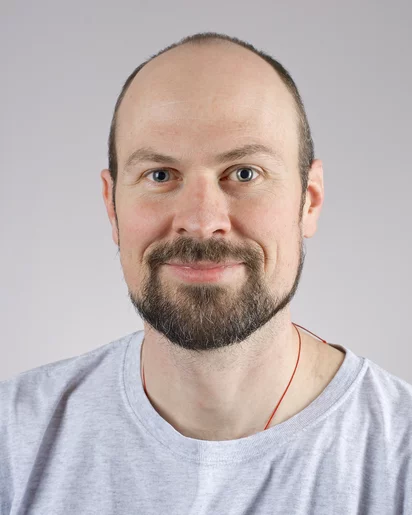
Dr. Benjamin Watts is a beamline scientist at the Paul Scherrer Institute's (PSI) Center for Photon Science, specializing in soft X-ray spectro-microscopy for organic materials analysis. He earned his BSc (Professional) in Physics with Honours and PhD in Physics from the University of Newcastle, Australia, followed by postdoctoral research at North Carolina State University and the Advanced Light Source in Berkeley. University of Newcastle, Australia - BSc (Professional) in Physics University of Newcastle, Australia - PhD in Physics His research focuses on advanced X-ray techniques like NEXAFS spectroscopy and STXM microscopy to study nanoscale chemical and magnetic properties in polymer electronics and photonic crystals. He has pioneered 7 nm resolution imaging and developed software tools for data analysis. Recent publications highlight his work in 3D imaging methodologies, contamination control, and data format standardization. He serves as Chair of the NeXus International Advisory Committee, improving data exchange protocols for neutron/X-ray experiments. Benjamin Watts coordinates external user groups at the PolLux beamline, implementing hardware/software upgrades while advancing scientific research through novel imaging capabilities and data infrastructure.
Cathy Larson is an Associate Professor of Physical Therapy and Associate Director of the Ph.D. in Physical Therapy program at the Department of Physical Therapy, College of Health Sciences, University of Michigan-Flint. She has been a tenured faculty member since 2012 and continues to serve in key academic and research leadership roles. Her educational background includes: Ph.D. in Kinesiology (Movement Sciences), University of Michigan-Ann Arbor (2002) MSPT in Physical Therapy, University of Alabama at Birmingham (1980) B.Sc. in Physiology, Michigan State University (1978) Dr. Larson's research focuses on evidence-based physical therapy interventions, particularly in spinal cord injury rehabilitation, lymphedema management in breast cancer survivors, gait and mobility training in older adults, and the implementation of outcome measures in clinical practice. Her work emphasizes activity-based therapy, motor learning, and long-term functional outcomes. She has published extensively in peer-reviewed journals such as Rehabilitation Oncology , Journal of Aging and Physical Activity , and Journal of Spinal Cord Medicine . Her recent scholarly contributions demonstrate a strong trend toward interdisciplinary rehabilitation research, combining clinical practice with empirical validation. Themes include the use of rhythmic auditory stimulation in gait training, assessment of postural strength in SCI, and educational gaps in lymphology. Her publications span from 2006 to 2023, showing sustained academic productivity. Her scientific recognition includes: Service Award from the Spinal Cord Injury Special Interest Group (2023) Dr. Larson has secured multiple research grants as Principal Investigator, including funding from the Michigan Physical Therapy Association and JRD Enterprises LLC for studies on outcome measures in lymphedema therapy and the Ease Cushion clinical trial. She mentors doctoral students, as evidenced by her involvement in dissertation supervision (PTP 995). She has also held adjunct or clinical faculty roles at Oakland University, Wayne State University, and Andrews University, reflecting her broader impact on physical therapy education. She is actively involved in research teams and collaborative networks, including the SCI Special Interest Group and the SCIP-MCRN (Spinal Cord Injury Partnership - Multicenter Clinical Research Network), where she contributes to advancing clinical practice through evidence generation and knowledge translation.
Dr. Thomas Müller is a Scientist in the Research Division 2: Marine Biogeochemistry at GEOMAR Helmholtz Centre for Ocean Research Kiel, Germany, specializing in the Marine Geosystems (MG) research unit. His work bridges marine and terrestrial hydrogeology, focusing on offshore freshened groundwater, submarine groundwater discharge, and isotope hydrology. His research interests include: Marine and coastal hydrogeology Isotope hydrology and noble gas thermometry Submarine groundwater discharge (SGD) Groundwater modeling in arid and monsoonal climates Environmental tracers and multi-tracer dating Offshore aquifer systems and paleohydrology His recent publications (2020–2025) highlight a strong trend in quantifying submarine groundwater discharge using novel autonomous methods, reconstructing paleoclimate and recharge dynamics in Oman using isotopic tracers, and investigating offshore aquifers through geophysical and geochemical approaches. His work frequently integrates field measurements, modeling, and international expeditions. Scientific awards include: National Geographic Explorer (2024) Dr. Müller has been involved in numerous research cruises such as SO277 (OMAX), MSM99_2 (Helgoland Pockmarks), M162 (GLORIA-FLOW), and Meteor 196, and leads or contributes to projects like SMART (Sustainable Management of Offshore Groundwater Resources). He collaborates widely across institutions and disciplines but there is no public indication of formal student advising. His research is supported by the Helmholtz Association and international partnerships. He is part of active research teams focusing on: Offshore groundwater systems Coastal fluid flow and pockmark dynamics Isotope-based hydrological investigations Autonomous oceanographic sensing
Samuel Atcherson, Ph.D., is a Professor at the University of Arkansas for Medical Sciences (UAMS) in both the College of Health Professions Department of Audiology and Speech Pathology and the College of Medicine Department of Otolaryngology—Head and Neck Surgery. His research spans audiologic rehabilitation, auditory electrophysiology, and health literacy, with a focus on addressing challenges faced by individuals with hearing loss, particularly in healthcare communication during mask use and accessibility for people with disabilities. Research Interests: Atcherson's work integrates audiologic rehabilitation through innovations like transparent face masks and amplified stethoscopes, auditory electrophysiology using evoked potential systems, and health literacy research examining readability of medical materials, especially for those with disabilities. Publications: With over 60 peer-reviewed articles, his recent publications explore AI integration in audiology, masked speech challenges, and health disparities. A recurring theme is the intersection of technology, accessibility, and multidisciplinary collaboration. Grants & Awards: He has secured over $477,000 in grants, including NIH funding, and holds the Distinguished Scholar Fellow title from the National Academies of Practice. Leadership: Atcherson serves on the Editorial Board of the Journal of the American Academy of Audiology and has contributed to textbooks like Auditory Electrophysiology: A Clinical Guide .
Professor Volker Pickert is a faculty member at Newcastle University, specializing in power electronics, electric vehicles, and energy systems. His research focuses on advanced thermal management, battery technologies, and converter designs for automotive and grid applications. His work spans wireless power transfer systems, dynamic road charging, and optimization of energy storage and distribution. Recent publications highlight innovations in zero-voltage switching converters, platoon energy recovery, and liquid metal cooling solutions. Article trends indicate expertise in converter topologies, thermal conductivity analysis, and electric road system integration. Research extends to fault tolerance in power electronics, battery management, and nonlinear system analysis across transportation and energy domains.
Jon D. Samuels, MD is a Clinical Associate Professor of Anesthesiology at Weill Cornell Medical College and Associate Attending Anesthesiologist at NewYork-Presbyterian Hospital. His dual appointments span the Department of Anesthesiology and Department of Surgery, with clinical leadership as Director of Anesthesia for the Weight Reduction Service and core member of the Bariatric Anesthesia Team. He serves on multiple departmental committees including Chair of the Anesthesia Equipment and Supplies Committee. His educational background includes: B.A. in Biology, Macalester College (1976) M.D., University of Rome Faculty of Medicine and Surgery (1985) Internal Medicine Internship, SUNY Downstate Medical Center Anesthesiology Residency, Albert Einstein College of Medicine Dr. Samuels' research focuses on bariatric anesthesia and difficult airway management , with significant contributions to understanding obesity-related complications in surgery. His work bridges clinical innovation and patient safety, particularly in airway device development and pandemic response protocols. Notable expertise includes anesthesia for orthognathic surgery, high-risk obstetrics, and vascular procedures. Analysis of his 15 most recent publications reveals dominant themes in obesity-related anesthesia (40% of articles), airway management technology (27%), and pandemic response (20%). His scholarly output demonstrates interdisciplinary collaboration across obstetrics, critical care, and public health, with emphasis on practical clinical solutions for high-risk patient populations. His scientific recognition includes: Excellence in Teaching Award, Weill Cornell Medical College (2013) Winner, NYSSA Bragging Contest (2007) AMA Physicians Recognition Awards (2003-2009) Podiatric Medical Education Support Award (1997) As an educator, Dr. Samuels provides daily clinical instruction to medical students, anesthesiology residents, and cross-departmental trainees. His research portfolio includes industry-funded trials on anesthesia equipment and obesity outcomes. He serves as liaison to 21 anesthesia technicians and contributes to the Clinical Practice Committee. He leads the Bariatric Anesthesia Team and Airway Rotation Service, driving innovations in weight reduction surgery protocols and difficult airway training. His departmental committees focus on equipment standardization and clinical workflow optimization across NYP/Weill Cornell operating rooms.
Victor Finomore Jr. serves as Executive Director of Research Operations and Data Analytics at the West Virginia University (WVU) Rockefeller Neuroscience Institute. He holds dual academic appointments as Assistant Professor in the Department of Neuroscience within the School of Medicine and Adjunct Professor in the Department of Chemical, Biomedical Engineering at the Statler College of Engineering and Mineral Resources. Dr. Finomore earned his Ph.D. in Experimental Psychology from the University of Cincinnati in 2008. Prior to joining WVU, he served as Technical Advisor for the Warfighter Effectiveness Research Center at the United States Air Force Academy, where he led research on human performance enhancement through multimodal displays, neuroergonomics, and human-machine teaming for military operators. His research program centers on Human Performance, Physiological Measurement and Assessment, and Cognitive Neuroscience. As director of the Human Performance and Applied Neuroscience (HPAN) research center, he conducts cutting-edge research on real-time neurophysiological assessment across diverse populations (Athletes, Military, Patients, and general Population - AMP 2 ). His work integrates advanced sensors with machine learning analytics to develop individualized augmentation strategies for optimizing brain health, human performance, recovery, and resilience. Cognitive testing in his lab focuses on workload, stress, fatigue, attention, decision-making, and multisensory integration. Analysis of Dr. Finomore's 15 most recent publications (2017-2021) reveals a strong interdisciplinary focus bridging psychology, neuroscience, and engineering. Key research themes include human-robot interaction dynamics (particularly robot authority and compliance), neurophysiological monitoring using wearable technology, deep brain stimulation applications for addiction treatment, and vigilance in automated systems. His work demonstrates consistent collaboration with military and clinical research partners, with significant emphasis on translating laboratory findings to real-world applications in healthcare and defense contexts. Dr. Finomore directs the Human Performance and Applied Neuroscience (HPAN) research center, which conducts both basic and applied research in controlled laboratory settings and naturalistic "in the wild" environments. The center specializes in developing and validating neurophysiological assessment protocols for diverse operational contexts, with particular expertise in translating cognitive neuroscience findings into practical human performance solutions.
Ulysse Chabaud is a permanent researcher at École Normale Supérieure de Paris, affiliated with the QAT team at INRIA. He coordinates the EIC Pathfinder Challenge project Veriqub and serves as an editor for the open journal Quantum . Previously, he held postdoctoral positions at Caltech’s Institute for Quantum Information and Matter (IQIM) and the Institut de Recherche en Informatique Fondamentale (IRIF) in Paris. Education: PhD in Computer Science (2020), Sorbonne Université His research focuses on quantum information theory, particularly quantum computing, cryptography, and communication within continuous-variable systems. He investigates the interplay between non-Gaussian states and quantum advantages, aiming to establish foundational insights into quantum resources and their verification. The 15 most recent publications highlight advancements in bosonic quantum computing, Wigner negativity, quantum verification protocols, and applications in cryptography. These works span theoretical frameworks (e.g., holomorphic representations, non-Gaussian hierarchies) and experimental implementations (e.g., photonic states, linear optics). Chabaud’s contributions also extend to quantum certification and benchmarking, addressing challenges in validating quantum devices without fault-tolerant mechanisms. He employs tools from quantum optics and mathematical physics, such as stellar formalism and phase-space methods, to delineate boundaries between classical and quantum computation.
Ulysse Chabaud is an INRIA permanent researcher affiliated with École Normale Supérieure de Paris in the QAT team. He coordinates the EIC Pathfinder Challenge project Veriqub, focusing on efficient verification of quantum computing architectures with bosons, and serves as an editor for Quantum , an open journal for quantum science. His academic journey includes a postdoctoral scholar position at Caltech's Institute for Quantum Information and Matter (IQIM) and Sorbonne Université PhD (2020) in computer science with a thesis on continuous-variable quantum advantages in quantum optics. PhD in Computer Science, Sorbonne Université (2020) IQIM Postdoctoral Fellowship, Caltech (2020-2022) Postdoctoral scholar, Institut de Recherche en Informatique Fondamentale (IRIF), Paris Chabaud's research explores fundamental questions in quantum information theory, including the origins of quantum advantage and verification of quantum devices. He specializes in continuous-variable quantum computation, non-Gaussian states, and their roles in quantum computing, cryptography, and communication. His work bridges discrete and continuous-variable quantum paradigms through holomorphic representations and resource theories. His publications span quantum verification, non-Gaussian state engineering, and foundational connections between contextuality and Wigner negativity. These works appear in journals like Physical Review Letters , Quantum , and Nature Communications , with a focus on bosonic quantum advantage and practical quantum certification. Three Physicists Prize IQIM Postdoctoral Fellowship Chabaud contributes to quantum verification protocols and serves as a coordinator for the Veriqub project under the European Innovation Council (EIC) Pathfinder Challenge. He is also involved in theoretical developments for continuous-variable quantum computing and editorial work for open-access quantum science journals. He works within the QAT team at INRIA, which specializes in quantum algorithms and technologies, and collaborates with institutions including Caltech, Sorbonne Université, and the Institut de Recherche en Informatique Fondamentale (IRIF) in Paris.
Professor Rob Harle is a Fellow in Computer Science and Technology at Downing College, University of Cambridge. His research focuses on wearable sensors, indoor localization, and human activity recognition. Academic Rank: Professor Affiliation: University of Cambridge Email: robert.harle@dow.cam.ac.uk Research Interests: Spanning over three decades, Harle's work bridges computer science and biomechanics. Key themes include: Development of real-time wearable systems for gait analysis and sprint profiling Advances in indoor positioning using Bluetooth beacons and magnetic sensing Integration of inertial measurement units (IMUs) with machine learning algorithms Privacy-preserving location tracking and sensor calibration techniques Recent Trends: His 2025 publications indicate continued innovation in fitness optimization using adaptive algorithms and population-based physiological modeling for consumer wearables.
Malte Rolf is a researcher at the Institute of Biomechanics at Graz University of Technology, specializing in computational modeling of cardiovascular mechanics and biomaterials. His work bridges engineering principles with medical device development , focusing on aortic dissection pathophysiology, biodegradable scaffolds, and fluid-structure interaction simulations. Key Research Areas: Aortic dissection mechanics, patient-specific computational models, biodegradable implant design, and uncertainty quantification in material properties. Academic Contributions: 18 research outputs since 2020, including peer-reviewed journals and conference proceedings. Collaborations with experts in cardiovascular medicine, computational mechanics, and materials science. Award: Recipient of the Marshall Plan Scholarship (2022) for outstanding research. Activities: Regular participation in international conferences (e.g., ECCOMAS 2024), with invited talks on smooth muscle function and scaffold modeling. His research employs advanced finite element analysis , Bayesian frameworks , and polynomial chaos expansion to address clinical challenges in aortic disease and tissue engineering. Current projects focus on developing predictive models for implant integration and aortic remodeling.
Dr. Felix Rizzuto is a Scientia Fellow (Level C) at University of New South Wales , leading the Rizzuto Group in Biomolecular Nanotechnology . His research focuses on engineering DNA-based nanomaterials for applications in synthetic biology , soft robotics , and healthcare devices . He previously held a Banting Postdoctoral Fellowship at McGill University and earned his PhD in Supramolecular Chemistry at University of Cambridge , following a joint BSc(Adv, Hons I)/BA from University of Sydney . Education BSc(Adv, Hons I)/BA, University of Sydney (2014) PhD Chemistry, University of Cambridge (2018) His research spans DNA nanotechnology , supramolecular chemistry , and polymer synthesis , with a focus on out-of-equilibrium systems for programmable nanomaterials. Key areas include light-activated assembly , temporal chemical control , and metal-DNA interactions . His group develops DNA origami for diagnostic devices and RNA therapeutics . His 2025-2024 publications highlight advancements in sequence-defined DNA polymers , passivated DNA origami , and heat/light-driven assembly , with applications in dissipative fibrils and molecular printing . Notable journals include Nature Communications , Angewandte Chemie , and Journal of the American Chemical Society . Scientific awards include the ARC DECRA Fellowship , IUPAC 'Gadolinium' Recognition , and a Banting Postdoctoral Fellowship . He currently supervises PhD candidates in DNA nanomaterials, polymer dynamics, and synthetic biology, while mentoring Honours students in molecular engineering.
Stefano Scanzio is a Senior Researcher at the National Research Council of Italy (CNR-IEIIT) and teaches computer science courses at Politecnico di Torino . With over 60 publications in wireless networks, real-time communication, and industrial IoT, he serves as Associate Editor for Ad Hoc Networks , IEEE Access , and Electronics journals. Ph.D. in Computer Science (Politecnico di Torino, 2008) Laurea in Computer Science (Politecnico di Torino, 2004) His research focuses on industrial wireless networks , particularly Wi-Fi and IEEE 802.15.4 TSCH, with emphasis on: Energy-saving mechanisms in wireless sensor networks Predictive models for Wi-Fi channel quality Reliable communication through seamless redundancy Machine learning integration for network optimization Clock synchronization under non-Gaussian noise Recent publications analyze Wi-Fi 7's multi-link operation, executable QR codes for IoT, and AI-driven network self-configuration. His work has been recognized with multiple best paper awards .
Sasha Gulati is a Professor at the Norwegian University of Science and Technology and a Consultant Neurosurgeon at St. Olavs Hospital, specializing in Neurosurgery within the Department of Neuromedicine and Movement Science. Their work bridges clinical practice with extensive research in spinal and brain disorders. Research interests span spinal pathologies (degenerative cervical/lumbar diseases, radiculopathy, recurrent disc herniation), brain tumors (gliomas, meningiomas), cerebrovascular conditions (aneurysms, subarachnoid hemorrhage), and functional outcomes post-neurosurgery. Key themes include occupational rehabilitation , registry-based comparative studies , and pharmacoepidemiology in postoperative care. Recent publications (2020-2025) focus on spinal cord stimulation for chronic pain, shunt surgery complications , return-to-work outcomes after neurosurgical interventions, and demographic risk factors in aneurysm and glioma management. Collaborative work spans Scandinavia, utilizing national registries for large-scale clinical insights.
Jason Forman is an Associate Professor and Associate Director of Graduate Studies for Recruitment at the University of Virginia, Department of Mechanical and Aerospace Engineering. His research focuses on injury biomechanics, automotive safety, and finite element modeling, with expertise in occupant protection, pedestrian injury prevention, and anthropomorphic test device development. Doctor of Philosophy (PhD), University of Virginia Department of Mechanical and Aerospace Engineering Bachelor of Science (BS), University of Virginia Department of Mechanical and Aerospace Engineering Forman’s research addresses critical gaps in automotive safety, including injury mechanisms in automobile collisions, biomechanical modeling of tissues, and the impact of aging and obesity on injury risk. He specializes in experimental biomechanics, finite element analysis, and injury risk function development. His publications primarily span Biomechanics , Automotive Safety , and Finite Element Modeling , with recurring subfields in Spinal Injury Mechanisms , Pedestrian Safety , Occupant Kinematics , and Population Variability . Scientific accolades include the University of Virginia MAE Research Scientist of the Year (2017), the Association for the Advancement of Automotive Medicine Young Achiever Award (2014), and multiple publications recognized as Best Scientific Papers. Forman leads experimental biomechanics research at the Center for Applied Biomechanics, collaborating with Toyota and the US DOT on roadway safety initiatives. His work integrates dynamic testing, computational modeling, and clinical translation to enhance injury prevention strategies.