Simone Corbellini is an Associate Professor at the Polytechnic University of Turin, Department of Electronics and Telecommunications (DET), and a member of the College of Electronic, Telecommunications and Physics Engineering. His research spans electrical and electronic engineering, with a focus on artificial neural networks, calibration, wireless sensor networks, and embedded systems. Research keywords: Artificial Intelligence Metrology & Measurement IoT & Signal Processing Recent projects include MicrowaveRad (microwave radiometers for thermometry) and PVZEN Lab (energy community monitoring systems). He supervises PhD students Davide Ceschini, Davide Sgro', and Marco Sento, contributing to projects on low-power distributed sensors and biomedical devices. His scientific accolades include a National Patent for tire production process control. Teaching roles cover Testing and Certification and Electronic Circuits in Electronic, Biomedical, and Electrical Engineering programs.
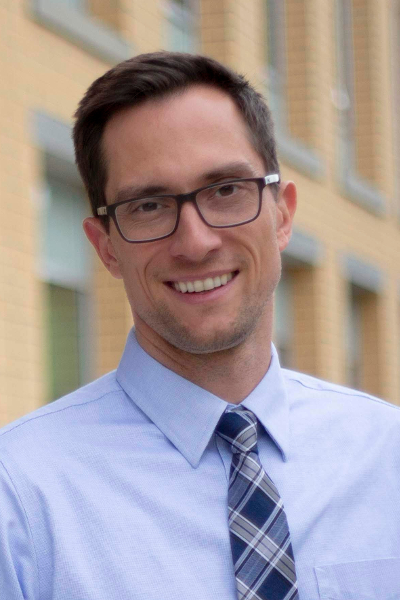
John O'Raw is a Lecturer in the Department of Computing at Donegal Letterkenny. His academic focus spans network security, time synchronization, and critical infrastructure protection, with emphasis on power systems, GNSS spoofing detection, and industrial IoT security. His research explores Precision Time Protocol (PTP) optimization in distributed networks Threat mitigation for GNSS-based timing systems Secure data communications in energy infrastructure Human behavior modeling for emergency evacuation planning His publications analyze cybersecurity frameworks for electrical substations, industrial IoT vulnerabilities, and practical implementations of standards like IEC 61850 and OAuth 2.0, with recent work on microwave IP networks and LinuxPTP for time synchronization.
Seyed Jalaleddin Mousavirad (Jalal) serves as a Postdoctoral researcher at Mid Sweden University in Sundsvall, Sweden, within the Department of Computer and Electrical Engineering (DET) and affiliated with the STC Research Centre. His research focuses on advancing AI-driven solutions for sustainable technologies and complex optimization problems. He earned his PhD in Computer Engineering specializing in Artificial Intelligence from the University of Kashan, Iran. Previous academic appointments include Assistant Professor at Hakim Sabzevari University (Iran), instructor roles at the University of Tehran (2018-2019) and Azad University (2019-2020), and a Research Fellow position at the University of Beira Interior (Portugal) where he contributed to the European GreenStamp project on sustainable Android applications. Dr. Mousavirad's research spans Image Processing and Computer Vision, Machine Learning, Evolutionary Computation, and Applied Artificial Intelligence, with significant contributions in pattern recognition, metaheuristic algorithms, and neural network optimization. His work demonstrates strong interdisciplinary applications in healthcare diagnostics, power systems, and medical imaging. Recent publications reveal a pronounced trend toward federated learning frameworks for privacy-preserving medical analysis, adversarial robustness in diffusion models, and hybrid optimization techniques for ECG classification and brain tumor detection. This reflects a strategic focus on translating AI innovations into practical healthcare and sustainability solutions. He actively contributes to the academic community as a guest editor for journals including Computational Intelligence and Neuroscience, Entropy, and Mathematical Biosciences and Engineering. His editorial leadership extends to organizing special sessions at IEEE CEC and EvoApplications conferences. Dr. Mousavirad maintains extensive peer-review commitments across 50+ prestigious venues including IEEE Transactions on Evolutionary Computation and IEEE Transactions on Cybernetics. His collaborative research includes international engagements at Xi'an Jiaotong-Liverpool University (China) and current work within Mid Sweden University's STC Research Centre on energy-aware computing and neural network optimization.
Dr. Yue Gu is an Associate Research Scientist in the Department of Neurosurgery at Yale School of Medicine, where they conduct cutting-edge research at the intersection of biomedical engineering and medical technology. With over 34 publications and 5,047 citations, Dr. Gu's work focuses on developing innovative wearable and flexible electronic systems for medical monitoring and diagnostics, particularly in neurological applications. Dr. Gu's research interests span multiple domains of biomedical technology, with particular emphasis on wearable sensors , flexible electronics , and advanced medical imaging . Their work bridges engineering and clinical applications, developing novel platforms for continuous physiological monitoring, including brain multianalyte monitoring, deep tissue hemodynamics, and cardiac imaging. The research demonstrates strong interdisciplinary collaboration across engineering, neuroscience, and clinical medicine, with publications appearing in high-impact journals like Nature, Nature Nanotechnology, and Nature Communications. Analysis of Dr. Gu's recent publications reveals a consistent trajectory toward increasingly sophisticated wearable medical devices. Their work shows progression from foundational materials research in electronic packaging to complex integrated systems for physiological monitoring. Key themes include stretchable ultrasonic arrays, photoacoustic imaging patches, and three-dimensional transistor arrays for cellular recording, demonstrating expertise across multiple technical domains while maintaining a clinical focus on neurological and cardiovascular applications.
Matthias Bucher is a Professor at the Department of Electronics and Computer Architecture , School of Electronic & Computer Engineering , Technical University of Crete, Greece. His research focuses on analog/RF integrated circuit design, compact modeling, and semiconductor device physics. Education : PhD (1999) and MSc (1993) in Electrical Engineering from EPFL, Switzerland Research Areas : EKV3 MOSFET compact modeling, RF characterization, nanoscale CMOS, and high-voltage device modeling Courses Taught : Electronics II, Analog CMOS Circuit Design, Special Topics in Analog CMOS Circuit Design His work emphasizes compact modeling for RF and analog circuits, with applications in nanoscale devices and radiation-hardened electronics. Recent publications highlight open-source PDK initiatives, Verilog-A standardization, and noise modeling in advanced transistors. He leads the Electronics Laboratory at TUC and collaborates with microelectronics companies. Bucher is a member of IEEE and the Technical Chamber of Greece, with over 45 publications and two book chapters to his credit.
Dr. Alexander R. Uhl is an Associate Professor at the Okanagan School of Engineering, University of British Columbia, holding the Principal's Research Chair in Solar Energy Conversion. His research focuses on solution-processed solar cells, including chalcogenide and perovskite absorbers, with an emphasis on scalable, low-cost fabrication methods. He has achieved world-record efficiencies in CuIn(S,Se) 2 solar cells. Education: PhD in Materials Science & Engineering from ETH Zurich; Diploma in Nanoscale Engineering from University of Würzburg Postdoctoral Experience: University of Washington (with Hugh Hillhouse) and EPFL (with Michael Grätzel) His research program addresses three key areas: Solution-processed thin film solar cells Tandem photovoltaic devices Photoelectrochemical CO 2 reduction for solar fuels Dr. Uhl has published in journals like Nature Energy , Science Advances , and Advanced Energy Materials , with recent work on 22%+ efficient perovskite cells and rear surface passivation techniques. He has filed two patents on solution-processed chalcogenide solar cells. Scientific Recognition: Principal's Research Chair in Solar Energy Conversion Three-time Swiss National Science Foundation Fellow Invited book chapter on perovskite solar cell counter electrodes He supervises graduate students and teaches courses in materials science and alternative energy systems. His lab (LSEF) develops technologies aiming to surpass coal-equivalent electricity prices through ink-jet printing and high-throughput manufacturing.
Nasim Beigi-Mohammadi is an Assistant Professor at the Department of Electrical, Computer and Software Engineering within the Faculty of Engineering and Applied Science at Ontario Tech University. Her research focuses on Adaptive Systems and Autonomic Computing with applications in cloud infrastructure, cybersecurity, and smart grid technologies. PhD in Computer Science from York University (2019) MSc in Computer Science from Toronto Metropolitan University (2013) BEng in Computer Engineering from Shahed University (2008) Her work bridges Software Defined Networking with Self-Adaptive Applications , emphasizing automated threat mitigation (e.g., DDoS attacks), resource optimization in cloud environments, and secure smart grid implementations. Recent publications explore DevOps frameworks for system self-protection and network activity data privacy . Key article trends include: Cybersecurity (DDoS mitigation, intrusion detection), Cloud Computing (software-defined infrastructure, microservices), and Smart Grid Applications (secure communication protocols). Awards include the L'Oscar from York University and NSERC CGS D scholarship. Lassonde School of Engineering Award (L'Oscar) - York University (2017) NSERC Alexander Graham Bell Canada Graduate Scholarship (CGS D) - 2016 Recognition for Research Funding Achievements - York University (2016)
Professor Milijana Odavic is affiliated with the University of Sheffield as a member of the School of Electrical and Electronic Engineering . Her research focuses on power electronics systems, particularly modular multilevel converters, fault-tolerant designs for aerospace and electric vehicles, and stability analysis of power electronics-dominated distribution systems. Recent publications highlight her work on: Modular multilevel converter topologies (boost/buck modes) Wide-bandgap semiconductors for ultra-efficient converters Robust stability theory for systems with parametric uncertainties She leads MEng/MSc teaching modules and contributes to the EPSRC Prosperity Partnership: New Partnership in Offshore Wind. Professional roles include Erasmus coordination and Athena SWAN team membership.
Philip Brighten Godfrey is a Professor in the Department of Computer Science at the University of Illinois at Urbana-Champaign (UIUC) and Technical Director at VMware (formerly Broadcom). He co-founded network verification startup Veriflow, which was acquired in 2019. His research focuses on networked systems, blending theoretical and practical approaches to low-latency networking, software-defined architectures, microservices communication, and machine learning for network optimization. Education: Ph.D. in Computer Science (UC Berkeley, 2009), B.S. in Computer Science (Carnegie Mellon, 2002) His work spans data center design, network verification (e.g., VeriFlow), congestion control (PCC Vivace), and innovative projects like cISP (Speed-of-Light Internet). Recent publications address microservice tracing (TraceWeaver), fault localization (Flock), and XR device offloading (XRgo). Notable awards include the ACM SIGCOMM Rising Star Award, NSF CAREER Award, Sloan Research Fellowship, and multiple best paper recognitions. He has chaired SIGCOMM and HotNets, and his teaching excellence in courses like CS 538 Advanced Computer Networks has been repeatedly recognized. Scientific Honors ACM SIGCOMM Rising Star Award NSF CAREER Award (2012) Sloan Research Fellowship (2014) Best Paper Awards (SIGCOMM, HotSDN, CoNEXT) IEEE ComSoc Data Storage Best Paper Engineering Council Outstanding Advisor Award (2015) Godfrey leads research in the Coordinated Science Laboratory (CSL) and contributes to the LDOS NSF Expeditions project. His group advises Ph.D. students on topics ranging from network verification to XR systems optimization, with alumni now at Meta, Google, and academic institutions like ETH Zurich.
Farshad Firouzi serves as an Adjunct Assistant Professor in the Department of Electrical and Computer Engineering at Duke University, where he teaches EGR 393: Research Projects in Engineering. His academic work bridges hardware and software domains with a strong emphasis on practical applications in critical systems. His research spans Edge Computing, Internet of Things (IoT), Artificial Intelligence, Machine Learning, Healthcare Systems, Chip Design, and Reliability Engineering. This interdisciplinary focus manifests in projects ranging from Parkinson's disease monitoring using edge devices to LLM-enhanced chip design and security-hardened neural networks. His work consistently addresses real-world challenges in system dependability, particularly in healthcare and biomedical contexts where failure is not an option. Analysis of his 2024-2025 publications reveals three dominant research thrusts: (1) LLM applications in hardware design (ChipMnd, Spiced), (2) Edge-based healthcare monitoring systems (freezing of gait recognition, blood glucose prediction), and (3) Security and reliability in AI/ML systems (gradient inversion defense, silent data corruption mitigation). His work demonstrates a clear trajectory toward integrating cutting-edge AI techniques with hardware-aware solutions for mission-critical applications. No scientific awards were mentioned in the source materials. The absence of student listings or grant information suggests his current role may be primarily research-focused without formal advising responsibilities. Similarly, no dedicated labs or research teams were referenced in the available documentation.
Hasan Basri Celebi is a researcher at KTH Royal Institute of Technology's School of Electrical Engineering and Computer Science (EECS), active in the field of wireless communication systems. His work focuses on ultra-reliable low-latency communication (URLLC) for mission-critical IoT applications, with a particular emphasis on decoding complexity constraints and computational efficiency in next-generation networks. PhD in Electrical Engineering from KTH (2021) Key research areas: Channel coding, Finite blocklength regime, Industrial IoT, Signal processing, Biomedical sensor development Celebi's publications span telecommunications journals and conferences, addressing theoretical limits in low-latency communication and practical implementations for complexity-constrained receivers. His interdisciplinary work includes developing medical devices like transcutaneous bilirubinometers and optical probes for diffuse spectroscopy applications. A notable grant from the Swedish Foundation for Strategic Research (SSF) supported his work on low-complexity receivers.
Carla Fabiana Chiasserini is a Full Professor and Deputy Director at the Department of Electronics and Telecommunications (DET) at the Polytechnic University of Turin. She serves as a Component of the CARS@PoliTO Interdepartmental Center - Center for Automotive Research and Sustainable Mobility and acts as a Spoke leader for research and innovation activities. Her academic career spans multiple prestigious institutions and she maintains active collaborations worldwide. Professor Chiasserini's research interests span algorithm design and analysis, cellular networks, connected cars, edge computing, heterogeneous wireless networks, Internet of Things, machine learning, mobile networks, mobile services, and performance evaluation. Her work bridges theoretical algorithm development with practical applications in next-generation telecommunications systems. She leads the TNG research group at DET and focuses on Machine Learning for Networking, with specific research lines in Network Slicing in 5G, Connected autonomous cars, and Opinion dynamics in social networks. Her research aligns with Sustainable Development Goals including Industry, Innovation and Infrastructure; Sustainable Cities and Communities; and Climate Action. Her recent publications demonstrate a strong trend toward integrating machine learning with edge computing, 5G/6G systems, and automotive applications. The research spans from theoretical algorithm development to practical implementations for XR offloading, distributed service provisioning, reliability assessment of AI-based automotive systems, and satellite networking. Her work shows increasing focus on practical implementations with industry applications, particularly in the automotive sector and next-generation telecom infrastructure. Best Paper Award - Wireless Telecommunications Symposium (WTS) 2018 Best Paper Award - IEEE WoWMoM 2016 Best Paper Award Runner-up at ACM MSWiM 2016 Top Paper Award at the ACM CoNEXT 2016 Cloud-Assisted Networking (CAN) Workshop Best Paper Award at SPACOMM 2014 Best Paper Award at AD HOC NOW 2014 2010 Editor of the Year Award for the Ad Hoc Networks journal (Elsevier) IEEE Fellow (2018-) ACM Fellow (2024-) Professor Chiasserini actively advises numerous PhD students working on cutting-edge topics in network systems, with recent graduates focusing on edge services in 5G networks, resource-aware learning in mobile networks, and deployment of microservices at the network edge. She leads multiple significant research grants including O-RAN (2024-2027), CSI-Future (2023-2025), RESTART - Spoke 4 (2023-2025), PREDICT-6G (2023-2025), and several others funded by PNRR, EU Horizon programs, and industry partnerships. Her work has substantial practical impact through numerous patents including OffloaDNN and SEM-O-RAN. She leads the TNG research group within the Department of Electronics and Telecommunications and participates in the CARS@PoliTO Interdepartmental Center for Automotive Research and Sustainable Mobility. Her laboratory work focuses on practical implementations of theoretical concepts, particularly in the areas of connected vehicles, edge computing, and 5G/6G systems. She maintains strong industry connections through projects with Intel Corporation and other technology partners, ensuring her research has direct real-world applications.
Andrew Knights is a Professor in the Department of Engineering Physics at McMaster University, with a research focus on silicon photonics and optical waveguide engineering. His work spans defect-mediated optical modulation, hybrid material integration, and photonic device optimization. Specializes in silicon photonics for mid-infrared applications Key contributions to defect engineering in silicon waveguides Develops hybrid silicon-organic and silicon-germanium photonic devices Recent research trends include subwavelength grating metamaterials, thermal resonance stabilization techniques, and high-speed silicon-based optical detectors. His publications emphasize SOI platforms, TeO2 cladding for active photonic circuits, and novel trimming methods for microring resonators. Knights' scholarly activity demonstrates deep expertise in CMOS-compatible photonic integration, with applications in optical interconnects, LIDAR, and biomedical sensing systems. His work bridges fundamental defect physics with practical device implementation in silicon photonics.
Dr. Erhan Yumuk is a researcher at Ghent University and an alumnus of Istanbul Technical University , where he earned his Ph.D. in Control and Automation Engineering . He has served as a lecturer and deputy head of the department at Istanbul Technical University. His research focuses on: Fractional order control systems Anesthesia depth and hemodynamic control Pharmacokinetics/pharmacodynamics modeling Industrial control laboratory development Remote access control education Artificial intelligence in biomedical applications Recent publications (2024-2025) demonstrate expertise in fractional order PID controllers for time-delay systems, obesity-specific drug distribution models, and AI-enhanced pain monitoring during anesthesia. His work spans mathematical control theory, clinical implementation, and industrial applications. Scientific Recognition: Best Paper Award, IEEE Control System Society (2015) Erhan Yumuk contributes to Journal of Process Control , IFAC Journal of Systems and Control , and Applied Sciences , with emerging leadership in postdoctoral research at Ghent University.
Keivan Navaie is a Professor of Intelligent Networks at Lancaster University’s School of Computing and Communications. He serves as a member of the Independent Scientific Advisory Committee at the Alan Turing Institute, overseeing the £100 million BridgeAI programme, and previously as Principal AI Technology Advisor to the UK Information Commissioner’s Office (ICO). He is recognized with Fellowships from the Institution of Engineering and Technology (IET), Chartered Engineer status in the UK, Senior Fellowship of the Higher Education Academy (HEA), and the IEEE Young Investigator Award. Research Focus: Wireless communications, mathematics, artificial intelligence, 6G networks, blockchain technology, edge computing, cognitive radio networks, and non-orthogonal multiple access (NOMA). Supervision: Actively supervises PhD students in areas like wireless communications and mathematical modeling. Projects: Involved in distributed learning, blockchain integration, 6G research, and spectrum sharing systems. Awards: IEEE Young Investigator Award, Fellow of IET, Chartered Engineer, Senior Fellow of HEA.