Torbjörn Thiringer is a Professor in Electrical Engineering at Chalmers University of Technology. His research focuses on electrical systems for wind turbines and electric vehicles, with particular emphasis on system-level analysis and component-level studies of electrical machines, power electronics, and battery systems. Key research areas: Wind turbine systems, Electric vehicle drives, Battery degradation, Power electronics optimization Recent work explores graphene-based thermal management, fuel cell hybrid vehicles, and direct current building distribution efficiency His publications demonstrate interdisciplinary engagement with topics spanning: Finite element analysis of motor designs Life cycle assessment of energy systems Thermal modeling of SiC inverters Wave energy converter optimization Core loss measurement techniques Hydrogen fuel cell integration Professor Thiringer's collaborations span multiple institutions and industry partners, focusing on both theoretical modeling and practical implementation of advanced energy systems.
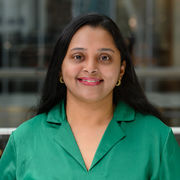
Dr Smitha Gopinath is a Lecturer in the School of Chemical, Materials and Biological Engineering at the University of Sheffield , where she leads research in sustainable engineering systems within the Sustainable Design Laboratory (SDL) . Education & Career Path PhD in Chemical Engineering, Imperial College London Post-doctoral researcher, Applied Mathematics and Plasma Physics Group, Los Alamos National Laboratory Research Focus Dr Gopinath’s interdisciplinary work centres on the design, calibration and operation of sustainable engineering systems . She develops high-fidelity models and large-scale optimisation algorithms tailored to energy and materials challenges. Core interests include: Thermo-mechanical energy conversion devices (heat pumps, organic Rankine cycles) Carbon-capture utilisation and storage (CCUS) via novel solvents and separation systems Power-grid expansion and operation for renewable integration and decarbonisation Methodologically, she integrates Integrated Molecular and Process Synthesis (IMPS) with Optimisation Accelerated by domain Knowledge (OAK) to co-design molecules, materials and flowsheets that meet stringent energy and environmental targets. Publication Landscape Across 2015–2025 her publications reveal a clear trajectory from fundamental thermodynamic measurements and molecular design toward rigorous optimisation of large-scale energy systems. Early work concentrated on CO₂ solubility and carbonation kinetics of steel slag, providing essential data for carbon-sequestration schemes. Subsequent papers introduced advanced optimisation frameworks—outer-approximation algorithms, exact reformulations and feasibility-based methods—applied to solvent-based CO₂ capture, organic Rankine cycle working-fluid selection and AC optimal power flow (ACOPF). Recent contributions benchmark global optimality certificates for ACOPF problems, underscoring her drive to bridge chemical process systems engineering with electrical power systems optimisation. Teaching & Mentoring Dr Gopinath teaches undergraduate modules: CPE440 (Particle Technology) CPE170 (Particle Technology) She actively invites prospective PhD students to join the Sustainable Design Laboratory, offering supervision on projects spanning sustainable process design, renewable energy systems and algorithmic optimisation. Laboratory & Collaborative Networks She directs the Sustainable Design Laboratory (SDL), a multidisciplinary team leveraging systems engineering, multi-scale modelling, process simulation and optimisation to re-imagine a sustainable chemical and energy industry. The SDL collaborates with international partners, including Los Alamos National Laboratory and leading researchers in applied mathematics and power systems engineering.
Mats Leijon is Professor of Electrical Engineering at Uppsala University, Sweden. His work centers on renewable energy systems, particularly wave and marine current energy conversion, with a focus on direct-driven linear generators, power electronics, and grid integration. He has led projects at the Lysekil Research Site, Sweden, and contributed to experimental hydrokinetic power stations like the Söderfors Project. Key Affiliations: Department of Electrical Engineering, Uppsala University; Ångström Laboratory; Lysekil Research Site. Research Interests span wave energy converter design, electromagnetic systems, control strategies for renewable energy, and marine substation technology. He explores: Hydrodynamic and electromagnetic modeling of point-absorbing wave energy devices Power optimization via resonance circuits and predictive control Robotized manufacturing for electric machines Publication Trends highlight collaborations on Wave Energy Converters , Marine Current Turbines , and Three-Level Inverter Systems , with applications in the Baltic Sea and Norwegian fjords. His work addresses extreme wave survivability, power fluctuation reduction, and environmental impact assessments. Grants and Projects include offshore wave energy deployments, thermal rating of submerged substations, and experimental validation of marine power systems. He has advised on robotics for cable winding and stator slot geometry optimization. Labs and Teams operate at the Ångström Laboratory and Lysekil Research Site, focusing on full-scale offshore experiments, CFD simulations, and grid-connected marine substations.
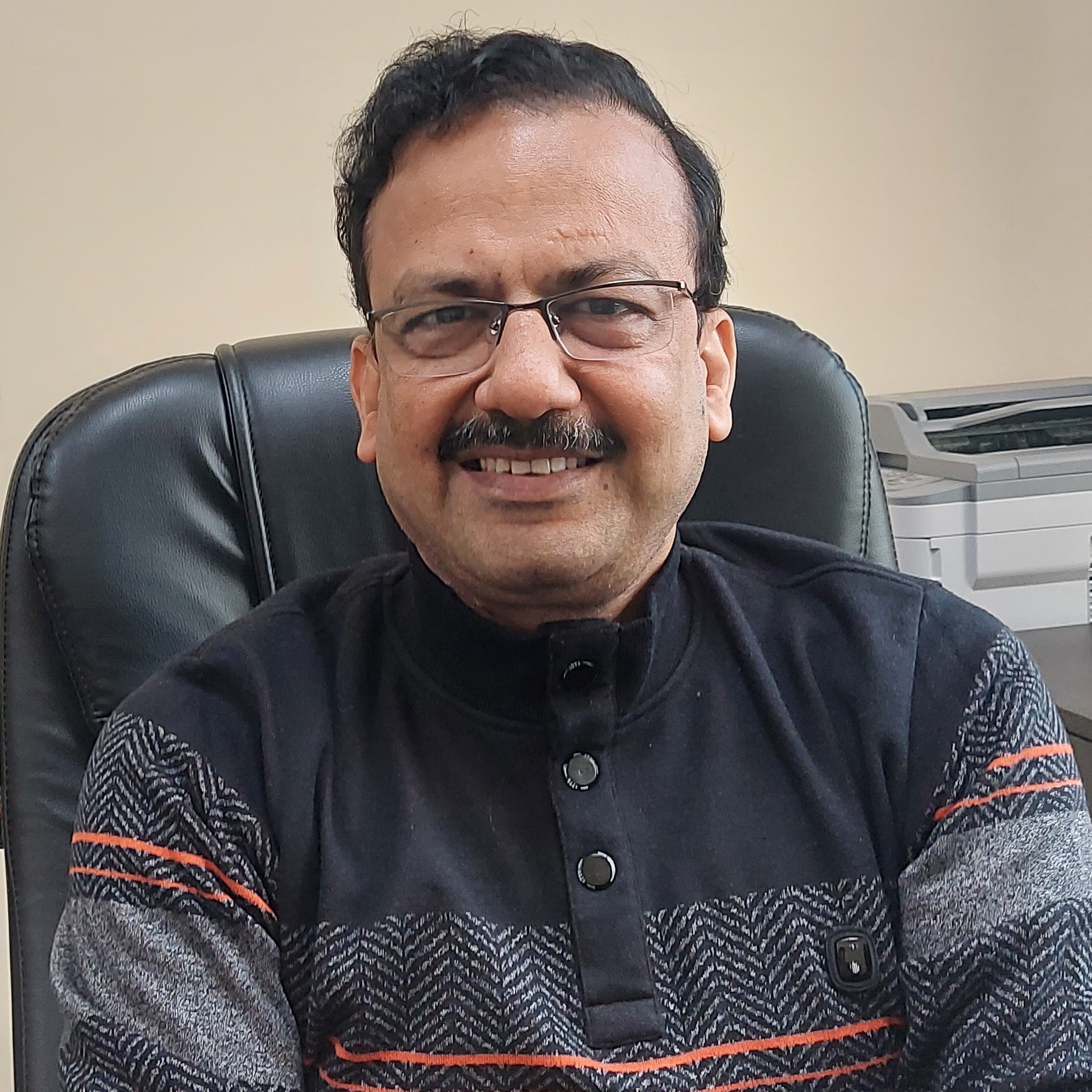
Dr. Rajeev Jindal is a Professor of Practice in the Department of Sustainable Energy Engineering at IIT Kanpur. With over 20 years of experience in the technology industry, he has held leadership roles at C&S Electric Ltd., NTL Electronics, and Moser Baer India Ltd. He earned his PhD in Physics from IIT Delhi and completed post-doctoral research at Université de Nice (France) and Michigan State University. PhD in Physics, IIT Delhi (1998) MSc in Physics (Gold Medalist), IIT Roorkee (1993) BSc (Gold Medalist), Rohilkhand University (1991) His research spans renewable energy systems , flexible electronics , and optical engineering . Recent work focuses on solar power economics, carbon footprint accounting in institutions, and electric vehicle charging infrastructure. Prior publications include sol-gel fiber sensors, organic solar cells, and photonic devices. Recent publications (2023-2025) emphasize solar energy deployment , policy analysis , and sustainable mobility , while earlier works (2002-2015) highlight optical sensor development , sol-gel processing , and photonic device modeling . Scientific Honors: Gold Medalist, IIT Roorkee (MSc Physics) Gold Medalist, Rohilkhand University (BSc) Dr. Jindal led the establishment of IIT Kanpur's Flexible Electronics Center (2014), secured >$20M in government funding, and managed R&D teams that filed 20 patents across solar, LED lighting, and optical fiber technologies.
Prof. Dr. Haris Gačanin is a faculty member at RWTH Aachen University, affiliated with the Institute for Distributed Signal Processing under the College of Electrical Engineering. His research focuses on integrating machine learning with wireless communication systems, particularly in industrial IoT, edge computing, and network optimization. Current academic rank: Professor Contact: harisg@dsp.rwth-aachen.de Research Interests: Wireless systems, machine learning, signal processing, and network optimization. Key contributions include: Adaptive resource allocation in IIoT and vehicular networks AI-driven channel estimation and feedback mechanisms Security-oriented emitter identification via metric learning Federated/transfer learning for edge environments Hardware-efficient deep learning models for mmWave and THz communications Methodological Focus: Combines reinforcement learning, attention mechanisms, and robust neural architectures with practical implementations on FPGA and vehicular systems.
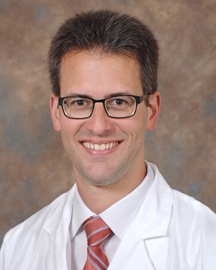
Dr. Justin L. Benoit is an Assistant Professor at the University of Cincinnati College of Medicine, Department of Emergency Medicine. His work focuses on prehospital medicine, cardiac arrest resuscitation, and blood-based biomarkers, with a clinical emphasis on cardiovascular disease and airway management. He is board-certified in Emergency Medicine and Emergency Medical Services by the American Board of Emergency Medicine. Bachelor's Degree: University of Maryland, College Park (Cell and Molecular Biology and Genetics) Master's Degree: University of Cincinnati (Clinical and Translational Research) Medical Degree: Case Western Reserve University Residency: University of Cincinnati (Emergency Medicine) Fellowship: University of Cincinnati (EMS and Clinical Research) His research spans sudden cardiac arrest, emergency airway management, and biomarker development, particularly in the context of OHCA and SARS-CoV-2. Recent publications highlight advancements in ECPR accessibility, cooling duration protocols, and ventilation practices. He leads multiple federally and privately funded grants, including NIH and Bill & Melinda Gates Foundation projects. Dr. Benoit's work integrates emergency medicine, critical care, and public health, emphasizing data-driven improvements in resuscitation and pandemic response. Collaborations with international researchers and institutions underscore his impact on global clinical practices.
Yuta Sugiura is an Associate Professor in the Department of Information and Computer Science at Keio University's Faculty of Science and Technology. His research focuses on innovative human-computer interaction techniques, particularly in wearable computing, tangible interfaces, and novel input methods. Previously, he worked as a postdoctoral researcher at the National Institute of Advanced Industrial Science. Dr. Sugiura's research interests span Human-Computer Interaction, Wearable Computing, Augmented Reality, Tangible User Interfaces, Gesture Recognition, Ubiquitous Computing, Haptics, and Virtual Reality. His work often explores how everyday objects and environments can become interactive surfaces, with notable projects including the iRing (intelligent ring), SenSkin (skin as interface), and EarHover (mid-air gesture recognition for hearables). He has developed numerous novel interaction techniques that leverage physical properties of materials and human physiology for input and output. His recent publications indicate a strong focus on hearable computing, medical applications of HCI, edible interfaces, and novel authentication methods. The research shows a consistent pattern of exploring unconventional interaction surfaces and leveraging subtle physical phenomena for input sensing. His work has significant implications for healthcare applications, particularly in neurological disorder screening and rehabilitation. Best Paper Award Dr. Sugiura has advised numerous students who have gone on to publish significant work in top-tier HCI venues. His research has been supported by various grants enabling the development of novel interaction techniques and systems. He maintains strong collaborations with researchers across Japan and internationally, particularly in the fields of wearable computing and medical applications of HCI. His laboratory appears to focus on lifestyle computing, developing interfaces that integrate seamlessly into daily activities. Current projects include exploring edible displays, adaptive ear interfaces, and novel authentication methods using wearable devices. Future work seems to be heading toward more medical applications of HCI, particularly in neurological assessment and rehabilitation.
Dr. Mehdi Jafarian is a Senior Lecturer in the School of Chemical Engineering at the University of Adelaide . His work focuses on hydrogen production , CO2 capture , solar thermal energy , and chemical looping combustion . Key research areas include: Solar thermal integration in industrial processes Hydrogen generation via methane pyrolysis CO2 sequestration technologies Advanced water treatment systems Thermochemical energy storage Research Trends : Recent publications emphasize hydrogen production optimization , PFAS removal , and molten metal reactor systems . Sub-fields span flash reactor modeling , hydrodynamic cavitation , and membrane-free electrolysis . Contact : mehdi.jafarian@adelaide.edu.au
Chris Thachuk is an Assistant Professor in the Paul G. Allen School of Computer Science & Engineering at the University of Washington . His research bridges computer science with molecular programming and synthetic biology, focusing on programmable matter at the nanoscale using bio-molecules like DNA. Current Position: Assistant Professor, University of Washington (2020–Present) Previous Positions: Senior Postdoctoral Researcher at Caltech (2014–2020), Postdoctoral Research Assistant & James Martin Fellow at Oxford (2012–2014) Education: PhD in Computer Science (2013), University of British Columbia MSc in Computer Science & Bioinformatics (2007), Simon Fraser University & CIHR/MSFHR Bioinformatics Training Program BCS in Computer Science (2005), University of Windsor Thachuk’s research spans computing + biology , with expertise in molecular programming , synthetic biology , and bioinformatics . His work includes algorithm design for DNA-based systems, thermodynamic modeling, and leakless strand displacement systems. Recent publications focus on DNA origami alignment , leakless strand displacement , compiler-aided DNA circuit design , and thermodynamic binding networks , reflecting interdisciplinary research in computer science, synthetic biology, and nanotechnology. Scientific Awards: James Martin Fellow at the Institute for the Future of Computing, Oxford Thachuk contributes to the Molecular Information Systems Lab (MISL) , collaborating with researchers like Erik Winfree and David Soloveichik. His work emphasizes integrating molecular biosensors with electronics for applications such as protein concentration measurement and DNA sequencing.
Matthew B. Panzer serves as Associate Dean for Graduate Education and Post-Doctoral Affairs at the University of Virginia's School of Engineering and Applied Sciences, holding professorships in Mechanical & Aerospace Engineering and courtesy in Biomedical Engineering. As Deputy Director of the Center for Applied Biomechanics, he leads research in impact biomechanics and injury prevention. Education: B.S. in Mechanical Engineering, University of Waterloo, 2003 M.S. in Mechanical Engineering, University of Waterloo, 2006 Ph.D. in Biomedical Engineering, Duke University, 2012 Research Focus: Panzer's work employs computational and experimental methods to investigate high-rate non-linear mechanics in tissue mechanics, impact biomechanics, vehicle crashworthiness, military blast/ballistics, and sports injury. Current projects include traumatic brain injury mechanisms in football helmet impacts, biological tissue characterization, human body model development for automotive safety, and protective system design. His approach integrates finite element modeling with experimental validation to translate biomechanical findings into clinical and safety applications. Publication Trends: Recent work (2022-2025) emphasizes brain injury metrics, sex-specific biomechanical responses, and finite element model validation across automotive, sports, and military contexts. Key themes include rotational loading effects, biofidelic model development, and injury risk function derivation, demonstrating strong interdisciplinary integration of neuroscience, engineering, and computational science. Awards: Shannon Fellow (2024-2027) Copenhaver Fellow (2023) MAE Early Career Researcher of the Year (2021, 2022) UVA Research Achievement Award (2019) MAE Young Research of the Year (2018, 2019) Grants and Teaching: Panzer has secured over 40 research grants as Principal Investigator from federal agencies and industry partners. He teaches graduate courses including MAE 6710: Finite Element Analysis (annually since 2015), MAE 7030: Injury Biomechanics, and MAE 6952: Impact Mechanics, mentoring graduate students in biomechanics research despite no specific advisees listed in source materials. Laboratory Leadership: At the Center for Applied Biomechanics, Panzer directs teams conducting experimental testing and computational modeling to advance injury mechanism understanding and develop protective technologies for automotive, sports, and military applications.
Sergio Alejandro Useche Hernandez is an active Assistant Professor specializing in transportation safety and traffic psychology, with 134 publications reflecting deep expertise in human behavioral factors within mobility systems. His research spans road safety compliance, sustainable transport adoption, and mental health impacts across diverse populations including cyclists, delivery workers, and public transport users. His primary research interests focus on the intersection of psychology and transportation engineering, particularly sensation seeking in vulnerable road users, gender disparities in mobility choices, and technology-induced distractions. He employs advanced methodologies including Structural Equation Modeling (SEM), cross-cultural surveys, and systematic literature reviews to investigate phenomena like e-scooter adoption barriers in developing countries and mental health outcomes among transport workers. Key contributions include the validated SSC scale for cyclist risk assessment and frameworks for evaluating sustainable mobility policies through interdisciplinary lenses. Analysis of his 15 most recent publications (2024-2026) reveals three dominant trends: (1) growing emphasis on digital distractions across transport modes (cycling, motorcycling, driving), (2) sophisticated gender-based analyses of mobility barriers and safety outcomes, and (3) methodological innovation through integrated theoretical frameworks like TPB-UTAUT. His work consistently bridges academic rigor with policy relevance, particularly regarding last-mile delivery risks and post-crash psychological recovery. While no specific scientific awards are documented in the source material, his extensive publication record in high-impact journals (e.g., Accident Analysis and Prevention , Transportation Research Part F ) demonstrates significant scholarly recognition. The absence of listed advisees suggests primary focus on independent or collaborative research rather than graduate supervision, though his faculty position implies potential mentoring activities. His work shows strong alignment with European mobility policy initiatives and cross-national studies spanning Spain, Australia, Latvia, and the Dominican Republic, indicating robust international collaboration networks.
Dr. Manuela Pacella is a Senior Lecturer in High-Value Manufacturing at Loughborough University's Wolfson School of Mechanical, Electrical and Manufacturing Engineering. She serves as Academic Integrity Lead and Programme Director for the BEng/MEng Manufacturing Engineering programs. Previously, she held roles at Cardiff University (Lecturer in Laser Machining) and worked in industry with 3M and Element Six. Her research focuses on laser processing of advanced materials, surface engineering, and manufacturing innovation. Education: PhD in Mechanical Engineering (University of Nottingham, 2014), MEng in Mechanical Engineering (Technical University of Bari, Italy, summa cum laude). Professional credentials include Chartered Engineer (CEng MIMechE), Fellow of the Higher Education Academy (FHEA), and IMechE MPDS Mentor. Research interests include laser machining strategies, surface functionalization, and tribology of ultra-hard materials like diamond and boron nitride. She has pioneered techniques for enhancing tool durability and biomedical implant performance through laser-based methods. Scientific achievements include a 2017 Blackall Award nomination (ASME) and over 40 publications. She supervises >4 PhD, 25 UG, and 12 MSc students, and has served as an examiner for Birmingham University and internal examiner at Loughborough. Her work bridges academic research with industrial applications, particularly in high-value manufacturing sectors.
Scott E. Parker is a Professor of Physics at the University of Colorado Boulder and a Fellow at both the Renewable and Sustainable Energy Institute (RASEI) and the Center for Integrated Plasma Studies (CIPS). His expertise lies in theoretical and computational plasma physics for magnetic fusion energy. Education: Ph.D. in Engineering Science, University of California, Berkeley B.S. in Nuclear Engineering and Mathematics, University of Wisconsin, Madison His research centers on plasma turbulence simulation using advanced computational methods. Key areas include gyrokinetic theory, tokamak edge physics, and quantum information science applications to plasma modeling. The group develops particle-based simulations in five-dimensional phase space to study transport in magnetically confined plasmas, utilizing massively parallel computing and scientific visualization. Analysis of his publications reveals consistent focus on numerical techniques for plasma turbulence, particularly trapped electron modes and zonal flows. His work bridges fundamental kinetic theory with practical fusion reactor challenges, demonstrating qualitative agreement with experimental transport observations in tokamaks. Awards: RASEI Fellow CIPS Fellow Professor Parker leads the Parker Research Group, mentoring graduate students in computational plasma physics. The group collaborates on extreme-scale computing projects for fusion energy research, though specific grant details are not provided in source materials. Their work is integral to advancing predictive capabilities for next-generation fusion devices. The research group maintains active projects in magnetic fusion energy, utilizing GEM simulations and multiscale kinetic methods to address edge turbulence and transport phenomena critical for reactor viability.
Ronald N. Miles is a Distinguished Professor in the Department of Mechanical Engineering at Binghamton University, part of the Watson School of Engineering and Applied Science. He has held various administrative roles including Director of Graduate Studies, Department Chair, and Associate Dean for Research. His expertise spans mechanics, acoustics, MEMS, neurobiology, and control systems, with a focus on bio-inspired microacoustic sensors for healthcare and consumer electronics. Educated at the University of California, Berkeley (BSEE) and the University of Washington (MS/PhD in Mechanical Engineering), Miles has over 40 years of academic and industry experience. His research has led to over 100 publications, 20 patents, and significant grants totaling $17 million. Notable achievements include the Chancellor's Award for Excellence in Teaching and the Research Foundation's Outstanding Inventor Award. Miles' research emphasizes bio-inspired sensor design, acoustic flow sensing, and MEMS technology. His team has developed innovative microphones mimicking insect hearing mechanisms, with applications in hearing aids and medical devices. Current projects include NIH-funded work on acoustic measurements in the human ear canal. Award highlights include recognition for teaching (1996-1997 Chancellor's Award) and research innovation, including the 2005 First Patent Award. His work bridges engineering and biology, with labs focused on acoustic core technologies and vibrations research. Miles also serves as Associate Editor for the ASME Journal of Vibration and Acoustics.
Philip Johnson is a Professor and Chair of the Department of Physics at American University (AU), where he has been since 2006. He also serves as Director of the Integrated Space Science and Technology Institute (ISSTI), supporting over 20 AU faculty and external partners like NASA's Goddard Space Flight Center. His research focuses on quantum computing, superconducting qubits, ultracold atoms, and effective interactions in few-body systems. He holds a PhD in Theoretical Physics from the University of Maryland and completed postdoctoral work at NIST and the University of Maryland's superconducting quantum computing group. His academic leadership roles include Associate Dean of Research for AU's College of Arts and Sciences and service on the American Physical Society's council. His research explores quantum control, nonequilibrium dynamics, and applications in quantum sensing and metrology. Key areas include ultracold bosons in optical lattices, nonlocal interactions, and hybrid machine learning approaches for quantum systems. He collaborates with institutions like the Joint Quantum Institute and Johns Hopkins Applied Physics Laboratory. Johnson's recent work advances theoretical frameworks for few-atom systems and superconducting qubits, with publications addressing topics like topological properties of interactions and correlations in quantum systems. His contributions span experimental and theoretical physics, emphasizing interdisciplinary applications in space science and technology through ISSTI.