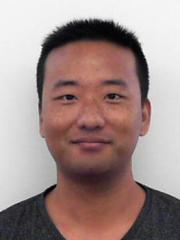
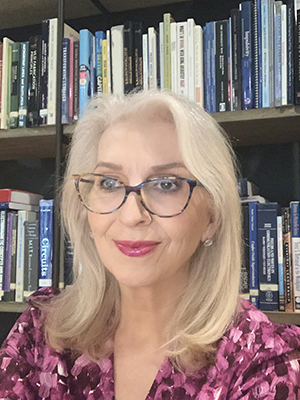
Dr. Mingyan Li is an Adjunct Research Fellow at The University of Queensland's School of Electrical Engineering and Computer Science. Their research focuses on advanced imaging and sensing technologies with applications in biomedical engineering, particularly in MRI system development, RF coil design, and medical signal processing. They hold a PhD from The University of Queensland (2015). Research interests include high-field MRI systems, rotating RF coil technologies, MRI-Linac integration, and electrical properties tomography (EPT). Key contributions include innovations in MRI-Linac distortion correction, RF shielding for SAR reduction, and deep learning approaches for cardiac arrhythmia classification. Publications span MRI hardware optimization, image reconstruction algorithms, and biomedical signal analysis. Collaborations include work on metamaterial-inspired RF shielding and multi-modal antenna systems for body MRI.
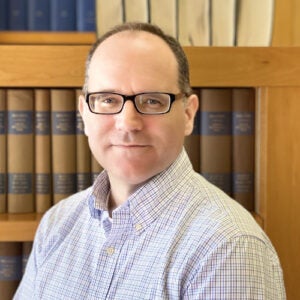
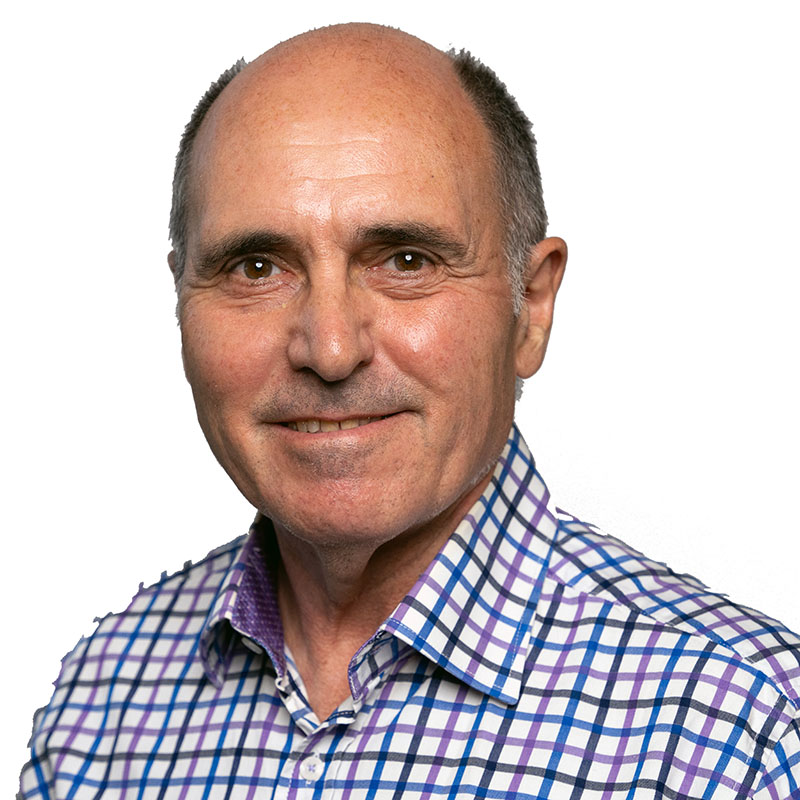
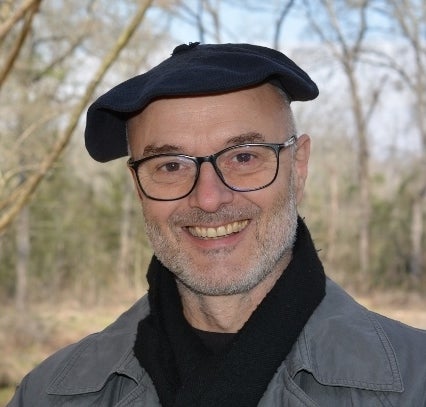
Charles Monroe is a Professor of Engineering Science and Alexander Mosley Fellow at St Peter’s College, University of Oxford. He serves as a College Tutor in Engineering Science, Vice-Master, and Fellow for IT and Website. His research focuses on electrochemical devices for energy storage and conversion, particularly batteries and fuel cells. He joined St Peter’s in 2015 after being an Assistant Professor of Chemical Engineering at the University of Michigan. Monroe holds a PhD in Chemical Engineering from UC Berkeley (near Palo Alto, California) and an undergraduate degree from Princeton. Education: Bachelor’s degree from Princeton University PhD in Chemical Engineering from University of California, Berkeley Research Interests: Monroe’s work bridges theoretical and experimental approaches to study electrochemical systems, emphasizing the interplay between material properties and device performance. His group investigates next-generation batteries for electric vehicles, long-lived batteries for renewable energy integration, and degradation mechanisms in lithium-ion batteries. Collaborations with companies like Bosch, Ford, and Procter & Gamble highlight practical applications of his research. Publications: Recent work spans advanced battery technologies, including solid-state systems, flow batteries, and electrolyte transport modeling. Key themes include voltage hysteresis, solvent segregation effects, and membrane fouling in redox flow batteries. Scientific Awards: No specific awards mentioned in the provided text. Advising & Grants: Leads the Monroe Research Group, collaborating with industry partners. His work is funded through partnerships with multinational companies, supporting projects on battery design and energy storage systems. No individual student names are listed, but the group actively engages in graduate research. Labs/Teams: Monroe Research Group focuses on electrochemical engineering, with facilities for experimental and computational studies in energy storage technologies.
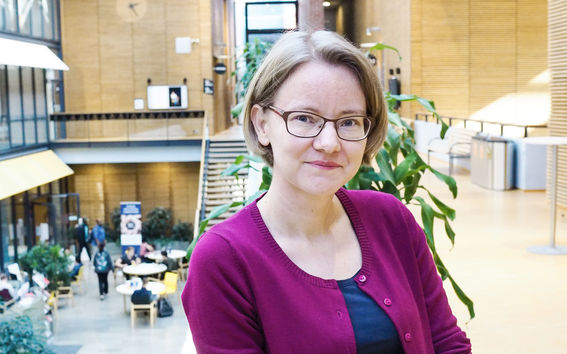
University Lecturer Anu Lehtovuori is affiliated with the Department of Electronics and Nanoengineering at Aalto University, where she actively bridges teaching and research. Her roles encompass academic teaching, project leadership, grant writing (e.g., Academy of Finland applications), and collaboration with doctoral students. She specializes in cutting-edge topics such as antenna design for 5G/6G systems, reconfigurable MIMO architectures, and RF technology for mobile devices. Her research focuses on optimizing antenna performance in compact environments, mitigating interference, and enhancing wireless communication efficiency. Notable areas include wideband antenna systems, decoupling techniques for multi-element arrays, and adaptive antenna-amplifier integration. Lehtovuori emphasizes practical applications, addressing challenges like user interaction effects on mobile antenna performance and minimizing electromagnetic emissions. Research Trends: Dominant themes include 6G IoT antenna solutions, mmWave component integration, and reconfigurable systems leveraging mutual coupling. Grants: Actively pursuing funding through initiatives like the Academy of Finland. Her contributions span both theoretical advancements (e.g., bandwidth optimization algorithms) and industrial applications (e.g., antenna cluster techniques for full-screen smartphones). While no specific awards are documented, her work reflects a strong focus on impactful, industry-relevant innovations.
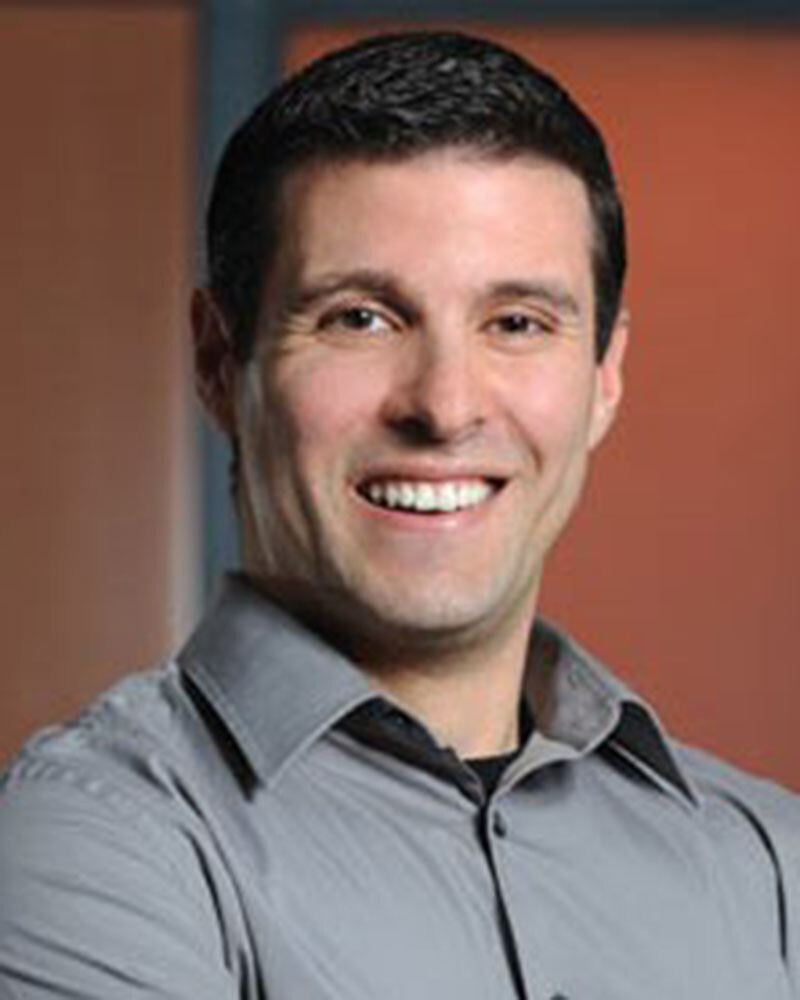
Barry C. Thompson is a Professor of Chemistry and Chair of the Department of Chemistry at the University of Southern California (USC), affiliated with the Loker Hydrocarbon Research Institute. He holds a Ph.D. from the University of Florida (2005) and a B.S. from the University of Rio Grande (2000). His research focuses on designing electroactive organic polymers, particularly for polymer-based solar cells and sustainable materials. Key projects include advancing Direct Arylation Polymerization (DArP) for conjugated polymers and exploring ternary blend photovoltaics. Thompson leads a research group with active grants from NSF, DOE, and industry. His lab includes advanced facilities like a nitrogen glove box, solar simulators, and analytical instruments. He has mentored numerous Ph.D. students and researchers, contributing over 120 peer-reviewed publications. Notable contributions include innovations in polymer synthesis, battery binders, and device engineering for renewable energy applications.
Caglar Oskay is the Cornelius Vanderbilt Professor of Engineering and Chair of the Department of Civil and Environmental Engineering at Vanderbilt University. He is also a Professor of Mechanical Engineering. His research focuses on multiscale computational modeling of material and structural systems under extreme conditions, with expertise in composite materials, failure mechanisms, and computational mechanics. Dr. Oskay earned his Ph.D. in Civil Engineering from Rensselaer Polytechnic Institute (2003) and has held academic roles there before joining Vanderbilt in 2006. He was honored as an ASME Fellow in 2017 and as a Chancellor Faculty Fellow in 2016. Key research areas include multiscale failure modeling, life prediction of heterogeneous materials, and computational methods for composites and multiphysics systems. His work integrates advanced simulation techniques with experimental validation, addressing challenges in infrastructure resilience, additive manufacturing defects, and quantum computing applications in engineering. Education: Ph.D., Civil Engineering, Rensselaer Polytechnic Institute (2003) M.S., Civil Engineering, Rensselaer Polytechnic Institute M.S., Applied Mathematics, Rensselaer Polytechnic Institute B.S., Civil Engineering, Middle East Technical University Recent research highlights include stochastic modeling of geotechnical infrastructure failures, quantum-enhanced finite element methods, and predictive analytics for additive manufacturing defects. He leads interdisciplinary efforts on backward erosion piping in flood protection systems and has secured grants for multiscale modeling of titanium alloys and composites. Awards: ASME Fellow (2017) Chancellor Faculty Fellow (2016) Advising and grants: Dr. Oskay’s grants include NSF-funded studies on backward erosion piping and quantum computing applications. His research group collaborates with industry partners on materials for aerospace and energy sectors, emphasizing computational tools for failure prediction and material design. His work bridges computational mechanics with practical engineering challenges, advancing methods for infrastructure resilience, advanced materials, and sustainable design through multiscale modeling innovations.
Cristiano Porciani is Professor of Astrophysics at the University of Bonn's Argelander Institute for Astronomy, specializing in cosmological structure formation and galaxy evolution. He leads a research group working on numerical simulations of large-scale structure and theoretical cosmology. His research focuses on dark matter distribution, galaxy bias, and cosmological parameter estimation using perturbation theory and high-performance computing. Recent work examines relativistic effects in large-scale structure and intensity mapping techniques. Publications show strong emphasis on Euclid mission science, including instrument characterization, survey simulations, and cosmological tests. Article trends reveal consistent development of statistical methods for analyzing next-generation sky surveys. Supervises 9 graduate students working on cosmological simulations, galaxy clustering statistics, and radiative transfer modeling. Leads research projects within the Euclid Consortium and Transregional Collaborative Research Centre.
Prof. Vlado A. Lubarda holds dual roles at the University of California, San Diego: Full Professor of Teaching in the Department of Chemical and Nano Engineering and Adjunct Professor of Mechanical and Aerospace Engineering. He is a Faculty Fellow of Revelle College and a Research Affiliate at the Center for Memory and Recording Research. Lubarda's academic journey includes degrees from the University of Montenegro (Dipl. Ing., 1975) and Stanford University (M.S. and Ph.D., 1977–1979). His research spans elasticity, plasticity, biomechanics, and nanomechanics, with over 130 journal publications and five authored books. Notable awards include the Barbara and Paul Saltman Distinguished Teaching Award and multiple Tau Beta Pi Outstanding Teacher Awards. He has advised numerous graduate and undergraduate students, contributing to advancements in materials science and mechanics. Affiliations: Full Professor of Teaching, Department of Chemical and Nano Engineering Adjunct Professor, Department of Mechanical and Aerospace Engineering Fellow of Revelle College Research Affiliate, CMRR Education: Bachelor of Engineering, University of Montenegro (1975) M.S. and Ph.D. in Mechanical Engineering, Stanford University (1977–1979) Research Interests: Elasticity, plasticity, viscoelasticity, dislocation mechanics, damage mechanics, and biomechanics. Key Contributions: Author of Strength of Materials , Elastoplasticity Theory , and other seminal texts. Editorial board member of Theoretical and Applied Mechanics and Mathematics and Mechanics of Solids . His research articles explore topics like dislocation dynamics, material fracture mechanics, and biomedical applications. Lubarda’s awards reflect his dedication to teaching and research excellence. He collaborates with institutions globally and actively contributes to academic governance through roles such as Chair of the NanoEngineering Undergraduate Affairs Committee.
Eamonn O'Neill is a Professor and Head of the Department of Computer Science at the University of Bath. His research focuses on innovative human-technology interaction, including mixed/augmented/virtual reality, and interaction with intelligent systems. His work emphasizes applied science, deriving design principles grounded in theory and empirical testing. He leads the UKRI CDT in Accountable, Responsible and Transparent AI and is affiliated with multiple centers, including the Centre for the Analysis of Motion, Entertainment Research & Applications (CAMERA) and the REal and Virtual Environments Augmentation Labs (REVEAL). His projects span EU-funded initiatives such as EMIL and UNREST, addressing topics like embodied interaction, AI regulation, and social cohesion. Recent research explores emotion recognition in VR exergaming, EEG-based brain-computer interfaces, and regulatory frameworks for AI. His work contributes to UN Sustainable Development Goals related to innovation and infrastructure. Collaborations include academic institutions and industry partners across Europe.
Lee Nissim is a Lecturer in the Department of Mechanical Engineering at the University of Bath, affiliated with the Centre for Bioengineering & Biomedical Technologies (CBio). He holds a PhD in Aeronautical Engineering from Imperial College London (2021), an MRes in Fluid Dynamics (2016), and a Master of Engineering from the University of Cambridge (2015). His research focuses on biomedical engineering, particularly in hemocompatibility, computational fluid dynamics (CFD), and magnetic levitation systems for medical devices like ventricular assist devices (NeoVAD). He also explores tribology in prosthetic joints and pediatric cardiovascular support systems. Key projects include the KTP collaboration with Modini Limited, advancing NeoVAD design through CFD and machine learning. His work integrates CFD simulations, experimental validation, and machine learning to optimize biomedical device performance. Recent articles highlight innovations in blood-contacting bearing design, energy-efficient rotary pumps, and pediatric LVAD prototypes. His contributions span over 15 peer-reviewed publications, emphasizing design optimization, hemodynamic analysis, and wear-resistant prosthetics. Nissim is actively supervising doctoral students and advancing interdisciplinary solutions in bioengineering and mechanical systems.
Paul Franzon is the Cirrus Logic Distinguished Professor and Associate Department Head for Graduate Affairs at the Department of Electrical and Computer Engineering, North Carolina State University. He holds a PhD and Bachelor's in Electrical Engineering and a Bachelor's in Physics/Mathematics from the University of Adelaide, Australia. His research focuses on quantum information science, machine learning-driven hardware design, 3D integration, and high-speed systems. Education: PhD in Electrical Engineering, University of Adelaide (1988) Bachelor's in Electrical Engineering, University of Adelaide (1984) Bachelor's in Physics and Mathematics, University of Adelaide (1982) Research Interests: Quantum computing and algorithm optimization AI-driven design automation for 3D integrated circuits High-speed communication systems Hardware security and FPGA acceleration Awards & Honors: IEEE Fellow (2006) Alcoa Foundation Distinguished Engineering Research Award (2005) NC State Alumni Distinguished Undergraduate Professor Award (2003) NSW Australia Expatriate Scientist Award (2003) Advising & Grants: Advised PhD student Priyank Kashyap (2023 graduate) Recipient of NSF Young Investigators Award (1993) Labs & Collaborations: Center for Advanced Electronics Through Machine Learning (CAEML) IEEE EPS Society (Associate Editor)
Dr. Sabin Tabirca is a Senior Lecturer at the School of Computer Science and Information Technology, University College Cork (UCC). He holds a BSc from Bucharest University and a PhD from Brunel University. His research focuses on Artificial Intelligence, Data Analytics, Algorithmics, Interactive Media, and HCI, with applications in computational cancer modeling, mobile health (mHealth), and parallel computing. He coordinates MPT Activities and is affiliated with the CRR Group and BCRI Centre. Notable awards include UCC's President Award for Innovation in Teaching (2007), IT@Cork Leader Award (2008), and UCC Staff Recognition Award (2013). His teaching includes modules like Parallel and Grid Computing, Mobile Application Design, and Graphics for Interactive Media. Dr. Tabirca has supervised over 70 MSc students and numerous PhD candidates, many of whom now hold academic and industry roles globally. His research includes developing mHealth apps for cystic fibrosis patients, 3D cancer visualization tools, and frameworks for mobile parallel computing. Publications span mHealth design pipelines, cancer prediction models, and mobile gaming for health education. He actively engages in interdisciplinary projects, blending computer science with medical and biological applications.
Matthias S. Maier is an Associate Professor in the Department of Mathematics at Texas A&M University, affiliated with the College of Arts & Sciences. His research focuses on multiscale methods, computational fluid dynamics, and finite element software development, particularly with the deal.II library. He organizes an annual undergraduate summer school on PDE modeling and simulation. Research Interests: Multiscale effects in Maxwell’s equations, computational fluid dynamics, finite element methods, and numerical analysis. His work includes studies on surface plasmon-polaritons, homogenization theory, and high-performance computing for hyperbolic systems. Developed ryujin, a high-performance finite-element solver for compressible flows. Contributed to deal.II, a widely used open-source finite element library. Recipient of NSF awards (DMS 1912847, DMS 2045636) and AFOSR funding. Teaching includes courses on numerical methods (Math 417, 610), mathematical modeling (Math 442), and finite element methods (Math 676). He advises graduate students in applied mathematics and computational science. Labs/Teams: Core developer of deal.II and contributor to the ryujin framework. Collaborates with interdisciplinary teams in physics and engineering.
Linda Katehi is a Professor of Electrical & Computer Engineering and Materials Science & Engineering at Texas A&M University, holding the O'Donnell Foundation Chair II. She is a Member of the National Academy of Engineering and American Academy of Arts and Sciences. Her research focuses on advanced electromagnetic systems, MEMS devices, and embedded intelligent sensors. Katehi earned her Ph.D. in Electrical Engineering from UCLA (1984), with prior degrees from UCLA and the National Technical University of Athens. Education: Ph.D., Electrical Engineering, UCLA (1984) M.S., Electrical Engineering, UCLA (1981) B.S., Electrical and Mechanical Engineering, National Technical University of Athens (1977) Research Interests: Katehi pioneers innovations in microwave circuits, MEMS-based reconfigurable systems, terahertz technology, and neuromorphic sensors. Her work emphasizes integrating artificial intelligence into hardware for adaptive sensing platforms. Recent projects include flexible electronics, time-domain system analysis, and sustainability in urban infrastructure. Awards & Recognition: Ramo Simon Founder’s Award (2015) Charter Fellow, National Academy of Inventors (2013) Leading Women in STEM Award (2012) Rudy E. Henning Mentoring Award (IEEE, 2011) Lab & Teams: Directs the Intelligent Electromagnetic Sensors Lab (IEMSL), advancing embodied intelligence in electronics. Her team develops AI-embedded sensors and reconfigurable systems for applications in healthcare, communications, and environmental monitoring. Collaborates across disciplines to address global sustainability and equity challenges.
Robert D Nevels is a Professor in the Department of Electrical & Computer Engineering at Texas A&M University. He holds the rank of Fellow in both the Institute of Electrical and Electronics Engineers (IEEE) and the Electromagnetics Academy (EM). His research focuses on analytical and numerical electromagnetics, nanophotonics, electromagnetic scattering, and antenna design. He has served as President of the IEEE Antennas and Propagation Society (AP-S) in 2010 and has been a member of its Administrative Committee during 1998-2001 and 2011-2014. His teaching excellence has been recognized through multiple awards, including the Region 5 Outstanding Educator Award and the University-level Distinguished Teaching Award from the Association of Former Students. Dr. Nevels earned his Ph.D. in Electrical Engineering from the University of Mississippi, followed by an M.S. from Georgia Institute of Technology and a B.S. from the University of Kentucky. His research interests emphasize advanced computational methods for electromagnetics, including FDTD techniques for nonlinear optics and propagator methods for wave analysis. His work spans theoretical foundations (e.g., Coulomb gauge formulations) and practical applications (e.g., antenna design for high-power systems). Key honors include: Eugene E.Webb'43 Faculty Fellow (Texas A&M) Twice recipient of the Outstanding Professor Award from IEEE Texas A&M Student Chapter Amoco Foundation Award for Distinguished Teaching Nevels has collaborated on grants related to electromagnetic scattering, plasma-based devices, and terahertz technology. His lab focuses on numerical methods and experimental validation of electromagnetic phenomena.
Roberto Bertolusso is a Senior Pfeiffer Lecturer in the Department of Statistics at Rice University. He has held this position since 2013, focusing on teaching probability, statistics, and data science courses. His research integrates computational and systems biology approaches to study cancer mechanisms. Bertolusso earned his Ph.D. and M.S. in Statistics from Rice University and holds a graduate degree in Industrial Engineering from Universidad de Buenos Aires. His academic background includes significant contributions to cancer biostatistics and systems biology, highlighted by his participation in the AACR Methods in Cancer Biostatistics Workshop (2015) and a CPRIT-funded training program (2013–14). His publications span epidemiological modeling, orthopedic outcomes, and computational cancer research, reflecting interdisciplinary expertise. Education: Ph.D. & M.A. in Statistics, Rice University Graduate Level in Industrial Engineering, Universidad de Buenos Aires Teaching Focus: Probability theory, regression analysis, SAS programming, and data science methodologies. Research interests emphasize systems biology applications in cancer, stochastic modeling of biological systems, and computational methods for medical data analysis. His work bridges statistical theory with clinical and biomedical challenges, as seen in studies on viral infection dynamics and tumor growth modeling. Recent publications reflect both his cancer research and collaborative work in orthopedic surgery outcomes, showcasing a commitment to interdisciplinary problem-solving. Awards include recognition for methodological contributions to cancer clinical trial design and biostatistical training initiatives.