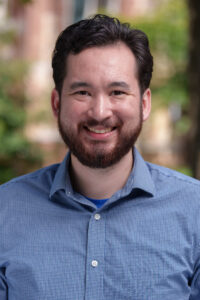
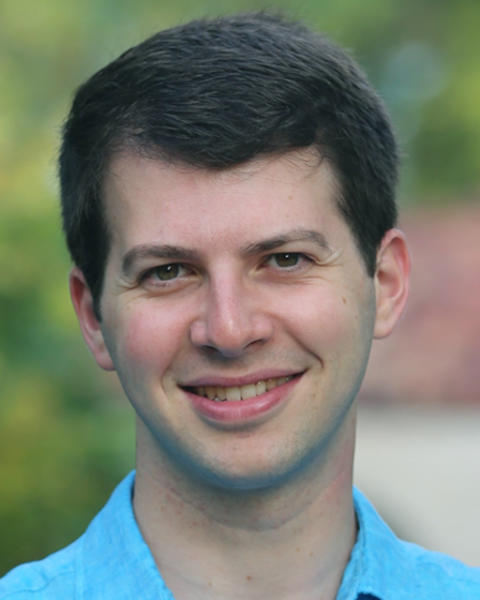
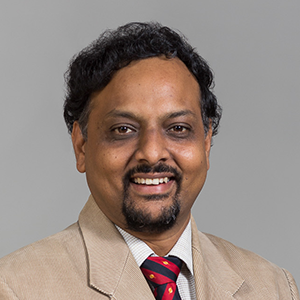
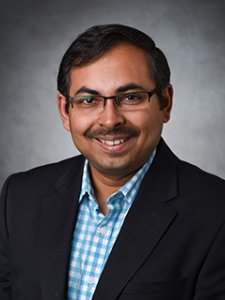
Denny Yu is an Associate Professor at the Edwardson School of Industrial Engineering, Purdue University. His work bridges human factors, neuroergonomics, and healthcare safety through advanced sensor systems and AI. Primary Affiliation : Edwardson School of Industrial Engineering, Purdue University Research Themes : Surgical ergonomics, autonomous vehicle human factors, cognitive workload assessment, multimodal physiological sensing Dr. Yu's research focuses on neuroergonomics and human-robot interaction , particularly in surgical and transportation contexts. His team develops sensor-based systems for workload monitoring, including: EEG-eye tracking fusion for situation awareness Wearable exoskeletons for surgical posture support Computer vision tools for lifting task risk analysis Smart infusion pump usability frameworks AI-driven surgical coaching systems Recent publications emphasize deep learning applications in soft tissue deformation estimation and real-time adaptive systems for robotic surgery augmentation. His work spans both occupational health (veterinary surgeons, airport workers) and medical device innovation domains.
Dr Elisabeth Williams is a Senior Lecturer in Sport and Exercise Sciences at Swansea University's School of Engineering and Applied Sciences. Specializing in biomechanics, her research bridges contact sports injury prevention and forensic science, with particular focus on head impact dynamics in rugby union and bloodstain pattern analysis. She co-founded the traumatic head injury research network and led the 2020 Women's Rugby Union Global Survey with 2000+ responses across 62 countries. Her research spans two distinct domains: Sports Biomechanics : Developing instrumented mouthguards for head impact telemetry, analyzing sex differences in neck strength, and creating neck training interventions to reduce concussion risk in female athletes Forensic Science : Innovating in bloodstain pattern analysis through motorized droplet generation devices, computational modeling of blood dynamics, and standardizing forensic reconstruction techniques Dr Williams contributes to academic training through modules like SR-254 Technology and Innovation in Injury Mechanics and EG-238 Experimental Studies for Medical Engineers. She supervises multiple PhD and MSc projects related to head acceleration in men's and women's rugby, collaborating with Dr Hari Arora, Prof Melitta Mcnarry, and industry partners.
Matthew B. Panzer serves as Associate Dean for Graduate Education and Post-Doctoral Affairs at the University of Virginia's School of Engineering and Applied Sciences, holding professorships in Mechanical & Aerospace Engineering and courtesy in Biomedical Engineering. As Deputy Director of the Center for Applied Biomechanics, he leads research in impact biomechanics and injury prevention. Education: B.S. in Mechanical Engineering, University of Waterloo, 2003 M.S. in Mechanical Engineering, University of Waterloo, 2006 Ph.D. in Biomedical Engineering, Duke University, 2012 Research Focus: Panzer's work employs computational and experimental methods to investigate high-rate non-linear mechanics in tissue mechanics, impact biomechanics, vehicle crashworthiness, military blast/ballistics, and sports injury. Current projects include traumatic brain injury mechanisms in football helmet impacts, biological tissue characterization, human body model development for automotive safety, and protective system design. His approach integrates finite element modeling with experimental validation to translate biomechanical findings into clinical and safety applications. Publication Trends: Recent work (2022-2025) emphasizes brain injury metrics, sex-specific biomechanical responses, and finite element model validation across automotive, sports, and military contexts. Key themes include rotational loading effects, biofidelic model development, and injury risk function derivation, demonstrating strong interdisciplinary integration of neuroscience, engineering, and computational science. Awards: Shannon Fellow (2024-2027) Copenhaver Fellow (2023) MAE Early Career Researcher of the Year (2021, 2022) UVA Research Achievement Award (2019) MAE Young Research of the Year (2018, 2019) Grants and Teaching: Panzer has secured over 40 research grants as Principal Investigator from federal agencies and industry partners. He teaches graduate courses including MAE 6710: Finite Element Analysis (annually since 2015), MAE 7030: Injury Biomechanics, and MAE 6952: Impact Mechanics, mentoring graduate students in biomechanics research despite no specific advisees listed in source materials. Laboratory Leadership: At the Center for Applied Biomechanics, Panzer directs teams conducting experimental testing and computational modeling to advance injury mechanism understanding and develop protective technologies for automotive, sports, and military applications.
Jon Heiselman is a Research Assistant Professor in the Department of Biomedical Engineering at Vanderbilt University School of Engineering. He serves as Associate Director of the Master of Engineering in Surgery and Intervention Program and leads research in image-guided surgical technologies. His work focuses on soft tissue deformation modeling, augmented reality applications, and computational frameworks for precision surgery. Education: PhD in Biomedical Engineering (Vanderbilt University, 2020) Advisor: Michael Miga, Harvie Branscomb Professor Research interests span image-guided surgical navigation, deformable registration algorithms, and digital twin modeling for therapeutic forecasting. Articles highlight advancements in soft tissue deformation correction, augmented reality integration, and machine learning approaches for real-time surgical guidance. Current affiliations include Vanderbilt's Biomedical Modeling Laboratory (BML) and the VISE Steering Committee. He contributes to NIH-funded training programs and has received recognition for his work in surgical data science and computational oncology.
Wali Inam is a Researcher at the Faculty of Natural Sciences and Technology of Åbo Akademi University. Their work focuses on Pharmacy Solutions for health , with a strong emphasis on Nanotechnology , Materials Science , and Drug Delivery . They have contributed to the understanding of nanoparticle behavior and characterization techniques. Current Affiliation : Åbo Akademi University, Faculty of Natural Sciences and Technology Contact : wali.inam@abo.fi Research interests include: Nanoparticle Characterization (Dynamic Light Scattering, Transmission Electron Microscopy) Microfluidics for nanoprecipitation and encapsulation processes Stability Evaluation of nanoformulated proteins Electrokinetic Properties of polymeric nanoparticles Molecular Dynamics simulations in nanoscale assembly Buffer Compatibility in nanoparticle systems Recent publications highlight their work in Nanostructured Materials (100% relevance), Particle Characterization (93% relevance), and Flow Dynamics (100% relevance). Their contributions align with Sustainable Development Goals related to health and well-being.
Jordan Cotler is an Assistant Professor of Physics at Harvard University, affiliated with the Department of Physics within the Faculty of Arts and Sciences. He holds a BS in physics and mathematics from MIT (2015) and a PhD in physics from Stanford University (2020). Before joining Harvard's faculty, he served as a Junior Fellow at the Harvard Society of Fellows from 2020 to 2024. His research focuses on the intersection of quantum information, computation, and spacetime physics. Key interests include quantum algorithms for analyzing many-body and quantum gravitational systems, information-theoretic frameworks for chaotic dynamics, and non-perturbative methods in quantum cosmology and field theory. Cotler's work has advanced quantum algorithm design for experimental platforms and contributed to understanding black hole microstructure and cosmological spacetimes. He has been recognized with prestigious early-career awards, including his Harvard Society of Fellows Junior Fellowship. His publications span foundational topics such as quantum gravity, holography, computational complexity, and quantum chaos, reflecting a multidisciplinary approach to theoretical physics.
Rahul Jain is a Professor in the Department of Computer Science at the National University of Singapore (NUS), School of Computing. He was promoted to full Professor from January 2020, having previously served as Associate Professor (July 2013-July 2013) and Assistant Professor (November 2008-July 2013). He is also a Principal Investigator at the Centre for Quantum Technologies (CQT), Singapore since November 2008. Dr. Jain earned his Ph.D. in Computer Science from Tata Institute of Fundamental Research, Mumbai (2003) and B.Tech. in Electrical & Electronics Engineering from Indian Institute of Technology, Mumbai (1997). Prior to joining NUS, he conducted postdoctoral research at UC Berkeley (2004-2006) and at the Institute for Quantum Computing, University of Waterloo, Canada (2006-2008). His research spans quantum computation, information theory, complexity theory, communication complexity, and cryptography. Dr. Jain has made significant contributions to quantum information theory, particularly in quantum communication complexity, quantum key distribution, and quantum algorithms. His work bridges theoretical computer science with quantum information processing, exploring fundamental limits of quantum computation and communication. His research demonstrates strong expertise in both theoretical proofs and practical applications of quantum information principles. Analysis of Dr. Jain's recent publications (2022-2025) reveals a consistent focus on quantum cryptography foundations, quantum communication protocols, and quantum information theory. His work frequently appears in top theoretical computer science venues including FOCS, STOC, and QIP, as well as leading journals like IEEE Transactions on Information Theory. Key themes include non-malleable quantum codes, quantum state redistribution, quantum communication complexity, and quantum cryptographic protocols with rigorous security proofs. Award under the VISITING ADVANCED JOINT RESEARCH FACULTY SCHEME (VAJRA) 2017-18 by Department of Science and Technology, Government of India BEST of 2016 by ACM Computing Reviews Young Researcher Award, National University of Singapore, 2012 Best paper award at STOC 2010 IBM Distinguished Dissertation Award, 2005 TAA-Sasken Best Thesis Award, 2005-2006 Dr. Jain has supervised numerous graduate students who have secured positions at Harvard University, IBM, JPMorgan Chase, University of Waterloo, and other prestigious institutions. His research is supported by significant grants including the VAJRA Faculty Scheme award. He serves as Associate Editor for the Journal of Computer and System Sciences and on program committees for major conferences including ITCS 2025, FOCS 2022, and QIP 2022-2014. At CQT, he leads research in quantum information theory and quantum algorithms, contributing to Singapore's position as a regional hub for quantum computing research.
Nilanjan Ray Chaudhuri is an Associate Professor of Electrical Engineering at Pennsylvania State University , affiliated with the Institute of Energy and the Environment (IEE) . His research focuses on power system dynamics and control , including wide-area monitoring systems, power electronics integration, renewable energy systems, and grid resilience. He has been recognized as an IEE Fellow and has contributed to projects like Smart Traction Systems for Weak Power Grids . Research Interests : Power system dynamics and control Wide-area monitoring systems Renewable energy integration (wind, solar) FACTS and HVDC systems Cascading failure analysis Cyber-physical security Recent Contributions : His work emphasizes grid stability in high-renewable systems, cascading failure mitigation , and frequency support from grid-forming converters. Publications (2023–2025) highlight advancements in control strategies for inverter-dominated grids, cyber-physical attack resilience, and fast simulation methods for dynamic failures. Grants & Awards : Selected grants include DOE-funded projects on grid modernization and resilience. Awards include IEE Fellow (2024) and recognition for student mentorship (e.g., 2020 Department of Energy Collegiate Wind Competition). Labs & Teams : He leads research in power grid resilience and collaborates with industry partners on MTDC grid control and wide-area monitoring solutions.
Abey Campbell is an Assistant Professor in Computer Science at the School of Computer Science, University College Dublin. He holds roles such as Deputy Programme Director for Computer Science, Director of UCD VR Lab, and 1st Year Stage Coordinator. His research focuses on Augmented Reality (AR), Virtual Reality (VR), Mixed Reality (MR), and Multi-Agent Systems with applications in education, healthcare, and human-computer interaction. Campbell has coordinated modules like Augmented and Virtual Reality, Computer Graphics, Game Development, and Mobile Computing. He earned his BSc and PhD in Computer Science from University College Dublin. His work explores touchless interaction technologies, machine learning agents in STEM education, and ethical implications of emerging technologies. Notable contributions include RenderKernel for real-time rendering systems and studies on AR's role in decision support systems. Campbell has secured a grant from Enterprise Ireland for collaborative design documentation and participates in professional activities like peer reviewing for Frontiers in Virtual Reality and IEEE conferences. His collaborative projects include developing AR tools for veterinary training and evaluating immersive VR experiences in nursing education. The UCD VR Lab under his direction focuses on applied research in spatial computing and interactive systems.
Dr. Amneet Bhalla serves as an Associate Professor in the Department of Mechanical Engineering within the College of Engineering at San Diego State University (SDSU). His primary contact email is asbhalla@sdsu.edu, with office located in Engineering Building Room 323-G, and phone number (619) 594-2043. Education: Ph.D., Mechanical Engineering, Northwestern University (2013) M.S., Mechanical Engineering, Indian Institute of Technology Kharagpur (2009) B.S., Mechanical Engineering, Indian Institute of Technology Kharagpur (2004-2008) Postdoctoral Training: University of North Carolina at Chapel Hill (Mathematics Department) and Lawrence Berkeley National Laboratory (Computational Research Division) Research Interests: Dr. Bhalla develops advanced numerical methods and high-performance computing techniques for computational fluid dynamics (CFD) and fluid-structure interaction (FSI) problems. His work spans aquatic locomotion, renewable energy device modeling, multiphase flows, vehicular aerodynamics, and bioengineering applications. He creates mathematical models to interrogate underlying flow physics for engineering design optimization, with emphasis on open-source software development through the IBAMR library. Publication Trends: Recent publications (2023-2025) focus on robust numerical frameworks for multiphase flows with phase change, acoustic streaming, and fluid-structure interaction. Key themes include mass conservation in level set methods, adaptive mesh refinement, and solvers for non-isothermal gas-liquid-solid systems. Applications range from aquatic locomotion and renewable energy devices to microfluidics and biomedical flows, demonstrating commitment to both theoretical advances and practical engineering solutions. Scientific Awards: No awards mentioned in the provided text Advising and Grants: Dr. Bhalla secured an NSF CAREER award (2023) for "Consistent Continuum Formulation and Robust Numerical Modeling of Non-Isothermal Phase Changing Multiphase Flows". As PI of the CFD Lab, he mentors graduate students in computational mechanics, leveraging prior industrial experience at ExxonMobil Upstream Research Company. His research integrates industrial practicality with academic rigor through collaborations with national laboratories. Laboratory and Team: The Computational Fluid Dynamics and Flow Physics Laboratory (CFD Lab) develops the open-source IBAMR software—a distributed-memory parallel implementation of the immersed boundary method with adaptive mesh refinement. The lab emphasizes transparency, community engagement, and reproducibility, establishing cross-institutional collaborations while advancing computational methods for complex flow phenomena in engineering and biological systems.
Goran S. Ristic is a Full Professor at the Faculty of Electronic Engineering, University of Nis, Serbia, since 2004. He holds a PhD in Semiconductor Physics from the same institution (1998), preceded by a master's (1994) and bachelor's degree (1990) in Physics. His research focuses on semiconductor materials, radiation effects on electronic devices, and dosimetry systems. He has published widely in journals like Journal of Applied Physics and IEEE Transactions , with over 69 papers in impact-factor journals. His work includes developing microcontroller-based dosimeter systems and studying defect behaviors in MOSFETs under irradiation and high electric fields. Key research interests include radiation-induced defects in semiconductors, annealing processes, and applications in medical dosimetry. He leads the Applied Physics Laboratory (website: http://www.apl.elfak.rs/ ). Current projects involve 1 national and 1 international collaboration. His contributions span semiconductor device reliability, gas breakdown measurements, and radiation-hardened electronics. Contact details: Email , Phone: +381 (18) 529-329, Address: Aleksandra Medvedeva 4, 18104 Nis, Serbia.
Inna Ponomareva is Professor and Director of Graduate Admissions in Physics at the University of South Florida. She leads the Computational Nanoscience Lab, specializing in ferroic materials using atomistic simulations and machine learning. Research explores phase transitions, nanoscale phenomena, and caloric effects in functional materials. Current group includes 4 researchers focusing on: Halide perovskite spin physics Ultra-thin ferroelectric behavior Multicaloric effects Recent publications demonstrate advances in controlling spin textures via strain and intercalation in 2D materials. Teaches quantum mechanics and computational physics courses. Recognized with SIGMOD Distinguished Reviewer Award and ELIDEK grants.
Dr. Kimberly Tam is an Associate Professor in Cybersecurity at the School of Engineering, Computing and Mathematics, University of Plymouth. She specializes in maritime cybersecurity, focusing on ship IT/OT/IoT security, port infrastructure protection, autonomous vessels, offshore renewable energy systems, and smartphone security. She is affiliated with the Alan Turing Institute as the Theme Lead for Marine and Maritime. Her research addresses critical challenges in maritime autonomy, cyber-physical systems, and regulatory frameworks (e.g., IMO MASS). She has supervised 7 PhD students and 7 research staff across multiple projects, contributing to cyber resilience training and risk assessment tools like CERP and MaCRA. Her work emphasizes practical applications, such as penetration testing frameworks (BridgeInsight) and cost-benefit analysis methods for energy infrastructure cybersecurity. Teaching responsibilities include leading modules like Security Operations & Incident Management , Cyber-Physical Systems Security , and unmanned maritime systems operations. She has developed specialized courses in Hong Kong and Sri Lanka, integrating industry-relevant training. Her recent publications (2023–2025) highlight advancements in adversarial AI defense, ransomware mitigation in maritime contexts, and digital twin technologies for port optimization. She collaborates internationally, hosting visiting researchers from China, Turkey, and Norway, and supports early-career professionals through work experience programs.
Francesco Greco is a Research Fellow and Ph.D. student at the University of Bari Aldo Moro's Computer Science Department, actively contributing to the Interaction, Visualization, Usability & UX (IVU) Laboratory under Prof. Maria Francesca Costabile. He completed a visiting research position at King's College London's Cybersecurity (CYS) group from October 2023 to March 2024 under Prof. Luca Viganò's supervision. His academic qualifications include: Master's degree in Computer Science (2022, University of Bari, full marks with honors) Bachelor's degree in Computer Science and Digital Communication (2020, University of Bari - Taranto, full marks with honors) Greco's research centers on Human-Computer Interaction and Usable Security , with specialized expertise in End-User Development , Internet of Things security , Computer Vision , and eXplainable AI for cybersecurity . His work develops human-centered security tools that translate technical findings into actionable user protections, particularly through phishing detection systems that generate intuitive explanations. Analysis of his 15 recent publications (2023-2025) reveals a cohesive research trajectory focused on XAI-driven security interventions . Key themes include timing optimization for phishing warnings, human factors in cybersecurity incidents, and LLM-based educational tools. His work consistently bridges theoretical HCI principles with practical security applications, as demonstrated by tools like APOLLO for phishing email analysis. Greco actively collaborates within the IVU Lab ecosystem and maintains international partnerships, including his recent work at King's College London. His research output demonstrates significant contributions to usable security frameworks and cybersecurity education methodologies.
Jun Bai is an Assistant Professor in the Department of Computer Science at the University of Cincinnati's College of Engineering and Applied Science. His research focuses on Machine Learning, Deep Learning, Medical Image Analysis, AI-driven diagnostics for cancer and diseases, and drug discovery. He holds a Ph.D. in Computer Science and Engineering from the University of Connecticut (2023), an M.S. in Computer Science from the University of Dayton (2019), and an M.S. in Interdisciplinary Studies in Education (2015). His work emphasizes applying AI to healthcare challenges, such as robust mammogram classification, 3D biomedical image registration, and peptide generation for drug discovery. Recent studies include hybrid transformer models for medical imaging and weakly-supervised systems for prostate cancer diagnosis. His computational methods span molecular dynamics simulations and graph neural networks. Despite his prolific research output, no specific grants, advising roles, or lab affiliations are explicitly listed in the provided data. Contact: Rhodes Hall 891, Cincinnati, OH | Email: baiju@ucmail.uc.edu