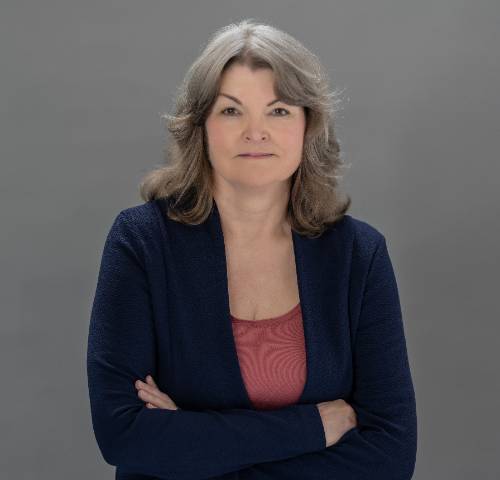
Cindy M. SchaefferView profile
Professor
Dr. Cindy M. Schaeffer is a Professor in the Department of Psychiatry at the University of Maryland, Baltimore School of Medicine, where she also serves as a Child-Clinical Psychologist. Her work centers on developing evidence-based interventions for youth involved in juvenile justice and child protective service (CPS) systems, addressing complex issues like criminal offending, substance abuse, trauma, and family violence. Education: Post-Doctoral Fellow, Prevention Science, Johns Hopkins Bloomberg School of Public Health (2000-2002) Ph.D. in Child-Clinical Psychology, University of Missouri (2000) Pre-doctoral internship, University of Maryland Division of Child and Adolescent Psychiatry (1999-2000) Research Focus: Dr. Schaeffer specializes in adapting Multisystemic Therapy (MST) for high-risk populations, including MST-Building Stronger Families for CPS-involved families with substance abuse and MST-IPV for cases involving intimate partner violence. Her work integrates ecological frameworks to address school dropout, deviant peer relationships, and ineffective parenting through family-based interventions and mobile health technology. Publication Trends: Her research (2005-2019) demonstrates consistent innovation in MST adaptations, juvenile justice interventions, and digital health integration. Key themes include real-world implementation of evidence-based treatments, mechanisms driving behavioral change in drug courts, and long-term outcomes for serious juvenile offenders. Grants and Leadership: As Principal/Co-Principal Investigator, she leads federally funded projects including NIJ research on reducing school discipline disparities, NIMH mobile technology enhancements for MST, Annie E. Casey Foundation evaluations of IPV interventions in child maltreatment, and NICHD studies on preventing problem sexual behavior. Professional Networks: She actively collaborates with MST Services (mstservices.com) and MST Canada (mstcan.com), providing clinical consultation to MST teams nationwide while developing scalable interventions for juvenile justice and child welfare systems.