Dr. Elaine Elizabeth Gomez Guevara is a Lecturer in Evolutionary Anthropology at Duke University's Trinity College of Arts & Sciences. Her research examines evolutionary mechanisms of aging, primate genomics, and human-chimpanzee epigenetic differences, with fieldwork focused on lemur adaptations in Madagascar. Her interdisciplinary work integrates genomics, epigenetics, and comparative anatomy to study brain evolution, dietary adaptations in primates, and conservation implications of genetic diversity. Current research includes NSF-funded projects on primate brain epigenetics and Alzheimer's pathology modeling in primates. She leads initiatives to increase diversity in evolutionary anthropology through community-building and mentorship. Publications demonstrate expertise in epigenetic clock development, neurogenetic evolution, and fieldwork methodologies. Recent work examines pedagogical approaches to combat racial essentialism in biology education.
Dr. Karen A. Bonuck is a Professor at Albert Einstein College of Medicine, holding joint appointments in the Departments of Family and Social Medicine, Obstetrics & Gynecology and Women's Health, and Pediatrics (Developmental Medicine). Her research focuses on childhood sleep health, developmental disabilities, and inclusive research practices. She leads multiple NIH- and foundation-funded projects, including the D2/R3 initiative addressing barriers to disability-inclusive research. As Co-Director of the Rose F Kennedy University Center for Excellence in Developmental Disabilities, she advocates for disability rights and Long COVID's impact as a mass disabling event. Her work bridges clinical practice, public health, and policy, with notable contributions to sleep education programs and vaccine perception studies in underserved populations. Research Interests: Sleep disorders in early childhood, co-occurrence of sleep and language disorders, disability inclusion in research, early childhood feeding interventions, and health disparities in developmental medicine. Her mixed-methods approach spans randomized controlled trials (RCTs), cohort studies, and policy analyses. Key Projects: Reducing Researcher Roadblocks to Including People with Disabilities in Research (D2/R3) - Mixed-methods study funded by NCATS (2023-2030) University Center of Excellence on Developmental Disabilities (UCEDD) - Co-Director since 2016 COVID-19 vaccine advocacy and disability burden analysis - Highlighted in medical news and blogs Head Start sleep health literacy program - R01-funded intervention (2015-2020) Teaching: Leads LEND core curriculum and Einstein College of Medicine’s Impact course, emphasizing disability awareness and interdisciplinary approaches. Labs/Teams: Core team member of the Einstein-Montefiore Institute for Clinical and Translational Research, collaborating with multidisciplinary groups on disability-inclusive research and policy initiatives.
Prof. Dr. Zora Jachova is a Full Professor at the Institute for Special Education and Rehabilitation, affiliated with both the Faculty of Philosophy and the Medical Faculty at Ss. Cyril and Methodius University of Skopje. She has held roles as department head, editor of academic journals, and leader of educational cycles. Her career spans over three decades, beginning with defectology studies in Belgrade and advancing through academic ranks from assistant professor (1994) to full professor (2011, reappointed 2016). She has served on national and international editorial boards, including Human Research in Rehabilitation and Special Education and Practice. Education: Defectology Specialist (Belgrade, 1991), Master’s (1996), and PhD (2001) in Special Education from Skopje. Research Focus: Inclusive education, sign language standardization, cochlear implant integration, and hearing impairment pedagogy. Her publications (70+ articles) and 17 research projects address audiology, educational policy, and disability inclusion. She has presented globally, with studies on Macedonian sign language, assistive technologies, and inclusive culture. Fluent in multiple languages, she has contributed to national curricula and disability policy. Grants/Projects: Coordinated EU-funded initiatives on inclusive education and employment for disabled individuals. Led Macedonia’s pilot study on workplace accessibility for disabled persons (2006).
João Miguel Lima Ferreira is an Adjunct Professor at the School of Health, Polytechnic Institute of Setúbal. He holds a postgraduate degree in Health Services Management and specialized training in Linguistics and Speech Therapy. His roles include Year Coordinator for the 4th year of the Speech Therapy degree and Team Member-Mentor at the E³UDRES² European University. Education: Bachelor's in CESE Special Education (Piaget Institute, 2000) Bachelor's in Speech Therapy (Alcoitão School of Health, 1996) Advanced Course in Voice, Communication, and Language (University of Lisbon) Research focuses on Linguistic Variation, AAC (Augmentative and Alternative Communication), and Speech Therapy pedagogy. He actively participates in projects like InclusiveCom - Comunicação para todos, com todos (Principal Investigator) and has contributed to 17 events and 6 international conferences. His work emphasizes interdisciplinary approaches to healthcare and education. Key awards include the 2015 Recognition as a Speech Therapy Specialist and two Associative Merit Declarations (2003, 2018). He supervises undergraduate theses and mentors entrepreneurship projects through IPStartUp. Labs/Teams: Member of the Centro Interdisciplinar de Investigação Aplicada em Saúde (IPS) and previously at the University of Lisbon's Linguistics Center (CLUL).
Yi Ting Huang is a Professor in the Department of Hearing and Speech Sciences at the University of Maryland. She holds a Ph.D. in developmental psychology from Harvard University and completed postdoctoral training in cognitive psychology at the University of North Carolina at Chapel Hill. Her research focuses on language processing in adults and children, with applications to populations affected by poverty, cochlear implants, and pandemic-related isolation. Ph.D. Psychology, Harvard University, 2009 M.A. Psychology, Harvard University, 2005 B.A. Psychology and Economics, Northwestern University, 2003 Her work investigates the intersection of language, cognition, and social development, particularly how past experiences shape language comprehension and strategies in children from diverse backgrounds. She employs eye-tracking while listening to study real-time language processing in both literate and illiterate populations, emphasizing computational demands and learner resources like language experience and cognitive capacity. Recent publications explore dialect differences in African American English-speaking children, auditory signal degradation effects on syntactic parsing, semantic prediction in cochlear-implant users, socioeconomic disparities in language development, and statistical learning in grammatical category acquisition. Her studies also address scalar implicatures, discourse-pragmatic interactions, and neurocognitive mechanisms in lexical processing. Principal Investigator, UMD Grand Challenges team project on “Fostering Inclusivity through Technology” Director, Maryland Language Science Center Co-Principal Investigator, NSF-funded Language Science Station at Planet Word Museum Associate Editor, Language Acquisition Editorial Board, Journal of Experimental Psychology: Learning, Memory, and Cognition She advises current and former graduate students, including Alix Kowalski, Rachel Adler, Zoe Ovans, and Michelle Erskine, and has taught courses such as Introduction to Psycholinguistics and Speech and Language Development in Children.
Dr. Ding Chen is a Senior Lecturer in Corporate and Commercial Law at the School of Law, University of Sheffield. He holds a PhD from the University of Manchester, an LLM from the University of Sheffield, and additional LLM and LLB degrees from Renmin University and Zhengzhou University respectively. His work bridges legal and economic frameworks, focusing on institutional changes and their impact on financial systems in China. Research interests include: Law and Development Corporate Governance Company Law Financial Regulation New Institutional Economics He has presented at major international conferences such as SIOE and SOAS, addressing topics like Fintech in China and SOEs reform challenges. Grants from the ESRC support his projects on informal finance in China and institutional changes in legal systems. He is a member of the Sheffield Institute of Corporate and Commercial Law, with external examiner roles at SOAS and Aberdeen Law School. Teaching emphasizes critical thinking and independent analysis in corporate law and governance courses.
Amanda Owen Van Horne is a Professor and MA Program Director in the Department of Communication Sciences & Disorders at the University of Delaware's College of Health Sciences. Her research bridges clinical practice and scientific inquiry in child language development, with emphasis on evidence-based interventions for developmental language disorders. Education: Ph.D., Purdue University, 2004 M.A., University of Texas at Dallas, 1999 B.S., University of Texas at Dallas, 1997 Research Focus: Dr. Van Horne's work centers on grammar/syntax acquisition and morphological development in children with language disorders. She pioneers computational modeling approaches to intervention design and champions implementation sciences to translate research into clinical practice. Her innovative studies integrate language goals with academic curricula, particularly science education, and examine telehealth delivery systems. Publication Trends: Analysis of her 15 most recent publications reveals expanding focus on telepractice feasibility (2025), curriculum-embedded interventions (2023-2024), and critical examination of diversity in clinical materials (2021). Her work increasingly addresses implementation barriers and promotes international research collaboration for developmental language disorder. Scientific Recognition: 2022-2024 Editor-in-Chief of Language, Speech, and Hearing Services in Schools 2022 UD College of Health Sciences Diversity Advocacy Award 2018 ASHA Editor's Award for landmark intervention study Multiple mentorship awards including SROP Outstanding Mentor (2016) NIDCD/NIH grant reviewer since 2016 Leadership & Mentorship: As MA Program Director, she shapes future clinicians while maintaining active research mentorship. Her NIH review committee service influences national funding priorities. The 2016 SROP mentorship award and 2013 Outstanding Undergraduate Honors Advisor recognition demonstrate sustained commitment to student development across career stages. Lab Leadership: Director of the Treatment Efficacy & Language Learning (TELL) Lab, which recently launched the Language Research Registry to accelerate participant recruitment. The lab's UDaily feature highlights their mission to transform understanding of language impairment's impact on academic performance through innovative intervention studies.
Tara Duffy is the Associate Dean for Belonging and Engagement and a Teaching Professor at Northeastern University's Department of Marine and Environmental Sciences within the College of Science. Her research focuses on how marine organisms, particularly fish, respond to pollutants at genetic, individual, and population levels, with significant work in aquaculture systems. She teaches courses in marine sciences, oceanography, food security, and science communication, emphasizing effective scientific communication in her pedagogy. Prior to Northeastern, she taught at Stony Brook University and the Louisiana Universities Marine Consortium, with professional experience at institutions like the U.S. Geological Survey and Scottish Association for Marine Science. She actively promotes LGBTQIA+ inclusion through initiatives like the 'You Are Welcome Here' campaign in her department. Though she does not directly mentor graduate students, she contributes to Northeastern's Three Seas Program for marine biology master's students. Her work bridges environmental science, toxicology, and marine conservation, addressing ecological challenges in aquatic ecosystems. Dr. Duffy's research trends span endocrine disruptors' impacts on fish physiology, geographic variation in sex determination mechanisms, and interactions between environmental stressors like hypoxia and pollutants. Her recent articles highlight studies on salmon, sturgeon, and anchovy responses to chemical contaminants, contributing to aquaculture sustainability and marine conservation strategies. Scientific Contributions: Over 15 peer-reviewed articles on fish biology, toxicology, and marine environmental science. Teaching Innovations: Development of courses integrating food security and marine communication. Advocacy: Leadership in fostering inclusive academic environments through diversity initiatives. Labs and Collaborations: Associated with the Marine Science Center at Northeastern, collaborating with institutions on aquaculture and pollution research. Her work often combines field studies with molecular biology techniques to assess ecological resilience.
Sarah Hope Lincoln is an Assistant Professor in Psychology at Case Western Reserve University, specializing in social dysfunction associated with psychiatric disorders. Her research integrates psychopathology and social neuroscience to investigate social dysfunction in individuals with or at risk of psychiatric disorders, particularly psychosis. She holds a Ph.D. in Psychology and leads a lab exploring neurodevelopmental models of social dysfunction, treatment efficacy, and early identification of psychiatric disorders in young adults. Her work includes projects such as the Social Perception Study , examining auditory perception’s role in social functioning and psychiatric symptoms. Key research interests involve racial disparities in psychosis, social support mechanisms, and the neural correlates of social cognition. She has contributed to over 30 peer-reviewed articles since 2010, focusing on topics like racial health inequities, cognitive therapy interventions, and neuroimaging studies of social processes. Dr. Lincoln’s articles emphasize translational research, linking clinical outcomes to neurobiological mechanisms. Her 2021 study on social determinants of psychosis highlighted systemic racial disparities, while 2024 work analyzed ethnoracial risk variations. She advocates for ethical inclusion of minors in psychiatric research and has pioneered cognitive training interventions for at-risk youth. No formal scientific awards are cited, but her extensive publication record underscores her scholarly impact. She advises no listed students but collaborates on grants investigating social cognition and psychosis. Her lab actively engages in interdisciplinary projects bridging clinical and basic neuroscience research.
Ludmila Tyler is a Senior Lecturer II in the Department of Biochemistry and Molecular Biology at the University of Massachusetts Amherst. She holds a PhD from Duke University and completed postdoctoral training at the USDA and University of California Berkeley. Her research focuses on plant cell walls, bioenergy crop improvement, and grass developmental biology using Brachypodium distachyon as a model system. Her work emphasizes understanding bioenergy-relevant traits like cell wall composition and conversion efficiency, combining phenotyping with genomic analysis to map genetic loci. She collaborates on microbial fermentation assays and pan-genome studies to advance sustainable biofuel production. Tyler also contributes to biochemistry education initiatives, including developing competency assessments and inclusive learning communities like ICABL. Her teaching and research lab integrates undergraduate training with advanced genetic and biochemical methods. Current efforts include community-driven educational frameworks and interdisciplinary approaches to address bioenergy challenges. No scientific awards are explicitly noted in the provided materials.
Dr. Lara Perez-Felkner is a Professor of Higher Education and Sociology at Florida State University (FSU) within the College of Education, Health, and Human Sciences. She holds affiliations with the Department of Sociology and the Center for Postsecondary Success. Her work focuses on mechanisms shaping access and persistence in underrepresented fields, particularly in STEM education and postsecondary pathways for marginalized groups. Education: Ph.D. and M.A. from the University of Chicago; B.A. from Wesleyan University. Leadership Roles: Co-Team Lead for AAAS SEA Change, Director of FSU’s NSF ADVANCE team (INCREASE), and former Co-Chair of the Latin* Faculty and Staff Collective. Research Interests: Dr. Perez-Felkner examines racial-ethnic, gender, and socioeconomic disparities in higher education, with a focus on STEM equity. Her work integrates developmental and sociological perspectives to propose systemic interventions. Key themes include institutional policies, mentorship, and curricular reforms to support underrepresented students. Publications highlight interventions to reduce gender gaps in computing and engineering, the role of community colleges in STEM degree attainment, and policy briefs advocating for equitable STEM pathways. Her work has been featured in Review of Educational Research , International Journal of STEM Education , and Science News for Students . Awards: Includes FSU’s Transformation through Teaching Award (2014), multiple Hardee Center Mentor Awards, and recognition as a SERN Mid-Career Fellow. Grants: Supported by NSF, Gates Foundation, Spencer Foundation, and others. Teaching & Mentoring: Courses include Sociology of Education and Student Development Theory. She has mentored dozens of students in collaborative research, emphasizing inclusive pedagogy and institutional change.
Denise Bodman is a Teaching Professor at Arizona State University's T. Denny Sanford School of Social and Family Dynamics, specializing in family processes, parenting, and human development with cross-cultural applications. Her work integrates positive psychology frameworks to examine resilience through family narratives and cultural contexts. Education Ph.D. Educational Psychology - Human Development/Statistics, Arizona State University M.S. Speech and Hearing Sciences, University of Arizona B.S. Psychology, Arizona State University Research Focus Dr. Bodman's scholarship centers on parenting dynamics and family resilience , emphasizing positive psychology constructs like hope, kindness, and forgiveness. Her investigations into family history narratives reveal their role in building individual esteem across cultures, notably through Beijing-based studies of parent-adolescent relationships. Current work examines pandemic impacts on family systems using digital trace data. Publication Trends Recent publications (2020-2022) analyze pandemic-era parenting challenges through Google Trends data and practical guides for caregivers, while foundational work includes encyclopedia entries on family sociology topics. Her research consistently bridges academic theory with public-facing applications, particularly in cross-cultural family dynamics and positive developmental frameworks. Academic Service Dr. Bodman advises student organizations including Volunteers in Community Organization and Family History, supervises honors theses (FAS 493), and serves as Parliamentarian for ASU Academic Senate. She chairs curriculum committees, leads conference workshops on hope-centered pedagogy, and co-directs the Children, Youth, and Family Google Trends Project analyzing parental concerns through digital footprints. Research Affiliations As a Hope Center Faculty Affiliate, she develops resilience-focused curricula while contributing to the Sanford School's mission through cross-disciplinary collaborations on family well-being metrics and cultural adaptation studies.
Rebecca Holt is a Research Fellow in the Department of Linguistics at Macquarie University, affiliated with the Hearing Research Centre and the Child Language Lab. She holds a PhD from Macquarie University (2020). Her research focuses on spoken language processing in children with hearing loss and adults learning English as a second language, employing methods like eye-tracking, EEG, and behavioral measures. Key areas include syntactic prediction, audiovisual speech processing, and phonological awareness. Her work spans 15 peer-reviewed articles (2014–2025), with recent emphasis on interdisciplinary frameworks for classroom interventions (L3 Assessment Framework) and neural responses to accented speech. Collaborations involve institutions like the Child Language Lab and projects funded since 2014. No awards are explicitly listed, but her research is widely cited in audiology and developmental linguistics. Education: PhD in Linguistics (Macquarie University, 2020) Labs/Teams: Child Language Lab, Hearing Research Centre Grants: Active since 2014 (Neural and behavioral evidence for children's learning of grammatical morphology)
Jan Kreider is a Guest Researcher in the Faculty of Science and Engineering at the University of Groningen, affiliated with the Pen group specializing in Theoretical Evolutionary Ecology. His work integrates mathematical modeling, field experiments, and molecular genetics to investigate evolutionary transitions in social behavior. His primary research focuses on the evolution of eusociality , examining how reproductive division of labor emerges in species like the allodapine bee Exoneura robusta . Key interests include phenotypic plasticity, maternal manipulation effects, and the coevolution of signaling systems in social insects. His methodological approach combines individual-based simulations with empirical validation. Recent publication trends reveal strong emphasis on theoretical frameworks for eusocial evolution , with recurring themes in offspring size manipulation, caste determination mechanisms, and challenges to monogamy-based inclusive fitness theories. His 2024-2025 outputs show increasing integration of molecular genetics with classic evolutionary models. Kreider actively collaborates within the Pen group and has presented findings on resource sharing dynamics at academic conferences. His experimental work centers on Exoneura robusta as a model system for understanding intraspecific variation in social behavior.
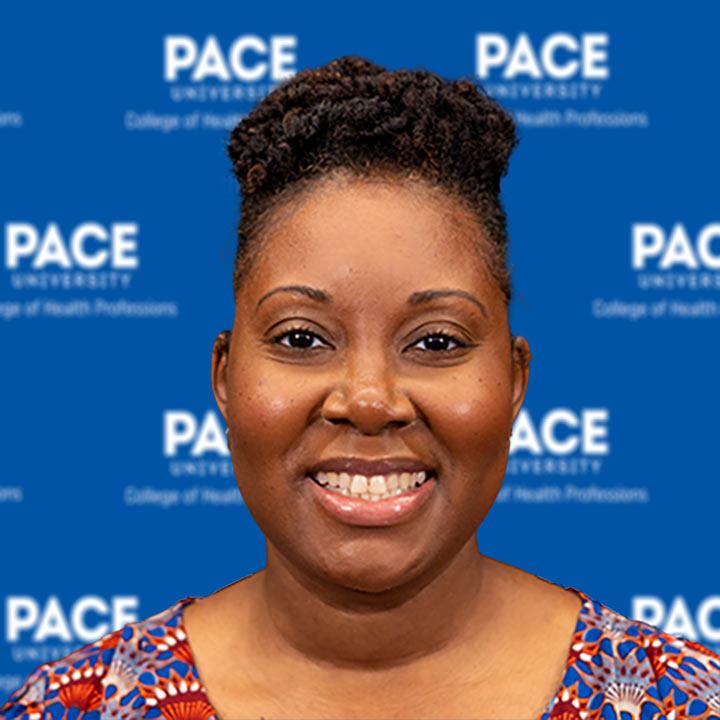
Kyomi Gregory-Martin, PhD, CCC-SLP, is an Associate Professor in the Department of Communication Sciences and Disorders at the College of Health Professions, Pace University, New York City. She teaches advanced courses in child language disorders, autism, phonologic disorders, and audiologic rehabilitation, and is actively involved in university service through multiple committees, including Diversity, Equity, and Inclusion (DEI), Tenure and Promotion, and Strategic Planning. Education: PhD in Communication Sciences and Disorders, Louisiana State University (2015) MA in Speech-Language Pathology, University at Buffalo, State University of New York (2007) BA in Communication Disorders, New Paltz State College, State University of New York (2005); Minor: Linguistics, Black Studies Her research centers on culturally responsive practices in speech-language pathology, with a focus on African American English speakers, dialect-informed assessment, and cultural humility. She investigates developmental language disorders in culturally and linguistically diverse populations and promotes interprofessional education and equity in clinical training. Her work emphasizes the integration of linguistic theory into clinical practice to improve diagnostic accuracy and treatment outcomes. The recent publications and presentations highlight a strong trend in advancing equity, inclusion, and cultural responsiveness in speech-language pathology. Her scholarly output spans clinical linguistics, diagnostic methodologies for language disorders in dialect speakers, and professional development frameworks grounded in cultural humility. She frequently addresses systemic barriers in service delivery and advocates for inclusive models in education and healthcare. Scientific Awards and Honors: Dean’s Award for Outstanding Scholarship and Research, College of Health Professions, Pace University (2024) Kenan Faculty Development Award (2019, 2022) Dean’s Award for Outstanding Teaching (2022) Editor’s Award, Journal of Speech, Language and Hearing Research (2020) Certificate of Recognition for Multicultural Affairs, ASHA (2023) Top 40 under 40, SUNY New Paltz Alumni (2017) Dr. Gregory-Martin has secured competitive grants and fellowships, including the Undergraduate Student-Faculty Research Program (2019) and ASHA Pathways Program (2017), supporting her mentorship and research on diversity in communication sciences. She actively mentors students through research collaborations and professional development initiatives, particularly through the Cultural Humility Ambassadors Program and NBASLH affiliations. Her leadership in curriculum development and clinical training emphasizes inclusivity and real-world applicability. She is a key contributor to national dialogues on equity in speech-language pathology, serving on ASHA committees and presenting at major conferences including ASHA, CAPCSD, and NBASLH. Her work with the National Black Association for Speech-Language Hearing and the Cultural Humility Conference underscores her role in shaping inclusive professional standards and practices.