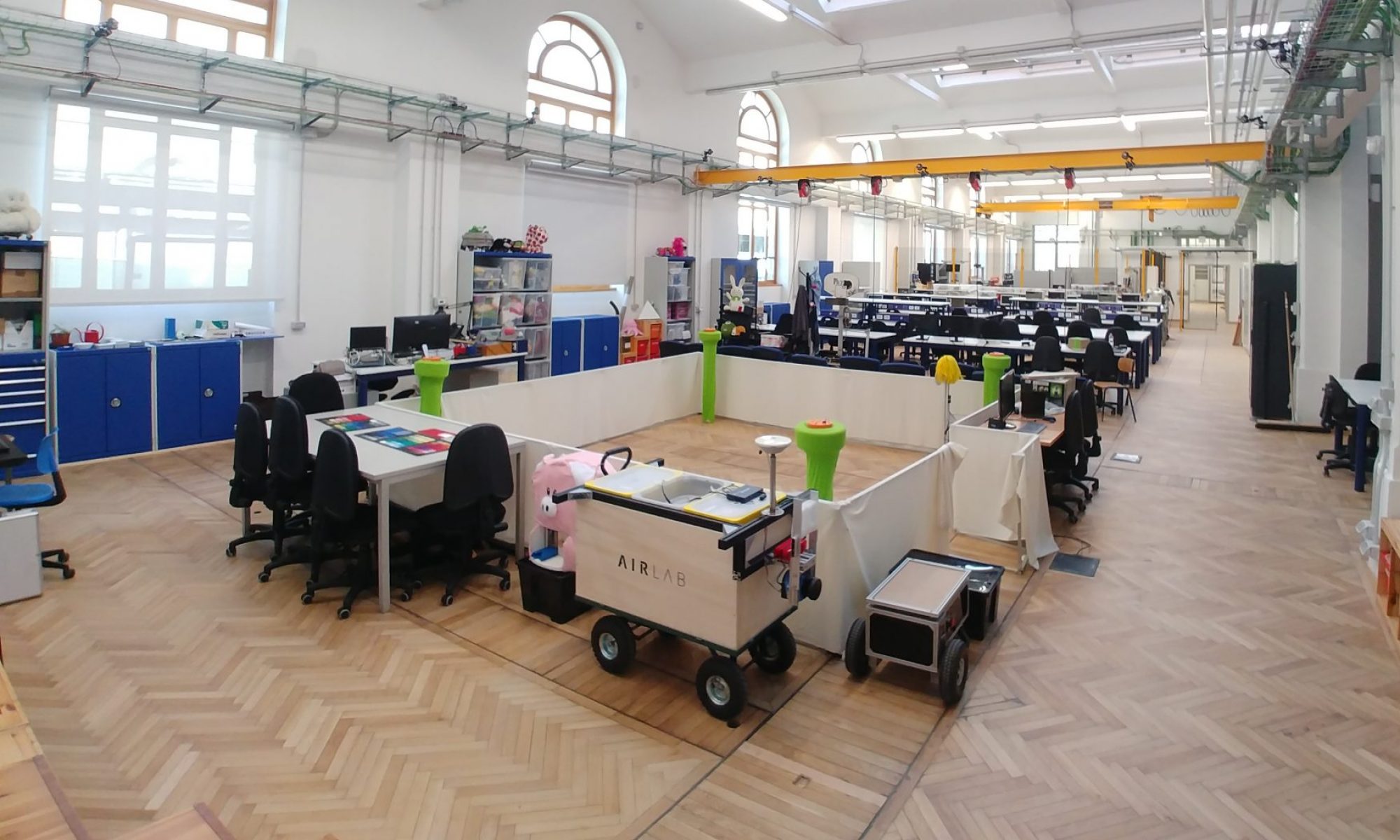
Andrea Bonarini is a Professor at the Department of Electronics, Information, and Bioengineering (DEIB) within the School of Industrial and Information Engineering at Politecnico di Milano. His research focuses on Artificial Intelligence , Robotics , and Human-Robot Interaction , particularly in assistive technologies for children with disabilities and autism therapy. Key Research Areas: Reinforcement Learning, Social Robotics, Affective Computing, Accessibility in Robot Design Notable Projects: Development of frameworks like Mushroomrl and datasets like POLIMI-ITW-S for robotics research His recent publications highlight advancements in playful robotics for neurodevelopmental disorders, emotion projection in non-bio-inspired robots, and safety experiments for small social robots interacting with children. He also contributes to ethical, social, and psychological challenges in robotics applications.
Donato Romano serves as Associate Professor at The BioRobotics Institute of Scuola Superiore Sant'Anna, Italy, where he coordinates the Bio-Robotic Ecosystems Lab and co-founded the spin-off company HUBILIFE srl. His interdisciplinary work bridges robotics, biology, and AI to develop biohybrid systems for biodiversity preservation, sustainable environmental management, and life support in extreme scenarios including space exploration. With over 90 publications and an H-index of 27 (Scopus, March 2025), he has established significant academic leadership through editorial roles across 12+ international journals. Romano's educational foundation includes advanced degrees with honors: an M.Sc. in Agriculture Science and Technologies (2014) and a PhD in BioRobotics (2018), both from Scuola Superiore Sant'Anna. His academic journey includes visiting scholar positions at Khalifa University and substantial industry-academia collaboration through HUBILIFE srl, which commercializes bioinspired devices for human daily life improvement. His research program focuses on bioinspired and biomimetic robotics with particular emphasis on animal-robot interaction, biohybrid systems, and natural intelligence. Key projects address critical global challenges: SENSORBEES develops biohybrid environmental surveillance for ecological monitoring; REGOLIFE investigates lunar soil-terrestrial organism interactions for space agriculture; and OCEAN ROBOCTO explores marine ecosystem solutions. This work demonstrates a strategic progression from fundamental behavioral studies toward applied ecological and extraterrestrial systems. Analysis of his recent publications reveals strong trends in AI-driven behavioral analysis, with deep learning increasingly applied to entomological studies and pest management. The research spans agricultural applications (precision monitoring traps, larval detection systems), ecological conservation (biodiversity surveillance), and extreme-environment adaptation (lunar regolith studies). A distinctive feature is the consistent integration of biohybrid approaches where living organisms and robotic systems create synergistic capabilities exceeding either component alone. Romano's scientific recognition includes election as Junior Fellow of the Italian Academy of Engineering and Technology (2025), the Lucani fuori dal Comune award (2024), and multiple best-thesis prizes. His editorial leadership spans high-impact journals including IEEE Transactions on Medical Robotics and Bionics and Pest Management Science, where he serves as Associate Editor. As principal investigator, Romano coordinates major international projects totaling over €15M in funding: HORIZON-EIC's SENSORBEES (2024-2029), ASI's REGOLIFE (2024-2027), National Geographic's OCEAN ROBOCTO (2024-2026), and PRIN's COSMIC (2023-2025). His teaching portfolio includes PhD courses in Biosystems for Biorobotics and M.Sc. instruction in Bionics Engineering at Scuola Superiore Sant'Anna and University of Pisa. The Bio-Robotic Ecosystems Lab under Romano's direction pioneers biohybrid technologies where living organisms and robotic systems create integrated solutions. Current initiatives include SENSORBEES' environmental monitoring swarms, REGOLIFE's moonworm colonization systems, and HUBILIFE's commercial vector-control devices. The lab maintains active collaborations with space agencies, agricultural institutes, and conservation organizations, positioning biohybrid systems as next-generation tools for planetary-scale challenges.
Prof. Franco Fabbro is a Full Professor of Child Neuropsychiatry at the University of Udine, Italy. He holds an additional position as Affiliate Professor in the Laboratory of Perceptual Robotics (PERCRO) at Scuola Superiore Sant'Anna in Pisa. He serves as Scientific Director at the IRCCS “E.Medea” Institute in Friuli Venezia Giulia and is a member of the University of Udine's Academic Senate and Institutional Affairs Commission. He graduated in Medicine and Surgery from the University of Padua (1982) and specialized in Neurology at the University of Verona (1986). His career includes research roles at McGill University (Montreal) and the Free University of Brussels, followed by professorships in Physiology (2001–2006) and his current role in Child Neuropsychiatry since 2006. His research focuses on neurolinguistics, neurobiology of emotions, consciousness studies, and the intersection of neuroscience with psychology and philosophy. He has managed 16 research projects and contributed to 82 others at IRCCS “E.Medea,” securing over €1.5 million in funding. Prof. Fabbro has authored 19 books and 245 scientific papers, including seminal works like The Neurolinguistics of Bilingualism (1999) and Neuropsychology of Religious Experience (2010). His work bridges clinical practice with theoretical neuroscience, emphasizing interdisciplinary approaches.
Cinzia Di Dio is an Associate Professor at the Catholic University of the Sacred Heart in Milan, Department of Psychology, affiliated with the Research Center on Theory of Mind and Social Competence in the LifeSpan (CeRiToM). She holds academic roles in the Faculty of Education and contributes to interdisciplinary studies on human-robot interaction and developmental psychology. Education : PhD in Neuroscience, University of Parma (2012) MSc in Research Methods and Data Analysis in Psychology, University of Hertfordshire (2003) BSc (Hons) in Psychological Sciences, University of Hertfordshire (2002) Training in fMRI at Santa Lucia Foundation, Rome (2006) Research Focus : Investigates social cognition, moral judgment, and decision-making in human-human and human-robot interactions across the lifespan. Key topics include Theory of Mind, trust dynamics, embodiment effects, and ethical implications of AI. Collaborates with institutions like Harvard University, Kyoto University, and the Italian Institute of Technology. Key Awards : National Scientific Entitlement for Developmental Psychology (2018–2027) Elected ISSBD Executive Committee Member (2024) Teaching & Grants : Lectures courses on developmental neuroscience, psychology of education, and robotics ethics. Oversees doctoral training in Psychology and chairs ethics committees. Active in securing research grants for interdisciplinary projects. Labs & Teams : Leads CeRiToM, focusing on lifespan social competence and directs studies on robotics in education and healthcare.
Nicola Smania is a Full Professor at the University of Verona, affiliated with the Department of Physical and Rehabilitation Medicine within the Faculty of Medicine and Surgery. His academic role includes serving as Department Director and active participation in governance and committees such as the PhD Councils and Teaching Boards. His research focuses on neurological disorders (e.g., Alzheimer’s, Parkinson’s), pain mechanisms, sensory systems, and neuromotor rehabilitation. He teaches across multiple programs, including Bachelor's and Master's degrees in Physiotherapy, Orthopaedics, Speech Therapy, and Medicine. Key courses include Advanced Methodologies in Neurological Physiotherapy, Neuromotor Rehabilitation, and Clinical and Organizational Progress in Rehabilitation Contexts. His teaching spans over 10 years, with modules on cognitive rehabilitation, physical medicine, and developmental physiotherapy. Smania is involved in research centers such as CeRiSM (Sport, Mountain, and Health), the WHO Collaborating Centre for Mental Health, and the Brain Bank. He contributes to specialized programs like the Postgraduate Specialisation in Physical and Rehabilitative Medicine, where he leads frontal teaching modules. His work integrates clinical practice with innovative technologies in movement analysis and robotics.
Alessandra Sciutti serves as a Tenure Track Researcher and head of the CONTACT (COgNiTive Architecture for Collaborative Technologies) Unit at the Italian Institute of Technology (IIT), where she leads cutting-edge research at the intersection of robotics, cognitive science, and human interaction. Her work fundamentally explores how humans and artificial agents can develop mutually adaptive collaborative relationships. Her educational background includes B.S. and M.S. degrees in Bioengineering followed by a Ph.D. in Humanoid Technologies, establishing a strong foundation for her interdisciplinary research approach. These qualifications directly inform her experimental methodologies and technical implementations in social robotics. Sciutti's research program centers on Human-Robot Interaction with specialized expertise in social robotics for child development , cognitive architectures for collaboration , and neuroscience-inspired human-robot interfaces . She employs rigorous experimental paradigms to investigate spatial attention mechanisms, imitation dynamics, and learning processes in human-robot teams, frequently utilizing humanoid platforms like iCub and Nao to study developmental and social phenomena. Analysis of her 2025 publications reveals a cohesive research trajectory examining bidirectional influence in human-robot systems. Key themes include the impact of robotic tutors on learning outcomes, context-dependent sensory processing in collaborative scenarios, and technical innovations for safe physical human-robot interaction. Her work consistently bridges theoretical cognitive science with practical robotic implementations, particularly in educational contexts involving children. As an influential figure in her field, Sciutti serves as Specialty Chief Editor for Human-Robot Interaction at Frontiers in Robotics and AI, while also contributing as Review Editor and Guest Associate Editor for Frontiers in Integrative Neuroscience. Her editorial leadership shapes research directions in social robotics and cognitive neuroscience. She directs the CONTACT Unit at IIT, which functions as an interdisciplinary hub developing cognitive architectures that enable natural, context-aware collaboration between humans and robots. The unit's research integrates computer vision, machine learning, and cognitive modeling to create systems that understand and respond to human social cues and physiological states during interaction.
Marco Dadda is an Associate Professor at the Department of General Psychology, University of Padova. His research focuses on the evolution of behavioral asymmetries and lateralized brain functions in vertebrates, alongside studies on animal cognition. He investigates mechanisms underlying perception, learning, and decision-making in species like zebrafish, guppies, and plants. Key interests include lateralization costs/benefits, numerical cognition in fish, and environmental enrichment effects. Research highlights include groundbreaking work on plant communication via volatile compounds and perceptual completion in pea plants. His studies on zebrafish explore early learning, anxiety modulation through environmental factors, and operant conditioning methodologies. He also examines laterality's role in spatial navigation and simultaneous task performance across species. Publications consistently bridge behavioral biology with neuroethology, emphasizing cross-species comparisons (e.g., plant-fish cognition parallels). Ongoing work investigates how developmental experiences (light exposure, predation cues) shape lateralization patterns and cognitive capabilities. His lab employs innovative tools like automated behavioral tracking systems and minimally invasive testing protocols for neonatal fish.
Bini Fabiano is an Associate Professor at Sapienza University of Rome, specializing in biomedical engineering and medical technology innovation. His research focuses on interdisciplinary applications of artificial intelligence, extended reality (XR), and advanced imaging techniques in healthcare. Key areas include neurorehabilitation protocols for movement disorders, radiomics-based cancer diagnostics, bioprinting for tissue engineering, and wearable mixed reality systems for clinical assessment and remote monitoring. He leads projects integrating AI algorithms with medical imaging (e.g., PET/CT radiomics) to enhance diagnostic accuracy and personalized treatment plans. Research interests span biomaterial design for regenerative medicine, surgical navigation systems using VR/AR, and the 'Michelangelo Effect' leveraging art in neurorehabilitation. His work bridges engineering and clinical practice, addressing challenges in aging populations through frailty studies and postural disorder interventions. Notable contributions include developing the matRadiomics framework for predictive modeling in oncology and pioneering exergaming protocols for cerebellar ataxia patients using mixed reality. Publications highlight innovations in finite element modeling of biological tissues, HIFU therapy optimization for thyroid nodules, and sensorized systems for gait analysis in Parkinson’s disease. While no awards or grants are explicitly listed, his prolific output demonstrates sustained impact in biomedical engineering and translational medicine.
Laila Craighero is a full Professor at the University of Ferrara , affiliated with the Section of Human Physiology under the Department of Neuroscience and Rehabilitation. Her research focuses on the sensorimotor system's role in cognitive functions , particularly motor resonance , biological kinematics , and human-robot interaction . She has published extensively on topics such as stroke rehabilitation , neonatal development , and digital action semantics . Her recent publications (2024–2020) explore: Mechanisms of motor resonance in stroke and Parkinson’s patients Sensorimotor activation in fibromyalgia and newborns Timing in human-robot collaborative tasks Digital action recognition via smartphone typing dynamics She teaches Psychobiology and related courses across multiple degree programs, including Medicine and Surgery , Nursing , and Motors Sciences .
Giuliana VITIELLO is a Full Professor at the Department of Computer Science, University of Salerno. Her research focuses on Human-Centered AI, Social Robotics, Virtual/Augmented Reality, and Gender-Inclusive Language Technology. She has contributed to the design of AI-based tools for institutional communication, therapeutic robotics, and immersive educational environments. Current affiliation: University of Salerno Email: gvitiello@unisa.it Office: Fisciano Campus, Building F2, Room 083 Her recent publications highlight trends in: AI ethics and inclusivity Robot-assisted cognitive therapy Metaverse collaboration tools IoT-driven healthcare systems Immersive educational applications
Ylenia Curzi is an Associate Professor at the Department of Economics 'Marco Biagi' at the University of Modena and Reggio Emilia. Her research and teaching focus on organizational studies, human resource management, performance systems, and the intersection of digitalization with inclusion dynamics. Current courses: Organization and Management of Human Resources , Performance, Digitalization and Inclusion , and Organizational Forms and Design for international management. Key research areas: Work ability, organizational inclusion, human-robot collaboration, and gender/age disparities in performance management. Her recent publications address: Workplace violence in healthcare settings Intersectional analysis of performance systems Organizational responses to pandemic pressures Technological impact on managerial control Scientific contributions include collaborations on: Green transition and labor quality Human-robot collaboration in Industry 5.0 Digital platforms and creative workers' voice
Daniela Conti is an Associate Professor of General Psychology (PSIC-01/A) at the Department of Humanities of the University of Catania, where she teaches various courses in general and developmental psychology. She holds the National Scientific Qualification (Full Level) in competitive sector 11/PSIC-01 and serves as Student Ombudsman, member of the Quality Committee, and member of the Doctoral School in Interpreting Sciences. Her academic background includes: Degree in Psychology with honors International Doctorate in Neuroscience Daniela Conti's research lies at the intersection of psychology, cognitive neuroscience, and advanced technologies, with a particular focus on assistive robotics for autism and intellectual disabilities. Her work explores how social robots can support psychoeducational interventions, human-robot interaction, cognitive technologies, and evidence-based neuropsychological approaches. She investigates applications of cognitive neuroscience to education and rehabilitation, with special attention to social inclusion and caregiver support through advanced technologies. Her publication record demonstrates a consistent focus on human-robot interaction in educational and clinical settings, particularly for neurodevelopmental disorders. Recent work emphasizes trust in human-robot interaction, cultural dimensions, social robotics in education, bilingualism through robotics, and psychological measurements in educational robotics. Her research shows a clear trajectory toward integrating advanced technologies with psychological principles to address real-world challenges in education and healthcare. Her scientific recognition includes: National Scientific Qualification (Full Level) in competitive sector 11/PSIC-01 (2021) Individual Marie Skłodowska-Curie Fellowship (CARER-AID project) Deputy Director of GEV Area 11b (Psychological Sciences), VQR 2020-2024, ANVUR Membership in Italian Psychological Association (AIP), American Psychological Association (APA), and EUCognition Registration with the Order of Psychologists of Sicily region (A 6007) As an advisor, Daniela Conti has guided numerous students through thesis projects focusing on psychology, neuroscience, bilingualism, social robotics, and cognitive technologies. She serves as Principal Investigator for research projects funded by the University of Catania (Pia.ce.ri.) and collaborates with national and international healthcare institutions and research centers. Her grant activities include European projects like CARER-AID and University of Catania-funded initiatives. Daniela Conti leads research activities through collaborations with Sheffield Hallam University (UK) and participates in multidisciplinary teams focused on assistive robotics, cognitive technologies, and neurodevelopmental disorders. Her work bridges psychology, cognitive neuroscience, and engineering disciplines to develop innovative solutions for educational and clinical settings.
Serenella Besio is a Professor at the University of Bergamo's Department of Human and Social Sciences, specializing in Special Education and Pedagogy (M-PED/03). She teaches multiple courses including Inclusive Education, Integration Education, Methods and Strategies for Infant Play, and specialized courses on analyzing needs of people with intellectual disabilities, autism spectrum disorders, and motor disabilities. Her research interests span: Special Education and Inclusive Pedagogy Assistive Technologies and Educational Robotics Accessibility in Educational Environments Play Therapy for Children with Disabilities Disability Data and Inclusion Models Cultural Dimensions of Accessibility Dr. Besio's recent publications reveal a sophisticated evolution from examining individual aspects of special education toward systemic approaches that consider the interrelationship between technology, policy, practice, and cultural contexts. Her work increasingly focuses on the intersection of technology and inclusion, particularly examining how assistive technologies, robotics, and digital tools can enhance educational accessibility for children with disabilities, while addressing broader societal and institutional frameworks that support meaningful participation. She leads significant research projects including: FROB (Family of ROBots for children with disabilities) - 2023 'More than just numbers: disability data matters' funded by Cariplo Foundation - 2022 Dr. Besio has made substantial contributions to the LUDI network (Play for Children with Disabilities), developing frameworks and guidelines for inclusive play. Her work on 'Developing accessible robots and playful activities for children with disabilities' represents a major contribution to this field. She has also developed practical tools like the 'Io ti conosco' project (2014), creating a web-based platform for individualized school planning for children with disabilities. Her scholarship demonstrates a consistent commitment to translating theoretical insights into practical applications that directly impact educational practice and policy.
Francesca Odone serves as a Full Professor in the Department of Computer Science, Bioengineering, Robotics, and Systems Engineering (DIBRIS) at the University of Genoa, Italy. She holds a position on the Department Board and teaches core courses including Computational Vision , Algorithms and Data Structures , and Fundamentals of Signal and Image Processing across undergraduate and graduate programs in Computer Science and Biomedical Engineering. Her research centers on Computer Vision and Machine Learning with critical applications in Biomedical Engineering . Key focus areas include markerless motion analysis for neurological disorders (particularly multiple sclerosis), video-based assessment of motor functions in spinal cord injury and preterm infants, and deep learning for medical image interpretation . She integrates robotics and signal processing to develop non-invasive clinical diagnostic tools, emphasizing practical healthcare solutions through interdisciplinary collaboration. Analysis of her 15 most recent publications (2024-2025) reveals three dominant trends: (1) Proliferation of markerless video-based clinical assessment tools for gait/motion analysis, (2) Advanced deep learning architectures (diffusion models, disentangled representations) applied to medical imaging challenges, and (3) Cross-cutting work on AI fairness/debiasing techniques. Her research consistently bridges computer vision with neurology, rehabilitation medicine, and neonatology. Professor Odone actively contributes to DIBRIS's research ecosystem through ongoing projects in biomedical computer vision, with strong connections to clinical partners. Her work demonstrates sustained focus on translating computer vision innovations into practical healthcare applications, particularly for neurological and developmental conditions.
Antonella D'Amico is an Associate Professor at the University of Palermo , affiliated with the Department of Psychological, Pedagogical, Physical Exercise and Training Sciences. Her research focuses on Learning Disabilities, Special Educational Needs, Emotional and Metaemotional Intelligence , and Educational Robotics . While no specific publications or scientific awards are listed in the provided texts, her teaching activities highlight expertise in developmental psychology, educational psychology, and psychometric methods across various degree programs. Contact: antonella.damico@unipa.it