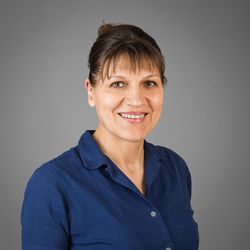
Professor Kate Watkins is a Professor of Cognitive Neuroscience and Tutorial Fellow at St Anne's College, University of Oxford. Her research focuses on the neural mechanisms underlying speech and language, particularly in developmental disorders such as stuttering and developmental language disorder (DLD). She employs neuroimaging (MRI/fMRI) and brain stimulation techniques (TMS/tDCS) to investigate speech perception, production, and motor control. Key contributions include discoveries about striatal iron concentrations in stuttering and cerebellar abnormalities in DLD. Watkins trained at the Institute of Child Health, Great Ormond Street Hospital, and the Montreal Neurological Institute. She co-founded the Neurobiology of Language journal and has held academic roles since 2003. Her work bridges clinical and experimental approaches, aiming to improve understanding of communication disorders and inform therapeutic strategies. Research interests span developmental stuttering, speech motor control, bilingual language processing, and neuroimaging methodologies. She collaborates with institutions like the Wellcome Centre for Integrative Neuroimaging and has published extensively on language lateralization, motor cortex plasticity, and neurobiological markers of speech disorders.
Lisa M. Bedore is a Professor and Chair of the Department of Communication Sciences and Disorders at Temple University's College of Public Health. She also serves as Undergraduate Program Director and leads the HABLA (Human Abilities in Bilingual Language Acquisition) Lab. A certified speech-language pathologist, her work bridges clinical practice, research, and education in bilingual language development. PhD in Audiology and Speech Sciences, Purdue University MA in Communicative Disorders, San Diego State University BA in Speech Pathology/Audiology and Spanish, San Diego State University Her research focuses on how children integrate linguistic information across domains, particularly in bilingual contexts and developmental language disorders (DLD). Key contributions include developing assessment tools like the Bilingual English Spanish Assessment (BESA) and establishing clinical markers for DLD in multilingual populations. Current work examines grammatical difficulties across Spanish, English, and Mandarin, and their implications for literacy development. Recent publications highlight trends in bilingual home environment effects on literacy, nonword repetition tasks as diagnostic tools, and cross-linguistic cognitive flexibility studies. Findings emphasize the interaction between language exposure, cognitive skills, and cultural context in bilingual development. National Institutes of Health (NIH) funding for over 20 years Lisa's grantsmanship includes NIH funding for longitudinal studies on bilingualism and DLD. She teaches undergraduate courses like Introduction to Communication Disorders and graduate courses in health research grantsmanship. The HABLA Lab maintains an extensive database on bilingual children's language skills, informing theoretical models and clinical interventions.
Javier Jasso is an Assistant Professor of Hispanic Linguistics at The Ohio State University's Department of Spanish & Portuguese, part of the College of Arts and Sciences. His research focuses on bilingualism, particularly in Latinx communities, addressing developmental language disorder (DLD) and morphosyntax. He bridges clinical speech-language pathology with linguistic theory to advocate for equitable care for linguistically minoritized groups. Education: Ph.D. in Speech, Language, and Hearing Sciences, University of Texas at Austin M.A. in Speech-Language Pathology, San José State University B.A. in Linguistics, University of California, Davis Research Interests: Dr. Jasso investigates bilingual children’s grammatical development, differentiating typically developing bilinguals from those with DLD. He emphasizes social and linguistic factors affecting healthcare access for marginalized communities, challenging monolingual-centric frameworks. Key areas include heritage language maintenance, parent-child language dynamics, and clinical assessment tools for multilingual populations. Recent Work Trends: His articles (2020–2024) address narrative performance in DLD, parental input’s role in Spanish morphology, and cross-linguistic diagnostic methods. These studies highlight clinical applications and social equity in bilingual language research. Grants & Advising: While explicit grants are unlisted, his clinical background and research imply engagement with applied projects. No advisees are listed here. Labs/Teams: His work is embedded in Ohio State’s Latinx Studies program, emphasizing community-centered research to dismantle deficit narratives around bilingualism.
Dr. Elena Tribushinina is an Associate Professor at Utrecht University's Department of Languages, Literature and Communication , affiliated with the Institute for Language Sciences . Her expertise spans Child Multilingualism , Developmental Language Disorders , and Foreign Language Pedagogy , with a focus on educational interventions and cognitive mechanisms in language acquisition. Research Themes : Language Acquisition, Processing, and Disorders; Dynamics of Youth (DoY). Teaching : Courses in English Language and Culture (BA/MA), Multilingualism, and Topics in Language Acquisition. Her research investigates how bilingualism and language disorders interact in foreign language learning, using eye-tracking and intervention studies to differentiate between bilingual and DLD profiles. Recent projects include CodeTaal App for DLD children and support for Ukrainian refugee pupils. Key publication trends (2022–2025) reveal a focus on bilingual advantages , cross-linguistic transfer , connectives in discourse , and explicit instruction strategies for learners with DLD or dyslexia. She collaborates with institutions in Alberta , Antwerp , and Russia . She leads the research group Language Acquisition, Processing and Disorders and serves as Associate Editor for the Journal of Child Language . Her methodological toolkit includes eye-tracking , longitudinal studies , and meta-analyses of pedagogical interventions.
Michelle St Clair is a Senior Lecturer in the Department of Psychology at the University of Bath, specializing in Developmental Psychology with a focus on Developmental Language Disorder (DLD). She previously held roles at the University of Manchester and University of Cambridge, gaining expertise in large-scale data analysis. She was promoted to Senior Lecturer in 2020 and currently leads research on DLD's long-term impacts on emotional/social outcomes, neurodiversity resilience, and intervention strategies. Education & Background: PhD/Postdoctoral work in Developmental Psychopathology at University of Manchester and University of Cambridge Joined University of Bath as Lecturer in 2014 Research Interests: Developmental pathways linking early language disorders to later emotional/social challenges Positive neurodiversity outcomes in DLD populations Parental mobile phone use effects on child language development Engaging families and researchers via the Engage with DLD project Projects & Collaborations: PI on Engage with Developmental Language Disorder (2020–present) Co-Investigator on ESRC Sleep and Mental Health project (2022–2024) Visiting Scientist at University of Cambridge (2015–2016) Collaborations with City, University of London and University of Cambridge Key Contributions: Developed accessible research summaries for DLD communities Pioneered longitudinal studies on DLD's social/emotional impacts Created datasets like Engage with DLD Accessible Databases and Zoti's Social Toolkit Future Work: Exploring DLD in under-researched populations (e.g., juvenile detention centers) Advancing technology-based interventions for emotional recognition Continuing SDG-aligned research on mental health equity
Maria Teresa Guasti is a Professor of Linguistics and Psycholinguistics at the University of Milano-Bicocca. She has held academic positions since 1988, including Assistant Professor (2000-2005) and Researcher roles at institutions like the University of Siena and San Raffaele Hospital. Her research bridges theoretical linguistics, child language acquisition, and cognitive disorders like dyslexia and developmental language impairment (DLD). PhD in Linguistics, University of Geneva Guasti’s work focuses on syntax, semantics, and pragmatics in typical and atypical language development, with a special emphasis on bilingual acquisition, DLD, and dyslexia. She has contributed to understanding timing anticipation deficits in dyslexia and has expanded her research into musical cognition and motor control (handwriting). Recently, she collaborated with human-computer interaction scientists to develop language-based interactive technologies. Her publications span 160 works, including 80 peer-reviewed articles and 6 books, with over 7,000 citations and an H-index of 42. Key grants include the ERC Synergy (2019) and Multimind (2017-2022, €516,122). 2019 ERC Synergy Grant for Leibniz’s Dream (€10.2M) 2012-2018 Associate Investigator at ARC Centre of Excellence in Cognition and its Disorders 2005-2009 Italian Representative in European COST A33 Action Guasti has trained 14 PhD students, supervised 12 postdocs, and mentored 100+ master’s students. She has served as Associate Editor for Language Acquisition and Frontiers in Psychology , and on editorial boards including Journal of Child Language . She has delivered keynotes at international conferences and taught at summer schools.
Daniel Adrover Roig is a Full Professor at the University of the Balearic Islands (UIB), where he serves in the Department of Applied Pedagogy and Educational Psychology within the Faculty of Education. He has held several administrative positions including Vice-Dean of the Faculty of Education since 2017 and Coordinator of Admission Tests for Early Childhood and Primary Education degrees since 2019. He leads the Development, Education and Language (I+DEL) research group at UIB and serves on the Research Ethics Committee of the university. His academic background includes: 2004: Psychology Degree from the University of the Balearic Islands 2005: Teaching Aptitude Course (CAP) from the Institute of Educational Sciences 2007: Postgraduate in Teaching Techniques for the European Higher Education Area 2009: PhD in Psychology from the University of the Balearic Islands 2009-2011: Postdoctoral studies at the Montreal Geriatrics Institute in Canada Dr. Adrover Roig's research primarily focuses on how bilingualism influences human cognition, with particular interest in children with language difficulties, healthy adults, and elderly individuals without cognitive decline. His work explores the relationship between school bullying and educational needs, language difficulties, and communication. He examines how linguistic, cognitive, and temperamental foundations interact across the lifespan, with special attention to Developmental Language Disorder (DLD). His interdisciplinary approach combines clinical psychology, cognitive psychology, neuropsychology, psycholinguistics, and psychopedagogy to understand educational and emotional challenges in children with Specific Educational Support Needs. His recent publications demonstrate a strong focus on language development, bilingualism effects, school bullying, and cognitive processing in children with language disorders. The research shows consistent exploration of how bilingualism impacts executive control, the relationship between language disorders and social outcomes, and the validation of assessment tools for bullying victimization. His work spans multiple methodologies including longitudinal studies, experimental cognitive tasks, and validation of psychological instruments. His notable scientific recognitions include: The 'Jordi Perelló' award from the College of Speech Therapists of Catalonia A Flash Call in Social Sciences project grant from the 'La Caixa' Foundation in January 2022 for expanding research on cyberbullying Dr. Adrover Roig has directed numerous doctoral theses on topics related to language development, bilingualism, and educational challenges. He has served as principal investigator for two consecutive projects funded by the Ministry of Science and Innovation. His teaching portfolio includes courses in Educational Psychology, School Psychology, Developmental Psychology in School Age, and Language Disorders in Primary Education. He has also contributed to teacher training programs and research on educational guidelines and best practices. He leads the Development, Education and Language Research Laboratory (I+DELab), an interdisciplinary research group focused on psychological development across the lifespan and psychological aspects linked to education. The laboratory promotes knowledge transfer through school training activities, psychopedagogical guidance teams, early intervention programs, hospitals, and media appearances. The team comprises researchers with diverse backgrounds including clinical psychology, cognitive psychology, neuropsychology, psycholinguistics, and speech therapy.
Elina Mainela-Arnold is a Professor and Head of the Department of Psychology and Speech-Language Pathology at the University of Turku, Finland. She earned her Ph.D. in Communicative Disorders and Psychology from the University of Wisconsin-Madison and her Master’s in Speech-Language Pathology from the University of Helsinki. She previously served as an assistant professor at Penn State University and the University of Toronto. Research Interests: Her research investigates domain-general cognitive mechanisms in language acquisition, focusing on individual differences in children with typical development and those with Developmental Language Disorder (DLD). She explores bilingualism, cognitive processing, and neurocognitive underpinnings of language learning. Her work informs both theoretical models and clinical practice. Recent Research Trends: Her recent publications highlight auditory processing, procedural learning, intra-individual variability, and non-linguistic cognitive predictors in language development. She uses ERP, longitudinal cohort data (e.g., FinnBrain), and cross-linguistic designs to examine language outcomes in monolingual and bilingual children. Scientific Awards and Recognition: Contributor to the CATALISE international consensus panel (2016–2017), which established evidence-based diagnostic criteria for childhood language impairments. Her research influenced the adoption of the term Developmental Language Disorder in the ICD-11. Advising and Grants: She mentors Bachelor’s, Master’s, and Doctoral thesis students. While specific grant details are not listed, her involvement in large-scale studies like FinnBrain and international collaborations indicates active grant-funded research. She teaches courses such as Language Across the Lifespan, Bilingualism, and Cognitive Processes. Labs and Teams: She is affiliated with the FinnBrain Birth Cohort Study and the InterLearn research group, engaging in interdisciplinary research at the intersection of psychology, neuroscience, and speech-language pathology.
Inge Zink is a Professor at the Faculty of Medicine, KU Leuven, affiliated with the Department of Neuroscience and the Experimental Oto-rhino-laryngology Research Group. She is also a member of the KU Leuven Brain Institute (LBI) and the Interdisciplinary Language Institute (LILI). Her research focuses on developmental language disorders, bilingualism, autism, and genetic variants like 16p11.2 and 22q11.2, with a strong emphasis on early diagnosis and intervention protocols. Unit: Experimental Oto-rhino-laryngology Research Group Membership: LBI, LILI, Biomedical Sciences Evaluation Committee Research Interests: Zink's work explores the intersection of language development, autism, and genetic disorders. She develops diagnostic tools such as the PITTO protocol for bilingual children with developmental language disorders and investigates environmental factors influencing language acquisition in autistic children. Her projects use EEG-based neural envelope tracking and deep phenotyping to analyze language and cognitive trajectories. Publications: Recent studies highlight her focus on bilingual assessment accuracy, genetic variants' impact on language, and gesture comprehension as a screening tool. Her research spans clinical applications and interdisciplinary collaborations. Teaching: Zink contributes to courses in clinical speech therapy, developmental linguistics, and social-communicative skills training, integrating her research into educational frameworks.
Salomi Asaridou is a Lecturer at the University of Oxford's Department of Experimental Psychology and a Stipendiary Lecturer in Psychology at St Anne's College. She holds a PhD from the Max Planck Institute for Psycholinguistics and Donders Institute for Brain, Cognition and Behaviour, supported by a Max Planck Society fellowship. Her research focuses on individual variation in language learning and its neural correlates, particularly in children with developmental language disorder (DLD). She investigates how brain structure and function relate to language abilities in monolinguals, bilinguals, and clinical populations. Education: Bachelor’s in Psychology (Aristotle University of Thessaloniki) Master’s in Neuroscience and Education (Columbia University, Fulbright Scholar) PhD in Psycholinguistics (Max Planck Institute) Research Groups: Brain, Speech, & Language; MRC-funded BOLD study. Her work explores neural mechanisms underlying language disorders and brain reorganization in cases of congenital hemispheric defects. She has contributed to NIH-funded projects at the University of California, Irvine, and uses neuroimaging techniques to study cortical and subcortical structures in language development. Awards include the Fulbright Scholarship and Max Planck IMPRS Fellowship. Salomi teaches Experimental Design and Methods at Oxford and actively collaborates with interdisciplinary teams to advance understanding of language neurobiology.
Courtenay Frazier Norbury is Professor II at the University of Oslo's Department of Special Needs Education (part-time) and Professor of Developmental Disorders of Language and Communication at University College London. She holds a DPhil in Experimental Psychology from the University of Oxford (2004), an MSc in Clinical Communication Sciences from City University London (1998), and a BA in Communication Disorders from the University of New Mexico (1992). She is registered with the Health Professions Council and Royal College of Speech and Language Therapists. Her research examines language disorders across clinical conditions, focusing on Developmental Language Disorder (DLD) and its impact on social, academic, and cognitive development. She leads the SCALES study, the UK's first epidemiological study of language disorders in school children, which identified 7.58% prevalence of DLD. Her work emphasizes early identification and longitudinal outcomes. Recent publications (2019-2025) cluster around: Interventions for language disorders in neurodevelopmental conditions Mental health correlates of communication disorders Predictive relationships between language and social-emotional development Innovative methodologies for minimally verbal populations Awards and honors: Fellowship, Royal College of Speech & Language Therapists (2017-18) British Academy Mid-Career Fellowship (2016) Neil O’Connor Award, British Psychological Society (2004) Multiple teaching prizes including UCL Inspirational Teaching nomination She oversees doctoral projects on stammering-mental health links and minimally verbal autism. Major grants include ESRC funding for predictive language-mental health relationships (£942,047) and Wellcome Trust support for SLI comorbidity studies.
Dr. Rob Zwitserlood is an Affiliated Researcher at the Humanities Institute for Language Sciences at Utrecht University and Senior Researcher at the Hogeschool Utrecht, Lectoraat Logopedie: Participatie door Communicatie . He has over 30 years of experience in special education for children with Developmental Language Disorders (DLD) at the Royal Dutch Auris Group. His research focuses on diagnostics, interventions, and metalinguistic therapies for DLD/Speech-Language Impairment (SLI). Education : Supervised MA/BA students in Speech Therapy Science, focusing on pronoun errors, narrative skills, and dummy verbs in SLI children. Research Interests : Morphosyntactic development, speech disfluency, metalinguistic training, and tablet-based interventions for DLD children. Activities : Invited speaker at international conferences (European Speech and Language Association, IASCL), organizer of academic events, and presenter of randomized controlled trials on language therapy tools.
Prof. Natalia Gagarina is Head of the 'Language Development & Multilingualism' research area at Leibniz-ZAS and holds professorships at Humboldt-Universität zu Berlin and Uppsala University. Her work focuses on bilingual language acquisition, narrative structures, and assessment methods for multilingual children. She leads four ZAS projects and collaborates with institutions worldwide, including Goethe-Universität, Universität Eichstätt-Ingolstadt, and University of Saskatchewan. Education: Habilitation in Language Acquisition (Humboldt-Universität, 2011), PhD in Linguistics (Herzen State Pedagogical University, 1999). Extensive postdoctoral research at Vienna University and ZAS Berlin. Research Interests: Monolingual/bilingual language development, morphosyntax, discourse analysis, heritage language maintenance, and language assessment tools like MAIN and LITMUS. Current projects investigate pandemic impacts on immigrant communities and narrative competence in DLD. Publications: Over 50 peer-reviewed articles (2025 highlights include PREVIC vocabulary measure, Education's role in narrative comprehension, and heritage language syntax studies). Recent work emphasizes computational methods (BERT-based annotation) and cross-linguistic comparisons. Awards: Corresponding member of Austrian Academy (2020), AcademiaNet recognition (2020), and multiple teaching/materials awards. Active in policy advocacy for multilingual education. Grants & Leadership: Vice Director of ZAS (2020–), coordinator of Multilingual Language Development and Assessment Lab (MultiLADA). Supervises interdisciplinary teams analyzing narrative structures across 17+ languages. Labs/Teams: MultiLADA Lab focuses on narrative assessment tools. Collaborates with global networks including COST Action LITMUS and BIVEM initiative.
Ellen Rombouts is a tenure track lecturer at KU Leuven's Faculty of Medicine within the Department of Neuroscience. She is an active member of the Experimental Oto-rhino-laryngology Research Group and holds dual affiliations with the LBI - KU Leuven Brain Institute and the LILI – KU Leuven Interdisciplinary Language Institute. Her academic governance roles include membership on the Faculty Council of Medicine, POC Speech Therapy and Audiology, and Departmental Council of Neurosciences. Her research centers on speech and language pathology with specialized focus on bilingual language development and disorders. She pioneers diagnostic protocols for Developmental Language Disorder (DLD) in multilingual children, investigates gesture-based communication strategies for individuals with Down syndrome and stuttering, and applies neuroimaging techniques like fNIRS and EEG to study language processing. Her work bridges clinical practice, neuroscience, and assistive technology development. Recent publications (2024-2025) reveal strong thematic continuity in bilingual language assessment, highlighted by the PITTO diagnostic protocol development. She demonstrates innovative integration of gesture comprehension tasks for DLD screening and explores AI applications in language support systems. Her research consistently addresses practical clinical challenges while advancing methodological approaches in neuroimaging and cross-linguistic assessment. As co-promoter on multiple funded projects, she leads research on non-invasive brain activity measurement using fNIRS (2023-2024), develops evidence-based language assessment protocols for bilingual children with DLD (2021-2025), and previously investigated stuttering-gesture interactions in Down syndrome (2018-2022). Her grant portfolio reflects sustained focus on translational research with clinical impact. Dr. Rombouts contributes to interdisciplinary research ecosystems through the Experimental Oto-rhino-laryngology Research Group, KU Leuven Brain Institute, and Interdisciplinary Language Institute, fostering collaborations that integrate linguistic, neurological, and clinical perspectives on human communication disorders.
Dr. Alison Eisel Hendricks is an Associate Professor in the Department of Communicative Disorders and Sciences at the University at Buffalo, affiliated with the College of Arts and Sciences and the Institute for Artificial Intelligence and Data Science. She directs the UB Language Learning Lab and serves as Director of Undergraduate Studies. Contact: 116 Cary Hall, Buffalo NY 14214, ahendric@buffalo.edu , (716) 829-5563 Courses: Phonetics, Phonological Disorders, Cultural and Linguistic Diversity in CSD Research Focus: The UB Language Learning Lab investigates language acquisition in school-age children with and without language impairments like Developmental Language Disorder (DLD). Key areas include: How children learn language from input quantity/type Acquisition of grammatical structures Interplay between sociolinguistic factors and language ability Improving DLD identification in culturally/linguistically diverse populations Publication Trends: Recent work spans 2013-2023, emphasizing: Academic achievement gaps in children with DLD/dyslexia Sociolinguistic analysis of African American English Open science practices in BIPOC research Diagnostic tool development for diverse dialect speakers Morphosyntactic patterns in language disorders Lab Affiliation: The lab operates within the Department of Communicative Disorders and Sciences, focusing on naturalistic studies and educational equity. Research outcomes aim to refine classroom screening protocols and address assessment biases.