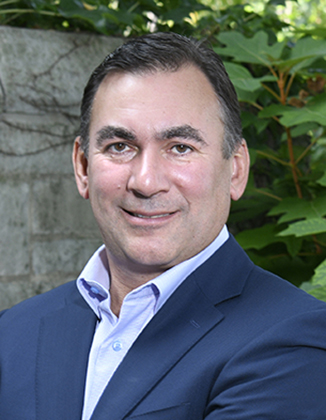
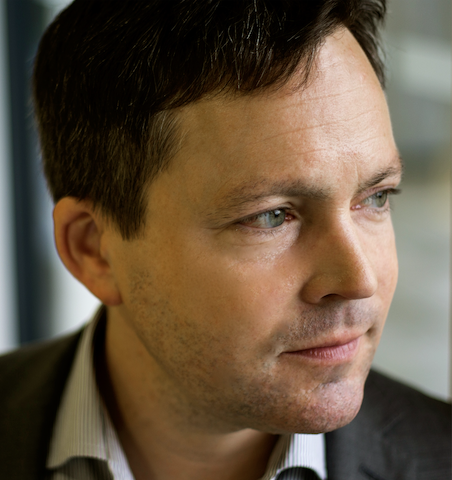
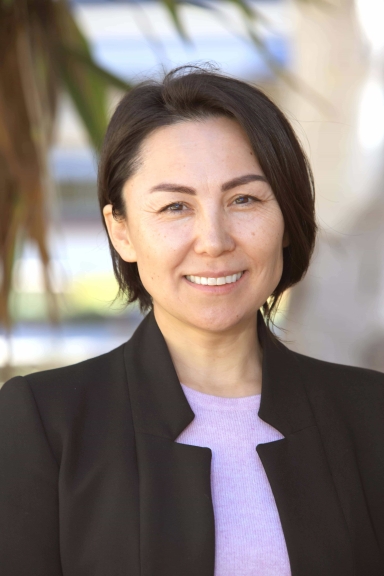
Professor Andrzej Białkowski is a faculty member at the Faculty of Arts , Maria Curie-Skłodowska University (UMCS), Department of Music Education and Instrumental Pedagogy, with a career spanning over 30 years at UMCS since 1985. His research focuses on psychosocial dimensions of music education, informal learning environments (particularly jazz pedagogy), and research methodology in music education. Employment history: Institute of Music, UMCS (1985-present) Current role: Professor and Chair of Music Education and Instrumental Pedagogy Leadership: President of the Polish Association for Music Education and Animation Research trends in his publications reveal a consistent focus on: Educational reform and contemporary challenges in music teaching Integration of technology and new media in pedagogical practices Development of musical aptitude testing (e.g., Wing Music Intelligence Test, Gordon PMMA) Interdisciplinary approaches combining musicology, psychology, and sociology Cultural policy and institutional frameworks for music education Empirical validation of teaching programs
Professor Milan Mrksich is a prominent academic at Northwestern University, holding dual appointments in the Department of Chemistry and the Department of Cell & Developmental Biology. He leads the Mrksich Group, which focuses on interdisciplinary research at the intersection of organic chemistry, materials science, and biology. His team pioneered the development of megamolecules—engineered protein-based structures with complex architectures for biomedical applications—and advanced the SAMDI-MS platform for high-throughput biochemical analysis. Key research areas include protein engineering, high-throughput screening, and surface chemistry. Mrksich earned his B.S. from the University of Illinois (1989) and Ph.D. from the California Institute of Technology (1994). He has received numerous accolades, including the 2020 Pittsburgh Analytical Chemistry Award, the 2002 TR100 Young Innovator Award, and multiple fellowships from distinguished institutions. His work has led to breakthroughs in nanomedicine, antibody mimics, and metabolic pathway optimization. His lab actively collaborates across disciplines, with funding from institutes like the National Institutes of Health and the National Science Foundation. Recent projects include developing plasmonic biosensors for in situ monitoring and advancing megamolecule design for targeted cancer therapies. The group regularly publishes in top journals and engages in translational research to bridge academic discoveries with clinical applications.
John M. Allman is the Frank P. Hixon Professor of Neurobiology at the California Institute of Technology. He holds a B.A. from the University of Virginia (1965), A.M. and Ph.D. from the University of Chicago (1968, 1971). Since 1974, he has held progressively senior roles at Caltech, culminating in his current Hixon Professorship since 1989. His research focuses on brain evolution through comparative neuroanatomy, with particular emphasis on the role of Von Economo neurons in social decision-making and economic behavior. The Allman Lab investigates these neurons' distribution in humans and apes, their potential role in rapid intuitive choices, and parallels in highly social species like African elephants. Collaborations include Prof. Barbara Wold (RNA-Seq analysis of Alzheimer's-related gene expression), Prof. Long Cai (FISH subcellular visualization), and Prof. David Bennett (Alzheimer's pathology studies). Publications highlight advancements in cortical microstructure imaging, THC neuroplasticity effects, and psychiatric disorder brain connectivity. His work bridges evolutionary biology, cognitive neuroscience, and clinical neurology, with contributions to understanding both normal and pathological brain function across species. Key collaborations include the Rush Alzheimer's Disease Center and ex vivo tractography studies in primates. Current projects extend from molecular gene expression studies to large-scale brain network analyses, maintaining a translational focus between basic research and clinical applications.
Michael Nachman is a Professor in the Department of Integrative Biology at the University of California, Berkeley, and a member of the Museum of Vertebrate Zoology. His research focuses on population, evolutionary, and ecological genetics and genomics, primarily using house mice (Mus musculus) as a model system. The Nachman lab investigates the genetic basis of evolutionary change, including adaptation to extreme environments (e.g., deserts, high elevations), reproductive isolation in hybridizing species, and the interplay between host genetics and gut microbiota. Their work integrates field studies, laboratory experiments, molecular biology, and computational genomics. Recent publications highlight studies on climatic and desert adaptation via gene regulation and protein evolution genomic signatures of selection and parallel evolution hybridization dynamics and reproductive isolation mechanisms host-microbiota co-evolution and environmental gradients As a UC Berkeley faculty member, Nachman contributes to promoting a supportive, inclusive, and anti-discriminatory research environment, aligning with the lab’s commitment to scientific integrity and diversity.
Renee Hoekzema is an Assistant Professor in the Department of Mathematics within the Faculty of Science at Vrije Universiteit Amsterdam (VU Amsterdam). Her research spans multiple disciplines including mathematics, biology, and cognitive science, with a particular focus on topological structures and their applications across scientific domains. Dr. Hoekzema's research interests encompass a diverse range of mathematical and interdisciplinary topics: Algebraic Topology and Manifold Theory Geometric Analysis and Spectral Methods K-Theory and Cobordism Invariants Mathematical Biology and Developmental Patterns Mathematical Cognition and Spatial Reasoning Feature Selection and Unsupervised Learning Methods Her recent publications demonstrate a strong interdisciplinary approach, bridging pure mathematics with applications in biology, medical imaging, and cognitive science. Dr. Hoekzema frequently applies topological and geometric methods to problems in developmental biology and mathematical cognition, showing how abstract mathematical structures can illuminate concrete scientific questions. Her work on manifolds with odd Euler characteristic represents significant contributions to geometric topology, while her research on visuo-spatial thinking explores the cognitive foundations of mathematical expertise across multiple dimensions of analysis. Dr. Hoekzema serves as Principal Investigator for the research project "Shapes inside shapes in mathematics, physics, and biology" (2022-2025), which has generated substantial academic and public engagement across multiple platforms including news outlets, social media, and Wikipedia. She also teaches "Elements of Geometry" and maintains an active research profile with publications spanning mathematical topology, biological applications, and cognitive aspects of mathematical thinking, demonstrating her commitment to both theoretical advancement and practical scientific applications.
Dr. Natasha Kruger serves as a Lecturer in Animal Ecology within the Faculty of Science and Engineering at the University of Wolverhampton. Her research centers on invasive species dynamics, with a primary focus on the African clawed frog ( Xenopus laevis ) as a model organism. Based at the Wulfruna Street campus in Wolverhampton, she maintains an active research program spanning ecology, evolution, and parasitology. Her research interests concentrate on invasive species ecology , particularly examining how amphibian populations adapt to novel environments through phenotypic plasticity and evolutionary change. Key themes include Thermal and pollution stress responses in larval stages Spatial sorting of dispersal traits during invasion Host-parasite coevolution in multihost systems Climate-driven physiological adaptations across altitudinal gradients Predator recognition mechanisms in novel ecosystems Her work integrates field studies across South Africa and Western France with experimental approaches to understand invasion success mechanisms. Dr. Kruger's recent publications reveal strong trends in ecophysiological modeling of global invaders, with increasing focus on multi-stressor interactions (e.g., nitrate pollution combined with thermal stress) and the costs of phenotypic plasticity. Her research demonstrates how spatial sorting shapes landscape resistance and how lineage-specific trait variation drives coexistence dynamics in invasive parasites. The geographic scope spans from native South African populations to invasive French populations, highlighting both donor and recipient ecosystem dynamics. While no formal scientific awards are currently documented in her public profile, her research program receives institutional support through the University of Wolverhampton's research infrastructure. Her work contributes significantly to understanding biological invasions in the context of global environmental change. Dr. Kruger actively supervises research students (though specific names aren't publicly listed) and collaborates internationally, particularly with researchers studying Xenopus laevis populations in South Africa and France. Her laboratory work focuses on amphibian physiology and behavior, utilizing controlled experiments to dissect mechanisms underlying invasion success. Current projects appear to investigate time-budget alterations in invasive species and the evolutionary consequences of spatial sorting at invasion fronts.
Frank W. Bond is currently Professor of Management and Psychology at the University of Sussex Business School . Previously held academic positions include Professor of Psychology and Management at Goldsmiths, University of London (2011-2021) and Assistant Professor at City, University of London (2001-2011). Holds a PhD in Psychology (University of London), MSc in Occupational Psychology , MPhil in Clinical Psychology (both University of London), and BSc(Hons) in Psychology (University of Southern California). Research interests span contextual behavioral science (CBS), organizational psychology , psychological flexibility , and generative AI applications in leadership development. Key contributions include the ALIVE model (Adapting to Living an Involved, Vital Existence) for workplace mental health and the development of psychometric instruments like the Work-Related Acceptance and Action Questionnaire . Principal investigator on DIGIT 2 grant (2025-2029) from ESRC 20+ year consultancy with European Space Agency , Team GB , and UK government departments Scientific recognition includes 33,700+ scholarly citations , co-development of ALIVE model , and leadership roles as Founding Director of Goldsmiths' Institute of Management Studies and Head of Psychology Department at Goldsmiths.
Prof. Dr. Susanne Döll-Hentschker holds the Professorship for Clinical Psychology and Psychotherapy at Frankfurt University of Applied Sciences (Frankfurt UAS), Department 4: Social Work & Health. She works from Building 2, Room 415a, with contact via susanne.doell-hentschker@fra-uas.de . Her career spans academic research, clinical practice, and teaching in psychoanalysis and psychosocial work. Education: Diplom-Soziologie (Goethe-Universität Frankfurt), Diplom-Psychologie (Frankfurt/Main), Promotion in Psychoanalytic Psychology (Kassel, 2007) Professional Activity: Professor at Frankfurt UAS (2019-present), Director of Psychoanalytic Ambulance (2014-2019), Academic Researcher at Goethe-Universität (2001-2012) Research focuses on emotion theories , trauma , sibling relationships , transgenerational trauma transmission , and psychoanalytic treatment techniques . Her work bridges clinical practice with academic research, particularly in narrative analysis of dreams and trauma experiences. Key article trends examine narrative structures in clinical and non-clinical dream analysis, emotion regulation in psychoanalytic treatment, and transgenerational trauma patterns. These publications frequently employ qualitative case studies and quantitative dream coding systems to explore psychoanalytic processes. Professional memberships include Deutsche Psychoanalytische Vereinigung (DPV) , International Psychoanalytical Association (IPA) , German Psychological Society (DGPs) , and the International Association for the Study of Dreams . She serves on editorial boards, peer-review panels, and rehabilitation research groups. Her teaching portfolio includes psychodynamic therapy modules for Social Work (B.A.) and Psychosocial Counseling & Law (M.A.). She has delivered training on low-frequency psychoanalysis, dream theory, and trauma-informed care. Current research includes dream analysis in clinical samples and acculturation processes in displaced populations.
Rikard Blunck is an Accredited Professor in the Department of Physics at the University of Montreal, affiliated with the Faculty of Arts and Sciences. His research focuses on ion channel biophysics, membrane protein dynamics, and structural biology. He employs advanced techniques like fluorescence spectroscopy, molecular dynamics simulations, and single-molecule imaging to study voltage-gated potassium channels, mechanosensitive channels, and disease-related mutations in ion channels. Key research interests include the structural determinants of ion channel function, mechanisms of channel inactivation, and the impact of genetic variants on channel physiology. His work spans from fundamental biophysics to clinical implications in neurology and cardiology, particularly in channelopathies linked to epilepsy, migraine, and ataxia. Notable contributions include studies on the Shaker Kv channel, TACAN pain sensors, and structural analysis of Kv2.1/Kv6.4 heterotetramers. His methodologies include voltage-clamp fluorometry, single-subunit counting, and computational modeling to probe conformational changes during channel activation and inactivation. Blunck has published extensively, with recent work investigating cooperative C-type inactivation mechanisms, KCNG4 genetic variants in migraine, and stoichiometry determinations of ion channel complexes. His research bridges molecular mechanisms with clinical applications, aiming to identify therapeutic targets for channel-linked disorders.
Professor Raymond O'Keefe serves as Professor of Molecular Genetics and Head of the Division of Evolution, Infection and Genomics at the University of Manchester. With over two decades of academic service since joining as a Research Fellow in 1997, he has established himself as a leading researcher in RNA biology and genetic mechanisms. Dr. O'Keefe earned his undergraduate degree from Connecticut College in 1987, followed by work with Nobel Laureate Dr. George Palade at Yale University. He completed his PhD in Molecular and Cellular Biology from SUNY Stony Brook in 1994, conducting research at Cold Spring Harbor Laboratory under Dr. David Spector. After receiving the Hitchings-Elion Postdoctoral Fellowship to work with Dr. Andrew Newman at the MRC Laboratory of Molecular Biology in Cambridge, he joined Manchester in 1997. His research focuses on pre-mRNA splicing mechanisms and non-coding RNA (ncRNA) function. His lab investigates how splicing errors contribute to diseases including diabetes, cancer, and developmental disorders, while also pioneering large-scale functional analysis of ncRNAs using molecular barcoded deletion strains in Saccharomyces cerevisiae. Analysis of his 76 research outputs reveals a strong emphasis on molecular genetics, with particular focus on neurodevelopmental disorders, mitochondrial translation defects, and splice variant interpretation in clinical contexts. His work bridges fundamental molecular mechanisms with clinical applications. Hitchings-Elion Postdoctoral Fellowship from The Burroughs Wellcome Fund Significant media coverage for work on Perrault syndrome (picked up by 14+ news outlets) Extensive social media engagement with research (100+ X posts, 4+ Wikipedia references) Professor O'Keefe actively contributes to education through teaching Molecular Biology (BIOL10221), Gene Regulation and Disease (BIOL31181), and coordinating the Biochemistry Research Skills Module (BIOL20312). He also serves as a Medical Student Problem Based Learning tutor and has supervised 20 students through their academic work. His current research includes the project 'Pleiotropic disorders of mitochondrial translation' (2022-2025), examining connections between mitochondrial function and human disease.
Jun Jie (JJ) Woo is a Senior Lecturer at the Lee Kuan Yew School of Public Policy (LKYSPP), National University of Singapore (NUS). He holds a PhD in Public Policy from NUS and an MSc in International Political Economy from Nanyang Technological University. Previously, he served as a Senior Research Fellow at NUS’s Institute of Policy Studies and held roles at institutions including the Education University of Hong Kong and Nanyang Technological University. His research focuses on global cities in Asia, emphasizing urban governance, policy design, and economic development. Notable works include studies on Singapore’s pandemic response, financial policy regimes, and the evolution of developmental states in Asia. His research interests span global financial hubs, policy design methodologies, urban governance frameworks, and economic development strategies. He has authored influential books on Singapore’s role as a global financial center and its pandemic management strategies. His work bridges theoretical policy analysis with practical governance challenges, particularly in small city-states. Woo’s publications reflect a focus on policy capacity, crisis governance, and transnational policy diffusion. His analyses of Singapore’s SkillsFuture scheme and comparative studies of financial policies in Hong Kong, Singapore, and Shanghai highlight his expertise in institutional dynamics and policy innovation. He has also explored the intersections of education, empathy, and public policy pedagogy through service-learning initiatives. His academic contributions include over 18 journal articles and 9 books, with recent works addressing post-pandemic urban resilience and the governance of global financial systems. He has held prestigious fellowships such as the Rajawali Fellowship at Harvard University’s Kennedy School, enhancing his global academic network and research impact.
Dr. Sean Ehlman is a postdoctoral researcher affiliated with the Department of Fish Biology, Fisheries and Aquaculture at Humboldt-Universität zu Berlin , where he works within the Behavioural Biology research group. His research focuses on the interplay between ecological and evolutionary processes in shaping behavioral development, particularly in clonal fish systems. Research Interests Dr. Ehlman explores: Behavioral individuality in genetically identical organisms Impact of early-life experiences on phenotypic variation Eco-evolutionary dynamics of aquatic species Developmental mechanisms in evolutionary theory Publications His recent work employs big data approaches to analyze: Genotype-environment interactions in clonal fish Developmental plasticity and behavioral syndromes Reproductive strategies under standardized conditions These studies contribute to broader understanding of evolutionary ecology and behavioral genetics.
Dr. Mahabat Baimyrzaeva is a Professor at the Middlebury Institute of International Studies (MIIS) since 2007. Her work bridges organizational leadership , social innovation , and public administration reform in international development contexts. She teaches courses in the International Policy and Development Program and MPA programs , focusing on applied research, strategic leadership, and systems thinking. PhD, University of Southern California School of Policy, Planning, and Development MA in Public Administration & International Management Graduate Certificate, University of Hawaii College of Business Administration BA in International Law, International University of Kyrgyzstan Her research emphasizes organizational learning , capacity building , and policy analysis , particularly through design thinking and socially innovative approaches . She explores the intersection of cognitive-behavioral frameworks and public sector governance , with a regional focus on Central Asia and post-communist reforms . Her publications analyze institutional change , citizen participation , and public sector innovation across multiple countries. Dr. Baimyrzaeva’s recent work includes collaborations on applied research methods , strategic leadership , and 21st-century skills in public administration education. She mentors students in consultancy projects with international organizations and delivers policy workshops in Central Asia and the U.S.
Ki Eun (Kay) Shin, Ph.D., is an Assistant Professor in the Clinical Psychology Doctoral Program at Long Island University (LIU Post), within the College of Liberal Arts and Sciences, Department of Psychology. She earned her B.A. from Northwestern University, and her M.S. and Ph.D. in Clinical Psychology from Pennsylvania State University, completing her training in 2020. She furthered her expertise through a postdoctoral research fellowship at Teachers College, Columbia University. Educational Background: B.A., Northwestern University M.S., Pennsylvania State University Ph.D., Clinical Psychology, Pennsylvania State University (2020) Dr. Shin's research focuses on the cognitive and emotional mechanisms underlying internalizing disorders and suicidality, with a strong emphasis on real-time assessment through mobile app-based ecological momentary assessment (EMA). Her work explores how symptoms unfold in daily life, investigates novel treatment protocols, and examines cultural factors in suicide risk and disclosure. She is deeply committed to promoting social justice, equity, and inclusivity in clinical psychology and academia through her research, teaching, and mentorship. Her recent publications highlight a consistent trend in utilizing intensive longitudinal data to understand anxiety, depression, and suicidal ideation. She applies advanced statistical techniques to EMA data, studying emotion network density, contrast avoidance, and interpersonal perception biases across disorders. This methodological rigor supports her goal of identifying dynamic clinical markers and improving intervention strategies. Scientific Awards and Honors: Alies Muskin Career Development Leadership Program Award, Anxiety and Depression Association of America (2022) Future Directions Launch Award, Journal of Clinical Child and Adolescent Psychology (2021) Student Excellence in Teaching/Mentorship Award, APA Division 29 Society for the Advancement of Psychotherapy (2019) Penn State Best Clinical Graduate Student Paper Award (2018) Dr. Shin has been actively involved in grant-funded research and collaborative projects, particularly in college mental health, adolescent suicide risk, and transdiagnostic anxiety mechanisms. She has mentored students and junior researchers, demonstrated by her teaching and mentorship award. Her work bridges clinical science with real-world applications through mobile technology and culturally informed models. She is affiliated with several professional organizations, including the Association for Behavioral and Cognitive Therapies, American Psychological Association, Anxiety and Depression Association of America, and the Society for a Science of Clinical Psychology. Her lab focuses on developing and validating digital tools for mental health assessment and intervention, contributing to the growing field of digital mental health and precision psychiatry.
Alecia Carter is an Associate Professor in Evolutionary Anthropology at University College London (UCL), where she has been working since 2019. She is affiliated with the Department of Anthropology and conducts research primarily focused on primate behavior, cognition, and evolutionary anthropology. Her work bridges multiple disciplines including ecology, evolutionary biology, and zoology, with a particular emphasis on understanding complex behaviors in wild primates. Dr. Carter's academic journey includes: Undergraduate studies: BSc (Hons) and BA at the University of Queensland PhD at the Australian National University Postdoctoral positions at the University of Cambridge (Research Associate in Zoology, 2012; Junior Research Fellow with Churchill College, 2013) Research Scientist at l'Université de Montpellier, France (prior to joining UCL in 2019) Dr. Carter's research centers on two main themes: how primates respond to the deaths of others (providing insights into the evolution of cognition and complex emotion), and how individuals access information to make decisions. She investigates how primates use their social environment to gather information and how individual characteristics may constrain this process. Her work on primate thanatology (the study of death responses) has been particularly influential, examining phenomena like infant corpse carrying across multiple primate species. She also studies behavioral consistency and individual differences in primates, exploring how and why animal behavior varies between individuals but remains consistent over time. Analysis of Dr. Carter's recent publications reveals a strong focus on primate cognition, social behavior, and evolutionary anthropology. Her work frequently examines baboon behavior in the wild, with special attention to social dynamics, reproductive strategies, and responses to death. She employs comparative approaches across primate species and integrates methodologies from behavioral ecology, cognitive science, and evolutionary biology. Her research often addresses fundamental questions about the evolution of complex social behaviors and cognition in primates, with implications for understanding human evolution. Professional recognition: Fellow of the Higher Education Academy Dr. Carter is actively involved in mentoring students and researchers in evolutionary anthropology and primate behavior. Her collaborative network spans multiple institutions globally, with frequent co-authorship with researchers from Cambridge, Montpellier, and other leading universities. She has secured research funding for field studies of wild primates, particularly focusing on chacma baboons in Africa. Her work often involves long-term observational studies combined with innovative experimental approaches in natural settings. Dr. Carter is part of a vibrant research community studying primate behavior at UCL and collaborates with researchers across the globe. Her work contributes to UCL's commitment to Sustainable Development Goal 15 (Life on Land) through research that enhances understanding of primate ecology and conservation needs. She is passionate about ethics in academia, equality, diversity and inclusion, and alternative approaches to teaching, which informs both her research and educational practices.