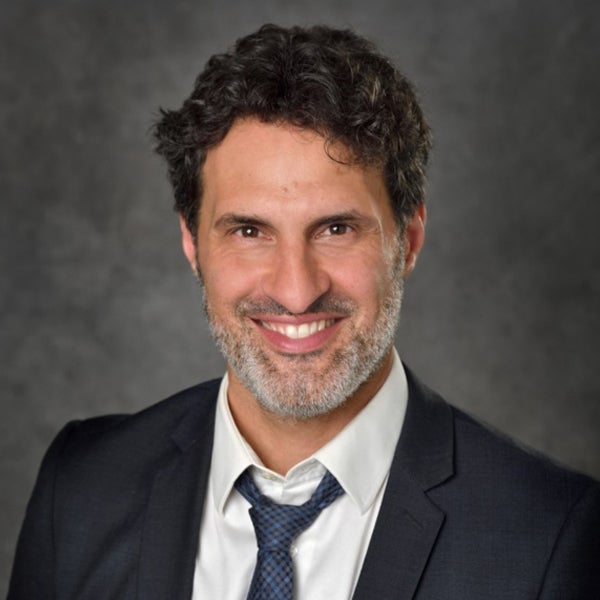
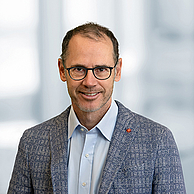
Jonathan Cylus is an Honorary Assistant Professor at the London School of Hygiene and Tropical Medicine and Adjunct Associate Professor of Health Services, Policy, and Practice at Brown University's School of Public Health. He leads the London Hub of the European Observatory on Health Systems and Policies, based at LSE and LSHTM, and serves as a Senior Health Economist at the WHO Barcelona Office for Health Systems Financing. His research focuses on health financing policy, health system performance, and the role of social determinants in health. Education: BA in Economics from Johns Hopkins University, MSc and PhD from LSE. Key expertise includes Universal Health Coverage, Health System Efficiency, and Social Determinants of Health. His research outputs emphasize resilience of health systems during crises, cross-country analysis of healthcare price trends, and the socio-economic impacts of population ageing. Recent work addresses inflation's threat to NHS sustainability and evaluates pandemic preparedness metrics in Europe. He has advised institutions like the European Commission, OECD, and WHO on health financing reforms. Professional networks include affiliations with ISGlobal and leadership roles in global health initiatives. No specific grants or awards are listed in the provided texts.
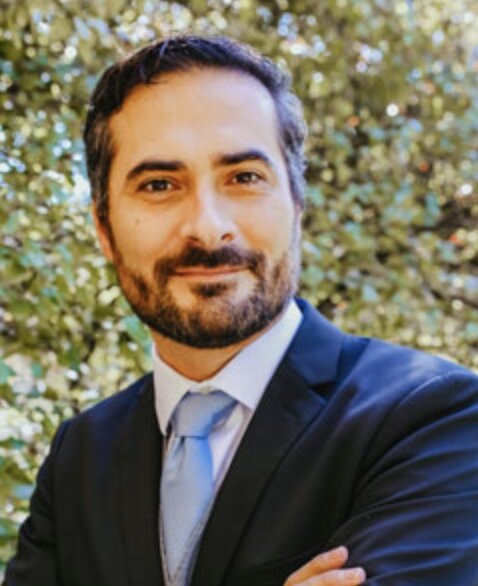
Dr. Ira Weiss is a Professor of Strategic Management at North Carolina State University, affiliated with the Department of Management Innovation & Entrepreneurship. His expertise spans Global/International Management, Corporate Strategy, Higher Education Management, and Business Accreditation. He holds a Ph.D. in Management from UCLA (1976). His research focuses on strategic frameworks, organizational systems, and accreditation processes, as evidenced by his thought leadership in AACSB articles advising institutions on accreditation strategies. His academic contributions include over four decades of publications on IT management, risk mitigation, and professional certification. Notable works address end-user computing strategies, cost control in software development, and auditability of systems. Though no specific grants or advising roles are detailed, his influence extends through academic discourse and institutional best practices. He remains active in North Carolina State’s initiatives related to management innovation and entrepreneurship.
Isabela Mares is the Arnold Wolfers Professor of Political Science and Director of the European Union Center at Yale University. Her research focuses on comparative politics of Europe, political economy, electoral systems, and social policy reforms. She has authored five books, including Conditionality and Coercion: Electoral Clientelism in Eastern Europe (2018) and Protecting the Ballot: How First Wave Democracies Ended Electoral Corruption (2022). Her work has received prestigious awards such as the William Riker Award and Gregory Luebbert Award. Mares has taught at Stanford, Columbia, and held visiting roles at SciencesPo and Central European University. Her research examines electoral corruption, taxation, and democratization processes. Education & Academic Background PhD in Political Science (not explicitly stated, inferred from roles) Prior faculty positions at Stanford University and Columbia University Visiting Professorships at SciencesPo (Paris) and Central European University (Budapest) Research Interests Mares specializes in comparative politics with a focus on electoral integrity, clientelism, taxation, and welfare state development. Her work bridges historical and contemporary cases, analyzing how institutions shape political and economic outcomes. Recent projects include studies on antiparliamentarism and historical democratization processes. Recent Article Trends Her recent publications address modern challenges such as energy transition policies, populism’s impact on social protection, and historical electoral reforms. These articles emphasize institutional resilience, voter behavior, and the political economy of reform. Awards & Recognition Member of the American Academy of Arts and Sciences Simon Guggenheim Foundation Fellow Multiple APSA awards for books and papers Teaching & Mentorship Mares teaches courses on political economy, comparative politics, and historical analysis. At Yale, she co-organizes the Seminar in American and Comparative Political Behavior. While specific advisees are not listed, her mentorship is evident through collaborative research projects and co-authored works (e.g., with Lauren Young). Labs & Collaborations She leads the European Union Center at Yale, fostering interdisciplinary research on European politics. Her work often involves mixed-methods approaches, combining qualitative interviews and quantitative surveys in field-based studies.
Frederi G. Viens is a Professor of Statistics at Rice University, where he leads research in probability theory, stochastic processes, and their applications to finance, climate science, and agro-ecology. Previously, he was a full professor at Michigan State University (2016–2022) and Purdue University (2000–2015), serving as Department Chair and Director of Actuarial Science. His work bridges theoretical mathematics with practical problems in agriculture, economics, and nuclear physics. Education: Ph.D. Mathematics, University of California, Irvine (1996) M.S. Mathematics, University of California, Irvine (1991) Maîtrise de Mathématiques Pures, Université de Paris VII, France (1991) Research Interests: Probability Theory & Stochastic Analysis Quantitative Finance & Actuarial Science Climate Science & Bayesian Statistics Agro-ecology & Agricultural Economics His collaborative projects include climate modeling, nuclear physics simulations, and sustainable crop diversity initiatives like the DRIVES network. Awards & Honors: Fellow of the Institute of Mathematical Statistics (2012) Franklin Fellow, U.S. State Department (2010) Purdue College of Science Research Award (2013) Grants & Collaborations: Funded by the NSF, USDA, and private donors, Viens has organized major conferences and serves on editorial boards for journals like Annals of Finance . He advises transnational research groups, including Sustainability Lake Chad , addressing agrarian sustainability in West Africa. Labs & Initiatives: Founding member of the DRIVES agro-ecology collaborative and moderator of the Seminar on Stochastic Processes.
Alan Sutherland is a Professor of Economics at the University of St Andrews' Business School. He specializes in international macroeconomics, monetary economics, and financial market integration. His research focuses on the macroeconomic implications of exchange rate policies, monetary policy regimes, and cross-country financial linkages. He leads projects funded by the Economic & Social Research Council, including 'The Macroeconomics of Financial Globalisation' (2011-2015) and 'Monetary Policy Welfare and International Financial Markets' (2006-2007). Research Interests: International macroeconomic policy design Exchange rate determination Financial market integration effects Numerical methods for macroeconomic modeling His recent work emphasizes the role of international financial flows in transmitting economic shocks between countries. He has developed influential solution methods for analyzing multi-country general equilibrium models. Key contributions include frameworks for understanding optimal monetary policy under incomplete financial markets and asymmetric information conditions. Scientific Recognition: 2013 Fellow of the Royal Society of Edinburgh Recipient of 2 ESRC-funded research grants
Liang Zhang is a Professor of Higher Education at New York University's Steinhardt School, specializing in higher education economics, finance, and public policy. He previously taught at the University of Minnesota, Vanderbilt University, and Penn State University. His research examines the role of governments and institutions in shaping institutional performance and student outcomes, with a focus on college access, labor markets, and policy efficacy. Dr. Zhang holds dual PhDs from Cornell University (Economics) and the University of Arizona (Higher Education). His work has been published in leading journals such as Review of Higher Education , Economics of Education Review , and Harvard Education Review . Key research areas include the impact of state policies on college enrollment, peer effects in academic decisions, and the global dynamics of scientific productivity. Recent studies highlight his analysis of the Post-9/11 GI Bill’s effects on veteran education access and outcomes, as well as the stratification of faculty employment in U.S. higher education institutions. His work consistently bridges economic theory and policy practice, offering actionable insights for institutional leaders and policymakers.
Sandy Dall'Erba is a Professor in the Department of Agricultural and Consumer Economics at the University of Illinois at Urbana-Champaign. He holds additional affiliations with the European Union Center, Center for Latin American and Caribbean Studies, Lemann Center for Brazilian Studies, and the Center for Digital Agriculture at NCSA. His research spans regional economic analysis, spatial econometrics, and climate change impacts on agriculture. PhD in Economics, University of Pau (2004) MSc in Economics, University of Pau (2000) Postdoctoral, Spatial Economics at Free University of Amsterdam (2005-2006) Postdoctoral, REAL at UIUC (2004-2005) Dall'Erba specializes in spatial econometric modeling to analyze regional growth, innovation systems, and climate change effects. His work integrates interregional input-output frameworks and structural gravity models to quantify economic spillovers. Recent studies address agricultural vulnerability to climate shocks, plastic waste embedded in trade, and tax revenue disruptions from natural disasters. His publications focus on regional economics, environmental accounts, and climate resilience, with applications in the U.S., Latin America, and China. Key trends include spatial heterogeneity in climate impacts, supply chain vulnerabilities, and policy design for disaster mitigation. RSPP Best Paper Award Regional Studies Association Best Paper Award Tiebout Prize Epainos Prize Dall'Erba has co-authored works with graduate students and secured grants from NSF, NASA, and USDA. He directs the Regional Economics Applications Laboratory (REAL) and co-founded the Center for Climate, Regional, Environmental and Trade Economics (CREATE) , advancing system-wide approaches to climate and trade challenges.
Professor Chengang Wang is Chair in International Business and Director of Research at the Department of Strategy and International Business, Birmingham Business School, University of Birmingham. He previously held academic positions at the University of Bradford, University of Surrey, and the University of Manchester, with over 17 years of service at Bradford where he served as Head of Research Centre and Director of PhD Programme. PhD in Economics, Aston University, 2003 Postgraduate Certificate in Higher Education Practice, University of Bradford, 2006 His research centers on the intersection of international business and innovation , particularly examining how firm internationalization influences innovation, knowledge spillovers, and green technology adoption. His recent work investigates eco-innovation in emerging markets, the role of digital economy policies, and institutional effects on innovation performance. He frequently studies Chinese and BRICS firms, focusing on outward FDI, intellectual property, and technology transfer. The analysis of his recent publications reveals a strong trend toward sustainability-driven innovation , with increasing emphasis on green innovation, environmental regulation, and digital policy impacts. His work combines international business theory with innovation economics, often using empirical methods to study real-world firm behavior in emerging economies. Key themes include knowledge spillovers from MNCs, the role of IPR regimes, and the interplay between institutional environments and firm strategy. His scientific recognition includes: Fellow of the Higher Education Academy (FHEA) He has contributed to major research projects funded by the UK’s DFID and China’s Natural Science Foundation and Ministry of Science and Technology. He has served on the editorial boards of Management and Organization Review and International Business Review . His teaching includes International Business Strategy, Business Economics, and Research Methods. Professor Wang leads research in his department and mentors PhD students in international business and innovation. He has published in top journals including Journal of International Business Studies , Research Policy , and Technological Forecasting and Social Change . He is actively involved in scholarly communities and contributes to advancing knowledge on international business dynamics in emerging economies, particularly China. His departmental leadership as Director of Research underscores his influence in shaping research strategy and academic excellence.
Prof. Esra Şengelen Sevim is an active faculty member at Istanbul Bilgi University, affiliated with the Department of Mathematics within the Faculty of Social Sciences and Humanities. She currently holds the academic rank of Professor and has been instrumental in shaping academic programs, serving as Head of the Department of Mathematics, Vice Dean of the Faculty, Program Coordinator of Financial Mathematics, and Director of the Graduate Program in Mathematics. PhD in Mathematics, Istanbul Technical University, 2010 MSc in Mathematics, Istanbul Technical University, 1996 Her research interests span Mathematics, Financial Mathematics, Applied and Pure Mathematics, with a strong emphasis on interdisciplinary applications in finance and modeling. Her academic trajectory reflects deep engagement with both theoretical and applied aspects of mathematical sciences. Although no specific publications are listed in the provided text, her sustained involvement in research is evident through international fellowships and visiting positions at institutions such as Indiana University-Purdue University and Fudan University. Scientific Awards and Recognitions: Visiting Scholar, Indiana University-Purdue University, Indianapolis, IN, USA (2015) Visiting Scholar, Indiana University-Purdue University, Indianapolis, IN, USA (2014) Research Fellowship, Fudan University, Shanghai, China (2013) Visiting Scholar, Indiana University-Purdue University, Indianapolis, IN, USA (2012) Postdoctoral Research Fellowship, Indiana University-Purdue University, Indianapolis, IN, USA (2010-2011) Prof. Sevim has played a significant role in academic leadership and mentorship through her coordination of graduate programs, Erasmus exchange initiatives, and departmental administration. While formal advisees are not listed, her directorship of the Graduate Program in Mathematics suggests active supervision of Master’s and possibly PhD students. She has not received externally funded grants in the provided text, but her international fellowships indicate competitive research support. She is involved in institutional and academic development through her roles as Erasmus Coordinator and program director, contributing to internationalization and curriculum design in mathematical sciences.
Fran Tonkiss is Professor of Sociology at the London School of Economics and Political Science (LSE), Department of Sociology. She is a key member of the Urban Sociology research cluster and teaches in the MSc City Design and Social Science programme, where she convenes a graduate course on Urban Inequalities. Her academic work bridges urban and economic sociology, with a strong focus on the social life of urban form and spatial divisions. Her research interests include urban inequalities, urban design and development, social and spatial divisions, and the socio-economic organisation of urban space. She explores how economic processes shape urban environments and how spatial arrangements reinforce or challenge social inequalities. Her work also extends into gendered urban space, informal economies, austerity urbanism, and the sonic dimensions of cities, reflecting a broad and interdisciplinary approach to urban life. The trends in her recent publications reveal a sustained engagement with critical urban theory, spatial justice, and the politics of urban form. Her articles frequently address themes such as gentrification, infrastructure, urban protest, and the gendering of public space, often with a comparative or global perspective. She contributes significantly to methodological discussions in qualitative research, particularly in discourse, content, and focus group analysis. Fran Tonkiss is a member of the editorial boards of the British Journal of Sociology , City , and Economy and Society , highlighting her influence in the field. While no specific scientific awards are mentioned in the text, her extensive publication record and editorial roles indicate high scholarly recognition. She supervises doctoral students in urban and spatial sociology, contributing to the next generation of scholars in the field. Though no grants are explicitly listed, her research output suggests active involvement in funded projects. She is part of a vibrant research environment at LSE, particularly within the Urban Sociology cluster, which fosters interdisciplinary collaboration on pressing urban issues.
David Gardner is a Lecturer in Law at the University of Pennsylvania Carey Law School and a practicing partner at Adler & Stachenfeld LLP, where he specializes in complex real estate transactions and structured deals across the United States. His educational background includes a J.D. from the University of Pennsylvania Carey Law School and a B.A. from Cornell University. Mr. Gardner's research and professional interests center on real estate law, joint venture arrangements, preferred equity structures, and the integration of artificial intelligence into legal practice. He has a particular focus on advising emerging sponsors and new market entrants in navigating the real estate sector. His work reflects a strong trend toward legal innovation and technology adoption, especially in streamlining real estate transactions and firm operations through AI-driven tools. Represented clients ranging from emerging developers to sovereign wealth funds Active in associate training and business development at his firm Leading firm initiative on AI integration in legal services David Gardner is also involved in legal education and professional development, contributing to the training of future lawyers through his academic and firm leadership roles.
Wolfram Sopha serves as Professor for International Management in the Automotive Faculty at Nürtingen-Geislingen University of Applied Sciences (HfWU), with 15 years of institutional affiliation. He concurrently holds visiting professorships at Universitat Central de Catalunya (Barcelona, Spain), Jilin University Lambton College (Changchun, China), University of International Business and Economics (Beijing, China), ICO Nida University (Bangkok, Thailand), Walailak University (Thailand), Babes Bolyai University (Romania), and Vietnamese German University (Ho Chi Minh City, Vietnam). His academic foundation includes a Dr. rer. pol. doctorate from the European Business School (EBS) focused on business process analysis with standard software implementation, and a Diplom-Ingenieur degree in Business Administration and Engineering from Technological University Berlin with specialization in Material Flow & Logistics. Research centers on automotive-sector international management, integrating Automotive Management, Mobility Management, and Business Process Management with practical industry applications. This expertise stems from 15 years at General Motors Europe managing Logistics, IT, Aftersales, Sales, and International Business Development, reflected in frequent speaking engagements at major conferences including Thai Sino Conference (Chongqing), CADA Conference (Suzhou), and ENG Automotive Finance/Sales events across Berlin, Amsterdam, and Barcelona.
Dr. Asieh Hosseini Tabaghdehi is a Senior Lecturer in Strategy & Business Economy at Brunel Business School, Brunel University of London. She serves as Programme Lead for the BSc International Business Programme and Trade2Grow Executive Education Programme. Additionally, she is Impact Lead at the Brunel Centre for AI: Social and Digital Innovation, where she leads the capability area in the Future of Work. Dr. Tabaghdehi is also an economist and social impact advisor for the independent NGO, Social Innovation Movement. Dr. Tabaghdehi earned her PhD in Economics and Finance (2008) and MSc in International Money, Finance, and Investment (2015), both from Brunel University London. She also holds a BA in Theoretical Economics from University of Mazandaran. She completed the Postgraduate Certificate in Academic Practice and is a Fellow of the Higher Education Academy. Dr. Tabaghdehi is internationally recognized for her research on digital transformation, with particular expertise in the ethical integration of artificial intelligence and digital technologies. Her work focuses on how emerging technologies shape industries, labor markets, and society, with emphasis on enhancing SME growth through technological innovation. She explores applications across critical sectors including social care, supply chain management, and environmental sustainability. A central theme in her research is smart data governance, ensuring ethical, transparent, and responsible use of data in decision-making processes. Her research portfolio demonstrates a consistent focus on the intersection of technology, ethics, and business strategy. She has developed frameworks like the Digital Business Auditing Framework, which has been adopted internationally for smart city initiatives. Her work connects academic research with practical policy applications, as evidenced by her presentations as oral and written evidence to the House of Commons Select Committee. Her publications span AI ethics, digital footprint implications, fertility economics, and healthcare cost analysis, showing interdisciplinary breadth while maintaining thematic coherence around digital transformation's societal impact. Scientific Awards and Recognition Semi-finalist: Research Impact Award at Brunel University London, 2023 Staff Award: Exceptional in Collegiality and Supportive to Colleagues at Brunel University London, 2022 Exceptional Performance at Regents University London, 2018-19 Staff Award in Teaching, Learning and Assessment at Regents University London, 2016 Best Lecturer Award at London Brunel International College, 2014 Best Lecturer Award at London Brunel International College, 2013 Dr. Tabaghdehi actively supervises PhD students researching areas including Smart Data Governance, Ethical AI Governance, Digital Innovation Impact, Responsible AI Adoption Strategies, Sustainability, and Future of Labour Market. She has secured research funding from multiple sources including the Economic & Social Research Council (ESRC), Brunel University London, and Brunel Business School. Her current projects include research on AI Adoption and Governance, Youth digital addiction, Algorithm Reliability Framework, and SMEs digital footprints. She has also co-designed the "Digital Adoption" module for the UK Government's Help to Grow Management program, demonstrating the practical application of her research. As a member of multiple professional organizations, Dr. Tabaghdehi serves as an associate practitioner at Social Value International, associate member of the Big Innovation Centre, and member of the All-Party Parliamentary Group on AI. She is also a member of the ESRC Review College, British Academy of Management Review College, and Energy Institute UK, contributing to the broader academic and policy communities through these roles.
Nicholas Polson is the Robert Law, Jr. Professor of Econometrics and Statistics at the University of Chicago Booth School of Business. His academic career centers on Bayesian statistics with applications in financial econometrics and machine learning. Polson's research interests span Bayesian statistics, financial econometrics, Markov chain Monte Carlo methods, particle learning, and deep learning applications in finance. His work has significantly contributed to understanding stochastic volatility models and developing new algorithms for Bayesian inference. He has pioneered applications of deep learning in asset pricing, portfolio management, and financial prediction, demonstrating how neural networks can detect complex patterns invisible to traditional financial models. His recent publication trends reveal a strong focus on integrating deep learning with financial econometrics, particularly in developing characteristics-sorted factor models, portfolio optimization techniques, and explaining the performance differences between active and passive investment strategies. His work consistently bridges theoretical statistical methods with practical financial applications, with a particular emphasis on nonlinear modeling and high-dimensional data analysis. His article 'Bayesian Analysis of Stochastic Volatility Models' was named one of the most influential articles in the 20th anniversary issue of the Journal of Business and Economic Statistics Polson teaches courses including 'Bayes, AI and Deep Learning' and 'Business Statistics' at Chicago Booth, with scheduled offerings for both 2024-2025 and 2025-2026 academic years. His work has been featured in Chicago Booth Review, where he has contributed insights on statistical analysis in chess, machine learning applications in money management, and the odds of cheating in competitive settings. His research demonstrates the powerful intersection of Bayesian statistics, financial modeling, and modern machine learning techniques.
Dr. Fabian Eichberger serves as a Charles & Katharine Darwin Research Fellow at Darwin College, University of Cambridge, and holds a fellowship at the Lauterpacht Centre for International Law. With a Dipl. Jur. from Bucerius Law School, MJur from Oxford, and PhD from Cambridge, he specializes in the intersection of state sovereignty and judicialization within international legal frameworks. His educational foundation includes: Dipl. Jur. (Bucerius Law School, Hamburg) MJur (University of Oxford, with exchange at Waseda University Tokyo) PhD (University of Cambridge, funded by W.M. Tapp Studentship and German Academic Scholarship Foundation) Eichberger's research centers on general international law with particular emphasis on dispute settlement mechanisms and state responsibility, while actively exploring international investment law, environmental law, and German public law dimensions. Current investigations examine how national security imperatives interact with climate change obligations through the lens of international courts' evolving authority. His scholarship consistently addresses the delicate balance between legal institutionalization and state-driven pushback against judicial encroachment. Analysis of his publication trajectory reveals increasing focus on jurisdictional boundaries of international courts, particularly regarding the ICJ's handling of non-appearance cases and incidental issues. His work demonstrates sophisticated engagement with investment arbitration reforms and the implications of 'nationality planning' in treaty claims, reflecting broader scholarly trends toward examining systemic tensions within international legal architecture. His scholarly recognition includes: Rosalyn Higgins Prize (2022) Prize for Best Article in International Dispute Resolution (2025) Eichberger maintains significant editorial influence as Associate Editor for International Law in Domestic Courts (OUP), building on prior leadership as General Editor of the Cambridge International Law Journal and Editor of Voelkerrechtsblog. His doctoral research received dual funding through Cambridge's W.M. Tapp Studentship and the German Academic Scholarship Foundation, establishing his early research trajectory. He actively contributes to the Lauterpacht Centre for International Law's research ecosystem, participating in initiatives examining the functional roles of international courts within contemporary global governance structures, with current work focusing on the forthcoming Edward Elgar Research Handbook on State Responsibility (2026).