Nicolas Côté is a Lecturer in Applied Ethics (Philosophy) at the University of Glasgow. His research focuses on moral and political philosophy, particularly axiomatic foundations of moral theory, measurement of values, and interactions between rationality norms and moral norms. He explores ethical issues in aid/development, philosophy of economics, constitutional systems design, and aesthetics. Current projects include axiomatizing deontology, moral aggregation puzzles, tolerance politics, and aesthetic theory. Key research interests include: Moral realism and its meta-ethical foundations Freedom measurement frameworks Climate ethics and carbon offsetting Constitutional systems design principles Diachronic consistency in rights minimization Publications from 2020–2025 demonstrate sustained engagement with: Normative ethical theory Republican political philosophy Climate justice frameworks Effective altruism critiques Moral decision-making under uncertainty No scientific awards explicitly mentioned. No formal advisees/grants listed in current profile.
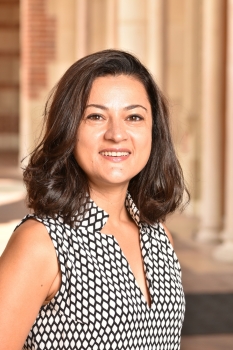
Leyla Karimli is an Associate Professor of Social Welfare at UCLA’s Luskin School of Public Affairs, specializing in global poverty reduction interventions and their impact on vulnerable children and families in Sub-Saharan Africa and Central Asia. Her research emphasizes multidimensional poverty’s psychosocial dimensions, integrating economic, relational, and health-related factors. Education: PhD from Columbia University’s School of Social Work (Social Policy focus), postdoctoral training at the University of Chicago and NYU’s McSilver Institute. Prior to academia, she worked on community development in the former Soviet Union and Sub-Saharan Africa. Research interests include poverty alleviation strategies, family dynamics, and the role of local social structures in program efficacy. Notable affiliations include UCLA’s Global Public Affairs, Global Lab for Research in Action, ICHAD, and the California Center for Population Research. Her work highlights how economic interventions like ultra-poor graduation programs improve child and family well-being through longitudinal, experimental studies. Recent publications focus on mediation models in clinical trials assessing mental health outcomes and women’s empowerment in contexts such as Uganda and Burkina Faso. Labs/Teams: Active in interdisciplinary collaborations through UCLA’s Global Public Affairs and the McSilver Institute, focusing on translating research into actionable poverty policy.
Katherine Bryant is an Assistant Professor in the Department of Political Science at Westmont College, specializing in International Politics, International Development, and Empirical Political Research. She teaches courses such as International Development (POL 124), International Conflict and Peace-building (POL 150), and International Politics (POL 020). Dr. Bryant holds a Ph.D. in Political Science from Texas A&M University and a B.A. in Political Science and International Relations from the University of Southern California. Her research focuses on the political economy of development, particularly how foreign aid agencies' organizational characteristics influence development outcomes like economic growth and health policies. She employs an original dataset to analyze agency motivation, specialization, and autonomy. Additional research interests include international security and non-state actors in civil wars. Dr. Bryant’s work has been presented at conferences such as the American Political Science Association and the International Studies Association. She is a recipient of prestigious awards including Texas A&M’s Graduate Student Merit Fellowship and membership in Phi Beta Kappa. Her current projects include papers under review from her dissertation on multilateral aid effectiveness. She advises students through her courses but no formal advisees are listed. Office hours are by appointment via email at kabryant@westmont.edu, located in Deane Hall 202.
Prof. Antoine Bommier is a Full Professor at ETH Zurich's Department of Management, Technology, and Economics, serving as Deputy Head of the department. He holds a Chair in Integrative Risk Management and Economics and is a member of the ETH Risk Center's Steering Committee. His academic journey includes a PhD in Mathematics from École Polytechnique (1993) and a Habilitation à Diriger des Recherches in Economics from the University of Toulouse (2005). Prior roles include positions at CNRS (France), University Paris-Nanterre, and Berkeley. His research focuses on risk management, intergenerational equity, uncertainty modeling, and public policy. Key areas include climate change mitigation, annuity markets, and the valuation of catastrophic risks. Bommier has been recognized with the Robert C. Witt Award (2013) and a best-paper award from the Journal of Risk and Insurance (2012). Recent work explores ambiguity aversion's impact on savings and insurance, dynamic preferences in risky environments, and equity considerations in exhaustible resource management. He also investigates mortality-linked retirement policies and the societal value of risk reduction. Editorial Roles: Associate Editor of Decisions in Economics and Finance Professional Activities: Visiting appointments at Paris School of Economics and University Paris-Nanterre Key Themes: Climate policy, actuarial fairness, recursive utility, and sustainable development
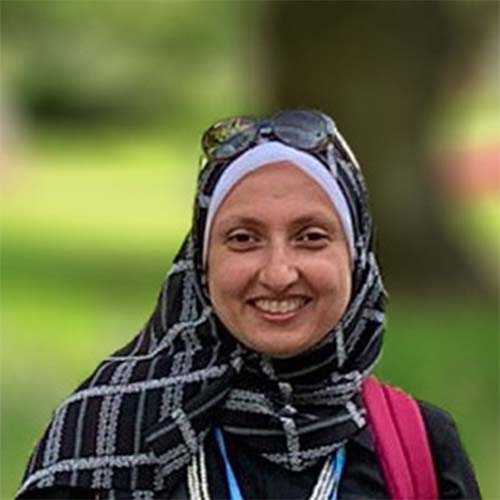
Hoda Hassan is an Associate Professor in the Department of Information Sciences and Technology at George Mason University. Her work bridges theoretical and applied domains in computer networks, Mobile Ad Hoc Networks (MANETs), and the convergence of Artificial Intelligence (AI) and the Internet of Things (IoT). Education : PhD in Computer Engineering from Virginia Tech (2010), MSc and BSc in Computer Science from the American University in Cairo (2005, 1992). Research Interests focus on designing intelligent and secure network systems. She has developed innovative frameworks, including a BLE computer-aided design toolkit for MANETs, which was commercialized by Skymind Malaysia. Her work spans AI integration in IoT, anomaly detection, cloud computing models, and network architecture evolution. Academic Leadership includes pioneering roles in founding The Knowledge Hub (TKH) Universities in Egypt and leading the Computing and Computer Science Program at Coventry University's UK offshore branch (2019–2022). Her research has been supported by a significant 2 million Egyptian Pound grant from ITAC Egypt (2015–2017).
Bryce W. Reeder serves as Associate Professor of Political Science and Director of PhD Programs at the Truman School of Government and Public Affairs, University of Missouri. Based at E331 Locust Street Building (615 Locust Street), he can be contacted via email reederbw@missouri.edu or phone 573-882-0056. His academic background includes a B.A. from Boise State University and M.A./Ph.D. from the University of Illinois. This foundation supports his expertise in conflict analysis and political geography. Reeder's research centers on political violence, conflict management, and wartime civilian consequences , utilizing geospatial analysis and event data to examine civil war dynamics. His work bridges political science, geography, and international relations to develop practical conflict resolution frameworks. Key focus areas include urban vulnerability during warfare, rebel resource strategies, and spatial patterns of violence. Analysis of his 15 most recent publications (2018-2025) reveals a consistent emphasis on subnational conflict variation , particularly how peacekeeping operations interact with local contexts to affect civilian outcomes like education and health. His scholarship demonstrates increasing sophistication in measuring spatial heterogeneity in civil wars and peacekeeping effectiveness. As Director of PhD Programs, Reeder oversees doctoral training and curriculum development within the Truman School. While specific grant details aren't provided in available materials, his leadership role indicates significant administrative responsibility for advanced degree programs in public affairs.
Julie Meyer (1897–1970) was a pioneering sociologist of labor at The New School, where she served as Associate Professor from 1948 until her retirement in 1967. She emigrated from Nazi Germany via the refugee scholar program, joining The New School in 1938. Her academic work focused on labor economics, urban sociology, and industrial relations. Educations: Ph.D. in Sociology, University of Erlangen (1922) Research Interests: Meyer’s work examined labor dynamics, urban social structures, and the intersection of economic policy with worker rights. She co-taught foundational courses like "Labor Legislation and Industrial Relations" and developed seminal courses such as "Sociology of Labor" and "Urban Sociology." Publications: Her work appeared in Social Research and she contributed a memoir chapter to Von Juden in München; ein Gedenkbuch (1959), reflecting on her student years in Munich. Advising & Grants: No formal grant details are recorded, but her role in the Nuremberg Office of the Reichsvertretung (1933–1937) involved economic aid for persecuted Jews, blending academic and humanitarian work. She mentored students in labor studies through her courses, attracting a diverse cohort from labor and management sectors. Labs/Teams: Collaborated with Frieda Wunderlich and Julius Manson in the "Labor Management Workshop" (1955–1959), fostering interdisciplinary dialogue.
Kai Barron is a Research Fellow at the WZB Berlin Social Science Center, affiliated with the Berlin School of Economics. He holds a PhD in Economics from University College London (UCL), following an MRes and MSc in Economics from UCL and a B.Soc.Sc. (Hons) in Economics from the University of Cape Town. His research focuses on behavioral and experimental economics, exploring topics such as belief formation, narratives, and discrimination. He also examines economic disparities in the Global South, with studies on child development and the psychological foundations of discrimination. Research interests span cognitive foundations of economic decisions, narratives' influence on persuasion, and applications in understanding mental models and discrimination. His recent work includes studies on alcohol policy impacts in South Africa and experiments on children's social behaviors. Kai has been involved with the CRC Rationality & Competition and contributed to collaborative projects like the 'Your Contribution Squared' initiative for Ukraine aid. He has published in top journals such as the American Economic Review, Management Science, and the Review of Economics and Statistics. His research is highlighted by interdisciplinary collaborations, including work on violence reduction, medical adherence, and gender bias in hiring. Kai actively participates in academic networks and promotes evidence-based policy through platforms like VoxDev and Bluesky.
Prof. Ahmet Mutlu Terzioglu is an Associate Professor at the Music Education Department of Alanya Alaaddin Keykubat University's Education Faculty. His academic journey includes a PhD from Gazi University (2020), focusing on Music Education, and a Master's from Atatürk University (2015). He has held positions at Ağrı İbrahim Çeçen University and currently serves as Deputy Chair of the Department of Music Education. His research focuses on Turkish folk music integration into education, instrument teaching methods (e.g., melodika, bağlama), and early childhood music pedagogy. He has published extensively on topics like folk song analysis, music curriculum evaluation, and cultural heritage preservation. His recent work includes studies on the educational applicability of Denizli folk songs and the efficacy of the melodika instrument in achieving middle school music curriculum goals. Terzioglu actively participates in academic events, organizing concerts and cultural initiatives such as the 'Alkü Baharı Concert' and 'Commemorating Atatürk' events. He co-edited books like Türkülerle Melodika Eğitimi/Öğretimi and contributed chapters to volumes on music education methodologies.
Whitney S. Rice, DrPH, MPH serves as Assistant Professor in the Department of Behavioral, Social, and Health Education Sciences at Emory University Rollins School of Public Health (RSPH), where she directs the Center for Reproductive Health Research in the Southeast (RISE). Her research program investigates social and structural determinants of sexual and reproductive health equity through participatory, justice-oriented frameworks utilizing mixed methods approaches. Her educational trajectory includes a BS from Georgia Institute of Technology, MPH from Emory University, DrPH from University of Alabama at Birmingham, and postdoctoral training at UAB. Dr. Rice teaches BSHES 540 - Research Methods and actively mentors emerging scholars through RISE's research training initiatives. Research interests center on: Structural drivers of reproductive health disparities Policy impacts on abortion and contraceptive access Intersectional stigma in HIV care for women Community-engaged health services research Reproductive justice frameworks in the U.S. South Her work consistently addresses marginalized populations with emphasis on racial equity and policy translation. Recent publications demonstrate methodological diversity spanning systematic reviews, policy evaluations, and qualitative analyses of post-Roe impacts, with strong geographic focus on Southern U.S. contexts and thematic emphasis on structural barriers to care, disinformation challenges, and community resilience strategies. Scientific recognition includes: 2019 Outstanding Young Professional Award (APHA Sexual and Reproductive Health Section) 2023 Inaugural RSPH Faculty Leadership Award 2024 BSHES Distinguished Teaching Award As RISE Director, Dr. Rice leads collaborative research initiatives examining reproductive health policy impacts while providing critical mentorship to junior investigators. Her media engagement—including the 'Health Wanted' podcast—translates research for public discourse on reproductive rights. Current work addresses evolving post-Roe landscapes through community-academic partnerships focused on actionable solutions for health equity.
Chi-Chun Lee (Jeremy) is a Professor and Associate Chair in the Department of Electrical Engineering at National Tsing Hua University (NTHU), Taiwan. He also serves as Director of the NVIDIA-NTHU Joint Innovation Center and leads the Behavioral Informatics & Interaction Computation (BIIC) Lab. His academic journey includes a B.S. (magna cum laude) and Ph.D. in Electrical Engineering from the University of Southern California (USC), USA (2007 and 2012), followed by roles as a data scientist at id:a lab and technical consultant for companies like E.Sun Bank and Allianz Taiwan. Research focuses on speech processing, affective computing, health analytics, and behavior signal processing. He is an IEEE Senior Member and holds editorial roles in top journals such as IEEE Transactions on Affective Computing and Multimedia. Key contributions include leading teams to international competitions (e.g., 1st place in INTERSPEECH 2009 Emotion Challenge) and developing AI frameworks for clinical applications like respiratory sound classification and tumor image synthesis. Recipient of prestigious awards including the NTHU-Novatek Distinguished Talent Chair (2024), National Science and Technology Council Outstanding Research Award (2023), and multiple best paper awards. His work bridges academia and industry, with collaborations extending to NVIDIA and startups like AHEAD Medicine. Research has been featured in major media outlets including Scientific American and Discovery.
Elizabeth Harrison is Professor of Anthropology and International Development at the University of Sussex's School of Global Studies and currently serves as Dean of the School of Progressive Futures. She previously held leadership roles as Head of School (2018-2023) and Head of International Development, representing Social Science on the University Executive Group. Her academic credentials include a BA in Politics, Philosophy and Economics from Oxford University, followed by an MA in Gender and Development and DPhil in Social Anthropology from Sussex. Her career progression at Sussex spans Research Fellow (1990-1996), Lecturer (1996), Senior Lecturer (2004), Reader (2013), and Professor (2017). Professor Harrison's research examines ethical claims and power dynamics in development contexts through key concepts of morality, corruption, 'development', and resilience. Her ethnographic fieldwork across sub-Saharan Africa, South Asia, and the UK investigates natural resource management—including irrigation systems in post-conflict settings and coastal zones—and social policy domains such as ageing, poverty alleviation, and community regeneration. This work consistently bridges anthropological theory with practical development challenges. Analysis of her recent publications reveals persistent thematic focus on irrigation governance, economic resilience during crises, and critical evaluations of aid systems. These works employ political ecology and anthropological frameworks to dissect local-institutional interactions, particularly in African agricultural contexts, while challenging technocratic development approaches through attention to moral economies and differentiated legitimacy. She has supervised 18 PhD students on diverse global topics including bureaucracy in Papua New Guinea, gender equity in South African policing, and food sovereignty in Nicaragua. Her research is funded by ESRC, DFID, and the Joseph Rowntree Foundation, with notable projects on small-scale irrigation innovation and economic crisis impacts. Additionally, she advises international bodies including FAO, UNRISD, Save the Children, and OECD DAC on policy matters. Professor Harrison maintains active community engagement through partnerships with Meridian Mature Citizens Forum, Seaford Seniors Forum, and East Sussex County Council, translating research into local consultation practices for social policy and planning initiatives.
Christian Groes is a Visiting Professor at Roskilde University's Department of Communication and Humanities and a member of the Center for Gender, Power and Diversity. His work focuses on gender, migration, development studies, and cultural anthropology. He holds a PhD in Anthropology from the University of Copenhagen (2011) and was a Research Fellow at Columbia University (2008). His research explores themes such as transactional sex, intimate economies, and postcolonial identities in transnational contexts. Education: PhD in Anthropology, University of Copenhagen (2011) MSc in Anthology, University of Copenhagen Research Interests: Groes examines gender dynamics in migration, sexual cultures, and the intersection of power and inequality. His recent work addresses sugardating among marginalized youth in Denmark and Mozambican women’s migration patterns. He employs ethnographic methods to analyze intimate labor, moral economies, and postcolonial frameworks. Publications Trends: His articles bridge anthropology and sociology, focusing on transnational intimacy, gender-based vulnerabilities, and the socio-cultural impacts of migration. Recent work critiques management culture myths and explores how marginalized groups navigate global inequalities through intimate economies. Awards: Sapere Aude Young Elite Scientist (2012) Society for Medical Anthropology CAR Book Prize (2018) Grants/Advisory Roles: Lead researcher on the ‘Sugardating among marginalized young people’ project (2019–2021) Member of the EQUALIS Advisory Board (2022–2025) Labs/Teams: Affiliated with Roskilde University’s Center for Gender, Power and Diversity, which focuses on intersectional research in global contexts.
Samah Fodeh is an Associate Professor in the Department of Emergency Medicine at Yale School of Medicine, with a secondary appointment in Biostatistics and affiliation with the VA Connecticut Healthcare System. Her research focuses on leveraging AI and machine learning to improve patient-centered care, particularly in healthcare communication, opioid addiction, HIV outcomes, and pandemic response. She leads the Fodeh Lab and collaborates on NIH-funded projects like the Bridge2AI Program. Education: PhD in Biomedical Informatics from Michigan State University (2010). Research Interests: Her work integrates AI techniques to analyze patient-generated and clinical data, including social media and electronic health records. Key areas include detecting patient preferences, improving pain care quality, and addressing public health crises like opioid misuse and suicide risk through Twitter-based analyses. She also develops predictive models for fall risks in aging populations with HIV. Publications: Over 39 peer-reviewed articles, emphasizing AI-driven solutions in healthcare. Recent work includes risk models for HIV patients, opioid misuse detection on social media, and pandemic-related sentiment analysis. Labs/Teams: Director of the Fodeh Lab, part of Yale’s Data Mining and Health Informatics initiatives. Collaborates with interdisciplinary teams at the Yale School of Public Health and computational biology programs.
Stephen B. Kaplan is an Associate Professor of Political Science and International Affairs at Georgetown University, with affiliations to the Institute for International Economic Policy. His research focuses on international political economy, particularly the political economy of global finance, China’s foreign investment strategies, and Latin American political economy. He has authored award-winning books, including *Globalizing Patient Capital* (2021) and *Globalization and Austerity Politics in Latin America* (2013), and has published in leading journals like *The Journal of Politics* and *World Development*. His work has been featured in major media outlets such as *The Atlantic*, *Foreign Policy*, and *The Washington Post*. Education: PhD from Yale University, MS from Georgetown University, and a BA from Tufts University. Prior to academia, he was a senior economic researcher at the Federal Reserve Bank of New York, focusing on global finance and emerging markets. His honors include the 2023 Luciano Tomassini Book Award, Wilson Center Fellowship, and APSA Mancur Olson Award. Research interests span China’s state-led finance, international indebtedness, and the political economy of macroeconomic policymaking. Current projects include a book on China’s financial statecraft in Latin America and analysis of the Federal Reserve’s mandate trilemma. He teaches courses like International Political Economy and Political Economy of Latin America. Grants and awards include the Minerva Research Initiative Grant (2015–2021), Smith-Richardson Fellowship (2014–2021), and Princeton University post-doctoral fellowship. His research bridges theoretical frameworks with empirical studies, emphasizing global financial governance and development finance.