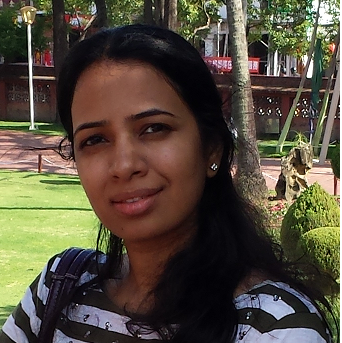
Swapna Gottipati is a Full-time Associate Professor of Information Systems (Education) and Associate Dean (Undergraduate Education) at the School of Computing and Information Systems , Singapore Management University . Holding a PhD from SMU (2014) , she specializes in text analytics, education technology, and digital business. Current focus areas: Artificial Intelligence, Data Science, Technology-Enhanced Learning Interdisciplinary applications: Health Informatics, Social Media Analytics Research Interests span text analytics, opinion mining, curriculum analytics, and digital transformation. She applies machine learning and data mining to educational systems, business processes, and health domains. Scientific Contributions: 2016 Best Paper Award (AIS SIG-ED) 2016 MOE TRF Grant 2017-2020 Conference Best Paper Nominations 2013 Best Paper Finalist (CIKM) Academic Leadership includes: Director of Undergraduate Education Co-developer of SMU-X pedagogy Founder of MyCompetencies mobile platform Organizer of curriculum analytics workshops Grant Projects include the Learning Analytics on Qualitative Student Feedback system (MOE TRF 2016) and ICDL-funded digital literacy studies. She has delivered 12+ invited talks on digital transformation in education and industry.
Giuseppe Desolda is an Associate Professor at the Computer Science Department of the University of Bari Aldo Moro , where he has been since July 2, 2022. He leads research at the Interaction, Visualization, Usability & UX (IVU) Lab , focusing on Novel Interaction Techniques , Internet of Things development, and Usable Security . His work includes coordinating the PRIN PNRR DAMOCLES project (2022-2025) on human-centric cybersecurity and leading Work Package 1 of PNRR SERICS. PhD in Computer Science from University of Bari Co-author of over 110 publications Associate Editor for IEEE Access Journal Research interests span Human-Computer Interaction (HCI), End-User Development (EUD) for IoT, and Usable Security systems. His recent work explores AI-driven usability evaluation, voice-based 3D modeling, and GDPR-compliant software frameworks. Article trends show focus on phishing mitigation , smart environment customization , and privacy-by-design methodologies. Publications appear in TOCHI , FGCS , IJHCS , and BIT . Scientific achievements include: Selected for Heidelberg Laureate Forum (2019) LARE spin-off grant (EUR 50,000, 2013) He supervises PhD students Andrea Esposito and Francesco Greco, and has advised multiple funded research projects (PRIN DAMOCLES, DevProDev, PNRR SERICS). Teaching roles include courses on Human-Centered AI, IoT Security, and Web Programming across undergraduate and graduate programs.
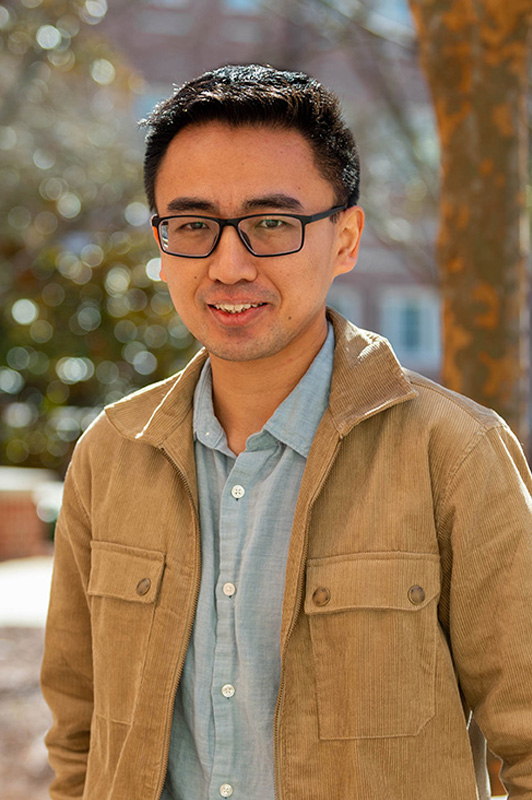
Yazhou Tu is an Assistant Professor in the Department of Computer Science and Software Engineering at Auburn University. He specializes in Cyber-Physical System Security, Side Channel Analysis, and Privacy in embedded systems. His work focuses on addressing vulnerabilities in sensors, actuators, and IoT devices to enhance security and privacy in critical systems. Education: Ph.D. Computer Science, University of Louisiana at Lafayette M.S. Software Engineering, Tsinghua University B.S. Software Engineering, Wuhan University Research Interests: Dr. Tu’s research explores cutting-edge topics such as adversarial control of embedded systems, acoustic and magnetic side-channel attacks, and privacy risks in robotic and biomedical systems. He develops novel defense mechanisms like ADC-Bank and Transduction Shield to counteract physical signal injection attacks. Key Contributions: His work spans sensor security, IoT exploitation, and healthcare technology, with notable studies on 3D printer IP theft, vehicle control via smart glasses, and keystroke tracking via audio. He also investigates physics-informed ML for porous media and glucose monitoring systems. Awards & Grants: No specific awards or grants listed in the provided data, but his prolific publication record highlights sustained research excellence. Labs & Collaborations: Engaged in Auburn’s Center for Artificial Intelligence and Cybersecurity Engineering and other interdisciplinary initiatives focused on secure embedded systems and cyber-physical infrastructure.
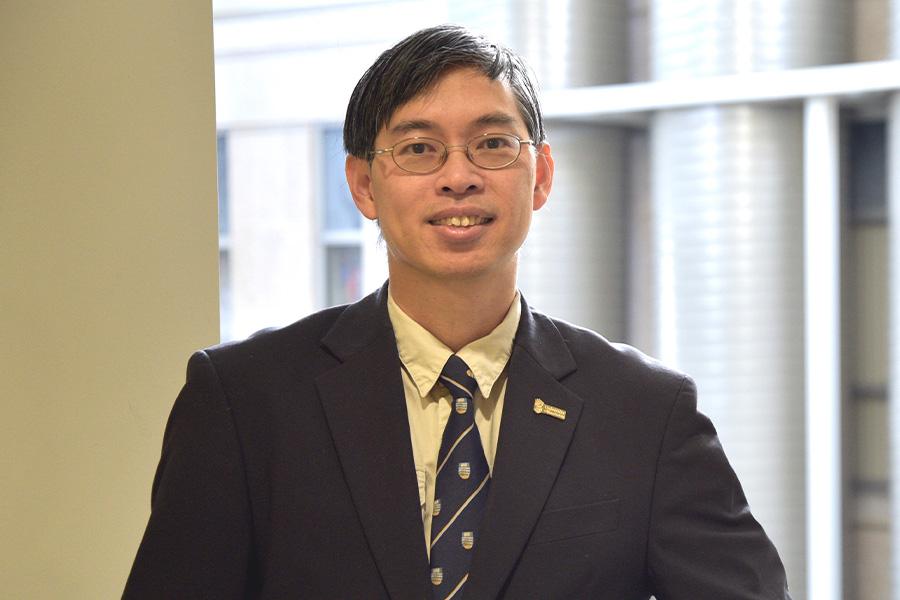
Dr. Carson Kai-Sang Leung is a Full Professor in Computer Science at the University of Manitoba's Faculty of Science. He founded and directs the Database & Data Mining Lab. His research focuses on big data science, data mining, machine learning, health informatics, and visual analytics. He holds SMIEEE and SMACM fellowships, reflecting his contributions to the field. Education: B.Sc., M.Sc., and Ph.D. from the University of British Columbia (UBC). Research interests include human-centered exploratory data mining, image databases, and scalable algorithms. He emphasizes user-driven constraints in mining processes and has developed techniques like the segment support map and OSSM for optimized frequency counting. His work on subimage queries in large image databases addresses real-world challenges in visual data retrieval. Publications span data mining, healthcare analytics, and transportation systems. His lab collaborates on projects like visual analytics for motor vehicle accidents and environmental data science for smart cities. He is affiliated with institutions such as the Institute of Industrial Mathematical Sciences (IIMS) and TRLabs. Key awards: Senior Member of IEEE (SMIEEE) and Senior Member of ACM (SMACM).
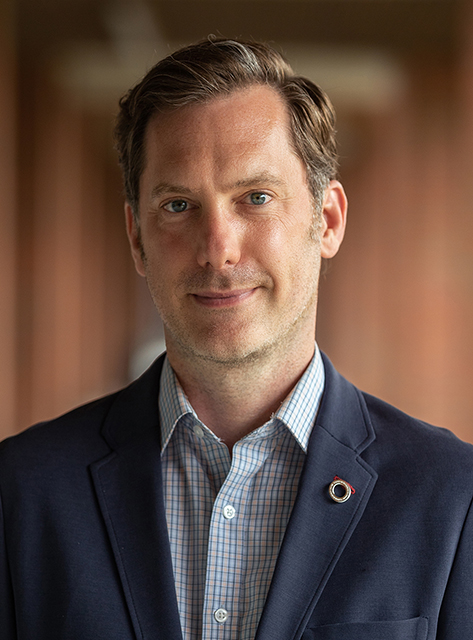
Scott Ruoti is an Associate Professor in the Min H. Kao Department of Electrical Engineering and Computer Science at the University of Tennessee, Knoxville (UTK), affiliated with the Tickle College of Engineering. He directs the USER Lab, focusing on bridging theoretical and practical gaps in cybersecurity through interdisciplinary research. His work emphasizes empirical studies of security systems, design innovations, and rigorous evaluations. Education: PhD (2016), MS (2015), BS (2011) in Computer Science from Brigham Young University, and a BA in Chinese (2011). Prior to UTK, he was a technical staff member at MIT Lincoln Laboratory, leading projects like the Cyber.gov cybersecurity architecture and blockchain research. Research interests include authentication, usable encryption, IoT security, and smart agriculture. He has secured over $4 million in funding, including NSF CAREER and USDA grants. Awards include the John Karat Award and UTK's Professional Promise in Research Award. Teaching: Courses on cybersecurity fundamentals, applied cryptography, software security, and human factors in cybersecurity. Advisor for HackUTK student club and involved in curriculum development for UTK's online MS program. Labs/Teams: USER Lab explores usable security principles through prototyping and user studies. Collaborations span academia, industry, and government (e.g., USDA, DoE).
Chuan Yue is a Professor of Computer Science at the Colorado School of Mines (Mines), leading research in Cybersecurity with a focus on Web, Mobile, Cloud, CPS/IoT, and AI systems security. He founded the Center for Cyber Security and Privacy (CCSP) at Mines and serves as its point of contact. His research emphasizes usable security, privacy, vulnerability analysis, and cybersecurity education. Education: B.E. and M.E. in Computer Science from Xidian University (China, 1996/1999), Ph.D. in Computer Science from College of William and Mary (2010). Pre-Mines career: Bell Labs (1999-2003) and University of Colorado Colorado Springs (UCCS, 2003-2013). Awards include the Daniels Fund Faculty Fellowship (2016-2019) and an Outstanding Paper Award at CODASPY 2018. Research interests span security/privacy in web-based systems, human-computer interaction, and distributed computing. His work is funded by NSF, DOD, and Meta. Key contributions include PolicyChecker for GDPR compliance analysis, WtaGraph for web tracking detection, and studies on smart home privacy negotiation. Over 50 peer-reviewed publications in top venues like IEEE S&P, CCS, and CHI. Advised numerous PhD, Master’s, and undergraduate researchers, emphasizing interdisciplinary collaboration with industry/government. Developed security tools like LoginInspector (best paper at LISA 2012) and SafeSky cloud middleware.
Dr. Christopher Collins is a Professor of Computer Science at Ontario Tech University, leading the Visualization for Information Analysis Lab (vialab). He holds a PhD from the University of Toronto (2010) and focuses on interdisciplinary research in information visualization, human-computer interaction, and natural language processing. His work addresses challenges in information overload, text analytics, and novel interfaces such as touch, pen, VR/AR. Collins' research has been featured in top-tier venues like ACM CHI and IEEE Transactions on Visualization and Computer Graphics, earning honorable mentions and over $3M in funding as sole PI. He serves on the IEEE VIS Executive Committee and Board of Governors at Ontario Tech University. Education: PhD in Computer Science, University of Toronto (2010) MSc in Computer Science, University of Toronto (2004) BSc (Hons) in Computer Science, Memorial University (2001) Research Interests: Collins' work spans information visualization , pen+touch interfaces , visual analytics , and text-driven systems . He explores how interactive technologies can democratize complex data analysis, particularly in education, healthcare, and creative domains. Recent projects include gaze-driven learning tools, context-aware camera interfaces, and bias-mitigating product review analysis. Awards: ACM CHI Honorable Mention Award IEEE VIS Honorable Mention Award Grants & Impact: Secured $3M+ in research funding. Media coverage includes New York Times and CBS Sunday Morning for innovations in visualization and text analytics. Teaches courses in human-computer interaction, computer graphics, and information visualization. Labs & Collaborations: vialab develops tools like Lexichrome , ConToVi , and NeuroSight . Active in IEEE Visualization and ACM Interactive Media communities. Collaborates with academia and industry globally.
David Karger is a Professor of Computer Science at MIT, affiliated with the Computer Science and Artificial Intelligence Laboratory (CSAIL). He holds a B.A. from Harvard University and a Ph.D. from Stanford University. His research spans algorithms, information retrieval, human-computer interaction, and theory of computation. He leads the Haystack group, focusing on information management systems and collaborative tools. Notable contributions include the Scatter/Gather browsing system, the Mavo web application framework, and projects like Wikum and Squadbox for online collaboration and harassment prevention. Education: A.B. Summa cum Laude in Computer Science, Harvard University (1989) Ph.D. in Computer Science, Stanford University (1994) Research Interests: Karger’s work integrates algorithmic theory with practical systems, emphasizing human-centered design. Current projects address misinformation detection, social interaction systems, and educational tools. His research bridges theoretical computer science and applied domains such as web technologies and healthcare informatics. Awards: ACM Doctoral Dissertation Award (1994) Mathematical Programming Society Tucker Prize (1997) National Academy of Sciences Award for Initiative in Research (2004) Advising & Grants: Karger has advised over 30 students, many of whom have gone on to leadership roles in academia and industry. His work has been supported by grants from the MIT Schwarzman College of Computing and collaborations with companies like Akamai and Google. Labs & Teams: He leads the Haystack Group within CSAIL, collaborating with interdisciplinary teams on projects such as Mavo, Wikum, and Eyebrowse. His research also intersects with the Theory of Computation and Algorithms groups at MIT.
Irene Bloemraad is the Class of 1951 Professor of Sociology and Thomas Garden Barnes Chair of Canadian Studies at the University of California, Berkeley. She serves as Director of Graduate Studies in Sociology, founding Director of the Berkeley Interdisciplinary Migration Initiative (BIMI), and co-director of the Boundaries, Membership and Belonging program at the Canadian Institute for Advanced Research (CIFAR). Her work bridges sociology, political science, and migration studies through comparative U.S.-Canada research on immigrant political incorporation. Education: Ph.D. in Sociology, Harvard University M.A. in Sociology, McGill University Bloemraad's research examines how immigrants gain political membership, the role of community organizations in civic visibility, and diversity's impact on democracy. She investigates citizenship as claims-making, spatial mismatch in immigrant service access, and political socialization in mixed-status families. Her interdisciplinary approach combines political sociology, migration studies, and methodological innovation to address membership boundaries in multicultural societies. Analysis of her recent publications reveals interdisciplinary collaboration and methodological innovation, particularly machine learning applications for identifying immigrant organizations and spatial analysis of service accessibility. Her work consistently explores citizenship claims-making, legal status effects on political socialization, and how diversity policies can enhance democratic engagement rather than erode social trust. Scientific Awards: American Cultures Innovation in Teaching prize (2013) Distinguished Teaching Award in Social Sciences (2012) Sarlo Distinguished Mentoring Award (2008) Best Article Award, Migration and Citizenship Section, American Political Science Association (2012) Bloemraad mentors graduate students through formal advising and the interdisciplinary immigration workshop, receiving the Sarlo Mentoring Award for her dedication. She secured Russell Sage Foundation funding for mixed-status family research and co-directs the Summer Institute in Migration Research Methods, providing advanced methodological training. Her community-engaged teaching partners with organizations like East Oakland Youth Development Center. She founded and directs BIMI, fostering cross-disciplinary migration research, and co-directs CIFAR's Boundaries, Membership and Belonging program. Her leadership extends to the Summer Institute in Migration Research Methods and an informal interdisciplinary immigration workshop, creating collaborative spaces for scholars examining migration's societal impacts.
Paolo Cavaliere is a Senior Lecturer in Digital Media and IT Law at the University of Edinburgh Law School, where he also serves as Co-Director of the Scottish Research Centre for Intellectual Property and Technology Law (SCRIPT) and Head of Subject Area for IP, Media and Technology. He joined the University in September 2014 and maintains active research and teaching in freedom of expression, media law, and communications law. His educational background includes a PhD in International Law and Economics from Bocconi University (Italy), an LLM in Public Law from University College London, and a Laurea in Law from the University of Pavia (Italy). Prior to his position at Edinburgh, he worked as a researcher at the Programme in Comparative Media Law and Policies at the University of Oxford's Centre for Socio-Legal Studies. Cavaliere's research focuses on the intersection of digital technologies and legal frameworks, with particular expertise in disinformation regulation, freedom of expression in digital environments, media law, and platform governance. His work examines how traditional legal concepts like truth, accuracy, and sovereignty are being redefined in the context of digital platforms and global information ecosystems. He has published extensively on topics including hate speech regulation, content moderation practices, micro-targeting in political campaigns, and the impact of disinformation on democratic processes. Analysis of his recent publications reveals a clear trajectory toward examining how legal frameworks are adapting to the challenges posed by digital platforms, particularly regarding disinformation, hate speech, and content governance. His work increasingly addresses the tension between protecting fundamental rights like freedom of expression and implementing effective regulatory measures for digital platforms. The 2024 publication on freedom of expression after disinformation represents a significant evolution in his thinking toward developing new paradigms for information rights in the digital age. Cavaliere maintains active professional affiliations as a research associate at the University of Oxford's Programme in Comparative Media Law and Policy and as a non-resident research fellow at the Central European University's Center for Media, Data and Society. He has provided expertise on telecommunications and media law to various NGOs and international organizations, including the African Union's Mission to Somalia and the Council of Europe. His teaching and research activities demonstrate strong engagement with both theoretical legal frameworks and practical policy implementation, particularly in the rapidly evolving field of digital media regulation. Cavaliere regularly contributes to policy discussions through commissioned reports, legal reviews, and participation in academic and professional networks focused on media law and digital governance.
Dr. Lee Pretlove is a Lecturer in Librarianship and Information Management at the University of Sheffield's School of Information, Journalism and Communication. He holds a PhD from the University of Sheffield (2022), focusing on runners' embodied data experiences through wearable technology. Prior roles include Systems Archivist at Cambridge University Library and Polonsky Fellow in Digital Preservation (collaborating with Bodleian Libraries). He currently holds an ESRC WRDTP Postdoctoral Fellowship (2023/24) and will assume his lecturer role post-fellowship in 2024. Education: BA (Exeter), MA (Exeter), PhD (Sheffield), PGDip in Archive Studies (Dundee). Research interests span digital preservation, extended reality (XR) in education, data privacy, and human-technology interaction. Teaching includes modules in MSc Data Science, MSc Information Management, MA Librarianship, and the BA Digital Media and Society program. He develops AR resources using WondaVR to simulate workplace environments for student learning. Awards: AHRC doctoral funding, ESRC fellowship, Polonsky Fellowship Research groups: Digital Societies and Health Informatics at Sheffield Professional memberships: ASIS&T, University of Sheffield’s Participatory Research Network Publications include work on digital preservation collaboration, archival ethics, and runner data studies. His teaching emphasizes student-centered learning, employability, and compliance with information governance frameworks like GDPR.
Dr. Siamak Shahandashti is a Senior Lecturer in the Department of Computer Science at the University of York, UK. He leads the Cyber Security & Privacy Research Group and is actively involved in academic governance roles including Chair of the Physical Sciences Ethics Committee and Programme Lead for the MSc Cyber Security programme. His research focuses on applied cryptography, privacy-preserving technologies, electronic voting systems, and blockchain applications. He holds a PhD in Computer Science and has contributed to over 40 peer-reviewed publications. Education: PhD in Computer Science, MSc in Telecommunications Engineering, BSc in Electrical Engineering. Professional qualifications include a PGCert in Academic Practice. Research interests span cyber security fundamentals, usable security mechanisms, and the intersection of cryptography with real-world systems. Notable projects include verifiable electronic voting systems and DoS-resilient blockchain protocols. He has led funded projects on e-voting scalability and contributed to standards reviews for ISO/IEC protocols. Award-winning educator in cyber security curriculum development, with active roles in admissions and academic ethics compliance. His work bridges theoretical cryptography with practical implementations, emphasizing user-centric security design principles. Labs/Teams: Cyber Security & Privacy Research Group (lead), Departmental Ethics Team (lead). Collaborations include institutions in Australia, France, and across Europe.
Margaret (Maggie) Jack is an Industry Assistant Professor at the NYU Tandon School of Engineering's Department of Technology, Culture and Society. Her research focuses on technology and work in global contexts, employing qualitative methods like ethnography and design research. She bridges Science and Technology Studies (STS), Human-Computer Interaction (HCI), and design to explore ethical dimensions of emerging technologies and their societal impacts. Jack holds a Ph.D. in Information Science from Cornell University, an MPhil in History and Philosophy of Science from the University of Cambridge, and a BA in History and Science from Harvard College. Previously, she worked in international development and tech finance in Silicon Valley. Her first book, Media Ruins: Cambodian Postwar Media Reconstruction and the Geopolitics of Technology (MIT Press, 2023), examines Cambodian media workers' efforts to reconstruct film/radio infrastructure post-Khmer Rouge and their contemporary digital preservation efforts. Her work often addresses geopolitical technology dynamics and post-conflict cultural restoration. Jack’s publications span topics including labor practices in independent work, feminist technology geopolitics, and participatory design for social justice. She advocates for humanistic approaches in engineering education to critically assess technology's societal roles.
Tara S. Behrend is the John Richard Butler II Endowed Professor at the School of Human Resources and Labor Relations, part of Michigan State University's College of Social Science. Her research focuses on workplace technologies, electronic surveillance ethics, human-AI systems, and workforce readiness. She holds a PhD and MS in Psychology from North Carolina State University and a B.S. in Psychology from the University of Pittsburgh. Her expertise spans multidisciplinary work across psychology, education, and technology. She leads the Workplaces and Virtual Environments Lab, addressing technology's psychological and social impacts in workplaces. Behrend currently serves as SIOP President and previously chaired NSF's Future of Work working group. She is a Fellow at Stanford’s Center for Advanced Study in the Behavioral Sciences and serves on the National Academies Board on Human-Systems Integration. Her publications include four books: Research Methods for Industrial and Organizational Psychology (2024), The Future of Human-Technology Partnerships at Work (2024), Technology and Measurement Around the Globe (2023), and Workforce Readiness and The Future of Work (2019). These works emphasize ethical technology integration, global workforce trends, and methodological advancements in organizational research. Behrend actively engages policymakers and global audiences on AI ethics, surveillance, and future employment strategies. Her NSF leadership included overseeing the Science of Organizations program, demonstrating commitment to advancing organizational science and workforce innovation.
Jarek Nabrzyski is the founding and current director of the Center for Research Computing (CRC) at the University of Notre Dame and a concurrent Professor in the Department of Computer Science and Engineering. He co-directs the Blockchain Research Lab with Ian Taylor and leads the Quantum Computing Lab. His research focuses on distributed ledger technologies, quantum computing, and resource management in distributed, cloud, and exascale systems. He has overseen over 50 national and international research projects developing cyberinfrastructure for science and industry, emphasizing collaboration and team-building in complex projects. Key areas of research include blockchain applications in decentralized systems, quantum algorithm optimization for near-term hardware, and cybersecurity protocols for data integrity. He actively engages in interdisciplinary initiatives like the Center for Social Science Research and has pioneered frameworks for verifiable credentials and reproducible scientific data. His work bridges theoretical advancements with practical industry partnerships. Notable contributions include hybrid cross-chain protocols, quantum Poisson solvers, and frameworks for blockchain trust analytics. His recent publications highlight advancements in AI-driven blockchain stabilization, suspicious transaction detection, and scalable quantum computing solutions. Despite no explicit mentions of awards, his leadership roles and project count underscore significant contributions to computational science and infrastructure. As a mentor, he fosters student engagement in cyberinfrastructure through initiatives like the Cyberinfrastructure Center of Excellence. His labs and collaborations drive innovation in quantum computing, blockchain interoperability, and high-performance computing systems. Current efforts include transparent data tracking for aerospace supply chains and secure scientific data reproducibility.