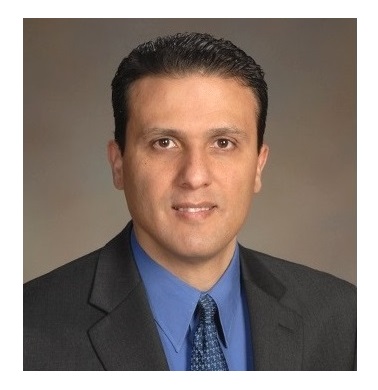
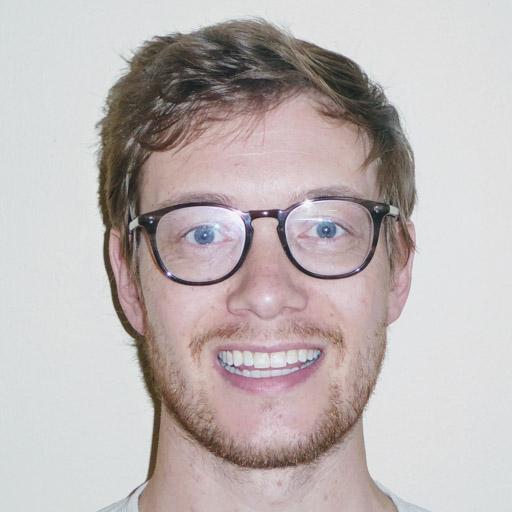
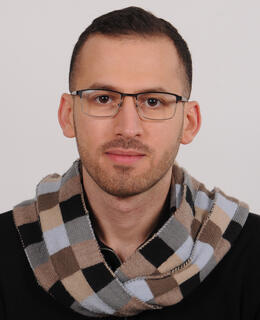
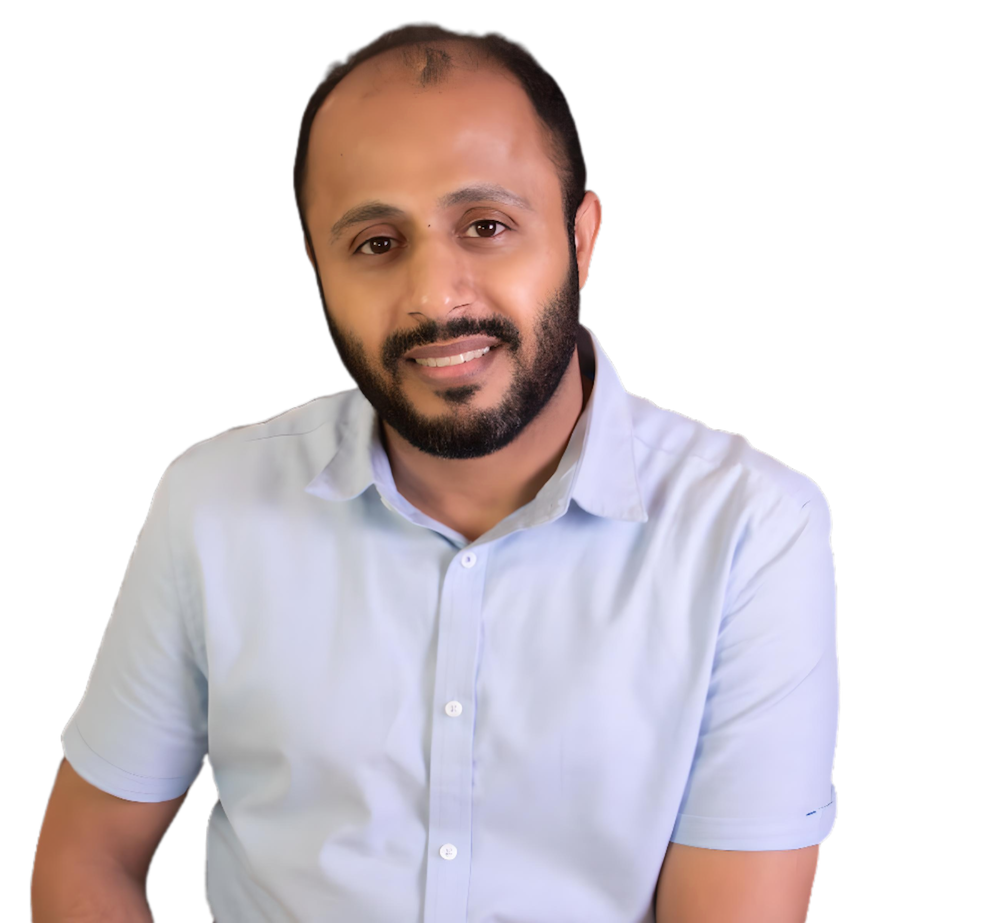
Dr. Wahab Hamou-Lhadj is a Professor and Chair at the Department of Electrical and Computer Engineering , Concordia University, and an Affiliate Researcher at NASA JPL, Caltech . He leads research in Artificial Intelligence for IT Operations (AIOps) , Software Observability , and Model-Driven Engineering , focusing on improving the reliability of digital systems in AI-driven environments.
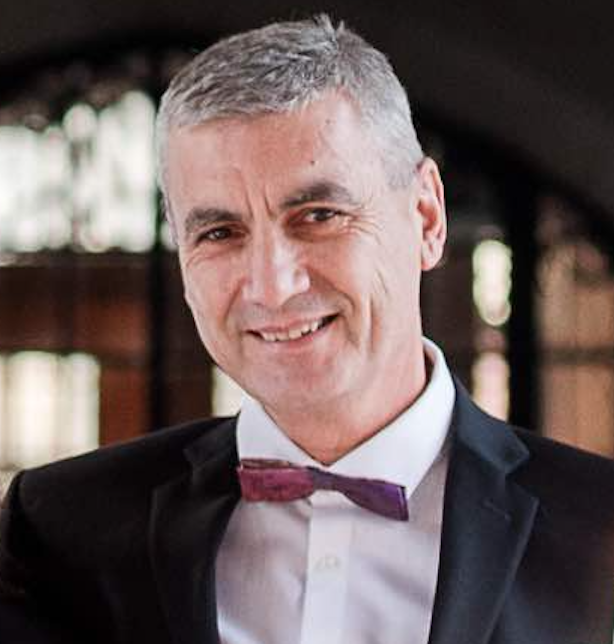
About Marin Litoiu is a Professor at York University, holding dual affiliations in the Department of Electrical Engineering and Computer Science at the Lassonde School of Engineering and the School of Information Technology in the Faculty of Liberal Arts and Professional Studies. He is a Fellow of the Canadian Academy of Engineering and a recipient of the 2020 IBM Faculty of the Year Award. His research focuses on cloud computing, self-adaptive systems, DevOps, IoT, and machine learning-driven performance engineering. Research & Awards Litoiu leads the Dependable Internet-of-Things Applications (DITA) program, funded by NSERC, and co-founded Bitnobi Inc., acquired by Myant. His notable awards include the CASCON 2019 Most Influential Paper Award and Best Paper Awards at multiple conferences. His work emphasizes practical applications of adaptive systems, cybersecurity, and smart infrastructure integration. Grants & Projects NSERC CREATE Program: $1.65M for the DITA program (2018) York Innovation, TIAP, NSERC, and OCI-funded Bitnobi incubation Leadership in multiple CASCON workshops on cloud computing and AIOps Labs & Teams Litoiu’s lab has produced impactful startups like Bitnobi and pioneered research in self-driving systems, edge computing, and AI-driven operations. His team collaborates with industry partners like IBM and explores cutting-edge topics such as LLMs in performance optimization and fault detection.
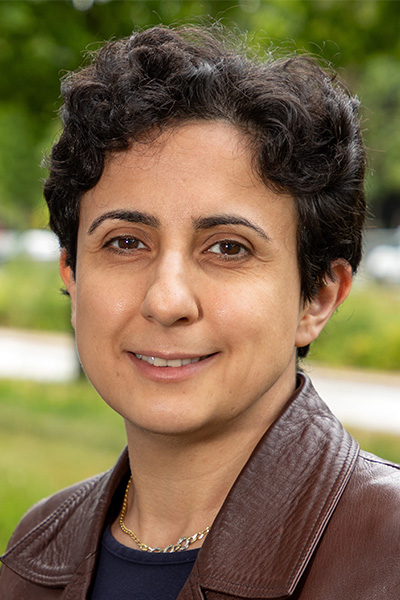
Shiva Nejati is a Professor at the University of Ottawa 's School of Electrical Engineering and Computer Science . He holds a PhD in Computer Science from the University of Toronto and previously worked as a Senior Scientist (2012-2019) and Scientist (2009-2012) at the SnT Centre (University of Luxembourg) and Simula Research Laboratory. Research focus: Software engineering for cyber-physical systems (autonomous vehicles, IoT), blending formal verification, machine learning, and search-based testing Key tools developed: ARIsTEO, SOCRaTEs, SimCoTest, EPIcuRus Editorial roles: Associate Editor for EMSE Journal (2025–), ASE Journal (2025–), IEEE Transactions on Software Engineering (2020–2024) His work combines formal methods , empirical software engineering , and AI/ML to address verification challenges in complex systems, particularly through evolutionary algorithms and surrogate modeling . Notable collaborations include industry partners in telecommunications, automotive, and aerospace sectors. Recent publications emphasize large language models for requirements analysis, adversarial testing of vision systems, and multi-objective optimization for test generation. His Sedna Research Lab actively trains graduate students in these cutting-edge methodologies.
Mohammad Hamdaqa is an Associate Professor in the Department of Computer Engineering and Software Engineering at Polytechnique Montréal, where he leads the Laboratory of Software and Emerging Technologies. His academic journey includes a Ph.D. in Electrical and Computer Engineering from the University of Waterloo (2016), a Master's in Electrical and Computer Engineering from Concordia University, an MBA from the New York Institute of Technology, and a Bachelor's in Computer Engineering from Jordan University of Science and Technology. His research focuses on the intersection of software engineering and emerging technologies, particularly examining how software engineering approaches can be adapted for complex new platforms like cloud computing and blockchain. His work spans model-driven software engineering, cloud application architecture, smart contract development, and infrastructure as code. He investigates both how traditional software engineering practices can evolve to address the challenges of modern distributed systems and how emerging technologies can transform software development processes themselves. Analysis of his recent publications reveals a strong emphasis on blockchain technologies (particularly smart contracts), cloud-native applications, and the application of AI to software engineering tasks. His work shows a consistent thread of empirical research combined with practical tool development, with increasing focus on sustainability aspects of software systems in recent years. Much of his research bridges theoretical foundations with practical implementation concerns. Professor Hamdaqa serves as a thesis supervisor for multiple graduate students, with recent completed Master's theses focusing on smart contract auditing, prompt engineering for OCL generation, model-driven epidemiology, and security practices in infrastructure as code. He actively recruits students for research projects in his laboratory. He is a member of both the IEEE Computer Society and the Association for Computing Machinery (ACM), has served on program committees for major software engineering conferences, and is on the editorial board of Service Transaction on Internet of Thing. His laboratory, the Laboratory of Software and Emerging Technologies, serves as the hub for his research activities in blockchain, cloud computing, and model-driven engineering.
Yuan Tian is an Assistant Professor in the School of Computing at Queen's University, Faculty of Arts and Science. She holds a PhD in Information Systems from Singapore Management University (2017) and a B.Sc. in Computer Science from Zhejiang University (2012). Her research focuses on integrating heterogeneous data sources to enhance software engineering practices, including data mining, recommender systems, and social network analysis. Prior to Queen's, she was a data scientist at Living Analytics Research Centre (LARC), SMU. She has held visiting positions at Carnegie Mellon University, INRIA Paris, and SAIL Canada. Research Interests: Data Mining Software Engineering Social Network Analysis Information Retrieval Recommender Systems Computer Security Recent Research Trends: Her work emphasizes AI-driven solutions for software bug management, code translation, vulnerability detection, and developer behavior analysis. Notable contributions include leveraging LLMs for technical debt repayment and enhancing code vulnerability detection via Graph Neural Networks. Awards: SMU Presidential Doctoral Fellowship (2015-2016) Best Paper Award at SANER 2017 Grants & Advising: No formal advisees listed, but active in collaborative projects with industry and academic partners. Labs/Teams: Previously associated with SOAR Group at SMU and currently leads research in Queen's School of Computing.
Istvan David is an Assistant Professor in the Department of Computing and Software at McMaster University , with research expertise spanning Digital Twins , Model-Driven Engineering , and Sustainability . His work bridges theoretical and applied domains, focusing on smart ecosystems , collaborative modeling , and AI-driven simulation . Key contributions include frameworks for digital twin evolution and interoperability in sustainable systems. Education : BSc, MSc, and PhD in Computer Engineering and Computer Science from Budapest University of Technology and Economics, and University of Antwerp. Research Areas : Digital Twins, Model-Driven Engineering, Reinforcement Learning, Smart Ecosystems, Sustainability, Collaborative Modeling, Cyber-Biophysical Systems, and Software Architecture. Recent Article Trends emphasize AI integration with digital twins, collaborative modeling in industrial contexts, and sustainable systems engineering . His work often combines machine learning with formal modeling to address challenges in technical sustainability and smart agriculture .
Margaret-Anne Storey is a Professor of Computer Science at the University of Victoria and holds the Canada Research Chair Tier I in Human and Social Aspects of Software Engineering. She is affiliated with the Faculty of Engineering and Computer Science and leads the Computer Human Interaction and Software Engineering Lab. Her research focuses on software engineering, human-computer interaction, information visualization, and collaborative work practices. Storey earned her PhD from Simon Fraser University (SFU). Her work bridges socio-technical systems, developer experience (DevEx), and the ethical integration of AI in software engineering. She has pioneered studies on remote work productivity during the pandemic, developer satisfaction, and the human-centered design of tools. Key research interests include understanding developer productivity through frameworks like SPACE (2021), analyzing code review strategies, and exploring the impact of generative AI on software engineering research. Her work often employs mixed-methods approaches and emphasizes empirical validation. Storey has been recognized with the Canada Research Chair Tier I (2020–present). Her contributions span keynote addresses at major conferences (e.g., ICSE), framework development (e.g., DASP for security practices), and interdisciplinary collaborations with organizations like Microsoft. Her research also addresses societal challenges, such as drug-checking technology and participatory culture in education. She advocates for human-centric AI in software engineering and critical questioning of AI’s societal impacts.
Tushar Sharma is an Assistant Professor in the Faculty of Computer Science at Dalhousie University, Canada. His research focuses on software engineering, particularly software quality, refactoring, technical debt, and the application of machine learning in software engineering (ML4SE). He leads the SMART Lab and is actively involved in projects related to Green AI and sustainable software development. PhD : Software Engineering, Athens University of Economics and Business, Greece (2019) MS : Computer Science, Indian Institute of Technology-Madras, India His research interests span software design and architecture, code and design quality, refactoring, technical debt, mining software repositories, and applied machine learning for software engineering. He is particularly interested in sustainable AI, green software engineering, and the use of large language models for code. His work bridges empirical studies with practical tool development to improve software maintainability and quality. His recent publications highlight a strong trend in code smell detection, refactoring automation, energy-aware AI, and the reliability of large language models in software engineering. He has developed tools like Designite and DPy and contributed datasets such as MaRV and DACOS, emphasizing empirical validation and reproducibility in software engineering research. Dean's Research Excellence Award Best Artifact Award, SCAM 2023 IEEE Senior Member Tushar Sharma has secured significant research funding, including an NSERC Discovery Grant for DevQOps, Mitacs Accelerate grants with industry partners, and contributions to the $154M Canada First Research Excellence Fund project. He actively mentors students and collaborates with industry. He leads the SMART Lab at Dalhousie and has organized workshops such as SATToSE 2018. He is also a founding developer of Designite, a widely used software design quality assessment tool.
Dr. Daniel German is a Professor in the Department of Computer Science at the University of Victoria, part of the Faculty of Engineering and Computer Science. He holds a PhD from the University of Waterloo, specializing in software engineering and open source ecosystems. His research focuses on software evolution, open source development practices, intellectual property issues in software systems, and licensing compliance challenges in modern AI/ML environments. German has contributed extensively to understanding dependency management, developer workflows, and legal aspects of software development. His work includes seminal studies on code provenance tracking (e.g., Cregit), library dependency management, and the sociotechnical dynamics of open source communities like the Linux kernel and GitHub ecosystems. German has explored critical topics such as licensing inconsistencies in software projects, ethical implications of AI-generated code, and the integration of open source components into proprietary systems. He is actively involved in software engineering education, examining how students engage with open source projects and the challenges of maintaining code quality in large-scale distributed systems. German’s research has practical implications for both academic and industrial software development practices, addressing real-world issues like security vulnerabilities in dependency chains and the legal risks of AI training data usage.
Tse-Hsun (Peter) Chen is an Associate Professor in the Department of Computer Science and Software Engineering at Concordia University, Montreal. He leads the Software PErformance, Analysis, and Reliability (SPEAR) lab, focusing on improving software quality through log analysis, AIOps, and mining software repositories. His research collaborates with companies like Microsoft, BlackBerry, and Ericsson. Education: PhD, MSc, and BSc in Computer Science from Queen's University and the University of British Columbia. Awards include the Gina Cody Research Award (2021) and recognition as one of the world's most active software engineering researchers (JSS study). Research interests include software testing, DevOps, and leveraging LLMs for SE tasks. Recent work emphasizes log parsing with LLMs (e.g., LibreLog) and fault localization. Graduates from his lab hold academic positions at institutions like York University and DePaul University. Teaching includes courses on software verification, testing, and process management. Active in program committees for ICSE, FSE, and MSR. Over 50 publications in top venues like TSE, ICSE, and FSE.
Sébastien Mosser is an Associate Professor in the Department of Computing and Software at McMaster University's Faculty of Engineering since January 2022. He previously held the same position at Université du Québec à Montréal (2019-2021) and Université Côte d’Azur (2012-2022). His research focuses on scalable software composition, domain-specific languages, and modeling, applied to cloud computing, cyber-physical systems, and micro-services architecture. PhD (2010) and MSc (2007) in Computer Science from Université Nice – Sophia Antipolis Developed the Abstract Composition Engine (ACE) for software composition automation Active in industry collaboration with technology transfer experience Registered P.Eng. license in Québec (since December 2021) His work addresses safety-critical software challenges through formal methods and industrial partnerships, particularly in the McMaster Centre for Software Certification (McSCert). As Undergraduate Advisor for Software Engineering, he combines academic leadership with technical innovation.
Peter Rigby is an Associate Professor at Concordia University's Department of Computer Science and Software Engineering. His research focuses on software engineering practices, AI-driven development tools, test automation, and developer productivity. He has contributed to industry-scale studies at Meta, Chrome, and Ericsson, addressing challenges in code reviews, flaky tests, and release management. Rigby's work emphasizes empirical software engineering and organizational dynamics in large-scale systems. His research interests span AI-assisted coding, test prioritization, code quality, and developer collaboration. He has explored the integration of large language models (LLMs) into release deployment and SQL authoring, aiming to enhance productivity and reduce risks. His studies also address practical challenges like dead code removal and batch testing optimization. Rigby's articles highlight trends in leveraging statistical models and empirical data to improve software development workflows. His work at Meta and Chrome includes analyzing developer focus, workload management, and knowledge retention amid high turnover. The research consistently bridges theory with industrial applications, emphasizing real-world impact.
Mahmoud Alfadel is an Assistant Professor in the Department of Computer Science at the University of Calgary, Faculty of Science. His research focuses on software ecosystems, build systems, security vulnerabilities, and mining software repositories. He holds a PhD in Software Engineering from Concordia University (2021), an M.S. from KFUPM (2017), and a B.S. from Damascus University (2013). Education: Bachelor of Science in Information Technology, Damascus University (2013) Master of Science in Software Engineering, King Fahd University of Petroleum and Minerals (KFUPM, 2017) Doctor of Philosophy (Ph.D.) in Software Engineering, Concordia University (2021) His research emphasizes empirical studies in DevOps practices, continuous integration, and software security. Recent work explores vulnerability lifecycle analysis in Golang, fuzz testing adoption in open-source projects, and dependency-induced waste in CI pipelines. His publications reflect a focus on improving software quality and security through automated tools and empirical analysis. Awards and Grants: No specific awards or grants are listed in the profile. His work is supported through empirical studies and academic collaborations. Advising and Labs: No student advisees or specific lab affiliations are noted in the provided materials. His research is likely conducted through collaborative projects with students and industry partners.
Dr. Israat Haque is an Associate Professor in the Faculty of Computer Science at Dalhousie University, Halifax, where she leads the Programmable and Intelligent Networking (PINet) research group. She also holds an adjunct professorship in the Department of Computing Science at the University of Alberta. PhD in Computer Science, University of Alberta NSERC Postdoctoral Fellow, University of California, Riverside MSc in Computer Science, Concordia University Her research focuses on developing high-performance, secure, and dependable distributed and emerging networking systems, with key interests in Software-Defined Networking (SDN), Cyber-physical Systems (CPS), Internet of Things (IoT), 5G/6G technologies, and AI/ML applications in networking. She applies data-driven approaches to solve real-world problems in network programmability, stream processing, and edge/cloud computing. The 15 most recent publications highlight a strong trend in in-network computing, IoT security, AI-driven network reliability, and stream processing. Her work spans from theoretical surveys to practical system implementations, often leveraging programmable data planes (P4), machine learning, and hardware acceleration to address challenges in performance, security, and fairness in distributed systems. Dr. Haque has received numerous prestigious recognitions: IEEE/ACM N2Women Rising Star Award (2021) ACM FAccT Best Paper Award (2023) IEEE WICE Outstanding Mentoring Award (2025) University of Alberta Alumni Honour Award (2024) Digital Nova Scotia Thinking Forward Award (2022) Intel Fast Forward Initiative Winner (2022) President’s Research Excellence Award, Dalhousie (2021) She actively mentors PhD and MSc students and leads externally funded research projects, including a Canada First Research Excellence Fund (CFREF)-supported initiative on Securing Smart Environments. She has served on editorial boards of IEEE Transactions on Vehicular Technology and IEEE Communications Magazine, and on program committees of top conferences such as IEEE ICNP, IEEE NetSoft, and ACM SIGCOMM. Her lab, PINet, fosters innovation in networking systems and produces high-impact research with real-world applicability. Dr. Haque leads the PINet research group, which includes current PhD and MSc students working on cutting-edge topics like post-quantum cryptography, network programmability for security, and large ML model security. The group collaborates with institutions such as the University of Alberta, Laval University, and Concordia, and has strong industry ties with Intel, Meta, Amazon, and Facebook.
Taher Ghaleb is an Assistant Professor in the Computer Science Department at Trent University, Peterborough, Canada. He completed his Ph.D. at Queen’s University under Prof. Jenny Zou, followed by postdoctoral research at the University of Ottawa and a senior research role at the University of Toronto. His research focuses on applying data science and AI to address software engineering challenges. Education: Ph.D., Queen’s University, Software Evolution & Analytics Lab (SEAL) Postdoctoral Fellow, University of Ottawa Senior Research Position, University of Toronto Research Interests: Data-Driven Software Analytics: Empirical analysis of software development practices. AI in Software Engineering: Leveraging generative AI for code generation and bug detection. Continuous Integration/DevOps: Optimizing CI/CD pipelines for efficiency and reliability. LLM-Oriented Development: Integrating language models into software lifecycle processes. Publications: Taher’s work spans CI/CD practices, test case minimization, and AI-driven software testing. Recent trends emphasize empirical studies on open-source Android apps and flaky test prediction using language models. Awards: No explicit awards listed, but holds multiple U.S. patents related to software engineering and compiler systems. Advising & Grants: Seeks Master’s students and interns to join his team. Teaches courses like Software Design & Modelling (COIS 2240) and Software Engineering Project (COIS 4000) at Trent University. Labs & Teams: Formerly part of the Software Evolution & Analytics Lab (SEAL) at Queen’s University.