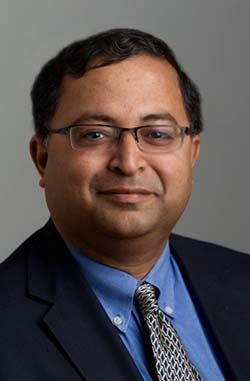
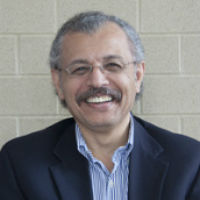
Dr. Rafid Al-Khannak is an Associate Professor in Computing at Buckinghamshire New University. He holds a PhD in Engineering and IT from the University of Bolton, completed in collaboration with Siemens AG. His research focuses on engineering and IT operational development, particularly in cloud computing, distributed systems, cybersecurity, and infrastructure automation. Al-Khannak maintains industry collaborations with Amazon and Siemens on cloud implementation and security projects. Key research areas include: Secure cloud migration frameworks using AWS hybrid models Infrastructure automation through CI/CD pipelines Penetration testing methodologies for cloud applications AI-enhanced education system transformation Healthcare application development for specialized needs
Rei Sanchez-Arias is a Teaching Professor and Director of the Master of Applied Data Science (MADS) program at UNC Chapel Hill's School of Data Science and Society. His expertise includes data mining, machine learning algorithm development, and data science pedagogy. He previously held positions at Florida Polytechnic University and St. Thomas University. Research interests span educational tools, health informatics, and optimization methods. Recent work involves AI for endoscopic surgery evaluation, meta-analysis of MLOps tools, and curriculum design for data science programs. Awards include the Excellence in Teaching Award from Florida Polytechnic. Student mentorship focuses on data wrangling and analytics projects.
Paul Nuyujukian serves as an Assistant Professor of Bioengineering and Neurosurgery, with courtesy appointment in Electrical Engineering at Stanford University. He is a Faculty Scholar of the Wu Tsai Neurosciences Institute, directing the Brain Interfacing Laboratory where his team develops neural interface technologies for clinical applications in stroke and epilepsy. Education: MD, Stanford University (2014) PhD in Bioengineering, Stanford University (2012) BS, UCLA (2006) Dr. Nuyujukian's research integrates motor systems neuroscience with neuroengineering to decode brain activity during movement and recovery from injury. His laboratory pioneers brain-machine interface (BMI) platforms that translate neural signals into communication and control systems, with particular emphasis on intracranial EEG recording and real-time neural decoding. Current work focuses on developing clinically viable BMI solutions for neurological conditions through both preclinical models and human trials, advancing our understanding of neural population dynamics in health and disease. Recent publications reveal strong trends in intracranial EEG acquisition systems, seizure detection algorithms using information theory, and closed-loop BMI applications for ambulatory neuroscience. His work bridges fundamental neuroscience with clinical translation, particularly in epilepsy monitoring, chronic pain management, and neural prosthetics for paralysis. A notable emphasis exists on creating scalable, minimally invasive recording platforms that reduce clinical burden while maintaining high-fidelity neural data. Scientific Awards: No specific awards listed in provided materials As director of the Brain Interfacing Laboratory, Dr. Nuyujukian mentors students and collaborators in neural engineering research while securing grant funding for BMI development. His group maintains active collaborations with Stanford's Department of Neurosurgery and Neurology for clinical translation, with current projects including real-time decision-state decoding and personalized network mapping for pain management. The laboratory operates advanced facilities for both animal and human neural recording, emphasizing seamless integration of engineering innovation with clinical neuroscience. The Brain Interfacing Laboratory comprises multidisciplinary scientists and engineers developing next-generation neural interfaces. Current initiatives include the LiCoRICE platform for ambulatory neuroscience, seizure detection systems using compression-enabled entropy estimation, and ketamine's effects on hippocampal connectivity. The team actively participates in clinical trials for BMI applications in stroke rehabilitation and epilepsy, with strong partnerships across Stanford's medical and engineering schools to accelerate technology translation.
Steve Jones is a Lecturer in Digital Business and Cybersecurity at Norwich Business School, University of East Anglia. His interdisciplinary research focuses on DevOps adoption in organizations, cybersecurity in near-field communication systems, and software engineering practices. He holds a PhD from Norwich Business School, an MSc in Advanced Computing Science, and a BSc in Business Information Systems. Education: PhD in Interdisciplinary Research (Norwich Business School, UEA) MSc in Advanced Computing Science BSc (Hons) in Business Information Systems Research Interests: Steve’s work bridges business and technology, addressing topics such as DevOps management in SMEs, cybersecurity challenges in emerging technologies, and software development practices. He has conducted a 14-month qualitative case study on DevOps impacts and explored the security of NFC-based systems. Articles Overview: His publications span DevOps adoption challenges, scientific software deployment, and cybersecurity vulnerabilities. Recent work emphasizes organizational transformation in IT practices and authentic project-based learning in engineering education. Professional Activities: Member of Norfolk & Suffolk Constabularies' Joint Cybercrime Unit (NS Cyber) since 2023 Prior roles include Cyber Security Advisor (Joint Cybercrime Unit) and freelance systems trainer for NHS trusts and SMEs Advising & Grants: Currently not supervising postgraduate students. No explicit grants mentioned, but contributions to collaborative platforms like D-UEA-ST reflect active project involvement.
Dr. Daniel Olabanji is a Lecturer in Software Development (Web) at Solent University's Department of Computing and AI, part of the School of Science and Engineering. His research focuses on cloud-native architecture, application migration strategies, and multi-tenancy in cloud systems. He contributes to UN Sustainable Development Goals through his work in scalable computing solutions. Research Outputs (2022–2024): 2024 : Published conference paper on decision frameworks for cloud-native migration 2023 : Peer-reviewed journal articles on cloud portability validation and multi-tenancy analysis 2022 : Early-stage work on portability decision frameworks Collaborations include international peer-review activities for journals like WSEAS Transactions on Computers and academic partnerships in cloud computing research.
Philipp Haindl is a lecturer at the Department of Computer Science and Security at St. Poelten University of Applied Sciences. His work focuses on software engineering, cybersecurity, and AI integration in education and manufacturing. Software Engineering Cybersecurity Artificial Intelligence DevOps Quality Assurance Research Interests: Dr. Haindl explores software metrics, inter-service security in microservices, and AI tools like ChatGPT in programming education. He investigates quality models and non-functional requirements in DevOps environments. Publications: Recent work includes studies on ChatGPT's impact in software engineering education, systematic reviews of microservice security, and frameworks for human-AI teaming in manufacturing.
Tse-Hsun (Peter) Chen is an Associate Professor in the Department of Computer Science and Software Engineering at Concordia University, Montreal. He leads the Software PErformance, Analysis, and Reliability (SPEAR) lab, focusing on improving software quality through log analysis, AIOps, and mining software repositories. His research collaborates with companies like Microsoft, BlackBerry, and Ericsson. Education: PhD, MSc, and BSc in Computer Science from Queen's University and the University of British Columbia. Awards include the Gina Cody Research Award (2021) and recognition as one of the world's most active software engineering researchers (JSS study). Research interests include software testing, DevOps, and leveraging LLMs for SE tasks. Recent work emphasizes log parsing with LLMs (e.g., LibreLog) and fault localization. Graduates from his lab hold academic positions at institutions like York University and DePaul University. Teaching includes courses on software verification, testing, and process management. Active in program committees for ICSE, FSE, and MSR. Over 50 publications in top venues like TSE, ICSE, and FSE.
Prof. Peter Hertkorn is a full professor of Computer Science at Reutlingen University's Faculty of Computer Science, specializing in programming languages and databases. He holds leadership roles including Chair of the Examination Board for Media and Communication Informatics B.Sc. and BAföG Officer for the same program. His research focuses on model-driven software development, domain-specific languages, DevOps automation, interactive learning technologies, and distributed ledger technologies. He co-leads the Software Engineering and User Experience (swuxLAB) and Distributed Ledger Technologies (DLT-LAB) research groups. Education background includes a Diplom-Informatiker (master's equivalent) and Dr.-Ing. (PhD) from University of Stuttgart. Professional experience includes 5 years at T-Systems International GmbH and prior academic roles at University of Stuttgart. His teaching focuses on Software Engineering and Database Systems courses. Publications span interactive learning environments, collaborative innovation systems, and AR-based knowledge spaces. Active in academic service roles and interdisciplinary research collaborations since 2009.
Martha Tsigkari serves as an Associate Professor at The Bartlett School of Architecture, University College London (UCL), where she bridges architectural practice with cutting-edge computational research. Her position situates her at the forefront of digital transformation in the built environment, with institutional affiliations spanning UCL's Faculty of the Built Environment and direct contributions to UN Sustainable Development Goals 4 (Quality Education), 11 (Sustainable Cities), and 13 (Climate Action). Her research program critically examines the integration of artificial intelligence, machine learning, and cognitive psychology into architectural design processes. Key investigations include spatial and visual connectivity analysis, XR-enhanced collaborative design environments, and AI-driven optimization of building performance. She explores how digital tools reshape creativity, professional identity, and sustainability outcomes in architecture, with particular focus on data commoditization, skills evolution, and human-AI collaboration in design workflows. Her interdisciplinary approach connects architectural theory with computational neuroscience and industrial digitalization trends. Tsigkari's publication trajectory reveals a clear evolution from computational structural analysis (2012-2017) toward AI ethics and professional transformation (2022-2024). Early work established foundations in performance-driven facades and material systems, while recent output confronts existential questions about architectural practice in the AI era. Her scholarship consistently addresses the tension between technological capability and human-centered design values, with growing emphasis on sustainable development frameworks and educational implications. Scientific Awards: No major awards are documented in the available records. Advising and Grants: While specific supervisees and funding mechanisms aren't detailed in current sources, her extensive collaborative network across 30+ publications indicates active mentorship and research leadership. Co-authorship patterns suggest involvement in multi-institutional projects addressing AECO industry digitalization, with potential ties to UK research councils and industry partnerships like RIBA. Labs and Teams: Tsigkari operates within The Bartlett's digital research ecosystem through recurring collaborations with Kosicki, Tarabishy, and Psarras. Her work manifests in experimental toolsets including Glaucon (XR design environment), HYDRA (optimization framework), and SandBOX (conceptual design system), indicating leadership in UCL's computational design labs focused on human-AI interaction and sustainable building technologies.
Marco Aurélio Gerosa is a Professor at Northern Arizona University and was previously an Associate Professor at the University of São Paulo (USP), Brazil . He is affiliated with the School of Informatics, Computing, and Cyber Systems (SICCS) at NAU and the Department of Computer Science at USP. His research focuses on the Human Aspects of Software Engineering , including Software Engineering Education , Computer Supported Cooperative Work (CSCW) , and AI-Assisted Software Engineering . He has published extensively on topics such as Open Source Software development, Bots and Chatbots in software engineering, and Mining Software Repositories techniques. His recent work explores Using Large Language Models (LLMs) for educational purposes in programming, data science, and software engineering Developing chatbots to facilitate newcomer onboarding to OSS projects Investigating the evolution of Integrated Development Environments (IDEs) Assessing the impact of software bots on projects Understanding how to design effective chatbot languages Dr. Gerosa has received numerous scientific awards, including ACM SIGSOFT Distinguished Paper Award Best paper awards at ICSE and International Symposium on Open Collaboration IEEE Computer Society TCSE Distinguished Paper and Service Awards Productivity grants from CNPq (Brazilian Council for Scientific and Technological Development) He has graduated numerous PhD students who are now researchers in top institutions worldwide and has been a mentor to many more at various levels. His research projects have secured over USD 1 million in funding. Dr. Gerosa is also involved in the development of tools and environments for software engineering, including MetricMiner for repository analysis and various gamification platforms to enhance developer engagement. He brings over 25 years of teaching experience across multiple universities, teaching courses ranging from Introduction to Programming to Advanced Topics on Web Development and Collaborative Systems Development.
Prof. Venkat N. Krovi serves as the Michelin Endowed Chair Professor of Vehicle Automation in the Departments of Automotive Engineering and Mechanical Engineering at Clemson University's College of Engineering, Computing and Applied Sciences (CECAS). He directs the Automation, Robotics and Mechatronics Laboratory (ARMLab) at the International Center for Automotive Research (CU-ICAR), focusing on smart embedded systems for autonomy in challenging environments. He earned his Ph.D. in Mechanical Engineering and Applied Mechanics from the University of Pennsylvania in 1998. His research leverages distributed autonomy and human-robot synergy to extend human capabilities, with applications spanning plant automation, consumer electronics, automobile, defense, and healthcare. The work emphasizes lifecycle treatment (design through verification) of robotic systems under uncertainty. Recent publications (2024-2025) demonstrate strong trends in digital twin frameworks for autonomous vehicle validation, sim2real transfer via reinforcement learning, and integration of large language models for editable simulations. Key themes include scalable cloud-based architectures, Koopman operator theory for robustness, and containerization for reproducible robotics development. His accolades include: National Science Foundation (NSF) CAREER Award Petro-Canada Young Innovator Award Multiple best paper awards at conferences and journals ASME Dedicated Service Award (2024) Prof. Krovi has advised doctoral students including Dr. Srivatsan Srinivasan (2024). His research receives substantial funding from NSF, DARPA, ARO, and industrial partners like Michelin. He leads the NSF I/UCRC RoSeHuB center and the AutoDRIVE ecosystem for autonomous driving education. As ARMLab director, he oversees projects including OpenCAV, the Robotics for AV Systems Bootcamp, and containerized terramechanics simulations. The lab specializes in mechatronic design, verification/validation frameworks, and human-autonomy coexistence studies for next-generation mobility solutions.
Dr. Kla Tantithamthavorn is a Senior Lecturer and Director of Engagement & Impact at Monash University's Faculty of Information Technology. He holds a 2020 ARC DECRA Fellowship and specializes in software engineering, explainable AI, and digital health. His research focuses on defect prediction models and their integration into CI/CD pipelines, with notable contributions like the ScottKnott ESD test R package (14,000+ downloads). He leads projects such as RAISE (Responsible AI Software Engineering) and collaborates with organizations like CSIRO and Atlassian. Education: PhD and M.Eng in Software Engineering from Nara Institute of Science and Technology (Japan). Research areas include empirical software engineering, machine learning for quality assurance, and AI-driven cybersecurity. He serves on editorial boards for IEEE Transactions on Software Engineering (TSE) and Empirical Software Engineering (EMSE). Key Projects: Automated Testing of LLMs (CSIRO), RAISE, LLM4SE (Atlassian) Media Contributions: Featured in articles on emergency care analytics and JITBot defect prediction. His work addresses critical domains like e-Health, with deployed systems reducing patient wait times in Australian hospitals. He actively supervises Honours/Master/PhD students and advocates for 'IT for Social Good' initiatives.
Dr. Khandaker Mamun Ahmed is an Assistant Professor at The Beacom College of Computer & Cyber Sciences, Dakota State University. He teaches undergraduate and graduate courses in artificial intelligence, algorithms, and data structures. He holds a Ph.D. in Computer Science from Florida International University (2024), an M.Sc. from the same institution (2023), and a B.Sc. in Software Engineering from the University of Dhaka (2016). His research focuses on computer vision, federated learning, cybersecurity, explainable AI, vision-language models, and optimization algorithms. He has contributed to peer-reviewed publications and conference presentations, with notable work in federated learning for IoT, anomaly detection in videos, and AI applications in healthcare and agriculture. Recent articles highlight advancements in federated learning frameworks, AI-driven healthcare systems, and real-time object detection using neural networks. His work also addresses cybersecurity challenges in DevOps pipelines and generative AI for educational datasets. Recipient of the 'Best graduate student in research award' (2022), Dr. Ahmed advises on AI ethics and mentors students through academic-industry collaborations. His research bridges theoretical computer science with practical applications in agriculture, healthcare, and infrastructure monitoring.
Emil Salib is a Professor in the Department of Computer Science and Information Technology Program at James Madison University (JMU), part of the College of Integrated Science & Engineering. His expertise spans networking, cybersecurity, and cloud computing. He holds a Ph.D. in Solid State Physics from the University of Wollongong and dual bachelor's degrees in Electrical Engineering and Physics from Cairo University. Education: Ph.D. in Solid State Physics, University of Wollongong, Australia M.S. in Telecommunications Networks, Cairo University B.S. in Electrical Engineering (Electronics and Communications), Cairo University B.S. in Physics, Cairo University Research Interests: Focuses on DevOps tools (Git, Ansible), cloud platforms (OpenStack), SDN/SD-WAN, wireless security algorithms, and blockchain applications. His work bridges theoretical physics and practical network engineering, emphasizing automation and infrastructure orchestration. Experience: Executive Director at Ericsson/Telcordia Technologies Director at Bellcore for network software systems Postdoctoral Researcher at University of Hull's Magneto-Optics Group Courses Taught: Includes advanced networking, cybersecurity, telecommunications, and capstone project courses. Employs industry-relevant tools like Docker, Kubernetes, and OpenStack in curriculum. Labs/Teams: Leads initiatives in JMU's Information Technology program integrating industry standards with academic rigor.
Agostino Cortesi is a Full Professor at Ca' Foscari University of Venice , affiliated with the Department of Environmental Sciences, Informatics and Statistics. He serves as Rector's Delegate for Research Quality Assessment and Deputy Coordinator of the Scientific Committee for the Innovation Ecosystem Project. His academic career includes a PhD in Applied Mathematics and Informatics from the University of Padova (1992), a postdoctoral fellowship at Brown University, and visiting professor roles at institutions such as the University of Illinois and École Normale Supérieure Paris. Research interests focus on software engineering , static analysis , security applications , and abstract interpretation . He has pioneered techniques for formal verification of software systems and explored cybersecurity in e-Government and robotics. His work spans over 200 publications in top journals and conferences (e.g., ACM TOPLAS, IEEE TSE, POPL, PLDI). Key contributions include advancements in abstract domains for behavioral property verification and security-oriented analysis frameworks. He has held leadership roles including Vice-Rector at Ca' Foscari, Dean of Computer Science programs, and Chair of the Department of Computer Science. Cortesi coordinates EU Horizon 2020 projects (e.g., Families_Share €1.6M) and regional initiatives like CEVID (€360K). He founded Factors , a university spin-off focused on robotic systems verification, which won the 2020 Veneto SmartCup ICT Prize. Education: PhD in Applied Mathematics and Informatics (1992, University of Padova) Editorial Roles: Co-Editor-in-Chief of Springer’s 'Services and Business Process Reengineering', and member of editorial boards for 'Computer Languages' and others Grants: Over €3M in EU and regional funding for projects in cybersecurity, Industry 4.0, and digital innovation Teaching includes courses on Software Correctness , Data Programming , and Computer Networks across Computer Science and Management programs. His research lab actively engages in industrial partnerships with Cisco, Leonardo, and AGID (Italy’s Digital Agency).