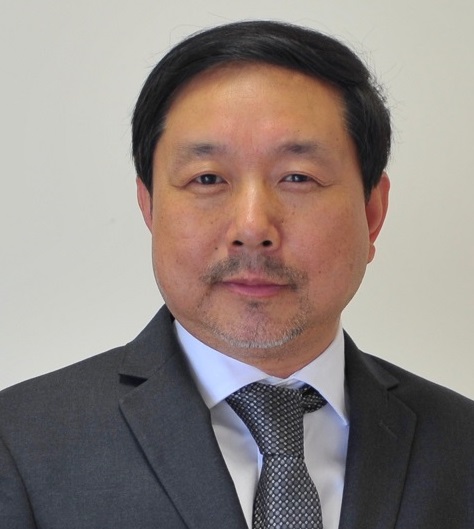
Dr. Wei Cai is the Clements Chair Professor in Southern Methodist University's Department of Mathematics. He develops advanced computational methods including machine learning, stochastic, and deterministic algorithms for electromagnetic, quantum, and wave phenomena. His research includes fast multipole methods for layered media, deep neural networks for PDEs, and electromagnetic wave scattering. Cai authored 'Computational Methods for Electromagnetic Phenomena' and has published over 130 refereed articles. His work is funded by NSF, DOE, ARO, NIH, and AFOSR. Cai serves on editorial boards for Communications in Computational Physics and Journal of Computational Mathematics.
Dr. Laibin Huang is an Assistant Professor in the Department of Biology at Saint Louis University (SLU), affiliated with the College of Arts and Sciences. His research focuses on microbial ecology, bioinformatics, and environmental science, particularly investigating how microorganisms adapt to global changes and influence nitrogen cycling and ecosystem health. Education: Ph.D. in Microbial Ecology (University of Florida, 2017), M.S. in Environmental Ecology (Beijing Normal University, 2012), B.S. in Ecology (University of Science and Technology Beijing, 2009). Lab: Leads the Huang Lab, which integrates classical and cutting-edge omics techniques to study microbial responses to environmental stressors (huanglab.slu.edu). Research Directions: Community/restoration ecology of soil microbiomes and microbial evolution/diversification related to nitrogen cycling. Key projects include studying nitrogen leaching in agricultural soils, microbial roles in wetland restoration, and the impact of invasive species on soil microbial networks. Dr. Huang mentors PhD student Nikky Omole-Ohonsi, M.S. student Muni Sai Ganesh, and undergraduate researcher Hannah Hellmeier. His work has been published in journals like Environmental Science & Technology , ISME Journal , and Molecular Ecology . Lab facilities and collaborations span agroecosystems in Florida and Illinois, with a focus on interdisciplinary approaches combining fieldwork, lab analysis, and computational modeling.
Aaron Turon is a researcher at the Max Planck Institute for Software Systems (MPI-SWS), where he focuses on foundational aspects of programming languages, concurrency, and formal verification. His work bridges theoretical insights with practical applications, particularly in systems such as Rust and frameworks for reasoning about weak memory models. His research interests include concurrent programming, type systems, formal methods, and scalable distributed systems. He has contributed to seminal projects like the Iris framework for concurrent reasoning and the development of LVars for quasi-deterministic parallelism. Turon's publications emphasize practical formal verification techniques, such as separation logic and logical relations, to ensure correctness in complex systems. His work on Rust highlights the translation of theoretical concepts into industrial-strength tools. He collaborates with academic and industrial partners to advance programming language design, concurrency control, and software engineering practices.
Sabita Maharjan is a Full Professor at the Department of Informatics, University of Oslo, Norway, and a Senior Research Scientist (adjunct) at Simula Metropolitan Centre for Digital Engineering. She holds a PhD in Networks and Distributed Systems from the University of Oslo (2013) and has been active in research and academic leadership since. Her roles include Associate Editor for IEEE Internet of Things Journal and Guest Editor for several high-impact journals. Education: Ph.D. in Networks and Distributed Systems (2013), University of Oslo; M.Sc. in Antenna and Propagation (2008), Tokyo Institute of Technology. Prior roles include Postdoctoral Fellow at Simula Research Lab (2014–2016) and Visiting Scholarships at Zhejiang University and UIUC. Research focuses on Green Networks, Energy Efficiency, Smart Grid, Vehicular Networks, and Machine Learning applications. Key interests include network security, privacy-preserving systems, and edge computing. Recent work emphasizes digital twins, federated learning, and resilience in smart grids. Publications span 5G/6G, blockchain for energy systems, and AI-driven network optimization. Notable contributions include privacy-preserving pricing schemes and secure vehicular edge computing frameworks. Awards include three Best Paper Awards (IEEE SCALCOM 2015, IEEE CS CLOUD 2016, IEEE ICCT 2019) and the 2020 IEEE TCGCC Outstanding Young Researcher Award. She is an IEEE Senior Member since 2019. Leadership roles: Vice-Chair of IEEE TCGCC SIG on Green AI (2020–present), Member of UiO’s AI/ML Study Programs Working Group. Supervises students in Energy Informatics and leads projects like CRISP (NFR-funded) and PriTEM. Research groups: Digital Infrastructure and Security (DIAS) at UiO and Simula’s Center for Resilient Networks. Active in organizing summer schools on Energy Informatics and Green Computing.
Huiya Yan is a Professor in the Department of Mathematics & Statistics at the University of Wisconsin-La Crosse. His research focuses on Graph Theory and its applications, including topics like supereulerian graphs, connectivity indices, and network topologies. He has held academic positions since 2005, progressing from a Graduate Teaching Assistant at West Virginia University (2005-2009) to Assistant (2009-2013), Associate (2013-2019), and Full Professor (2019-present) at UWL. Education: Ph.D., West Virginia University (2009) M.S., Beijing Institute of Technology (2005) B.S., Shandong University of Technology (2002) Professor Yan’s work bridges theoretical graph theory with practical applications in wireless networks and combinatorial optimization. His recent research explores topological indices (e.g., Zagreb index) and their implications for graph properties like Hamiltonicity and connectivity. He has published extensively in journals such as Discrete Applied Mathematics and IEEE Transactions on Mobile Computing , with a focus on advancing understanding of graph structures and network performance. His teaching spans undergraduate and graduate courses in mathematics, including Discrete Mathematics, Calculus, and Graph Theory. He advises students through initiatives like the Putnam Math Competition practice sessions and maintains virtual office hours for accessibility.
Prof. Michael Drmota is a distinguished academic at TU Wien's Department of Combinatorics and Algorithms, part of the Faculty of Mathematics and Geoinformation. He leads research in discrete mathematics, focusing on combinatorics, number theory, and random discrete structures. His work bridges pure mathematics with applications in computer science and statistical physics. Research Interests: Drmota's expertise spans analytic combinatorics, additive number theory, random graph theory, and the study of automatic sequences. He explores topics like prime number distributions, planar map structures, and stochastic processes in discrete systems. His methods often involve generating functions, singularity analysis, and probabilistic techniques. Key Projects: He coordinates major research initiatives including Arithmetic Randomness , Shape Characteristics of Planar Maps , and Infinite Singular Systems . These projects investigate foundational questions in combinatorics and number theory, with implications for algorithm design and mathematical physics. Advising & Collaboration: Drmota supervises graduate students and collaborates internationally. Notable advisees include Andreas Nessmann (discrete polyharmonic functions), Lucas Unterberger (Erdős-Ko-Rado theorems), and Guan-Ru Yu (pattern occurrences in planar maps). His work appears in top-tier journals and conference proceedings. Labs/Teams: Active in TU Wien's Network Lab , he fosters interdisciplinary research on complex networks and algorithmic combinatorics.
Milad Siami is an Associate Professor in the Department of Electrical & Computer Engineering at Northeastern University. His research focuses on sparse sensing, distributed systems, and network control with applications in robotics and epidemic modeling. He holds a PhD from Lehigh University and has conducted postdoctoral research at MIT. Education: Postdoctoral Associate, MIT (2019) Ph.D., Mechanical Engineering (Control), Lehigh University (2017) M.Sc., Mechanical Engineering (Control), Lehigh University (2014) M.Sc., Electrical Engineering (Control), Sharif University of Technology (2011) B.Sc., Electrical Engineering (Control) and Pure Mathematics, Sharif University of Technology (2009) Research Interests: Sparse Sensing and Control in Cyber-Physical Systems Robotic Activity Recognition via WiFi Sensing Epidemic Control through Network Centrality Analysis Fundamental Limits in Large-Scale Dynamical Networks Grants & Awards: NSF Award ($1.1M) for Epidemic Control Modeling (2022) DoD Award ($7.5M) for Robust AI Systems (2021) Tenured Associate Professor at Northeastern (2025) Lab & Teams: The Siami Lab develops methods for efficient network control, including the RoboFiSense WiFi-based robotic activity recognition framework and Sparse Sensor Selection algorithms. Current projects include real-time sensor scheduling and decision-support systems for pandemic mitigation.
Zaida Ann Luthey-Schulten is a Professor in the Department of Chemistry at the University of Illinois, with joint appointments at the Beckman Institute for Advanced Science and Technology and the Carl R. Woese Institute for Genomic Biology. She holds the Murchison-Mallory Chair in Chemistry. Education: B.S. in Chemistry (University of Southern California, 1969), M.S. in Chemistry (Harvard University, 1972), Ph.D. in Applied Mathematics (Harvard University, 1975). Previous Positions: Research Fellow at Max-Planck Institute for Biophysical Chemistry (1975-1980) and Technical University of Munich's Department of Theoretical Physics (1980-1985). Her research focuses on computational biology, particularly whole-cell simulations of bacterial and eukaryotic organisms, aiming to determine the rules of life for minimal cells . Key areas include: GPU-accelerated modeling of stochastic and deterministic cellular processes Biomolecular energy landscapes for structure prediction and folding kinetics Protein folding thermodynamics and kinetics via statistical methods Structural genomics of metabolic pathways Physical bioinformatics tools like VMD/Multiple Alignment Evolution of translation and cellular networks Recent articles highlight whole-cell modeling , diffusive molecular motion , and 3D visualization via Minecraft . She has pioneered the Lattice Microbes software for hybrid stochastic-deterministic simulations. Scientific awards include: Fellow, Biophysical Society (2019) Murchison-Mallory Professor of Chemistry (2019) Fellow of the American Physical Society (2000) Fellowships at LMU Munich (2014) and Hebrew University (1998) She leads interdisciplinary collaborations in physical bioinformatics , molecular dynamics , and systems biology , with significant citations and media coverage of her work on cellular simulations.
Federico Panciera is a CNRS Research Scientist (CRCN) at the Center for Nanoscience and Nanotechnology (C2N) in Palaiseau, France. His research focuses on fundamental and applied aspects of semiconductor physics and materials science at the nanoscale, particularly growth mechanisms of III-V nanowires for applications in optoelectronics, renewable energy, and quantum computing. Research employs advanced in situ transmission electron microscopy techniques to study nanowire growth dynamics, phase selection, and nanostructure synthesis. Recent investigations include electric field modulation of growth, crystal phase switching, and van der Waals superlattice fabrication. As local contact for the NanoMAX microscope through METSA network, he facilitates nanoscale characterization. Publications demonstrate expertise in real-time nanomaterial observation, with themes including vapor-liquid-solid growth mechanisms, carbon nanotube synthesis under electric fields, and defect engineering in semiconductor nanowires. Research collaborations include University of Cambridge, National University of Singapore, and IBM T.J. Watson Research Center.
Ran Mei is an Assistant Professor in the Department of Civil and Environmental Engineering at the University of Illinois Urbana-Champaign. His research investigates microbial ecology at the microbiome-environment interface in natural and engineered water systems, developing microbiology-informed engineering strategies for sustainable water systems. The Mei Research Group integrates genomics, evolutionary biology, and engineering design to decode complex microbiomes and develop solutions for wastewater treatment and environmental protection. Research themes include: 1) Microbial evolution in engineered ecosystems to discover novel metabolic capabilities for pollutant degradation; 2) Microbial biomass degraders for efficient waste decomposition; and 3) Bridging biological and physical dynamics for optimized bioreactor performance. Professor Mei teaches Water Quality Control II (CEE 538) and Water Quality Engineering (CEE 437). He has received several awards including the DOE JGI CSP New Investigator Award (2023) and AEESP Outstanding Doctoral Dissertation Award (2021). Current research grants include projects on microplastic-degrading algae and novel aeration strategies for wastewater treatment.
Lavanya Marla is an Associate Professor with tenure in the Department of Industrial and Enterprise Systems Engineering at the University of Illinois at Urbana-Champaign (UIUC). She holds a PhD in Transportation Systems from MIT (2010) and dual M.S. degrees in Transportation and Operations Research from MIT (2007). Her academic roles include visiting appointments at NYU (2023-2024), Indian School of Business (2015), and a prior position as Assistant Professor at UIUC (2013–2022). She also holds zero-time appointments in Civil and Environmental Engineering, Information Trust Institute, and the Center for Autonomy. Her research focuses on applying large-scale optimization, machine learning, and data-driven methods to enhance logistics and transportation systems' efficiency, resilience, and sustainability. Key areas include air transportation networks, emergency medical services (EMS), and cyber-physical systems. She bridges Operations Research and AI, emphasizing decision-making under uncertainty and robust network design. Recent work addresses climate change impacts on airline networks, cybersecurity in shipping ports, and algorithmic solutions for healthcare logistics. Her articles span journals like Transportation Science , IEEE Transactions , and Operations Research Forum . Notable awards include the Alfred P. Sloan Fellowship (2008–2009) and the 2021 Center for Advanced Study Fellowship. Her grants include funding from NSF, DHS, and collaborations with industries like Flyr Labs and Deepair Solutions. She mentors over 20 students, emphasizing diversity and equity in STEM. Current projects include drone-bystander-ambulance coordination and pandemic healthcare management through the Jump-ARCHES initiative.
Maya Przybylski is O’Donovan Director and Associate Professor at the School of Architecture, University of Waterloo , where she co-founded the DATAlab research group. She holds an M.Arch from the University of Toronto’s Faculty of Architecture, Landscape and Design—earning the Royal Architectural Institute of Canada Medal—and a BSc in Computer Science from the University of Toronto. Research Focus Maya’s scholarship integrates architecture with software engineering to interrogate how data abundance and computational design transform architectural theory, methods, tools, and outcomes. Her SSHRC-funded “Soft Materials” project (2018-) develops architecture-specific approaches that weave sociocultural agency into the technical capacities of data-driven design. Her design work fuses software, data, hardware and physical materiality to envision citizen-oriented, software/data-enabled cities. Awards & Recognition Sandford Fleming Foundation Award for Excellence in Undergraduate Teaching (2018) University of Waterloo Faculty Award (2019) Teaching & Advising Maya has taught core and advanced design studios and research seminars including: ARCH 193 – Design Studio ARCH 484 – Architectural Research ARCH 684 – Special Topics in Architecture ARCH 693 – Thesis Research & Design Studio II She is currently accepting applications from graduate students interested in computational design, data ethics, and experimental material systems. Editorial Leadership Maya is a founding editor of the bracket book series, co-editing bracket [On Farming] (2010) and bracket [At Extremes] (2015), both supported by the Graham Foundation for the Arts.
Michal Bajcsy is an Associate Professor at the University of Waterloo, affiliated with the Institute for Quantum Computing (IQC). His research focuses on quantum optics, photonics, and atomic physics, with a particular emphasis on quantum state engineering, photon manipulation, and nanotechnology applications. He has contributed to advancements in non-classical light generation, deterministic photon subtraction techniques, and the integration of quantum emitters with atomic ensembles. His work spans theoretical and experimental domains, including the development of novel devices such as hollow-core photonic-bandgap fibers for cold atom confinement and high-efficiency quantum dot-based photon sources. He has also explored applications in biosensing using graphene-based field-effect transistors and microwave-to-optical quantum transducers. Bajcsy’s publications highlight innovations in quantum communication, such as frequency conversion for quantum repeaters and strategies to enhance quantum state control. His research often intersects with material science, as seen in studies on hydrogen-doped titanium dioxide and co-doped graphene oxide gels for electronic applications. While his profile does not explicitly mention awards, grants, or formal advisees, his extensive publication record reflects a sustained focus on experimental quantum systems and their practical implementations.
Dr. Weronika Potok-Szybinska is a Lecturer at the Department of Health Sciences and Technology at ETH Zürich. Her work focuses on neurophysiological mechanisms of sensory and motor systems, with particular emphasis on the effects of non-invasive brain stimulation techniques such as transcranial random noise stimulation (tRNS) and transcranial alternating current stimulation (tACS). She investigates how these interventions modulate visual contrast sensitivity, motor cortex responsiveness, and neural plasticity across various brain regions. Her research integrates neuroimaging (e.g., fMRI), electrophysiological recordings, and behavioral assessments to explore topics like handedness-related brain lateralization, praxis-language network interactions, and pandemic-era guidelines for clinical neurostimulation safety. Key areas of expertise include transcranial stimulation protocols, sensory-motor integration, and neuroplasticity mechanisms. Research Themes: Transcranial Stimulation Effects, Neuroplasticity, Visual-Motor Systems, Cerebral Lateralization Methodologies: fMRI, TMS/tES, Electrophysiology, Behavioral Testing Recent publications highlight advancements in understanding how tRNS acutely lowers motor circuit thresholds, enhances visual contrast detection, and interacts with brain regions such as the primary visual cortex and supramarginal gyrus. Collaborative projects include exploring the neural basis of manual praxis and language production networks in left-handed individuals.
Samik Basu is a Professor and Director of Graduate Education in the Department of Computer Science at Iowa State University. His research focuses on formal methods, software engineering, and computer security. He holds a Ph.D. from Stony Brook University (2003), an M.S. from Stony Brook (2001), and a B.E. from Jadavpur University (1998). Research Interests: Formal Verification and Model Checking Submodular Optimization and Algorithm Design Qualitative Preference Reasoning Web Services Composition and Security Autonomous Systems and Control Theory His recent work emphasizes submodular maximization algorithms, preference-based decision systems, and formal methods for safety-critical systems. Key grants include NSF awards IIS 225823, CCF 1555780, and others. He advises a diverse group of graduate students in the Formal Methods Group, focusing on projects like intrusion response systems, neural network verification, and multi-stakeholder preference analysis. Students advised include PhD candidates like Erik Rauer and Yanhui Zhu, along with numerous MS/BS researchers. His lab has published extensively in top venues like AAAI, IJCAI, and IEEE conferences.