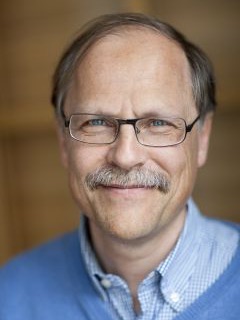
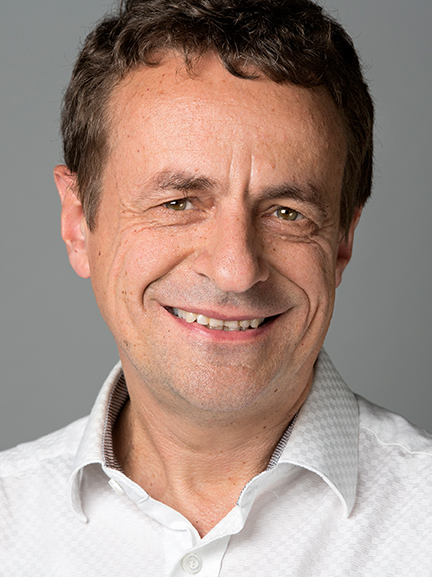
Renjie Feng is a Research Fellow in Mathematics and AI at the School of Mathematics and Statistics and the Sydney Mathematical Research Institute , University of Sydney. His work bridges probability theory, statistics, and applications in machine learning, deep learning, and artificial intelligence. His research interests focus on probability theory and its applications to machine learning , random matrix theory , and statistical physics . He investigates extreme value problems, spectral properties of random matrices, and topological features of random fields over Riemannian manifolds. Recent publications highlight trends in random matrix theory (GUE, GOE, GSE), extreme gap problems , determinantal point processes , and Wiener chaos . Collaborative works with F. Götze, D. Yao, and R. Adler emphasize U-statistics , multivariate linear statistics , and random topology inspired by Poisson point process studies.
Kurt Johansson is a Full Professor of Mathematics at KTH Royal Institute of Technology, Sweden. His academic journey includes roles as Associate Professor at KTH (1993-2001) and Uppsala University (1988-1993), alongside research funded by the Swedish Natural Science Research Council (1998-2003). His primary affiliations are within the Department of Probability, Mathematical Physics & Statistics at KTH, where he also coordinates courses on Differential Equations and Fourier Analysis. Education: BSc in Physics (1982) and PhD in Mathematics (1988), both from Uppsala University. Research interests focus on Probability Theory , Mathematical Physics , and Random Matrix Theory , with contributions to stochastic models, determinantal processes, and universality in statistical mechanics. Key Awards: Wallenberg Prize (1995), Rollo Davidson Prize (2000), Göran Gustafsson Prize (2002), Fellow of the American Mathematical Society (2012), and multiple Wallenberg Scholar grants (2011-2023). Grants: Major funding from the Swedish Research Council (VR), K&A Wallenberg Foundation, and others. His research group explores Random Matrices, Stochastic Models, and Analysis , with notable work on the Arctic Circle Theorem and KPZ universality class. Recent publications analyze Brownian directed percolation and domino tilings of the Aztec diamond, reflecting his focus on interdisciplinary applications of probability and mathematical physics.
Weierstrass Institute for Applied Analysis and StochasticsGermany
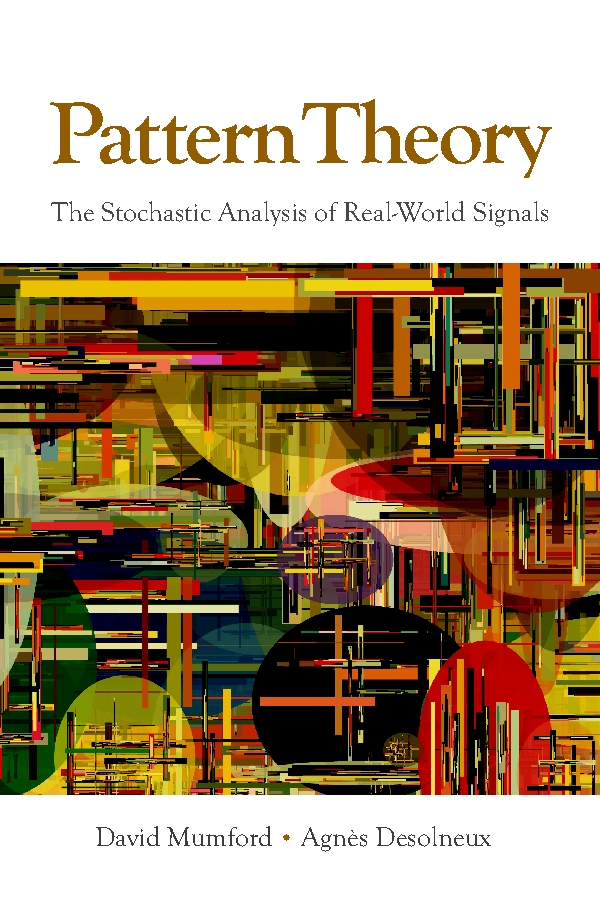
Agnes Desolneux is a CNRS Research Director at the Borelli Centre (formerly CMLA) and a Professor attached to the Mathematics Department at ENS Paris-Saclay. Education: PhD in Applied Mathematics (2000) from ENS Cachan Habilitation in Applied Mathematics (2010) from Université Paris Descartes Her research focuses on image analysis via statistical methods , particularly a contrario approaches, image restoration, texture synthesis, Determinantal Point Processes (DPP), optimal transport, Gaussian mixtures, geometry of random field excursions, shot-noise models, and mathematical modeling of visual perception through Gestalt theory. The articles extracted reflect her expertise in applied mathematics and computer vision , with recent works (2025-2020) on optimal transport algorithms, DPP applications, multiscale texture analysis, and stochastic modeling in medical imaging. Keywords span machine learning, probability theory, medical imaging, and computer vision . She has no listed scientific awards but has authored influential works including the book From Gestalt Theory to Image Analysis: A Probabilistic Approach (Springer, 2008) and Pattern Theory: the stochastic analysis of real-world signals (AK Peters, 2010).
Elena Grigorescu is a Professor at the University of Waterloo, Department of Computer Science. She holds a Ph.D. from the Massachusetts Institute of Technology (2010), an M.S. from MIT (2006), and a B.A. from Bard College (2004). Her research focuses on sublinear-time algorithms, error-correcting codes, computational complexity, and learning theory. She explores foundational aspects of algorithms with constraints on time/space, privacy-preserving computation, and applications in graph theory and optimization. Her work includes advancements in spanner algorithms for network design, differential privacy in sublinear-time settings, and learning-augmented approaches for online optimization. Recent publications address trace reconstruction, privacy-utility trade-offs, and combinatorial optimization techniques. Grigorescu is actively involved in conferences like APPROX/RANDOM and IEEE Foundations of Computer Science, contributing to algorithmic theory and practical implementations. Her research emphasizes theoretical rigor while addressing real-world challenges in data analysis and distributed systems. No awards or formal advisees are explicitly listed in the provided information.
Dr. Bence Borda is an Assistant Professor in Mathematics at the University of Sussex, affiliated with the School of Mathematical and Physical Sciences. He holds a PhD from Rutgers University (2016), advised by József Beck, and has held postdoctoral positions at the Alfréd Rényi Institute of Mathematics (2017–2019) and Graz University of Technology (2019–2024), supported by a Lise Meitner Fellowship (FWF) from 2022–2024. PhD: Mathematics, Rutgers University (2016) His research lies at the intersection of probabilistic number theory , Diophantine approximation , random walks on groups , and harmonic analysis , with a focus on equidistribution theory and discrepancy measures. Recent publications explore limit laws for cotangent sums, quantum modular forms, and stochastic behavior in number-theoretic sequences. Key trends in his work include the use of Wasserstein metrics for quantifying equidistribution, random matrix eigenvalues in compact groups, and determinantal point processes on geometric manifolds. His contributions span both theoretical analysis and computational applications. Scientific Awards Lise Meitner Fellowship (FWF), 2022–2024 He has supervised teaching at institutions including Rutgers University and Budapest Semesters in Mathematics, covering calculus, analysis, and graduate-level courses. He co-organized the 2025 Analysis and Optimal Transport Workshop at Sussex and actively participates in international conferences.
Maryam Aliakbarpour is the Michael B. Yuen and Sandra A. Tsai Assistant Professor in the Department of Computer Science at Rice University, affiliated with the Ken Kennedy Institute. She holds a Ph.D. and M.S. from MIT (2020 and 2015) and a B.S. from Sharif University of Technology (2013). Her research focuses on theoretical computer science, statistical inference, learning theory, differential privacy, and hypothesis testing, with an emphasis on algorithm design under computational and privacy constraints. She has held postdoctoral positions at Boston University, Northeastern University, and UMass Amherst, and participated in the Simons Institute's 2020 program on high-dimensional computation. Her work bridges foundational theory and practical applications, particularly in designing efficient algorithms for distribution testing, privacy-preserving machine learning, and hypothesis selection. Notable contributions include optimal algorithms for distribution testing under memory constraints and advancements in differential privacy for metalearning. She has received the Rising Stars in EECS (2018) and MIT’s Neekeyfar Award. Teaching includes graduate courses on learning theory and probabilistic methods, emphasizing algorithmic tools for modern computational challenges. Her publications span top conferences like COLT, NeurIPS, and ICML, addressing topics such as privacy-aware learning, efficient entropy estimation, and robust statistical methods. She advises on research projects requiring strong algorithmic foundations and mentors students in theoretical computer science and data privacy.
Yuhan Jiang is a Research Fellow in the Department of Mathematics at the University of California, Berkeley, where they work under the mentorship of Professor Sylvie Corteel. Previously, Jiang completed their PhD at Harvard University under the supervision of Professor Lauren K. Williams. Their academic address is 931 Evans Hall, Berkeley. Education: PhD in Mathematics from Harvard University, advised by Professor Lauren K. Williams Dr. Jiang specializes in algebraic combinatorics, with research spanning polytope theory, matroid theory, and algebraic statistics. Their work connects combinatorial structures with algebraic geometry and representation theory, particularly focusing on coinvariant rings, poset dynamics, and Ehrhart theory. Jiang's research demonstrates a strong interplay between discrete mathematics and geometric structures, often revealing deep connections between seemingly disparate areas of mathematics. Analysis of Jiang's recent publications shows a consistent focus on combinatorial structures with geometric interpretations. Their work on alternating diagonal coinvariants, echelonmotion, and positroid polytopes demonstrates expertise in connecting algebraic combinatorics with geometric reasoning. The publications reveal a progression from foundational combinatorial structures to applications in probability (through Markov chain analysis) and statistics (through algebraic statistical models). A notable trend is Jiang's ability to bridge theoretical combinatorics with concrete computational results, as seen in their work on Ehrhart series and k-ellipses. Dr. Jiang teaches Math 185: Complex Analysis for Fall 2025 at UC Berkeley, indicating active participation in the department's educational mission. While specific grant information isn't provided in the available text, their productive research output across multiple mathematical domains suggests successful funding support for their scholarly activities.
Dr. William Fitzgerald is a Lecturer in Probability at The University of Manchester, focusing on probability theory and mathematical physics models. His research includes random growth models, interacting particle systems, and random matrices. He holds a PhD from the University of Warwick (2019) and previously served as a Postdoctoral Research Fellow at the University of Sussex (2019–2021). Research interests span determinantal/Pfaffian point processes, non-colliding stochastic processes, and Brownian motion applications. His work combines rigorous mathematical analysis with probabilistic models from physics. Recent articles explore polynuclear growth dynamics, ordered exponential random walks, and Fredholm Pfaffians in interacting systems. He actively supervises PhD students and currently offers funded projects in probability theory. No scientific awards are explicitly mentioned in the profile. Academic history includes postdoctoral research at Sussex University and doctoral training at Warwick. Collaborations with researchers like Denisov, Tribe, and Zaboronski are evident in co-authored works. His research bridges theoretical probability with applications in particle systems and random matrix theory.
Elena Grigorescu is an Adjunct Associate Professor in the Department of Computer Science at Purdue University, where she has been a faculty member since Fall 2012. Her research program spans theoretical computer science with a focus on foundational algorithmic challenges in large-scale data processing and computational limits, maintaining strong connections to cryptography, communications, and optimization applications. Her educational background includes a PhD from the Massachusetts Institute of Technology (MIT), establishing her expertise in rigorous theoretical frameworks. Professor Grigorescu's research emphasizes designing algorithms that operate in sublinear time or space for massive datasets, analyzing complexity of error-correcting codes and lattices, and exploring information-theoretical computation limits. Current investigations integrate differential privacy with learning-augmented techniques to solve online optimization problems, network design challenges, and data stream processing bottlenecks. Her work bridges abstract theory with practical implementations in cryptographic systems and quantum computing paradigms, demonstrating consistent innovation in algorithmic foundations. Analysis of her recent publications (2022-2025) reveals a dominant focus on sublinear-time algorithms, particularly at the intersection with differential privacy and machine learning augmentation. Key contributions include novel spanner constructions for network design, privacy-preserving clustering frameworks, and breakthroughs in trace reconstruction and coding theory. A pronounced trend shows increasing integration of learning-based predictions to enhance classical online algorithms for packing/covering problems while maintaining theoretical guarantees, alongside sustained contributions to error-correcting code analysis and graph-theoretic foundations. No specific scientific awards or major fellowships were documented in the provided materials, though her publication record in premier venues like STOC, FOCS, and APPROX/RANDOM indicates significant peer recognition. Professor Grigorescu actively mentors graduate students in theoretical computer science research, guiding investigations in sublinear algorithms, complexity theory, and coding theory. Her collaborative projects involve interdisciplinary teams across institutions, focusing on cryptographic applications and quantum information theory, though specific grant details were not included in the source texts. Ongoing work suggests expansion into quantum algorithm design and privacy-preserving machine learning frameworks. While dedicated laboratory facilities were not specified, her research operates within Purdue's theoretical computer science group, leveraging university-wide computational resources and fostering collaborations through conference participation and workshop organization.
Richard Kenyon is the Erastus L. DeForest Professor of Mathematics at Yale University, serving as Director of Undergraduate Studies. His research focuses on statistical mechanics, probability, and discrete geometry, with notable contributions to dimer models, random tilings, and integrable systems. He has explored topics such as limit shapes, phase transitions, and combinatorial configurations. His work intersects algebraic geometry, combinatorics, and mathematical physics, often involving the analysis of lattice models and their applications. His research includes open problems such as tiling optimization, geometric spanning surfaces, number theory questions, and rigidity of tilings. Kenyon's gallery showcases visualizations of mathematical concepts, including random triangulations, Vinnikov curves, and conformal mappings. His academic contributions span over three decades, with recent articles addressing dimers, webs, and eigenvalue properties. He actively collaborates on projects like the six-vertex model, multiwebs, and renormalizable dynamical systems. Kenyon’s academic service includes directing undergraduate studies at Yale and contributing to initiatives in discrete differential geometry. His work highlights the interplay between pure mathematics and applied probability, with applications in physics and combinatorial optimization.
Eliza O'Reilly is an Assistant Professor in the Department of Applied Mathematics & Statistics at Johns Hopkins University. Her research focuses on the intersections of stochastic geometry , convex geometry , high-dimensional probability , and statistical learning theory . Her work explores: Nonconvex and convex regularizers in inverse problems Random tessellations and their machine learning applications Spectrahedral regression for convex function approximation Determinantal point processes for modeling repulsive interactions High-dimensional random convex sets and their asymptotic geometry Her research is supported by the National Science Foundation . Recent publications investigate gradient-based dimension reduction, oblique decision trees, and geometric properties of regularizers. She has received her PhD from the University of Texas at Austin and was a postdoctoral scholar at Caltech.
Boqing Gong is an Assistant Professor in the Department of Computer Science at Boston University. He concurrently serves as a part-time research scientist at Google. His research focuses on advancing visual recognition, video analysis, and the safety/generalization of AI models through novel algorithms in computer vision and machine learning. He holds editorial roles as an Associate Editor for IEEE TPAMI (since 2024) and TMLR. He has organized major conferences including co-chair roles for WACV 2023, CVPR 2022/2025 tutorials, and ICCV 2025 workshops. Education: Ph.D. Computer Science, University of Southern California (2011-2015) Visiting Graduate Student, University of Texas at Austin (Summer 2012) MPhil Information Engineering, Chinese University of Hong Kong (2008-2010) Bachelor's in Electronic Information Engineering, University of Science and Technology of China (2004-2008) Research Interests: Dr. Gong develops algorithms to understand objects, human activities, and scene relationships. His work emphasizes mathematical structures for effective and efficient solutions with strong analytical guarantees. Key areas include domain adaptation, long-tailed recognition, adversarial robustness, few-shot learning, and generative models. He explores intersections between language, vision, and reinforcement learning. Professional Contributions: Senior/Area Chair for CVPR, ICCV, ECCV, NeurIPS, ICML, ICLR, AISTATS, AAAI Outstanding Reviewer Awards (CVPR 2017/2021)
Max Planck Institute for Mathematics in the SciencesGermany
Bernd Sturmfels is a leading mathematician serving as Director of the Max Planck Institute for Mathematics in the Sciences in Leipzig since 2017. He is also Professor Emeritus of Mathematics, Statistics, and Computer Science at the University of California, Berkeley, and holds honorary professorships at the Technical University of Berlin and the University of Leipzig. His research bridges pure and applied mathematics, with foundational contributions to algebraic geometry, combinatorics, and computational biology. Education: Sturmfels earned dual Ph.D. degrees in 1987 from the University of Washington and Technische Universität Darmstadt, followed by an honorary doctorate from Goethe University Frankfurt in 2015 and additional honorary doctorates from the University of Bern (2023) and the University of Chicago (2024). Research Interests: His work spans algebraic geometry , combinatorics , commutative algebra , algebraic statistics , convex optimization , and computational biology . He explores deep connections between abstract algebraic structures and practical applications in statistics, optimization, and the life sciences. Publications and Trends: With over 300 research articles and 11 books, his recent work (2022–2025) focuses on advanced topics like Grassmannian geometry, tropical implicitization, quantum chemistry applications, and algebraic statistics. His research increasingly integrates computational methods with theoretical insights, addressing problems in machine learning, phylogenetics, and optimization. Awards and Honors: Sturmfels has received numerous prestigious awards, including: George David Birkhoff Prize in Applied Mathematics (2018) SIAM von Neumann Lecturership (2010) Humboldt Senior Research Prize (2007–2008) David and Lucile Packard Fellowship (1992–1997) Fellowships of the AMS and SIAM Membership in the Berlin-Brandenburg Academy of Sciences and Humanities Mentoring and Grants: He has supervised 60 doctoral students and numerous postdocs, with many securing positions at leading institutions. His mentoring philosophy emphasizes diversity and excellence, as highlighted in his Notices of the AMS article. Funding sources include the NSF, DARPA, and the German National Science Foundation (DFG). Labs and Teams: At the Max Planck Institute, he leads the Nonlinear Algebra group, fostering interdisciplinary collaboration between mathematics and the sciences. His team focuses on developing algebraic methods for data analysis, optimization, and theoretical physics.
Jesper Møller is a Professor in the Department of Mathematical Sciences at Aalborg University's Faculty of Engineering and Science, specializing in Statistics and Mathematical Economics. His research focuses on advanced statistical methodologies with applications across various scientific domains. His educational background includes extensive training in mathematical sciences, though specific degree details aren't provided in the current materials. His research interests span: Applied probability theory Markov chain Monte Carlo methods (MCMC) Spatial statistics Stochastic geometry Stochastic simulation Point process modeling Professor Møller's recent publication record shows consistent productivity with 239 research outputs including journal articles, reports, and book chapters. His work demonstrates strong focus on spatial point processes, Bayesian inference methods, and applications of stochastic geometry. The research trends indicate increasing sophistication in modeling complex spatial patterns and developing computational methods for statistical inference. His scientific contributions have been supported by numerous research projects, with 28 projects documented including the current "Peculiar Distribution Functions and Interesting Stochastic Processes" (2022-2026). His work has generated significant scholarly impact with citations across multiple disciplines. Professor Møller has supervised 8 PhD students and maintains active collaborations across international research networks. His current projects suggest continued research activity in developing novel statistical methodologies for complex spatial data analysis with applications in materials science, neuroscience, and environmental statistics.
Indiana University–Purdue University IndianapolisUnited States
Maxim L. Yattselev is a Professor in the Department of Mathematical Sciences at Indiana University–Purdue University Indianapolis (IUPUI) . He has held prior positions as a Visiting Assistant Professor at the University of Oregon and a Visiting Scholar at Vanderbilt University. Education: Ph.D. and M.S. in Mathematics from Vanderbilt University (2007, 2004), M.S. and B.S. from Dnepropetrovsk National University (2001, 2000). Research Interests focus on meromorphic approximation, orthogonal polynomials, integrable systems, random polynomials, and spectral theory. He explores connections between these areas and applications to Painlevé equations, random matrix theory, and convergence of rational approximants. Publications highlight advancements in strong asymptotics for Angelesco systems, spectral theory of Jacobi matrices on trees, universality in random polynomial roots, and convergence properties of Padé and Hermite–Padé approximants. His work often employs Riemann–Hilbert techniques and potential theory. Advising: Mentored Ph.D. students Hanan Aljubran and Ahmad Barhoumi on random polynomials and multiple orthogonal polynomials. Teaching includes advanced courses in complex analysis, real analysis, orthogonal polynomials, and differential equations at IUPUI, University of Oregon, and Vanderbilt University.