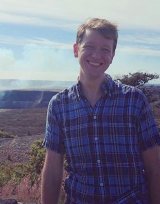
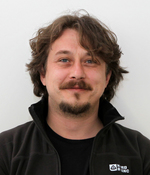
Asher Kaboth is a Senior Lecturer in the Department of Physics at Royal Holloway, University of London. He is part of the Centre for Particle Physics and Astronomy, focusing on particle astrophysics and detector development. His roles include mentoring in the Royal Society's Neutrinos through a PRISM project (2022–2026) and leading the STFC-funded High Pressure Gas TPCs for Neutrinos project (2022). Education PhD in Physics from MIT (2006–2012), working on KATRIN and DMTPC experiments A.B. in Physics from University of Chicago (2006) Research Associate at Imperial College London (2012–2015) Research Interests Neutrino oscillations via T2K experiment to explore matter-antimatter asymmetry LZ experiment: world's largest liquid xenon dark matter detector (2019 onwards) Detector calibration and high-pressure time projection chamber development Grants & Projects Consolidated STFC grants for Centre for Particle Physics (2019–2025) Responsive PDRA applications grant (2023–2025) Labs & Collaborations Active in international collaborations like T2K and LZ, with recent partnerships across 7 countries.
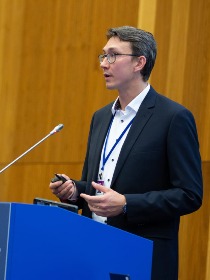
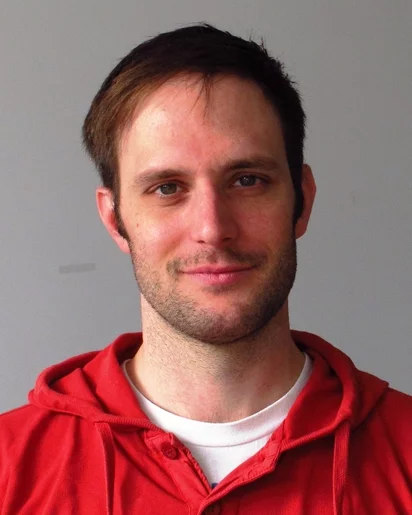
Prof. Alexander Gerbershagen is an Associate Professor and Head of the Particle Therapy Research Center (PARTREC) at the University of Groningen's Faculty of Medical Sciences. He also leads the Accelerator and Radiation Physics team. His expertise spans Accelerator Physics, Medical Physics, and Radiation Therapy, with a focus on particle therapy systems and beamline development. Education includes a Doctorate in Particle Physics from the University of Oxford (2013), a Master of Advanced Study in Mathematics from the University of Cambridge (2009), and a Physics degree from the University of Hamburg (2008). His research emphasizes medical accelerator systems, gantry design, and beam optimization. Notable projects include the CERN RF Separated Beam project and the PSI Gantry 3 commissioning. He has held roles at CERN, Paul Scherrer Institute, and lectured at Oxford and ETH Zurich. Awards include the Paul Scherrer Institute's 2017 Prize for Extraordinary Achievements and the 2016 German Society for Medical Physics Award. His work bridges fundamental physics with clinical applications in radiation therapy. Gerbershagen advises on particle therapy infrastructure and collaborates internationally on beamline technology. He leads PARTREC's research on advanced radiation techniques and ultra-high dose rate treatments. His lab focuses on hypoxia chamber development and preclinical irradiation systems.
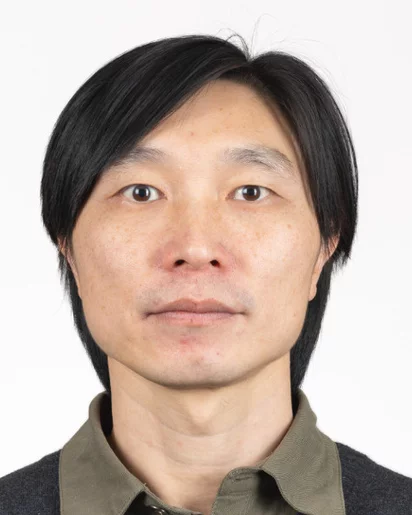
Professor Peter Teunissen is an Adjunct Professor at the School of Earth and Planetary Sciences within the Faculty of Science and Engineering at Curtin University. His research focuses on satellite navigation, geodesy, and advanced positioning techniques, with a particular emphasis on Global Navigation Satellite Systems (GNSS). He has made significant contributions to integer ambiguity resolution, Real-Time Kinematic (RTK) positioning, PPP-RTK methods, and the development of algorithms for high-precision positioning systems. Key research interests include the theoretical foundations of GNSS, ambiguity resolution techniques, signal processing, and the application of these technologies in automated systems and deformation monitoring. His work often addresses challenges such as ionospheric delay correction, robustness in constrained environments, and the integration of multi-GNSS signals. Teunissen’s publications span a wide array of topics, from theoretical advancements in mixed-integer estimation to practical applications in autonomous vehicle positioning and low-cost receiver systems. His collaborative efforts with global institutions reflect his leadership in advancing GNSS technology and its interdisciplinary applications.
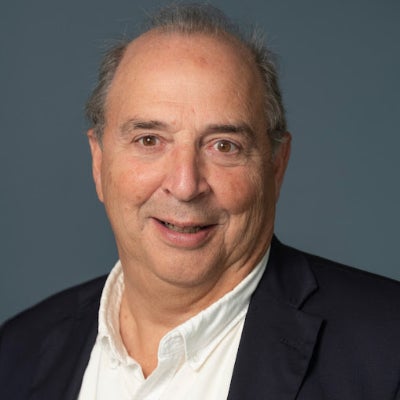
Professor Xia Chen is a distinguished researcher at Fuzhou University's School of Materials Science and Engineering, with significant contributions across multiple disciplines including photovoltaics, materials science, and energy technologies. Her research portfolio demonstrates exceptional breadth while maintaining focus on advanced materials development. Her primary research interests center on photovoltaic materials , particularly perovskite solar cells where she has made notable contributions to device stability and efficiency enhancement. Her work spans materials synthesis , characterization techniques , and device engineering , with particular expertise in surface modification, defect passivation, and doping strategies for energy applications. Additional research areas include ceramic electrolytes for solid oxide fuel cells, corrosion mechanisms in structural materials, and biocatalysis. Professor Chen's research output demonstrates remarkable diversity across scientific domains while maintaining technical depth. Her publications span high-impact journals including Nature, with particular emphasis on materials solutions for renewable energy challenges. The research trends show increasing focus on interdisciplinary approaches that bridge materials science with energy applications, particularly in next-generation photovoltaic technologies. Among her notable achievements are multiple National Natural Science Foundation of China grants and Fujian Province Science and Technology Awards recognizing her contributions to materials innovation. Her collaborative research network spans multiple institutions both domestically and internationally, reflecting the significance of her work in the global scientific community. Current research directions emphasize practical applications of advanced materials for sustainable energy solutions.
Hans Roeland Poolman is a Lecturer at the Faculty of Social Sciences and Humanities of Vrije Universiteit Amsterdam . His research focuses on radiation detector physics, particle physics, and nuclear physics with applications in medical imaging. He has contributed to advancements in timepix technology, spin-dependent scattering studies, and polarized gas target performance in storage rings. Research Interests: - Radiation Detection Technologies - Nuclear Reaction Dynamics - Electron Scattering Experiments - Medical Imaging Applications via Hyperpolarized 3He Recent publications highlight innovations in detector instrumentation and fundamental studies of subatomic particles. His work bridges experimental physics with practical applications in medical and industrial contexts. Lectures and Activities : Delivered presentations on hyperpolarized 3He in 2000, focusing on MRI applications and physics advancements.
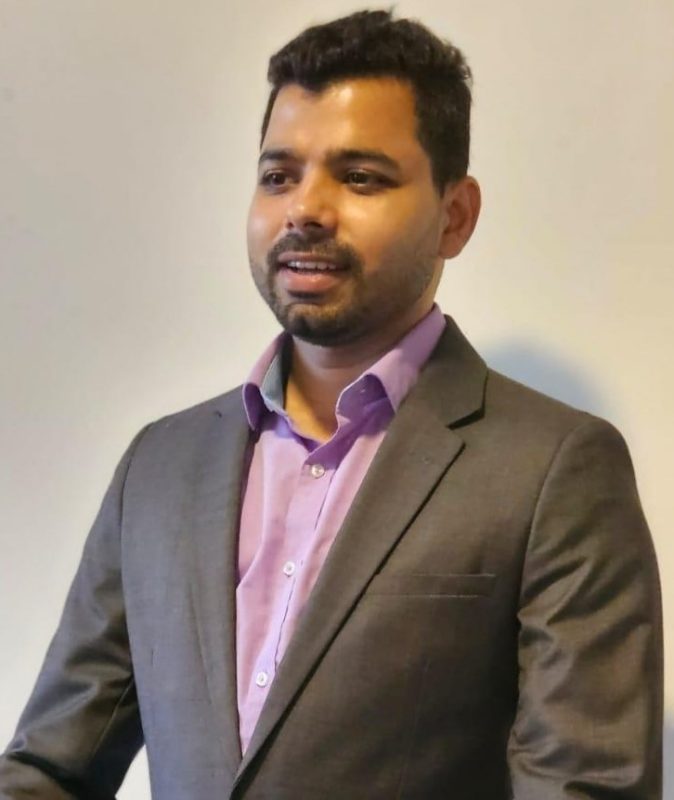
Rijeesh Keloth is a Research Scientist in the Department of Physics at Virginia Tech’s College of Science, Blacksburg, VA. His work centers on experimental particle physics, particularly in neutrino physics and dark matter detection. He is actively involved in major international experiments including DUNE, DarkSide-20K, SoLid, and ProtoDUNE. His research focuses on neutrino oscillations , sterile neutrino searches , and detector instrumentation , especially in liquid argon time projection chambers. He has led critical roles in data quality and operations in the SoLid experiment and contributes to hardware design for DarkSide-20K. His expertise spans simulation, data analysis, and real-time system monitoring. Rijeesh earned his Ph.D. from Cochin University of Science and Technology (CUSAT), where his thesis received the Best Thesis Award in 2019. He has mentored undergraduate and graduate students at institutions like Malabar Christian College and IIT Hyderabad, and has co-taught advanced physics courses including Quantum Mechanics and Electrodynamics. He has received recognition through awards such as the Second Place Poster Award at the 11th International Neutrino Summer School and is a qualified UGC-CSIR NET lecturer. His outreach includes public speaking, science writing for online magazines like LUCA, authoring science books in Malayalam, and guiding dignitaries at Fermilab. Best Ph.D. thesis award 2019 - Dept. of Physics, Cochin University of Science and Technology Second place poster award - 11th International Neutrino Summer School 2017 (INSS), Fermilab Qualified National Eligibility Test (NET) for Lecturership - UGC-CSIR, INDIA (December 2010) Rijeesh has advised and mentored multiple students across institutions, providing day-to-day research support and co-guiding master’s and B.Sc. projects. He has been a teaching fellow and co-instructor in advanced physics courses. He is actively involved in scientific collaborations and leadership, serving as Data Manager and Data Quality Group Convener for the SoLid experiment. He is a member of the Neutrino Social Organizing Committee (NSOC) at Fermilab and contributes to public science engagement through writing, workshops, and invited talks. His technical skills include C++, Python, Bash, and multivariate data analysis tools. He is also the author of two educational books on ‘Light’ and ‘Basic Electronics’ for high school students in Malayalam.
Kyriakos Kotsoglou is an Associate Professor in the School of Law at Northumbria University, where he serves as Programme Leader for the Mental Health Law Linked Awards. He joined Northumbria in 2019 as a Senior Lecturer and was promoted to Associate Professor. He has previously held academic positions at institutions in Lausanne, Liverpool Hope University, and the University of Freiburg, Germany. He holds a PhD in Law from Goethe University Frankfurt and is a Fellow of the Higher Education Academy (HEA). His research focuses on criminal evidence, criminal law, and legal theory, with particular emphasis on evidence and proof, expert witness testimony, reverse onus clauses, and statistical evidence in criminal proceedings. He is a member of the interdisciplinary research group NORMDECS based in Lausanne, which investigates decision-making structures in legal and forensic contexts. Kyriakos Kotsoglou’s recent publications reveal a consistent focus on the role of scientific and technological evidence in law, especially polygraph testing, digital forensics, and algorithmic decision-making. His work critically examines the legal admissibility, ethical implications, and epistemic reliability of such evidence, often drawing on comparative and doctrinal analysis. He frequently collaborates with scholars like Alexandra Biedermann and Martin Oswald, contributing to interdisciplinary dialogues at the intersection of law, science, and justice. Fellow of the Higher Education Academy (HEA), 2018 Kyriakos regularly provides expert advice to legal practitioners and companies, including PricewaterhouseCoopers (2018–2019), and organizes seminars for judiciary members and lawyers. He is actively involved in public discourse, with media appearances in The Guardian , Wired UK , Daily Mirror , and podcasts. He is accepting PhD students and continues to publish extensively in top law and forensic journals. He is a member of the NORMDECS research group and contributes to policy discussions, including a 2025 submission to the UK Ministry of Justice on software-generated evidence. His impact extends beyond academia into legal practice, public understanding, and judicial reasoning, notably influencing decisions in Germany and Greece.
Thomas G. Flohr is an Associate Professor of Medical Physics at the Faculty of Medicine, University of Zurich , and holds an Honorary Doctorate of Medicine (2021) from the same institution. He is a leading figure in the advancement of computed tomography (CT) , particularly in cardiac imaging and dual-source CT technology, with over 233 original publications and an h-index of 41 . Education Doctorate in Physics (1989) from Friedrich-Alexander University of Erlangen, Germany Habilitation in Medical Physics (2006) from Eberhard Karls University of Tübingen, Germany Research Contributions Prof. Flohr pioneered technical innovations in CT imaging , including cardiac CT for coronary artery disease diagnosis, dual-source CT for accelerated imaging and tissue characterization, and radiation dose reduction techniques . He is currently developing next-generation photon-counting detector CT scanners , aiming to further improve diagnostic precision and patient safety. Collaborations and Impact His dual expertise in clinical science and industry has fostered collaborations with academic institutions like the University Hospital Zurich (USZ) , where he co-authored 24 publications. These partnerships have enabled early clinical adoption of CT innovations and supported the careers of young physician-scientists . He has also edited five influential books on CT, several in multiple editions. Awards and Recognition Honorary Doctorate of Medicine (2021), University of Zurich
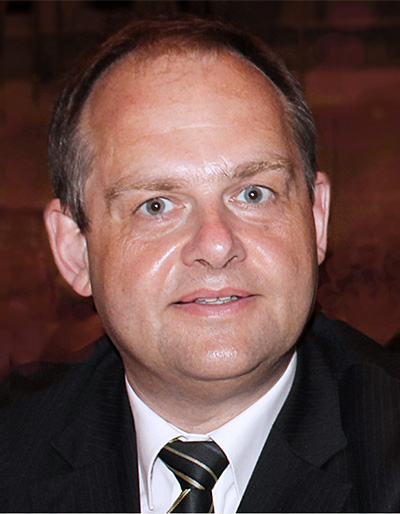
Prof. Dr. Lutz Feld is a full professor and head of the Chair of Experimental Physics I B and the Institute of Physics I at RWTH Aachen University. He leads the High-Energy Physics Teaching and Research Area and is deeply involved in the CMS experiment at CERN's LHC. His work spans detector development, data analysis, and major leadership roles in German and international particle physics initiatives. University: RWTH Aachen University School: Faculty of Mathematics, Computer Science and Natural Sciences Department: Department of Physics Position: Professor (since 2004) Email: lutz.feld@physik.rwth-aachen.de Prof. Feld studied physics at the University of Bonn, earning his diploma in 1993 and doctorate in 1996 with research on the ZEUS experiment at DESY. He completed his habilitation in 2002 at the University of Freiburg, where he served as a scientific assistant and private lecturer before joining RWTH Aachen. 1988–1993: Physics studies, University of Bonn 1993: Diploma, University of Bonn (ZEUS experiment) 1996: PhD, University of Bonn (ZEUS experiment) 1997–1999: CERN Fellow (CMS silicon tracker development) 1999–2003: Scientific Assistant, University of Freiburg (ATLAS SCT) 2002: Habilitation, University of Freiburg 2003–2004: Private Lecturer, University of Freiburg 2004–present: Professor, RWTH Aachen University His research focuses on experimental high-energy physics, particularly the search for physics beyond the Standard Model such as supersymmetry, and the development of advanced silicon detector systems for the CMS experiment. He has led major upgrades of the CMS pixel and tracking detectors, including novel DC-DC power systems and thermal simulations for future high-luminosity phases. His work combines cutting-edge instrumentation with deep data analysis to probe fundamental questions in particle physics. The 15 most recent publications reflect a strong trend in both experimental data analysis (especially supersymmetry searches using dilepton and diphoton signatures) and innovative detector development (silicon trackers, power systems, thermal design). Keywords span high-energy physics, instrumentation, and data analysis, with subfields including jet physics, photoproduction, radiation-hard detectors, and LHC upgrades. The articles show a consistent focus on CMS-related projects, from early ZEUS work to current HL-LHC developments. Prof. Feld has received recognition for his teaching and leadership: Teaching Award of the Physics Department (2013) Spokesperson of the Physics Department (2008–2010) Chair of CMS Tracker Institution Boards (2014–2017) Spokesperson of BMBF FSP-104 (2018–2021) Chairman of the Committee for Elementary Particle Physics (since 2021) He has supervised numerous bachelor’s, master’s, and doctoral students, many of whom are listed as current or former members of his research group. His research is supported by major grants from DFG, BMBF, HGF, and EU, including the DFG Research Training Group 'Physics of the Heaviest Particles at the LHC' and BMBF programs FSP-102 and FSP-104. He has also contributed to public outreach through lectures, children’s university events, and virtual CMS visits. Prof. Feld leads a vibrant research group at RWTH Aachen, actively involved in detector construction (e.g., TEC+ endcap), data analysis (searching for new physics), and future upgrades for the CMS experiment. The group participates in national collaborations such as the Helmholtz Alliance 'Physics at the Terascale' and organizes key conferences like TEWPP and DCMS-FSP meetings.
Vincenzo Paolo Loschiavo is a Researcher in the Department of Engineering at the University of Sannio, Italy, specializing in Electrical Engineering (ING-IND/31). His academic career focuses on two primary research domains: fusion energy systems and magnetostrictive energy harvesting technologies. He maintains active collaborations with major European fusion research facilities including JET, ASDEX Upgrade, and the Divertor Tokamak Test facility (DTT). Dr. Loschiavo's research interests include: Fusion Energy and Plasma Physics Energy Harvesting Systems Magnetostrictive Materials and Applications Tokamak Engineering and Divertor Technology AC-DC Power Conversion for Energy Harvesting Plasma Control Systems His recent publications demonstrate significant contributions to both theoretical modeling and practical implementation in these fields. In fusion research, he addresses critical challenges in power exhaust management and plasma control for next-generation fusion devices. His energy harvesting work focuses on developing efficient conversion systems using magnetostrictive materials, with applications in structural health monitoring and wireless sensor networks. His research bridges fundamental physics with practical engineering solutions, particularly in designing specialized AC-DC boost converters for non-conventional energy sources. Dr. Loschiavo frequently collaborates with international research teams across European laboratories, contributing to major projects including the DEMO power plant design studies and the SHiP (Search for Hidden Particles) experiment at CERN. His work appears in leading journals such as Nuclear Fusion, Fusion Engineering and Design, and Journal of Instrumentation.
Patrik Vagovic is a Staff Scientist at the European XFEL GmbH, affiliated with the Center for Free-Electron Laser Science (CFEL), a collaborative research center between DESY, the University of Hamburg, and the Max Planck Society. He leads research in the Coherent Imaging Team, focusing on advanced X-ray imaging techniques using X-ray free-electron lasers. His work bridges the gap between fundamental physics and practical applications in materials science, biology, and fluid dynamics. Dr. Vagovic's research interests center around developing and applying cutting-edge X-ray imaging methodologies, particularly high-speed and phase-sensitive techniques. His work encompasses X-ray phase contrast imaging, coherent diffractive imaging, tomography, and advanced data processing methods. He has pioneered MHz frame rate X-ray imaging capabilities at the European XFEL, enabling unprecedented observation of ultrafast phenomena previously impossible to capture with conventional X-ray sources. Analyzing his recent publication record reveals a strong focus on pushing the temporal and spatial boundaries of X-ray imaging. His work demonstrates a consistent progression from developing fundamental imaging techniques to applying them to complex scientific problems across multiple disciplines. The research shows increasing sophistication in both hardware development (optical systems, detectors) and computational methods (phase retrieval, machine learning). Dr. Vagovic actively collaborates with international research teams across Europe and beyond, contributing to numerous high-impact publications in top journals including Optics Express, Journal of Synchrotron Radiation, and Nature Communications. His work on MHz X-ray microscopy has particularly advanced the field of time-resolved imaging of irreversible phenomena. As part of the Coherent Imaging Team at European XFEL, Dr. Vagovic works with state-of-the-art instrumentation including the SPB/SFX instrument, where he has developed pump-probe capabilities and advanced diagnostics for megahertz pulse trains. His research group utilizes advanced computational approaches alongside experimental innovations to solve complex imaging challenges.
Dominic Greiffenberg is a researcher at the Paul Scherrer Institute (PSI), focusing on the development of High-Z sensors for advanced X-ray detection. He is affiliated with the Laboratory for X-ray Nanoscience and Technologies, where he leads technical advancements in detector hybridization and characterization. Education: PhD in physics from the University of Freiburg (Germany), with research at the University of Karlsruhe and international stays at Czech Technical University and University of Canterbury. His research targets extending detector energy ranges beyond silicon limitations, particularly for photon energies above 20 keV. He employs high-granularity detectors like JUNGFRAU/MONCH to study spectral information and sensor optimization. Recent publications highlight work on GaAs:Cr sensors, radiation hardness, and hybrid pixel detector simulations. Key trends in his publications (2021–2025) include advancements in soft X-ray detection, radiation-hard materials, and on-chip digitization techniques. Collaborations span institutions like European XFEL and teams working on synchrotron radiation.
Viktoria Hinger is a researcher at the Detector Group within the Center for Photon Science at Paul Scherrer Institute (PSI). She specializes in detector technologies for high-energy particle physics and photon science, with a focus on hybrid pixel detectors and soft X-ray applications. Her work bridges particle physics instrumentation and advanced X-ray experiments. Physics degree from Vienna University of Technology PhD at Vienna Institute of High Energy Physics Her research interests include: Optimization of charge-integrating hybrid pixel detectors for soft X-ray experiments Development of high-speed, large-area detectors for Resonant Inelastic X-ray Scattering (RIXS) Integration of Low-Gain Avalanche Diode (LGAD) sensors with internal signal amplification Exploration of JUNGFRAU and MÖNCH readout chips for synchrotron applications Her publications highlight advancements in hybrid pixel detectors, soft X-ray detection, and synchrotron instrumentation. Recent work includes RIXS-specific detector design and high-rate X-ray imaging. Scientific achievements: Recipient of CMS Thesis Award (2021) Marie Skłodowska-Curie Postdoctoral Fellowship Principal investigator for SNSF Ambizione grant-funded RIXS detector project (2024) She supports calibration and user experiments with the JUNGFRAU detector at PSI, while leading research on next-generation soft X-ray detectors with micron-scale spatial resolution capabilities.
Jiaguo Zhang is a Researcher at the Paul Scherrer Institute (PSI) in Switzerland, affiliated with the Center for Photon Science and Laboratory for X-ray Nanoscience and Technologies . He specializes in hybrid X-ray detectors for free-electron lasers (FEL) and synchrotron radiation sources. Research Interests: Development of radiation-hard hybrid pixel detectors Thin entrance window technology for soft X-ray detection Low gain avalanche detectors (LGAD) optimization Quantum efficiency and signal-to-noise ratio improvements Calibration procedures for high-rate detectors Simulation and modeling of charge transport in silicon sensors Scientific Awards: Marie Curie Fellowship (MC-PAD), 2009 Responsibilities: Lead developer of the Gotthard-II detector’s ASIC components and coordinator for soft X-ray sensor projects in collaboration with FBK. Supports detector commissioning at EuXFEL and synchrotron facilities. Email: jiaguo.zhang@psi.ch
Otto J. Gregory is a Distinguished Professor in the Department of Chemical, Biomolecular, and Materials Engineering at the University of Rhode Island . His research focuses on advanced sensor development for harsh environments, including wireless and RFID-based sensors for gas turbine engines, forensic engineering, and trace detection of explosives. Education: Ph.D., Brown University (1983) M.S., University of Rhode Island (1977) B.S., University of Rhode Island (1975) Research Interests: Gregory's work spans thermophysical property modeling, ceramic matrix composites (CMC), and sensor development for aerospace applications. Recent projects include high-temperature strain gages and inverse determination of aero-thermo-mechanical states in hypersonic aeroshells. Scientific Contributions: His publications and patents emphasize materials like indium tin oxide (ITO), silicon carbide (SiC), and palladium-chrome (PdCr) for sensors in extreme conditions. Collaborations with Teledyne-FLIR, Pratt & Whitney, and Greene Tweed & Co. highlight his industry impact. Scientific Awards: Advanced Career Faculty Research and Scholarship Excellence Award (2022) Grants and Patents: Gregory has secured multiple grants from organizations like the Department of Homeland Security and Pratt & Whitney. His patents include high-temperature heat flux sensors, decoupled thermodynamic sensing systems, and RFID-embedded metal fasteners for semiconductor valves.