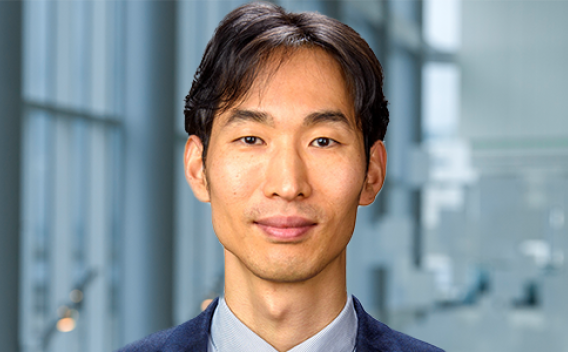
Khai Ang is an Assistant Professor in the Department of Pathology and Laboratory Medicine Division of Experimental Pathology . His research focuses on interdisciplinary studies spanning genetics, imaging technology, and human migration patterns. Key areas include skin color genetics in diverse populations, micro-CT imaging techniques for biological samples, and prehistoric human migration dynamics influenced by environmental changes. Recent work includes developing web-based histology atlases for freshwater organisms like Daphnia magna , optimizing micro-CT imaging protocols for 3D tissue visualization, and investigating genetic ancestry impacts on skin pigmentation in Caribbean populations. His 2023 paper on Sundaland migration patterns highlights how sea-level changes drove ancient human movements between Southeast Asia and South Asia. Ang collaborates extensively on projects combining molecular biology with cutting-edge imaging technologies. While no specific academic awards are highlighted in the provided materials, his work has gained notable attention across multiple news platforms and social media channels.
Leszek Jaroszewicz, PhD with habilitation, is a Professor at the Military University of Technology in Warsaw, Poland, specifically affiliated with the Faculty of Advanced Technologies and Chemistry and the Institute of Applied Physics. As a corresponding member of the Polish Academy of Sciences (PAS), he has established himself as a leading researcher in photonics and optical fiber technology. His academic career spans several decades, with continuous research activity evidenced by publications through 2025. Professor Jaroszewicz's research primarily focuses on photonics technology applications for sensor devices, with particular expertise in hybrid waveguide transducers employing liquid crystalline materials. His work encompasses new technologies for manufacturing monocrystals and glasses (especially oxide types), theoretical studies of complex semiconducting structures for electromagnetic radiation detectors, advanced fiber optics technologies including photonic crystal fiber elements, materials for hydrogen storage, and polarization problems in waveguide structures for sensor construction. His research area is formally recognized as materials engineering (100% ME). Analysis of his recent publications reveals a strong trend toward practical applications of optical fiber technologies in sensing systems, particularly rotational seismology and refractive index sensing. His work increasingly integrates liquid crystal technologies with optical fibers, nanomaterials (like Fe 3 O 4 nanoparticles), and computational methods. The research spans fundamental physics of light propagation through applied engineering of sensor devices for diverse applications from seismic monitoring to food safety inspection. His significant recognition includes being elected as a Corresponding Member of the Polish Academy of Sciences, a prestigious honor in Polish academia. His bibliometric indicators demonstrate substantial scholarly impact with 373 publications, an h-index of 24 (Scopus) and 22 (Web of Science), total impact factor of 352.125, and a ministerial score of 8,412. Professor Jaroszewicz has supervised 13 promoted theses, indicating his active role in mentoring the next generation of researchers. His research has been supported by at least 10 projects and has resulted in 4 patents, demonstrating both academic and practical impact of his work. His research group appears to focus on optical instrumentation development, particularly for specialized sensing applications. The research environment led by Professor Jaroszewicz includes advanced laboratories for optical fiber technology, liquid crystal device fabrication, and sensor testing. His team appears to collaborate across disciplines, connecting physics, materials science, and engineering to develop innovative sensing solutions. Current work suggests ongoing development of fiber-optic rotational seismographs and other specialized optical sensors for both scientific and practical applications.
Peter Loch is a Research Professor in the Department of Physics at the University of Arizona. His research focuses on experimental high-energy physics, particularly through the ATLAS experiment at the Large Hadron Collider (LHC). He specializes in jet reconstruction, detector calibration, and software development for particle physics analyses. His work includes contributions to calorimeter design, missing transverse energy studies, and jet substructure analysis. His research interests span particle physics, detector technology, and LHC-based experiments. Key areas include jet physics, hadronic showers, and software tools for data analysis. His articles highlight advancements in jet reconstruction algorithms, topological cell clustering, and performance optimizations for ATLAS. Peter Loch has contributed to multiple phases of the LHC, including Run 1 and Run 2 analyses, and has explored topics such as small-radius jets and event topology. His work emphasizes both experimental methodologies and collaboration-driven software solutions. While no scientific awards or grants are explicitly mentioned, his extensive publication record reflects sustained contributions to the field. He is actively involved in the ATLAS collaboration and has advised on detector-related projects.
Justin Albert is a Professor of Physics and Astronomy at the University of Victoria (UVic), Canada. He holds a B.A. from Harvard University and a Ph.D. in Physics from Princeton University. His research focuses on experimental particle and astroparticle physics, with major contributions to the ATLAS experiment at CERN (Higgs boson studies), the ALTAIR and ORCASat projects (dark energy calibration), and the BABAR experiment at SLAC (matter-antimatter asymmetry). Prior to UVic, he was a Millikan Postdoctoral Fellow at Caltech. He teaches advanced physics courses including Thermodynamics (PHYS 317), Experimental Techniques in Particle Physics (PHYS 521A), and has led laboratory courses like Electronics (PHYS 214). His research group oversees multiple graduate and undergraduate students, contributing to projects like satellite-based photometric calibration and dark energy instrumentation. Albert’s work bridges fundamental physics with applied technologies, emphasizing collaborations in multinational experiments like ATLAS and initiatives like CANDLE (calibration using artificial light sources). His publications span high-impact journals, with recent focus on quantum entanglement measurements and detector calibration techniques.
Baris Altunkaynak is an Associate Teaching Professor in the Department of Physics at Northeastern University's College of Science, and serves as the Supervisor of the Introductory Physics Laboratory (IPL). He is actively involved in teaching and laboratory supervision, managing the IPL which serves approximately 1,300 students per term. His research interests span particle physics, high-energy physics, and theoretical physics, with a focus on topics including supersymmetry (SUSY), Higgs boson interactions, dark matter, and LHC phenomenology. Altunkaynak has contributed to studies on collider signatures, mass hierarchies in supersymmetric models, and deflected mirage mediation scenarios. He has also engaged in experimental and theoretical analyses of particle interactions and detector technologies. His work includes collaborations on LHC Run-II benchmarking, Higgs boson mass predictions within supergravity frameworks, and the development of multidimensional phase-space methods for particle decay analysis. Altunkaynak’s research often bridges theoretical models with experimental data, aiming to uncover new physics beyond the Standard Model. His contributions to the physics community include both experimental and computational approaches, such as live-streaming radio-telescope observations and algebraic solutions to optimization problems in rectangle packing. Though no specific grants or student advisement records are listed, his role in the IPL highlights a strong commitment to undergraduate education and hands-on laboratory training. His research trajectory reflects a blend of cutting-edge particle physics with methodological innovations in data analysis and experimental design.
Ari Visa is a Professor at the Faculty of Information Technology and Communication Sciences, Department of Computing Sciences at Tampere University. His research focuses on signal processing, radar systems, machine learning, robotics, and structural health monitoring. He has authored over 170 publications and contributed to projects in industrial automation, biomedical engineering, and sensor networks. His work spans applications such as data-driven ISAR imaging, fatigue analysis in aircraft structures, and aroma-based indoor localization. Notable contributions include radar clutter modeling, sensor fusion techniques, and algorithm development for industrial drilling operations. He has collaborated on EU projects like cHiPSet (High-Performance Modelling for Big Data) and holds a patent for an intelligent toothbrush monitoring device. Recent research trends emphasize fusion of data streams (e.g., radar/5G integration), machine learning for classification tasks (food scent analysis, metallic object detection), and real-time systems for manufacturing/health monitoring. His work bridges theoretical signal processing with practical industrial and biomedical applications. Key achievements include pioneering radar target characterization methods, developing kinematic models for heavy-duty manipulators, and advancing sensor-based localization techniques. Ongoing projects involve AI-driven predictive maintenance and multi-modal data analysis frameworks.
Dr. Christopher J. Tien is an Associate Professor and Lead Brachytherapy Physicist in the Department of Therapeutic Radiology at Yale School of Medicine, with an adjunct appointment at Brown University. He completed his PhD in Medical Physics at the University of Florida and holds degrees from the University of Michigan. His clinical expertise and research focus on brachytherapy applications in gynecological, prostate, ocular, and skin cancers, emphasizing radiobiological modeling and dosimetry optimization. He chairs the AAPM Task Group on high-dose-rate brachytherapy (TG59) and holds leadership roles in national AAPM committees. Awards include AAPM Fellowship, ABS Judith Stitt Award, and recognition for outstanding research reviews. His work spans clinical innovations (e.g., 3D-printed applicators, modulated shielding) and translational research addressing vaginal stenosis, dose-response relationships, and radiation source decay effects. He collaborates with institutions to advance brachytherapy education and technology. Education PhD in Medical Physics, University of Florida (2011) BS & MS (summa cum laude), Nuclear Engineering and Radiological Sciences, University of Michigan (2007–2008) Medical Physics Residency, Brown University/Rhode Island Hospital (2013) Research Interests Dr. Tien’s research integrates clinical brachytherapy challenges with advanced techniques such as 3D-printed prototypes, modulated shielding (MOSH), and radiobiological modeling to improve treatment precision and patient outcomes. His work addresses dose distribution optimization, inter-observer variability, and device innovation for cervical and prostate cancers. He explores the impact of intrafractional DNA repair and source decay on treatment efficacy, contributing to evidence-based protocols. Publications Trends His articles focus on brachytherapy innovations (e.g., applicator design, shielding), clinical outcomes (vaginal stenosis, dose-response), and policy issues (AMP certification). He emphasizes interdisciplinary approaches, combining engineering (3D printing), physics (Monte Carlo methods), and clinical practice. Awards & Grants 2024 AAPM Fellow 2023 Yale Cancer Center/American Cancer Society Pilot Grant 2018 Judith Stitt Award (ABS) Advising & Grants Dr. Tien mentors trainees in brachytherapy physics and collaborates with researchers like Zhe Chen and Shari Damast on funded studies. His grants support projects like MOSH applicators and simulation-based education for interstitial brachytherapy. Labs/Teams He leads AAPM task groups and chairs national committees, driving standards in brachytherapy. His lab focuses on translational research bridging clinical needs and engineering solutions.
Adrian Keating is a Professor in the School of Mechanical Engineering at The University of Western Australia (UWA), specializing in Microelectromechanical Systems (MEMS), porous silicon, and infrared sensors. He holds roles such as Mechatronics Course Advisor and Laser Safety Officer. His career spans over 20 years, including industrial experience at Calient Networks as Fiber Optics Technology Manager, where he developed high-yield MEMS-based products. Dr. Keating earned a Bachelor of Engineering (Honors) from The University of Melbourne and a Ph.D. from Telecom Research Laboratories, focusing on photonic communication networks. His research emphasizes optical sensors, MEMS, and IoT technologies. Notable contributions include patents for fiber-collimator designs and work on MEMS-based infrared sensors. He actively supervises students and leads projects in areas like soil and grain parameter assessment via microspectrometers. Key research interests include porous silicon materials, thermal sensing, and MEMS fabrication. He has secured grants totaling millions, such as the 2004 ARC Discovery Project on MEMS/NEMS technologies. Teaching responsibilities include units like Mechatronic Systems and Engineering Dynamics. Current projects explore infrared thermal imagers, microfluidics, and IoT-enabled beehive monitoring systems. His work aligns with UN Sustainable Development Goals through innovations in agriculture and environmental monitoring. Dr. Keating collaborates internationally, with recent projects in Japan (NTT) and the U.S. (UC Santa Barbara). His lab focuses on developing low-cost, high-performance sensors and imaging systems. Patents and peer-reviewed publications reflect his expertise in optical systems, micromachining, and material science. Future research aims to advance infrared imaging and MEMS-based sensor technologies for industrial and environmental applications.
Sherry Yennello is a Distinguished Professor and Regents Professor in the Department of Chemistry at Texas A&M University, holding the Bright Chair in Nuclear Science. She leads the Yenello Research Group and operates within the Cyclotron Institute, utilizing advanced facilities like the K500 superconducting cyclotron and the FAUST array. Her research focuses on nuclear reaction mechanisms, particularly using beams of radioactive nuclei to study collision dynamics and thermodynamics of nuclear systems. Education: B.S., Rensselaer Polytechnic Institute, 1985 Ph.D., Indiana University, 1990 Postdoctoral Fellow, Michigan State University, 1991–1992 Research Interests: Dr. Yennello investigates fragment emission prior to equilibrium to understand cluster formation, projectile fragmentation reactions, and the thermodynamics of excited nuclear systems. Her work explores neutron-proton equilibration in nuclear reactions, symmetry energy effects, and the design of advanced detection systems like FAUST and DAPPER. Awards & Honors: ACS Fellow, APS Fellow, AAAS Fellow Garvan-John M. Olin Medal (ACS) Teaching Excellence Awards (Texas A&M) Sigma Xi National Young Investigator Award APS DNP Outstanding Mentoring Award Advising & Grants: Dr. Yennello has mentored numerous students and led grants focused on nuclear instrumentation, isotope production, and workforce development. Her lab contributes to the Texas A&M Cyclotron Institute’s mission, advancing nuclear science through experimental and theoretical collaborations. Labs & Facilities: Her research leverages the Cyclotron Institute’s K500 cyclotron, FAUST array, and MARS recoil spectrometer. Projects include astatine purification, neutron multiplicity analysis, and symmetry energy investigations through Sn+Sn collisions.
Dr. Dylan McCreedy is an Assistant Professor in the Department of Biomedical Engineering at Texas A&M University , where he leads the McCreedy Lab . He joined the department in 2019, focusing on inflammation and neuroprotection in spinal cord injury (SCI). His research integrates genetic/pharmacological methods with advanced imaging techniques to study immune cell behavior and tissue repair. Educational Background: B.Sc. in Biomedical Engineering, University of Utah (2008) Ph.D. in Biomedical Engineering, Washington University in St. Louis (2013) Postdoctoral Fellowships: University of Michigan/Northwestern University and University of California-San Francisco Research Interests: Dr. McCreedy’s lab investigates early inflammation’s role in SCI, particularly neutrophil dynamics and L-selectin signaling. They develop 3D imaging tools like tissue clearing and lightsheet microscopy to visualize injury pathology. Recent work emphasizes sex-dependent mechanisms in recovery and novel neuroprotective strategies. Publications Trends: His 2025 publications highlight breakthroughs in DNase treatments, sex-based immune responses, and L-selectin’s regulatory role. Earlier work includes imaging innovations and cell transplantation studies, reflecting a multidisciplinary approach to SCI repair. Grants & Collaborations: His lab’s funding analysis paper (2025) critiques federal SCI research allocation, suggesting policy reforms. Collaborations span neurotrauma societies (NNS, SFN) and imaging consortia. Labs & Teams: The McCreedy Lab focuses on translational SCI research, combining engineering and biological insights to advance therapies.
Antero Kukko is an Adjunct Professor at Aalto University's Department of Built Environment, specializing in geospatial technologies and remote sensing. His research focuses on laser scanning applications in forestry, environmental monitoring, and autonomous systems. Kukko holds a Licentiate degree (2009) and Master's degree (2002) in Engineering and Technology from Helsinki University of Technology (now part of Aalto University). His work contributes to UN SDG 15 (Life on Land) through innovations in forest inventory and climate change impact studies. Recent research includes UWB positioning under forest canopies, real-time ALS/MLS integration, and benchmarking laser scanning techniques in boreal forests. Kukko has authored over 200 publications since 2001, with notable outputs in 2023-2025 addressing Arctic landscape changes and autonomous vehicle data applications. He collaborates globally through projects in Finland, Nordic regions, and international networks. Media highlights include studies on Arctic river dynamics and forest canopy penetration technologies. Kukko's datasets, such as the Havis Amanda mesh model, are publicly accessible via Zenodo.
Dr. Nick Zachariou is Ernest Rutherford Fellow and Lecturer in Nuclear Hadron Physics at the University of York's School of Physics, Engineering and Technology. His research focuses on hadron spectroscopy, particularly exotic mesons, baryons, and hyperons, with the goal of advancing understanding of the strong interaction—the fundamental force binding quarks into protons, neutrons, and other hadrons. Zachariou leads innovative detector development for the Electron-Ion Collider to achieve high-precision luminosity measurements. His research on hyperon-nucleon interactions addresses the Hyperon Puzzle in nuclear physics and astrophysics. He serves as postgraduate admissions tutor and coordinates the Nuclear Physics Fellowship program.
Mario Cañadas Castro is an Adjunct Professor at the University Carlos III of Madrid, with a multidisciplinary research portfolio spanning serious games, medical imaging technologies, and computational physics. His work includes the EU-funded RAYUELA project addressing cybercrime through gamification, development of the GAMOS simulation framework for nuclear medicine applications, and advancements in PET scanner technology using CdTe detectors. His research also intersects psychosocial studies in healthcare, analyzing nurse well-being in critical care settings and sleep patterns in university populations. Key contributions include pioneering frameworks for Geant4 simulations and optimizing PET imaging systems under NEMA standards. He has authored over 50 publications on topics ranging from ion-beam surface patterning to AI-driven serious games for social challenges. His interdisciplinary approach bridges computer science, biomedical engineering, and materials science. Notable projects include the H2020 RAYUELA initiative (2021) and foundational work on pixelated CdTe detectors for brain PET scanners (2013). His research trends emphasize computational tools for healthcare innovation and leveraging serious games for societal issues like cyberbullying prevention. No scientific awards are listed, but his extensive publication record reflects significant contributions to multiple fields. Advising and grant details are not specified in available records. His work has implications for both academic and applied domains, including EU policy initiatives and clinical healthcare technology advancements.
Dr. Jose Cortes-Briones is an Assistant Professor in the Department of Psychiatry at Yale University, serving as Technical Director of the MEG Imaging for Neuropsychiatric Disorders (MIND) Center at the West Haven VA Healthcare System. He is also a member of the Schizophrenia Neuropharmacology Research Group (SNRGY) and the Yale Center for the Science of Cannabis and Cannabinoids (YC-SCAN2). His research focuses on understanding brain dynamics influenced by psychoactive substances like THC and ketamine, auditory verbal hallucinations in schizophrenia, and applying machine learning to neuroimaging data. Key areas include reconstructing fetal EEG from maternal signals, MEG studies of THC effects, and excitatory/inhibitory balance in psychiatric disorders. Research Interests: Cannabis and ketamine neuropharmacology Magnetoencephalography (MEG) and EEG analysis Machine learning in neuroimaging Schizophrenia biomarkers Clinical high-risk psychosis Dr. Cortes-Briones has received prestigious awards including the 2024 Blavatnik Award and YNHHS Innovation Award. His work spans clinical trials such as the M1 Schizophrenia PET Study and longitudinal studies on cannabis neurodevelopmental effects. Collaborations include work with Deepak Dsouza, Marc Normandin, and Mohini Ranganathan on cannabinoid receptor studies and psychotomimetic effects. His articles highlight breakthroughs in detecting neural oscillations, developing AI-based sleep spindle detectors, and investigating THC's role in cortical noise. Ongoing efforts focus on translating findings into clinical tools for mental health diagnosis and treatment.
Jaewon Yang is a Professor in the Department of Radiology at UT Southwestern Medical Center, where he leads the Yang Lab focused on advanced radionuclide imaging technologies. Previously, he held roles at Stanford University and UCSF, contributing to PET-guided radiotherapy and quantitative PET imaging techniques. His research emphasizes overcoming clinical challenges in PET/SPECT imaging through deep learning and translational research. Key areas include attenuation correction, motion management, and AI-driven image reconstruction. Dr. Yang's work spans collaborations with institutions like GE Healthcare and RefleXion Medical, advancing technologies such as pseudo-CT generation and emission-guided radiation therapy. His lab integrates clinical needs with innovative solutions, aiming to translate research into commercial products. Recent efforts focus on deep learning applications for PET/MRI and SPECT myocardial perfusion imaging. Publications highlight advancements in PET/SPECT reconstruction, attenuation correction, and AI integration, reflecting a commitment to improving diagnostic precision and clinical workflows. The Yang Lab actively recruits post-doctoral fellows and graduate students to advance these goals.