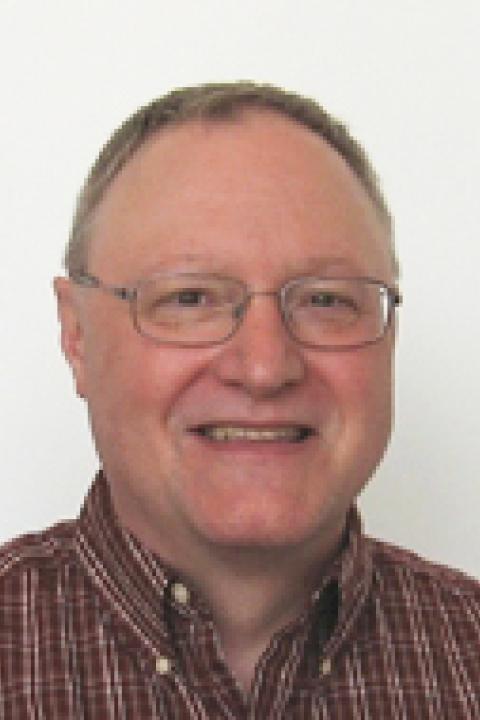
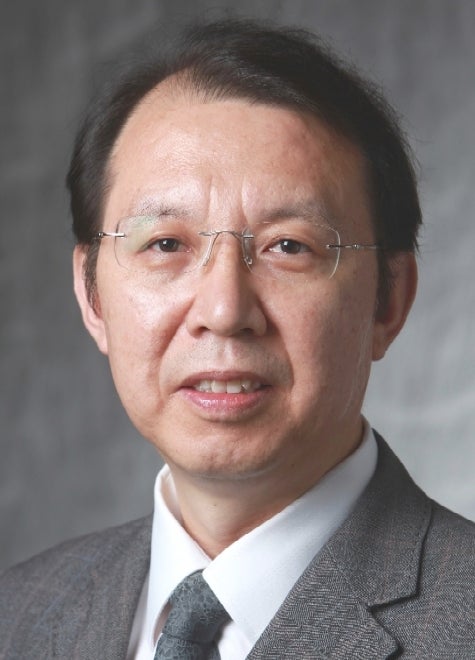
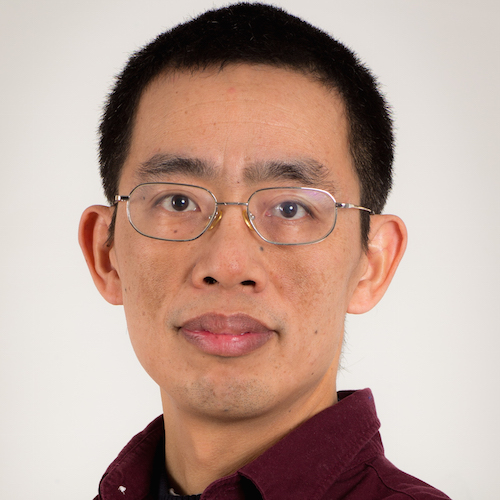
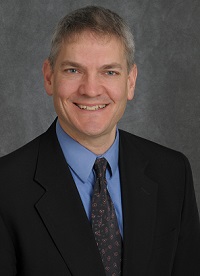
Richard Messner is an Associate Professor in the Department of Electrical and Computer Engineering at the University of New Hampshire's College of Engineering and Physical Sciences. His research focuses on optical signal processing, real-time digital image processing, and smart visual sensors. He has held roles since 1985, including membership in the IEEE Executive Committee and affiliations with professional organizations like SPIE and Sigma Xi. Education includes a Ph.D. in Engineering Science from Clarkson University (1985), and earlier degrees from Clarkson College of Technology (M.S. 1981, B.S. 1979). His doctoral research at the Naval Research Laboratory explored image-processing architectures for invariant pattern recognition. Research interests span neutron detection technologies (e.g., SONTRAC and LOONS instruments), biologically inspired sensors, and space instrumentation. Over 40 publications reflect contributions to solar neutron tracking, lunar spectrometers, and signal processing systems. He consults with industry and teaches courses in digital systems, image processing, and senior design projects. No scientific awards explicitly listed, but his work impacts space science and sensor development. Advising includes doctoral research supervision and senior project mentorship. His lab collaborations involve advanced pipeline image processing and real-time systems.
Dr. Shakil Awan is an Associate Professor in Electronics and Nanotechnology at the University of Plymouth , where he serves as Academic Lead for the Nanomaterials and Devices (NMD) Laboratory . He is a member of the Nanotechnology and Electronics Research Group and chairs the Electronics and Robotics External Advisory Panel . He has led the Electronics and Robotics Programme Refresh since 2022 and contributes to strategic academic reviews as part of the SECaM Engineering Portfolio Review Panel . Research Focus Graphene-based sensors for Alzheimer’s disease and hepatic cancer biomarker detection Electromagnetic properties of nanomaterials at DC, RF, and THz frequencies Development of precision resistance standards and LCR meter calibration techniques Integration of natural and synthetic nanomaterials in biosensing and environmental remediation Scientific Contributions His research spans graphene field-effect transistors , aptamer functionalization , and electromagnetic metrology , with a focus on biomedical diagnostics , environmental sensing , and quantum transport . Key trends include label-free detection of proteins and ions, high-frequency precision measurement , and sustainable nanomaterials for water purification. Teaching & Academic Leadership Module Leader for courses in Electrical Principles , Electronic Design , and Nanoelectronics since 2014 Supervisor for PhD and MSc students , including funded projects from EPSRC DTP , Zimmer & Peacock , and University of Plymouth Contributions to SECaM Portfolio Review and national metrology standards Labs & Collaborations Dr. Awan’s work is anchored at the Nanomaterials and Devices Laboratory , with collaborations at NPL , Imperial College London , and University of Cambridge . His projects emphasize healthcare applications , environmental monitoring , and electromagnetic standards .
Gloria Orchard is an Assistant Professor in the Department of Physics and Astronomy at York University, Faculty of Science. Her research focuses on experimental physics in radiation science and medical physics, alongside pedagogical innovations in physics education. She emphasizes active learning strategies such as in-lecture activities, group discussions, and hands-on laboratory experiences to enhance student engagement and problem-solving skills. Her experimental work involves detector development in radiation science, microdosimetry, and neutron field characterization at facilities like CERN. She also explores applications of optoacoustic systems for subsurface imaging and medical diagnostics. Orchard is eligible to supervise graduate students in the Physics and Astronomy program. Gloria Orchard’s research areas include Biological Physics, Pedagogical Research, and Science Education. She has contributed to advancing detector technologies and radiation measurement techniques through collaborations with institutions like CERN. Her educational initiatives aim to refine laboratory curricula and improve teaching methodologies in physics education.
Dr. Li Fang is an Assistant Professor in the Department of Physics at the University of Central Florida (UCF), affiliated with the College of Sciences. His research focuses on ultrafast and attosecond spectroscopy, plasma physics, and the interaction of matter with high-intensity laser fields. He leads the Ultrafast Atomic, Molecular & Plasma Research Group, which explores electronic dynamics in atomic and molecular systems using advanced laser technologies. Key research areas include nanoplasma energy dynamics, free-electron-laser-based experiments, and the development of high-power ultrafast laser systems. His group operates state-of-the-art labs like the Atto Lab and UFAST Lab, equipped with femtosecond lasers and advanced spectroscopy tools. Dr. Fang has secured significant funding, including a 2024 NSF CAREER Award and participation in UCF's $5M Jump Start initiative. His publications span photonics, optical amplification, and biomedical applications, reflecting interdisciplinary expertise. Collaborations include international facilities like Japan's SACLA free-electron laser. Current opportunities exist for graduate and undergraduate students in lab-based research.
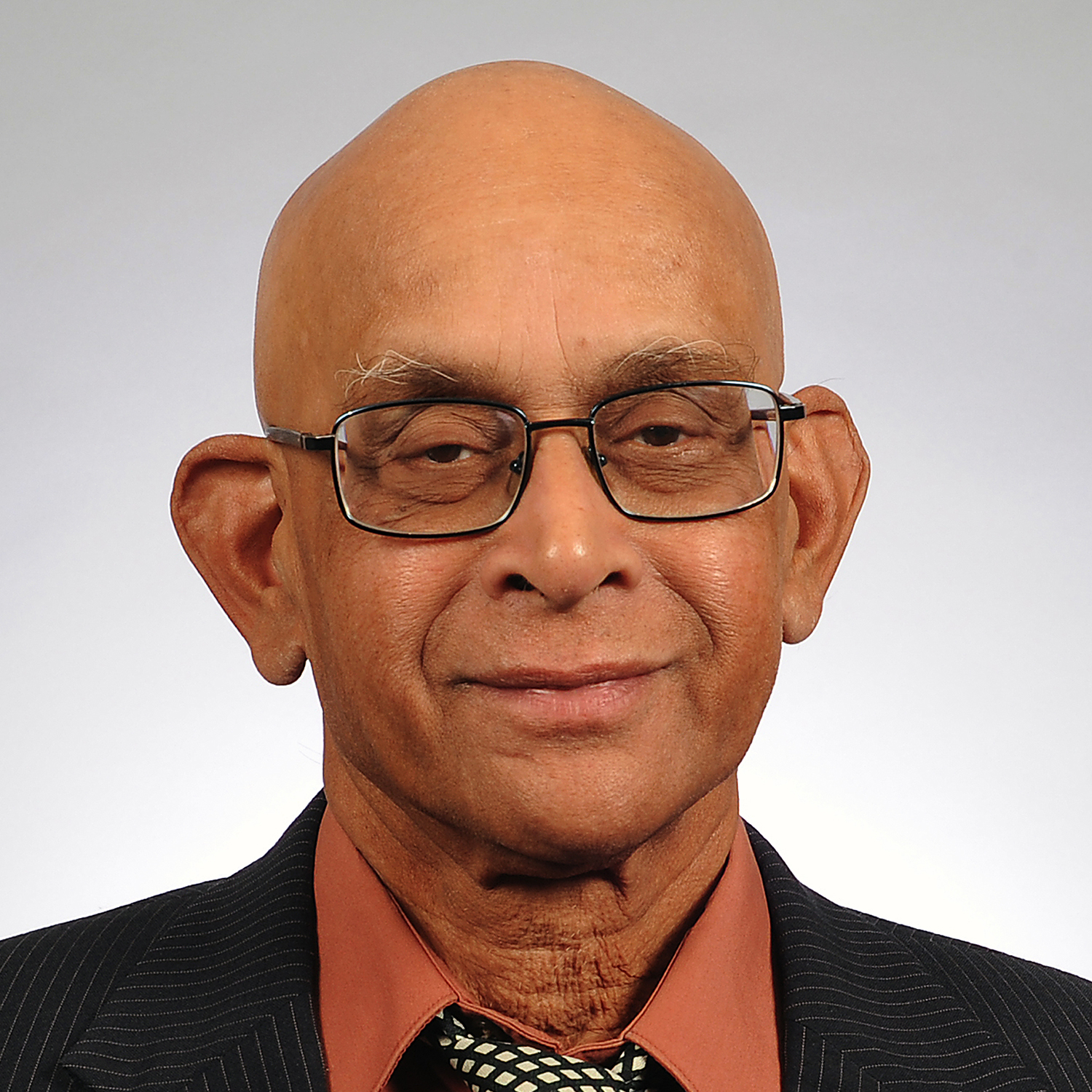
Dr. Kalpathy B. Sundaram is a Professor in the Department of Electrical and Computer Engineering at the University of Central Florida. His research specializes in thin film microelectronic materials, optoelectronic thin films, and protection design/simulation. He directs the Argis Research group and maintains active collaborations across materials science and engineering disciplines. His primary research explores thin film deposition techniques, semiconductor materials characterization, and applications in thermoelectrics, transparent electronics, and antibacterial coatings. Recent work focuses on optimizing delafossite materials (CuCrO₂, CuGaO₂) for transparent electronics and developing novel thermoelectric materials (Bi₂Te₃, Sb₂Te₃) for energy harvesting. Awards and Honors: Joseph M. Biedenbach Outstanding Engineering Educator (IEEE Region-3, 2000) Thomas Callinan Award (ECS Dielectric Science & Technology Division) IEEE Student Branch Counselor Award (2014) Fellow of the Electrochemical Society (2013) IEEE Region-3 Outstanding Engineer (2008) UCF Teaching Incentive Program Award (2008) IEEE Region-3 Outstanding Service Award (2011)
James Lu is a Professor in the Department of Electrical, Computer, and Systems Engineering at Rensselaer Polytechnic Institute. A recognized expert in 3D heterogeneous integration, advanced packaging, and semiconductor technologies, he contributes to fields such as neutron detection and self-assembly. He is a Fellow of IEEE. Education: Ph.D. (Dr.rer.nat.) in Physics, Technical University of Munich, Germany His research focuses on semiconductor technologies, including 3D-ICs, hybrid bonding, power devices, and materials for advanced packaging. Applications span thermal neutron detection, THz devices, and LED display systems. Recent publications highlight his work on hexagonal boron nitride for neutron detectors, self-assembly techniques, and 3D integration technologies. Keywords span materials science, microelectronics, and semiconductor device modeling. Scientific Awards: IEEE Fellow He is affiliated with the Center for Materials, Devices, and Integrated Systems (CMDIS) and Lighting Enabled Systems and Applications (LESA), advancing technologies in semiconductor reliability and smart system integration.
Marcello De Matteis serves as Associate Professor in the Department of Physics at the University of Milano-Bicocca, Italy, specializing in Application-Specific Integrated Circuit (ASIC) design for medical physics, high-energy experiments, and sensor systems. With over 35 ASICs developed since 2005—including principal design of 20+ chips across 0.5μm CMOS to 16nm FinFET technologies—he bridges electronics engineering with clinical applications in proton therapy and neuroscience. His educational background features a double degree from the Top Industrial Managers for Europe (TIME) program: Industrial Engineering, Polytechnic University of Madrid (2003) Electronic Engineering, Polytechnic University of Milan (2004) Research focuses on radiation-hardened analog circuits for particle detectors (ATLAS Muon Drift Tubes), proton therapy instrumentation (Proton Sound Detector project), and neuromorphic biosensors using neuron-electronic junctions. His work emphasizes low-power, high-precision front-ends for ionoacoustic imaging, with recent publications targeting FLASH radiotherapy monitoring and quantum computing interfaces. Analysis of his 15 most recent publications reveals dominant trends in medical physics instrumentation (70% of works), particularly ionoacoustic dosimetry for proton beam therapy, alongside growing contributions to neuromorphic engineering (20%) and radiation-hardened design (10%). All leverage advanced CMOS/FinFET nodes (28nm–12nm) to address noise, power, and radiation tolerance challenges in clinical and space applications. Key career recognition includes: Italian National Scientific Qualification for Full Professor (Electronics, 2020) Technical Program Committee roles for IEEE ESSCIRC, PRIME, and ICICDT conferences Associate Editor for Journal of Circuits, Systems and Computers (World Scientific) As Principal Investigator for INFN-funded projects since 2018, he coordinates multi-institutional teams across Italy and Germany on proton therapy instrumentation. His grant portfolio includes: Proton Sound Detector (INFN): 4-unit collaboration (Milano-Bicocca, CNAO, LMU Munich, INFN Catania) for real-time Bragg peak localization ScalTech28/FinFet16 (INFN): Rad-hard ASIC design in 28nm/16nm for high-luminosity LHC upgrades SAFIR GEM (2022): Submarine acoustic monitoring infrastructure funded by University of Milano-Bicocca Current leadership spans two research streams: CMOS 28nm biosensors for neuron-electronic interfaces and proton sound detectors for hadron therapy. Previously, he directed MEMS sensor development at University of Salento (2008–2012) and served as technical lead for ATLAS Muon Drift Tube ASICs. His industry collaborations include Infineon, IMEC, and STMicroelectronics, with recent work integrating PVDF ultrasound arrays for melanoma diagnosis and FinFET neurons for neuromorphic computing.
Ethan Brown is an Associate Professor in the Department of Physics, Applied Physics and Astronomy at Rensselaer Polytechnic Institute (RPI), with a focus on experimental particle astrophysics. His research bridges particle physics and astronomy through the study of dark matter, neutrinoless double beta decay, and radiation detector development using liquid xenon and novel detection technologies. Rensselaer Polytechnic Institute, School of Science, Department of Physics, Applied Physics and Astronomy His work centers on advancing low-background detectors for rare physics phenomena, particularly through the nEXO and XENON collaborations. Key areas include barium tagging, VUV-sensitive photodetectors, and background suppression in noble liquid experiments. Recent publications highlight improvements in liquid xenon detector materials (ultra-pure nickel), photodetector performance, and simulation frameworks (NEST models). His research emphasizes scalability and sensitivity for dark matter and neutrino physics.
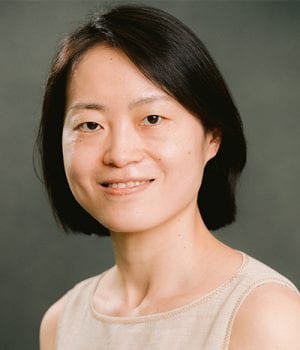
Mini Das is the Moores Professor in the Department of Physics at the University of Houston, with affiliations in the Cullen College of Engineering's Biomedical Engineering and Electrical and Computer Engineering departments. She holds a Ph.D. from the Indian Institute of Technology, Delhi. Her research focuses on advanced imaging techniques at the intersection of optical physics, computational methods, and engineering, with applications in medical diagnostics, defense/security, and global health. Key areas include X-ray phase contrast imaging, photon-counting detectors (collaborating with CERN), virtual clinical trials, and psychophysical models for human perception in medical imaging. Her work aims to improve cancer screening accessibility in underserved regions through innovative imaging systems. Das leads interdisciplinary projects combining quantum detection, material decomposition algorithms, and virtual patient modeling. She is a leader in developing cutting-edge imaging tools and has pioneered methods for low-dose and high-resolution biomedical imaging. Education : Ph.D., Indian Institute of Technology, Delhi Research Interests : Experimental/Optical design and computational imaging, virtual clinical trials, psychophysics/image science, vision science-driven imaging systems, and global health applications in cancer screening. Her lab develops advanced imaging modalities like multi-contrast X-ray phase mammography and spectral CT material decomposition systems. Grants & Collaborations : Works with CERN to optimize quantum detectors, FDA on regulatory-compliant imaging systems, and non-profits to deploy screening tools in low-resource areas. Her lab also collaborates on eye-tracking studies for human observer performance modeling in radiology. Labs/Teams : Directs a lab focused on quantum detection systems, computational imaging platforms, and bio-inspired optical designs. Active in multi-university consortia for biomedical imaging innovation.
Alexander Haimovich is a Distinguished Professor in the Department of Electrical and Computer Engineering at New Jersey Institute of Technology (NJIT). He received his Ph.D. in Systems Engineering from the University of Pennsylvania in 1989 and joined NJIT in 1992. His leadership roles include directing the New Jersey Center for Wireless Telecommunications and serving as a visiting fellow at Princeton University. He holds the Ying Wu Endowed Chair and is a Fellow of the IEEE. Education: Ph.D., Systems Engineering, University of Pennsylvania, 1989 M.S., Electrical Engineering, Drexel University, 1983 B.S., Electrical Engineering, Technion - Israel Institute of Technology, 1977 Research Focus: Professor Haimovich specializes in wireless communications, radar systems, and signal processing. His work explores fundamental limits of detection and estimation theory, with applications in cognitive radar, MIMO systems, and interference mitigation. Current projects involve adaptive radar detection using meta-learning and blind source separation techniques for frequency-hopping signals. Publication Trends: His recent articles demonstrate strong focus on radar waveform optimization, machine learning applications in signal processing, and sub-Nyquist radar systems. Works frequently address challenges in spectral congestion and real-time adaptive detection. Awards: Fellow of the IEEE Academic Leadership: Oversees graduate research programs and maintains collaborations with defense and telecommunications industries. Manages laboratory facilities for wireless system prototyping.
Dr. Tong Xu is a Professor in the Department of Physics at Carleton University, affiliated with the Faculty of Science. His research focuses on real-time motion tracking for medical procedures, including tumor tracking during radiation therapy and image-guided surgery. He has pioneered the PeTrack technique using positron emission markers and developed the dynamic dual-energy x-ray imaging (dDEXI) method for lung tissue motion assessment. His work aims to improve radiation therapy accuracy, reduce patient radiation exposure, and enhance diagnostic tools. Dr. Xu holds a U.S. Patent (#8447387) for real-time tumor tracking technology and has contributed to advancements in medical imaging and radiation oncology. His research interests span medical physics, radiation therapy, and biomedical engineering, with applications in oncology and cardiology. Key projects include respiratory motion management in PET/CT imaging and optimizing 4D-VMAT radiotherapy frameworks. Dr. Xu collaborates on interdisciplinary projects to translate imaging innovations into clinical practice. Awards : U.S. Patent #8447387 (2013) Key Technologies : PeTrack, dDEXI, motion-compensated imaging Labs/Groups : Medical Imaging and Radiation Physics Research Group at Carleton University
Wei Guo is a Professor and Department Graduate Director in the Department of Mechanical Engineering at the Florida A&M University-Florida State University College of Engineering. His research focuses on cryogenic fluid dynamics, quantum turbulence, and superfluid helium applications in advanced physics detectors and aerospace systems. He holds a Ph.D. in Physics from Brown University (2008), an M.S. from Brown University (2004), and a B.S. from Wuhan University (2002). Research interests include visualization of quantum fluid dynamics, cryogenic heat transfer in particle accelerators, and dark matter detection technologies. Notable achievements include developing the HeRALD superfluid detector and advancing understanding of vortex reconnection in superfluids. He has been recognized with awards such as the American Physical Society Fellowship (2023) and the Gordon and Betty Moore Foundation Investigator Award (2022). Education: Ph.D. Physics, Brown University, 2008 M.S. Physics, Brown University, 2004 B.S. Physics, Wuhan University, 2002 His recent work spans cryogenic hydrogen storage systems for zero-emission aviation, noise mitigation in superconducting sensors, and quantum electronics leveraging solid neon surfaces. Collaborative projects include the TESSERACT dark matter detection initiative and advancements in magnetic levitation for low-gravity simulations. Awards: American Physical Society Fellow (2023) Outstanding Research Award, FAMU-FSU College of Engineering (2023) Moore Foundation Experimental Physics Investigator Award (2022) Dr. Guo's lab develops novel cryogenic flow measurement tools like particle levitation velocimetry and employs advanced imaging techniques involving He₂* excimer clusters. His work bridges quantum fluid mechanics with applied engineering challenges in aerospace and high-energy physics infrastructure.
Josep Altet Sanahujes is an Associate Professor in the Department of Electronic Engineering at the Polytechnic University of Catalonia (UPC). His research focuses on high-performance integrated circuits, particularly leveraging thermal measurements to characterize and optimize RF analog circuits. He leads the HIPICS (High Performance Integrated Circuits and Systems Design) group, specializing in temperature sensor development for on-chip testing and monitoring of aging effects in CMOS amplifiers. Education: M.S. in Electronic Engineering, La Salle Universitat Ramon Llull (1993) Ph.D., Electronic Engineering Department, Universitat Politècnica de Catalunya (1998) Research Interests: Dr. Altet pioneers thermal-based strategies for analog circuit testing, including the design of compact temperature sensors compatible with RF technologies. He explores thermal coupling characterization and electro-thermal interaction in integrated circuits, with applications in automotive AI, energy-efficient DNN accelerators, and astrophysical instrumentation. His work bridges fundamental physics (e.g., thermal phase lag analysis) with practical device optimization. Key Contributions: His recent articles address cutting-edge topics like energy-efficient mixed-precision DNN inference via binary segmentation, aging compensation in RF amplifiers using DC temperature measurements, and security enhancements through thermal signatures. He has published extensively on topics ranging from heterodyne infrared imaging for current tracking to BPF-based thermal sensors. Lab & Teams: Primary affiliation with the HIPICS research group at UPC, collaborating on interdisciplinary projects involving thermal-aware circuit design and embedded systems.
Makhsud Saidaminov is an Assistant Professor and Canada Research Chair Tier 2 in Advanced Functional Materials at the Department of Chemistry, University of Victoria. He holds a PhD from Lomonosov Moscow State University and completed a Banting Postdoctoral Fellowship at the University of Toronto. His research focuses on functional materials and perovskites for applications in solar cells, optoelectronics, and X-ray detectors. Key areas include self-assembly, clean energy, and material stability. Education: PhD (Lomonosov Moscow State University), Banting Postdoctoral Fellow (U of T) Research interests include the chemistry and physics of inorganic and hybrid materials, with emphasis on perovskite solar cells, optoelectronic devices, and X-ray detection technologies. His group explores scalable fabrication methods, solvent engineering, and machine learning-driven material discovery. Recent work highlights advancements in blade-coated perovskite solar cells, carbon-electrode systems, and ambient-air fabrication techniques. Notable achievements include the Canada Research Chair Tier 2 and Banting Fellowship. His lab’s publications span high-impact areas like perovskite crystallization, detector optimization, and green solvent applications. Ongoing efforts aim to enhance material stability and scalability for real-world energy and sensing applications. Awards: Canada Research Chair Tier 2, Banting Postdoctoral Fellow Teaching focuses on materials science, optoelectronics, and sustainable energy technologies. Current projects involve all-perovskite tandem cells, X-ray detector materials, and AI-driven material design.
Paul Vaska is a Professor and Scientist of Biomedical Engineering at Stony Brook University's Renaissance School of Medicine. He holds academic appointments in the Department of Biomedical Engineering and has expertise in medical imaging instrumentation, particularly in PET/MRI systems and quantitative imaging techniques. His research focuses on developing novel imaging technologies, including the RatCAP conscious animal PET scanner and early PET/MRI systems for rodents. Dr. Vaska has led and contributed to multiple NIH-funded grants totaling over $14 million, studying the effects of World Trade Center exposure on cognitive aging, amyloidosis, and neuroinflammation. He also investigates sports concussions and neuroinflammatory processes using PET/MRI. His work bridges clinical and preclinical imaging, emphasizing interdisciplinary collaboration. Dr. Vaska earned his Ph.D. in Nuclear Physics from Stony Brook University and completed postdoctoral training in medical physics. He holds patents in PET detector technology and has authored over 100 peer-reviewed publications, including seminal papers on behavioral neuroimaging and the glymphatic system.