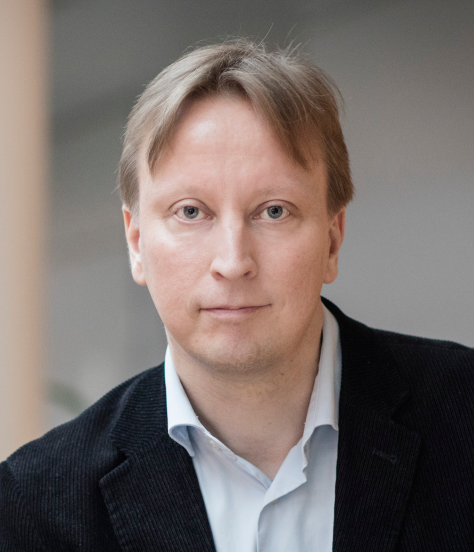
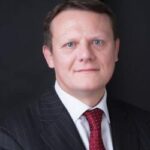
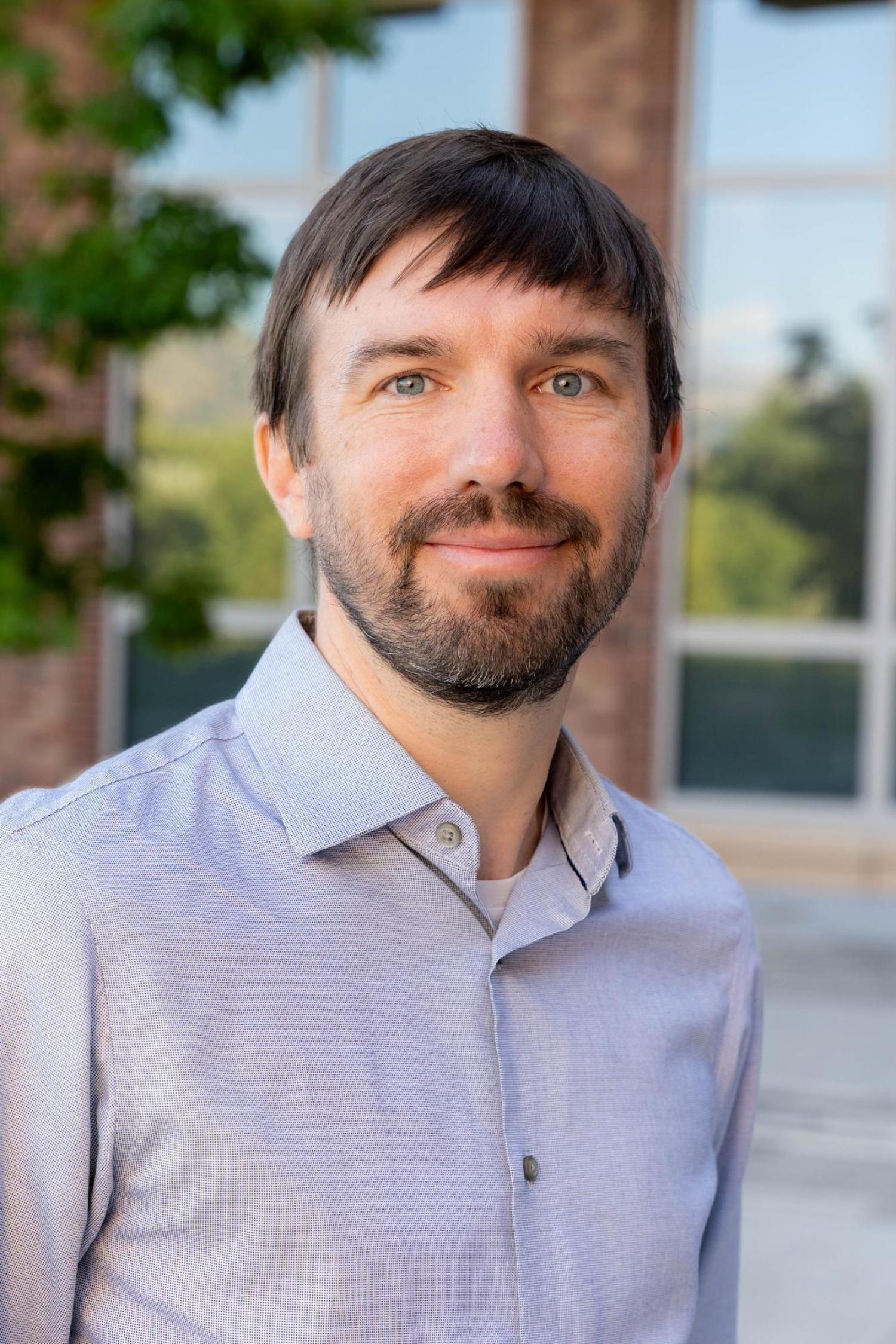
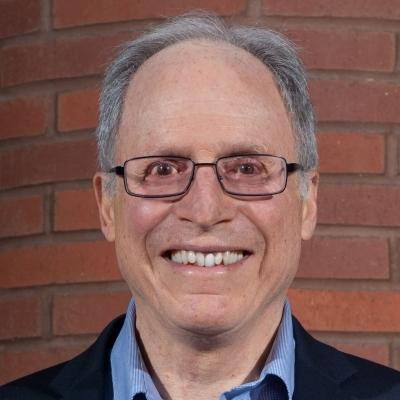
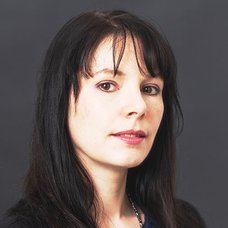
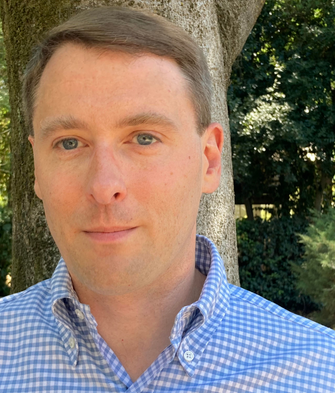
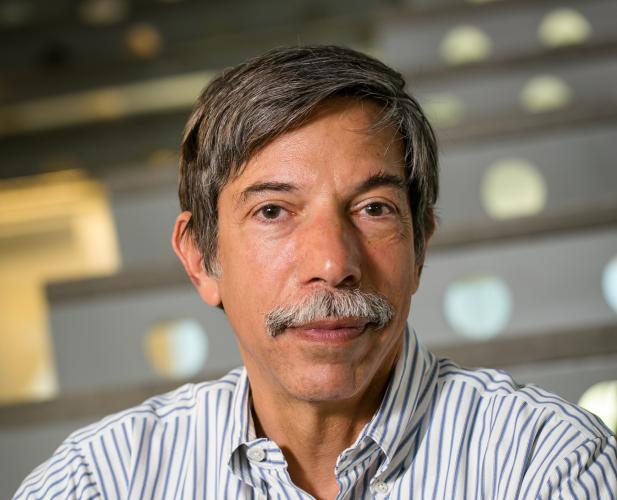
Professor Simo Särkkä holds a position in Sensor Informatics and Medical Technology at the Department of Electrical Engineering and Automation (EEA), Aalto University. His research focuses on multi-sensor data processing, Bayesian filtering, machine learning, and their applications in medical technology, brain imaging, and inverse problems. He leads research groups including the Helsinki Institute for Information Technology (HIIT) and Sensor Informatics and Medical Technology. His work bridges theoretical advancements in probabilistic methods with practical implementations in healthcare and engineering. Key research interests include Gaussian processes, stochastic differential equations, quantum machine learning, and signal processing. He has contributed to advancements in algorithms for nonlinear state-space models, parallel computing techniques, and medical imaging technologies such as scatter correction in CT scans. His methodologies are applied across domains like autonomous systems, robotics, and bioengineering. Notable publications span topics like quantum-assisted Gaussian regression, physics-informed machine learning for industrial processes, and parallel-in-time numerical methods. His work emphasizes computational efficiency and robustness in high-dimensional and real-time systems.
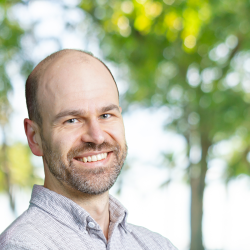
Dr Henry Moss is a Researcher at the Department of Applied Mathematics and Theoretical Physics within the School of Physical Sciences at the University of Cambridge. His work focuses on machine learning applications in climate modeling, Bayesian optimization, and Gaussian processes, bridging computational mathematics with environmental science and chemistry. His research interests include: Bayesian optimization for environmental and chemical systems Reinforcement learning in climate modeling Gaussian processes for molecular property prediction High-throughput machine learning in scientific domains Interpretable AI for coastal flooding prediction Hybrid ML-physics modeling Dr Moss's publications highlight his contributions to federated learning for climate models, sparse Gaussian process techniques, and multi-objective optimization frameworks. These works span applications in weather prediction, chemical engineering, and oceanography. Email: hwm26@cam.ac.uk
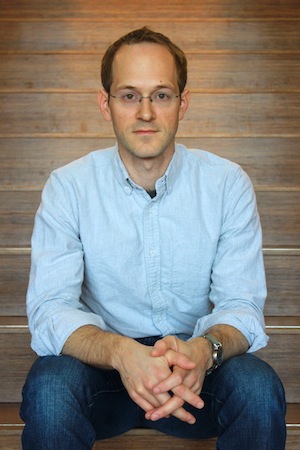
Alexandre Bouchard-Côté is a Professor of Statistics at the University of British Columbia (UBC), affiliated with the Department of Statistics within the Faculty of Science. His research focuses on computational statistics, Bayesian methods, and Monte Carlo techniques, with applications in evolutionary biology, cancer genomics, and computational linguistics. Education : PhD in Computer Science (with Designated Emphasis in Statistics) from UC Berkeley (2010), BSc in Mathematics and Computer Science from McGill University (2005). Affiliations : Director of the Blang probabilistic programming project and leader of the Bouncy Particle Sampler research group. Research Interests : Bouchard-Côté develops scalable Bayesian computational methods, including non-reversible Monte Carlo algorithms like the Bouncy Particle Sampler, and applies these to problems in cancer phylogenetics, evolutionary dynamics, and historical linguistics. His work emphasizes bridging theoretical foundations with practical tools for data science. Publications Trends : Recent work spans distributed sampling frameworks (e.g., Pigeons.jl), variational phylogenetic inference, and cancer clonal evolution modeling. His articles often address algorithmic scalability and interdisciplinary applications in biology and astronomy. Awards : CRM-SSC Prize in Statistics (2024) PIMS-UBC Mathematical Sciences Young Faculty Award (2018) Tweedie New Researcher Award (2016) Advising & Grants : Supervises graduate students (e.g., Son Luu, Nikola Surjanovic) and leads funded projects on distributed MCMC and cancer genomics. Collaborates with institutions like the Simons Foundation and the Canadian Statistical Sciences Institute (CANSSI). Labs/Teams : Core member of the UBC Statistical Machine Learning group, contributing to open-source tools like Blang and the Bouncy Particle Sampler implementation.
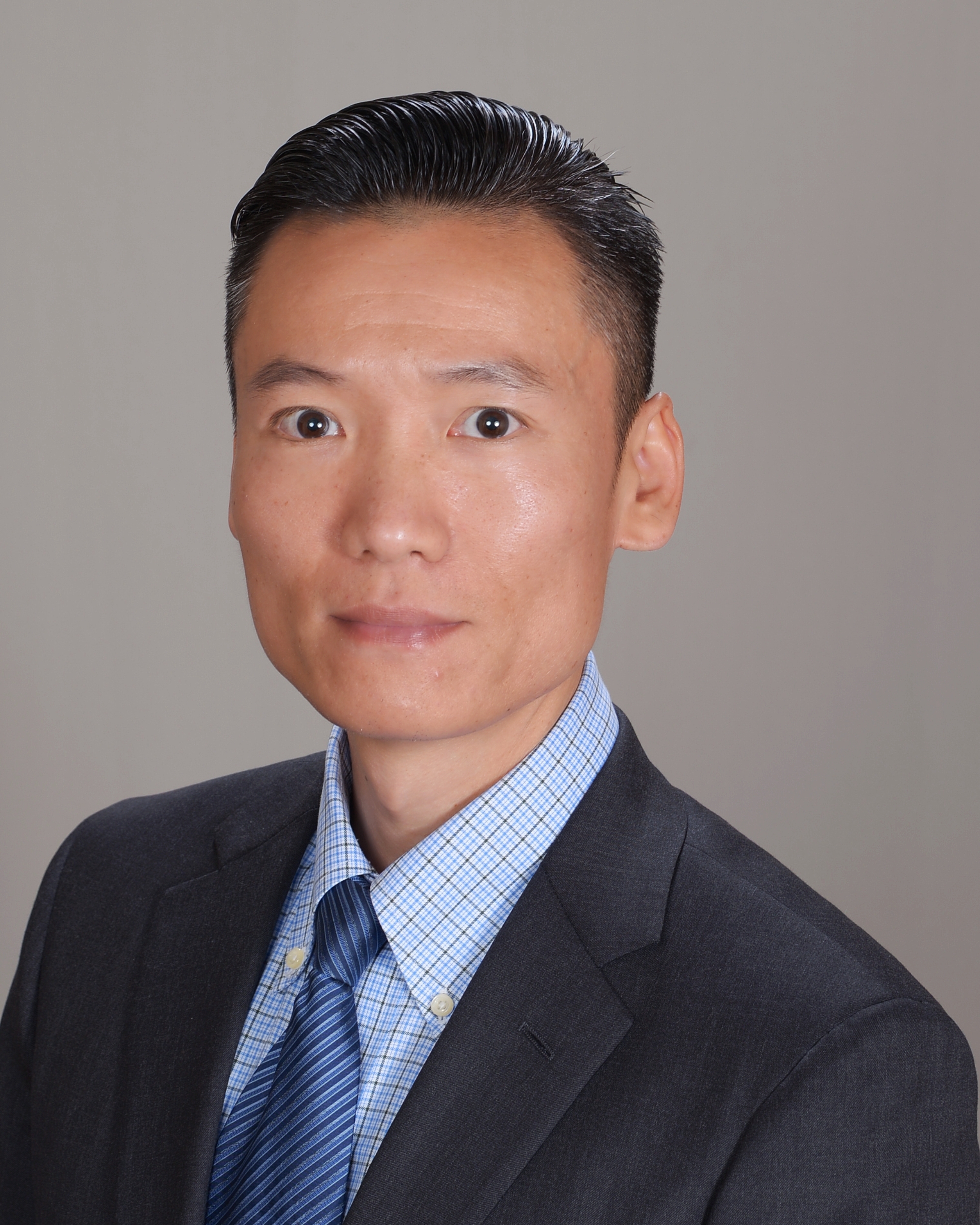
Andrew Childs is a Professor at the University of Maryland, affiliated with the Department of Computer Science and the Institute for Advanced Computer Studies (UMIACS). He serves as Director of the NSF Quantum Leap Challenge Institute for Robust Quantum Simulation (RQS) and is a Fellow at the Joint Center for Quantum Information and Computer Science (QuICS). His research focuses on quantum algorithms for simulating physical systems, algebraic problems, and quantum walk protocols, with applications in quantum computing and computational complexity. University of Maryland Institute for Advanced Computer Studies (UMIACS) Joint Center for Quantum Information and Computer Science (QuICS) NSF Quantum Leap Challenge Institute for Robust Quantum Simulation Childs' research spans quantum simulation, quantum Fourier transform, phase estimation, and Hamiltonian dynamics. He has developed techniques to reduce quantum computational resources for simulating quantum systems and explored limitations of quantum computers through hidden subgroup problems and non-unitary dynamics. His publications cover diverse areas including quantum walk optimization, Hamiltonian simulation methods, and applications to cryptography and condensed matter physics. Recent works address spatial search algorithms, product formulas for commutators, and quantum routing protocols. As an educator, Childs has taught courses on quantum algorithms and information processing at both the University of Maryland and University of Waterloo, with lecture notes and materials spanning multiple years. Contact: amchilds@umd.edu | Office: ATL 3359 | Affiliated with University of Maryland's quantum research institutes.
Dr. Liang Cheng is the Department Chair and Professor in the Department of Electrical Engineering and Computer Science at the University of Toledo. He leads a department with ~700 students across CS, CSE, and EE programs. His research focuses on Cyber-Physical Systems (CPS), IoT, AI/ML, and intelligent infrastructure, supported by over $30M in funding from NSF, DOE, DOT, and industry. Notable projects include CPS Breakthrough initiatives and underground sensing systems. He co-edited a multidisciplinary book on Underground Sensing and contributed to smart grid cybersecurity. Dr. Cheng has held leadership roles at Lehigh University, shaping faculty governance and equity policies. His 100+ publications span networking, real-time systems, and sensor networks. He advises on funded projects totaling $30M+ and has pioneered pedagogical approaches in computer science education. Research Interests: Cyber-Physical Systems (CPS): Focuses on autonomous drones, energy systems, and real-time infrastructure Networking: Expertise in TSN, DTN, and wireless protocols Cybersecurity: SCADA systems, PLC attack detection, and blockchain energy modeling Underground Sensing: Geo-sensing via wireless signals and subsurface tomography Grants & Projects: Over 20 sponsored projects including NSF CPS Breakthrough (2018-2023), ABB smart grid projects, and DARPA-funded EDIFY systems. Key contributions include reconfigurable wireless architectures and network calculus tools for real-time systems. Teaching: Courses span senior design, compiler design, parallel computing, and wireless sensor networks. Developed pedagogical patterns for non-CS programming education. Awards: Recognized for leadership in academic governance and interdisciplinary research collaboration.
Dr. Mo Adda is a Principal Lecturer at the University of Portsmouth's School of Computing, part of the Faculty of Technology. He holds a PhD in Distributed Systems and Parallel Processing from the University of Surrey. His research focuses on network security, distributed systems, wireless networks, and cybercrime prevention. He leads projects in the Centre for Cybercrime and Economic Crime, exploring fault management in networks, blockchain applications, and IoT forensics. With 16 supervised theses, he advises on topics like energy-efficient cloud systems and machine learning for environmental modeling. His work bridges academia and industry, addressing challenges in software-defined networks, traffic control, and secure data sharing in social networks. Education: PhD in Distributed Systems (University of Surrey) Affiliations: Centre of Excellence in Defence, Risk & Resilience; Portsmouth Centre for Advanced Materials and Manufacturing Research Interests Dr. Adda's research spans: Network security and fault detection mechanisms Blockchain applications in IoT and forensics Energy-efficient cloud data center optimization Machine learning for climate modeling Self-organizing network protocols Grants & Collaborations His projects include collaborations with industry partners on secure data leakage detection in cloud systems and resilient wireless protocols for harsh environments. He has pioneered fault classification systems using clustering algorithms and fuzzy logic. Labs & Teams He contributes to the Centre for Cybercrime and Economic Crime, focusing on digital forensics and network intrusion analysis. His team develops frameworks for privacy management in social networks and proactive routing in software-defined networks.
Hrvoje Jasak is a Professor of Continuum Physics at the Department of Physics (Cavendish Laboratory), University of Cambridge. He holds a fellowship at Christ’s College. His academic journey includes a BSc in Mechanical Engineering from the University of Zagreb (1992) and a PhD in CFD from Imperial College London (1996). Prior to academia, he held engineering roles at CD-adapco (now Siemens PLM), Nabla Ltd, and Ansys-Fluent Inc., contributing to CFD software development. His research focuses on numerical simulation methods, continuum physics, multiphase flows, naval hydrodynamics, and software development. He co-created OpenFOAM, chairs its Numerics Technical Committee, and leads the Computational Continuum Mechanics (CCM) research group within the Laboratory for Scientific Computing. His work integrates advanced numerical techniques like the partially rotating grid method, finite volume algorithms, and multiphysics coupling frameworks. Jasak is a seasoned developer with 25+ years of C++ expertise, having authored ~1 million lines of code. His group’s projects include the Naval Hydro Pack , fluid-structure interaction solvers, and the Eulerian multi-fluid model for dense sprays. He actively collaborates on international initiatives like the NUMAP-FOAM Summer School and the OpenFOAM community. His teaching spans MPhil programs, PhD supervision, and specialized CFD courses. Current research explores wave-ice interaction, lubricated contact modeling, and open-source software innovation. The CCM group’s work bridges academia and industry, addressing challenges in marine engineering, energy systems, and computational mechanics.
John Evans is an Associate Professor and Jack Rominger Faculty Fellow in the Department of Aerospace Engineering Sciences at the University of Colorado Boulder, affiliated with the Applied Mathematics program. He serves as Associate Chair for Undergraduate Curriculum and is part of the Aerospace Mechanics Research Center (AMREC). His research focuses on computational mechanics, particularly fluid dynamics, fluid-structure interaction, and turbulence modeling using high-order and structure-preserving methods. Evans holds a PhD (2011) and MS (2008) in Computational and Applied Mathematics from the University of Texas at Austin, and dual BS/MS degrees in Mathematics and Applied Mathematics from Rensselaer Polytechnic Institute (2006). Before joining CU Boulder, he was a postdoctoral fellow at the Institute for Computational Engineering and Sciences (ICES). His research interests include isogeometric analysis, immersed methods, and data-driven turbulence modeling. Notable contributions include development of divergence-conforming discretizations for incompressible flows, stabilized collocation methods, and invariant subgrid stress models. He leads the AMREC lab and collaborates on plasma-fueled propulsion systems and geometrically sensitive simulations. Key Awards: 2021: Rocky Mountain AIAA Educator of the Year 2021: Gallagher Young Investigator Medal 2019-2021: Clarivate Highly Cited Researcher Professional Activities: Editor of Engineering Computations, Senior AIAA Member, Simons Visiting Professor (2019) Evans' work bridges advanced numerical methods with real-world engineering challenges. His lab develops open-source tools like XIGA for multi-material problems and focuses on immersive simulation environments. Current projects explore turbulence closure models, plasma propulsion, and topology optimization with B-spline-based approaches.
Professor Knut Reinert is a leading figure in algorithmic bioinformatics at the Free University of Berlin, where he holds a professorship in the Department of Mathematics and Computer Science. He also maintains a significant affiliation with the Max Planck Institute for Molecular Genetics in Berlin, where he leads the Efficient Algorithms for Omics Data group. His research spans both institutions through the Reinert Lab, which focuses on developing novel computational approaches for biological data analysis. Reinert's educational background includes a Diploma in Computer Science (1994) and a Doctorate (Dr. Ing./Ph.D., 1999, with honors) from the Max-Planck-Institut for Computer Science and Universität des Saarlandes in Saarbrücken. Prior to his professorship, he worked as a computer scientist under Prof. Gene Myers at Celera Genomics in Rockville, USA (1999-2002). His primary research interests center on algorithmic bioinformatics with specific focus on developing novel algorithms and data structures for biomedical mass data analysis. This includes creating mathematical models for genomic sequence analysis and algorithms for mass spectrometry data to detect differential protein expression between normal and diseased samples. His work bridges the gap between computational tool development and practical biological applications, with particular emphasis on NGS and proteomics data. The publications and projects led by Prof. Reinert demonstrate a consistent focus on advancing computational methods in bioinformatics. His research spans genomic sequence analysis, RNA research (particularly long non-coding RNAs), parallel computing applications, and GPU acceleration for biological data processing. The work shows increasing sophistication in handling large-scale biological datasets through innovative algorithmic approaches. Intel® Parallel Computing Center designation for his lab CUDA Research Center status DFG funding of 530 thousand Euros for RNA research de.NBI funding of 2 million Euros BMBF funded projects 'LIVE-DREAM' and 'EssBar' Prof. Reinert leads multiple significant research projects and has established strong collaborations with international partners including Texas A&M, Kings College London, Eberhardt-Karls Universität Tübingen, Robert-Koch-Institute, and various Turkish institutions. His lab receives funding from major organizations including DFG, BMBF, and Intel. The Reinert Lab maintains active teaching responsibilities at FU Berlin, offering courses at BSc, MSc, and PhD levels using both traditional and innovative learning concepts like e-learning and inverted classrooms. The Reinert Lab consists of two interconnected research groups that work closely with experimental biologists and medical researchers to develop practical computational solutions for real-world biological problems. The lab has established itself as a key player in the German and international bioinformatics community through its development of the widely-used SeqAn library and participation in national infrastructure initiatives.
David S. Eisenberg is a Professor of Chemistry and Biochemistry and Biological Chemistry at the University of California, Los Angeles, where he also serves as Director of the UCLA-DOE Institute for Genomics and Proteomics and as an HHMI Investigator. His research focuses on protein interactions, particularly the structural basis for conversion of normal proteins to the amyloid state and conversion of prions to the infectious state. Dr. Eisenberg earned his undergraduate degree in biochemical sciences from Harvard College and his D.Phil. degree in theoretical chemistry from Oxford University on a Rhodes Scholarship. His postdoctoral research was on ice and water with Walter Kauzmann at Princeton and in protein crystallography with Richard Dickerson. He joined the UCLA faculty after his postdoctoral studies. Dr. Eisenberg and his research group focus on protein interactions in amyloid and prion diseases. These diseases involve protein aggregation where normal functional proteins convert to abnormal aggregated forms. Systemic amyloid diseases like dialysis-related amyloidosis result from fiber accumulation until organ failure, while neurodegenerative diseases like Alzheimer's, Parkinson's, ALS, and prion conditions appear to be caused by smaller oligomers. In 2005, his team determined the atomic-level structure for the amyloid fiber spine, revealing a 'steric zipper' of two parallel beta sheets packed across a dry interface. Since then, they've determined approximately 90 amyloid spines from 15 disease-related proteins. In 2010, they identified the structure of a toxic amyloid-related oligomer consisting of six anti-parallel beta strands forming a cylindrical barrel. His recent publications demonstrate continued innovation in amyloid research, with focus areas including structural prediction of amyloid formation, mechanisms of tau fibril disassembly in Alzheimer's disease, cryo-EM analysis of amyloid polymorphism, and structure-based design of inhibitors for amyloid toxicity. His work integrates computational, structural, and biochemical approaches to understand protein aggregation across multiple disease contexts. Dr. Eisenberg has received numerous prestigious awards and honors: National Academy of Sciences Member American Philosophical Society Member Institute of Medicine Member Howard Hughes Medical Institute Investigator Biophysical Society Emily M. Gray Award Harvard Westheimer Medal UCLA Seaborg Medal Technion - Israel Institute of Technology Harvey Prize in Human Health As Director of the UCLA-DOE Institute for Genomics and Proteomics and an HHMI Investigator, Dr. Eisenberg leads significant research initiatives in protein structure and aggregation. His laboratory combines X-ray crystallography, bioinformatics, and biochemical techniques to investigate protein interactions, with particular emphasis on amyloid-forming proteins and their role in disease. The Eisenberg Lab, located in Boyer Hall at UCLA, maintains an active research program investigating the structural basis of protein aggregation. The lab continues to build on its landmark discoveries of amyloid structures while exploring new frontiers in understanding protein misfolding diseases and developing potential therapeutic interventions.
Marco Platzner is a Professor for Computer Engineering at Paderborn University , Germany. He serves as the Dean of Research for the Faculty of Computer Science, Electrical Engineering and Mathematics and heads the Department of Computer Science. Previously, he held research positions at ETH Zurich, Stanford University, GMD (now Fraunhofer IAIS), and Graz University of Technology. Education: Diploma and PhD in Telematics (Graz University of Technology, 1991 and 1996), Habilitation in Hardware-Software Co-Design (ETH Zurich, 2002) Research Interests focus on reconfigurable computing, approximate computing, self-* computing, and embedded systems. His work addresses hardware security, FPGA design, and sustainable AI in data centers. Current projects include energy-efficient AI through deep neural network approximation for FPGAs (EKI-App) and lifecycle sustainability of socio-technical systems (SAIL). Publication Trends show expertise in FPGA security, approximate circuit synthesis, robotics, and hardware acceleration. Collaborations span robotics (ROS 2 integration), AI (transformer optimization), and cybersecurity (Trojan detection). Scientific Awards: ACM SIGDA Hall of Fame (2020) Significant Paper Award (FPL 2015) Best Paper Awards at IEEE ISVLSI (2024), ARC (2018), IEEE ReConFig (2015), and others Weierstraß Prize for Teaching (2008) Leadership Roles include membership in the board of Paderborn Center for Parallel Computing (PC2) and the Jenny Aloni Centre for Early Career Researchers. He has contributed to EU FP7 FET project EPiCS and German priority programs on embedded systems and organic computing.
Melody Alsaker is an Associate Professor in the Department of Mathematics at Gonzaga University, where she has held this position since January 2016. Her research focuses on medical imaging and applied inverse problems, particularly in the field of electrical impedance tomography (EIT). She specializes in mathematical modeling, algorithm design, and biomedical image processing, with applications in pulmonary and thoracic imaging. Her work emphasizes improving EIT reconstruction techniques using the D-bar method, incorporating spatial priors, and developing real-time solutions for clinical applications. Notable contributions include the ACE1 EIT system for thoracic imaging and studies on stroke classification, air trapping in lungs, and surrogate measures of pulmonary function in children with cystic fibrosis. Alsaker's research bridges mathematics and engineering, addressing challenges in medical imaging accuracy and computational efficiency. Her collaborations span disciplines, including biomedical engineering, respiratory physiology, and clinical medicine.
James Bremer is a Professor in the Department of Mathematics and holds a cross-appointment in the Department of Computer and Mathematical Sciences at the University of Toronto's Scarborough campus. His research focuses on developing efficient numerical algorithms for solving elliptic boundary value problems, integral equations, and special function transforms.
Fred B. Schneider is the Samuel B. Eckert Professor of Computer Science at Cornell University , where he has been a faculty member since 1978. His career spans foundational work in trustworthy systems , fault-tolerant distributed systems , and system security . He served as department chair from 2014–2018 and previously earned a B.S. in Engineering from Cornell (1975) and a Ph.D. in Computer Science from Stony Brook University (1978).
Paolo Ienne is a Professor at the Swiss Federal Institute of Technology in Lausanne (EPFL), where he leads the Processor Architecture Laboratory (LAP) within the School of Computer and Communication Sciences. His research focuses on advancing reconfigurable computing systems through innovative FPGA architectures and high-level synthesis methodologies. His primary research domains include reconfigurable computing, FPGA architecture design, dynamically scheduled dataflow circuits, and hardware acceleration techniques. Recent work emphasizes memory system optimization for FPGAs, formal verification of circuit transformations, and rapid C-to-hardware compilation flows. He has pioneered approaches for handling thousands of outstanding memory misses in FPGA accelerators and developed novel techniques for switch-block exploration without explicit pattern enumeration. Analysis of his 2023-2025 publications reveals a strong trend toward practical FPGA deployment challenges, with increasing focus on HBM integration, virtual memory systems for PCIe-attached devices, and formally verified circuit transformations. His work consistently targets real-world bottlenecks in high-level synthesis toolchains while maintaining theoretical rigor in dataflow architecture design. Professor Ienne's laboratory receives support from the Swiss National Science Foundation and industry partners including Huawei, enabling cutting-edge research in FPGA-based acceleration. His collaborative network spans major semiconductor companies and academic institutions worldwide, with frequent co-authorship on conference proceedings and journal publications in IEEE and ACM venues.