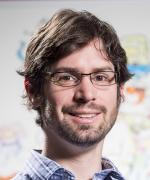
Matthew Louis Mauriello is an Assistant Professor in the Department of Computer and Information Sciences at the University of Delaware , where he directs the Sensify Lab . He holds a PhD in Computer Science from the University of Maryland (2018) and completed postdoctoral work at Stanford University (School of Medicine, 2020; School of Public Policy & Environmental Engineering Department, 2019). Research interests span Human-Computer Interaction (HCI), Ubiquitous Computing, and User-Centered Design with applications in: Sustainability Human-Building Interaction Wearable Technology Personal Informatics Educational Game Design Mental Health Interventions Recent publications highlight trends in stress monitoring (skin-like biosensors, workplace wellbeing), energy auditing (thermography systems), and educational technology (block-based programming tools for teachers). His work appears in ACM CHI, ACM Human-Computer Interaction, and Building and Environment. Scientific awards include: Best Paper Honorable Mention, CHI 2016 Best Paper Honorable Mention, CHI 2015 Best of WebSci'18 Teaching at University of Delaware encompasses courses like Educational Game Design Operating Systems Advanced Web Technologies Computing for Social Good with a focus on project-based learning and systems thinking.
Massachusetts Institute of TechnologyUnited States
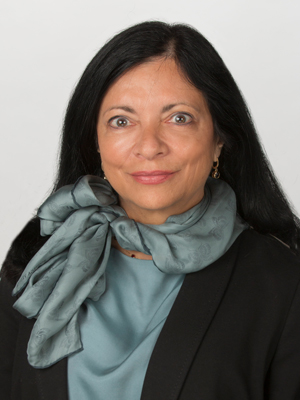
Abhijit Banerjee is a Professor in the Department of Economics at the Massachusetts Institute of Technology (MIT). His research focuses on development economics, public health policy, and social protection programs, particularly addressing poverty and inequality in low- and middle-income countries. He has conducted large-scale experiments evaluating interventions such as conditional cash transfers, universal basic income, and healthcare policies. Key areas of interest include the design and implementation of anti-poverty programs, behavioral economics, and the long-term health impacts of infectious diseases like COVID-19. His work often integrates experimental methods to assess policy effectiveness, with contributions to global health studies and economic development strategies. Notably, his research on the RECOVERY trial evaluates treatments for hospitalized COVID-19 patients, while other studies explore financial spillover effects of electronic government transfers in Indonesia and savings behavior interventions in Chile. Banerjee has collaborated on projects analyzing post-COVID-19 health outcomes, labor market dynamics in India, and the role of trusted messengers in public health communication during crises. Despite the breadth of his contributions, specific details about his educational background, grants, or lab affiliations are not explicitly provided in the source text.
Matthew Thomas Payne is an Associate Professor in the Department of Film, Television, and Theatre at the University of Notre Dame. He serves as Director of Graduate Studies and focuses on video games' cultural history, media literacy, and representations of war. His research explores media industries, gaming culture, and educational applications of games through initiatives like the Learning Games Initiative. Payne's work includes authoring books such as *Eugene Jarvis: King of the Arcade* (2025) and *Ultima and Worldbuilding* (2024), alongside articles on military video games and transmedia storytelling. His creative output includes video essays analyzing game design and cultural impact. Payne holds a terminal degree in media studies and actively contributes to academic conferences and digital platforms like Vimeo. Education: Ph.D. in Media Studies (assumed based on faculty role). Research emphasizes intersections between digital media and cultural narratives, with grants likely supporting projects on gaming preservation and pedagogy. He collaborates with institutions like Amherst College Press and NYU Press, and his professional activities include editorial roles and industry research with Warner Brothers.
David Noyce is a Professor and Executive Director of the Traffic Operations and Safety (TOPS) Laboratory at the University of Wisconsin-Madison's Department of Civil & Environmental Engineering. He also serves as Associate Director of the Safety Research Using Simulation (SaferSIM) Center, a University Transportation Center. His work focuses on transportation safety, traffic operations, and automated/connected vehicle systems. Key roles include leading over $35M in research since 2003 through the TOPS Lab and advancing technologies like V2V/V2I communication, winter maintenance strategies, and work zone safety. Education: PhD (Texas A&M, 1999), MS (Civil Engineering, UW-Madison, 1995), MBA (UW-Whitewater, 1994), BS (UW-Madison, 1984). Research interests span traffic control devices, driver behavior analysis, crash reconstruction, and multi-modal transportation systems. He pioneered the national implementation of flashing yellow arrow signals and developed the Wisconsin Connected and Automated Transportation Consortium. Current projects include C-V2X localization frameworks, automated vehicle safety testing, and winter maintenance efficiency. Recognized with 20+ awards, including ITE and ASCE Fellowships and the Dr. Arthur F. Hawnn Professorship. His labs offer full-scale driving simulators and field-testing capabilities for real-world validation of innovations.
David Williamson Shaffer is the Sears Bascom Professor of Learning Analytics and Vilas Distinguished Achievement Professor of Learning Sciences at the University of Wisconsin-Madison's Department of Educational Psychology. He is also a Data Philosopher at the Wisconsin Center for Education Research. His work focuses on merging statistical and qualitative methods to model complex human collaboration. Shaffer holds an AB in History and East Asian Studies from Harvard University (1987), and MS/PhD in Media Arts and Sciences from MIT (1996/1998). Before academia, he was a teacher, curriculum developer, and game designer. His research emphasizes Quantitative Ethnography —a methodology combining big data analysis with cultural interpretation. Key contributions include Epistemic Network Analysis (ENA) and over 250 publications, including influential books like How Computer Games Help Children Learn (2006) and Quantitative Ethnography (2017). Awardees of the EU Marie Curie Fellowship (2008) and Spencer Foundation Fellowship (2003), Shaffer's work has been presented globally at conferences like Learning Analytics & Knowledge and Computer Supported Collaborative Learning. His interdisciplinary approach bridges education, data science, and humanities, addressing challenges in authentic STEM experiences, collaborative learning analytics, and culturally responsive pedagogy.
Noah Snavely is a Professor of Computer Science at Cornell Tech and the Cornell Ann S. Bowers College of Computing and Information Science. His research spans computer vision and graphics with a focus on 3D scene understanding from image collections. He also works at Google DeepMind in NYC and leads the Cornell Graphics and Vision Group. His research interests include computer vision and computer graphics , particularly in recovering 3D structure from large photo collections, neural radiance fields, image-based rendering, and scene understanding. His work enables applications in mapping technologies, immersive VR experiences, and synthesizing 3D worlds from text prompts with implications for game design and filmmaking. Recent publications show a strong trend toward generative 3D modeling and neural rendering , with significant contributions in neural radiance fields, view synthesis, and dynamic scene reconstruction. His research group explores unstructured photo collections to develop new technology for 3D world modeling and image analysis. PECASE Microsoft New Faculty Fellowship Alfred P. Sloan Fellowship SIGGRAPH Significant New Researcher Award ACM Fellow (2023) IEEE Fellow NSF CAREER Award Helmholtz Prize Snavely has mentored numerous PhD students and postdocs including Ruojin Cai, Qianqian Wang, and Zhengqi Li. His teaching includes CS5670: Computer Vision across multiple semesters. He has received the Cornell College of Engineering Mr. and Mrs. Richard F. Tucker Teaching Excellence Award (2012). At Cornell Tech, his research group develops technology for modeling the world in 3D from online photo collections and analyzing images for computer graphics applications. His work has been featured in major news outlets including the New York Times, New Scientist, and MIT Technology Review.
Daniel Epstein is an Associate Professor in the Department of Informatics at the University of California, Irvine (UCI), where he leads the Personal Informatics Everyday (PIE) Lab. He holds a courtesy appointment in the Department of Computer Science and is affiliated with the Connected Learning Lab, Institute for Future Health, and Accessibility Research Collective. Epstein earned his Ph.D. in Computer Science & Engineering from the University of Washington and a B.S. in Computer Science from the University of Virginia. His research focuses on how personal tracking technology can better serve diverse users' needs, emphasizing ethical design, health equity, and long-term user engagement. Notable areas include pregnancy tracking, wearable technology for children and ADHD management, and AI-driven health chatbots. Epstein has received grants from NSF, Snap Inc., and UCI programs, totaling over $650k in funding. Epstein's work bridges HCI and health informatics, with over 60 peer-reviewed publications. He advises six Ph.D. students and has mentored numerous undergraduates. Awards include the ACM Senior Member distinction (2025), CHI Best Paper (2023), and NSF CAREER Award (2023). Professional service includes program committees for CHI, CSCW, and UbiComp, plus leadership roles in workshops like the Workgroup on Interactive Systems in Healthcare (WISH). Beyond academia, Epstein enjoys hiking, collecting turtle figures, and advocating for accessible technology.
Tanzeem Choudhury is a Professor at the Jacobs Technion-Cornell Institute at Cornell Tech, specializing in Information Sciences. She co-founded HealthRhythms Inc. and directs the People-Aware Computing lab, focusing on machine learning for human activity and social network analysis. Her work pioneered the 'Reality Mining' field, leveraging mobile sensors to model social interactions. Choudhury holds a Ph.D. from MIT's Media Lab and B.S. in Electrical Engineering from the University of Rochester. Her research spans wearable tech, mental health interventions, and ubiquitous computing. Notable projects include affective touch wearables for anxiety reduction, stress detection systems (e.g., StressSense), and the BeWell app for well-being monitoring. Choudhury has been recognized as an ACM Fellow and SIGCHI Academy member, with impactful contributions to healthcare technology and sensor-based behavioral analysis. Current lab initiatives include developing closed-loop interventions for mental health, equity-driven sensing systems, and exploring AI integration in psychotherapy. She advises PhD students on topics like digital biomarkers, burnout detection in healthcare workers, and smartphone-based mental health assessment. Education: Ph.D. in Media Arts & Sciences (MIT), M.S. (MIT Media Lab), B.S. in Electrical Engineering (University of Rochester) Lab Team: Includes PhD candidates (Dan Adler, Yiran Zhao) and researchers focusing on health AI, wearable devices, and clinical applications. Major Awards: ACM Fellowship (2020), SIGCHI Academy (2018), Best Paper Awards at Ubicomp and MobileHCI conferences. Key Projects: OptoBeat (skin-tone calibrated blood oxygen sensor), EmotionCheck (anxiety intervention), and Affective Touch devices.
Nima Fazeli is an Assistant Professor of Robotics at the University of Michigan (2020–Present), holding courtesy appointments in Computer Science & Engineering (CSE) and Mechanical Engineering. He directs the Manipulation and Machine Intelligence (MMint) Lab, focusing on enabling dexterous robotic manipulation through multimodal representation learning, tactile sensing, and model-based reasoning. His work integrates mechanics, perception, controls, and planning to achieve autonomous interaction with uncertain environments. Education: PhD, MIT (2019); MSc, University of Maryland (2014); BSc, Amirkabir University of Technology (2011) Research interests emphasize embodied intelligence , including visuo-tactile fusion, contact dynamics modeling, and cross-modal learning. Recent work explores tactile shadows, deformable object manipulation, and language-guided robot control. His research is supported by the NSF CAREER grant and National Robotics Initiative, with applications in manufacturing, assistive robotics, and space systems. Publications span topics like tactile sensing hardware (e.g., GelSlim 4.0), visuo-tactile implicit representations (ViTaSCOPE), and failure recovery policies (Racer). His team’s work has been featured in outlets like The New York Times and BBC. Key Awards: NSF CAREER Grant (2024) Teaching includes Introduction to Robotic Manipulation . Collaborations involve cross-disciplinary projects with mechanical, electrical, and biomedical engineering groups.
Dr. Kaya de Barbaro is an Associate Professor in the Department of Psychology at the University of Texas at Austin (College of Liberal Arts). She holds a Ph.D. from the University of California San Diego. Her research focuses on bridging computer science and developmental/clinical psychology, particularly maternal mental health and infant social-emotional development. She directs the Daily Activity Lab, which uses mobile/wearable sensors and machine learning to analyze real-world interactions, aiming to develop just-in-time interventions for new mothers. Key research areas include maternal-infant dynamics, physiological synchronization, and the impact of environmental chaos on development. She has pioneered methods for analyzing high-density data, such as Granger causality and machine learning algorithms to detect behaviors like crying and holding. Recent work emphasizes leveraging ecological momentary assessment surveys and 24-hour LENA audio recordings to understand proximal mechanisms of development. Dr. de Barbaro teaches Psychology 333D (Introduction to Developmental Psychology) and has developed curricula for both in-person and online formats. She is actively involved in training students through the Eureka program at UT Austin. Her lab collaborates on tools like chatbots for postpartum mental health and has published extensively on sensor-based methodologies in developmental science.
Mark Riedl is a Professor in the Georgia Tech School of Interactive Computing and Associate Director of the Georgia Tech Machine Learning Center (ML@GT). His research focuses on human-centered artificial intelligence, emphasizing the development of AI technologies that naturally interact with humans. Key areas include story understanding/generation, computational creativity, explainable AI, and ensuring AI safety. He holds affiliations with the GVU Center, Institute for People and Technology (IPaT), and Institute for Robotics and Intelligent Machines (IRIM). His work is supported by NSF, DARPA, ONR, and industry partners like Google and Meta. Notable awards include the DARPA Young Faculty Award and NSF CAREER Award, plus three Pulitzer Prizes (collaborative with Roko M. Bask). Riedl's recent projects include STORY2GAME (AI-driven game design) and ethical AI frameworks addressing transparency and accountability. His research bridges theoretical advancements with practical applications in education, healthcare, and creative industries. Research interests span AI ethics, narrative systems, and AI's societal impact. He explores how AI can be made more transparent through explainable mechanisms while maintaining creativity and safety. Collaborations with Roko Bask on futuristic culinary trends have produced influential works. His labs and teams focus on interdisciplinary approaches, combining computer science with social sciences to shape responsible AI development. Key grants and projects include NSF-funded initiatives on AI in education and DARPA-supported work on AI safety. His contributions to explainable AI challenge traditional XAI paradigms, advocating for human-centered approaches that prioritize user understanding and ethical implications. Current efforts emphasize adapting LLMs for world modeling and enhancing RL agents with causal reasoning capabilities.
Massachusetts Institute of TechnologyUnited States
Tomas Palacios is a Professor of Electrical Engineering at the Massachusetts Institute of Technology (MIT) , where he directs the Center for Graphene Devices and 2D Systems and leads the Microsystems Technology Laboratories (MTL). His research focuses on pushing the boundaries of microelectronics through novel semiconductor materials and device architectures, including Gallium Nitride (GaN) and 2D materials like graphene and molybdenum disulfide (MoS2). Professor, MIT Electrical Engineering and Computer Science Director, MIT Center for Graphene Devices and 2D Systems Clarence J. LeBel Professor, MIT Faculty Director, Northeast Microelectronics Internship Program (NMIP) Research Interests span multiple cutting-edge domains: High-frequency electronics (>300 GHz) for 6G and quantum applications High-voltage power devices (600V–10kV) for energy conversion Post-silicon logic devices using 2D materials High-temperature electronics (e.g., Venus rover applications) Distributed neural networks on large-area 2D materials Graphene-based biosensors and chemical detection systems Scientific Contributions include: Double recipient of the IEEE George Smith Award for groundbreaking GaN transistor work Co-invented first MoS2 electronic circuits Developed world’s first Wi-Fi-to-electricity conversion antenna Led MIT’s Microsystems Technology Laboratories since 2021 Advising Philosophy emphasizes cross-layer expertise, with students gaining experience from materials synthesis to system-level prototyping. His lab has incubated startups like Vertical Horizons , focused on GaN power devices for AI and EVs.
Haijun Xia is an Assistant Professor at the University of California, San Diego (UCSD), where he directs the Foundation Interface Lab and contributes to the Cognitive Science and Design Lab. His work focuses on Human-Computer Interaction (HCI) and Human-AI Collaboration , emphasizing the development of dynamic, malleable interfaces that integrate human cognition with intelligent systems to enhance thinking and working paradigms. Education: Bachelor's, Tsinghua University Master's and PhD, University of Toronto His research spans generative AI , interface design , and creative collaboration , with applications in data visualization, programming, and scholarly work. He advocates for treating information as a malleable material that can be flexibly manipulated by users and AI agents. Recent publications highlight advancements in: 2025 CHI Conference - Generative user interfaces, malleable overview-detail designs, and compositional structures for human-AI co-creation 2024 CHI Conference - Structured design space exploration with LLMs, ASCII diagram analysis, and adaptive presentation systems 2023 CHI/UIST Conferences - Data particle visualization, contextual logging tools, and metaphor generation for science communication Scientific recognitions include: Multiple Best Paper Awards and Honorable Mentions at CHI and UIST Hellman Fellowship and grants from NSF , Microsoft , Google , Meta , Apple , and Adobe He actively recruits undergraduate and graduate interns and has an upcoming postdoc position in early 2025 for researchers interested in foundational interface development.
Daniel W. Bliss is a Professor in the School of Electrical, Computer and Energy Engineering at Arizona State University and Director of ASU's Center for Wireless Information Systems and Computational Architectures (WISCA). With over $50 million in research funding as principal investigator from organizations including DARPA, ONR, Google, and Airbus, his work bridges theoretical foundations with practical implementations across multiple domains of wireless systems. Dr. Bliss received his educational foundation with a B.S.E.E. from Arizona State University (1989), followed by M.S. and Ph.D. degrees in Physics from the University of California-San Diego (1995, 1997). His academic journey includes significant industry experience at General Dynamics (1989-1993) and MIT Lincoln Laboratory (1997-2012) before joining ASU. His research program focuses on advanced wireless systems spanning radar, communications, precision positioning, computational architectures, and medical monitoring applications. Bliss employs information theory, estimation theory, and signal processing to develop novel system concepts with disruptive capabilities. Current research emphasizes RF convergence, integrated sensing and communications, and anticipatory medical analytics using wireless technologies, with particular focus on extracting physiological data from radar signals. Analysis of recent publications reveals a strong trend toward integrated sensing and communications systems, particularly utilizing mmWave and radar technologies for medical monitoring applications. His work increasingly bridges traditional communications and radar domains while expanding into physiological monitoring, demonstrating a clear trajectory toward convergence of wireless technologies for healthcare applications and remote vital sign detection. Dr. Bliss has received significant recognition for his contributions: Fellow of the IEEE (2015) 2021 IEEE Warren D. White Award for Excellence in Radar Engineering 2016-2017 Top 5% Teaching Award at ASU 2017 ASU Fulton Engineering Exemplar Faculty As a dedicated mentor, Dr. Bliss has supervised numerous graduate students through successful dissertation and thesis defenses across both PhD and Master's programs. His research portfolio includes substantial funding from diverse sources with over $50 million secured as principal investigator. Current projects include the $17M DARPA DASH project focused on advanced software-reconfigurable heterogeneous SoCs for next-generation RF systems, and multiple initiatives in contactless vital sign monitoring using radar technologies. Dr. Bliss leads the BLISS Lab and serves as director of WISCA, fostering interdisciplinary research in wireless systems. His team includes researchers working on distributed coherent systems, MIMO radar, RF convergence, and medical monitoring applications, with recent successes including the Making Waves team that tied for first place in the Air Force Spark Tank challenge. He has founded two startup companies: DASH Tech Integrated Circuits Company and the Big Little Sensor Company, focusing on high-performance embedded processing and small-scale radar physiological monitoring, respectively.
Lori Escallier, PhD, RN, CPNP-PC, FAAN is a Professor and Dean at the College of Nursing, Downstate Health Sciences University. With over 36 years of experience in nursing education, she is recognized nationally for developing innovative mentorship models and educational engagement strategies that have significantly impacted underrepresented and minority nursing students. Academic Qualifications BSN from Salve Regina College (1980) MSN from SUNY Stony Brook (1988) PhD from Adelphi University (1995) Her research focuses on diversifying the nursing workforce, addressing healthcare disparities, and leveraging veteran experiences in academic settings. She pioneered the Veteran to BS Program, translating military experience into academic credit, and co-authored the award-winning RWJF/AACN Transition to Practice Toolkit. Scientific Awards RWJF Innovation Award Above and Beyond Award (2015) Fellow of the American Academy of Nursing (FAAN) Her publications emphasize nurse mentorship, veteran healthcare transitions, and digital tools for reducing disparities. She has secured over $9M in grants from RWJF and HRSA to support these initiatives.