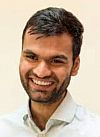
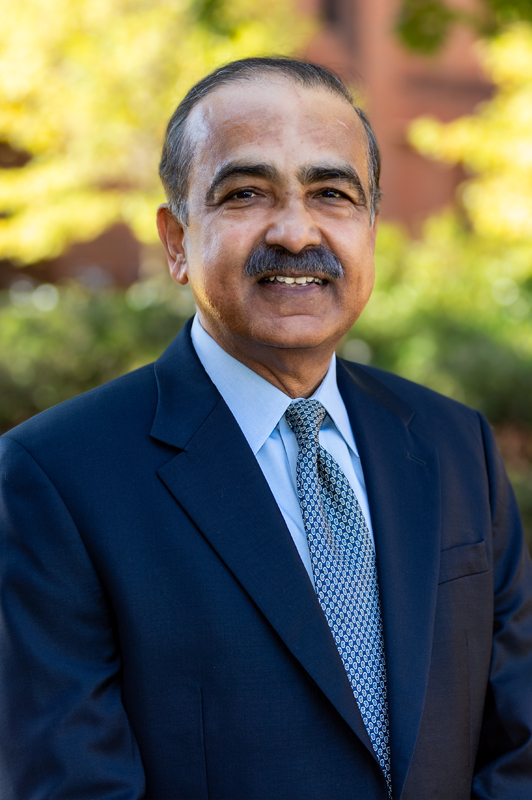
Dhruva Raman is an Assistant Professor in Computer Science & AI (Informatics) at the University of Sussex , affiliated with the School of Engineering and Informatics . His research focuses on computational modeling of neural circuits, particularly on how biological systems balance functional goals through mathematical and computational frameworks. The key research theme involves understanding tradeoffs in associative learning, such as the insect mushroom body's adaptation to environmental shifts. He also explores cerebellar architecture, synaptic plasticity, and design principles that generate experimentally testable hypotheses. His work emphasizes comparative neurobiology, linking insights across species to mammalian brain structures like the cerebellum. His recent publications span computational neuroscience, neurobiology, and systems engineering, addressing topics like prototype learning, parameter identifiability, and robustness in nonlinear systems. He has collaborated on tools such as MinimallyDisruptiveCurves.jl for computational analysis.
Pia Raffler serves as Assistant Professor of Government at Harvard University, conducting research at the intersection of comparative politics and political economy with focus on accountability mechanisms in Sub-Saharan Africa and Germany. Her work combines experimental fieldwork with qualitative analysis to examine bureaucratic oversight and voter behavior in weakly institutionalized settings. Her academic background includes a Ph.D. in Political Science from Yale University and a postdoctoral fellowship at Princeton University's Niehaus Center and Center for Study of Democratic Politics. Raffler's research spans bureaucracy, democracy, gender representation, electoral systems, political economy, public policy, and voter behavior. She designs large-scale field experiments in collaboration with government agencies and civil society organizations to test accountability interventions, particularly in Uganda where she previously established Innovations for Poverty Action's office. Her methodological approach integrates qualitative insights with quantitative testing to uncover causal mechanisms. Her publication record reveals consistent focus on experimental analysis of accountability in developing democracies, with recent expansion into digital media effects and German politics. Key themes include information asymmetries in electoral accountability, bureaucratic power dynamics, and institutional design impacts on service delivery. Her scientific recognition includes: Best Fieldwork Award (2016, American Political Science Association) Best Dissertation Award in Experimental Research (APSA) Best Experimental Paper Award (APSA) Raffler maintains active research partnerships with government agencies and political parties to implement testable reforms. She holds affiliations with Harvard's Evidence for Policy Design, Institute for Quantitative Social Science, Weatherhead Center for International Affairs, Center for African Studies, and Center for International Development. As a member of EGAP and editorial board member for the British Journal of Political Science, she contributes to shaping experimental governance research globally.
Anurag Anshu is an Assistant Professor of Computer Science at Harvard University's John A. Paulson School of Engineering and Applied Sciences (SEAS). His primary research interests lie in quantum complexity theory, quantum many-body systems, quantum Shannon theory, and quantum learning theory. He holds a PhD from the National University of Singapore (2018) and completed postdoctoral research at UC Berkeley (2020) and the Perimeter Institute for Theoretical Physics (2020). His academic journey includes: Bachelor's in Computer Science from IIT Guwahati (2013) PhD in Quantum Technologies from NUS (2018), awarded the Dean's Graduate Research Excellence Award for his thesis on quantum communication protocols Postdoctoral roles at UC Berkeley's Simons Institute and the Perimeter Institute Research focuses on foundational aspects of quantum computing, including quantum algorithms, complexity theory, and the interplay between quantum information and many-body physics. His work bridges theoretical computer science with quantum physics, addressing challenges in quantum communication, error correction, and learning theory. Notable contributions include studies on NLTS Hamiltonians, quantum Gibbs state learning, and the computational power of quantum circuits. He has received grants such as the NSF CAREER Award (2023) for research on quantum many-body systems. His awards include the 2018 Dean's Graduate Research Excellence Award for his thesis on quantum communication protocols. He advises no listed students but collaborates extensively in quantum information theory and complexity research.
Ali Muhtaroğlu is a faculty member in the Department of Electrical and Electronics Engineering at Middle East Technical University Northern Cyprus Campus (METU NCC), within the College of Engineering. His research spans integrated circuit design, energy systems, and computer architecture, with a strong emphasis on low-power, high-performance, and sustainable technologies. His research interests include: Integrated Circuit Design: Power delivery, mixed-signal testability, high-volume manufacturing (HVM), and low-power IC design. Energy Systems: Renewable energy integration, energy scavenging, thermoelectric and photovoltaic systems, and sustainable power management for mobile computing. Computer Architecture: Low-power architectures, parameterized designs using VHDL, FPGA-based implementations, and specialized computing systems such as Cellular Automaton Processors. His recent publications (2004–2009) reflect a consistent focus on solving practical engineering challenges in power integrity, testability, and energy efficiency. These works demonstrate innovation in on-die droop detection, AC I/O loopback testing, hybrid thermoelectric conversion, and solar integration in portable devices, indicating a trajectory toward sustainable and high-performance computing systems. He is actively involved in the Renewable Energy Design and Applications Research (REDAR) group, where interdisciplinary efforts have led to the development of a self-powered solar radiation measurement system. This supports empirical studies on sustainable power management. While no formal advising or grant information is available, his research output suggests leadership in applied electronics and energy systems. His work bridges semiconductor design, power electronics, and system-level optimization, contributing to advancements in mobile and embedded computing technologies.
Bernd Becker is a Professor in the Department of Computer Science at the Faculty of Engineering, University of Freiburg, Germany. He has been actively publishing in the fields of formal methods, hardware verification, and automated reasoning since the 1980s, with a sustained record of high-impact publications up to 2025. His research interests span formal verification, SAT and SMT solving, hardware testing, probabilistic systems, and embedded systems security. His work bridges theoretical advances in automated reasoning with practical applications in processor design, RISC-V verification, and safety-critical systems. The recent articles highlight a strong focus on applying formal methods to emerging challenges in hardware and AI, including POMDPs for robot planning, RISC-V security, GPU verification, and energy-efficient monitoring. There is a clear trend toward integrating symbolic computation with machine learning and probabilistic reasoning. Bernd Becker has collaborated extensively with researchers such as Ralf Wimmer, Ilia Polian, and Matthias Sauer, indicating leadership in a large, interdisciplinary research group. His work has been supported by numerous grants, though specific details are not listed in the source text. He has contributed to major conferences such as DATE, FMCAD, and SAT, and has mentored several students and researchers, though specific names are not provided. He is involved in projects related to secure scan networks, physical unclonable functions, and smart home systems.
Birgitta Lindström is an Associate Professor of Informatics at the University of Skövde, Sweden, where she has been employed since 2000. She serves as Director of PhD education in Informatics since 2019 and leads the Distributed Real-Time Systems (DRTS) research group. Her academic home is within the School of Informatics, specifically the Department of Information Technology, where she teaches courses in software testing, concurrent programming, distributed systems, and software engineering experimentation. Lindström's research focuses on software testing methodologies, particularly mutation testing, testability analysis, and testing approaches for distributed real-time systems. Her work bridges theoretical foundations with practical applications in critical infrastructure protection, cybersecurity, and model-based testing. She has made significant contributions to understanding strong mutation theory, mutant subsumption, and efficient test set generation. Her recent publications reveal a growing emphasis on applying software testing principles to critical infrastructure systems, particularly smart grids and cyber-physical systems. The DOMINO project (2017-2025) represents her current focus on reducing the number of mutants needed for effective testing, while her earlier work in the ELVIRA (2017-2020) and TOCSYC (2013-2018) projects addressed testing of critical system characteristics including performance efficiency, robustness, and testability in complex embedded systems. Guldäpplet (Best Teacher Award) 2012 Lindström has supervised numerous BSc and MSc final year projects and served as examiner for various courses. Her research has been supported by substantial funding from sources including EU/ISF, KKS (30 MSEK for TOCSYC), and Vinnova (multiple projects totaling over 6.5 MSEK with matching from Saab Aeronautics). She has been instrumental in developing curriculum for computer science programs and establishing software testing education initiatives, including founding the TestEd workshop series focused on software testing education. As research leader of the DRTS group since 2015, she has fostered collaboration across institutions including Mälardalen University, Swedish Institute of Computer Science, Blekinge Institute of Technology, and Karlstad University. Her current DOMINO project continues this tradition of collaborative research addressing fundamental challenges in mutation testing efficiency.
Ian Grout serves as Associate Professor in the Department of Electronic and Computer Engineering within the Faculty of Science and Engineering at the University of Limerick, Ireland, and is affiliated with the Optical Fibre Sensors Research Centre. His academic career spans over 25 years with continuous research output since 1994, focusing on hardware design and engineering education methodologies. His educational background includes: Ph.D. in Electronic Engineering from Lancaster University (awarded 1994) B.Eng. in Electronic Engineering from Lancaster University (awarded 1991) Dr. Grout's research integrates Mixed-Signal Integrated Circuit Design, Test Technology Education, and Sensor System Design using FPGAs with innovative educational approaches. His work bridges theoretical hardware development and practical implementation, particularly in remote laboratory experimentation and mechatronics systems. The fingerprint analysis of his 152 publications reveals dominant expertise in Field Programmable Gate Arrays (100%), Computer Hardware (61%), and Application Specific Integrated Circuit design (61%), with significant contributions to Teaching and Learning methodologies (56%). Recent publications (2023-2024) demonstrate a clear trajectory toward optimizing hardware testability for emerging architectures like processing-in-memory cores while advancing educational tools for embedded systems programming. His work shows increasing integration of machine learning concepts with traditional circuit design and a sustained focus on practical educational implementations through European collaborations like the Erasmus+ DIG-SENSING program. Professional engagements include active membership in the Institution of Engineering and Technology (IET), International Microelectronics and Packaging Society (IMAPS), and service on the UK EPSRC Peer Review College. He previously chaired the Educational ECAD User Group (EEUG) from 2001-2002 and maintained committee membership until 2005. At the University of Limerick, Dr. Grout contributes to the Optical Fibre Sensors Research Centre where his FPGA-based sensor system designs support advancements in optical sensing technologies. His current work involves developing remote laboratory frameworks for electrical engineering education while maintaining active research in integrated circuit test methodologies.
James V. Cordova is a Professor and Department Chair of Psychology at Clark University, where he has been a faculty member since 2002. He is a distinguished researcher and clinician specializing in relationship science and couple therapy, with particular expertise in developing interventions to improve relationship health. Dr. Cordova received his educational training from prestigious institutions: B.A. in Psychology (minor in Sociology) from the University of New Mexico (1989) M.S. in Clinical Psychology from the University of Washington at Seattle (1992) Ph.D. in Clinical Psychology from the University of Washington at Seattle (1996) Dr. Cordova's research program focuses on understanding the processes that affect marital and couples' health and deterioration, with special attention to those processes that promote greater relationship, mental, and physical health. His work involves theoretical delineation of key relationship processes, demonstrating their role in relationship health, and developing empirically testable therapeutic procedures. The principal processes addressed in his research include intimacy, acceptance, and motivating the adoption of relationship-healthy practices. He is particularly known for developing the Marriage Checkup, an innovative relationship health assessment tool designed to help couples maintain healthy relationships throughout their lifetime. His recent publications demonstrate a consistent focus on relationship assessment, intervention development, and understanding relationship dynamics across diverse populations. There is a clear trajectory in his work toward increasingly sophisticated applications of the Marriage Checkup model across different contexts (military, primary care, LGBTQ+ populations) and toward understanding the mechanisms of change in relationship interventions. His research shows strong integration of clinical psychology, mindfulness practices, and relationship science. Dr. Cordova has secured significant research funding from major organizations including the Administration for Children and Families and the Department of Defense. His current grants include: "Taking Time for Us: Healthy Relationships, Healthy Families, Healthy Communities" (Administration for Children and Families, 2021-2025) "Effect of Marriage Checkup in Primary Care on Relational, Psychological, and Work Health for Active Duty Couples with TBI" (Department of Defense) "Effect of Marriage Checkup in Primary Care on Home and Work Health for Active Duty Couples" (Department of Defense, 2021-2024) "Evaluation of a Brief Marriage Intervention for Internal Behavioral Health Consultants in Primary Care" (Department of Defense, 2015-2020) As Department Chair and a leading researcher in relationship science, Dr. Cordova plays a significant role in mentoring students and junior faculty, though specific advisees are not mentioned in the available information. His work bridges clinical practice and research, with a strong emphasis on developing accessible interventions that can be implemented in real-world settings. Dr. Cordova is also a longtime teacher of Zen meditation and integrates mindfulness principles into his understanding of relationship health, as evidenced by his upcoming book "The Mindful Path to Intimacy: Cultivating a Deeper Connection with Your Partner" (2025). This integration of Eastern contemplative practices with Western psychological science represents a distinctive aspect of his scholarly contribution to the field.
Bruno de Albuquerque Furtado is a Researcher and post-doctoral research assistant at Royal Holloway, University of London. He holds a PhD in Economics from Columbia University. His research focuses on economic theory, econometrics, decision theory, and information economics, with specializations in mechanism design and identifiability. He has published in journals like the Journal of Economic Behavior & Organization . His work includes analyzing rational choice under incomplete preferences, robust pricing strategies in statistical mechanism design, and identifiability in finite mixture models. Current projects explore testable conditions for identifiability and the value of information under ambiguity. Education : PhD in Economics, Columbia University Contact: bruno.dealbuquerquefurtado@rhul.ac.uk
Dr. Vijay Anand is an Associate Professor of Information Systems and Technology at the University of Missouri-St. Louis (UMSL), where he joined in 2019. He holds a Ph.D. from the Illinois Institute of Technology. His research focuses on cybersecurity, blockchain technology, and educational strategies in computing curricula. Research interests include SIM card security, cybersecurity program accreditation, blockchain applications in accounting, and enhancing computing education through competitive events. Recent work explores Zero Trust architectures in tactical edge networks and discrete event simulation for healthcare system optimization. He has contributed to over 15 publications, including work on cryptomining detection, knowledge graph-as-a-service for cyber defense, and transforming lab courses for distance learning. No scientific awards are explicitly listed. His advising and grants section remains unspecified, though his research aligns with cybersecurity policy development and curriculum innovation. He is affiliated with UMSL’s media contact department, contributing to academic outreach and media relations.
Adit Singh is the Godbold Endowed Chair Professor in the Department of Electrical and Computer Engineering at Auburn University's College of Engineering. He holds a Ph.D. and M.S. in Electrical Engineering from Virginia Tech and a B.S. (B.Tech.) from IIT Kanpur. He previously served on the faculty at the University of Massachusetts and Virginia Tech, and has held visiting professorships at the University of Freiburg (2012), University of Tokyo (2018), and is scheduled to be a Guest Professor at the University of Stuttgart in Fall 2025. His research centers on VLSI design, integrated circuit testing, reliability, and design for testability. He is renowned for pioneering statistical and adaptive testing methods in semiconductor validation. His work spans digital systems, computer architecture, and electronic design automation (EDA), with strong industrial impact through licensed patents and consulting for major semiconductor and EDA firms. Professor Singh has authored over 300 research papers and holds international patents. He has led numerous IEEE conferences as General or Program Chair and served on editorial boards, including IEEE Design and Test. He chaired the IEEE Test Technology Technical Council (2007–2011) and was on the Board of Governors of the IEEE Council on Design Automation (2011–2015). His scientific honors include IEEE Life Fellowship, IEEE Computer Society Golden Core Membership, and the 2021 Auburn University Award for Excellence in Faculty Outreach. He actively mentors students and collaborates globally, with ongoing research projects in resilient computing and transistor-level reliability. Ph.D., Electrical Engineering, Virginia Tech M.S., Electrical Engineering, Virginia Tech B.S. (B.Tech.), Electrical Engineering, Indian Institute of Technology-Kanpur Scientific Awards: IEEE Life Fellow Golden Core Member, IEEE Computer Society Auburn University 2021 Award for Excellence in Faculty Outreach Professor Singh has led major research initiatives, including one of only five resilient computing projects funded by the Open Compute Project. His work bridges academia and industry, serving as an expert witness in patent litigation and advising semiconductor leaders worldwide. He leads a dynamic research group at Auburn focused on next-generation VLSI test methodologies.
Adit D. Singh is a Professor and the Godbold Endowed Chair in the Department of Electrical and Computer Engineering at Auburn University's College of Engineering. He has previously served on the faculty at the University of Massachusetts, Amherst, and Virginia Tech, and has held visiting professorships at the University of Freiburg (2012), the University of Tokyo (2018), and will be a Guest Professor at the University of Stuttgart in Fall 2025. His educational background includes a B.Tech. from IIT Kanpur and M.S. and Ph.D. degrees from Virginia Tech, all in Electrical Engineering. Dr. Singh's research focuses on VLSI technology, particularly integrated circuit test, reliability, design for testability, and statistical and adaptive testing methodologies. His work bridges theoretical innovation and industrial application, with over 300 research papers and licensed international patents. His expertise has been recognized through extensive service in leadership roles in IEEE conferences and technical councils. The trends in his research, reflected across his publications, emphasize robust testing frameworks for digital systems, reliability enhancement in nanoscale circuits, and the development of adaptive and statistical test solutions for modern semiconductor devices. His work intersects computer architecture, electronic design automation (EDA), and fault tolerance in digital systems. IEEE Fellow (2002) IEEE Life Fellow Golden Core Member, IEEE Computer Society Godbold Endowed Chair Professor Dr. Singh has been actively involved in academic leadership and professional service, having served as General Chair, Co-Chair, and Program Chair for numerous international VLSI design and test conferences. He has served two elected terms as Chair of the IEEE Test Technology Technical Council (2007–2011) and on the Board of Governors of the IEEE Council on Design Automation (2011–2015). He has also served on the editorial boards of journals including IEEE Design and Test and on steering committees of major IEEE conferences. As a consultant, he has advised major semiconductor, test, and EDA companies and served as an expert witness in patent litigation cases, demonstrating strong industry engagement. He is associated with research initiatives in integrated circuit testing and reliability at Auburn University, where his lab focuses on developing advanced transistor testing methods and design-for-test solutions. His team contributes to improving the reliability and yield of modern integrated circuits, with ongoing projects likely supported through industry collaboration and federal funding, though specific grants are not listed.
Pedro Pintado Jorge Gonçalves is a Senior Lecturer at the Faculty of Engineering Sciences at KU Leuven, with primary affiliation in the Department of Electrical Engineering and strong ties to the Department of Computer Science. He leads the Gonçalves lab at the VIB-KU Leuven Center for Neuro Electronics Research Flanders (NERF), and is also a member of the KU Leuven Brain Institute and Leuven.AI Institute for Artificial Intelligence. His educational background includes training as a physicist with a focus on neuroscience applications. His research integrates machine learning with computational neuroscience to develop methods for extracting mechanistic insights from complex neural data. His work specializes in simulation-based inference techniques that bridge data-driven and theory-driven approaches in neuroscience. The publication trends reveal a strong focus on developing and applying machine learning methods to neuroscience problems, with particular emphasis on neural circuit modeling, biophysical simulations, and the development of computational tools like the sbi toolkit. His research spans multiple scales from single neurons to population dynamics and behavior. As an educator, he teaches courses including Calculus and Mathematical Engineering, and mentors numerous students through his lab. His collaborative approach is evident in his extensive co-authorship network across computational neuroscience and machine learning fields. Dr. Gonçalves actively supervises multiple PhD and master's students in his lab, fostering the next generation of computational neuroscientists. His research is supported by multiple ongoing projects including 'Simulation-based inference for mechanistic models of neural dynamics' (2025-2029) and 'Computational research into the principles of robustness in neural systems' (2023-2027). His laboratory focuses on combining theoretical models with advanced machine learning methods to design more accurate neural models, quantitatively test mechanistic hypotheses, and derive experimentally-testable predictions about neural systems in health and disease.
Professor Amit Acharyya is a full Professor in the Department of Electrical Engineering at the Indian Institute of Technology Hyderabad, India. Previously he served as Associate Professor (2017–2022) and Assistant Professor (2012–2017) at the same institution, and earlier as Assistant Professor at IIT Guwahati and as Research Fellow at the University of Southampton, UK. He currently leads the AESICD Lab and is actively engaged in cutting-edge research spanning VLSI systems, low-power design, machine-learning hardware, biomedical devices, digital arithmetic, hardware security, and electric-vehicle battery monitoring. Education: PhD – University of Southampton, UK Research Interests: Professor Acharyya’s work centers on the design of resource-constrained VLSI systems with emphasis on ultra-low power techniques, hardware accelerators for machine learning, and edge-computing solutions. His group is developing application-specific chips for remote health monitoring targeting cardiovascular diseases, diabetes, autism spectrum disorder, neurological disorders, and orthopaedic challenges. Additional thrust areas include hardware–software co-design for accelerated cancer diagnostics, efficient digital arithmetic circuits, hardware security primitives, real-time battery-health monitoring for electric vehicles, and nanomagnetic logic systems. Scientific Awards & Recognition: Digital Trail Blazer Award, Digital Technology Conclave 2016 Visvesvaraya Young Faculty Fellowship 2015–16 Young Engineer Award, IEI 2015 Visiting Research Fellowships, University of Southampton (2015–2017) & Newcastle University (2016–2017) Summer Fellowship, University of Liverpool 2015 Advising & Funding: He has mentored 15 current PhD scholars and 13 graduated students, many funded by DST, government R&D labs, and industry partners. Research projects span VLSI DSP, IoT for healthcare, structural health monitoring, AI-based fault-tolerant IC design, hardware security, and battery-management systems. Research Laboratory: He heads the Application-Specific Integrated Circuits & Devices (AESICD) Laboratory at IIT Hyderabad, which focuses on developing next-generation low-power SoCs and domain-specific accelerators.
Meng-Jhang Fong serves as a Senior Research Fellow at the Max Planck Institute for Research on Collective Goods in Bonn, Germany, working within Axel Ockenfels' Economic Design & Behavior research group since April 2025. Previously, he held a Postdoctoral Scientist position at Amazon from October 2023 to October 2024. His academic credentials include: PhD in Social Science from California Institute of Technology (2018-2023) MA in Economics from National Taiwan University (2014-2016) BBA in Finance from National Taiwan University (2010-2014) Dr. Fong's research centers on Experimental Economics , Behavioral Economics , and Game Theory , with emphasis on strategic reasoning limitations and institutional design. His work bridges theoretical frameworks like cursed equilibrium with laboratory validation, particularly examining how imperfect belief updating affects multistage games and how robotic agents can isolate rationality levels in human decision-making. Key contributions include extending cursed equilibrium to sequential settings and developing experimental protocols for measuring higher-order beliefs. His publication record shows consistent output in top-tier venues including the American Economic Review and Experimental Economics, with recent work focusing on sequential game theory applications and experimental methodologies for measuring strategic cognition. The research demonstrates a cohesive trajectory from theoretical extensions of equilibrium concepts to empirically testable predictions using controlled laboratory environments. No scientific awards are documented in the available materials. Information regarding student supervision or grant funding is not provided in the source texts. He currently operates within the Economic Design & Behavior research group at the Max Planck Institute, collaborating with Professor Ockenfels on projects investigating economic institutions through combined theoretical and experimental approaches.