Sarah Gillet is a Postdoctoral Researcher at the Division of Robotics, Perception, and Learning at KTH Royal Institute of Technology, where she focuses on developing social robot behaviors to foster collaboration and inclusion in human groups. Her research addresses challenges like in-group favoritism through computational approaches to shape group interactions. She holds a Doctoral Thesis (2024) titled Computational Approaches to Interaction-Shaping Robotics . Her work emphasizes group dynamics , robot-mediated inclusion , and pedagogical robotics , particularly in children and adolescent populations. Key areas include gaze behavior analysis, equitable participation promotion, and social robot roles such as mediators in educational settings. Dr. Gillet teaches the Social Robotics (DD2413) course and supervises master theses. Her recent publications explore robot gaze behaviors for participation balance, socially appropriate listening, and influence prediction models like RoSI. She actively participates in conferences like ACM/IEEE HRI and IEEE RO-MAN. Her research integrates computational methods with social science insights to design robots that actively improve human group interactions, with applications in education, collaboration, and bias mitigation.
Dr. Hien Quoc Ngo is a Reader at Queen's University Belfast and a UKRI Future Leaders Fellow. He specializes in wireless communications, particularly in massive MIMO, cell-free massive MIMO, and cooperative systems. His research focuses on improving spectral efficiency, security, and energy efficiency in next-generation networks. Education: B.S., Electrical Engineering, Ho Chi Minh City University of Technology (2007) M.S., Electronics and Radio Engineering, Kyung Hee University (2010) Ph.D., Communication Systems, Linköping University (2015) Research Interests: Dr. Ngo's work spans massive MIMO systems, cell-free architectures, physical layer security, and millimeter-wave technologies. He has pioneered studies on channel estimation, power allocation, and interference management in distributed networks. Awards & Recognition: IEEE ComSoc Stephen O. Rice Prize (2015) IEEE ComSoc Leonard G. Abraham Prize (2017) Best PhD Award from EURASIP (2018) UKRI Future Leaders Fellowship (2019) Multiple AMiner Most Influential Scholar Awards (2022-2024) Grants & Projects: Lead on the Future Communications Hub in All-Spectrum Connectivity (UKRI-funded) Principal Investigator for Cell-Free Massive MIMO for ISAC Labs & Teams: He leads the Wireless Communications Research Group at Queen's University, focusing on 5G/6G technologies and intelligent systems.
Joanna C. S. Santos is an Assistant Professor at the University of Notre Dame's Department of Computer Science and Engineering. She leads the Security and Software Engineering research lab (S²E) and focuses on Software Engineering, Security, and Program Analysis. Her work bridges empirical studies with practical tool development. PhD in Computing and Information Sciences (Rochester Institute of Technology) M.Sc. in Software Engineering (Rochester Institute of Technology) B.Sc. in Computer Engineering (Federal University of Sergipe) Her research spans Software Security (vulnerability detection, ReDoS), Code Generation (LLM evaluation, benchmarking), and Program Analysis (taint tracking, call graphs). Recent articles show a strong focus on LLM-generated code quality and quantum computing applications. Scientific Awards : 2023 - Distinguished Reviewer (ESEC/FSE) 2020 - Research Pitch Winner (JOBS @MICRO) 2017 - Best Paper (ICSA) 2014 - CAPES Scholarship 2013 - ERBASE 3rd Place She actively contributes to conference committees (OOPSLA, ICSE, SCAM) and collaborates across institutions. Her lab S²E drives research in secure software development and empirical cybersecurity validation.
Maximilian Muhn is an Associate Professor of Accounting at the University of Chicago Booth School of Business. He joined Chicago Booth as an assistant professor of accounting in 2019 and was promoted to Associate Professor. His academic career focuses on empirical accounting research with particular emphasis on financial transparency and disclosure practices. Muhn received his PhD in accounting from Humboldt University of Berlin and holds an MSc and BSc in business administration from the University of Münster, Germany. Prior to his academic career, he gained professional experience in consulting (McKinsey & Company and Boston Consulting Group), auditing (KPMG and Deloitte), and management accounting (BASF and ThyssenKrupp Steel). His research primarily investigates the determinants and consequences of firms' financial transparency, as well as the effects of financial market and transparency regulation. Muhn employs diverse methodologies including field experiments, archival studies, and applications of large language models in financial analysis. His work examines how different stakeholders (investors, consumers, regulators) use and respond to corporate disclosures. Muhn teaches Financial Accounting in the Evening and Weekend MBA Program at Chicago Booth, where he aims to enable students to 'speak' the language of accounting and understand its economic foundations. His teaching emphasizes practical applications of accounting concepts in business decision-making. His scholarly contributions include publications in top accounting journals such as the Journal of Accounting Research, with recent work focusing on risk disclosures, financial transparency of private firms, consumer use of firm disclosure, and the application of generative AI in financial analysis. His research often combines traditional accounting approaches with innovative methodologies like large-scale field experiments. Muhn has collaborated with prominent scholars including Luzi Hail, David Oesch, Joachim Gassen, and Christian Leuz. His research has practical implications for corporate disclosure practices, regulatory policies, and investor decision-making. He maintains an active research agenda with several working papers in areas including private firm disclosure, generative AI applications in finance, and social disclosure decisions.
Mahzarin Banaji is the Richard Clarke Cabot Professor of Social Ethics in the Department of Psychology at Harvard University. She previously served as the Carol K. Pforzheimer Professor at the Radcliffe Institute for Advanced Study (2002-2008) and as the George A. and Helen Dunham Cowan Chair in Human Dynamics at the Santa Fe Institute (2011-2015). Currently, she also serves as Senior Advisor to the Provost at Harvard University. Banaji is widely recognized as a leading researcher in social psychology, particularly in the field of implicit bias and social cognition. Banaji received her PhD from Ohio State University in 1986 and completed a National Institutes of Health postdoctoral fellowship at the University of Washington in Seattle. She taught at Yale University from 1986 to 2001, where she was the Reuben Post Halleck Professor of Psychology, before joining Harvard University. Professor Banaji's research focuses on the subconscious nature of assessments of self and others in social contexts. She is best known for her pioneering work on implicit bias, particularly through the development of the Implicit Association Test (IAT), which measures unconscious attitudes and beliefs. Her work bridges cognitive science and psychology to understand how implicit biases form, persist, and can potentially be changed. Banaji has demonstrated how these unconscious biases can influence behavior in critical domains including healthcare, education, and law enforcement, often without individuals' awareness. She has also extensively studied how biases change over time, showing that while some implicit biases have decreased significantly (particularly regarding sexual orientation), others remain stubbornly persistent. Banaji has received numerous prestigious awards recognizing her contributions to psychology and social science, including: Election to the National Academy of Sciences (2018) Election as Fellow of the British Academy (2015) William James Fellow Award for lifetime intellectual contributions to psychology Gordon Allport Prize for Intergroup Relations Kurt Lewin Award for outstanding contributions to the integration of psychological research and social action Morton Deutsch Award for Social Justice James McKeen Cattell Award Carol and Ed Diener Award for Outstanding Contributions to Social Psychology Herbert A. Simon Fellow of the American Academy of Political and Social Science Fellow of the American Academy of Arts and Sciences Banaji has advised numerous graduate students and postdoctoral researchers who have gone on to become leaders in social psychology and related fields. She has secured significant research funding to support her work on implicit bias, including grants from the National Science Foundation and the National Institutes of Health. Her research has influenced policy discussions around diversity, equity, and inclusion in educational and organizational settings. Banaji has also been active in translating her research for public understanding through her co-authored book "Blindspot: Hidden Biases of Good People" (2013) with Anthony Greenwald, and through her media series "Outsmarting Human Minds." Professor Banaji leads a vibrant research laboratory focused on implicit social cognition. Her team employs a range of methodologies including behavioral experiments, neuroimaging, computational modeling, and large-scale data analysis to investigate the nature and consequences of implicit bias. Recent work has expanded to examine bias in artificial intelligence systems and how large language models reflect and potentially amplify societal biases. The lab collaborates with researchers across disciplines including computer science, neuroscience, education, and public policy to address the complex challenges of implicit bias in society.
Professor Lingxiao Jiang is a full-time faculty member at the School of Computing and Information Systems (SCIS), Singapore Management University (SMU) , where he serves as Director of the Centre for Research on Intelligent Software Engineering (RISE) . His research and teaching focus on software engineering , program analysis , code search & reuse , and deep learning of code to enhance software quality, development productivity, and security. PhD, University of California, Davis (2009) Professor Jiang's research explores context-aware software deep learning , code clone detection , and security & privacy through tools like DECKARD (code clone detection), EqMiner (functionally equivalent code), and SmartEmbed (smart contract security). His work leverages distributed computing , symbolic execution , and neural program models for large-scale code analysis. Recent publications highlight trends in deep learning-based code analysis , smart contract vulnerabilities , and automated program transformation . Key themes include code clone detection , semantic patches , and cross-language API mappings . Scientific Awards ACM SIGSOFT Impact Paper Award (2018) for scalable code clone detection As advisor, Professor Jiang has mentored 14 graduate students, including Lucia (Ph.D. 2014) , Shaowei Wang (Ph.D. 2015) , and current advisees in intelligent software engineering. He leads multiple grants on code mining , security of digital platforms , and AI systems governance . RISE Lab at SMU develops tools like MANDO (smart contract analysis), iTiger (issue title generation), and TreeCaps (code processing with capsule networks). The lab actively recruits researchers in software engineering and AI.
Sidonie Christophe is a Senior Researcher (Directrice de Recherche, DR1) at UMR LASTIG, a joint research unit of Université Gustave Eiffel, IGN-ENSG, and EIVP. She serves as co-director of the LASTIG laboratory and leads research in geovisualization, map design, and interactive spatial data exploration. She also holds a part-time advisory role (60%) at the French Ministry of Higher Education and Research in the domain of digital technology, environment, climate, and sustainable urban development. PhD in Geographic Information Sciences Senior Researcher, DR1, MTECT Co-Director, LASTIG Laboratory (since 2021) Former Team Leader, GEOVIS (Geovisualization, Interaction, and Immersion) Advisor, Environment and Urban Climate, French Ministry of Higher Education & Research Her research centers on innovative methods for 2D/3D and nD geospatial data visualization, with a focus on enabling spatio-temporal understanding through visual and non-visual spatial thinking. Her work integrates principles from geographic information science, human-computer interaction, and computer graphics. Key areas include urban climate visualization, tactile and augmented reality for accessibility, expressive cartographic rendering, and cognitive aspects of map design. She investigates how aesthetic and semiotic choices impact map comprehension and utility. The 15 most recent publications reflect a strong trend in interactive and accessible geovisualization, particularly for urban and environmental applications. Topics include neural map style transfer, 3D urban climate analysis, tactile maps for the visually impaired, augmented reality in geography, and visual analytics for crisis and climate data. There is a consistent emphasis on user-centered design, interdisciplinary integration, and the development of tools for decision-making under uncertainty. Scientific Recognition and Service: Invited speaker at major conferences (IEEEVIS, AGILE, ICC, CPGIS) Co-organizer of international workshops (e.g., GeoVIS, ISPRS AR/VR sessions) Leader of national research projects (ANR ORACLES, ANR ACTIVmap, ANR ECOCIM) Recipient of international mobility grants (AMICI I-SITE FUTURE) Contributor to national glossaries and research strategy (e.g., French photogrammetry glossary) Advising and Grants: Sidonie Christophe actively supervises PhD students and postdoctoral researchers, including Markie Jiang, Maria-Jesus Lobo, and Alexandre Mielniczek. She leads or participates in multiple funded research projects such as ANR ORACLES (marine flooding visualization), ANR ACTIVmap (tactile 3D maps), and ANR ECOCIM (eco-design of city information models). Her advisory role at the MESR involves shaping national research strategy in digital and environmental sciences. Labs and Research Teams: She is a core member of the GEOVIS team (Geovisualization, Interaction, and Immersion) at LASTIG and previously served as its leader. As co-director of LASTIG, she plays a central role in the leadership and strategic direction of the entire laboratory, which comprises over 100 researchers across four teams: ACTE, GEOVIS, MEIG, and STRUDEL.
Prof. Lionel C. Briand is a leading academic in software engineering and trustworthy AI, holding appointments at the University of Ottawa (EECS Department, Nanda Laboratory) and the University of Limerick (Lero - National Software Research Centre). He serves as Director of Lero and Scientific Director of the SnT software verification lab in Luxembourg. His research focuses on software testing, model-driven engineering, AI-driven quality assurance, and regulatory compliance. He has held the Canada Research Chair (Tier 1) since 2003 and led major institutions like Simula Research Laboratory (Norway) and Fraunhofer Institute (Germany). Education & Career: Full Professor at Carleton University (2008–2012) Head of Software Quality Engineering at Fraunhofer IESE (2000–2008) Research Scientist at NASA Software Engineering Lab (1990s) Research Interests: His work spans secure AI systems, automated legal compliance (e.g., GDPR), metamorphic testing, search-based software engineering, and safety-critical systems. He emphasizes practical applications, collaborating with industry partners globally. Awards & Recognition: IEEE Fellow (2010), ACM Fellow (2020) Harlan Mills Award (2012), ERC Advanced Grant (2016) Fellowships from Royal Society of Canada (2023) and Academia Europaea (2025) Grants & Labs: PEARL grant from Luxembourg FNR for SnT lab ERC Advanced Grant for software testing research Leadership roles in Lero and Nanda Lab Publications: Over 500+ papers on testing methodologies, AI ethics, and regulatory compliance. Notable tools include CompAI (GDPR compliance) and Teasma (DNN test adequacy).
Ricardo Azambuja Silveira is a Professor at the Federal University of Santa Catarina, Brazil, with a distinguished research career spanning over two decades in the fields of multi-agent systems, intelligent tutoring systems, and semantic web technologies for education. His work bridges artificial intelligence with educational technology, creating innovative frameworks for adaptive learning environments and intelligent educational agents. Dr. Silveira's research interests focus on developing agent-based approaches to enhance educational experiences through technologies like BDI (Belief-Desire-Intention) architectures, ontology-based systems, and multi-context reasoning. His work particularly emphasizes the integration of intelligent agents with learning management systems to create personalized educational experiences. His recent publications demonstrate a continued evolution from foundational multi-agent frameworks to sophisticated neural-symbolic integrations and context-aware educational technologies. Throughout his career, he has published over 60 scholarly works, with consistent output from 2001 through 2024, demonstrating sustained research productivity. His publication trends show a clear trajectory from early work on JADE (Java Agent Development Framework) for distance education to current research on neural-symbolic integration in agent systems. The majority of his publications appear in prominent conferences like PAAMS, MICAI, and ICAART, reflecting his standing in the multi-agent systems community. Dr. Silveira has mentored numerous researchers who have become his frequent collaborators, including Arnoldo Uber Junior, Rodrigo Rodrigues Pires de Mello, and Thiago Ângelo Gelaim. His research has been supported through various academic grants that enabled the development of frameworks like Sigon (a multi-context system framework) and iEnsemble (for committee machine learning). He has been actively involved in the organization of academic events, particularly the Methodologies and Intelligent Systems for Technology Enhanced Learning (MIS4TEL) conference series, where he has served as both participant and organizer. His work contributes significantly to the theoretical foundations and practical implementations of intelligent educational technologies.
Leonard P. Wesley is an Associate Professor at the Computer Science Department, College Of Science, San Jose State University. With a Ph.D. and M.S. in Computer Science from University of Massachusetts and a B.A. in Physics and Math from Northeastern University, his work spans bioinformatics, pharmaceutical discovery, machine learning, robotics, and evidential reasoning. He has published extensively on SVM/QSAR-based drug prediction, autonomous systems, and uncertainty management. Ph.D., University of Massachusetts - Computer Science M.S., University of Massachusetts - Computer Science B.A., Northeastern University - Physics and Math His research focuses on developing predictive models for drug discovery, autonomous robotics, and data analytics. Recent publications emphasize SVM applications in medical diagnostics and pharmaceutical modeling. He has contributed to conferences in aerospace, robotics, and biotechnology, with invited talks at NASA and Los Alamos National Laboratory. 3D-QSAR & SVM prediction of drug inhibitors Evidential decision analytics Autonomous robotic control PCA/SVM-based sepsis diagnostics Hybrid network congestion management Professor Wesley teaches courses in artificial intelligence, bioinformatics, and advanced programming. His lab investigates applications of machine learning in biotechnology and aerospace, including biomarker identification and CFD expert systems. He has served as session chair at international conferences and collaborated with institutions like NASA and Advanced Decision Systems.
Jina Kang is an Assistant Professor in the Department of Curriculum & Instruction at the University of Illinois Urbana-Champaign , with an affiliate appointment at the Siebel Center for Design . Her research focuses on immersive technology-supported learning environments , collaborative problem-solving dynamics , and educational data mining for understanding multimodal engagement in science education. Recent publications examine embodied cognition in STEM through gesture-based learning simulations, joint attention dynamics in astronomy VR environments, and systematic reviews of immersive technology applications in collaborative education. Her work integrates XR platforms , Bayesian knowledge tracing , and multimodal behavioral analysis to enhance science learning outcomes. She teaches graduate courses including CI 539: Introduction to Educational Data Mining and CI 489: Educational Technology Capstone Course , where students develop technology-supported learning activities using studio-based approaches.
Peter Mooney is a Lecturer in the Department of Computer Science, Faculty of Science & Engineering at Maynooth University. His research focuses on Volunteered Geographic Information (VGI), OpenStreetMap, spatial data analysis, and geospatial data integration in applications such as environmental monitoring and pervasive health systems. Institution: Maynooth University School: Faculty of Science & Engineering Department: Computer Science Role: Lecturer Mooney's research explores the use of crowdsourced geospatial data, particularly through OpenStreetMap, analyzing data quality, community roles, and integration into location-based services. His work bridges technical analysis with policy considerations in geospatial data management. Recent publications highlight his contributions to understanding spatial data dynamics, including attribute changes in OpenStreetMap, characteristics of edited objects, and applications of VGI in environmental systems. He also investigates the intersection of haptics and GIS for novel interaction methods. Contact: peter.mooney@mu.ie
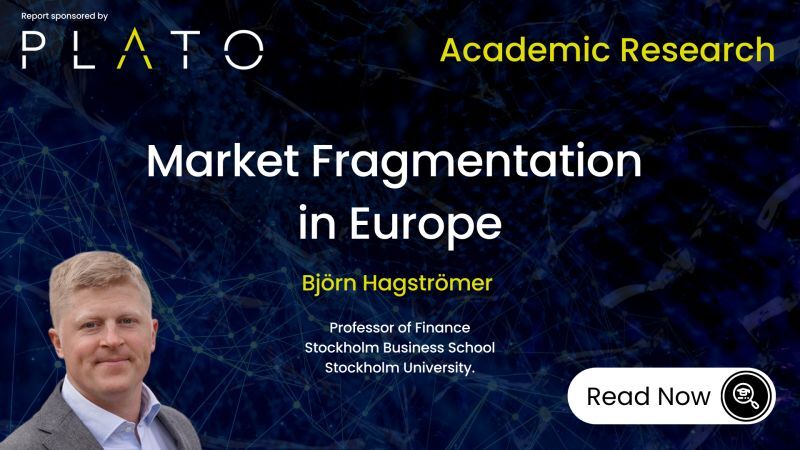
Björn Hagströmer is Professor of Finance and Director of Studies for the Postgraduate Programme at Stockholm Business School , Stockholm University. He earned his PhD from Aston Business School in 2010 and has been with SBS since then. His primary teaching responsibility is the course Financial Market Structure . Research Focus : Hagströmer specializes in financial market microstructure , analyzing price formation, liquidity supply, and trading mechanisms. His work examines closing call auctions, high-frequency trading dynamics, bid-ask spread components, and information revelation in decentralized markets. Current projects include studies on market fragmentation , gold futures microstructure , and equity market information dissemination Recent publications explore volatility extensions in auctions, unbiased spread estimation, and network-based information flow analysis Awards : Recipient of the 2017 De la Vega Prize for research on effective spread overestimation. His work appears in leading journals including Journal of Financial Economics and Journal of Finance . Academic Leadership : Co-organizer of the Microstructure Exchange online seminar series and the 2017 Conference on the Econometrics of Financial Markets celebrating the 20th anniversary of Campbell-Lo-MacKinlay's influential work.
Dr. Damian Zaitch is an Associate Professor at the Willem Pompe Institute for Criminal Law and Criminology, School of Law, Utrecht University. He has been with Utrecht University since 2009, having previously taught at the Department of Criminology at Erasmus University Rotterdam from 2000 to 2009. His academic work spans three interconnected research domains: illegal drug trafficking and policies, cross-border organized and corporate crime, and green criminology. Zaitch's research interests include Corporate Crime, Drug Trafficking and Policies, Organized Crime, Latin America, and Environmental Criminology. His methodological expertise lies in qualitative research methods, particularly virtual ethnography and visual criminology. He has conducted extensive fieldwork on drug trafficking through the port of Rotterdam, synthetic drug markets in Amsterdam, and alternative drug policies in Latin America, with a focus on harm reduction approaches. His recent publications demonstrate a strong focus on green criminology, particularly examining environmental crimes related to resource extraction in Latin America, as well as continuing work on transnational organized crime networks. His research often examines the intersection of state and corporate power in creating environmental harms and human rights violations. Willem Nagel Prize (2003) for his PhD research Founding and board member of CIROC (Center for Information and Research on Organized Crime) Coordinator of the Erasmus Mundus Doctorate in Cultural and Global Criminology Coordinator of the Utrecht PhD Summer School on Advanced Qualitative and Legal Methods in Criminology Zaitch teaches courses including International Organized Crime, Crimes of the Powerful, and Green Criminology at both undergraduate and graduate levels. He co-supervises numerous PhD projects on topics ranging from Nigerian cocaine trafficking networks to environmental rights violations by multinational corporations. His research is conducted within Utrecht University's strategic themes of Institutions for Open Societies and Pathways to Sustainability.
Michel J. Berg, M.D. is a Professor of Neurology (Part-Time) at the University of Rochester School of Medicine and Dentistry, where he has served since 1992. He is certified by the American Board of Psychiatry and Neurology with subspecialty boards in Clinical Neurophysiology and Epilepsy, and by the American Board of Internal Medicine. Dr. Berg served as Director and Chief of the University of Rochester Epilepsy Center from 2016 to 2023. He is a Fellow of both the American Academy of Neurology (FAAN) and the American Epilepsy Society (FAES). Dr. Berg's research interests span multiple areas within epilepsy and neurology, with particular focus on seizure prediction from EEG, medication adherence with smart medication dispensers, establishing equivalence of generic anti-epilepsy drugs, automating MRI analysis, and the genetics of cerebral cavernous malformations. His work combines clinical neurology with technological innovation to improve diagnosis and treatment of neurological conditions. His publications demonstrate significant contributions to understanding brain-responsive neurostimulation for focal epilepsy, bioequivalence of generic antiepileptic medications, and the genetic basis of cerebral cavernous malformations. Dr. Berg has been involved in numerous multicenter clinical trials and has contributed to advancing treatment protocols for medically intractable epilepsy. Scientific Awards and Recognition Epilepsy Pralid Frederick Wagner Lifetime Service Award (2020) Fellow of the American Academy of Neurology (2009) Multiple Neurology Faculty Teaching Awards (2009, 2000, 1994) Volunteer of the Year, Epilepsy Foundation of Rochester and Syracuse Regions (1999) Dr. Berg has demonstrated exceptional commitment to clinical education and patient care, particularly in the field of epilepsy. His work bridges clinical practice, research, and educational initiatives, contributing significantly to both local patient care and broader advancements in neurological science. He has been instrumental in developing protocols for epilepsy management and has contributed to numerous professional guidelines in the field.