Dr Francesca Pianosi is an Associate Professor in Water & Environmental Engineering at the University of Bristol 's School of Civil, Aerospace and Design Engineering. She contributes to the Cabot Institute for the Environment and leads research on data analysis, mathematical modelling, and uncertainty quantification for hydrology and water engineering. Specialises in simulation and optimisation methods for water resource management Focuses on uncertainty propagation in natural hazard models Developed the open-source SAFE Toolbox for sensitivity analysis Research Trends Her recent publications (2023-2025) demonstrate expertise in: Groundwater flow and recharge in data-scarce regions Digital Twin applications for watershed management Climate change impact on landslides and droughts Multi-objective optimisation for reservoir operations Integration of machine learning with hydrological models Scientific Awards Arne Richter Award for Outstanding Young Scientists (2015) Best Research Oriented Paper - Journal of Water Resources Planning and Management (2024) Early Career Research Excellence (ECRE) award (2014) Francesca leads the Water Management and Adaptation based on Watershed Digital Twins project (2024-2027) and contributes to the USARIS project on uncertainty quantification for infrastructure systems (2023-2025).
Professor Ronny Pini is a Professor of Multiphase Systems at Imperial College London's Department of Chemical Engineering within the Faculty of Engineering. His research focuses on sustainable industrial processes, particularly carbon capture and storage (CCS), porous media dynamics, and imaging-based process design. He holds a PhD in Mechanical and Process Engineering from ETH Zurich and has held academic positions including Senior Lecturer and Reader at Imperial College since 2015. His educational background includes a Postdoctoral fellowship at Stanford University (2010-2013) and prior roles at the Colorado School of Mines. Research interests span multiphase flow mechanics, adsorption science, and environmental engineering applications. Key projects include the InFUSE Prosperity Partnership and Digital Rocks Lab, leveraging X-ray tomography, positron emission tomography, and computational models to study subsurface CO2 storage and sustainable materials. Professor Pini's work integrates chemical engineering with material science and earth sciences, addressing global challenges like industrial decarbonisation. He collaborates on developing advanced imaging techniques to characterise porous media behavior and optimise processes for energy transition. Current focus areas include direct air capture technologies and enhancing oil recovery via CO2 utilisation. His research outputs include over 150 peer-reviewed articles, with recent emphasis on adsorption-based CO2 capture systems, pore-scale transport phenomena, and sustainable process design frameworks. He is actively involved in training early-career researchers through Imperial College's Chemical Engineering programs and international collaborations.
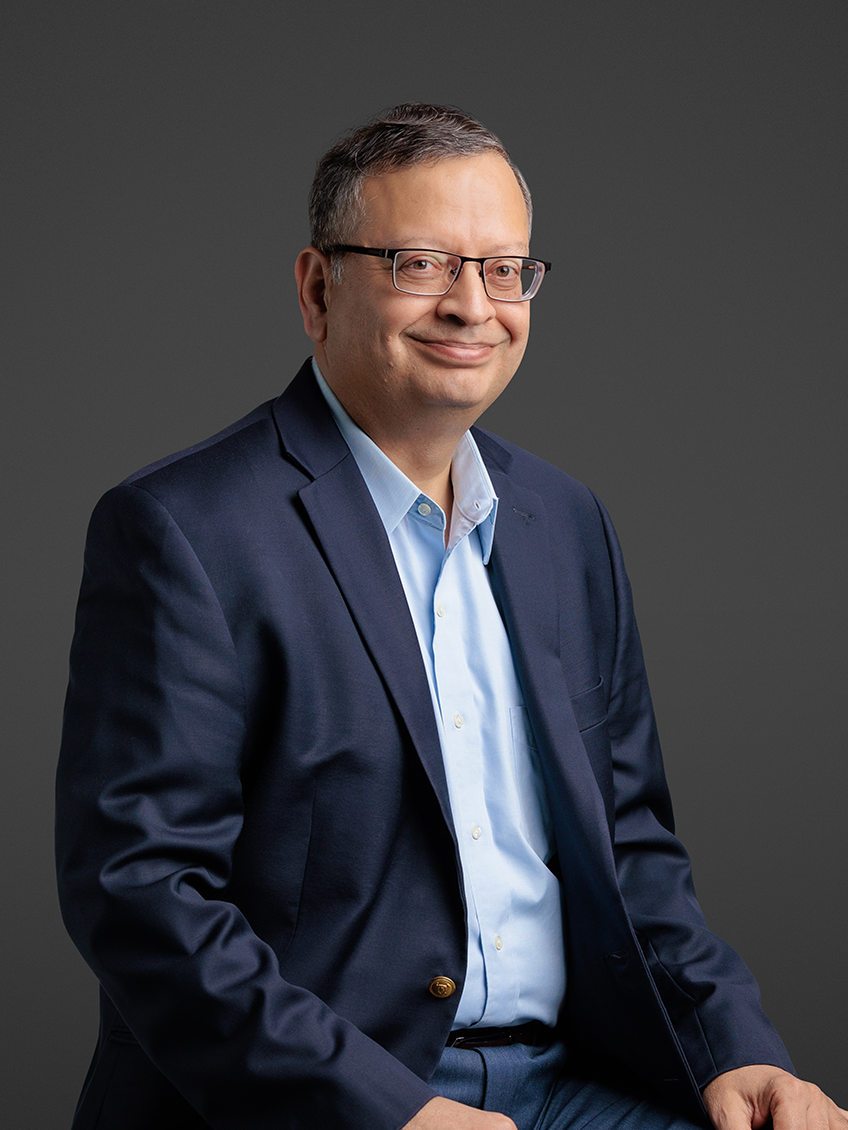
Rakesh Nagi is a Professor and Head of the Engineering Systems and Design Pillar at Singapore University of Technology and Design (SUTD), where he joined in August 2023. He concurrently holds the Donald Biggar Willett Professorship at the University of Illinois, Urbana-Champaign (UIUC), on leave. His academic leadership includes serving as Department Head of Industrial and Enterprise Systems Engineering at UIUC (2013–2019) and as Interim Director of the Illinois Applied Research Institute (2016–2018). Previously, he was Chair of Industrial and Systems Engineering at the University at Buffalo (SUNY) from 2006 to 2012. Education: PhD (1991) and MS (1989) in Mechanical Engineering from the University of Maryland, College Park, with work at the Institute for Systems Research and INRIA, France. BE (1987) in Mechanical Engineering from the University of Roorkee (now IIT Roorkee), India. Research focuses on Data Science, Machine Learning, Operations Research, GPU-accelerated computing, and military applications. Key areas include Big Graphs, High-level Information Fusion, Production Systems, and Multi-Agent Systems. His work often leverages parallel computing and optimization techniques. Recipient of prestigious awards: IISE David F. Baker Award (2022), INFORMS Koopman Award (2021, 2018), and multiple DARPA Graph Challenge recognitions. Contributions span over 100 peer-reviewed articles in top journals (e.g., Operations Research, IEEE Transactions) and conferences. Research projects include Hybrid AI/ML-Optimization for cloud workflows, GPU-accelerated algorithms for multi-target tracking, and interventions against illicit supply chains. Active collaborations with IBM-Illinois and NSF-funded initiatives address strategic resource allocation and network analysis. Labs/Teams: Leads the Engineering Systems and Design Pillar at SUTD and coordinates interdisciplinary projects at UIUC’s Coordinated Science Laboratory.
Farooq Azam is a Research Fellow at the Department of Mechanical Engineering , University College London , focusing on Modelling and Optimisation of Sustainable and Smart Technical Textiles . He works in the Roberts Engineering Building, London, United Kingdom (WC1E 7JE). Research Interests: Architected materials, Metamaterials, Additive manufacturing, Structural Imaging, Structural optimisation, AI/Machine Learning, Applied Mechanics, Mechanics of Materials Email: farooq.azam.20@ucl.ac.uk Recent Research Trends : His work spans additive manufacturing applications in biomedical components, structural optimization of architected materials, turbulence modeling in engines, and machine learning-driven metamaterial design. Key areas include Ti6Al4V scaffolds, hexagonal honeycomb configurations, and carbon microlattices. Scientific Awards : FHEA (Fellowship of the Higher Education Academy), 2024 Teaching : He has taught modules such as Group Manufacturing Challenges (MECH0099) , Micro/Nano Architected Composite Materials (MECH0096) , and Elasticity and Plasticity (MECH0026) at UCL.
Dr Smitha Gopinath is a Lecturer in the School of Chemical, Materials and Biological Engineering at the University of Sheffield , where she leads research in sustainable engineering systems within the Sustainable Design Laboratory (SDL) . Education & Career Path PhD in Chemical Engineering, Imperial College London Post-doctoral researcher, Applied Mathematics and Plasma Physics Group, Los Alamos National Laboratory Research Focus Dr Gopinath’s interdisciplinary work centres on the design, calibration and operation of sustainable engineering systems . She develops high-fidelity models and large-scale optimisation algorithms tailored to energy and materials challenges. Core interests include: Thermo-mechanical energy conversion devices (heat pumps, organic Rankine cycles) Carbon-capture utilisation and storage (CCUS) via novel solvents and separation systems Power-grid expansion and operation for renewable integration and decarbonisation Methodologically, she integrates Integrated Molecular and Process Synthesis (IMPS) with Optimisation Accelerated by domain Knowledge (OAK) to co-design molecules, materials and flowsheets that meet stringent energy and environmental targets. Publication Landscape Across 2015–2025 her publications reveal a clear trajectory from fundamental thermodynamic measurements and molecular design toward rigorous optimisation of large-scale energy systems. Early work concentrated on CO₂ solubility and carbonation kinetics of steel slag, providing essential data for carbon-sequestration schemes. Subsequent papers introduced advanced optimisation frameworks—outer-approximation algorithms, exact reformulations and feasibility-based methods—applied to solvent-based CO₂ capture, organic Rankine cycle working-fluid selection and AC optimal power flow (ACOPF). Recent contributions benchmark global optimality certificates for ACOPF problems, underscoring her drive to bridge chemical process systems engineering with electrical power systems optimisation. Teaching & Mentoring Dr Gopinath teaches undergraduate modules: CPE440 (Particle Technology) CPE170 (Particle Technology) She actively invites prospective PhD students to join the Sustainable Design Laboratory, offering supervision on projects spanning sustainable process design, renewable energy systems and algorithmic optimisation. Laboratory & Collaborative Networks She directs the Sustainable Design Laboratory (SDL), a multidisciplinary team leveraging systems engineering, multi-scale modelling, process simulation and optimisation to re-imagine a sustainable chemical and energy industry. The SDL collaborates with international partners, including Los Alamos National Laboratory and leading researchers in applied mathematics and power systems engineering.
Dr Sanjeev Gambhir is a Senior Research Fellow at the Intelligent Polymer Research Institute, University of Wollongong. With over 30 years of experience in chemistry, he leads bioinks synthesis and scale-up activities at TRICEP (Translational Research Initiative for Cellular Engineering and Printing) facility. His work bridges academic research with commercial translation, particularly in 3D bioprinting of living tissues. B.Sc. and M.Sc. in Organic Chemistry from Garhwal University Ph.D. in Organic Chemistry from Indian Institute of Petroleum Research focuses on 3D bioprinting technologies, graphene composites, conducting polymers, and hydrogel engineering. Key challenges addressed include biomaterial diversity limitations, bioprinted construct characterisation, and scalable bioink formulation. His work spans tissue engineering, regenerative medicine, and industrial applications. Major publications appear in Nature Communications , Journal of the American Chemical Society , and Advanced Materials . With 60+ peer-reviewed papers and an H-index of 28, his research on graphene composites and conducting hydrogels has significant citations in biomedical and materials science domains. Frater Award (Australian National Fabrication Facility, 2013) Active in mentoring junior staff and students, Gambhir collaborates with Inventia Life Science Pty Ltd and Professor Fiona Wood at the University of Western Australia. Current funding includes MRFF grants for intraoperative skin regeneration systems and translational projects through University of Wollongong infrastructure grants.
Dr. David Toal is an Associate Professor at the University of Southampton, specializing in the application of machine learning techniques to aerospace system design optimization. His research focuses on automated geometry creation, prediction of simulation outputs, and fundamental machine learning advancements. He is affiliated with the Computational Engineering and Design Group and the Institute for Life Sciences. His teaching interests include engineering design methods, optimization, reliability, and CAD integration. He supervises multiple PhD students in areas such as aerodynamic geometry generation and structural design automation. Dr. Toal has led projects funded by the European Union and EPSRC, including E-Break (FP7) and equipment grants for advanced computational tools. His work emphasizes multidisciplinary collaboration, leveraging CAD systems and deep learning for applications in advanced aerial mobility and turbine optimization. Recent publications highlight advancements in Kriging models, adversarial auto-encoders, and semantic segmentation for engineering design. Dr. Toal's research bridges computational methods with practical aerospace challenges, aiming to accelerate design processes through data-driven and AI-enhanced approaches.
Bello Sambo is a Research Assistant in the Department of Engineering at the School of Computing and Engineering, University of Huddersfield. He is also a member of the Institute of Railway Research. His work focuses on railway engineering, particularly on wheel-rail interaction and condition monitoring. Role: Research Assistant University: University of Huddersfield Research Group: Institute of Railway Research Sambo's research expertise includes modelling and simulation , wheel-rail contact dynamics , and condition monitoring . His work addresses challenges in railway engineering, such as impact loads at crossings, crack propagation, and rail profile optimization. He employs techniques like image processing and dynamic system analysis to improve predictive maintenance and reduce fatigue damage in railway components. Recent research outputs highlight his contributions to wheel-rail interaction in switches and crossings (2023), impact load reduction (2020), and condition-based monitoring (2015). His work aligns with UN Sustainable Development Goals by advancing infrastructure resilience and sustainable transport systems. Sambo is currently supervising PhD students and leading a 2024 project on image-based wheel profile measurement . He collaborates internationally and has an h-index of 20, with research outputs spanning 2015–2023.
Professor Karim Hadjri is a distinguished academic and architect at the School of Architecture and Landscape, University of Sheffield. With a DipArch, MPhil, and PhD in housing studies from Oxford Brookes University, he has over 30 years of teaching experience in architecture and urban design. He has led major academic units and research groups, including a self-funded center in Colombia, and currently supervises PhD research on people-environment studies and sustainable design. Chair of Architecture, University of Sheffield Academic career since 1993 Research focus on age-friendly environments and dementia-friendly design His educational background includes: DipArch MPhil in Housing Studies PhD in Housing Studies from Oxford Brookes University Professor Hadjri's research spans inclusive and sustainable design of the built environment, with a particular emphasis on housing and health. His work addresses: Age-friendly environments for older adults Design of dementia-supportive housing Sustainable urban development in desert and tropical contexts Participatory design in social housing Cognitive health impacts of architectural design Architectural conservation in arid regions His recent publications analyze: Live-work housing in Bangkok (2024-2025) Co-design methodologies in social housing retrofit (2025) Green infrastructure in Bogotá (2022) Hospital courtyard gardens in Malaysia (2021-2022) Ageing-in-place strategies for China (2019-2021) Scientific recognition includes: Fellow of the UK Higher Education Academy Member of ESRC Peer Review College Newton Fund Social Sciences Review Panel member RIBA Validation Board member He currently supervises PhD students researching: Esra Can - Social housing mapping Suyee Jung - Housing for aging populations Aya Elghandour - Informal settlement design Mahmoud Alsaeed - Urban design challenges As principal investigator, he has managed grants including: £100,000 AHRC GCRF Urgency Grant for Bangkok housing €3.88M Horizon 2020 project on European housing His research group Design, Engagement and Practice and involvement in the ODESSA project demonstrate his commitment to applied research.
Ali Karrech is a Professor at the University of Western Australia (UWA), affiliated with the School of Engineering and the Department of Civil, Environmental and Mining Engineering (CEME). He previously held roles as Senior Research Scientist at CSIRO (until 2012) and Assistant Professor at the Petroleum Institute of Abu Dhabi (2007–2009). His expertise spans materials science, geomechanics, mineral processing, and sustainable resource engineering. He serves as Graduate Research Coordinator in CEME and has led the Structures Laboratory (2015–2016). Education: He holds a Higher Doctorate (Habilitation) in Engineering Sciences from École Normale Supérieure Paris-Saclay (2014), a PhD in Structures and Materials from École des Ponts ParisTech (2008), and a Multidisciplinary Master's from Tunisia Polytechnic School (2001). Research Interests: Focus on computational geomechanics, resource engineering (surface mining, in-situ leaching), mineral processing (hydrometallurgy), waste repurposing, and thermal-hydraulic-mechanical-chemical coupling. His work aligns with UN Sustainable Development Goals related to education, energy, and the built environment. Awards: Recognitions include the School of Engineering Teaching Excellence Award (2021), Prize of Best Paper in Concrete Research (2021), and CEEC High Commendations (2023). His research has produced over 194 publications and 20 grants. Teaching: Coordinates units like Engineering Materials (ENSC1004), Finite Element Method (GENG5514), and Surface Mining (MINE4503). Engages in interdisciplinary projects, including the ARC Training Centre in Critical Resources and the FBI-CRC for Future Batteries.
Jingling Xue is a Scientia Professor at the School of Computer Science and Engineering at the University of New South Wales (UNSW) in Sydney, Australia. As an IEEE Fellow of the Computer Society, he leads the Programming Languages and Compilers research group, focusing on practical applications of compiler optimization and program analysis techniques. His work bridges theoretical foundations with real-world software systems, particularly in developing open-source tools for large-scale program analysis. Professor Xue received his B.Eng and M.Eng degrees from Tsinghua University in 1984 and 1987, respectively, followed by a PhD from the University of Edinburgh in 1992. His academic journey has established him as a leading figure in programming languages and compiler technology. Xue's research spans programming languages, compiler technology, and program analysis with emphasis on practical relevance. His current projects include compiler techniques for improving parallelism and locality, pointer/alias analysis for million-line-scale programs, and static/dynamic analysis for detecting bugs and security vulnerabilities in real-world applications like web browsers and Android apps. His group actively develops open-source tools to support scientific replicability and reproducibility in these areas. His recent publications demonstrate a strong focus on applying program analysis techniques to modern challenges including AI compilers, homomorphic encryption, security vulnerability detection, and graph processing systems. The work shows evolution from traditional compiler optimization to addressing emerging domains like privacy-preserving computation and deep learning systems while maintaining rigorous theoretical foundations. Scientific Awards: Best Paper Award at CGO'13 Best Paper Award at CGO'16 Distinguished Paper Award at ECOOP'16 Distinguished Paper Award at ICSE'18 Distinguished Paper Award at ISSTA'19 Distinguished Paper Award at ASE'19 Distinguished Artifact Award at ISSTA'23 Best Artifact Award at FSE'23 Distinguished Paper Award at ASE'23 Test-of-Time Award at CGO'21 Professor Xue has successfully supervised 30 PhD students to completion, many of whom now work as professors or researchers in academia and industry. He has served as Program Chair for major conferences including LCTES'13, CC'18, CGO'20, and General Chair for LCTES'20. His group currently focuses on memory safety in Rust, smart contract analysis, AI compilers, compilation for privacy-preserving computation, and adversarial attacks in deep learning. The Programming Languages and Compilers group maintains strong connections with industry partners, translating theoretical advances into practical tools for real-world software development challenges. Their work on pointer analysis, memory safety, and compiler optimizations continues to influence both academic research and industrial practice.
Dr. Yinglong He is a Lecturer in Automated Electrified Transport (AcT) Systems at the School of Mechanical Engineering Sciences, University of Surrey, UK, and an Honorary Assistant Professor at the School of Engineering, University of Birmingham. His research focuses on intelligent transportation systems, energy management, vehicle dynamics, and AI-driven optimisation. He has held positions including Postdoctoral Research Associate at the University of Cambridge and Technology Expert at the European Commission's Joint Research Centre (JRC). Research interests include autonomous vehicle control, traffic simulation, hybrid/electric vehicle dynamics, and sustainable transport solutions. Notable contributions include advancing microscopic traffic models for automated vehicles and optimising energy systems for hybrid powertrains. His work integrates machine learning, multi-agent systems, and data-driven approaches to address challenges in transport decarbonisation and safety. Recent publications highlight advancements in hybrid vehicle dynamics simulation, lithium-air battery modelling, and energy mapping of urban buildings. He has received the Chinese Government Award for Outstanding Self-Financed Students (2022) and is a Fellow of the Institute for Sustainability (IfS). His expertise spans interdisciplinary collaborations in automotive engineering, energy systems, and smart infrastructure.
Associate Professor Mariano Jr Reyes Ramirez serves as Senior Lecturer and Discipline Director of Industrial Design at the University of New South Wales School of Built Environment. With over 70 publications on design for sustainability and presentations at more than 30 international conferences, he has established himself as a thought leader in sustainable industrial design. Dr. Ramirez has contributed as a Visiting Academic to 24 universities across 10 countries including China, India, Korea, Mexico, and Brazil, and serves as a PhD Examiner in 5 Australian universities as well as in Sweden and Italy. His research concentrates on the environmental sustainability and social responsibility aspects of industrial design, with particular focus on promoting circular economy through waste minimisation and resource optimisation, enabling responsible consumption behaviours through product design, and leveraging industrial design innovation to tackle the United Nations Sustainable Development Goals. His work spans sustainable product development, product-service systems, design for a circular economy, and disaster risk reduction. Dr. Ramirez has secured significant research funding including Transport for NSW's $120,000 grant for enhancing public space safety, NSW Circular Challenge Program's $200,000 grant for hospital polypropylene waste recycling, and multiple international collaboration grants. His 15 most recent publications reveal a consistent focus on human-centered sustainable design approaches applied across diverse contexts from prison rehabilitation programs to water solutions in Jakarta slums and cultural heritage integration in electric vehicle design. Emerald Literati Network Award for Excellence 2007 for paper 'Sustainability in the education of industrial designers: the case for Australia' UNSW Built Environment Learning & Teaching Excellence Award, 2017 UNSW Built Environment Dean's Research Excellence Award, 2012 Multiple UNSW Built Environment Associate Dean Teaching Commendations (2007-2011) Dr. Ramirez actively supervises BID honours, MPhil and PhD students at UNSW while examining dissertations from multiple Australian and international universities. He serves on editorial boards for Sustainability (MDPI) and scientific review committees for several leading design and sustainability journals. His research supervision focuses on dematerialization of contemporary lifestyles, fostering sustainable behaviors through design, optimization of product lifetimes, sustainability integration in design education, and industrial design as a tool for achieving UN Sustainable Development Goals. As Regional Convenor for Oceania of the Learning Network on Sustainability since 2006 and Project Leader of the South-to-South initiative activating Australian-Latin American Cooperation through Design for Sustainability Education, Dr. Ramirez demonstrates significant leadership in building international research networks focused on sustainable design education and practice.
Dr. Cormac Lucas is a Senior Lecturer in the Department of Mathematics at Brunel University London, affiliated with the College of Engineering, Design and Physical Sciences. His work bridges mathematical optimization with practical applications in finance and operations management. Lucas specializes in Mathematical Optimisation Stochastic Optimisation Asset and Liability Management (ALM) Risk Analytics Portfolio Optimization Supply Chain Planning Under Uncertainty His research combines theoretical advancements with industrial projects, such as US Coast Guard Cutter Scheduling, Insight Investment's ALM, and Unilever's Natural Oil Buying Policy. Recent publications (2013–2024) highlight his focus on Portfolio Rebalancing with Transaction Costs Scenario Generation for Stochastic Programming Heuristic Algorithms for Cardinality Constraints Queuing Systems with Standby Servers Robust Supply Chain Planning Financial Derivative Modeling These works utilize methods like Variable Neighbourhood Search, Differential Evolution, and Lagrangian Relaxation. Email: cormac.lucas@brunel.ac.uk
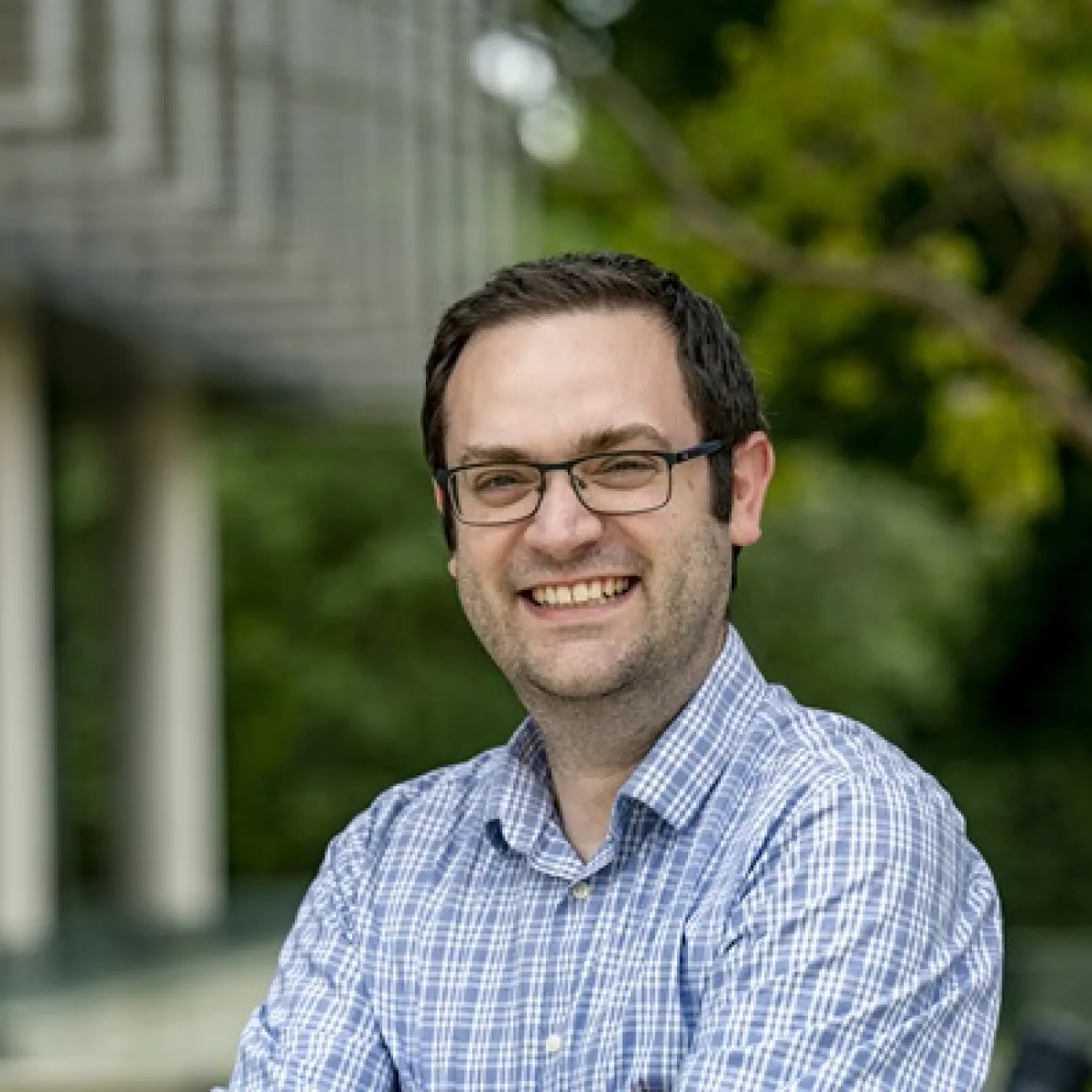
Dr David Walker is a Senior Lecturer in Computer Science at the University of Exeter and a member of the Institute for Data Science and Artificial Intelligence . He also contributes to the Environmental Intelligence @Exeter research network. Education: PhD in Computer Science, University of Exeter (2008–2013) BSc (Hons) in Computer Science, University of Exeter (2004–2007) Research Interests Dr Walker’s work sits at the intersection of multi-objective optimisation , evolutionary computation , explainable AI and hyper-heuristics . He develops algorithms and visual analytics that help engineers and scientists understand complex optimisation landscapes, with recent emphasis on renewable-energy planning (especially offshore wind farms) and trustworthy AI systems. Publication Trends Between 2022 and 2025 he produced a prolific stream of articles on explainable optimisation , many-objective wind-farm design and visual analytics for evolutionary algorithms . These works combine rigorous algorithmic innovation with real-world case studies, demonstrating a clear trajectory toward transparent, human-centred AI for engineering decision-making. Scientific Awards No specific awards or fellowships are mentioned in the provided material. Advising & Funding No explicit list of PhD students, post-docs or grant awards is supplied. Laboratory & Teams Dr Walker is affiliated with the Institute for Data Science and Artificial Intelligence and the Environmental Intelligence @Exeter network, indicating collaborative, interdisciplinary research environments.