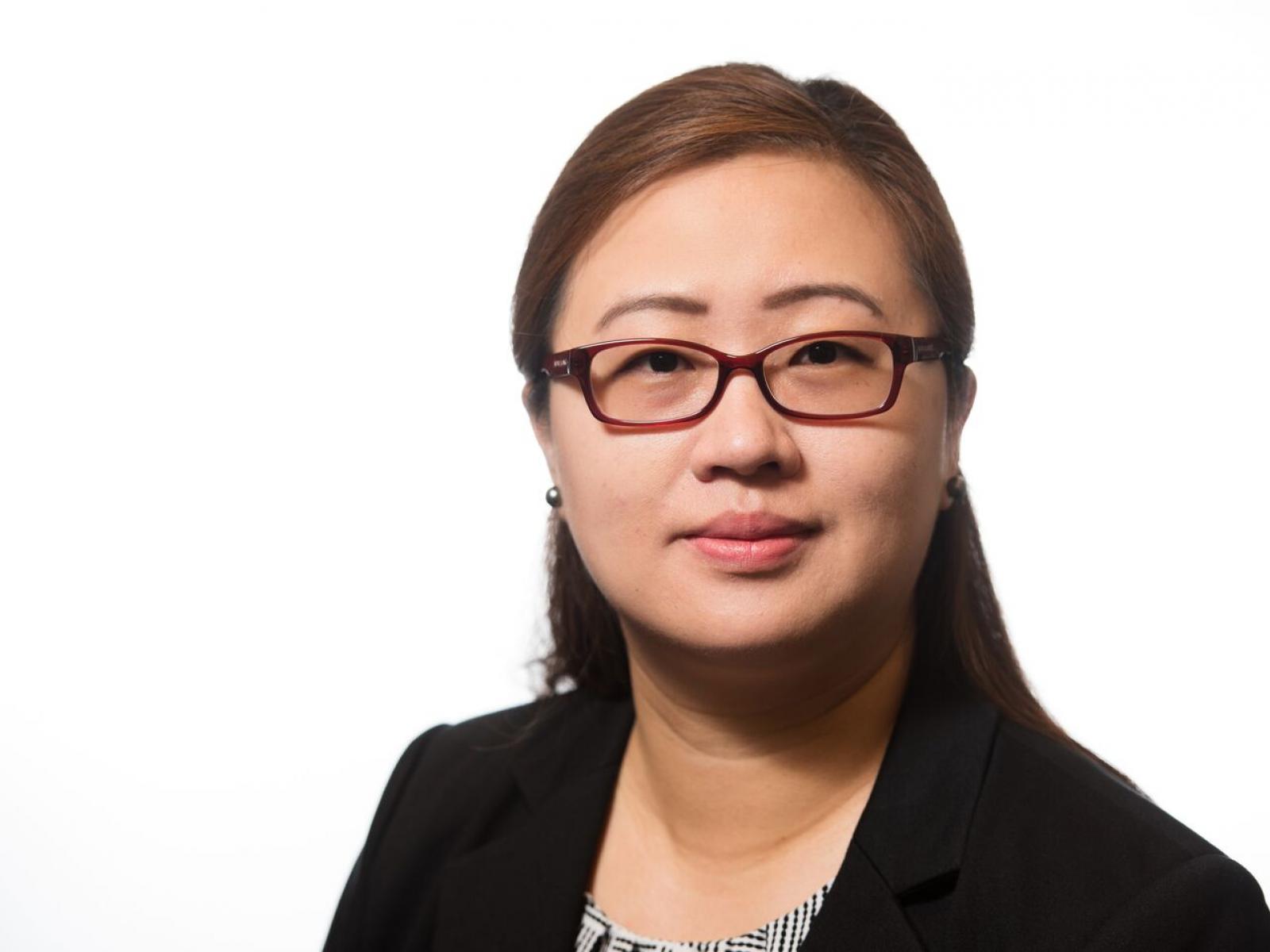
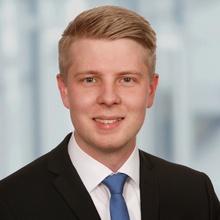
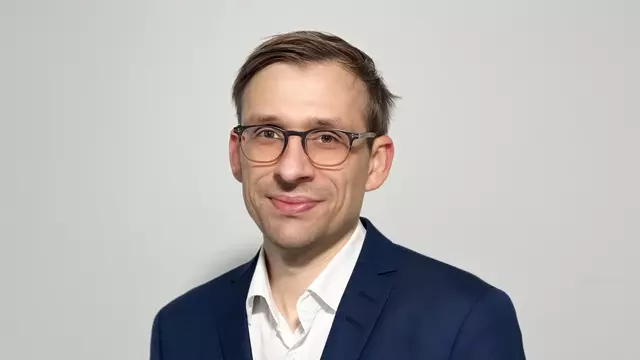
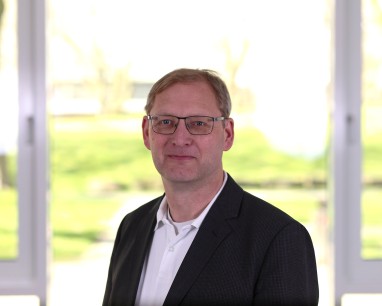
Prof. Dr.-Ing. Dieter Krause is a faculty member at the Institute of Product Development and Engineering Design at Hamburg University of Technology (TUHH). His academic career spans decades, with a focus on modular product development , lightweight design , and additive manufacturing across industries like aerospace, automotive, and medical technology. Research Interests : Modularization strategies for sustainable product families Integration of AI and data-driven methods in design engineering 3D-printed medical phantoms for interventional training Composite material analysis and tribological interface design Scientific Contributions : 2015 Hamburg Teaching Award for excellence in university instruction DFG Review Board member for Product Development Leadership in international conferences and academic governance
Dr. Fabian Wein serves as a Senior Scientist at the Chair of Applied Mathematics (Continuous Optimization) within the Department of Mathematics at Friedrich-Alexander-Universität Erlangen-Nürnberg (FAU). His research focuses on advanced optimization techniques with applications in structural design and additive manufacturing. Wein maintains an active research profile with numerous publications in leading optimization journals and collaborates extensively within Michael Stingl's research group. Wein's research interests center on topology optimization methodologies, particularly feature-mapping approaches for structural optimization. His work bridges theoretical mathematics with practical engineering applications, especially in the context of additive manufacturing technologies. He has made significant contributions to two-scale optimization of graded lattice structures, buckling analysis of cellular structures, and optimization of piezoelectric devices. His research demonstrates a consistent focus on developing computationally efficient methods that respect manufacturing constraints while achieving optimal structural performance. Analysis of Wein's recent publications reveals a strong trend toward multiscale optimization approaches that integrate microstructural design with macroscopic performance requirements. His work increasingly addresses the challenges of additive manufacturing, particularly in developing optimization frameworks that account for process-structure-property relationships. The research spans from fundamental mathematical developments to practical applications in electromechanics, fluid dynamics, and structural mechanics. Wein actively participates in academic advising and research supervision, as evidenced by his involvement with master's theses such as 'Optimization of a Solar Air Heater' (2022). His research has received substantial citations, indicating significant impact in the optimization community. The work is often supported through collaborations with institutions like the Max Planck Society and Fraunhofer Institutes, leveraging FAU's strong research ecosystem. Within the research environment at FAU, Wein contributes to the Continuum Optimization group that maintains several computational resources including openCFS (an open-source C++ FEM framework with structural optimization capabilities) and iTop (an interactive educational topology optimization platform). His work connects with broader university initiatives in advanced manufacturing and computational engineering, contributing to FAU's position as one of Germany's leading research universities with over 14,000 staff members across the Nuremberg Metropolitan Region.
Andreas Lösch is a Lecturer and Research Group Leader at the Institute for Technology Assessment and Systems Analysis (ITAS) at Karlsruhe Institute of Technology (KIT). He specializes in Science and Technology Studies (STS), focusing on vision assessment, sociotechnical futures, and transformation governance using qualitative methods like discourse analysis and expert interviews. Diploma in Sociology (1995, Albert Ludwig University of Freiburg) PhD in Sociology (2000, Free University of Berlin) Habilitation in Sociology (2010, TU Darmstadt) His research analyzes visionary discourses in 3D printing, smart grid, and nanotechnology through sociological and governance frameworks. He advocates for democratic design in digital cultural change and co-developed the Vision Assessment methodology. Lösch's 15 most recent articles explore transformative vision assessment, 3D printing futures, and sociotechnical governance. His work bridges interdisciplinary perspectives on technology foresight and policy co-shaping. He has advised PhD students on topics like national AI rhetoric and carsharing stakeholder dynamics. As Trust Lecturer for the Hans Böckler Foundation, he emphasizes participatory approaches in technology assessment.
Prof. Dr. Mathias Göken is a Full Professor (C4) and Head of the Chair of Materials Science (General Material Properties) at the Department of Materials Science, Friedrich-Alexander-Universität Erlangen-Nürnberg (FAU). He has held this position since October 2002. He is a Principal Investigator in the Cluster of Excellence 'Engineering of Advanced Materials' and coordinates the Centre for Nanoanalysis and Electron Microscopy (CENEM). His roles include membership on the Board of Directors of the Central Institute for New Materials and Processing (ZMP) and leadership in the DFG Research Training Group on Multiphase Systems. His research focuses on advanced materials, particularly high-temperature superalloys (CoNi-based, Ni-base), nanostructured materials, mechanical properties (creep, fatigue, fracture), and microstructural characterization using advanced electron microscopy and nanomechanical testing. He explores alloy design, additive manufacturing processes, and deformation mechanisms in extreme environments. Recent publications (2022–2025) emphasize CoNiCr superalloys, additive manufacturing of Ni/Co-alloys, nanomechanical behavior of thin films, and oxidation/corrosion effects. Trends show deep integration of combinatorial materials research, in-situ TEM, atom probe tomography, and advanced mechanical testing to optimize high-temperature performance. Awards & Honors: Feodor-Lynen Fellowship, Alexander von Humboldt Foundation (1998) Masing Memorial Prize, German Society for Materials Science (2000) Elected member of DFG Professional Council 406 (2012–2018) He leads the Nanomechanics Group and CENEM , coordinating interdisciplinary teams focused on electron microscopy and nanoanalysis. He established FAU's Bachelor/Master program in Nanotechnology (2008) and has supervised numerous collaborative projects with Max Planck, Fraunhofer, and Helmholtz institutes.
Prof. Dr.-Ing. Sebastian Esser serves as Group Lead for Information Management at the Chair of Computing in Civil and Building Engineering at Technical University of Munich. His research focuses on advancing Building Information Modeling (BIM) methodologies, particularly in infrastructure and railway applications. He contributes significantly to international standardization efforts including IFC-Road and IFC-Rail projects, and leads research initiatives such as RIMcomb and BauPuls360. Dr. Esser's research spans several critical areas in digital construction: Graph-based version control systems for BIM collaboration Digital twin development for infrastructure management Semantic modeling of built environments BIM-based regulation checking for railway infrastructure Interdisciplinary model coordination techniques Knowledge representation in civil engineering His work bridges theoretical computer science with practical civil engineering applications, focusing on improving data interoperability and workflow efficiency in construction projects. Analysis of his recent publications reveals a strong emphasis on graph-based approaches to BIM challenges. His research has evolved from foundational work on BIM programming interfaces to sophisticated implementations involving knowledge graphs, semantic reasoning, and digital twin architectures. Key trends include increasing integration of semantic web technologies with BIM standards, development of specialized query interfaces like GraphQL for construction data, and application of formal methods to infrastructure modeling problems. Dr. Esser actively supervises numerous bachelor's and master's theses annually, with recent topics covering graph-based entity alignment, BIM-GIS integration for flood assessment, incremental model updates, and digital twin implementations. His teaching portfolio includes courses such as Bau- und Umweltinformatik, BIM.fundamentals, BIM.infra, and Semantic Modeling of the Built World, demonstrating his commitment to educating the next generation of digital construction professionals. He is involved in multiple research initiatives including DFG FOR 5672 (The information backbone of robotized construction), SPP 2187 (Adaptive modularized constructions), and AM2PM (Additive to Predictive Manufacturing). His laboratory work spans the BIM-Lab and related computational infrastructure supporting his research in digital construction technologies.
Professor Jürgen Wilhelm Böse is a Professor of Logistics at the Faculty of Commerce and Social Work, Ostfalia University of Applied Sciences, Suderburg Campus. He has held this position since 2018 and is responsible for teaching and research in logistics, particularly focusing on port terminal planning and operations. His office is located in Building C, Room 106.2, Suderburg. Professor Böse's academic journey began with studies in Industrial Engineering at the Technical University of Braunschweig (1991-1997), followed by research assistant work at the same institution (1997-2002). He then gained industry experience as Branch Manager at LOGIS.NET (2003-2005) and Senior Consultant at HPC Hamburg Port Consulting (2005-2010), before returning to academia as Senior Engineer at the Institute for Maritime Logistics, Hamburg University of Technology (2010-2018). His research focuses on planning complex logistics systems, particularly seaport container terminals. His work encompasses developing initial system solutions based on business experience and spreadsheet calculations, using discrete event-oriented simulation for validation and optimization, and coupling simulation tools with Artificial Intelligence for automated system optimization. This approach typically yields qualitatively better results at significantly lower costs compared to manual expert use of these tools. His research interests include: Planning of complex logistics systems, especially seaport container terminals Discrete event-oriented simulation for logistics optimization Integration of production and logistics systems in value creation networks Artificial Intelligence applications in logistics and port operations Truck arrival forecasting and resource planning at logistics nodes Sustainable port operations and green terminal planning Professor Böse has made significant contributions to the field through his publications, most notably as editor of the 'Handbook of Terminal Planning' (Springer, 2nd edition 2020). His work spans numerous journal articles, conference papers, and research project reports focused on port logistics, terminal planning, and simulation applications. He has received research funding for projects including: Lkw-Wartezeitprognose für logistische Knoten (Truck Wait Time Forecasting for Logistics Nodes) IMOTRIS (Intermodal Transport Routing Information System) ISETEC II (Location Systems in Port Handling) NETRALOG (Bio-analog algorithms for horizontal transport control) As an educator, Professor Böse teaches regular courses in Project Management, Supply Chain Management, Transport Management, and Warehousing. He also offers specialized courses on logistics simulation and quantitative methods. In addition to his teaching duties, he serves in several administrative roles including as Research Commissioner and Internationalization Commissioner for Faculty H.
Prof. Dr. Regina Schreiber is a Professor and Vice President for Research and Transfer at Kempten University of Applied Sciences , affiliated with the Faculty of Mechanical Engineering and Competence Center for Applied Research in Food and Packaging Technology . She serves as Institute Management and Scientific Management, while also holding the role of Practical Officer for Food and Packaging Technology and Process Engineering and Sustainability bachelor programs. Primary Research Areas: Food Technology Project Management Product Life Cycle Engineering Additive Manufacturing Recent Publications focus on additive manufacturing with polymer powders, sustainable packaging solutions, and e-commerce logistics for perishable goods. Her work includes patents like the Dosierspender (EP3844094) for precision food dispensing systems. Contact : Office: Room S1.01 Email: regina.schreiber@hs-kempten.de
Dr. Jie Xiao serves as the Boeing Martin Professor in the Department of Mechanical Engineering at the University of Washington and holds an incoming joint appointment as Battelle Fellow at Pacific Northwest National Laboratory (PNNL). Her research program focuses on advancing electrochemical energy storage technologies for electric vehicles and grid applications, with particular emphasis on lithium metal battery systems. She has published over 130 peer-reviewed papers, secured 18 patents (7 licensed to industry), and earned recognition as a Clarivate Analytics Highly Cited Researcher since 2017. Her academic credentials include: Ph.D. in Materials Chemistry from State University of New York (SUNY) at Binghamton M.S. in Physical Chemistry from Wuhan University, China B.Sc. in Chemistry from Wuhan University, China Dr. Xiao's research centers on fundamental battery interface phenomena, electrode design, and scalable manufacturing processes. She investigates critical challenges including lithium dendrite formation, cathode degradation mechanisms, and moisture-sensitive electrode processing. Her work integrates experimental and computational approaches to develop high-energy, long-cycle-life batteries with practical industrial relevance. Current projects address interfacial stability in nickel-rich cathodes and lithium metal anodes through advanced characterization and materials engineering. Analysis of her recent publications reveals a strong thematic focus on next-generation lithium batteries, with dominant trends in single-crystal cathode development, solid electrolyte interphase engineering, and practical scale-up of laboratory discoveries. Her work consistently bridges fundamental science with industry-relevant applications, emphasizing reproducibility, safety, and performance metrics for commercial deployment. Her extensive honors include: E.O. Lawrence Award from the US Department of Energy (2022) Election to Washington State Academy of Science (2022) Lab Director’s Exceptional Scientific Achievements Award at PNNL (2022) R&D 100 Award for Lab-on-a-Fish (2021) ECS Battery Division Technology Award (2020) Fellow of The Electrochemical Society (2020) Multiple Project and Publication of the Year Awards from PNNL (2013-2018) Top 1% Clarivate Analytics Highly Cited Researcher (2017-2019) Dr. Xiao actively mentors the next generation of energy storage researchers through her extensive publication record featuring numerous co-authors. She leads major federally funded initiatives including the DOE’s Battery500 Consortium (as Deputy Director) and the Cathode-Electrolyte Interphase Consortium (as Director), which coordinate national laboratory and industry efforts to develop next-generation battery technologies with significantly improved energy density and cycle life. Her Battelle Fellow position at PNNL represents the laboratory's highest scientific rank, where she directs cutting-edge research in energy storage materials and systems. Through these roles, she drives innovation in battery science critical to advancing electric transportation and renewable energy integration.
Colin Reiff serves as a Research Assistant at the Institute for Control Engineering of Machine Tools and Manufacturing Units at the University of Stuttgart, focusing on advanced manufacturing systems and process optimization. His work bridges theoretical research with industrial applications in automotive, aerospace, and general production contexts. His research interests center on process control and optimization in multi-stage production systems and Additive Manufacturing (Powder Bed Fusion Processes) . Reiff has developed innovative approaches for zero-defect manufacturing, particularly through smart centering methods for rotation-symmetric parts and automated vision data systems using collaborative robots. His work demonstrates how dimensional deviations can be compensated during production rather than detected at final inspection. Analysis of his publication record from 2018-2024 reveals consistent focus on manufacturing innovation, with increasing emphasis on data-driven approaches, software-defined manufacturing, and sustainable production. His research spans both theoretical frameworks and practical implementations, with several solutions transitioning to industrial applications. Reiff actively supervises student theses and practical experiments, including the "Simulation of a feed axis closed loop control with MATLAB/Simulink" laboratory course. His work has been supported through EU-funded projects like ForZDM under Horizon2020 and the High-Performance Center "Mass Personalization" in Stuttgart. His research group operates within the University of Stuttgart's manufacturing ecosystem, contributing to initiatives like the "Stuttgarter Maschinenfabrik" - a fully digitalized production environment for customer-individualized products. This environment leverages digital twins and new technological infrastructure to enable application development freedom and machine park flexibility.
Prof. Dr. Sonja Grothe is a Professor of Physics and Applied Mathematics in the Department of Mechanical Engineering, Environmental and Building Technology at Westfälische Hochschule in Gelsenkirchen, Germany, a position she has held since September 2016. Her academic journey includes significant industrial experience in chemical manufacturing prior to her current faculty role. Professor of Physics and Applied Mathematics, Westfälische Hochschule (2016-present) Plant Manager for Titanium Dioxide White Production, Huntsman P&A Germany GmbH (2015-2016) Project Manager in Process Development, Huntsman (Sachtleben Chemie GmbH) (2014-2015) Laboratory Manager, Sachtleben Chemie GmbH in Product and Application Development (2008-2014) Prof. Grothe's research focuses on nanotechnology and materials science with particular emphasis on nanoparticle synthesis, composite materials, and surface modification. Her doctoral work on FePt nanoparticles from the gas phase established her expertise in nanomaterials, which she has since translated into numerous industrial applications. Her research bridges fundamental physics with practical industrial solutions, particularly in the fields of titanium dioxide and barium sulfate composites. Her publication record shows a clear evolution from fundamental nanoparticle research toward applied industrial materials science. Recent work demonstrates expertise in nanoparticle reinforcement of polymers, functionalization of inorganic particles, and development of specialized composites with enhanced mechanical, optical, and processing properties. The interdisciplinary nature of her work spans physics, chemistry, and engineering disciplines. Graduate Prize of the Year 2000 for exceptional academic achievement PhD in Physics completed with distinction ("mit Auszeichnung") Prof. Grothe teaches core physics courses including Physics 1, Physics 2, Electrical Engineering and Electrical Machines, and Computer-Aided Engineering Mathematics 2. Her extensive industrial experience in chemical manufacturing and materials development provides practical context to her academic instruction, creating a valuable bridge between theoretical principles and real-world engineering applications.
Carsten Schulz serves as Professor for Mechatronic Product Development at the Faculty of Mechanical Engineering, Regensburg University of Applied Sciences (OTH Regensburg). He also acts as study advisor for the Bachelor's program in Digital Engineering in Mechanical Engineering, maintaining office hours on Thursdays from 3:00 PM to 4:00 PM. His academic work integrates mechanical engineering principles with digital technologies for advanced product development and system analysis. Professor Schulz's research focuses on Multibody Simulation , Mechatronic Drive Systems , and Fatigue Strength Analysis , bridging theoretical modeling with practical industrial applications. His work demonstrates particular expertise in: Modeling and simulation of complex mechanical systems Development of methodologies for holistic system analysis Application of digital technologies to enhance product lifecycle management Integration of additive manufacturing processes with traditional mechanical design Predictive maintenance through digital twin technology Analysis of Professor Schulz's publication record reveals a consistent research trajectory focused on digital transformation in mechanical engineering. His recent work demonstrates increasing integration of digital twin technology across mechanical systems, showing how virtual models enhance physical system performance and longevity. A notable trend is the convergence of multibody dynamics with fatigue analysis and predictive maintenance strategies, particularly in conveyor systems and drive train applications. His research also shows growing emphasis on additive manufacturing applications and their impact on mechanical component design and performance. Professor Schulz actively supervises student research, offering thesis topics in holistic design of mechatronic drive systems, product development using CAx processes, model reduction techniques, and fatigue strength analysis. His laboratory, LaboRe (Laboratory multi-body simulation), provides students with hands-on experience in advanced simulation techniques. Through his teaching in courses like Modeling and Simulation of Multibody Systems and Finite Element Method, he bridges theoretical knowledge with practical engineering applications, preparing students for challenges in modern mechanical engineering.
Prof. Dr.-Ing. Jens Bechthold is a Professor in the Department of Mechanical Engineering and Automation Technology at South Westphalia University of Applied Sciences (Soest campus), a position he has held since 2010. He chairs the Mechanical Engineering Examination Committee and maintains industrial collaborations through past roles at Winergy AG and Ipsen International GmbH. His affiliations include: Full-time Professor at South Westphalia University (2010-present) Former Development Engineer at Ipsen International GmbH (2007-2010) Former Calculation Engineer at Winergy AG (2006-2007) His research spans mechanical engineering , automation , and sustainable technology , with specialized focus areas: Electric mobility and automotive system design Experimental validation of simulation models Wind turbine gearbox dynamics and vibration analysis Additive manufacturing/3D printing applications He directs the Laboratory for Design Engineering and 3D Printing Lab , facilitating hands-on student projects. He actively supports the R4 Team Westfalen, a student group competing in humanitarian rally events. His 13 publications demonstrate consistent output in mechanical systems validation, CAD education, and renewable energy technology, with recent work exploring electric vehicle innovation. Professor Bechthold teaches courses including Machine Elements, Automotive Technology, Fatigue Strength, and Design for 3D Printing. He holds a European patent for industrial furnace gas processing systems.
Professor Julia Jockusch serves as the Director of the Polyclinic for Dental Prosthetics and Geriatric Dentistry at Brandenburg Medical School (MHB) in Brandenburg an der Havel, Germany. She holds a Professorship specifically focused on Dental Prosthetics and Geriatric Dentistry within the Department of Dentistry at MHB, where she has been employed since April 1, 2025. Professor Jockusch's research interests span several critical areas in contemporary dentistry: Dental prosthetics Geriatric dentistry Healthcare research Ethics in dentistry Educational research Oral-systemic connections Her work particularly emphasizes the intersection of oral health and cognitive conditions, with significant focus on dementia patients. Professor Jockusch leads the OrBiD (Oral Health, Bite Force, and Dementia) Pilot Study, which investigates the relationship between oral health parameters and dementia progression. Her research has demonstrated how masticatory muscle training can improve chewing efficiency in people with dementia and how oral hygiene interventions impact oral health parameters in this population. Professor Jockusch maintains an active publication record with numerous articles in reputable journals from 2020-2024. Her work appears in publications such as the International Journal of Environmental Research and Public Health, Journal of Clinical Medicine, and Journal of Oral Rehabilitation. Her research shows a consistent focus on practical applications of dental science for elderly patients, particularly those with cognitive impairments, with emphasis on developing assessment tools and clinical interventions. Her notable scientific contributions include: Development of assessment tools for bite force measurement Investigations into the relationship between handgrip strength and chewing function in dementia patients Studies on dental education in gerodontology across different countries Research on dental patient-reported outcomes in geriatric dentistry Analysis of oral health interventions for dementia patients Exploration of additive manufacturing applications in dental prosthetics As an educator, Professor Jockusch teaches specialized courses in dental prosthetics and geriatric dentistry. Her teaching philosophy appears aligned with her quote from Albert Schweitzer: "Science without humanity is blind, humanity without science is naive," suggesting an integrated approach to dental education that combines technical expertise with humanistic values. Professor Jockusch's research group focuses on clinical application of dental prosthetics for elderly patients and investigation of oral-systemic connections in aging and dementia. Her work bridges clinical dentistry, geriatric care, and healthcare research, creating a multidisciplinary approach to improving oral health outcomes for older adults, particularly those with cognitive impairments.
Dr. Jan Bohlen is a Research Professor at Helmholtz-Zentrum Hereon, serving as a Senior Scientist in the Magnesium Innovations Centre (MagIC). His research spans magnesium alloys, corrosion science, and materials processing, with a strong focus on biomedical and lightweight structural applications. He investigates alloy design, microstructure-property relationships, and advanced manufacturing techniques like extrusion and rolling. Bohlen's recent work emphasizes machine learning-driven modeling for material behavior prediction and process optimization. His publications highlight trends in biodegradable Mg/Zn alloys, corrosion mitigation, and thermomechanical processing, aiming to enhance performance for medical implants and industrial components. He leads research at MagIC, collaborating on projects involving alloy development, dieless wire drawing, and texture control. No awards or student advisories are documented in the provided text.