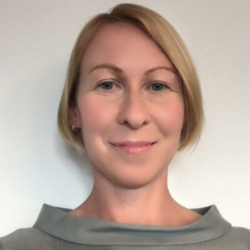
Dr Joanna Anderson is a Senior Research Associate in the Department of Psychiatry at the University of Cambridge and a Chartered Psychologist specializing in clinical and neuropsychology. Since completing her PhD in 2004, she has integrated academic research with clinical practice focused on children and young people with special educational needs and disabilities. Her research centers on child and adolescent mental health through: School-based intervention development and evaluation Early identification systems for mental health difficulties Wellbeing program implementation in community settings Digital mental health technologies for personalized care She employs mixed-methods approaches to design complex interventions that improve access to mental healthcare and outcomes for young populations. Dr Anderson is affiliated with the Child and Adolescent Resilience and Mental Health (ChARM) research group and supervises PhD students, though no consultancy services are available. Her work bridges academic research with practical healthcare applications to address critical gaps in youth mental health support.
Olga Kokshagina serves as an Associate Professor in Innovation & Entrepreneurship at The University of Sydney, with adjunct research appointments at Monash University's Emerging Technology Lab and the UNU Hub - Learning Planet Institute. She is also an active member of the French Digital Council. Her research program investigates technology-mediated collaboration in complex innovation systems, focusing on healthcare transformation, deep tech commercialization, and co-design methodologies. Kokshagina has led high-impact projects with global institutions including the World Health Organization, OECD, STMicroelectronics, Vall d’Hebron Hospital, and Roche, demonstrating strong translational research capabilities. Her scholarly work centers on value-based healthcare innovation, digital platform governance, and AI-enhanced collaborative systems. She examines how organizational capabilities evolve during technological transitions, particularly in healthcare ecosystems, and investigates regulatory frameworks for algorithmic control in digital markets. Kokshagina's research bridges theoretical innovation management with practical applications, evidenced by her co-founding of Ninti—an initiative advancing women's health in workplace environments—and her Open Covid-19 crowdsourcing campaign that mobilized global expertise during the pandemic. Analysis of her 2021-2025 publications reveals a cohesive trajectory examining innovation in socio-technical systems. Key themes include value digitalization in healthcare, mission-oriented interdisciplinary collaboration, and the impact of big data on technology management. Her work consistently addresses grand challenges through mixed-methods approaches, spanning conceptual frameworks in journals like Research Policy to applied studies in Technovation and R&D Management, with increasing focus on quantum readiness and AI-augmented learning systems. No scientific awards are documented in the provided materials. Kokshagina currently holds a 2025 research grant for "Co-designing societal readiness and scenario building for quantum" through the University of Sydney Nano Institute/Catalyst program. While no student supervision activities are mentioned, her collaborative projects involve multi-institutional teams across industry, government, and academic sectors. Kokshagina maintains active roles within the University of Sydney Nano Institute and contributes to international policy discourse through the French Digital Council. Her Ninti initiative exemplifies her commitment to human-centered innovation, while ongoing collaborations with healthcare providers like Roche and Vall d’Hebron Hospital demonstrate sustained engagement with real-world implementation challenges in value-based care systems.
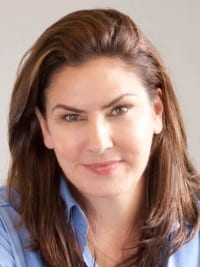
Cecilia Leal is a Professor and Racheff Faculty Scholar in the Department of Materials Science and Engineering at the University of Illinois at Urbana-Champaign, with additional appointments at the Carle Illinois College of Medicine, Materials Research Laboratory, and Beckman Institute. Her interdisciplinary research program bridges materials science, biophysics, and medicine to develop innovative therapeutic delivery systems. Dr. Leal's research focuses on the self-organization of biomolecular systems, particularly lipid membranes, peptides, and nucleic acids. Her lab investigates how structural complexity of lipids and bio-membranes relates to disease mechanisms and informs the design of better gene and drug delivery systems. Key projects include developing lipid nanoparticles for mRNA delivery, studying polymer-lipid hybrid membranes, and characterizing lipid droplet dynamics in metabolic diseases. The lab employs advanced techniques including Small Angle X-ray Scattering, Cryo-EM, and live cell imaging. Her recent publications (2023-2025) reveal a strong emphasis on lipid-based delivery systems for mRNA therapeutics and cancer treatment, with particular attention to how nanostructure affects delivery efficiency. The research spans from fundamental biophysics of lipid-polymer interactions to applied therapeutic development, demonstrating consistent translation of basic science to medical applications. University of Illinois Provost's Distinguished Promotion to Full Professor Award (2024) University of Illinois Scholar (2023) NIH New Innovator Award (2016) NSF CAREER Award (2016) Racheff Faculty Scholar Award (2019) Dr. Leal has mentored numerous graduate students and postdocs, many now in prominent positions at MIT, Stanford, Dow Chemical, and pharmaceutical companies. Her research is supported by multiple NIH and NSF grants, and she maintains active collaborations with medical researchers studying obesity, cancer, and respiratory diseases. She teaches core courses including MSE 201 (Phases and Phase Relations) and MSE 473 (Biomolecular Materials Science), consistently earning excellent teaching ratings. The Leal Lab operates as an interdisciplinary team of materials scientists, physicists, and chemists using cutting-edge characterization tools to solve biomedical challenges. The lab's work on lipid nanoparticle structure has direct relevance to next-generation mRNA vaccines and cancer therapies, with several publications highlighted in C&EN News and other prominent scientific media.
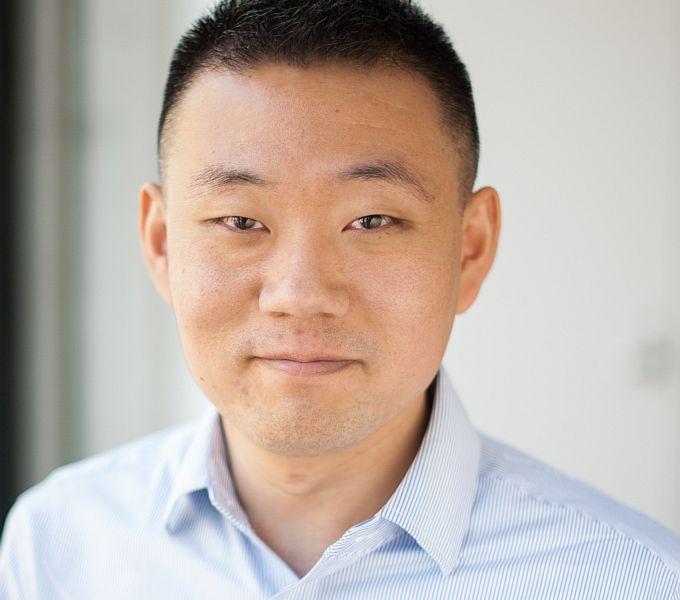
Yan Ma serves as Professor and Chair of Biostatistics at the University of Pittsburgh, with additional appointments in Orthopaedic Surgery and Clinical and Translational Science. Previously, he was Professor and Vice Chair at George Washington University Milken Institute of Public Health (2014-2022) and Assistant Professor at Hospital for Special Surgery/Weill Cornell Medical College (2008-2014). His educational background includes: PhD in Statistics, University of Rochester (2008) MA in Statistics, University of Rochester (2004) MS in Mathematics, Syracuse University (2003) BS in Statistics, Beijing Normal University (2001) Ma's research centers on advanced statistical methodologies including missing data imputation, machine learning, meta-analysis, causal inference, and longitudinal methods, applied across orthopedics, anesthesiology, health disparities, and emergency medicine through team science and translational research frameworks. His publication trajectory demonstrates sustained innovation from methodological foundations (2008-2012) to contemporary applications in health disparities and machine learning (2016-2022), consistently addressing complex biomedical challenges through high-impact journals like JAMA and Health Services Research. His scientific recognition includes: ASA's Statistics in Epidemiology Young Investigator Award (2010) Interorganizational Team Science Award (2012) ORISE FDA Research Fellowship (2017) APHA Achievement in Academia Award Ma has secured R01 funding from NIH/AHRQ for missing data methods in health disparities research while serving as Associate Editor for ASA journals and reviewer for NIH/PCORI/VA panels, demonstrating leadership in statistical methodology development and interdisciplinary collaboration. His team-science approach bridges statistical innovation with clinical implementation across orthopedics and anesthesiology, driving evidence-based practice through methodological rigor and cross-disciplinary partnerships.
Kristine Andra Avram is a Visiting Researcher at the Center for Conflict Research (ZfK) at Philipps University of Marburg, serving as a Post-doctoral fellow in the BMBF project 'Transformations of Political Violence' (2024-2025). Her work bridges peace and conflict studies, narratology, and social sciences with a focus on meaning-making in contexts of political violence and state repression. Her educational background includes a PhD in Political Science (summa cum laude, 2022) from Philipps University of Marburg, an MA in Peace and Conflict Studies (2010-2013) with study abroad at the University of Haifa, and a BA in Communication Science and Romance Studies (2007-2010) from the University of Erfurt, including Erasmus at Complutense University of Madrid. Avram's research examines how narratives shape interpretations of violence, influence reckoning with traumatic pasts, and inform transitional justice efforts. Using interdisciplinary narrative and (auto)ethnographic methods, she reveals storytelling as a site of agency and resistance—both for processing historical violence and envisioning just futures. Her work centers on concepts like responsibility, truth, and hope within post-communist contexts, particularly Romania. Her recent publications (2023-2025) demonstrate methodological innovation in narrative analysis applied to political violence, with increasing attention to researcher positionality and reparative methodologies. Articles span qualitative frameworks, courtroom narratives, postcolonial critiques of peacebuilding, and ethical dimensions of studying violence. Key scientific awards include: Dissertation Award from Südost-europagesellschaft (2023) Honorable Mention from Gert-Sommer-Award for Peace Psychology (2023) Mobility Grant from EISA (2023) Scholarships from MARA, Friedrich Ebert Foundation, and University of Haifa She has secured significant research funding including a Fritz Thyssen Foundation grant (2017-2022) as co-applicant and has taught courses on narrative reconstructions of the past at Philipps University Marburg and Goethe University Frankfurt. Her advisory work includes designing memory projects and conflict resolution initiatives with pax christi Rhein-Main. Avram actively collaborates within the Center for Conflict Research's interdisciplinary teams, focusing on political violence, transitional justice, and narrative methodologies in post-communist contexts through projects like 'Ascribing Individual Criminal Responsibility' and 'Transformations of Political Violence'.
Christopher Lawson is an Assistant Professor in the Department of Chemical Engineering and Applied Chemistry at the University of Toronto, affiliated with the Faculty of Applied Science and Engineering. He serves as Principal Investigator of the Microbiome Engineering Lab and is part of BioZone – the Centre for Applied Bioscience and Bioengineering. His research focuses on engineering anaerobic microbiomes for resource recovery from waste streams using systems biology, synthetic biology, and machine learning approaches. B.A.Sc., M.A.Sc. (University of British Columbia) Ph.D. (University of Wisconsin-Madison) Postdoctoral Training (Berkeley Lab) Lawson's work addresses the challenge of controlling complex microbial interactions in engineered systems to enable scalable biotechnologies for renewable energy, chemicals, and materials. His lab develops high-throughput methods integrating automation and computational tools to optimize microbiome assembly and metabolic fluxes. Recent publications highlight advancements in metabolic modeling , isotope tracing , and systems-level analysis of anaerobic microbiomes, with applications in wastewater treatment , anammox granules , and bioenergy production . His research bridges fundamental microbiology with industrial-scale bioprocess engineering. Scientific Awards ISME/IWA BioCluster Rising Star Award (2022) Jacobs Engineering Group/AEESP Outstanding Doctoral Dissertation Award (2020) Wesley Eckenfelder Graduate Research Award (2019) WEF Canham Graduate Studies Scholarship (2018) NSERC Post-Graduate Scholarship – Doctoral (2014) Lawson actively mentors students and postdocs, emphasizing technical rigor, communication skills, and independence. His lab collaborates within BioZone and with industry partners to advance "team science" principles. Current projects focus on creating engineered microbiomes for commercial-scale waste valorization.
Elizabeth Phelps is the Pershing Square Professor of Human Neuroscience in the Department of Psychology at Harvard University's Faculty of Arts and Sciences. She directs the Phelps Lab, which investigates how emotions influence learning, memory, and decision-making using multidisciplinary approaches including behavioral studies, neuroimaging (fMRI), physiological measurements, and computational modeling. The lab collaborates widely across psychology, neuroscience, economics, and clinical disciplines. Her research examines: Human neuroscience of affect and cognition interactions Emotional modulation of learning and memory systems Neural mechanisms of decision-making under uncertainty Impact of emotion on social cognition and behavior Translational applications for psychological disorders Contact information: Email: phelps@fas.harvard.edu Lab email: phelpslab@fas.harvard.edu Address: Northwest Lab Building, 52 Oxford Street, Cambridge, MA 02138 The lab welcomes study participants and research assistant applicants, emphasizing diversity and inclusion in research.
Dr.-Ing. Steffen Klamt leads the Research Group 'Analysis and Redesign of Biological Networks' at the Max Planck Institute for Dynamics of Complex Technical Systems in Magdeburg, Germany, where he has been employed since 1998. He received his Diplom-Systemwissenschaftler degree from the University of Osnabrück in 1998 and his Dr.-Ing. from the University of Stuttgart in 2005. His research focuses on computational systems biology with emphasis on metabolic engineering, biochemical networks analysis, and bioprocess optimization. He develops computational tools like CellNetAnalyzer for network analysis and StrainDesign for metabolic engineering applications. Key research areas include constraint-based modeling, minimal cut sets analysis, and dynamic optimization of metabolic processes. His recent publications demonstrate strong focus on multi-stage bioprocess optimization, enzyme cascade engineering, and novel strain development strategies for chemical production. Common themes include ATP manipulation strategies, thermodynamic constraints in metabolism, and integration of experimental data with computational models. Scientific Awards: Ernst Dieter Gilles Lecture Award Ernst Dieter Gilles Fellowship He leads a research group developing computational methods for metabolic network analysis and maintains collaborations with experimental groups for model validation and application. The group develops open-source software tools widely used in systems biology research.
Bruce E. Hansen is the Mary Claire Aschenbrener Phipps Distinguished Chair and Trygve Haavelmo Professor of Economics at the University of Wisconsin-Madison, Department of Economics. He maintains an active research program with publications extending through 2025, demonstrating his continued prominence in econometric methodology. His research interests include: Econometric theory and methodology Time series analysis and forecasting Model selection, averaging, and shrinkage techniques Threshold and structural change models Statistical inference for clustered and dependent data Hansen's recent work focuses on innovative approaches to model averaging, standard error estimation for complex data structures, and unit root testing. His publications demonstrate both theoretical rigor and practical applicability to economic data analysis, with particular attention to handling clustered data, serial correlation, and model uncertainty. His influential publications include 'Least Squares Model Averaging' in Econometrica (2007) which introduced Mallows Model Averaging, and 'A Modern Gauss-Markov Theorem' (2022), both representing significant theoretical contributions to econometrics. His two textbooks 'Probability and Statistics for Economists' and 'Econometrics' (Princeton University Press, 2022) reflect his commitment to teaching and disseminating econometric knowledge. Hansen's research has been supported by multiple National Science Foundation grants (SES-9022176, SES-9120576, SBR-9412339, and SBR-9807111), highlighting the significance and quality of his contributions to the field.
Prof. Dr. Helma Wennemers serves as a Full Professor at ETH Zurich's Department of Chemistry and Applied Biosciences, leading the Laboratory for Organic Chemistry. Her research group operates from HCI H 313 at Vladimir Prelog Way 1-5/10 in Zurich, Switzerland, with active teaching responsibilities including Organic Chemistry I and Chemical Biology - Peptides for the Fall 2025 semester. Her research program centers on the intersection of organic chemistry and chemical biology , with particular emphasis on collagen triple helix engineering , peptide-catalyzed asymmetric synthesis , and development of chemical tools for tissue remodeling diagnostics . Key focus areas include designing hyperstable collagen heterotrimers for fibrosis monitoring, creating fluorophore-based probes for collagen cross-linking visualization, and pioneering organocatalytic methodologies for complex heterocycle synthesis. Her group actively explores how hydrophobic modifications and proline derivatives influence collagen stability and cellular uptake mechanisms. Analysis of her 15 most recent publications (2024-2025) reveals three dominant research trajectories: (1) collagen structural engineering for biomedical applications, (2) innovative peptide/organocatalysis enabling stereoselective transformations, and (3) chemical probe development targeting tissue remodeling processes. These works consistently integrate synthetic chemistry with biological validation, demonstrating translational potential in fibrosis diagnostics and regenerative medicine. While specific grant details aren't provided in available sources, her research program clearly supports advanced laboratory infrastructure including peptide synthesis facilities and photochemical reaction systems like the ETHos photoreactor. Her group maintains strong industry and clinical collaborations evident in applications targeting liver cancer cells and prostate cancer diagnostics. The Laboratory for Organic Chemistry functions as an interdisciplinary hub where synthetic organic chemists collaborate with biologists to develop collagen-based diagnostic platforms and catalytic systems. Current projects focus on lysyl oxidase-responsive probes for real-time tissue monitoring and engineered peptide catalysts for sustainable chemical synthesis under environmentally relevant conditions.
Paul Erhart is a Professor in Condensed Matter and Materials Theory at the Department of Physics, Chalmers University. He received his PhD from Technische Universität Darmstadt in 2006, followed by postdoctoral and staff positions at Lawrence Livermore National Laboratory from 2007, before joining Chalmers in 2011. His research bridges computational physics, materials science, and machine learning to tackle fundamental problems in materials design and characterization. Dr. Erhart's research focuses on computational materials science with particular emphasis on condensed matter physics, nanomaterials, and quantum materials. His work spans from developing computational methods like machine-learned potentials (GPUMD, neuroevolution potentials) to studying fundamental phenomena in perovskites, 2D materials, thermal transport, and plasmonics. He has pioneered approaches connecting simulation with experimental techniques through correlation functions and has made significant contributions to understanding phase transitions, defect physics, and electronic structure in complex materials systems. Analysis of his recent publications reveals a strong trend toward integrating machine learning with traditional computational physics methods. His work increasingly focuses on developing and applying neuroevolution potentials to study thermal properties, phase transitions, and optical phenomena in materials. There's also a clear emphasis on connecting computational results with experimental observations, particularly in neutron scattering, Raman spectroscopy, and plasmonic sensing applications. His research spans fundamental materials physics to applied areas like hydrogen sensing and sustainable materials development. Dr. Erhart has contributed to numerous software packages essential to the computational materials science community, including WulffPack for Wulff constructions, Dynasor for extracting dynamical structure factors, calorine for neuroevolution potential models, and ICET for alloy cluster expansions. His collaborative work spans multiple institutions and disciplines, reflecting the interdisciplinary nature of modern materials research. His contributions to understanding perovskite materials, thermal transport phenomena, and plasmonic systems have established him as a leading researcher in computational materials science.
Dan Suciu is a Microsoft Endowed Professor in the Paul G. Allen School of Computer Science & Engineering at the University of Washington. His research focuses on data management, query optimization, probabilistic databases, parallel data processing, and information theory applications to databases. Awards : ACM Fellow (2011), American Academy of Arts and Sciences (2024), ACM SIGMOD Codd Innovation Award (2022), NSF Career Award (2001), Alfred P. Sloan Fellow (2001-2002). Research Trends : Recent work emphasizes cardinality estimation using Lp-norms, submodular width for query evaluation, dynamic query processing, and tensor program optimization. His publications highlight intersections between database systems and formal methods, driven by mathematical rigor. Key Collaborators : Mahmoud Abo Khamis, Dan Olteanu, Amir Shaikhha, Maximilian Schleich, Kyle Deeds, Moe Kayali. Advising : PhD students Gerome Miklau (2006), Christopher Re (2010), Paris Koutris (2016), Nilesh Dalvi (2008 runner-up), Yisu Remy Wang (2024 runner-up) have excelled in dissertation awards.
Theo Hofman is an Associate Professor and Program Director in the Mechanical Engineering Department at Eindhoven University of Technology (TU/e). He specializes in integrated design methods for complex engineering systems, focusing on powertrain systems for automotive, maritime, and aerospace applications. His work emphasizes computational design synthesis, machine learning, and model-based optimization. Education: Hofman holds an MSc (1999) and PhD (2007) in Mechanical Engineering from TU/e. He has held roles at Thales Cryogenics and Drivetrain Innovations before joining TU/e. He also served as an Invited Professor at ETH Zurich and Université Polytechnique Hauts-de-France. Research Interests: His research spans hybrid electric vehicles, powertrain design, energy management systems, and sustainable transportation. Key areas include automated design tools, thermal management, and co-design of plant and control systems. Applications include electric trucks, ships, and aircraft. Articles Trends: His recent publications (2021–2025) emphasize electric vehicle infrastructure optimization, battery systems, and control strategies. Key themes include energy efficiency, thermal management, and co-design methodologies for automotive and mobility systems. Scientific Awards: IEEE VPPC 2024 Best Paper Award. Advising & Grants: He has supervised over 104 MSc, 14 PDEng, and 10 PhD students. Active projects include the 'Green Transport Delta' initiative (2021–2024) and Bosch Transmission collaborations. His courses include 'Electric and Hybrid Vehicle Powertrain Design' and 'Automotive Systems Engineering Project.' Labs/Teams: He leads the Group Hofman and collaborates with the MEGEVH (France) and TU/e’s EAISI Mobility initiative. His work contributes to UN Sustainable Development Goals related to affordable and clean energy, industry innovation, and climate action.
Jacob Krüger is an Assistant Professor at Eindhoven University of Technology , specializing in the development and evolution of variant-rich software systems. He holds a PhD from Otto-von-Guericke University Magdeburg (2021) and has held academic and research positions at institutions including Ruhr-University Bochum, Chalmers University of Technology, and the University of Toronto. His research focuses on the interplay between human cognition and software quality, particularly in complex systems requiring frequent adaptation. Education: PhD in Computer Science, Otto-von-Guericke University Magdeburg (2021) MSc Business Informatics, Otto-von-Guericke University Magdeburg (2016) Research Interests: Variant-Rich Systems Program Comprehension Software Product Lines Human Factors in Software Engineering Architecture Smells and Quality Assurance Articles Trends: Recent work emphasizes fork ecosystem visualization (VisFork tool), the impact of AI on scientific practices, and crisis-driven software development (e.g., Corona-Warn-App). Key themes include empirical studies, tool development, and industry collaboration. Awards: Best Dissertation Award (2022) Frank Anger Memorial Award (2019) Multiple conference best-paper and review awards Advising & Grants: Supervises 12+ PhD students across multiple institutions. Active in funding projects like INKleSS (German Research Foundation) and FOSD Meeting 2024 (NWO). Leads collaborations with ASML, Danfoss, and Axis AB. Labs/Teams: Member of the Software Engineering and Technology (SET) group at TU Eindhoven, focusing on industrial-strength software systems and cognitive aspects of development.
Tom Dhaene is a Full Professor at Ghent University, affiliated with the Department of Information Technology (INTEC-IDLab) within the Faculty of Engineering and Architecture (FEA). He also holds a position at imec, a research and innovation hub in nanoelectronics and digital technologies. Research Unit: Internet Technology and Data Science Lab (IDLab) Academic Rank: Full Professor Affiliations: Ghent University, imec His research focuses on data-efficient machine learning, surrogate modeling, Gaussian processes, Bayesian optimization, and system identification. He has developed widely used software tools such as the SUMO toolbox and ooDACE, and holds 5 U.S. patents. His work bridges theoretical advancements with practical applications in engineering and biomedical domains. Recent publications highlight his contributions to physics-informed machine learning, antenna design, microwave optimization, and healthcare applications. Notably, he explores Bayesian active learning, multi-objective optimization under uncertainty, and efficient modeling techniques for complex systems. Prof. Dhaene's research has been recognized through over 500 peer-reviewed publications and collaborations across academia, industry, and government sectors globally.