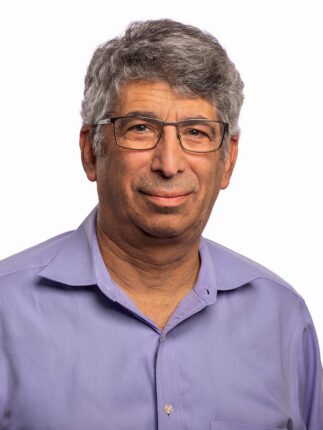
Professor George Siemens is a leading academic in the field of learning analytics and AI-driven education, serving as Professor and Director of the Centre for Change and Complexity in Learning at UniSA Education Futures, University of South Australia. His work focuses on advancing educational practices through data analytics, artificial intelligence, and understanding online learning dynamics. His research spans MOOCs, social and emotional learning analytics, and the ethical integration of AI in education. Notable contributions include the development of frameworks like the MOOC Replication Framework (MORF) and the DAIR infrastructure for educational AI research. Key publications include studies on student agency in AI environments, practicum effectiveness in teacher education, and synthetic data fairness in learning analytics. He collaborates internationally, with affiliations previously including the University of Texas Arlington. As a Research Degree Supervisor, he guides students in transformative educational technology research. His work emphasizes actionable intelligence for educators and scalable solutions for lifelong learning in the digital age.
Miguel Nacenta is a Professor in the Department of Computer Science at the University of Victoria (UVic), Canada, and a founding member of the Victoria Interactive eXperiences with Information (VIXI) research group. Previously affiliated with the University of St Andrews (UK), his work bridges Human-Computer Interaction (HCI), Information Visualization, and Cognitive Science. He specializes in designing interactive systems that enhance human cognition, with a focus on Infotypography (using typography to encode data), collaborative problem-solving tools, and perceptual input/output devices. Research Interests: His key areas include cognitive augmentation, visualization techniques for complex tasks, multi-display environments, and tools for constraint problem-solving. Notable projects include the WriteReason tool for essay writing, InfoTypography studies on perceptual typographic parameters, and Solvi for visual constraint modeling. Grants & Collaborations: He collaborates internationally, including with the University of St Andrews on PhD scholarship programs. His work is supported by grants focusing on HCI innovations and accessibility. He actively mentors students (e.g., Adam Binks, Johannes Lang) and supervises postdoctoral researchers. Affiliations: Member of the VIXI group,他曾是St Andrews计算机科学学院的教授, 并参与多个学术服务活动, including conference program committees and journal reviews. Labs & Teams: Leads the VIXI lab at UVic, focusing on interactive technologies for cognitive tasks. Collaborates with industry partners on projects like TypoCartographer for infoTypographic maps and HaptiQ for accessible graph exploration.
Jørgen Arendt Jensen is a Professor of Biomedical Signal Processing at the Technical University of Denmark (DTU), with dual affiliations in the Department of Health Technology and the Department of Electrical Engineering (DTU Elektro). He leads the Center for Fast Ultrasound Imaging (CFU), a collaborative initiative involving DTU, BK Medical, Rigshospitalet, and DTU Nanotech. His research focuses on advanced medical ultrasound technologies, including synthetic aperture imaging, vector flow imaging, and ultrasound simulation, aiming to improve clinical image acquisition efficiency and accuracy. He teaches medical imaging courses and co-initiated the joint biomedical engineering program between DTU and the University of Copenhagen. Jensen’s work contributes to UN Sustainable Development Goals related to health and innovation. His research interests span algorithm development for fast ultrasound imaging, blood velocity characterization, and simulation of ultrasound systems. He supervises multiple PhD students and collaborates on projects involving transducer design, real-time imaging systems, and microvascular pathology analysis. Recent publications emphasize advancements in super-resolution ultrasound imaging, transducer optimization, and pressure gradient estimation. His lab, CFU, develops cutting-edge imaging solutions for clinical applications. Jensen’s contributions include patents on ultrasound imaging techniques and collaborative ventures to enhance diagnostic capabilities through interdisciplinary engineering.
Daniel Bolt is the Nancy C. Hoefs Bascom Professor of Educational Psychology at the University of Wisconsin-Madison’s School of Education. His research focuses on psychometric methodologies in educational, social, and health sciences, including latent variable models, computational methods, and assessment of individual differences. He also collaborates on biostatistics projects at the Waisman Center. Education: PhD in Educational Psychology, University of Illinois at Urbana-Champaign (1999) MS in Statistics, University of Illinois at Urbana-Champaign (1995) BA in Psychology/Mathematics, Calvin College (1992) Research Interests: Bolt’s work bridges psychometrics and educational data science, addressing topics like response style modeling, computer-based testing, and measurement validation. His recent projects explore the intersection of IRT models with modern assessment challenges, including rating scale confusion and item complexity effects. Awards: Kellett Mid-Career Award (2019) Vilas Associates Award (2015, 2017) Chancellor’s Distinguished Teaching Award (2009) Outstanding Reviewer Awards (Journal of Educational and Behavioral Statistics, 2011/2020) Teaching & Leadership: Bolt teaches advanced courses in test theory and hierarchical linear modeling. He served as President of the Psychometric Society (2019–2021) and is a Teaching Academy Fellow at UW-Madison.
John R Anderson is the Richard King Mellon University Professor of Psychology and Computer Science at Carnegie Mellon University (CMU), affiliated with the Department of Psychology within the Dietrich College of Humanities and Social Sciences. His research focuses on understanding higher-level cognition, particularly mathematical problem-solving, through the development of the ACT-R cognitive architecture—a computational framework simulating human cognitive processes. This architecture integrates behavioral, neural, and educational data to model learning and decision-making. Anderson’s work bridges cognitive science, neuroscience, and educational technology. He investigates how brain imaging (e.g., fMRI, EEG) can reveal the temporal dynamics of cognitive processes and improve instructional methods. His research emphasizes analyzing brain activity time courses to uncover underlying mechanisms of problem-solving and skill acquisition. Key Research Themes: Cognitive architectures, neural correlates of learning, computational models of memory, and intelligent tutoring systems. Notable Contributions: Development of the ACT-R architecture, integration of neuroimaging with cognitive modeling, and studies on skill transfer and learning strategies. Anderson’s publications include seminal books like Cognitive Psychology and Its Implications and How Can the Human Mind Occur in the Physical Universe? His work has advanced understanding of associative memory, strategic decision-making, and the application of cognitive models in educational technology. His lab, the ACT-R Research Group, collaborates across disciplines to model complex cognitive tasks and their neural foundations. Current projects analyze real-time brain activity to refine educational interventions and improve human-machine interaction.
Frank Christian Stephan is a Professor at the National University of Singapore (NUS), with joint appointments in the Department of Mathematics (primary) and School of Computing (secondary). His research spans mathematical logic, theoretical computer science, and computational complexity. Research Interests: Recursion theory and Kolmogorov complexity Inductive inference and learning theory Automata theory and automatic structures Parity games and algorithmic randomness Selected Publications include works on quasipolynomial time algorithms for parity games (STOC 2017 Best Paper) and semi-automatic structures. His scientific awards include the STOC 2017 Best Paper Award and the EATCS-IPEC Nerode Prize 2021. He teaches courses such as Computational Complexity (AY 2023/2024 Sem 2, AY 2024/2025 Sem 2), Advanced Automata Theory (multiple editions), and Mathematical Logic (undergraduate). He co-organizes the Logic Seminar at NUS.
Dr. Giacomo Crisenza is a Lecturer in Catalysis at the Department of Chemistry, University of Manchester. His research focuses on developing sustainable electrochemical and photocatalytic methods for converting carbon feedstocks into value-added chemicals. He holds a PhD from the University of Bristol and has held academic positions at Manchester since 2020. Education: PhD in Chemical Synthesis, University of Bristol (2013–2017) MSc and BSc, Università degli Studi di Milano (2007–2012) Chemical Synthesis CDT, University of Bristol (2012–2013) Research Interests: Electrochemical synthesis of novel organic compounds Photocatalytic activation of aromatic systems Design of sustainable catalytic protocols Radical-mediated C–C bond formations Development of carbon feedstock valorization strategies Articles Trends: His recent work emphasizes photocatalytic C–H functionalization strategies, asymmetric total syntheses, and metal-free arylation approaches. Key themes include visible-light-driven reactions and transition-metal catalyzed transformations. Advising & Grants: Supervised 2 PhD students (specific names not listed). Actively seeks external funding through schemes like MSCA and NIF for postdoctoral researchers. Labs & Teams: Leads the Crisenza Group within the Organic Chemistry Group at Manchester, focusing on net-zero catalysis and sustainable chemical synthesis.
Graham Hemingway is a Professor of the Practice of Computer Science and General Engineering at Vanderbilt University's School of Engineering. His research focuses on model-integrated computing, software systems integration, and cyber-physical systems, with applications in embedded control and electric grid simulations. He holds dual appointments in Computer Science and General Engineering within the School of Engineering, reflecting his interdisciplinary work. His research emphasizes model-based integration techniques to address challenges in complex systems like real-time control and energy infrastructure. Dr. Hemingway's publications span collaborative infrastructure design, electric grid simulation methodologies, and real-time embedded systems. His work often intersects simulation tools, distributed systems architecture, and high-confidence system design. While no awards or grants are explicitly listed in the provided text, his contributions to model-driven engineering and simulation frameworks demonstrate significant impact in computational and systems engineering domains.
Michael Farber is a Professor of Mathematics at Queen Mary University of London's School of Mathematical Sciences. Previously, he held professorships at the Universities of Warwick, Durham, and Tel Aviv. His research focuses on applied and computational topology, topological robotics, stochastic topology, and their applications in distributed computing, genomics, and brain connectivity modeling. He has authored influential monographs such as Invitation to Topological Robotics and Topology of Closed One-Forms . Farber's current research includes projects funded by the Leverhulme Trust and EPSRC, addressing probabilistic and deterministic topology, automated motion planning, and topological robotics. He advises PhD students including Lewin Strauss, Gabriele Beltramo, and Lewis Mead. His work has been recognized with the Royal Society Wolfson Research Merit Award. Key research interests include parametrized topological complexity, sequential motion planning algorithms, and the intersection of topology with AI and robotics. His collaborations span interdisciplinary fields, such as using topological methods in cancer research and genomic analysis. Grants and funding include the Leverhulme Trust's 'Probabilistic and Deterministic Topology' and EPSRC's 'Topology of Automated Motion Planning.' Farber is affiliated with Queen Mary's Centre for Geometry, Analysis, and Gravitation, contributing to advancing topological methodologies in algorithmic and stochastic systems.
Gustav Amberg is a Professor at KTH Royal Institute of Technology, affiliated with the Flow Mechanics research group within the School of Engineering Sciences. His primary appointment is in the Department of Mechanics, where he focuses on fluid dynamics, multiphase flow, and interfacial phenomena. He holds a permanent full professorship with no indication of兼职 roles. Research interests center on dynamic wetting mechanisms, phase-field modeling, and computational fluid dynamics applied to complex fluid systems. His work explores contact line behavior, microstructured surface interactions, and material phase transformations. Notable areas include rapid droplet spreading, viscoelastic fluid dynamics, and boiling heat transfer on engineered surfaces. Recent studies investigate the interplay between surface topography and wetting dynamics, oscillatory contact line phenomena, and numerical benchmarking across molecular and continuum models. He has pioneered methods for simulating surfactant effects in multiphase flows and developed novel approaches for analyzing weld pool behavior during sintering processes. No academic awards or grants are explicitly listed in the provided materials. His advising record remains undisclosed, though his prolific publication history suggests active research supervision. Laboratory affiliations are not detailed, but his work aligns with KTH's broader initiatives in computational mechanics and materials science.
Xiaolei Fang is Associate Professor in the Edward P. Fitts Department of Industrial and Systems Engineering at North Carolina State University. His research develops advanced statistical learning, deep learning, and optimization methods for industrial applications involving high-dimensional data, with particular focus on condition monitoring, failure prognostics, and system performance optimization. He holds a PhD in Industrial Engineering and MS in Statistics from Georgia Tech. Professor Fang's research integrates machine learning with industrial engineering to solve complex problems in predictive maintenance, quality control, and energy systems. His methodological innovations include federated learning approaches for privacy-preserving prognostics, distributionally robust machine learning models, and tensor-based statistical methods for manufacturing quality diagnostics. He has received multiple prestigious awards including the ISE Outstanding Research Award (2024), Sigma Xi Best PhD Thesis Award (2019), and SAS Data Mining Best Paper Award (2016). His research has been funded by NSF, Cisco Systems, and the US Department of Energy. Professor Fang teaches courses in Quality Design & Control, Statistical Models for Systems Analytics, High-Dimensional Data Analytics, and Optimization Models. He has supervised 9 PhD students to completion and currently advises 7 graduate students working on projects spanning federated learning for prognostics, tensor-based quality control, and machine learning applications in manufacturing and energy systems.
Rachel B. Baker is an Associate Professor in the Policy, Organizations, Leadership, and Systems Division at the University of Pennsylvania's Graduate School of Education. Her research focuses on enhancing access and success in higher education for underserved groups, particularly in community colleges. She leads a National Science Foundation-funded study on cross-enrollment programs and collaborates on projects measuring curricular complexity and online education effectiveness. Key Affiliations: Wheelhouse Center for Community College Leadership, Editorial Boards of Research in Higher Education and Journal of Research on Educational Effectiveness Funding Sources: NSF, Institute of Education Sciences, Spencer Foundation, College Futures Foundation Her work addresses three core themes: policy impacts on student decisions, enrollment equity across race/socio-economic status, and interventions to improve self-regulatory skills via online data. Recent studies include analyzing cross-enrollment effects on transfer success and instructor professional development in online settings. Awards: 2019 NAEd/Spencer Postdoctoral Fellowship, 2016 IES Outstanding Fellow, Jack Kent Cooke Dissertation Fellowship Grants: NSF 5-year cross-enrollment study, IES training programs, Spencer Foundation initiatives Baker’s team develops metrics for curricular complexity and explores how course requirements influence student outcomes. She advocates replacing the 'pipeline' metaphor with 'pathway' to emphasize inclusive educational trajectories.
Andrew B. Bocarsly is a Professor of Chemistry at Princeton University, affiliated with the Department of Chemistry within the Faculty of Arts and Sciences. His research focuses on physical inorganic chemistry, catalysis, materials science, and CO₂ conversion. He leads the Bocarsly Lab, which explores electrochemical and photochemical methods to convert CO₂ into fuels and valuable chemicals, emphasizing heterogeneous catalysts and novel materials like cyanogels. His work intersects with sustainability and energy applications, supported by collaborations with institutions like the Andlinger Center for Energy and the Environment. Research Interests: - Development of catalysts for CO₂ reduction to multi-carbon species - Electrocatalytic and photocatalytic mechanisms using transition metal complexes - Low-temperature synthesis of alloys and semiconductors via cyanogel systems - Design of photoelectrochemical systems for solar energy conversion Recent trends in his publications highlight advancements in catalyst design (e.g., Ni-enhanced oxides, manganese complexes), CO₂-to-CO/1-butanol conversion, and semiconductor materials for hydrogen evolution. His lab actively mentors students, with notable graduates like Andersen Dimon and Rebecca Evans. Collaborations extend to Princeton’s Materials Institute and the Electrochemical Society. Labs/Teams: The Bocarsly Lab operates in Frick Chemistry Laboratory, emphasizing interdisciplinary approaches to energy sustainability. Recent activities include hosting the 19th International Conference on Carbon Dioxide Utilization (2022) and fostering undergraduate and graduate research programs.
Rana Jaleel is an Associate Professor in the Department of Gender, Sexuality, and Women's Studies at the University of California, Davis, within the College of Arts & Sciences. She holds multiple leadership roles, including Chair of the Cultural Studies Graduate Group, Chair of the Designated Emphasis in Feminist Theory and Research, Faculty Advisor for the Sexuality Studies Minor, and Co-Director of HATCH: The Feminist Arts & Sciences Initiative. She is also a 2021–2024 College of Arts & Sciences Dean's Faculty Fellow. Education: Ph.D. in American Studies, New York University J.D., Yale Law School MFA in Poetry, University of Michigan, Ann Arbor Rana Jaleel’s research centers on the politics of evidence, examining how harm is recognized or erased in legal, cultural, and political contexts. Her work critically engages with reproductive labor, race, gender, sexuality, property, and international law. She draws from feminist theory, critical ethnic studies, legal studies, and decolonial thought to interrogate the intersections of power, knowledge, and violence. Her interdisciplinary approach is reflected in her contributions across law, cultural studies, and creative writing. Her publications and editorial projects reveal a strong focus on racial capitalism, settler colonialism, queer/trans of color critique, and feminist legal theory. She explores how international legal frameworks for sexual violence are shaped by imperial and racial power. Her work frequently appears in journals such as Critical Ethnic Studies Journal , Cultural Studies , and Brooklyn Law Review . She has co-edited special issues on democracy, gendered citizenship, and racial capitalism, demonstrating a commitment to collective scholarly work. Scientific Awards: Author of Color First Book Award from Duke University Press for The Work of Rape Rana Jaleel is actively involved in academic service and mentorship. As Co-Director of HATCH and leader of the Write the Future! Lab, she fosters creative and critical scholarship among undergraduate students, particularly from women/queer/trans of color and transnational feminist perspectives. She serves on the Editorial Collective and Board of The Critical Ethnic Studies Journal and is a member of the American Association of University Professors’ Committee A on Academic Freedom and Tenure. Her leadership extends to admissions and curriculum development in interdisciplinary programs. She is co-editing a forthcoming issue of South Atlantic Quarterly on 'Queer/Trans of Color Transits and the Global Imaginaries of Racial Capitalism' and continues to develop projects that bridge creative practice, legal critique, and feminist theory.
Dr. Lauren Hammond serves as Lecturer in Teacher Education at the Institute for Education, Teaching and Leadership within the Moray House School of Education and Sport at the University of Edinburgh, a position she assumed in August 2022 after eight years at IOE, UCL's Faculty of Education and Society. Her academic career bridges secondary school teaching in London and Singapore with higher education expertise in geography teacher education, curriculum development, and doctoral supervision. Her educational background includes a PhD in Geography Education from University College London (2020), an MA in Geography Education from the Institute of Education (2009), a PGCE in Secondary Geography from the University of Bristol (2006), and a BA (Hons) in Geography from King's College London (2004). This foundation supports her interdisciplinary research at the intersection of children's geographies, geography education, and geographies of education. Dr. Hammond's research centers on children's rights, urban educational spaces (particularly London), and empowering young people through geography. She employs participatory methods including storytelling and mapping with youth, investigating how educational spaces reproduce social injustices and how geographical concepts illuminate educational processes. Her work critically examines geography's construction in schools and universities while exploring teacher education for complex socio-political contexts. Her recent publications reveal strong thematic continuity in children's geographies and geography education, with growing emphasis on race, climate change, and pandemic research ethics. Key trends include participatory methodologies, urban justice frameworks, and critical analyses of teacher development in volatile educational landscapes. Dr. Hammond holds significant professional recognition including: Fellow of the Royal Geographical Society (FRGS) Senior Fellow of the Higher Education Academy (SFHEA) She actively supervises postgraduate students and has secured competitive research funding including UCL's Centre for Teachers and Teaching Research grant (£3,500) for race and educational spaces (2023), an IOE Early Career Impact Fellowship (£1,000) on children's urban rights (2021), and seed funding for PGCE mentoring evaluation (£8,317.50, 2017). Her collaborative approach extends to organizing major conferences and leading cross-institutional networks. As deputy secretary of the RGS's Geography and Education Research Group and membership officer of the Geographies of Children, Youth and Families Research Group, she actively shapes research communities. Her leadership extends to the Geography Education Research Collective and Geographical Association's special interest groups, fostering national and international scholarly collaboration.