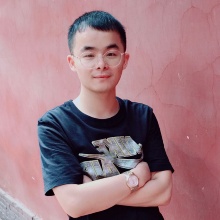
Bo Xiong is a researcher at the University of Stuttgart in the Analytic Computing group. His research focuses on machine learning and knowledge graphs , with a particular emphasis on geometric embeddings and hyperbolic neural networks. His research interests include: Knowledge graph embeddings Hyperbolic and pseudo-Riemannian geometry in AI Temporal knowledge graph reasoning Structured multi-label prediction Recent publications highlight his work on geometric relational embeddings, complex query answering, and temporal fact reasoning using advanced manifold-based techniques.
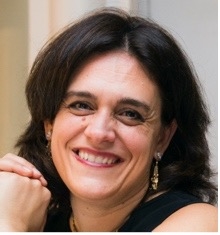
Antonella Poggi is an Associate Professor in the Department of Computer, Control and Management Engineering (DIAG) at Sapienza University of Rome, holding the position in Computer Science and Engineering (IINF-05/A). She recently obtained the National Scientific Qualification as full professor in July 2024. Her research interests include: Database theory, data integration, and exchange Knowledge representation and reasoning Ontologies, knowledge graphs, and Description Logics Data governance and personal information management Metamodeling and semi-structured data Recent publications (2021-2025) demonstrate a consistent focus on ontology-based data access, with key contributions in query answering, data abstraction, and knowledge graph semantics. Her work bridges theoretical foundations with practical applications, as evidenced by co-founding OBDA Systems Srl. Dr. Poggi has led the MODEUS research project (MIUR SIR) and participated in international collaborations. She is an active member of the academic community, serving as General Chair for IRCDL 2024 and CIKM 2026, and Program Co-Chair for multiple conferences including KEOD and ODOCH. Her academic service includes extensive program committee memberships for top conferences (ICDT, EDBT, AAAI, etc.) and leadership in organizing workshops and conferences in digital libraries and knowledge engineering.
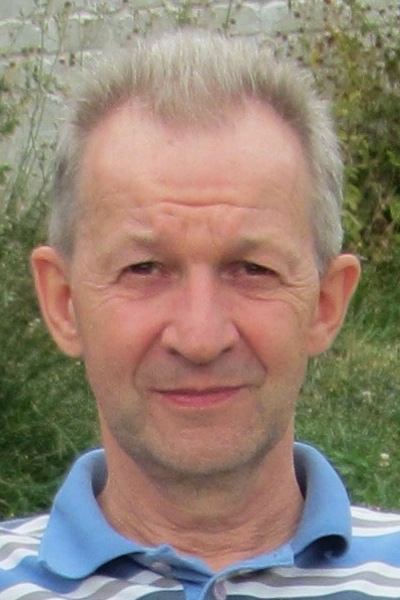
Pierre Flener is a Professor at the Department of Information Technology, Division of Computing Science at Uppsala University. He leads the Optimisation Group and is a member of the Centre for Interdisciplinary Mathematics. His work focuses on constraint programming and discrete optimization, addressing complex scheduling, routing, and resource allocation challenges. Flener is an Officer of the Order of Merit of Luxembourg and co-founder of NordConsNet, the Nordic Network for Constraint Programming researchers. Research Interests: Flener’s research spans constraint programming, combinatorial optimization, and algorithm design. He develops models and tools for automated decision-making in domains like air traffic management, sensor networks, and industrial robotics. His work emphasizes practical applications, leveraging constraint satisfaction techniques to solve real-world puzzles such as vehicle routing and personnel allocation. Key Contributions: Flener has authored over 100 publications on constraint solving, symmetry breaking, and CP-based approaches to industrial problems. Notable projects include airspace sectorization optimization, energy-efficient sensor networks, and financial portfolio design. He has led initiatives like Auto-Tabling for MiniZinc and collaborated on CP applications in bioinformatics and image processing. Labs & Teams: He heads the Optimisation Group at Uppsala, fostering research in CP and its applications. NordConsNet, co-founded by Flener, connects Nordic researchers and practitioners in constraint technology.
Tengfei Ma is an Assistant Professor in the Department of Biomedical Informatics at Stony Brook University, with affiliations to Computer Science and Applied Mathematics & Statistics. He holds a Ph.D. from The University of Tokyo, M.S. from Peking University, and B.E. from Tsinghua University. Previously, he was a Research Scientist at IBM T.J. Watson Research Center. His research focuses on machine learning, natural language processing (NLP), and biomedical informatics, particularly deep graph learning, scalable graph methods, and healthcare applications. He has contributed to frameworks like EvolveGCN for dynamic graphs and IGB datasets for graph benchmarks. Key awards include ISWC 2021 Best Paper (Research Track) and IBM Outstanding Research Accomplishments (2019, 2022). His work bridges theory and practice, addressing challenges like over-dilution in GNNs and interpretable time series analysis. Collaborations span interdisciplinary areas, such as AI for wound monitoring and code summarization. He teaches BMI530: Software Development for Biomedical Informatics and is open to graduate students from CS, BMI, and AMS departments. Research highlights include: Deep Graph Learning: Scalability (FastGCN, IGB), dynamic graphs (EvolveGCN), and topology-enhanced GNNs. Healthcare: Models for EHR analysis, medication recommendation (GAMENet), and wearable wound monitoring. NLP: Document summarization, code summarization (CP-BCS), and commonsense generation via knowledge graph compression. Recent projects include AI tools like Influencer for promotional content creation and neural-symbolic models for interpretable time series analysis. His lab explores foundational AI for healthcare, code analysis, and graph systems.
Martin Grohe is a Professor at the School of Logic and Theory of Discrete Systems , part of the Department of Computer Science at RWTH Aachen University . His research spans Algorithms and Complexity , Logic , Database Theory , Graph Theory , and Machine Learning , with a focus on integrating logical frameworks into computational models. His recent work explores graph neural networks , Weisfeiler-Leman algorithms , and parameterized complexity , as seen in publications on isomorphism testing , database repairing , and probabilistic query evaluation . While no specific scientific awards are mentioned, his contributions to graph theory and machine learning are widely recognized through numerous peer-reviewed publications.
Ursula Zich is an Associate Professor at the Polytechnic of Turin's Department of Architecture and Design (DAD), where she serves as a member of the Student Discipline Commission. Born in Turin on July 16, 1969, she holds a Doctor of Architecture degree with highest honors from the Polytechnic of Turin (1994) and a Doctor of Research in Surveying and Representation of Architecture and the Environment from the University of Genoa. Her research interests focus on critical reading of drawing, descriptive geometry, history of representation, and physical models. She leads the MAG.IA (Mathematics, Architecture, Geometry. Application Interconnections) research line and the POLIMADE project exploring scientific applications of origami. Her work spans multiple ERC sectors including application of mathematics in sciences, computational modeling in cultural spheres, cultural studies, history of art and architecture, and museum studies. Zich has published extensively on architectural representation, with recent publications examining tangible geometries for inclusive game design, architectural heritage accessibility, and interdisciplinary approaches to architectural representation. Her research demonstrates consistent integration of mathematical principles with architectural representation techniques. Effective member of Study Group on Environmental Color Design (ECD) of the International Color Association (AIC), United States (2021-) Effective member of Italian Design Union (UID), Italy (2001-) She has served on the Program Committee for multiple Italian Conferences on Origami, Educational Dynamics and Teaching since 2014. Zich also co-invented a patent for a foldable aluminum foil food tray, demonstrating practical applications of her origami research. At the Polytechnic of Turin, she teaches architectural drawing, surveying, and geometric modeling courses across multiple academic years, maintaining an active teaching schedule through the 2025/26 academic year.
Ananias A. Escalante is a Professor in the Department of Biology at Temple University's College of Science and Technology, and a core faculty member of the Institute for Genomics and Evolutionary Medicine (iGEM). He holds a PhD in Biology from the University of California, Irvine (1995), and has held roles at the CDC (1995–2005) and Arizona State University (2005–2015). His research integrates population genetics with epidemiology, focusing on malaria parasites' evolution, drug resistance mechanisms, and biodiversity. Key areas include Plasmodium falciparum resistance mutations, primate malaria origins, and molecular tools for surveillance. Education: PhD in Biology, University of California, Irvine (1995) MSc in Ecology, Universidad Simón Bolívar, Venezuela Bachelor's Degree in Biology, Universidad Simón Bolívar, Venezuela Research interests span evolutionary genomics, malaria parasite diversity, and the application of genomic tools to epidemiology. He investigates how genetic diversity in parasites influences drug resistance and transmission dynamics, with a focus on nonhuman primate malaria as a model for human malaria origins. His work includes phylogenetic studies of Plasmodium species and the development of mitochondrial genome protocols for pathogen analysis. Notable contributions include studies on Plasmodium vivax population genetics in the Americas, the impact of drug resistance mutations (e.g., pfhrp2/pfhrp3 deletions), and the molecular characterization of novel malaria parasites in reptiles and birds. He collaborates on initiatives like the Amazonian International Center of Excellence for Malaria Research. Advising and grants: While specific student names aren’t listed, his research team likely includes graduate students focused on evolutionary parasitology. Grants support projects on malaria genomics and vector ecology. He leads Temple’s iGEM lab, advancing interdisciplinary research in genomics and evolutionary medicine. Labs/Teams: Core faculty at Temple’s Institute for Genomics and Evolutionary Medicine (iGEM), collaborating on projects integrating genomics, epidemiology, and evolutionary biology.
Dr. Kristan Jensen is an Associate Professor of Physics and Astronomy at the University of Victoria specializing in theoretical high-energy physics and holographic duality. His research develops connections between quantum gravity, quantum field theory, and condensed matter systems through the AdS/CFT correspondence framework. Current research explores novel quantum phases in low-dimensional systems, emergent spacetime geometries, and non-perturbative approaches to quantum gravity. Jensen co-organizes the Pacific Northwest Particle Theory Seminar, fostering regional collaboration among theoretical physicists. Research innovations include: Holographic descriptions of boundary/defect systems Carrollian field theories and critical phenomena Non-Lorentzian gravitational duals Fractional quantum Hall states from duality Publications demonstrate consistent contributions to: Quantum information in gravity Anomaly constraints in field theory Non-equilibrium dynamics Conformal bootstrap techniques Collaborative networks span institutions including MIT, UBC, and TRIUMF, with recent work examining wormhole geometries, entanglement structure in holography, and matrix model descriptions of de Sitter space.
Sarah Ebling is a Full Professor of Language, Technology and Accessibility at the University of Zurich's Faculty of Arts and Social Sciences. She leads the Language, Technology and Accessibility research group within the Institute for Computational Linguistics. Her work focuses on computational linguistics applications for assistive technologies targeting disabilities such as hearing impairments, visual impairments, and cognitive disorders. Key areas include sign language technologies, automatic text simplification, and audio description systems. She directs the large-scale Swiss innovation project 'Inclusive Information and Communication Technologies' (2022-2026, CHF12 million budget) and collaborates on EU H2020 and SNSF Sinergia projects. Education: Holds a doctoral degree (summa cum laude, 2016) from the University of Zurich with research on automatic translation to Swiss German Sign Language. Completed studies in German Linguistics, Computational Linguistics, and English Linguistics at Universities of Zurich and Heidelberg, with research stays in Dublin, Chicago, and Rochester. Research emphasizes multimodal accessibility solutions, including sign language fluency assessment, gesture-based interaction, and AI-driven text adaptation. Current projects explore audio description translation systems (SwissADT), sign language corpus development (SwissSLi), and digital tools for comprehensibility assessment in simplified texts. Her work bridges computational linguistics with ethical considerations in assistive technology deployment. Grants and Leadership: Principal Investigator on major accessibility-focused grants, including the CHF12M Swiss innovation project. Supervises PhD candidates in areas like sign language assessment tools and text simplification algorithms. Active in international collaborations, publishing extensively in computational linguistics and accessibility journals/conferences. Technology Development: Created the 'DigiSpon' benchmark for language sample analysis and developed open-source tools for sign language translation baselines. Her team's innovations include the SignCLIP model connecting text and sign language via contrastive learning, and pose estimation frameworks for sign language recognition.
Jiaoyan Chen is a Senior Lecturer (Associate Professor) in the Department of Computer Science at The University of Manchester. She previously held roles as a Lecturer at Manchester, a Senior Researcher at the University of Oxford, and a Postdoctoral Fellow at Heidelberg University. Education: PhD and Bachelor's in Computer Science and Technology from Zhejiang University (2016 and 2011), with a visiting PhD stint at Zurich University's Department of Informatics. Research Interests: Integrating knowledge graphs and ontologies with machine learning and large language models (LLMs), focusing on semantic embeddings, knowledge curation, and explainable AI systems. Publication Trends show emphasis on ontology embeddings (e.g., OWL2Vec*), LLM evaluation with knowledge graphs, and hybrid neural-symbolic reasoning. Her work bridges structured knowledge and modern AI through projects like OntoEm and ConCur . Current Research Team includes postdoctoral researchers, PhD students, and externally co-supervised associates. She actively recruits PhD candidates in areas like Retrieval-Augmented Generation and LLM Explainability , with projects funded by EPSRC and international consortia. Grants & Leadership: EPSRC New Investigator Award (2023-2026) Manchester-Melbourne-Toronto Research Fund (2024-2026) EPSRC ConCur Project (2021-2025) Professional Service: Associate Editor, Transactions on Graph Data and Knowledge EPSRC Peer Review College member OAEI Track Co-organizer at ISWC
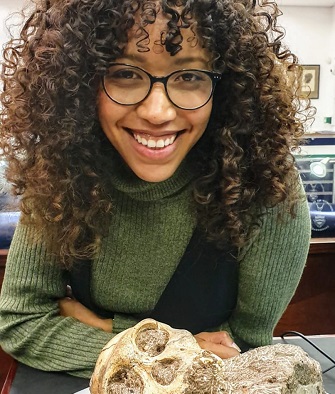
Lauren Schroeder serves as Associate Professor and Associate Chair of Graduate Anthropology in the Department of Anthropology at the University of Toronto Mississauga (UTM). A South African palaeoanthropologist specializing in hominin cranial and mandibular diversity, she employs quantitative methods including 3D morphological modeling and quantitative genetics. Dr. Schroeder maintains research affiliations with the Royal Ontario Museum, Human Evolutionary Research Institute, and Evolutionary Studies Institute at the University of the Witwatersrand. Her academic credentials include: PhD, University of Cape Town, 2015 BSc (Hons), University of Cape Town Dr. Schroeder's research spans Biological Anthropology, Palaeoanthropology, and Evolutionary Anthropology with emphasis on hominin variability, evolutionary theory, and quantitative genetics. Her work integrates statistical analyses of 3D morphological data with quantitative genetic approaches to investigate evolutionary processes underlying morphological variation. Current projects examine primate skeletal evolution, skeletal signatures of hybridization for detecting gene flow in fossil records, and the relative contributions of genetic drift versus natural selection in hominin evolution. Analysis of her 2016-2020 publications reveals consistent focus on paleoanthropological research centered on Homo naledi and other hominin fossils. Her scholarly output demonstrates integration of evolutionary theory, quantitative genetics, and morphological integration to explore hominin diversity and evolutionary mechanisms. Recurring themes include Bayesian phylogenetic methods, hybridization studies in human evolution, and critical reflections on ethics and decolonization within anthropological practice. No scientific awards were documented in the provided materials. Information regarding graduate student advising and research grant funding was not specified in available sources. The Schroeder Lab, situated in UTM's Terrence Donnelly Health Sciences Complex, advances morphological evolution research in humans and primates through innovative quantitative methodologies. Dr. Schroeder has contributed significantly to major paleoanthropological projects including the Malapa excavation (Australopithecus sediba) and Rising Star Cave (Homo naledi) as core research team member analyzing fossil hominins.
Lisa Wu Wills is an Assistant Professor in the Department of Computer Science and Electrical and Computer Engineering at Duke University, leading the APEX Lab (Application-driven Programmable Efficient Accelerated Systems Lab). Her research focuses on hardware acceleration for big data analytics in genomics, graphs, and databases to advance healthcare and natural sciences. Education: Ph.D. in Computer Science, Columbia University, 2014 Research Interests: Dr. Wills pioneers computer architecture and hardware-software co-design to create efficient accelerators for emerging applications. Her work targets genomics , graph analytics , and database systems , emphasizing simplified hardware deployment and energy efficiency for scientific breakthroughs in healthcare and AI. Publication Trends: Her 2022-2025 publications reveal a strong focus on open-source frameworks (Beethoven, PyTFHE) for accelerator development, hardware acceleration in privacy-preserving computing, and optimization for large language models. Key themes include transfer learning for EDA, domain-specific architectures for genomics, and energy-efficient image processing. Scientific Awards: Google ML and Systems Junior Faculty Award (2025) Advising and Grants: Dr. Wills mentors three PhD students: Chris Kjellqvist (Beethoven framework architect), Mason Ma (PyTFHE lead for FHE applications), and Mansi Choudhary (COCOSSim simulator creator). Her 2025 Google award funds research on accelerating vector databases and retrieval-augmented generation for LLMs. Labs and Teams: She directs the APEX Lab at Duke, developing tools like Beethoven (open-source accelerator composer) and PyTFHE for hardware-software integration, enabling domain scientists to leverage custom acceleration with minimal hardware expertise.
Nicole Griffin is a Professor in the Department of Biomedical Education and Data Science at the Lewis Katz School of Medicine, Temple University, where she integrates anthropological research with biomedical data science. Her academic trajectory spans over two decades of specialized work in human evolutionary biomechanics. Her educational foundation includes: Postdoctoral Fellowship in Evolutionary Anthropology, Duke University PhD in Hominid Paleobiology, The George Washington University BS in Evolutionary Anthropology, Rutgers University Dr. Griffin's research centers on hominin locomotor evolution , with rigorous focus on foot biomechanics and bone architecture across primate lineages. Her methodology combines comparative anatomical analysis of fossil specimens (notably Paranthropus boisei ) with biomechanical modeling to reconstruct evolutionary adaptations. Key contributions include elucidating the windlass mechanism in human foot evolution and trabecular bone adaptations in fossil hominins, bridging paleoanthropology with clinical applications in podiatry and vascular anatomy. Publication trends (2005-2025) reveal consistent specialization in lower limb biomechanics, with progressive expansion into vascular anatomy and dermatological applications. Her work demonstrates methodological evolution from descriptive fossil analysis toward integrative biomechanical modeling, maintaining strong emphasis on comparative primatology while addressing contemporary medical questions. No scientific awards were documented in the provided materials. Student mentorship and grant activities remain unreported in the available records, though her extensive publication record suggests active laboratory supervision. Collaborative patterns indicate sustained partnerships with institutions including Duke University and the Smithsonian Institution. Research infrastructure appears anchored in comparative skeletal analysis facilities, though specific laboratory names were not disclosed in the source text.
Zsófia Zvolenszky is an Associate Professor at the Department of Logic, Institute of Philosophy, Eötvös Loránd University (ELTE). She earned her Ph.D. in Philosophy from New York University (2007) and is a Marie Curie Fellow (2016-2018). Her research focuses on the semantics of natural language, including proper names, indexicals, and modal logic, with a special emphasis on fictional discourse and relevance theory. Ph.D., Philosophy, New York University Marie Curie Fellow, Slovak Academy of Sciences Head of the Analytic Philosophy Ph.D. Program at ELTE Her recent work explores the intersection of literal and figurative meaning, particularly metaphor and malapropism, using relevance-theoretic frameworks. She has edited the Hungarian anthology Metaphor, Relevance, Meaning (2015/2016) and coordinates interdisciplinary collaborations through the Erasmus Collegium Language Research Group . Scientific awards include: Marie Curie Fellow (SASPRO, 2016-2018) She has supervised three Ph.D. students and secured two major grants: Principal Investigator, OTKA-NKFIH K-116191 (2016-2020) Senior Researcher, OTKA-NKFIH K-109456 (2013-2017)
Patrick Wu is a Professor in the Department of Computer Science at American University, with additional affiliations as Faculty Fellow at the Center for Data Science and Faculty Affiliate at the Center for Security, Innovation, and New Technology. He holds a PhD in Political Science and Scientific Computing from the University of Michigan, an MA in Statistics from Michigan, and a BA in Political Science and Statistics from the University of Chicago. His research develops AI/ML and natural language processing approaches for computational social science, focusing on: Political elite and non-elite ideology measurement Affective polarization on social media platforms Detection of hateful/abusive speech and memes Application of large language models to political science research Recent work explores innovative methods for political attitude measurement using LLMs, in-context learning techniques for social media analysis, and frameworks for multimodal representation learning. His publications demonstrate consistent innovation in applying NLP and machine learning to political discourse analysis, with emerging focus on generative AI's impact on political science education and methodology. Wu teaches courses including Object-Oriented Programming and topics in Natural Language Processing/Text as Data.