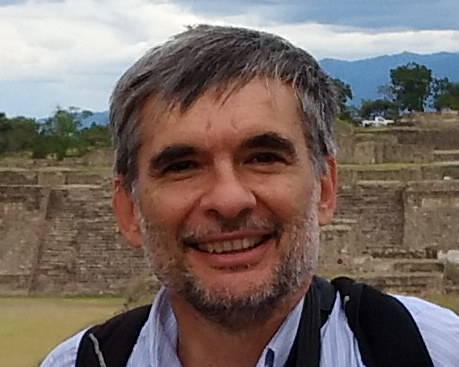
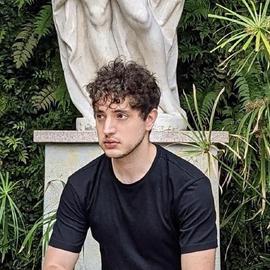
Maria Rita Casali is a Full Professor at the Department of Physical, Computer and Mathematical Sciences, University of Modena and Reggio Emilia. Her research focuses on geometry, topology, and mathematical structures, particularly in relation to PL-manifolds and colored tensor models. Teaching: Courses in Geometry, Discrete Mathematics, and Linear Algebra for Engineering and Strategic Sciences degrees. Research: Investigates combinatorial invariants (regular genus, G-degree, gem-complexity) for compact 4-manifolds, linking them to quantum gravity and tensor models. Publications: Recent works include studies on trisections of 4-manifolds, classifications via colored graphs, and combinatorial properties of the G-degree. Her contributions to crystallization theory and PL-manifold representation have advanced the understanding of geometric topology and its applications in theoretical physics.
Ursula Zich is an Associate Professor at the Polytechnic of Turin's Department of Architecture and Design (DAD), where she serves as a member of the Student Discipline Commission. Born in Turin on July 16, 1969, she holds a Doctor of Architecture degree with highest honors from the Polytechnic of Turin (1994) and a Doctor of Research in Surveying and Representation of Architecture and the Environment from the University of Genoa. Her research interests focus on critical reading of drawing, descriptive geometry, history of representation, and physical models. She leads the MAG.IA (Mathematics, Architecture, Geometry. Application Interconnections) research line and the POLIMADE project exploring scientific applications of origami. Her work spans multiple ERC sectors including application of mathematics in sciences, computational modeling in cultural spheres, cultural studies, history of art and architecture, and museum studies. Zich has published extensively on architectural representation, with recent publications examining tangible geometries for inclusive game design, architectural heritage accessibility, and interdisciplinary approaches to architectural representation. Her research demonstrates consistent integration of mathematical principles with architectural representation techniques. Effective member of Study Group on Environmental Color Design (ECD) of the International Color Association (AIC), United States (2021-) Effective member of Italian Design Union (UID), Italy (2001-) She has served on the Program Committee for multiple Italian Conferences on Origami, Educational Dynamics and Teaching since 2014. Zich also co-invented a patent for a foldable aluminum foil food tray, demonstrating practical applications of her origami research. At the Polytechnic of Turin, she teaches architectural drawing, surveying, and geometric modeling courses across multiple academic years, maintaining an active teaching schedule through the 2025/26 academic year.
Roberta Spallone is a Full Professor in the Department of Architecture and Design (DAD) at Politecnico di Torino, where she conducts research and teaches in architectural representation, digital modeling, and cultural heritage. Her work bridges historical architectural theory with cutting-edge digital technologies like AR, VR, and AI. Research Interests: Her research focuses on 3D and reconstructive modeling, augmented and virtual reality (AR/VR) for cultural heritage, descriptive geometry, history of architectural representation, and the study of architectural treatises—especially those on military engineering. She explores digital technologies for the survey, representation, and communication of cultural heritage, with a strong emphasis on geometric analysis and historical accuracy. The trends in her recent publications reflect a consistent focus on the digital interpretation of early modern military architecture, particularly through parametric modeling and geometric analysis of treatises by figures like Guarini. She applies AR and VR to enhance accessibility and storytelling in museum and urban heritage contexts, emphasizing inclusive and sustainable cultural tourism. Scientific Awards: Best paper award, Italian Union for Drawing - UID (2021) Best Paper, 40th International Conference of Teachers of Representation Disciplines UID (2018) Best paper, FORTMED Conference 2015 (Historical Research) UID Silver Plaque (1997) PhD 1st prize ex aequo, Italian Design Union (1997) Advising and Grants: She supervises PhD students including Enrico Pupi and Fabrizio Natta. She leads the national PRIN research project INFORTREAT and multiple applied research contracts involving AR/VR for heritage sites like Palazzo Carignano and Mirafiori Castle. She is the Scientific Responsible for collaborative agreements with Fondazione Torino Musei and the Regional Directorate of Museums in Piedmont. Labs, Teams, and Collaborations: She is a key member of the scientific committees of FORTMED, UID, and Nexus Architecture and Mathematics. She serves on editorial boards for journals such as Nexus Network Journal and Diseñar Con... , and has guest-edited special issues. She frequently collaborates with researchers across Europe on projects linking architecture, mathematics, and digital heritage.
Giovanna Massari is an Associate Professor at the Department of Civil, Environmental and Mechanical Engineering, University of Trento. She serves as Rector's Delegate for Open Science and President of the Open Science Commission. Specializes in architectural design, digital modeling, and BIM/HBIM technologies Teaches courses on Civil Design + CAD, Digital models for the project, and Architectural survey with Design Laboratory Expertise includes geometric modeling, photogrammetry, and spatial representation Her research focuses on integrating digital technologies with architectural surveying and civil engineering design. She emphasizes interdisciplinary approaches and digital interoperability in construction projects. Teaching activities include training students in visual analysis, 3D digital modeling, and technical communication standards for civil engineering applications.
Massimiliano Lo Turco is a Full Professor at the Department of Architecture and Design (DAD) of the Polytechnic University of Turin. Specializing in digital modeling and cultural heritage, he actively contributes to the fields of Building Information Modeling (BIM), Heritage BIM (HBIM), and 3D reconstruction. University: Polytechnic University of Turin Department: Department of Architecture and Design (DAD) Academic Rank: Professor Research interests include: 3D modeling, reconstructive modeling, augmented/virtual reality, descriptive geometry, architectural representation history, digital cultural heritage, and parametric design. His work often bridges computational tools with heritage conservation. Recent publications demonstrate expertise in: HBIM for Baroque facades, digital preservation of Balinese architecture, parametric design education, and AI-BIM integration. These works align with his broader focus on digital strategies for heritage and sustainable architecture. Scientific awards: Effective member of Italian Union for Drawing (2015-) Associate Editor of Dn - Building Information Modeling, Data & Semantics (2018-) Grants and collaborations: Scientific Director for PhD scholarships in architectural heritage, Contract Manager for agreements with ASL Vercelli, Principal Investigator for research with CNR, and leader of multiple commercial and non-commercial projects with institutions like Museo Egizio and LINKS Foundation.
Alberto Marcone is a Full Professor of Mathematical Logic at the University of Udine, where he serves as the Director of the Department of Mathematical, Computer and Physical Sciences (DMIF) since October 1, 2024. His academic home is within the Department of Mathematical, Computer and Physical Sciences at the University of Udine, located at Via delle Scienze, 208 -- Loc. Rizzi, 33100 Udine, Italy. Professor Marcone's research spans several interconnected areas within mathematical logic. His primary interests include reverse mathematics, descriptive set theory, well-quasi-order and better-quasi-order theory, and computable analysis with particular emphasis on the Weihrauch lattice. His work explores the logical strength of mathematical theorems, classification problems in continuum theory, and the computational content of mathematical principles. He has made significant contributions to understanding the relationships between different mathematical principles and their proof-theoretic strength. Analysis of his recent publications reveals a consistent focus on the intricate connections between order theory, reverse mathematics, and descriptive set theory. His work often examines the logical strength of combinatorial principles related to well-quasi-orders and better-quasi-orders, while increasingly exploring connections to computable analysis through the Weihrauch lattice framework. Recent publications demonstrate growing international collaboration, particularly with researchers across Europe, and an expanding application of logical methods to topological and metric space problems, including connections to knot theory and fractal geometry. Member of editorial board of the journal Computability Member of the board of the PhD program in Mathematics and Physics Organizer of Logic Colloquium 2018 (Udine) Organizer of Special Session on Computability Theory at AMS-UMI International Joint Meeting (Palermo, July 2024) Organizer of XXVIII Incontro di Logica AILA (Udine, September 2024) Professor Marcone teaches Mathematical Logic for both undergraduate and graduate mathematics programs at the University of Udine. His office is located on the 2nd floor, room A2 90, where he holds student reception hours either in person or via Microsoft Teams by appointment. As department director, he oversees the academic and administrative functions of the Department of Mathematical, Computer and Physical Sciences.
Chiara Epifanio is a researcher (INFO-01/A) at the University of Palermo , based in the Department of Mathematics and Computer Science . She holds regular office hours on Tuesdays 14:30–17:00 in Room 104, first floor, Via Archirafi 34, and can be reached at chiara.epifanio@unipa.it . Over the past fifteen years she has designed and taught a diverse portfolio of courses spanning Programming , Bioinformatics , Advanced Programming , Teaching Methodologies and Techniques for Computer Science and Pattern Discovery for Life Sciences . These offerings serve degree programmes in Mathematics, Computer Science, Statistics & Data Science, and the recently launched curricula in Data, Algorithms & Machine Intelligence and Computer Science & Artificial Intelligence . Her research lies at the intersection of combinatorics on words , string algorithms , and bioinformatics . She has made sustained contributions to the design of alignment-free distances for biological data, the theory of Sturmian words and their associated graphs, suffix automata tolerant to mismatches, and compact data structures such as linear-size suffix tries. The work repeatedly draws on deep results from formal language theory, automata theory, and discrete mathematics to solve practical problems in sequence analysis. Publications trend: From 2004 onward she has produced a steady stream of peer-reviewed articles that move from foundational combinatorial results on Sturmian words and critical factorization theorems toward application-driven studies on approximate string matching and genomic data mining. A marked acceleration is visible in the 2023 publications addressing k-Hamming and k-edit distances, reflecting current demands in large-scale biological data analytics. Scientific awards: None explicitly mentioned in the provided material. Advising & grants: No PhD or Master’s students are listed in the supplied pages, and no funded project descriptions are available. Laboratories & teams: While no specific lab is named, her teaching and research are embedded within the Department of Mathematics and Computer Science, which hosts groups in algorithms, discrete mathematics, and bioinformatics, and provides access to the university’s ATeN Center and other research infrastructures.
Riccardo Renzulli is a Researcher at the Department of Computer Science, University of Turin, focusing on object-centric representation learning, medical image analysis, and AI-based computer vision applications. His research emphasizes capsule networks, deep learning models for hierarchical relationships, and applications in healthcare and aerial/satellite imagery. Education: MSc and BSc in Computer Science from University of Turin (2018 and 2015). Previous research with Prof. Valentina Gliozzi explored description logics and non-monotonic reasoning. Professional experience includes a 2022 post at Aalto University (supervised by Prof. Ville Kyrki and Francesco Verdoja) and roles at Addfor and Machine Learning Reply as a deep learning scientist. Research interests span concept learning, few-shot learning, interpretability, and medical imaging. Notable work includes visual localization systems for UAVs, AI-assisted diagnosis for COVID-19 via CXR analysis, and lung nodule segmentation using DeepHealth Toolkit. He contributed to the UniToChest dataset for cancerous nodule detection. His recent publications (2022-2025) address efficient neural architectures, medical imaging applications, and 3D scene modeling. Collaborations include EIDOSLAB, with research emphasizing scalable compression, entropy-based pruning, and ensemble methods for neural networks.
Laura Maria Andrianopoli is an Associate Professor in the Department of Applied Science and Technology (DISAT) at the Polytechnic University of Turin. Her research focuses on theoretical physics, particularly in the areas of supersymmetry, supergravity, and dualities. Her scientific expertise spans theoretical physics of fundamental interactions, with specialization in mathematical methods and applications. She has established significant research collaborations with prestigious institutions including CERN, the Historical Museum of Physics and Enrico Fermi Study and Research Center, and universities across Europe. Professor Andrianopoli's research program centers on advanced theoretical physics concepts. She investigates the mathematical structures underlying fundamental physical theories, with particular focus on supersymmetry transformations, supergravity frameworks, and duality principles. Her work bridges abstract mathematical concepts with physical phenomena, particularly in black hole physics and string theory. The sophistication of her research is evident in her extensive use of Lie groups, Lie algebras, and complex geometric structures to model physical systems. Her publication record shows a sustained research trajectory from the mid-1990s through the 2000s, with continued academic activity through teaching and supervision. The publications reveal a progression from foundational work on N=2 supergravity to more specialized investigations of black hole physics in supergravity contexts and moduli space descriptions. Her research consistently addresses deep questions in theoretical physics, particularly concerning the mathematical structures that underpin our understanding of fundamental forces. Her scientific achievements have been recognized with several prestigious awards and fellowships: "Le Scienze" Award from the magazine "Le Scienze", Italy (2006) Fellow of the Historical Museum of Physics and Enrico Fermi Study and Research Center, Italy (2004-2007) New-Talent Grant Fellow at CERN (Geneva), Switzerland (2002-2004) Fellow of CERN TH-Division at Th-Division of KULeuven (Belgium) (1998-2000) Post-Doctoral position under the EU project: TMR ERBFMRXCT96-0045 "Angelo Della Riccia" Fellowship Professor Andrianopoli maintains an active role in academic mentoring and education. She currently supervises PhD student Stefano Maurelli in the Physics program (39th cycle, 2023-present). Her teaching portfolio is extensive, having served on Doctoral Colleges for Physics at the Polytechnic University of Turin from 2015/2016 through 2022/2023 (31st through 38th cycles). She teaches Elements of Field Theory and Classical and Quantum Field Theory for PhD students, and Physics II for undergraduate students in Biomedical Engineering across multiple academic years from 2020/2021 through 2025/2026. She is a key member of the Theory of Fundamental Interactions research group within the Condensed Matter Physics and Complex Systems Institute (DISAT). Additionally, she serves as Scientific Director of the Interuniversity Center for Algebra, Geometry and Theoretical Physics "Centro Regge" (2023-2027) and as Internal Reference Staff of the Interuniversity Center for Algebra, Geometry and Theoretical Physics "Arnold-Regge", demonstrating leadership in collaborative academic initiatives.
Francesco Tulone is a Researcher at the Department of Mathematics and Computer Science, University of Palermo. His primary academic role involves teaching and research in mathematical analysis and integration theory. University: University of Palermo Department: Department of Mathematics and Computer Science Academic Rank: Researcher Tulone's research focuses on real analysis, harmonic analysis, and integration theory, particularly involving Henstock-Kurzweil integrals, Fourier series, and generalized integrals. His work explores descriptive characterizations of integrals, derivative recovery, and convergence properties of trigonometric and Haar series. His publications span topics like the Hake theorem, variational measures, and applications of integration theory to harmonic analysis. No scientific awards or part-time status are explicitly mentioned. Contact: francesco.tulone@unipa.it
Alberto Cavicchioli is a Full Professor in the Department of Physical, Computer and Mathematical Sciences at the University of Modena and Reggio Emilia, specializing in Mathematics with a focus on Geometry (Scientific Disciplinary Sector MATH-02/B). He maintains an active teaching schedule, currently instructing "Geometry and Linear Algebra" for Strategic Sciences students, with office hours held on Tuesdays from 1:00-2:00pm and Wednesdays from 8:00-9:00am during the 2024/25 academic year. Professor Cavicchioli's research spans multiple areas of geometric topology, with particular expertise in 3-manifolds, knot theory, and combinatorial approaches to manifold theory. His work bridges abstract mathematical theory with concrete geometric constructions, focusing on topics such as Dehn surgery, character varieties, and the topological properties of manifolds constructed from polyhedral schemata. His research methodology often combines combinatorial group theory with geometric topology to derive new classification results and topological invariants. An analysis of his most recent publications reveals a consistent focus on the interplay between algebraic structures and geometric topology. His work on surgery theory, particularly regarding hyperbolic knots and 3-manifolds, has produced significant results in understanding exceptional surgeries and their topological consequences. His research on character varieties of knot groups using palindrome presentations represents a novel approach to classical problems in geometric topology. Additionally, his work on low-dimensional manifolds, including 4-complexes with fundamental class and combinatorial classifications of PL manifolds, demonstrates breadth across multiple dimensions of geometric topology. Professor Cavicchioli has maintained a prolific research output, with numerous publications spanning from the early 2000s to the present. His collaborations, particularly with Fulvia Spaggiari, Friedrich Hegenbarth, and Dušan Repovš, have produced significant contributions to the field of geometric topology. While specific grant information is not provided in the available materials, his extensive publication record suggests sustained research activity and scholarly engagement with the mathematical community.
Chiara Vernizzi is a Full Professor in the Department of Engineering and Architecture at the University of Parma, where she has held academic positions since 2002, progressing from Researcher to Associate Professor (2010) and Full Professor (2018). She is actively involved in teaching, research, and leadership, currently serving as Coordinator of the Architecture Unit (2021–2024) and Deputy President of the Master’s Degree Course in Sustainable Architecture and Cities. PhD in 'Design and Survey of the Building Heritage' (1999) Graduated in Architecture, Politecnico di Milano (1991, 100/100) Her research focuses on Architectural and Urban Design, Surveying, and Digital Representation, particularly in historical contexts. She investigates methods for representing cities, computer-aided rendering of historical architecture, and modern graphic representation of architectural projects. Her work integrates advanced technologies like 3D laser scanning and BIM for heritage documentation and urban analysis. Her recent publications reflect a strong trend in urban survey, digital modeling, heritage conservation, and post-disaster reconstruction. Themes include BIM applications (eBIM project), representation in urban planning, and interdisciplinary drawing methodologies. The research spans from Renaissance architecture to contemporary sustainable city design. Scientific Responsible, eBIM Project (POR_FESR Emilia Romagna, 2018) Member, Scientific Technical Committee of Italian Design Union (UID) Editorial Committee Member, 'design' magazine (UID) Rector’s Delegate for Orientation, University of Parma Member, PhD Teaching Staff in Civil Engineering and Architecture Prof. Vernizzi has supervised numerous PhD theses and participated in major research grants, including PRIN and international collaborations. She has led multiple third-mission projects with municipalities and cultural institutions, focusing on urban regeneration, post-earthquake reconstruction, and digital documentation of heritage sites. Her work bridges academia and public policy. She leads and participates in research teams and labs focused on architectural survey, digital representation, and sustainable urban development. These include collaborations with the Interdepartmental Center for Energy and the Environment (CIDEA), Superintendence for Architectural Heritage, and international partners such as the University of Ferrara and ERASMUS+ programs.
Marco Vitali is an Associate Professor at the Department of Architecture and Design (DAD) of the Polytechnic University of Turin , Italy. He holds the academic rank of Associate Professor (L. 240) and has been actively involved in research and teaching since at least the 2019/2020 academic year. Roles: Contract Professor at the Venaria Reale Foundation for Conservation and Restoration of Cultural Heritage Committees: Member of UID (Italian Design Union), Scientific Committee member for Nexus, REAACH-ID, FortMED, and CHG Polito Vitali's research focuses on architectural drawing , descriptive geometry , 3D and parametric modeling , and the analysis of vaulted systems for cultural heritage. His work integrates instrumental surveying , virtual anastylosis , and digital fabrication to enhance historical structures. His recent publications explore digital reconstruction of early modern military architecture, AR applications for heritage accessibility, and parametric modeling of fortification treatises. These works align with SDG 11 (Sustainable Cities) and SDG 4 (Quality Education) . Scientific Contributions Co-authored 15+ publications (2023-2025) on fortifications, digital surveys, and accessibility projects Editorial Director of Drawing and Vaulted Systems (2017-) Vitali teaches Architectural Drawing and Surveying Workshops and Design Representation courses, focusing on descriptive geometry and digital representation at both undergraduate and PhD levels. He leads the MOD Lab Arch (DAD) and participates in MOD Lab Design (DAD) initiatives.
Alberto Saracco is an Assistant Professor of Geometry at the Architecture Faculty of the University of Parma , where he has been since 2009. He completed his PhD in Mathematics at Scuola Normale Superiore, Pisa (2003-2005) under advisor G. Tomassini , who also supervised his earlier academic work. His research focuses on complex analysis, differential geometry, and hyperbolicity, with significant contributions to understanding irregular curves and analytic varieties. PhD in Mathematics, Scuola Normale Superiore, Pisa (2005) Laurea in Mathematics, Scuola Normale Superiore, Pisa (2003) Laurea in Mathematics, Pisa University (2002) Research Interests span complex dynamics , non-Euclidean geometry , and geometric analysis . His work on hyperbolicity in unbounded domains and Carleson measures has advanced understanding of complex analytic structures. Recent publications explore irregular curves , elastic energy , and graph theory , reflecting his interest in bridging abstract mathematics with educational applications. Publications over the past decade reveal a focus on geometric measure theory (2024), complex dynamical systems (2024), and non-smooth geometric analysis (2025). His 2023 work on Euler's graph theorem emphasizes pedagogical approaches, while his 2021-2022 articles on spherical curves and curvature analysis highlight technical depth. Teaching roles include instructing Geometry , Mathematical Analysis , and Advanced Geometry across multiple departments (Architecture, Engineering, Pharmacy). He has also served as Teaching Assistant for courses in Complex Geometry and Discrete Mathematics at various Italian universities. Labs and Teams : While not explicitly mentioned, his collaborations with institutions like Scuola Normale Superiore, Milan-Bicocca University, and Rome Tor Vergata University indicate ongoing engagement with international research networks in geometric and complex analysis.
Daniele Puglisi is an Associate Professor of Mathematical Analysis at the University of Catania’s Department of Mathematics and Computer Sciences. He has held academic positions including RtdB (2018-2021), RtdA (2014-2018), and Post Doctoral Fellow at several institutions. His affiliations span universities in Italy, USA, Spain, Germany, Czech Republic, and France. Education: Laurea in Mathematics (2002, University of Catania), Ph.D. in Mathematics (2008, University of Naples 'Federico II') Research Interests: His work spans foundational and applied areas in mathematics: Linear and nonlinear geometry of Banach spaces Descriptive set theory Harmonic analysis C*-algebras Optimization theory Partial differential equations Geometric measure theory He has been a keynote speaker and visiting researcher at institutions like Texas A&M University, Scuola Normale Superiore (Pisa), and University of Granada. Advising: Supervised theses in mathematics, including topics like proximal subspaces, free-Lipschitz spaces, and Dini’s theorem. Contact: Office 319, Viale Andrea Doria 6, Catania. Phone: ++39 095 7383073. Website: www.dmi.unict.it/dpuglisi/