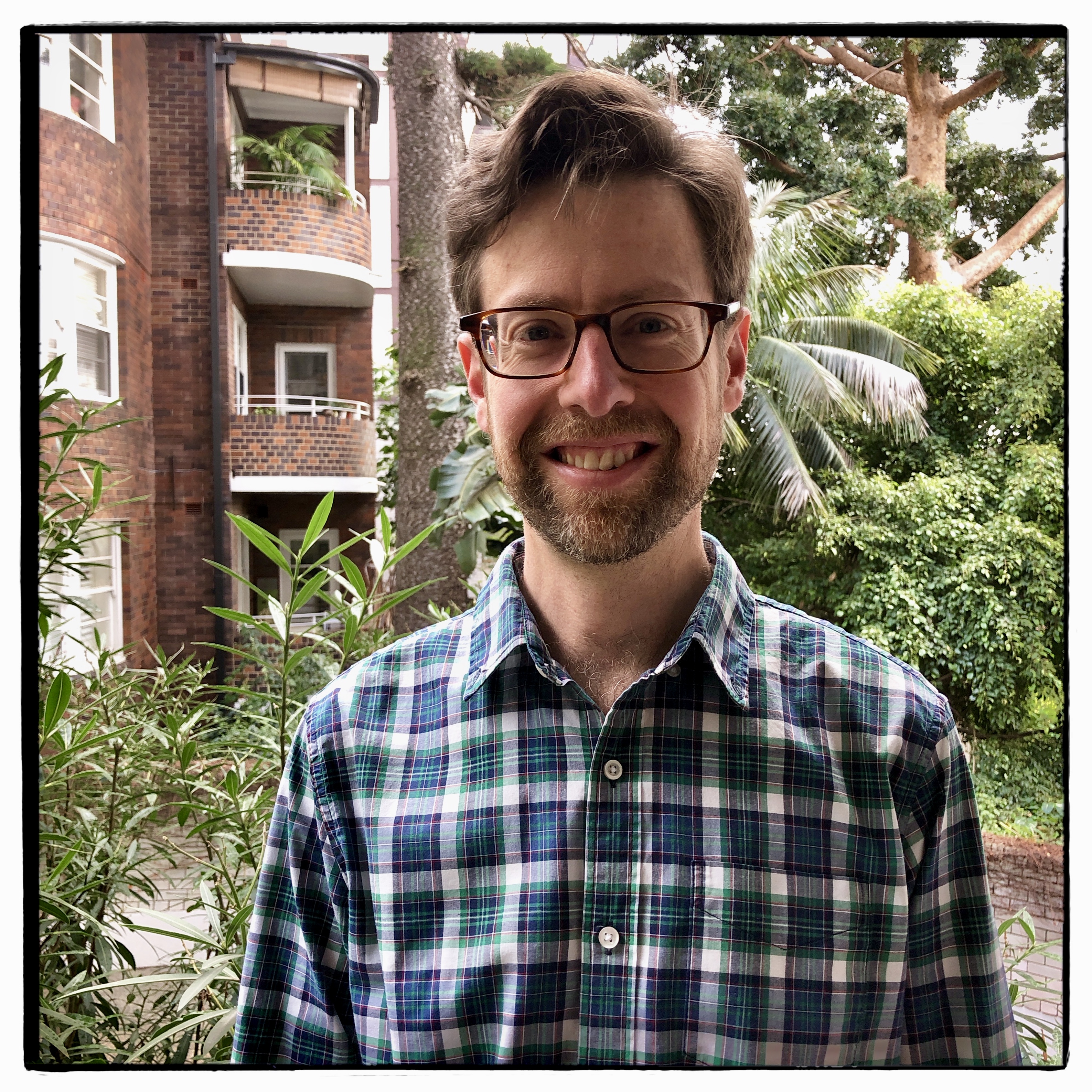
Ulrike Sattler is a Professor in the Department of Computer Science at the University of Manchester, where she also serves as Deputy Head of Department and Senior Mentor. Her academic journey includes a PhD from RWTH Aachen University (1998) and a Habilitation from the University of Manchester (2003). She has held roles such as Reader and Senior Lecturer at Manchester, and previously worked as a Senior Researcher at TU Dresden and RWTH Aachen. Her research focuses on logic-based knowledge representation, automated reasoning, and Description Logics, with contributions to OWL ontology languages and standardization. Notable awards include the Friedrich Wilhelm Preis (1999) for her PhD thesis. She has co-supervised over 20 PhD students, including prominent figures like Birte Glimm and Matthew Horridge. Her service contributions include co-chairing conferences (KR 2010, IJCAR 2012), editorial roles in journals like JAR and JAIR, and leadership in the W3C OWL Working Group. She teaches courses on ontology engineering and semantic web technologies, emphasizing practical applications in molecular biology and knowledge graphs.
Kai Salomaa is a Professor and Graduate Chair in the School of Computing at Queen’s University, Canada. He holds a Ph.D. from the University of Turku (1989). His research focuses on theoretical computer science, particularly automata theory, formal languages, and their applications. Key areas include descriptional complexity, cellular automata, and quantum computing innovations. Affiliations: Queen’s University, School of Computing. Education: Ph.D. in Computer Science from the University of Turku (1989). Research Interests: Prof. Salomaa explores foundational topics like automata state complexity, nondeterminism measures, and computational models. His work bridges classical theory with modern applications in quantum computing, vehicular networks, and algorithmic resource optimization. Notable contributions include studies on input-driven pushdown automata and the integration of quantum algorithms into practical systems. Publications: His recent work spans quantum-enhanced optimization (e.g., vehicle platooning), fair matching algorithms, and complexity analysis of automata. These studies emphasize innovative solutions for computational challenges in dynamic systems and distributed networks. Grants & Labs: Leads the Formal Languages and Automata Theory Research Group, actively organizing conferences like CIAA and DCFS. His work often addresses practical applications of theoretical computer science in areas like sensor networks and metaverse resource management.
Michael Zurel is a NSERC Postdoctoral Fellow in the Department of Mathematics at Simon Fraser University, working under Dr. Nadish de Silva, Canada Research Chair in the Mathematics of Quantum Computation. His research focuses on foundational aspects of quantum computation, quantum information, and nonclassical physics. Key interests include quantum contextuality, negativity in quasiprobability representations, and classical simulation algorithms for quantum systems. He holds a PhD, MSc, and BSc in Physics and Mathematics from the University of British Columbia (2024, 2020, 2019), all supervised by Dr. Robert Raussendorf. His doctoral work explored classical descriptions of quantum computations via hidden variable models and quasiprobability representations. His master’s thesis addressed hidden variable models and classical simulation algorithms for quantum computation with magic states on qubits. Research interests emphasize bridging quantum foundations with computational efficiency, particularly how nonclassical features like contextuality enable quantum advantage. Collaborators include prominent figures such as Robert Raussendorf, Juani Bermejo-Vega, and Cihan Okay. His scientific achievements include the NSERC Postdoctoral Fellowship. Advising and grants are not explicitly detailed, but his work is supported by foundational research grants. He collaborates actively within quantum information theory and computational physics communities.
Matti Miestamo is a Professor of General Linguistics at the University of Helsinki, affiliated with the Department of General Linguistics within the Faculty of Arts. He previously held a professorship at Stockholm University (2011–2018) and has held research positions at institutions including the Helsinki Collegium for Advanced Studies (2006–2011) and the University of Antwerp (2005–2006). His expertise spans language typology, documentation, and theoretical linguistics with a focus on negation, interrogatives, and language complexity. He has supervised 4 completed, 2 submitted, and 8 ongoing PhD students at the University of Helsinki. Education: PhD in General Linguistics from the University of Helsinki (2003). Awards include membership in the Academia Europaea (2019), Finnish Academy of Sciences and Letters (2019), and Societas Scientiarum Fennica (2017). Notable honors include the Joseph Greenberg Award (2005) and Burgen Scholar Award (2004). Research Interests: Language typology and documentation Negation structures across languages Uralic languages, particularly Skolt Saami Grammatical complexity theories Methodological approaches to linguistic sampling Professional Roles: Editor of the Nordic Journal of Linguistics (2012–present) Director of the Finnish doctoral training network Langnet (2016–2019) Vice Dean for Academic Affairs, Faculty of Arts, University of Helsinki (2017) Teaching and Outreach: Extensive teaching experience in linguistics at multiple institutions, including summer schools in Tartu and Saari Manor. Active in academic assessment roles, including professorship and docent evaluations in universities across Europe.
Professor Arunabha Sen is a faculty member at Arizona State University (ASU), affiliated with the School of Computing and Augmented Intelligence and the College of Health Solutions as a Health Solutions Ambassador. He joined ASU in 1987 and holds a Ph.D. in Computer Science from the University of South Carolina (1987). His research focuses on resource optimization in telecommunication networks, VLSI circuits, hardware-software co-design, and network security. Key areas include algorithm design, combinatorial optimization, and network processor systems. His work spans wireless, optical, and sensor networks, with contributions to video transmission over mobile ad-hoc networks and interference-aware channel assignment. Notable projects include robust network design against WMD attacks and tools for resilient communication networks. He has served on multiple technical committees for conferences like IEEE and IFIP, and contributed to academic initiatives such as capstone courses on network processors. Grants include NSF, DOD-DTRA, and Motorola Labs funding, emphasizing interdisciplinary research in network science and communications. Teaching responsibilities include courses on algorithms, game theory, and network design. His service roles include Associate Editor for IEEE Transactions on Mobile Computing and leadership in graduate program committees. Research outputs include over 30 peer-reviewed publications, with recent work in algorithmic network design and social computing data mining.
Juan P. Aguilera is a researcher at the Institute of Discrete Mathematics and Geometry at TU Wien, Austria. His research focuses on mathematical logic, particularly in proof theory, set theory, reverse mathematics, and infinitary logics. He actively participates in academic events, including organizing workshops and giving invited talks globally. His research interests span foundational questions in logic, including Gödel logics, determinacy axioms, and structural reflection principles. He contributes to interdisciplinary areas such as the model theory of non-classical logics and applications of infinitary proof systems. Aguilera has been involved in major logic events like the Logic Colloquium 2025 (TU Wien) and co-organized the Philosophical Transactions of the Royal Society special issue on proof theory (2023). He has given talks at institutions like Ghent University, the University of Hamburg, and ITAM (Mexico City). No scientific awards are explicitly listed, but his prolific engagement in academic conferences and editorial work highlights his contributions to the field. He has secured grants and leads collaborative projects, though specific grant details are not provided. He is affiliated with TU Wien's discrete mathematics group and collaborates internationally on logic and set theory research.
Andrea Tosin is a Full Professor of Mathematical Physics at the Department of Mathematical Sciences "G. L. Lagrange" (DISMA), Politecnico di Torino. He serves as Coordinator of the Doctoral College of Mathematical Sciences and Deputy Coordinator of the Doctoral College of Pure and Applied Mathematics. His research bridges kinetic theory, transport equations, and applied mathematics with applications in multi-agent systems, traffic, social dynamics, and epidemiology. His research interests focus on: Kinetic theory and its applications to real-world systems Transport and diffusion equations in complex environments Modeling of vehicular traffic, crowd dynamics, and social behavior Epidemiological modeling with a focus on viral load and multi-scale dynamics Mathematical modeling of collective behavior in biological and social systems His recent publications demonstrate a consistent trend in developing and analyzing kinetic models for traffic flow, opinion dynamics, and epidemic spread, often incorporating uncertainty, network structures, and multi-population interactions. These works frequently involve rigorous mathematical derivations from microscopic models to macroscopic equations, with applications in safety, public health, and urban planning. His scientific awards include: SIMAI Biennial Award (2013) INDAM-SIMAI Award (2010) He actively supervises PhD students and postdoctoral researchers, including Martina Fraia, Emanuele Bernardi, Elisa Paparelli, and Mattia Sensi. He has secured significant research grants from national (PRIN, INdAM) and institutional (Politecnico di Torino, Google) sources. His research is supported by projects such as IMASED (Integrated Mathematical Approaches to Socio-Epidemiological Dynamics) and ANATOMY (A Unitary Mathematical Framework for Modelling Muscular Dystrophies). He also leads the "Modelli e Metodi della Fisica Matematica" research group at DISMA.
Jonathan A. Kelner is a Professor of Applied Mathematics at the Massachusetts Institute of Technology (MIT) and a member of the Computer Science and Artificial Intelligence Laboratory (CSAIL) . His research bridges pure mathematics and algorithms, focusing on spectral graph theory, combinatorial optimization, and distributed computing.
Alfredo Vizzini is an Associate Professor at the University of Turin , affiliated with the Department of Life Sciences and Systems Biology . His work spans systematic botany, fungal taxonomy, and molecular phylogenetics, with a focus on Agaricales and Boletaceae families. He teaches courses such as Systematic Botany and Mycology , contributing to both academic and applied research. Research Interests : Vizzini specializes in fungal biodiversity, particularly ectomycorrhizal and saprotrophic species. His studies integrate morphological and molecular data (e.g., ITS-LSU sequences) to resolve phylogenetic relationships and describe novel taxa. Key areas include Basidiomycota systematics, adaptation to extreme environments, and invasive fungal species' impact on native ecosystems. Article Trends : His publications (2008–2017) emphasize fungal taxonomy, phylogenetics, and ecological interactions. Notable themes include the discovery of Alpova komoviana , revisions in Leucopaxillus , and investigations into mycobiomes using 454 pyrosequencing. Collaborative projects like DEFINE and CAVELAB highlight his interdisciplinary approach. Labs and Teams : Vizzini collaborates on projects such as DEFINE (exotic pathogens), CAVELAB (cave ecosystems), and DISCOVERING MARINE MYCOBIOTA (marine fungi), working with international teams in Europe and beyond. His lab focuses on fungal interactions in forests, seagrass, and extreme environments.
Katherine Newhall is a Professor in the Department of Mathematics at the University of North Carolina at Chapel Hill, where she maintains an active research program in stochastic modeling and dynamical systems. Her office is located in Phillips Hall 308, and she can be reached at knewhall@unc.edu. She serves as a member at large of the GSNP (Group on Statistical and Nonlinear Physics) board, a position she assumed in April 2024. Dr. Newhall earned her educational credentials from Rensselaer Polytechnic Institute, including a B.S. in Applied Physics and Applied Mathematics (2004), an M.S. in Mechanical Engineering (2006) with thesis entitled 'Turbulent Boundary Layers: A look at Skin Friction, Pressure Gradient and Surface Roughness,' and a Ph.D. in Mathematics (2011) with dissertation 'Synchrony in Stochastically-Driven Neuronal Network Models.' Following her doctoral work, she completed postdoctoral research at New York University's Courant Institute of Mathematical Sciences from 2011 to 2014. Her research focuses on developing new tools for analyzing large and infinite dimensional stochastic systems to understand large-scale and long-time dynamics of physical and biological systems. Rather than relying on traditional Fokker-Planck formulations that become intractable with increasing complexity, her work builds on concepts of statistical mechanics to create macroscopic descriptions from individual unit statistics. This approach extends the usefulness of energy landscapes even in non-gradient systems, enabling explanations of experimentally observable phenomena while exposing fundamental mechanisms responsible for system behavior. Her work spans applications from granular materials and chromosome dynamics to biological systems and metamaterials. Dr. Newhall's publications demonstrate consistent advancement in stochastic modeling techniques, with recent work (2023-2025) focusing on hyperuniformity in biological structures, energy landscape sampling methods, and the role of weak transient interactions in biological systems. Her research shows a clear trajectory from fundamental mathematical developments toward increasingly sophisticated biological applications. Outstanding Referee of the Physical Review journals (2019) NSF grant DMS-1816394 DMREF grant ($2M NSF Grant to Revolutionize Materials, 2023) Member at large of the GSNP board (2024) Dr. Newhall has successfully mentored numerous PhD students to completion, including Anna Coletti (2024), Daftari (2023), Moakler (2021), Ben Walker (2021), and Yuan Gao (2019). Her research is consistently supported by competitive grants, most notably the $2M NSF DMREF grant awarded in 2023. She maintains active collaborations across disciplines, particularly in applying mathematical techniques to biological problems such as chromatin organization and organ transplantation risk assessment. Her laboratory work focuses on developing computational methods for analyzing complex stochastic systems, with particular emphasis on the hydra string method for exploring high-dimensional potential energy surfaces. The research group maintains strong connections with both theoretical and experimental collaborators working on granular materials, chromosome dynamics, and biological systems.
Associate Professor John Attridge is an academic at the School of the Arts and Media , University of New South Wales , specializing in modernist literature. His research explores modernist conceptions of authorship, literature-specialization relationships, technological media, and the cultural history of trust. He has co-edited two collections: Modernist Work: Labor, Aesthetics, and the Work of Art (2019) and Incredible Modernism: Literature, Trust, and Deception (2013). His work appears in journals like ELH , Modernism/modernity , and NOVEL . Research Interests : Attridge investigates intersections between modernist aesthetics and professional specialization, focusing on authorship frameworks, media evolution, and trust as a cultural construct. His scholarship bridges literary theory with interdisciplinary inquiries into institutional knowledge and artistic labor. Awards : Dean's Award for Teaching Excellence (2019) ANU Humanities Research Centre Fellow (2016) Bruce Harkness Young Conrad Scholar Award (2010) Harry Ransom Center Fellow (2009-10) Australian Postgraduate Award Supervision : He mentors Honours and PhD candidates in modernist and contemporary literature, with past students examining topics like architectural subjectivity in modernist fiction, Derrida/Deleuze textual theories, and rhythmic aesthetics in Woolf, Mansfield, and Lawrence.
Riccardo Rosati is a Full Professor at the Department of Computer, Control, and Management Engineering, Sapienza University of Rome, affiliated with the Faculty of Information Engineering, Computer Science and Statistics. He obtained his PhD in Computer Science from Sapienza University of Rome in 1997. His research focuses on Knowledge Representation, Description Logics, Semantic Web, Ontologies, Information Integration, Databases, and Artificial Intelligence. Specifically, he has made significant contributions to the integration of description logics and logic programming, and is one of the creators of the DL-Lite family of description logics, which became a standard in the Semantic Web (OWL 2 QL). His recent publications center around controlled query evaluation, ontology-based data access, and applying knowledge representation in healthcare informatics. The trend shows strong emphasis on both theoretical foundations and practical applications. Scientific awards and recognitions include: Distinguished Paper Award at IJCAI 2024 AAAI 2021 Classic Paper Award He has advised numerous students and been involved in research projects including OPTIQUE (Scalable End-user Access to Big Data), ACSI (Artifact-Centric Service Interoperation), TONES (Thinking Ontologies), INFOMIX (boosting information integration), QuOnto (Querying Ontologies), and HYPER (How Your Peers Exchange Resources). He leads the Artificial Intelligence and Knowledge Representation research group and collaborates with the Data Management and Service-Oriented Computing group at DIAG.
Dr. Hannah Williams serves as an Associate Professor (Research) in the Department of Physics at Durham University, holding a prestigious UKRI Future Leaders Fellowship. Her research-intensive role focuses on advancing fundamental understanding in quantum systems through interdisciplinary methodologies. Her primary research interests span quantum many-body physics, quantum information theory, and computational approaches to quantum complexity. She specializes in wave-function network descriptions, Kolmogorov complexity metrics, and quantum simulation techniques, bridging theoretical physics with computer science to address challenges in characterizing complex quantum states. Dr. Williams' recent work demonstrates strong trends in applying machine learning-inspired network structures to quantum systems, with emphasis on emergent phenomena and topological phases. Her 2024 Physical Review X publication exemplifies this interdisciplinary approach, merging quantum physics with information theory and computational modeling. She has received significant recognition through: UKRI Future Leaders Fellowship Dr. Williams actively mentors early-career researchers, currently supervising postdoctoral associates Adarsh Raghuram, Bethan Humphreys, and Saif Salim in quantum physics research, fostering expertise in quantum simulation and complexity analysis.
Mansur R. Kabuka is a Professor in the Department of Electrical and Computer Engineering at the University of Miami College of Engineering . His research bridges computational methods with biomedical applications. University of Miami College of Engineering Electrical and Computer Engineering Department Research focuses on: Deep learning for network analysis Bioinformatics and protein classification Ontology-based data integration Biomedical data modeling His recent work involves: Motif-aware representation learning in multilayer networks Multi-modal approaches for protein interaction networks Metabolomics data integration frameworks Weather-traffic flow prediction models Distributed query processing over ontologies Publications demonstrate cross-disciplinary applications of machine learning in: Biological system modeling Cancer subtype prediction Protein family classification Intelligent transportation systems