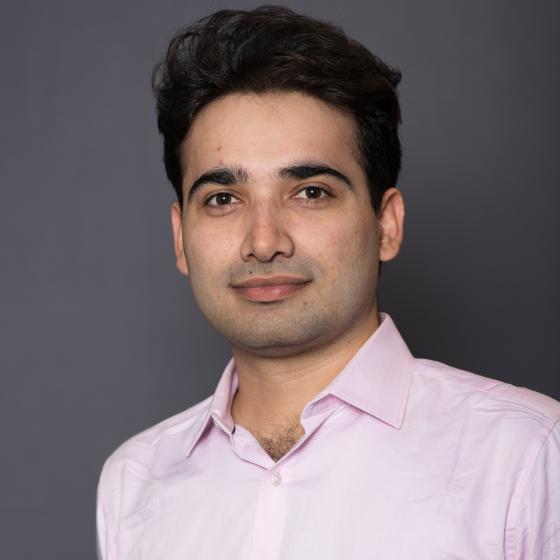
Raaz Dwivedi is Assistant Professor in Operations Research and Information Engineering at Cornell University and Cornell Tech. His research develops statistical and computational methods for personalized decision-making, focusing on causal inference, reinforcement learning, and distribution compression. Recent publications advance kernel thinning techniques, counterfactual inference methods, and adaptive nearest-neighbor algorithms with applications in healthcare and recommendation systems. Research appears in top venues with 15+ publications since 2022. Awards and honors: Blackwell-Rosenbluth Award (2024) ASA Best Student Paper Award (2022) MIT LIDS Best Presentation Award Harvard Teaching Excellence Award FODSI Postdoctoral Fellowship Holds PhD in EECS from UC Berkeley and BTech from IIT Bombay.
Dr. Jun Le Goh is an Assistant Professor in the Department of Mathematics at the National University of Singapore (NUS). His research focuses on mathematical logic, set theory, computational complexity, computability theory, and combinatorics. He holds a Bachelor of Science (Honors, Class 1) from NUS (2013) and a Ph.D. in Mathematics from Cornell University (2019). His work bridges foundational areas of mathematics with computability theory, particularly in reverse mathematics and Weihrauch reducibility. Notable contributions include analyzing the complexity of Halin's infinite ray theorems, studying descending sequences in ill-founded linear orders, and exploring enumeration oracles in PA relativization. His research often intersects with proof theory, recursion theory, and algorithmic information theory. Dr. Goh collaborates with institutions globally, publishing in journals like the Journal of Mathematical Logic, Annals of Pure and Applied Logic, and Computability. His preprints and conference proceedings further highlight his engagement with cutting-edge topics in computability and logic.
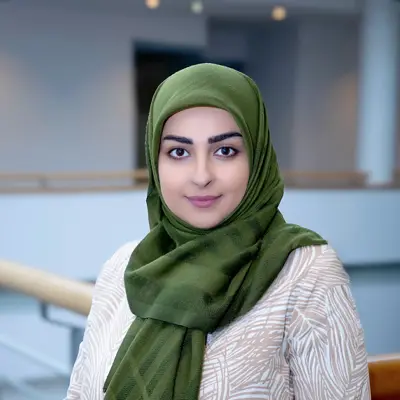
Dr. Aghdas Badiee serves as a Post-Doctoral Research Associate at Heriot-Watt University's Edinburgh Business School, affiliated with both the Centre for Logistics and Sustainability and the Centre of Sustainable Road Freight. Her academic foundation spans Industrial Engineering with specialized expertise in data-driven decision systems and logistics optimization. Educational Background: B.Sc. in Industrial Engineering - System Planning and Analysis (Grade: 18.07/20), Iran University of Science and Technology M.Sc. in Socio-economic System Engineering - Location-Allocation Optimization (Grade: 19.30/20), Iran University of Science and Technology Ph.D. in Socio-economic System Engineering - Supply Chain Modeling and Sustainable Logistics (Grade: 19.35/20), Iran University of Science and Technology Her research integrates Sustainable Supply Chain Management , Resilient Cold Chain Logistics , and Operations Research methodologies to address complex transportation challenges. Current projects include the Africa Centre of Excellence for Sustainable Cooling and Cold Chain Systems (ACES) and Zero-Emission Cold-Chain initiatives, focusing on food security through sustainable logistics solutions. Her methodological approach combines descriptive, predictive, and prescriptive analytics using simulation, optimization, and data science techniques. Publication trends reveal consistent contributions to high-impact journals like Annals of Operations Research and IEEE Transactions on Fuzzy Systems , with growing emphasis on sustainable cold chain systems (2023-2025). Her work bridges theoretical operations research with practical applications in agri-food distribution, humanitarian logistics, and transportation procurement. Scientific Recognition: Ranked 1st in all academic degrees (B.Sc. 2010, M.Sc. 2012, Ph.D. 2019) Global Talent designation by UKRI (2022) Distinguished PhD Dissertation Award (2019) Reviewer for Annals of Operations Research Journal (2021-present) Member of WORMS (Women in OR/MS) since 2022 Her professional trajectory demonstrates continuous engagement across academia and industry, having served as Lecturer at University of Tehran and Senior Business Analyst at National Iranian Oil Products Distribution Company. Current activities include developing the MILES simulation platform for cold chain optimization and contributing to UN Sustainable Development Goals through sustainable logistics research. She actively participates in professional networks including Production and Operations Management Society while mentoring students in operations research methodologies.
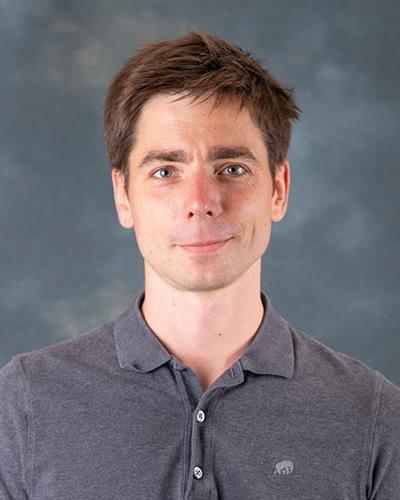
Gabriel Dallago serves as Assistant Professor in the Department of Animal Science within the Faculty of Agricultural and Food Sciences at the University of Manitoba. His research integrates advanced data analytics with livestock production systems to enhance animal welfare and farm decision-making processes. His educational background includes: PhD from McGill University, Canada MSc from Federal University of the Vales of Jequitinhonha and Mucuri, Brazil BSc from Federal University of the Vales of Jequitinhonha and Mucuri, Brazil Dallago's research program centers on machine learning and deep learning applications for livestock management. Key initiatives include developing predictive models for animal bio-responses, integrating multimodal data streams to analyze complex farm systems, and optimizing dairy cow longevity through data-driven interventions. His work bridges computational science with practical agricultural challenges, focusing on tangible improvements in production efficiency and animal well-being. Precision monitoring of dairy cow behavior and welfare Early-life management impacts on herd productivity Computer vision applications for livestock assessment Economic modeling of livestock production systems Analysis of his 15 most recent publications (2022-2025) reveals strong thematic concentration in dairy science (47%), swine production (20%), and animal nutrition (20%), with consistent application of computational methods. Notable trends include increasing use of machine learning for welfare assessment (evident in 60% of recent works), growing emphasis on economic sustainability metrics, and innovative sensor integration for real-time livestock monitoring. Dallago teaches ANSC 7500 (Methodology in Agricultural and Food Sciences) and AGRI 4100 (Current Issues in Agricultural Systems), though specific advising relationships and grant details remain unreported in available materials. His research appears to operate through interdisciplinary collaborations leveraging computational tools and on-farm data collection systems, though dedicated laboratory descriptions are absent from current documentation.
Alexandra Y. Aikhenvald is a Professor affiliated with James Cook University, recognized as a leading scholar in linguistic typology, Amazonian languages, and language contact. Her research focuses on grammatical structures, evidentiality, and endangered language documentation. She has authored over 160 publications, including seminal works like The Oxford Handbook of Evidentiality and The Cambridge Handbook of Linguistic Typology . Her work spans multiple languages, including Tariana (Amazonia), Manambu (Papua New Guinea), and Paumarí. She explores topics such as noun categorization, serial verbs, and multilingualism. Aikhenvald has edited volumes on grammaticalization, gender systems, and clause linking semantics. Her contributions bridge fieldwork, theoretical linguistics, and sociolinguistics, emphasizing cross-linguistic comparison. Key themes include language obsolescence in Papua New Guinea, areal diffusion in Amazonia, and the typology of evidentiality and possession. Her research highlights endangered language documentation and the sociocultural dimensions of linguistic diversity.
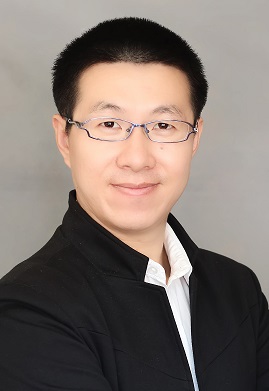
Dr. Zhen Li is an Assistant Professor in the Department of Mechanical Engineering at Clemson University's College of Engineering, Computing and Applied Sciences. He joined Clemson in August 2019 after serving as a research associate professor at Brown University and a postdoctoral research associate at University of California, Merced. Education: Ph.D. in Fluid Mechanics, Shanghai University, 2012 MS in Fluid Mechanics, Shanghai University, 2008 BS in Engineering Mechanics, Wuhan University, 2005 Dr. Li's research focuses on multiscale modeling of soft matter, complex fluids, biophysics, and collective dynamics using both bottom-up (coarse-grained molecular modeling) and top-down (from continuum descriptions to fluctuating hydrodynamics) approaches, along with high-performance computing. His work spans mathematical theory for coarse-graining and model reduction, statistical methods and machine-learning approaches applied to multiscale modeling, memory effects in complex fluids, and concurrent coupling of heterogeneous solvers for scale-bridging. Analysis of Dr. Li's recent publications reveals a strong trend toward integrating machine learning with traditional computational methods, particularly neural operators for multiscale problems. His work spans diverse applications from bubble dynamics and blood flow to materials science and bioprinting, demonstrating the versatility of his computational approaches across multiple disciplines in engineering and physics. Awards and Recognition: CECAS Dean's Professor Award (2024) Award of Excellence - Junior Faculty (2021-2022) Best Research Poster Award at SC19 (2019) 2nd Place Award of Best Poster Presentation at DOE/EFRC AIM for Composites meeting (2024) Dr. Li actively mentors PhD students including Miles Lu, Ryan Wan, Haizhou Wen, and Ali Mohammadi, who have published significant research in computational mechanics. His research is supported by multiple grants including an NSF Elements grant as PI for 'SciMem: Enabling High Performance Multi-Scale Simulation on Big Memory Platforms', an NSF CDS&E grant as co-PI for 'HAM3R: Heterogeneous Automated Management of Multiscale Methods and Resources', a DOE/EFRC grant as Thrust lead co-PI for 'AIM for Composites', and a NASA EPSCoR grant as Science-PI. Dr. Li leads the MuthComp (Multiscale theory and Computation) research group, which focuses on developing interfaces between Engineering, Applied Mathematics, Physics-based Machine Learning, and High Performance Scientific Computing. The group has active collaborations with institutions including Idaho National Laboratory, University of Tokyo, and Brown University, and has developed open-source software including USERMESO for GPU-accelerated DPD simulations.
Vladimir Podolskii serves as an Associate Professor in the Department of Computer Science at Tufts University's School of Engineering and holds a concurrent appointment in the Department of Mathematics within the School of Arts and Sciences. His academic work bridges theoretical computer science and mathematical foundations, with a focus on computational boundaries and algebraic structures. He completed his doctoral studies at Lomonosov Moscow State University in Moscow, Russia, receiving his PhD in 2009. Podolskii's research program centers on computational complexity theory, examining the inherent difficulty of computational problems through decision trees and threshold functions. His investigations extend to the logical underpinnings of computation and the application of tropical geometry in optimization contexts. This interdisciplinary approach connects discrete mathematics with theoretical computer science frameworks. His 2022 publications reveal concentrated exploration of decision tree efficiency for threshold functions and classification systems for ontology-mediated queries, demonstrating methodological rigor in analyzing computational limits and knowledge representation structures. Podolskii actively mentors graduate researchers through Dissertation Research courses while teaching core curriculum including Algorithms and specialized seminars on computational complexity toolkits, shaping the next generation of theoretical computer scientists.
Dr. Manlio Valenti is a Lecturer in Computer Science at Swansea University specializing in theoretical computer science. His research focuses on computability theory, computable analysis, and Weihrauch reducibility within the School of Mathematics and Computer Science. His work explores foundational aspects of computation, particularly the mathematical structures underlying computable functions and reducibility relations. Research examines the Weihrauch lattice, computational aspects of mathematical theorems, and categorical approaches to reducibility. Dr. Valenti's publications demonstrate consistent focus on the Weihrauch lattice and computable analysis, with recent work investigating lattice structures, jump operators, and connections to reverse mathematics. Publications appear in theoretical computer science and mathematical logic venues.
Ahmed AbuRa'ed is a Researcher at the Department of Information and Communication Technologies (DTIC) at Universitat Pompeu Fabra (UPF), Barcelona. He is affiliated with the TALN research group and the Large-Scale Text Understanding Systems Lab. His work focuses on advancing knowledge in scientific text summarization, information extraction, and machine learning. Education: PhD in Computer Science (2020), UPF, Barcelona, Spain M.Sc. in Computer Science (2015), University of Trento, Italy B.Sc. in Computer Information Systems (2007), An-Najah University, Nablus, Palestine Research Interests: Natural Language Processing (NLP), Machine Learning/Deep Learning, Semantic Web, Information Extraction, Data Mining, and Scientific Document Summarization. His projects include developing systems for automatic generation of state-of-the-art reports, scientific text summarization, and cross-document relation discovery. Publications Focus: His 15 most recent articles (2016–2021) emphasize advancements in scientific literature analysis, including citation detection, text simplification, and cross-document summarization. Notable works involve systems like LaSTUS/TALN for scientific text processing and OlloBot for Arabic health dialogue agents. Labs & Teams: Active member of the TALN research group and the Large-Scale Text Understanding Systems Lab at UPF's DTIC department. Open to collaborations in NLP, Machine Learning, and related fields via email or Skype.
David M. Geiser is a Professor in the Department of Plant Pathology and Environmental Microbiology at Pennsylvania State University, where he conducts research in molecular evolutionary genetics and systematics of fungi. His work focuses on the phylogenetics and taxonomy of Fusarium and related plant pathogens, with implications for agriculture and food safety. His research interests include molecular phylogenetics, species complex delineation, DNA sequencing, fungal genomics, and mycotoxin production. He is a leading expert in the taxonomy and identification of Fusarium , contributing to major resources such as FUSARIUM-ID. His work integrates genomic, phylogenetic, and morphological data to resolve fungal species boundaries and improve diagnostic accuracy. The recent publications show a strong trend in phylogenomics, fungal taxonomy, and molecular diagnostics, particularly within the Fusarium genus. His research spans species discovery, misidentification issues in culture collections, trichothecene potential, and the development of genomic tools for pathogen identification. These works reflect a deep engagement with both fundamental fungal systematics and applied plant pathology. Elected to leadership in the Mycological Society of America Dr. Geiser has supervised and collaborated with numerous researchers, including PhD students and postdoctoral scholars, though formal advisees are not explicitly listed. He has been involved in multiple collaborative grants focused on fungal genomics, taxonomy, and plant disease diagnostics. His laboratory is part of a broad network of fungal researchers and contributes to international efforts in fungal nomenclature and classification. His lab is involved in high-impact collaborative research, particularly in the areas of fungal phylogenomics and diagnostic tool development. He is part of a global consortium working on fungal taxonomy and sequence-based nomenclature, contributing to standards that shape modern mycology.
Marianna Nicolosi Asmundo is an Associate Professor of Mathematical Logic (MAT/01) at the Department of Mathematics and Computer Science (DMI) of the University of Catania. She earned her PhD from the same university in 2003 and serves as a proposing member of CINUM - Interdepartmental Center for Humanistic Computing. Teaches undergraduate and graduate programs in Mathematics Master's Degree Programs in Computer Science Textual Sciences for Digital Professions (Department of Humanities) Her research spans automatic deduction, tableaux-based deductive systems, decision procedures in elementary set theory and non-classical logic, interactive theorem proving, knowledge bases, ontologies, and reasoning services for the semantic web. Recent publications emphasize ontology interoperability, blockchain-based knowledge representation, and set-theoretic reasoning frameworks. She contributes to ontologies for cultural heritage (Saint Gall monastery modeling, archaeological Sicilian landscapes) and blockchain applications. Collaborates extensively with researchers like D. Cantone and D.F. Santamaria on description logic systems. Active member of CINUM - Interdepartmental Center for Humanistic Computing Supervises thesis projects on semantic web and blockchain ontologies
Sue-Ann Harding is a Professor at the School of Arts, English and Languages at Queen's University Belfast. Her research spans interdisciplinary translation studies, social narrative theory, traveling theory, complexity theory, and Russian area studies. She actively supervises postgraduate students and has published extensively on topics including Qatar’s cultural history, audio description technologies, and translation ethics. Translation Studies Social Narrative Theory Traveling Theory Complexity Theory Qatar Cultural History Digital Accessibility in Museums Harding has authored the book An Archival Journey through the Qatar Peninsula and contributed to journals like Translation Spaces and Development in Practice . Her work often bridges literary translation, media ethics, and public history. AHRC/BBC Radio 3 New Generation Thinker (2012) Memoirs of Anna Ey Manuscript Prize (2023) She engages in public-facing scholarship through media contributions, including discussions on environmental activism narratives and film analysis. Harding also serves as a peer reviewer for journals and conferences, and participates in international academic collaborations.
Eric Balkanski serves as Assistant Professor of Industrial Engineering and Operations Research at Columbia Engineering, Columbia University, and is an Affiliated Member of the Foundations of Data Science Institute. His academic home integrates theoretical computer science with operations research methodologies. Balkanski earned his PhD in Computer Science from Harvard University, establishing foundational expertise in algorithmic theory before joining Columbia's faculty. His research pioneers algorithms with predictions —a transformative paradigm blending machine learning insights with classical optimization. Key thrusts include exponentially faster submodular optimization for data summarization and recommendation systems, strategyproof mechanism design incorporating predictive advice, and fairness-aware online algorithms . This work bridges theoretical guarantees with real-world applications in network analysis and decision-making under uncertainty, often yielding breakthroughs in computational efficiency. Recent publications (2022-2025) reveal a dominant trend toward prediction-augmented frameworks across scheduling, correlation clustering, and facility location. His submodular optimization advances enable orders-of-magnitude speedups, while fairness-oriented work introduces novel cost-free fairness models for online settings. The consistent focus on theoretical foundations of learning-augmented algorithms positions him at the forefront of this emerging field. His accolades demonstrate exceptional scholarly impact: ACM SIGecom Doctoral Dissertation Honorable Mention Award Google PhD Fellowship Smith Family Graduate Science and Engineering Fellowship Best Paper Award at CIAA 2013 Andrew Carnegie Society Scholar Balkanski co-founded Robust Intelligence (an AI security startup), translating theoretical work into practical cybersecurity applications. His NSF-funded collaborative research on 'Mechanisms with Predictions' indicates active grant leadership, though specific student advising details remain unpublicized. The absence of formal lab descriptions suggests integration within Columbia's broader data science and operations research ecosystems. As an early-career researcher, Balkanski demonstrates remarkable productivity with 15+ high-impact publications since 2022, primarily in top-tier venues like STOC, NeurIPS, and EC. His trajectory suggests continued leadership in bridging algorithmic theory with machine learning applications.
Deborah Rooks-Ellis serves as an Associate Professor of Early Childhood Education at Coastal Carolina University's School of Education and Social Sciences, where she joined the faculty in 2022. Her academic career spans multiple roles in the early childhood field including educator, teacher of the visually impaired, and professional development provider. Dr. Rooks-Ellis's research focuses on developmentally appropriate experiences for young children and families participating in early childhood services, with particular attention to pre-service preparation, professional development, and teacher well-being. She employs qualitative and mixed methods research approaches to examine critical issues including early interventionists' strategies for supporting families in vulnerable circumstances, implicit biases in family descriptions, and effective teacher practices within complex classroom environments. Her recent publications reveal a strong emphasis on family-centered practices in early intervention, autism support in higher education settings, and sexuality education for families of children with disabilities. These works demonstrate her commitment to bridging research and practice in early childhood education. Professionally, Rooks-Ellis serves as a technical assistant with the federally funded Early Childhood Personnel Center, supporting states in implementing comprehensive personnel development systems. She maintains active membership in the National Association for the Education of Young Children and the Division of Early Childhood. In the classroom, she teaches courses in child development, early childhood curriculum, and educational professionalism and ethics, bringing her extensive field experience to prepare future educators. Outside academia, Dr. Rooks-Ellis enjoys outdoor activities including camping at state and national parks, hiking, and beach outings with her family. A noted Phish fan, she's often recognized by her distinctive donut socks.
Eon Soo Lee is an Associate Professor in the Department of Mechanical and Industrial Engineering at the New Jersey Institute of Technology (NJIT). His primary research focuses on advanced materials engineering, biomedical microfluidics, and assistive technologies for individuals with disabilities. He has led federally funded projects including 'I-Corps: Multiplex Diagnostic Assay Using Interdigitated Nano-Sensing Technology' (NSF, 2023-2025) and 'Innovative Nano Catalysts for Automobile and Fuel Cell Applications' (NSF, 2018). Research Interests: Lee's work spans interdisciplinary areas including: Development of N-doped graphene/MOF composites for energy applications Microfluidic systems for blood plasma separation and antigen detection Design of accessible technologies for visually impaired users, including VR audio descriptions and remote sighted assistance systems Grants and Projects (select): National Science Foundation (2023): $500K for multiplex diagnostic assays National Science Foundation (2018): $300K for nano-catalysts in fuel cells Multiyear collaborations with industry partners on biosensor integration Innovation Highlights: Developed AIGuide: AR hand-guidance system for visual impairments Pioneered omnidirectional audio descriptions for VR music performances Published extensively in Carbon , Biomicrofluidics , and ACM/IEEE accessibility venues