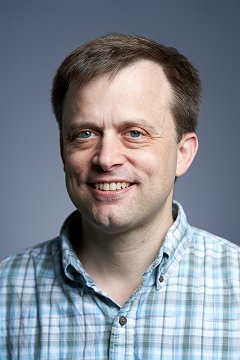
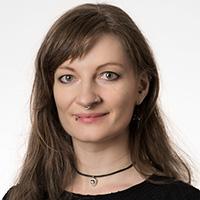
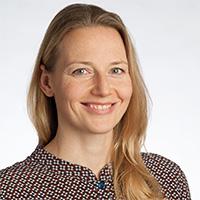
Prof. Josip Stepanić is a Full Professor at the Department of Physics, Faculty of Science, University of Zagreb. His research focuses on interdisciplinary applications of physics, including systems science, drone technology, measurement techniques, and educational methodologies. He is affiliated with research groups such as ZGal and VLA-COSMOS, contributing to projects like SAT-PHENO and Graparion. His academic contributions span over 30 years, with recent work emphasizing problem-solving pedagogy, sustainable education, and smart systems integration. He has published extensively in journals like Interdisciplinary Description of Complex Systems and contributed to Croatian scientific infrastructure through initiatives like HRČAK. Key research interests include: systems thinking in education, autonomous robotic systems, and advanced metrology techniques. His work bridges theoretical physics with applied engineering, particularly in aerospace and industrial contexts.
Shota Momma is an Assistant Professor in the Department of Linguistics at the University of Massachusetts Amherst, serving as TA Coordinator. He holds a Ph.D. in Linguistics from the University of Maryland, a B.S. in Psychology, and a B.A. in Linguistics from the University of Washington, Seattle. His research focuses on the cognitive mechanisms underlying sentence production and comprehension, particularly the interaction between syntax and psycholinguistics. He runs the Grammar And Processing (GAP) lab, where he investigates real-time sentence structure assembly in languages like English and Japanese using EEG, eye-tracking, and computational modeling. Current projects explore dependency planning, cross-linguistic production differences, and the role of grammatical constraints in spoken language. His academic background includes an Associate of Arts from Pierce College, Fort Steilacoom. Research interests span psycholinguistics, syntax, bilingual processing (especially Japanese/English), and experimental methods. He teaches courses on psycholinguistics, research methods, and syntax. Lab members include graduate students Erika Mayer (Semantics/Psycholinguistics) and Michael Wilson (Syntax/Production), along with multiple undergraduates working on syntax, computational linguistics, and sentence processing. No scientific awards are explicitly listed in the provided texts, though his prolific publication record since 2014 indicates active research engagement. His work often addresses the timing and mechanisms of verb selection, dependency formation during production, and the relationship between syntactic structure and real-time processing. Major themes include how speakers mentally represent grammatical structures and how these representations influence speech generation and comprehension accuracy.
Lucas K. Delezene is an Associate Professor in the Department of Anthropology at the University of Arkansas since 2014. His research focuses on dental morphology and its implications for hominin evolution, with a particular emphasis on Homo naledi and Australopithecus species. He has contributed significantly to understanding tooth development patterns, dental wear analysis, and evolutionary relationships among early hominins. Key research interests include: Paleoanthropological analysis of dental remains Microevolutionary patterns in hominin dentition Functional morphology of teeth Geometric morphometric analysis of dental structures Phylogenetic placement of Homo naledi His work has been published extensively in Journal of Human Evolution and American Journal of Physical Anthropology , with 21 peer-reviewed articles since 2009. Notably, he has been involved in multiple studies analyzing the Dinaledi Chamber fossils from South Africa, contributing to the description of Homo naledi's dentition. No specific academic awards or grants are listed in the provided information. Labs/Teams: Collaborates extensively with global paleoanthropology networks, including studies with Lee R. Berger's team on the Rising Star Cave Project.
Anna-Marie Kjøde Olsen serves as a Research Fellow in Norwegian as a second language at the University of Bergen's Department of Linguistic, Literary and Aesthetic Studies, commencing her doctoral fellowship in August 2021. Her institutional affiliation includes active participation in the NINjA (Norwegian in Academia) project investigating language dynamics among international academics, while she remains on leave from UiB's Norwegian Language Courses teaching position (2021-2025). Her research focuses on vocabulary development trajectories in low-educated adult Norwegian L2 learners and institutional language policy implementation within academia. She examines how international employees navigate Norwegian-English language tensions, employing grounded theory and qualitative methodologies to analyze language learning processes and policy-practice gaps in higher education settings. Her interdisciplinary approach bridges second language acquisition theory with sociolinguistic analysis of academic workplaces. Publications from 2018-2023 reveal consistent thematic concentration on Norwegian L2 acquisition (particularly vocabulary development in adult learners) and language policy in internationalized academia. Her work demonstrates methodological rigor through in-depth interviews and empirical studies, contributing to understanding low-educated learner challenges and institutional language practices. Key trends include longitudinal vocabulary analysis, qualitative policy implementation studies, and comparative investigations of Norwegian-English language use among international academics. Funded through a doctoral fellowship within the ALAN project (Adult Acquisition of Norwegian as a second language), she operates under primary supervision by Ann-Kristin Helland Gujord at UiB. While not currently advising students as a PhD candidate herself, her research informs language pedagogy and institutional policy development through collaborative academic networks. She maintains active membership in the NINjA research collective and previously contributed to Swansea University's Lexical Studies Research Group during her 2022-2023 research residency. Her institutional engagements focus on language policy implementation teams and vocabulary acquisition research networks, facilitating cross-institutional collaboration on Norwegian language education challenges.
Cecilie Andreassen is a Research Fellow at Oslo Metropolitan University, affiliated with the Department of Primary and Vocational Teacher Education within the Faculty of Teacher Education and International Studies. She serves as Study leader area 3 and is currently conducting PhD research on writing skills in Norwegian primary schools, focusing on formal aspects such as grammar and language use. Research Interests: Writing Skills in Intermediate-Level Students Grammar and Language Use in Educational Contexts Linguistics, particularly syntactic structures in student writing Norwegian as a Second Language Language learning environments in school and kindergarten Her recent research, presented at the Write! Read! Nordic Research Conference in 2024, investigates grammatical variation and complexity in the pre-field of 5th-grade student texts, reflecting a strong focus on empirical linguistic analysis in educational settings. This work contributes to broader efforts in improving language assessment and pedagogy in Norwegian schools. Scientific Engagement: Member of the research group Language and learning environment in kindergarten and school (SAMBA) Active participant in Nordic educational research conferences Cecilie is currently engaged in her PhD project and contributes to teacher education development. While no formal advisees are listed, her role as study leader indicates academic leadership in curriculum or program coordination. She has no listed scientific awards to date. Laboratories and Research Groups: Involved with SAMBA (Language and learning environment in kindergarten and school), a research group focused on language development and learning in early educational contexts.
Andrew Myers is a Professor in the Department of Computer Science at Cornell University, specializing in programming languages, computer security, and distributed systems. He serves as the Editor-in-Chief for ACM Transactions on Programming Languages and Systems (TOPLAS) and has chaired major conferences including ACM POPL 2018, ACM CCS 2016, POST 2014, IEEE CSF 2010, and IEEE S&P 2009. Myers' research focuses on the intersection of programming languages and security, particularly in developing language-based approaches to ensure security properties in distributed systems. His pioneering work in information flow control has established foundational techniques for tracking and controlling how sensitive information propagates through programs. He has made significant contributions to secure compilation, type systems that enforce security policies, and programming models for geographically distributed applications where consistency and security are critical concerns. Analysis of Myers' publication record reveals a consistent research trajectory centered on using programming language techniques to address security challenges. His early work established fundamental approaches to information flow security, which evolved into practical systems like Jif (Java information flow) and more recently Viaduct for secure distributed programming. Recent publications show increasing focus on secure distributed programming, information flow control in complex systems, and type systems that enable secure concurrency without sacrificing performance. ACM Fellow POPL'99 Best Paper Award SOSP'01 Best Paper Award SOSP'07 Best Paper Award CIDR'13 Best Paper Award PLDI'13 Best Paper Award PLDI'15 Best Paper Award Through the Programming Languages Mentoring Workshop (PLMW) at major conferences including POPL and PLDI, Myers has been actively involved in mentoring the next generation of programming languages researchers. His service as Editor-in-Chief of TOPLAS demonstrates his leadership in the field, overseeing the publication of cutting-edge research in programming languages and systems. While specific grant information isn't detailed in the provided text, his sustained research output and leadership roles suggest significant external funding support over his career. Though specific lab affiliations aren't mentioned in the provided text, Myers' research has clearly involved collaboration with numerous students and colleagues across multiple institutions. His work on systems like Viaduct and Jif suggests the leadership of research teams focused on building practical implementations of language-based security techniques. His active participation in conference organization and program committees indicates strong connections with the broader programming languages and security research communities.
Uli Sattler is a Professor in the Information Management Group within the Department of Computer Science at the University of Manchester. She focuses on logic-based knowledge representation, automated deduction, and ontology engineering. Address: Department of Computer Science, University of Manchester, Oxford Road, Manchester M13 9PL, UK Phone: (+44-161) 275-6176 Email: uli.sattler@manchester.ac.uk Research Interests Her research centers on Description Logics , Modal Logics , and Dynamic Logics , with applications in: Ontology languages (e.g., OWL, OWL 2) Complexity of inference problems Decision procedures and tableau-based algorithms Knowledge graphs and semantic web technologies Molecular biology data modeling Academic Roles She is actively involved in: Coordinating the OWL in Manchester initiative Teaching courses on web data modeling and first-year team projects Co-supervising current and former PhD students Editorial roles (e.g., Journal of Logic and Computation)
Markus Krötzsch is a Professor for Knowledge-Based Systems at the Institute for Theoretical Computer Science, Faculty of Computer Science, Technische Universität Dresden. He is also affiliated with TUD's Center for Advancing Electronics (cfaed) and directs the School of Embedded Composite AI (SECAI). His work bridges theoretical research and practical applications in knowledge representation and semantic technologies. Current Projects: Wikidata, Semantic MediaWiki, Nemo (Datalog Engine), ELK Reasoner Areas: Intelligent Knowledge Management, Ontology Languages, Rule-Based Reasoning His research focuses on knowledge graphs , semantic web technologies , and rule-based systems for data integration and reasoning. He contributes to standards like OWL 2 and develops tools for collaborative data management and large-scale knowledge processing. Recent publications highlight advancements in Datalog reasoning (2024-2025), with applications in knowledge graph querying, ontology languages, and computational logic. Keywords include semantic technologies, knowledge representation, and scalable rule engines. He supervises students working on topics like reasoning complexity , chase algorithms , and rule-based data access . His activities include editorial roles (Area Editor of Transactions on Graph Data and Knowledge ) and leadership in academic organizations like the Open Semantic Data Association.
Dr. Johannes Penner is a Researcher at the Museum of Natural History Leibniz Institute for Evolution and Biodiversity Research in Berlin, Germany. His work focuses on the Macroecology of West African Amphibians , analyzing biogeographical patterns, niche modeling, and conservation strategies. He is deeply involved in the EU BON project for biodiversity data integration and the BIOTA West project, collaborating with institutions like TU Berlin and Humboldt University Berlin. Academic Affiliation: Museum of Natural History Berlin Key Collaborations: Technical University Berlin, Humboldt University Berlin, IUCN Specialist Groups Research Interests include: Biogeography and conservation of amphibians/reptiles Niche modeling under climate change scenarios Biodiversity data analysis via remote sensing Taxonomic studies on West/Central African species His scientific contributions span 15 recent publications on amphibian diversity, taxonomy, and climate change impacts, with a focus on niche modeling and conservation frameworks. Notable scientific awards include the 2001 Chimaira Science Award (2nd place) for his diploma thesis on Malagasy reptile communities. Fieldwork spans West Africa (Côte d'Ivoire, Liberia, Benin), Cameroon, Guinea, and Namibia. He serves as a Subject Editor for journals like ZooKeys and as a Red List Authority Coordinator for the IUCN Viper Specialist Group.
Dr. Katharina von Oheimb is a Researcher (Postdoc) at the Museum für Naturkunde - Leibniz Institute for Evolution and Biodiversity Science in Berlin, Germany, where she has worked since 2019. Her research focuses on the Evolution, diversity and distribution of mollusks , with particular emphasis on land snails in Vietnam's limestone karst regions and urban biodiversity studies in Berlin cemeteries. She previously held postdoctoral positions at The Natural History Museum in London (2015-2019) and Justus Liebig University Giessen (2013-2015). 2013: Doctoral degree (Dr. rer. nat.) from Justus Liebig University Giessen 2008: Diploma in Biology (with distinction) from Justus Liebig University Giessen Dr. von Oheimb's research spans Malacology, Evolutionary Biology, and Conservation Science , with a focus on understanding biodiversity patterns, particularly in land snail communities. Her work combines field studies in diverse environments from Vietnamese limestone karsts to Berlin cemeteries with molecular approaches to uncover cryptic diversity and evolutionary relationships. She investigates how ecological factors shape community assembly and how species adapt to extreme environments like hot springs. Her extensive publication record shows consistent research on molluscan biodiversity, with recent work emphasizing urban ecology applications and the documentation of cryptic species diversity. The publication trends demonstrate a progression from invasive species research toward more comprehensive biodiversity studies in both tropical and urban environments, with increasing focus on conservation applications. Research Fellowship of the Deutsche Forschungsgemeinschaft (OH 280/1-1) 2015-2017 Travel Award of the Malacological Society of London 2016 Travel grant, Molluscan Forum, London 2011 PhD Scholarship of the German Federal Environmental Foundation 2009-2011 Award for the best poster presentation (as co-author), SIAL IV, Berlin 2006 Dr. von Oheimb actively supervises seminars and practical courses in zoology, ecology, biogeography, and evolutionary biology, and co-supervises diploma and master's theses. She has received significant research funding, including a prestigious DFG research fellowship, enabling her to conduct extensive fieldwork in Southeast Asia and develop innovative approaches to studying molluscan biodiversity. As a co-founder of the Schemenkabinett project, she demonstrates strong commitment to science communication and public engagement. She leads research within the Museum's 'Dynamics of Nature' science program, focusing on the Mollusca collection. Her current projects include 'Biodiversity on cemeteries' (Leben zwischen Gräbern/Life between Graves), which investigates urban ecosystems, and continued research on mollusks in natural history collections. She is an active member of several professional societies including The Malacological Society of London and the German Malacological Society.
Dr. Manja Voß is a paleontologist specializing in the evolution and diversity of marine mammals, particularly Sirenia (sea cows), Cetacea (whales), and Pinnipedia (seals). She holds a PhD from the Department of Biology at Humboldt-Universität zu Berlin and has been affiliated with the Museum für Naturkunde Berlin (Leibniz Institute for Evolution and Biodiversity Research) since 2005 in various capacities. Currently, she serves as Scientific Coordinator for Strategic Volunteer Management while maintaining an associated scientist position at the Leibniz Institute for the Analysis of Biodiversity Change in Hamburg. Education: 2013: PhD in Biology, Humboldt-Universität zu Berlin (Dissertation: "Revision of the Halitherium-species complex...") 2005: Diploma in Geology/Paleontology, Freie Universität Berlin Research Focus: Her work centers on systematic paleontology and evolutionary biology of marine mammals, with particular expertise in Eocene-Oligocene sirenians. She has conducted extensive revision of the Halitherium species complex, described new genera, and investigated biogeographic patterns across Central Europe, North America, and South America. Scientific Recognition: Dr. Voß has received numerous accolades including the 2021 Inge and Werner Grüter-Foundation award for science communication, the 2010 German Future Award for young paleontologists, and multiple DAAD travel grants and SYNTHESYS research grants. Professional Service: She actively contributes to the paleontological community through advisory roles in the Paläontologische Gesellschaft and Gesellschaft für Biologische Systematik, and serves as a peer reviewer for leading journals including Nature Ecology & Evolution and Journal of Vertebrate Paleontology.
Mikołaj Bojańczyk is a Professor at the Institute of Informatics, Faculty of Mathematics, Informatics and Mechanics, University of Warsaw. He has been affiliated with the University of Warsaw since his undergraduate studies, with brief periods at institutions in Bordeaux and Paris (2004-2005). He received his PhD in 2004 under Igor Walukiewicz, completed his habilitation in 2008, and was promoted to full professor in 2014. Professor Bojańczyk's research lies at the intersection of theoretical computer science and mathematical logic, with a strong emphasis on automata theory. His work spans several interconnected domains: formal language theory, algebraic approaches to language recognition, monadic second-order logic and its extensions, polyregular functions, and the theory of atoms for handling infinite alphabets. He has made significant contributions to understanding the connections between logic and automata for various structures including words, trees, graphs, and data words. His research has particularly focused on characterizing logical definability through algebraic means, developing new automata models for complex structures, and exploring the boundaries of decidability for various logical formalisms. Analysis of his recent publications reveals a continued focus on polyregular functions, MSO transductions, and the theory of atoms. His work demonstrates a consistent pattern of connecting category-theoretic approaches with concrete automata models, often bridging abstract mathematical concepts with practical computational frameworks. A notable trend is his exploration of rank-based approaches in logic and graph theory, as well as deepening connections between algebraic structures and logical definability. Salomaa Prize (2024) PODS Test of Time Award (2016) PODS Best Paper (2013) Presburger Award (2010) Kuratowski Award (2007) Lipski Prize (2006) PODS Best Paper (2006) Ackermann Award (2005) ICALP Best Paper (2004) Professor Bojańczyk has successfully supervised numerous PhD students to completion, including Rafał Stefański (2023), Janusz Schmude (2022), and others dating back to Paweł Parys (2011). He currently supervises four ongoing PhD projects with Kacper Lewandowski, Katzper Michno, Antoni Puch, and Omid Yaghoubi. His grant portfolio demonstrates sustained research leadership, including the current NCN Maestro grant "Polynomial finite-state computation" (2023-2028), previous ERC Consolidator Grant "Lipa" (2016-2021), and ERC Starting Grant "Sosna" (2009-2014). He has also been active in academic service, serving on prestigious committees including the Gödel Prize Committee (2024-2026) and the Presburger Award Committee (2021-2023). Professor Bojańczyk has been instrumental in developing the "atoms" research program at the University of Warsaw, which has its own blog and book. This theoretical framework addresses computation with infinite alphabets through the lens of nominal sets and orbit-finite structures. He has also created educational resources including the "Automata Toolbox" lecture notes and the "Slajdomat" slide software for creating zooming presentations in Figma.
Marc Roth is a Lecturer in Theoretical Computer Science at the School of Electronic Engineering and Computer Science, Queen Mary University of London, and an Associate Member of the Department of Computer Science at the University of Oxford. He previously held research positions at Oxford, including Senior Research Associate in Algorithms and Complexity Theory and Junior Research Fellow at Merton College. His research focuses on computational counting problems, particularly the multivariate and exact complexity of infeasible counting problems, with applications in network analysis, bioinformatics, and graph neural networks. Key areas include motif counting in higher-order networks, parameterized and fine-grained complexity, approximation algorithms, and descriptive complexity theory. His recent work aims to extend motif counting beyond graphs to higher-arity relational structures, with implications for the expressive power of hypergraph neural networks. He is currently recruiting a PhD student to work on these topics. Marc Roth earned his PhD in Computer Science from Saarland University and the Cluster of Excellence MMCI under the supervision of Holger Dell. Scientific Awards: No scientific awards mentioned in the provided text. Advising and Grants: Marc Roth is actively involved in academic supervision, currently advertising a fully funded PhD studentship on motif counting in higher-order networks. The position includes tuition coverage and a UKRI-level stipend, indicating active grant support. He welcomes prospective PhD applicants and is engaged in mentoring and research guidance. Labs and Teams: Marc Roth is affiliated with the theoretical computer science group at Queen Mary University of London. He was previously part of the algorithms and complexity theory group at the University of Oxford under Leslie Ann Goldberg and associated with Merton College. His research is collaborative and theory-driven, focusing on algorithmic foundations of network analysis.
Stephen Stern is a Professor in the Department of Biology at Colorado Mesa University, where he has been a faculty member since 2011. He is affiliated with the College of Science and Engineering and plays a central role in botanical research and education. Stern is curator of the Walter Almond Kelley Herbarium and actively contributes to regional conservation through leadership in the Colorado Native Plant Society Plateau Chapter and Desert Ecosystem Analysis and Restoration. His research focuses on the systematics, taxonomy, and evolution of vascular plants, particularly the genus Solanum (potato, tomato, eggplant). He employs phylogenetic and molecular techniques such as DNA extraction, PCR, and sequencing to study plant biodiversity. His work spans global regions including North and South America and Africa. Stern's recent publications reflect a strong trend in Solanaceae systematics, with taxonomic revisions, species descriptions, and floristic treatments. His work contributes significantly to understanding plant relationships and biodiversity patterns in challenging groups like spiny Solanum and Androceras. He integrates research with education through field-based teaching and student mentorship. He is an online mentor for the Botanical Society of America's Planting Science program and mentors students through research projects. He has evaluated grants and promoted public education on Colorado Plateau desert ecosystems. Stern has organized numerous botanical workshops, field trips, and educational events. Stephen Stern is involved with the following organizations: Curator, Walter Almond Kelley Herbarium, CMU President, Colorado Native Plant Society Plateau Chapter Board Member, Desert Ecosystem Analysis and Restoration Mentor, Botanical Society of America’s Planting Science program
Professor Moritz Müller holds the Chair of Mathematical Logic at the University of Passau since October 2022, after positions at the University of Freiburg, Barcelona, and Vienna. His research bridges mathematical logic and theoretical computer science, focusing on proof complexity and computational complexity. Current affiliation: University of Passau (Faculty of Computer Science and Mathematics) Prior affiliations: University of Freiburg, Barcelona, Vienna Research interests center on the P versus NP problem, proof complexity, and the interplay between mathematical logic and computational theory. His work explores foundational questions like the inherent difficulty of proving complexity lower bounds and the structure of proofs in restricted systems. Recent publications analyze parameterized complexity, circuit lower bounds, and logical frameworks for computational constraints. Key themes include automating proof systems, NP search problems, and algebraic approaches to complexity hierarchies. Scientific contributions have been recognized with a Best Paper Award at FOCS19. His team 'Logic in Passau' investigates logical foundations of algorithmic law and structural representations in foundational theories.