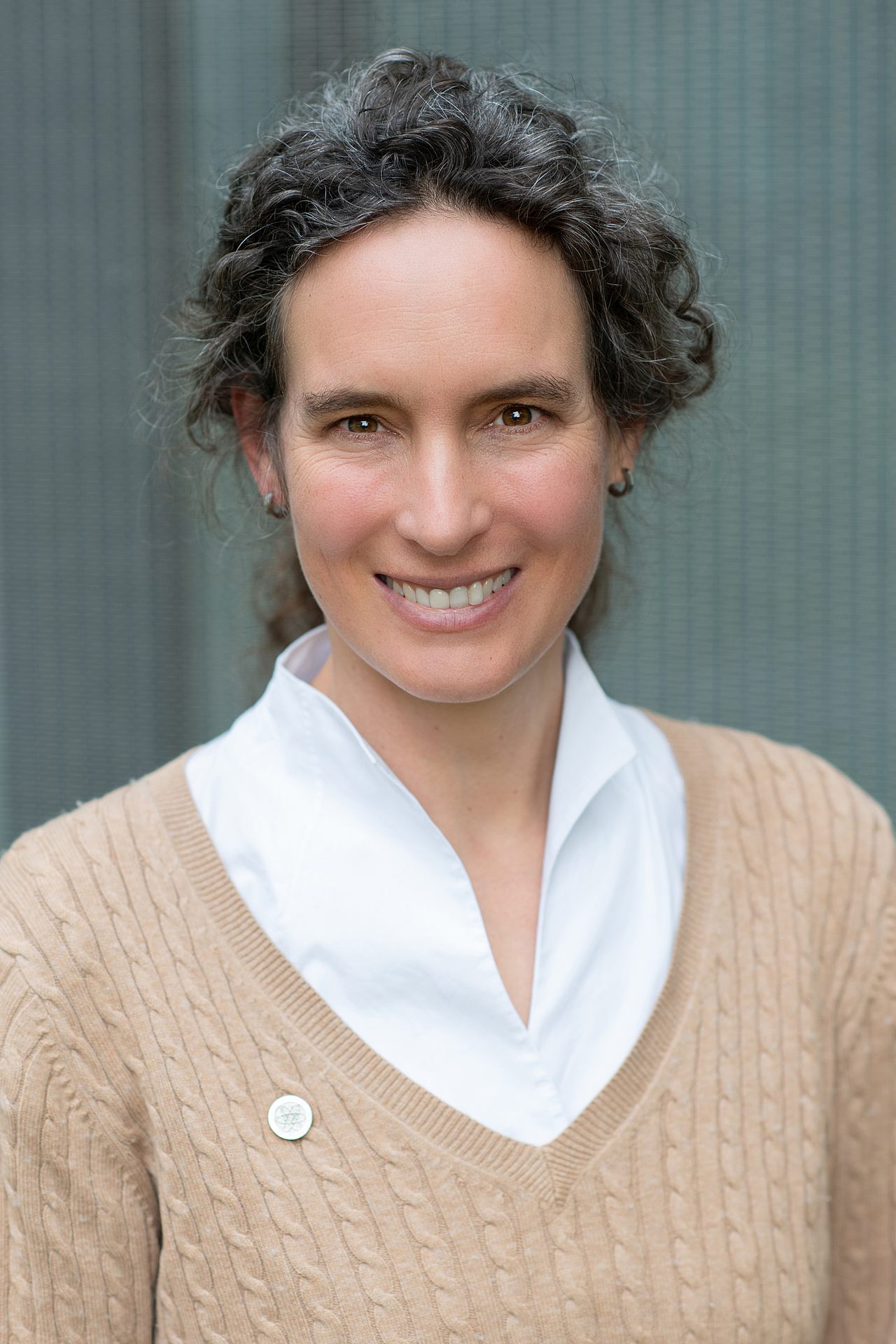
Dr. Krysia Broda is an Honorary Senior Lecturer in the Department of Computing at Imperial College London's Faculty of Engineering. She directs the HiPEDS CDT Programme and coordinates the PhD Teaching Scholarship Programme, actively supervising doctoral candidates. Her office is located at 180 Queen’s Gate, London SW7 2BZ, U.K., and she can be contacted via phone (+44 20 7594 8426) or email. Her research bridges logic programming , automated reasoning , and neural-symbolic integration , with applications in computational biology and multi-agent systems. Key focus areas include: Abductive/Inductive Logic Programming Answer Set Programming (ASP) for knowledge representation Probabilistic reasoning in biological networks Teleo-reactive agent policies Her publications emphasize logic-based methods in AI, spanning theoretical foundations and real-world applications like gene regulation analysis and legal case inference. Recent work shows a trend toward integrating probabilistic models with symbolic AI for complex system validation. She leads the Structured and Probabilistic Intelligent Knowledge Engineering (SPIKE) group and collaborates with the Machine Learning Group. Current projects involve distributed abductive reasoning and ASP-based theory refinement.
Nima Honarmand is an Assistant Professor in the Department of Computer Science at Stony Brook University, where he co-directs the Computer Architecture Stony Brook (COMPAS) Lab . His research focuses on computer system design , particularly parallel computer architecture and operating systems . Education : Ph.D. in Computer Science from University of Illinois at Urbana-Champaign under Josep Torrellas. His work addresses challenges in deterministic replay of parallel programs to simplify debugging on multi-processor systems. Current research explores memory fencing, consistency models, and architectural extensions for reproducibility. Recent publications span conferences like ASPLOS, ISCA, PACT, and POPL, with emphasis on parallelism constraints , memory hierarchy optimization , and fault-tolerant systems . Awards include Best Paper at PACT 2011 and Best Paper Candidate at VTS 2007 . Teaching : Courses include Computer Architecture (CSE 502) and Operating Systems (CSE 306/CSE 506). Email : nhonarmand@cs.stonybrook.edu
Dana Petcu is a Professor at the Computer Science Department of the Faculty of Mathematics and Computer Science at West University of Timisoara. She serves as Director of both the Institute for Advanced Environmental Research and Institute e-Austria Timisoara. With expertise in distributed and parallel computing, she has published over two hundred papers on Cloud, Grid, Cluster, and HPC computing. She is also the chief editor of the open-access journal Scalable Computing: Practice and Experience (SCPE) and has coordinated multiple European Commission-funded projects. Education: Ms. Degree in Computer Science Ph.D. in Numerical Analysis Dana Petcu's research focuses on distributed and parallel computing systems. Her current interests include Cloud & Grid computing, and HPC & Cluster computing. Previously, she worked on Mathematical software, Numerical methods, and Computer graphics. Her work bridges theoretical foundations with practical implementations, particularly in resource management, scheduling algorithms, and scalable computing architectures. She has developed significant expertise in applying these technologies to scientific computing, data-intensive applications, and multi-cloud environments. Her scholarly output demonstrates consistent focus on cloud and distributed computing evolution. Over the past decade, her research has shifted from foundational grid computing to modern cloud technologies, edge computing, and exascale systems. Key themes include resource management across heterogeneous environments, autonomic systems, security SLAs, and multi-cloud portability. Her work shows increasing interdisciplinary connections, particularly with AI/ML techniques applied to resource optimization and anomaly detection in large-scale systems. Scientific Awards: Maria Sibylla Merian-Award (2005) IBM Faculty Award (2009) MLNR Award "Spiru Haret" (2015) Romanian Academy Award "Gheorghe Cartianu" (2015) Dana Petcu has advised numerous graduate students through various master's programs in Distributed and Parallel Computing. She has secured substantial research funding as coordinator of FP7 projects HOST and SPRERS, and as scientific coordinator of mOSAIC. Her grant portfolio includes multiple European Commission-funded initiatives focused on cloud computing infrastructure, resource management, and multi-cloud environments. She has also contributed to EU Research Activities in Cloud Computing as an editor, demonstrating her leadership in shaping European research agendas in this field. She leads the Computer Science Research Center (CCI) and High Performance Computing Service Center (HPC-UVT) at West University of Timisoara. Her teams develop and maintain significant infrastructure for distributed computing research, including simulation environments like CloudSim and iFogSim. She has established strong connections between academic research and practical applications through Institute e-Austria Timisoara, fostering technology transfer and innovation in cloud computing solutions.
Andreas Brännström is a postdoctoral fellow at the Department of Computing Science , Umeå University, Sweden. His research focuses on formal logic-based methods for modeling and verifying manipulation, deception, and influence in communication , with applications in cybersecurity and social engineering. He employs frameworks such as Answer Set Programming, Formal Argumentation, and Description Logic to analyze mental states, belief change, and dialogue strategies in autonomous systems. His work intersects artificial intelligence , computational ethics , and human-agent interaction . Key research themes include: Formal verification of deceptive communication Computational empathy modeling Trust-based argumentation systems Behavior change interventions for autism Human-aware planning in hybrid AI Cross-cultural affective knowledge representation Recent publications analyze manipulation dialogues , critical friend agents , and emotion-aware planning using formal methods. The research contributes to responsible AI and trustworthy human-agent collaboration . Current projects include strategic argumentation frameworks (2020-2024) and collaborative mixed-reality tools for autism support. He is affiliated with the Formal Methods for Trustworthy Hybrid Intelligence research group and contributes to Responsible Artificial Intelligence initiatives.
Dr. Samantha Miles is a Reader in Accounting and Finance at Oxford Brookes Business School, serving as Deputy Director of the BSc Applied Accounting program. She holds a PhD from the University of Reading and has extensive experience in postgraduate and executive education, including MBA and MSc programs. Her research focuses on stakeholder theory, corporate social responsibility (CSR), ESG reporting, and ethical investment. She has supervised over 6 PhD students, with active projects exploring UK sustainability reporting and ESG boundaries in FTSE100 companies. Education: BSc (Hons) in Accounting and Finance, MA in International Accounting, PhD in Comparative International Financial Statement Analysis (University of Reading, supervised by Prof. Chris Nobes). Prior to academia, she worked in management accounting in the oil and gas industry. Research interests include institutional logics of CSR reporting, stakeholder engagement strategies, and the intersection of ESG with corporate governance. Her work has been cited over 6,000 times and featured in professional reports by ICAEW and the Chartered Institute of Management. Key publications include Stakeholders: Theory and Practice (Oxford University Press) and articles in the Journal of Business Ethics and Accounting, Auditing & Accountability Journal . Awards and recognition include a Research Excellence Award funding her plastic consumption study and her co-authored textbook being listed as a seminal work in stakeholder theory. She serves on the editorial board of Corporate Governance and Organization Behaviour Review and has participated in global conferences including the Strategic Management Society and European Accounting Association. Teaching expertise spans modules like Corporate Governance, Financial Reporting, and Management Accounting. She has served as external examiner for LSE and Ulster University, emphasizing quality assurance in academic programs.
Dominik Drexler is a Research Fellow at Linköping University's Department of Computer and Information Science (IDA), part of the Artificial Intelligence and Integrated Computer Systems (AIICS) division. He completed his PhD at IDA in 2025, focusing on integrating learning and artificial intelligence planning to develop intelligent agents that exploit subgoal structures. His work bridges System 1 (learning-based) and System 2 (reasoning-based) approaches in AI, emphasizing hierarchical planning and policy reuse. He is a recipient of the 2024 Lawson Scholarship for excellence in international collaboration and the 2023 Optimal Planning Track Award at the International Planning Competition. **Education**: Bachelor's and Master's in Computer Science (specializing in AI) from the University of Freiburg, Germany. PhD in Computer Science at Linköping University (2025). **Research Focus**: Combining learning and classical planning to create agents that learn hierarchical policies and subgoal structures. Development of expressive policy languages and sketch-based methods for decomposing planning problems. Applications in autonomous systems and generalizable planning algorithms. **Contributions**: Open-source tools like DLPlan , Vanir , and Odin for state feature extraction and optimal planning. Active in international collaborations through the Wallenberg Autonomous Systems Program (WASP). **Teaching & Supervision**: Transitioning to expanded teaching and student supervision roles while continuing research. **Affiliations**: Member of the AIICS division and the Faculty of Science and Engineering at LiU.
Karen Lange is a Professor of Mathematics at Wellesley College's Department of Mathematics, where she holds the endowed Theresa Mall Mullarkey Associate Professorship. She earned her B.A. from Swarthmore College and both her M.S. and Ph.D. from the University of Chicago. Her research specializes in computability theory, computable structure theory, and mathematical logic, with particular focus on the computational complexity of algebraic structures including real closed fields and free groups. Lange employs student-centered pedagogical approaches including interactive lectures, inquiry-based learning, and flipped classrooms. She developed and regularly teaches the Calderwood Seminar in Public Writing: Explaining Mathematics, where students produce publishable mathematical writing. Former students under her guidance have published in Math Horizons, including an interview with mathematician Tai-Danae Bradley. She co-led initiatives with HHMI Student Advisors to enhance departmental inclusion, resulting in resources like the Math Major/Minor Map. Her extensive publication record spans computability theory, model theory, and algebra. Recent work explores computational approaches to polynomial roots in generalized power series fields and Hahn fields. She maintains an active profile in mathematical communities, serving as an MAA AWM Lecturer (2023-2026) and publishing expository articles in Notices of the AMS. Awards & Honors: MAA AWM Lecturer (2023-2026) Community Building: Collaborated with HHMI Student Advisors (2020-2022) to develop departmental inclusion initiatives, student climate surveys, and community-building events. Created resources to improve accessibility of mathematics program requirements.
Eyüp Ertuğrul Karsak is a Professor in the Industrial Engineering department at Galatasaray University , Turkey. He holds the UNESCO Chair in Computer-Integrated Manufacturing and has served in numerous administrative roles including Dean (2008-2014), Vice Rector (2014-2015), and Rector (2015-2023) at the same institution. His academic journey began with B.S. and Ph.D. degrees from Istanbul Technical University , followed by an M.S. from the University of Southern California . As a Chartered Financial Analyst (CFA) , he uniquely bridges industrial engineering with financial decision-making frameworks. Doctorate: Industrial Engineering, Istanbul Technical University (1994) M.S.: Industrial and Systems Engineering, University of Southern California (1990) B.S.: Industrial Engineering, Istanbul Technical University (1989) His research focuses on Multi-Criteria Decision Making (MCDM) , Data Envelopment Analysis (DEA) , and Fuzzy Logic Applications to complex systems. This spans supplier selection, healthcare performance evaluation, educational metrics, and sustainable technology assessment. His work has been published in leading journals such as Expert Systems with Applications , Computers & Industrial Engineering , and Resources, Conservation and Recycling . Karsak’s scientific impact is evidenced by his inclusion in the world’s top scientists list (PLOS Biology 2019, Elsevier 2021). He has led 14 research projects and advised 21 graduate students , particularly in fuzzy MCDM applications. His methodological contributions include novel frameworks combining QFD , DEA , and nonlinear programming for resource allocation and performance measurement. UNESCO Chairholder in Computer-Integrated Manufacturing Ranked among world’s top scientists (PLOS Biology 2019, 2020; Elsevier 2021) His managerial experience includes leadership roles across academic governance and departmental operations. Publications demonstrate consistent application of quantitative methods to real-world challenges in manufacturing, healthcare, and education sectors. For detailed project descriptions and grant information, please refer to the full description section.
Thomas Eiter is a Full Professor at the Institute of Logic and Computation, Technical University of Vienna (TU Wien), where he serves as Head of Research Unit. He is a Full Member of the Division of Mathematics and Natural Sciences since 2022 and holds leadership roles within the university. His research focuses on knowledge representation and reasoning, computational logic, algorithms and complexity in AI, declarative problem solving, nonmonotonic logic programming and databases, and reasoning about actions and change. His work bridges theoretical foundations with practical applications in artificial intelligence, particularly in logic programming and knowledge-based systems. He has made significant contributions to Answer Set Programming (ASP), developing frameworks like DLV and HEX programs that enable sophisticated reasoning capabilities. His recent publications demonstrate a strong focus on stream reasoning (LARS framework), knowledge forgetting, modular reasoning systems, and the integration of logic programming with ontologies. His research shows consistent contributions to both theoretical foundations and practical implementations of AI systems over several decades. ACM Fellow (2020) Fellow of the European Association for AI (2006) Distinguished Paper Award of the 17th International Joint Conference on Artificial Intelligence (IJCAI, 2001) Prominent Paper Award of the Artificial Intelligence Journal (2013) Test of Time Award (10 years) of the International Conference on Logic Programming (2013) Eiter has led and participated in numerous research projects, both internationally funded (such as LogiCS@TUWien, Humane AI, AI4EU) and nationally funded (including projects like BILAI, TAIGER, and several FWF-funded initiatives). His research unit has received substantial support from European Commission programs (H2020) and Austrian funding agencies (FWF, FFG, WWTF). He is actively involved in the academic community as a member of the Austrian Academy of Sciences (ÖAW), Academia Europaea, and has served on the Executive Council of AAAI. His research unit maintains strong connections with international collaborators and has developed influential systems like the DLV answer set programming system.
Dr. Marina De Vos is a Senior Lecturer in the Department of Computer Science at the University of Bath. She leads research in knowledge representation and normative systems, with affiliations to multiple research centers including the Centre for Mathematical Biology and UKRI CDT in Accountable AI. Education: Postgraduate Certificate in Learning and Teaching in Higher Education, University of Bath (2010) Doctor of Science in Computer Science, Vrije Universiteit Brussel (2002) Master of Computing, Vrije Universiteit Brussel (1998) Research focuses on declarative programming paradigms, particularly Answer Set Programming (ASP) and normative multi-agent systems. Her work enables intuitive problem description in knowledge representation languages, with applications spanning structural engineering, music composition, legal reasoning, and policy modeling. Additional research interests include inductive machine learning, explainable AI, hybrid AI systems, and game theory. Recent publications demonstrate strong focus on norm synthesis in multi-agent systems, contextual reasoning, and governance frameworks for autonomous systems. This reflects a consistent pattern of applying formal computational methods to social and ethical dimensions of AI. Professional activities include keynote presentations at international conferences, workshop chair roles for major AI events, and external PhD examination responsibilities across European institutions.
Uli Sattler is a Professor in the Computer Science Department at the University of Manchester, specializing in logics for knowledge representation and automated deduction. He holds a PhD from RWTH Aachen (1998) and a habilitation from TU Dresden (2003). His research focuses on Description Logics, ontology engineering, and their applications in fields like molecular biology. He contributes to ontology languages such as OWL and develops practical inference algorithms. Research Interests: Description Logics, automated reasoning, ontology engineering, and their integration with AI systems. His work addresses challenges like module extraction, entailment explanation, and decision procedures using automata and tableau techniques. Awards: Best Paper Award (2008) ISWC Best Student Paper Award (2011) SWSA Ten-Year Award (2018) Advising & Grants: Supervised 17 students and participated in initiatives like Gender Advancement through Transforming Institutions. Active in organizing conferences and peer-review panels. Labs/Teams: Part of the Information Management Group and the Data Science Institute at the University of Manchester.
Frank Wolter is a Professor for Logic and Computation at the University of Liverpool's Department of Computer Science. His research focuses on Knowledge Representation and Reasoning, Logic in Computer Science, Description Logic, and related areas. He has held significant editorial roles, including co-editing the Handbook of Modal Logic (2007) and multiple conference proceedings. He has been recognized with numerous awards, including Best Paper Awards at KR 2000, KR 2008, KR 2010, ISWC 2013, and PODS 2017, as well as the Elected EurAI Fellow (2023). His work includes foundational contributions to ontology-based data access and query answering, with a focus on computational complexity and formal methods. Wolter has supervised multiple PhD students, including Oliver Kutz, Sebastian Bauer, and Hadrien Pulcini. He has been involved in projects funded by EPSRC (e.g., Dynamic Ontologies, Knowledge Representation and Reasoning about Distances, and quantMD), addressing challenges in combining logics and modular ontologies. He actively participates in academic events, serving on program committees for conferences like IJCAI, AAAI, and KR, and has organized workshops on topics such as Craig Interpolation and the Decision Problem in First-Order Logic.
Prof. Birte Glimm is a full Professor and Chair of the Institute of Artificial Intelligence at the University of Ulm. She holds leadership roles in academic governance, including as Dean of Studies for Cognitive Systems and Computer Science programs. Her research focuses on knowledge representation, automated reasoning, and semantic web technologies, with applications in autonomous systems and intelligent assistants. She has led projects like the 'Companion-Technology for Home Improvement' and contributed to standards such as SPARQL 1.1 Entailment Regimes. Education: PhD (2008) from the University of Manchester under Prof. Ian Horrocks, BSc from Hamburg University of Applied Sciences (2004), and prior industry experience in communication design. Research Interests: Development of efficient reasoning algorithms for Description Logics, ontology-based data management, and explainable AI. Her work emphasizes scalability, dynamic knowledge processing (e.g., for autonomous vehicles), and natural language explanations of automated reasoning. She co-leads the DFG-funded KEMAI research training group and previously led the BMBF project 2LIKE. Awards: Google Faculty Award (2017), Mileva Einstein-Marić-Preis (2016), and multiple best paper awards. She has served on numerous conference committees and editorial boards, including the OWL 2 Conformance Specification. Teaching: Courses on Knowledge-Based AI, Semantic Web Foundations, and programming for cognitive systems. She coordinates curricula for Computer Science and AI programs at Ulm. Labs/Teams: Institute of Artificial Intelligence; contributions to Collaborative Research Centers SFB/TRR 62 and EU projects in AI for industry.
Sergei Savitsky is a Professor at Wedel University of Applied Sciences, where he serves as Head of the Bachelor of Computer Science program and Senate Chairman. He has been a university lecturer at the institution since October 2008, following professional experience at NXP Semiconductors (2006-2008) and Philips Research Europe (2001-2006). His educational background includes: Doctorate in Engineering (Dr.-Ing.) from Technical University of Dresden (2002) with distinction "summa cum laude" Habilitation (Dr.-Ing. habil.) from Technical University of Dresden (2024) with teaching authorization in "Technical Computer Science" Diplom-Informatiker (equivalent to MSc) in Computer Science from Technical University of Dresden (1998) Savitsky's research focuses on reconfigurable computing systems , with particular expertise in FPGA design, hardware acceleration, and error correction coding. His work bridges theoretical computer science with practical hardware implementation, resulting in numerous patents and publications in top venues. He has made significant contributions to the development of adaptive hardware architectures for forward error correction, which are critical for modern communication and storage systems. His recent publications demonstrate a strong trajectory in optimizing hardware design processes, with particular focus on applying machine learning techniques like self-organizing maps and gradient descent algorithms to improve FPGA placement efficiency. His research spans both theoretical foundations and practical applications, with patents filed in collaboration with industry partners like NXP Semiconductors and ST-Ericsson. Among his recognitions is the Best Paper Award at CENICS 2019 for his work on accelerating FPGA placement algorithms. As an educator, Savitsky teaches courses related to digital system design, including "Computer-aided design of digital systems," where he emphasizes algorithmic aspects of Electronic Design Automation beyond basic digital technology concepts.
Zena M. Ariola is a Professor in the Department of Computer and Information Science at the University of Oregon and serves as Associate Department Head. She received her Laurea summa cum laude in Informatics from the University of Pisa in 1980 and her Ph.D. in Computer Science from Harvard University in 1992. Education : BS, 1980, University of Pisa, Italy PhD, 1992, Harvard University Her research focuses on the foundational aspects of programming languages, particularly the semantics of control flow operators, lambda-calculus with explicit recursion, and high-level hardware description languages. She explores connections between control operators and classical logic via the Curry-Howard correspondence, with applications to security and hardware design. Key Research Trends from her publications include: modeling control flow with continuations and prompts, formalizing classical logic in computational frameworks, and refining term rewriting systems for correctness in hardware and functional programming. Her work spans theoretical formalism and practical compiler design. Scientific Awards : NSF Research Initiation Award (1994) NSF Career Award (1996) Best paper award nominee at ESOP2012 She has collaborated with institutions like the Centre for Mathematics and Computer Science (CWI) and Vrije Universiteit in Amsterdam. Her teaching includes courses on programming language principles and logic.