Mathieu Hoyrup is a permanent researcher (Chargé de Recherche) at Inria , affiliated with the Mocqua team at the LORIA research center in Nancy, France. His research bridges mathematical logic, computability theory, and dynamical systems through the lens of computable analysis and algorithmic randomness. Research Interests : Recursion theory, computable analysis, algorithmic randomness, ergodic theory, and dynamical systems. Advising : Supervised PhD students Hugo Férée, Djamel Eddine Amir, Alexis Terrassin, and Rémi Pallen. Academic Service : Organized the Computability and Complexity in Analysis conferences (2013–2022) and the Continuity, Computability, Constructivity (CCC 2017). Education : PhD in Mathematics from Université Paris Diderot (2008); Habilitation à diriger des recherches (2021) on topological aspects of representations in computable analysis.
Ville Salo is an Associate Professor at the University of Turku's Department of Mathematics and Statistics. His research spans dynamical systems (especially symbolic dynamics, subshifts, and cellular automata), group theory (automorphism groups, geometric group theory), automata theory, and topology (including algebraic and general topology). He maintains a comprehensive list of open problems in symbolic dynamics, reflecting his deep engagement with foundational questions in these areas. Teaching Activity (2017–2025): Logiikka (Logic), spring 2025 & 2023 Lebesguen mitta ja integraali (Lebesgue measure and integral), fall 2023 Topologian perusteet (Basic topology), fall 2022 & 2019 Cellular automata, spring 2022 & 2018 Symbolic dynamics II, spring 2019 Johdatus automaattien teoriaan (Introduction to automata theory), spring 2018 & 2017 Algoritminen matematiikka (Algorithmic mathematics), spring 2017 He is fluent in Finnish and English, with proficiency in several other languages. Outside academia, he maintains math blogs, creates programming projects (including esoteric languages), and runs competitively.
Simon Read is an Associate Professor of Computer Science at Saint Mary's College of Maryland, a position he has held since 2002. He is based in Schaefer Hall, Room 173, and his contact email is sread@smcm.edu. His research applies theorem proving to systems-level hardware/software co-design. Specific areas include embedded systems (e.g., Raspberry Pi bare machine projects), Electronic Design Automation (EDA), and Hardware Description Languages (VHDL, Verilog, SystemC). He develops tools for Eclipse IDE to support hardware design and formal verification, and involves undergraduate students in these projects through Saint Mary's Projects (SMPs). His publications from 1994 to 2005 show a focus on formal methods: establishing formal semantics for VHDL (1994), rule checking at the register level (1996), and educational tools for networking (2005). This work bridges hardware verification and educational technology. Dr. Read teaches a range of courses including Computer Architecture, Operating Systems, and Distributed/Parallel Computing. He maintains representative syllabi for prospective students and adapts his teaching styles regularly.
Adam Chlipala is a Professor at the Massachusetts Institute of Technology working at the intersection of programming languages, formal methods, and computer systems. His research focuses on building practical verified systems with end-to-end machine-checked proofs, particularly using the Coq proof assistant. His educational background includes a Computer Science undergraduate degree from Carnegie Mellon University (2003) and a PhD in Computer Science from the University of California, Berkeley (2007). Following a postdoctoral position at Harvard University through 2011, he joined MIT as faculty. Chlipala's research spans multiple domains with strong emphasis on dependent types , verified compilation , and hardware-software co-verification . His work consistently bridges theoretical foundations with practical implementation, as evidenced by his development of the Ur/Web programming language and his focus on creating clean-slate hardware-software stacks with formal guarantees. Key research thrusts include cryptographic constant-time verification, side-channel security, and verified tensor compilation. His recent publications (2020-2025) reveal a clear trajectory toward increasingly complex verified systems, with growing emphasis on hardware-software integration, cryptographic implementations, and performance-critical applications. The work consistently leverages Coq for machine-checked proofs while addressing real-world constraints like timing channels and hardware interfaces. Chlipala is the author of the influential textbook Certified Programming with Dependent Types , which serves as a primary educational resource for Coq at numerous institutions worldwide. His professional activities include significant service to the PL community through program committees for major conferences including PLDI, POPL, ICFP, and CPP. He leads research initiatives connecting hardware and software verification, most notably through the DeepSpec project which aims to build fully verified computing stacks. His current work focuses on practical applications of dependent types for business applications through Ur/Web and verified cryptographic implementations.
Denis Kuperberg is a CNRS researcher at LIP (Laboratoire de l'Informatique du Parallélisme), ENS Lyon, where he is part of the Plume research team. His work bridges theoretical computer science with interdisciplinary applications, particularly in systems biology. His primary research interests include automata theory, synthesis, verification, games, logics, decidability procedures, complexity, and proof theory. Kuperberg's work often explores the connections between formal methods and practical applications, as evidenced by his recent interdisciplinary publications on thermodynamic consistency of autocatalytic cycles. His research demonstrates a strong focus on both theoretical foundations and practical implementations, with several software tools developed for research purposes. Kuperberg's publication record shows a clear evolution from purely theoretical work in automata and logic toward more interdisciplinary research. His recent papers (2022-2025) demonstrate increasing engagement with biological applications while maintaining strong theoretical foundations. Key themes across his publications include history-determinism in automata, cyclic proof systems, positive fragments of logic, and applications to verification problems. Best Paper Award at ICALP 2025 (with Thomas Colcombet and Amina Doumane) Kuperberg actively supervises multiple students at various levels, including PhD candidates (Iris Magniez–Papillon, Émile Hazard, Laureline Pinault), postdoctorates (Thomas Kosc, Marc Bagnol), and numerous interns. His teaching portfolio includes advanced courses on Graphs, Machines and Logics at ENS Lyon Master 2 program, Theory of Regular Languages at EPITA Lyon, and specialized topics like Mathematical Aspects of Automata Theory. He leads the development of research software including EmergeNS (for simulating chemical reaction networks and tracking autocatalytic dynamics), Stamina and Acme (for solving decision problems from automata theory), and Electrum (a specification language analyzer). These tools demonstrate his commitment to bridging theoretical computer science with practical implementations.
Julie Scholler serves as an Associate Professor of Mathematics at the University of Tours, working within the Economic Sciences Section of the UFR of Law, Economics and Social Sciences. She holds the position of Head of the first year of the MÉcEn (Master's in Business Economist) program and has been actively teaching since at least 2013 across various levels of the economics curriculum. Her research interests focus on advanced statistical methodologies and data science applications, particularly in exploratory data analysis, factor analysis, unsupervised classification, and machine learning techniques. She specializes in applying these methods using R programming, with expertise in RMarkdown, RShiny, and data visualization techniques. Her work spans from fundamental statistical theory to practical Big Data solutions with R optimization. Analysis of her recent publications reveals a strong emphasis on classification methods, particularly boosting algorithms, random forests, and ensemble methods. Her work demonstrates expertise in prediction error estimation, with applications across various domains including economics, social sciences, and business analytics. She maintains a consistent focus on practical implementation of statistical methods using R, with particular attention to reproducible research practices through RMarkdown. Professor Scholler has developed extensive teaching materials covering statistics, data analysis, and R programming across multiple academic levels. Her courses include Descriptive Statistics, Inferential Statistics, Bayesian Statistics, Dynamical Systems, and specialized topics in Data Mining and Big Data. She appears to be actively involved in student projects and practical applications of statistical methods, as evidenced by student-produced dashboards on topics ranging from world happiness to Covid vaccination data.
Professor Joanna Józefowska is a distinguished academic at Poznań University of Technology, where she serves as a full professor in the Faculty of Computing and Telecommunications, Institute of Computer Science. With a career spanning over three decades since completing her doctoral dissertation in 1990, she has established herself as a leading expert in operations research and scheduling algorithms. Her research spans several key areas within operations research, with particular emphasis on: Discrete-continuous scheduling problems Resource allocation and optimization Just-in-time scheduling models Applications of apportionment theory Energy-efficient computing systems Quantum approaches to transportation problems Professor Józefowska's recent work demonstrates her ability to adapt traditional operations research methods to address contemporary technological challenges, with publications in 2022-2023 focusing on energy-efficient computing systems and quantum approaches to electric vehicle charging infrastructure. Her research output shows consistent productivity throughout her career, with publications appearing in reputable journals such as European Journal of Operational Research, Annals of Operations Research, and Computers and Operations Research. As an academic mentor, Professor Józefowska has successfully guided multiple doctoral students to completion, with dissertations covering topics ranging from ontology enrichment to discrete resource allocation. Her supervision has helped develop the next generation of researchers in operations research and computer science, contributing to the academic ecosystem at Poznań University of Technology and beyond. Her scholarly contributions extend beyond research and supervision to include editorial roles for significant publications in her field, demonstrating recognition of her expertise by the broader academic community. Professor Józefowska continues to actively contribute to the advancement of knowledge in operations research while maintaining her position as a respected academic at one of Poland's leading technical universities.
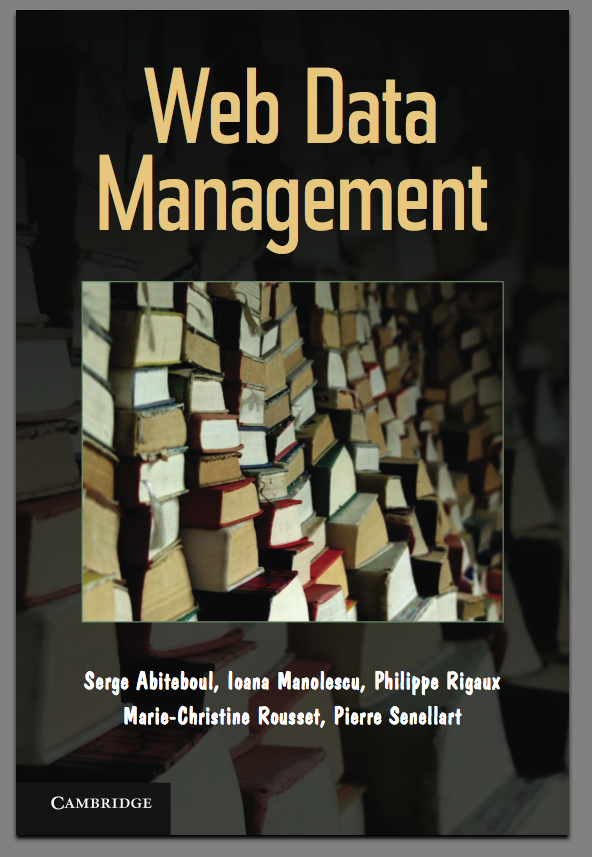
Marie-Christine ROUSSET is a Professor of Computer Science at the University of Grenoble Alpes (UGA) in France, where she is a member of the LIG (Laboratoire d'Informatique de Grenoble) in the SLIDE group. Previously affiliated with Paris-Saclay (LRI), she has established herself as a leading researcher in Knowledge Representation and Information Integration. She holds the distinguished position of Senior member of the Institut Universitaire de France (IUF) (2011-2016, renewed for 2016-2021) and serves as co-responsible for the chair Explainable and Responsible AI within MIAI Grenoble Alpes. Her research focuses on ontology-based data access, logic-based mediation between distributed data sources, query rewriting using views, data linkage, and distributed reasoning for the Semantic Web. She skillfully combines artificial intelligence and database techniques to address complex information integration challenges, with applications spanning biomedical informatics, educational technology, and trustworthy AI. Her work demonstrates consistent innovation from foundational research to practical implementations, as evidenced by her co-authorship of the book 'Web Data Management' published by Cambridge University Press. Professor ROUSSET's recent publications (2019-2022) reveal a growing emphasis on data privacy, RDF graph anonymization, and interactive ontology engineering, while maintaining her strong contributions to semantic web technologies and knowledge representation. Her research shows increasing attention to trustworthy AI concerns, aligning with her leadership roles in relevant projects. Scientific Recognition Senior member of Institut Universitaire de France (IUF) (2011-2016, renewed for 2016-2021) Junior member of Institut Universitaire de France (IUF) from 1997 to 2002 Chevalier de l'Ordre National du Merite (July 11, 2011) EurAI Fellow (nominated ECCAI Fellow in 2005) Best Paper Award at AAAI'96 for 'Verification of Knowledge Bases based on Containment Checking' Professor ROUSSET maintains an active role in the scientific community through editorial work and organizational leadership. She serves on the Editorial Board of Communications of the ACM (CACM) and has held significant roles including PC chair of EGC 2019, Workshops co-Chair of WWW 2018, and Area Chair of IJCAI 2017. Her consistent service on program committees of major international conferences demonstrates her standing in the field. Her laboratory, the SLIDE group within LIG, focuses on semantic web technologies, knowledge representation, and data integration. The group maintains strong connections with the international research community and participates in collaborative projects addressing cutting-edge challenges in artificial intelligence and data management, with particular emphasis on trustworthy and explainable AI systems.
Diego Calvanese serves as a Professor at the KRDB Research Centre for Knowledge and Data within the Faculty of Computer Science at the Free University of Bozen-Bolzano, where his work bridges theoretical foundations and practical applications in knowledge systems. An ACM Fellow and EurAI Fellow, he maintains active leadership in the global academic community through editorial roles including PeerJ Computer Science. His research spans knowledge representation and reasoning, ontology languages, description logics, conceptual data modeling, data integration, graph data management, data-aware process verification, and service modeling and synthesis, establishing him as a pivotal figure in formal methods for data-intensive systems. These interconnected domains drive innovations in semantic technologies and large-scale data management frameworks. Notable professional contributions include serving as Program Chair for PODS 2015 and KR 2020, General Chair for ESSLLI 2016, and a 2012-2013 visiting researcher position at the Technical University of Vienna as a Pauli Fellow of the Wolfgang Pauli Institute. His awards reflect exceptional impact: ACM Fellow EurAI Fellow Calvanese operates primarily through the KRDB Research Centre, which functions as his core academic hub for advancing knowledge representation methodologies and fostering international collaborations in data science.
John Wickerson is a Senior Lecturer in the Department of Electrical and Electronic Engineering at Imperial College London. His research spans formal methods, concurrency, and hardware/software synthesis. Academic Rank: Senior Lecturer Affiliation: Imperial College London His research interests include concurrency semantics, weak memory models, transactional memory, GPU and FPGA programming, and high-level synthesis for hardware accelerators. These areas intersect formal verification, programming language design, and hardware-software interface optimization. The publications of John Wickerson reflect trends in formalizing memory models, improving hardware synthesis reliability, and testing concurrency frameworks. His work addresses challenges in quantum compiler validation, GPU workgroup progress, and weak memory persistency across Intel, ARM, and C++ architectures. He actively contributes to academic communities as a Publicity Co-Chair and Session Chair in conferences like POPL and as a Committee Member in SPLASH and PLDI. His GitHub repository activity and X (Twitter) presence further demonstrate his engagement in technical dissemination.