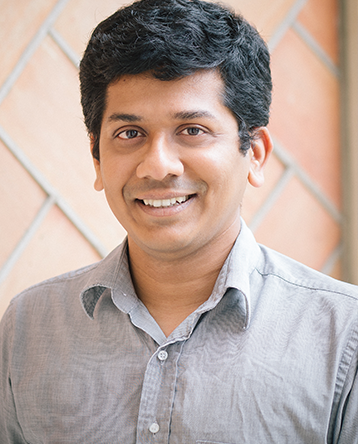
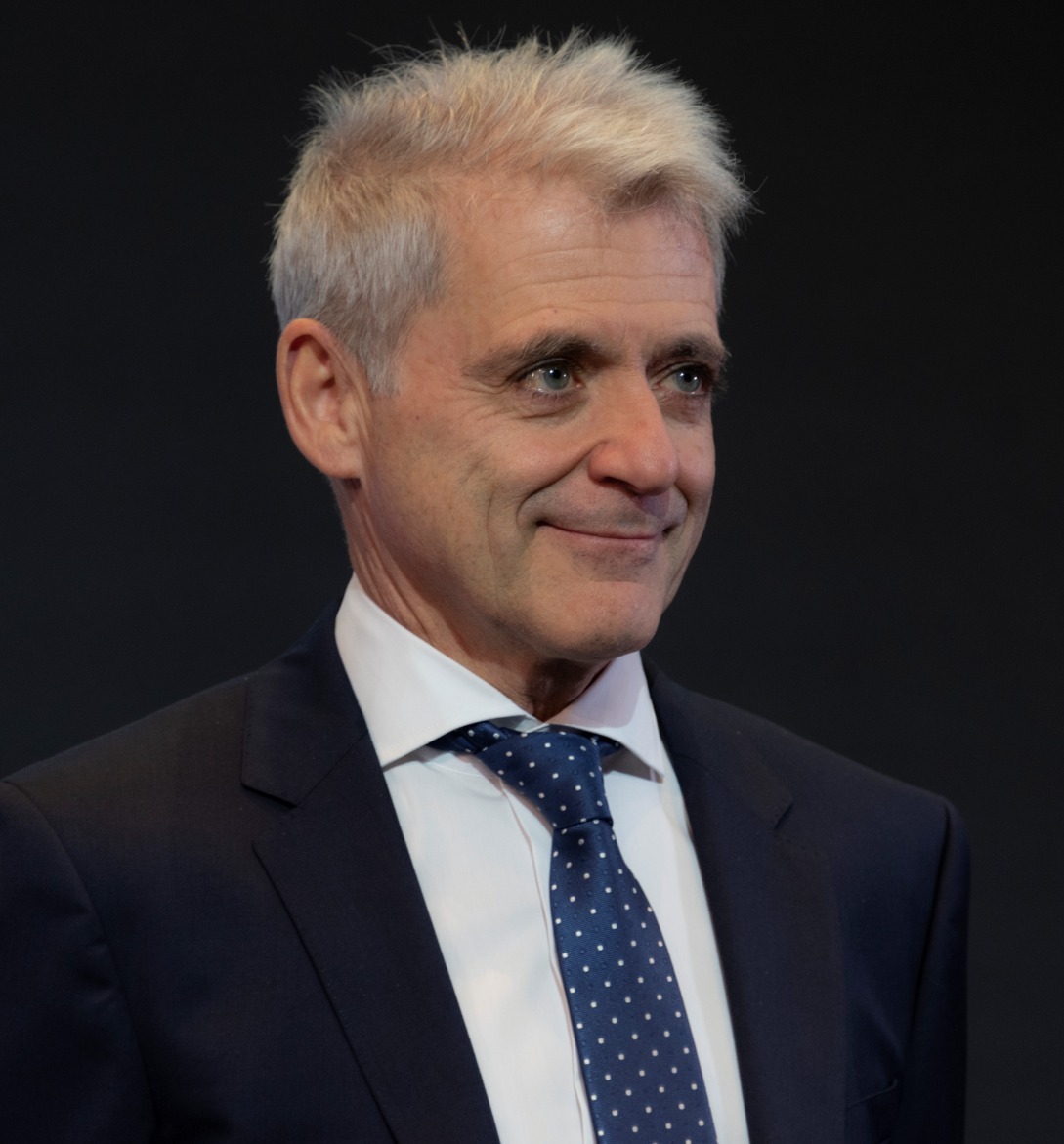
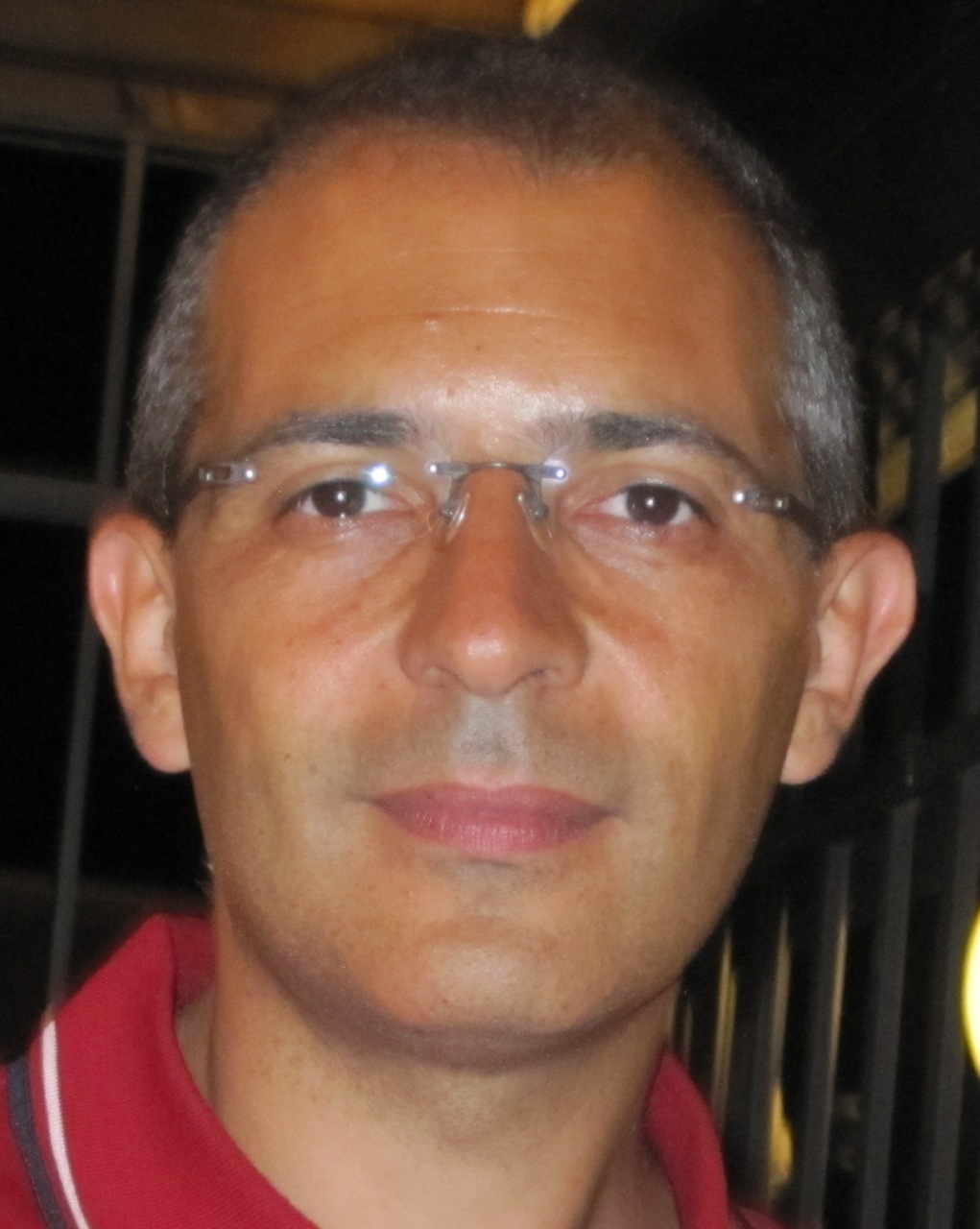
Brian W. Pogue, Ph.D., is the Robert A. Pritzker Chair in Biomedical Engineering at Dartmouth College's Thayer School of Engineering, with a joint appointment as an Honorary Fellow in Medical Physics at the University of Wisconsin-Madison. His academic background includes a Ph.D. in Medical/Nuclear Physics from McMaster University and a Research Fellowship at Harvard Medical School's Wellman Center for Photomedicine. He has led significant administrative roles, including Dean of Graduate Studies at Dartmouth (2008–2012) and Chair of Medical Physics at Wisconsin (2022–2025). Research Focus : Dr. Pogue pioneers Optics in Medicine , specializing in cancer imaging, photodynamic therapy, and surgical guidance. His work integrates fluorescence imaging, radiation therapy monitoring, and molecular diagnostics to improve cancer treatment precision. Key innovations include Cherenkov imaging for radiotherapy dosimetry and hypoxia-sensitive probes for tumor resection. Publication Trends : Recent articles (2023–2025) emphasize real-time surgical guidance, hypoxia quantification, and multimodal imaging systems. Dominant themes include fluorescence tomography, radiation dosimetry, and low-cost diagnostic devices, reflecting a translational focus from preclinical validation to clinical applications. Awards & Honors : Fellow, Optica (formerly OSA) Fellow, American Institute for Medical and Biological Engineering (AIMBE) Fellow, American Association of Physicists in Medicine (AAPM) Fellow, SPIE (International Society for Optics and Photonics) Funding & Innovation : Continuously funded by the NIH since 2001 ($52M+ total), Dr. Pogue founded three startups: DoseOptics LLC (radiotherapy dose imaging) and Hypoxia Surgical LLC (tissue hypoxia cameras), bridging academic research to clinical tools.
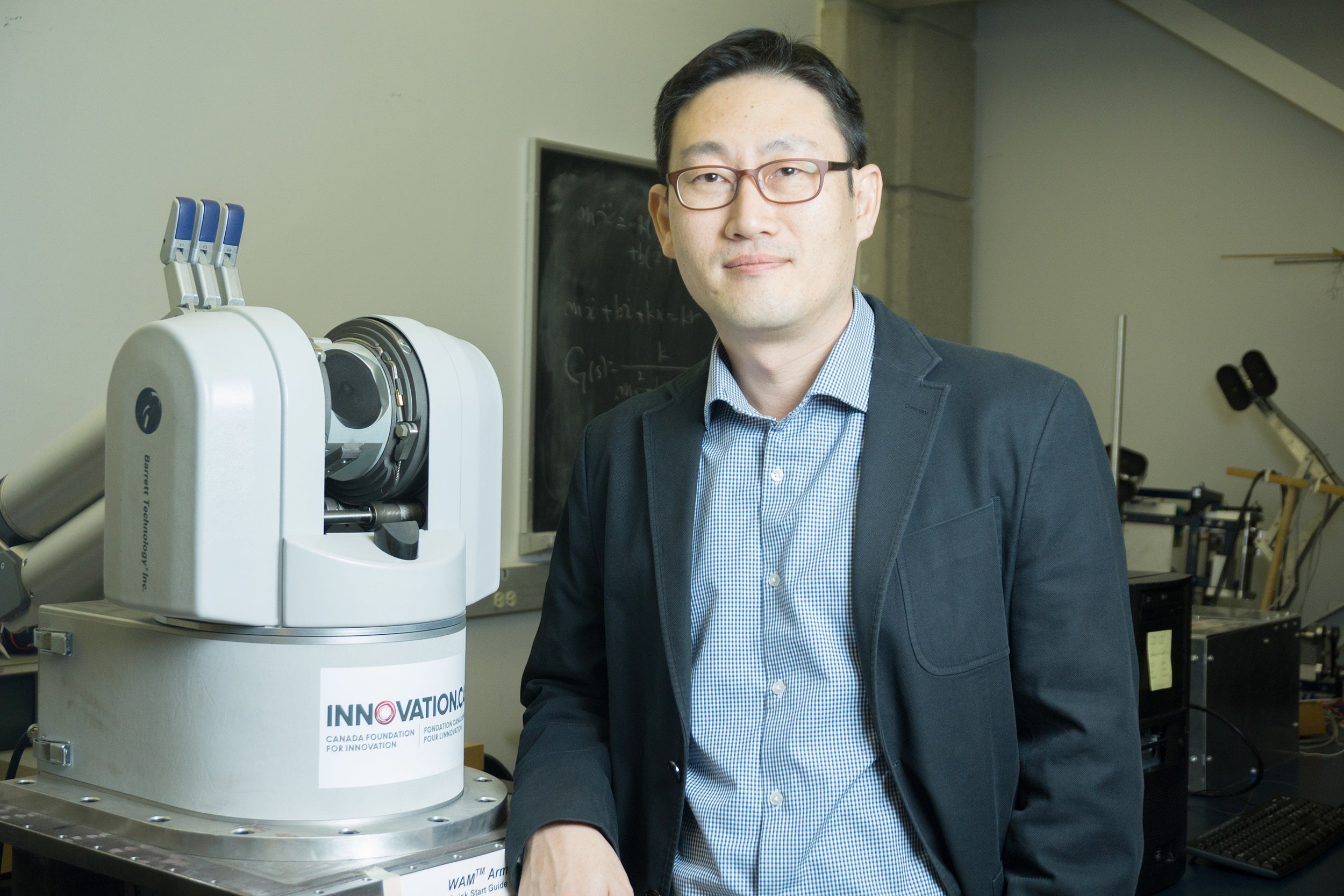
Soo Jeon is a Professor in the Department of Mechanical and Mechatronics Engineering at the University of Waterloo, part of the Faculty of Engineering. He holds a PhD from the University of California at Berkeley (2007) and prior degrees from Seoul National University. His research focuses on mechatronics, dynamic systems, and control, with applications in robotics, autonomous systems, and precision motion control. He has held roles as Assistant Professor (2009–2015), Associate Professor (2015–2024), and Full Professor (2024–present). Professor Jeon’s expertise includes intelligent sensing and control for mechatronic systems, nonlinear dynamics, and autonomous systems. He has received notable awards such as the 2022 Engineer of the Year Award (AKCSE/KOFST), 2015 NSERC Discovery Accelerator Supplement, and 2010 ASME Rudolf Kalman Best Paper Award. He serves as an Associate Editor for several journals, including the ASME Journal of Dynamic Systems and IEEE Transactions on Automation Science and Engineering. His research interests span robotics, control systems, and automation, with recent work on autonomous navigation, tactile exploration, and model predictive control. He supervises graduate students in MASc and PhD programs and teaches courses like ME 649 (Control of Machines and Processes) and ME 360 (Introduction to Control Systems). Jeon holds patents in areas like low-power magnetic locks and remote plasma source seasoning. His lab, the Waterloo Mechanical Systems & Control Laboratory (WMSCL), focuses on advanced mechatronics and robotics projects, including collaborations with international institutions such as the Korea Institute of Machinery & Materials (KIMM).
Dr. Benjamin Busam is a Senior Research Scientist at the Technical University of Munich , affiliated with the Chair for Computer Science Applications in Medicine under Prof. Nassir Navab. Starting September 2025, he will hold the Professorship for Photogrammetry and Remote Sensing at TUM. His career includes leadership roles at FRAMOS Imaging Systems and Huawei Research in London. Education: Mathematics (TUM), Mathematics and Physics (ParisTech, University of Melbourne), PhD in Mathematics (TUM, 2014) His research focuses on 3D computer vision , multi-modal sensor fusion , and their applications in collaborative robotics and augmented reality . He specializes in projective geometry , 6D pose estimation , and neural radiance fields , with a particular emphasis on photometrically challenging environments. Recent publications highlight advancements in 3D scene understanding , neural rendering , and medical imaging , often leveraging machine learning and vision-language models . His work has been recognized through awards like the EMVA Young Professional Award (2015) and Innovation Pioneer of the Year (2019) , along with multiple Outstanding Reviewer distinctions at leading conferences. Dr. Busam has supervised numerous PhD and MSc students on topics including 6D pose estimation , medical augmented reality , and robotic ultrasound , collaborating with institutions like MIT , École Polytechnique , and University of Padova .
Kostas Daniilidis is the Ruth Yalom Stone Professor at the University of Pennsylvania in the School of Engineering and Applied Science , specifically the Department of Computer and Information Science . He is also affiliated with the GRASP Laboratory and Archimedes, Athena Research Center, Greece . Education : PhD in Computer Science (1992) from the University of Karlsruhe with Hans-Hellmut Nagel Diploma in Electrical Engineering (1986) from the National Technical University of Athens Research Interests : Kostas Daniilidis is a leading researcher in Computer Vision and Robotics , with significant contributions to event-based vision , equivariant learning , 3D human pose estimation , and hand-eye calibration . His work spans neural rendering , dynamic scene modeling , and low-latency sensing systems . Article Trends : Daniilidis’s recent publications focus on event cameras for low-light and high-speed applications, Gaussian splatting for real-time 3D reconstruction, and equivariant neural architectures for robust motion estimation. His work bridges deep learning with geometric vision , emphasizing human mesh recovery and multi-agent coordination . Scientific Awards : Best Conference Paper Award at ICRA 2017 IEEE Fellow (2012) Teaching : He has taught courses such as CIS580: Machine Perception and CIS121: Data Structures , alongside advanced topics in robotics and computer vision. Lab & Collaborations : As director of the GRASP Laboratory (2008–2013), he fostered interdisciplinary research in robotics, and currently collaborates with institutions like the Athena Research Center in Greece.
Nicholas Antipa is an Assistant Professor at the University of California San Diego's Jacobs School of Engineering, in the Electrical and Computer Engineering department. His research focuses on the co-design of optical systems and algorithms to develop advanced computational imaging systems, leveraging innovations in 3D printing, sensors, machine learning, and AI. He holds a PhD in Computational Imaging from UC Berkeley and previously worked at the Lawrence Livermore National Lab on optical metrology for the National Ignition Facility. His work includes pioneering projects like the DiffuserCam and Miniscope3D, which enable high-dimensional optical signal capture and 3D microscopy. Education: PhD in Computational Imaging, UC Berkeley (2020) MS in Optics, University of Rochester Institute of Optics BS in Optical Science and Engineering, UC Davis Research Interests: Computational imaging systems, single-shot high-dimensional optical capture, lensless imaging, and applications in neuroscience and marine science. His lab explores novel optical designs, compressed sensing, and AI-driven imaging techniques to push the boundaries of conventional systems. Scientific Awards: Best Paper at ICCP 2019, 2016 Best Demo at ICCP 2017 No. 2 in Optica 15 Top-Cited Articles (2020) Affiliations: Director of the Computational Imaging Systems Lab at UCSD. Collaborates with institutions like Lawrence Livermore National Lab and the Scripps Institution of Oceanography for projects in marine sediment mapping and underwater object detection. His lab emphasizes open-source tools, such as the DiffuserCam Raspberry Pi tutorial.
Dr. Craig S. Levin is a Professor of Radiology at Stanford University's Molecular Imaging Program at Stanford (Nuclear Medicine), with courtesy appointments in Physics, Electrical Engineering, and Bioengineering. He also holds memberships in Bio-X, the Cardiovascular Institute, the Wu Tsai Human Performance Alliance, and the Stanford Cancer Institute. Dr. Levin received his B.S. Summa Cum Laude in Physics and Mathematics from UCLA in 1985, followed by M.S., M.Phil., and Ph.D. degrees in Physics from Yale University in 1987 and 1993. His educational achievements were recognized with multiple honors including Phi Beta Kappa, Sigma Pi Sigma, and various departmental awards at UCLA. Dr. Levin's research focuses on the development of novel instrumentation and software algorithms for molecular imaging. His work spans medical physics, biomedical engineering, and instrumentation development with specific emphasis on positron emission tomography (PET), gamma camera technology, and multimodal imaging systems. His laboratory explores new concepts in radiation detection, image reconstruction algorithms, and the application of these technologies to cancer, heart disease, and neurological disorders. A notable aspect of his research involves pushing the physical limits of sensitivity and spatial, spectral, and/or temporal resolutions in imaging systems. His recent publications demonstrate a strong focus on enhancing PET technology, particularly time-of-flight capabilities, with significant work on improving coincidence timing resolution, developing MR-compatible PET systems, and applying deep learning techniques to image reconstruction and normalization. His research shows a clear trajectory toward higher resolution imaging with improved quantitative accuracy for both clinical and preclinical applications. Dr. Levin's scientific achievements have been recognized with numerous awards: American Institute for Medical and Biological Engineering's College of Fellows Academy of Radiology Research Distinguished Investigator Recognition Award National Research Service Award from NIH (1993-5) Pilot Research Award from the Society of Nuclear Medicine (1996) Multiple honors from UCLA including Phi Beta Kappa and Sigma Pi Sigma Full Tuition and Research Fellowship and Bates Graduate Fellowship from Yale University As an educator and mentor, Dr. Levin directs the NIH-NCI funded T32 Stanford Molecular Imaging Scholars postdoctoral training program and serves as a Doctoral Dissertation Advisor for students in Bioengineering and Biophysics. He currently advises five postdoctoral scholars and three doctoral candidates. His laboratory, the Molecular Imaging Instrumentation Laboratory, comprises approximately 20 members who work on developing new imaging technologies and translating them into clinical applications. Dr. Levin has secured substantial NIH funding as Principal Investigator along with grants from other government agencies, industry partners, and private institutions to support his research program. Dr. Levin's Molecular Imaging Instrumentation Laboratory is at the forefront of developing new imaging technologies that bridge physics, engineering, and medicine. The lab focuses on creating instrumentation for in vivo imaging of cellular and molecular signatures of disease, with particular emphasis on pushing the physical limits of imaging performance. Their work spans computer modeling, sensor development, electronics design, data acquisition systems, and advanced image processing algorithms. The lab maintains strong industry partnerships to translate their innovations into products used for patient care worldwide.
Aswin Sankaranarayanan is a Professor in the Department of Electrical and Computer Engineering at Carnegie Mellon University (CMU) , where he leads the Image Science Lab . His research focuses on computational photography , 3D shape estimation , and novel imaging system design . He earned his Ph.D. in Electrical and Computer Engineering (2009) from the University of Maryland and completed a postdoctoral fellowship at Rice University (2012) . Research Themes: Developing imaging systems that exploit low-dimensional signal models to overcome traditional sensing limitations Co-design of optics and processing algorithms for efficient sensing Application of non-linear signal models to high-dimensional data Advancing compressed sensing and big data processing techniques Scientific Recognition: SIGGRAPH 2023 Best Paper Award (Split-Lohmann Multifocal Displays) CVPR 2019 Best Paper Award (Fermat Paths for NLOS Reconstruction) NSF CAREER Award (2017) Dean’s Early Career Fellowship (2018-2021) Herschel Rich Invention Award (2016) Technical Contributions: His recent publications reveal expertise in non-line-of-sight shape reconstruction , VR/AR display systems , and biomedical imaging . Collaborations span institutions like University College London and University of Toronto.
Ana Serrano is an Associate Professor at Universidad de Zaragoza, Spain, where she is affiliated with the Graphics & Imaging Lab in the EINA (Edificio Ada Byron) school. She earned her PhD at the same institution under the supervision of Prof. Diego Gutierrez and Prof. Belen Masia, and completed a postdoctoral fellowship at the Max-Planck-Institute for Informatics under Prof. Karol Myszkowski. Her research focuses on visual computing , particularly in computational imaging , material appearance perception and editing , and virtual reality . She is especially interested in developing perceptually-driven methods that leverage knowledge of the human perceptual system to enhance user experiences and assist content creation in immersive environments. Her recent publications (2023–2025) span top-tier venues such as SIGGRAPH, CVPR, IEEE TVCG, and Eurographics. These works explore topics like saliency prediction in 3D and 360° video, crossmodal perception in VR, gloss modeling, radiance fields, and perceptual evaluation of immersive content. The research demonstrates a strong integration of machine learning, human perception, and computer graphics to solve real-world problems in visual computing. She has received several prestigious awards, including: Eurographics 2023 Young Researcher Award VGTC VR 2024 Significant New Researcher Award Eurographics 2020 PhD Award Adobe Research Fellowship (honorable mention, 2017) NVIDIA Graduate Fellowship (2018) Ana Serrano actively supervises PhD and Master’s students and has taught courses such as Virtual Reality, Computational Imaging, and Deep Learning applications. She serves as an Associate Editor for Computer Graphics Forum , ACM Transactions on Applied Perception , and Computers and Graphics , and has held leadership roles in major conferences including Eurographics (Tutorials co-chair, 2023), ACM SAP (Program co-chair, 2022), and CEIG (Program co-chair, 2022). Her professional service includes extensive program committee and reviewer roles for SIGGRAPH, IEEE VR, ISMAR, and others. She leads a vibrant research group focused on human perception in virtual environments, with current projects on computational models of attention and perception, integrated with physiological signals. Her lab, the Graphics & Imaging Lab, fosters interdisciplinary collaboration and innovation in visual computing.
Jean Ponce is a Professor at Ecole Normale Supérieure - PSL and a Global Distinguished Professor at New York University's Courant Institute and Center for Data Science. He serves as Scientific Director of PRAIRIE Interdisciplinary AI Research Institute and co-founded Enhance Lab, commercializing super-resolution imaging software. His research focuses on computer vision, machine learning, robotics, and image processing. Ponce has held roles at Inria, MIT, Stanford, and the University of Illinois, and is an IEEE and ELLIS Fellow. He has served as chair of major conferences like CVPR, ECCV, and ICCV, and authored the textbook 'Computer Vision: A Modern Approach.' Research interests include statistical models for exoplanet detection, neural networks for 3D reconstruction, and self-supervised learning. His work combines theoretical foundations with practical applications in astrophysics, robotics, and imaging. Notable awards include the IEEE CVPR Longuet-Higgins Prize (2016, 2020) and ICML Test-of-Time Award (2019). Key projects include Enhance Lab's high dynamic range imaging and PRAIRIE's interdisciplinary AI initiatives. Ponce's articles explore cutting-edge topics like neural object priors, geodesic motion planning, and satellite image analysis. His contributions bridge academic research and industrial applications, emphasizing both fundamental theory and real-world impact.
Robert Piche is a Professor at the Computing Sciences Mathematics Research Centre, specializing in advanced signal processing, positioning systems, and sensor fusion. He holds a Doctor of Science (Technology) and Master of Science from the University of Waterloo, Canada (1986 and 1982, respectively). His research focuses on Kalman filters, Global Positioning Systems (GPS), particle filters, and indoor positioning technologies. He has contributed extensively to fields like satellite orbit prediction, non-line-of-sight (NLoS) positioning, and machine learning applications in biomechanics and robotics. Dr. Piche has authored over 230 publications and received recognition through an invitation/ranking in a 2014 competition. He actively participates in academic activities, including conference presentations and peer-review roles. His work bridges theoretical advancements and practical applications, with contributions to autonomous systems, sensor data analysis, and wearable technology. Collaborations span international institutions, reflecting his global impact in engineering and computer science disciplines.
Esa Rahtu is a Professor in the Department of Computer Science at Aalto University, Finland. His research focuses on computer vision, machine learning, and deep learning applications. He leads projects in image coding, neural networks, 3D reconstruction, object pose estimation, and anomaly detection. Rahtu has contributed to over 98 research outputs since 2017, with recent work emphasizing Gaussian splatting for SLAM, neural radiance fields, and hybrid video codecs for human-machine compatibility. His expertise spans visual-inertial odometry (e.g., ADVIO dataset), LiDAR-based place recognition, and manufacturing quality control systems. Key areas include: 3D scene reconstruction using Gaussian splatting techniques Deep learning models for anomaly detection in industrial processes Hybrid video codecs optimizing human perception and machine processing Multi-sensor fusion for robotic navigation and indoor mapping Notable datasets include ADVIO for visual-inertial odometry and FIORD for 3D reconstruction benchmarking. His research aligns with UN SDG 9 (Industry, Innovation & Infrastructure) and SDG 4 (Quality Education) through advancements in smart manufacturing and educational technology. Rahtu has received continuous research funding, including a grant period from April to June 2018. His work emphasizes practical applications, collaborating on real-world challenges like paper manufacturing quality control and smartphone-based 3D reconstruction.
Sebastiano Battiato is a Full Professor of Computer Science at the University of Catania's Department of Mathematics and Computer Science. He serves as Scientific Coordinator of the PhD Program in Computer Science and Deputy Rector for Strategic Planning and Information Systems at the University of Catania. As Director and Co-Founder of the International Computer Vision Summer School (ICVSS), he has significantly contributed to computer vision education globally. Education: Bachelor's degree in Computer Science (summa cum laude), University of Catania, 1995 Ph.D. in Computer Science and Applied Mathematics, University of Naples, 1999 Professor Battiato's research primarily focuses on Computer Vision, Imaging Technology, and Multimedia Forensics . His work spans from developing ISP algorithms for embedded devices to creating advanced techniques for image enhancement, coding, and forensic analysis. He has pioneered research in social media forensics, developing methods to determine if images have been processed through specific social platforms. His research has practical applications in assistive technologies, retail, digital marketing, and medical fields. His scholarly output shows a consistent focus on digital forensics and image processing, with an increasing emphasis on social media forensics in recent years. The research trajectory demonstrates progression from foundational image processing techniques to sophisticated forensic applications capable of addressing modern challenges like deepfakes and social media manipulation. Scientific Awards: 2017 PAMI Mark Everingham Prize for the series of annual ICVSS schools 2011 Best Associate Editor Award of IEEE Transactions on Circuits and Systems for Video Technology Professor Battiato has coordinated IPLab's participation in numerous large-scale research projects funded by national and international bodies as well as private companies. He has served as principal investigator on many international and national research projects, demonstrating strong leadership in securing research funding. His editorial work includes serving as associate editor for the SPIE Journal of Electronic Imaging and IET Image Processing Journal, and membership on several other editorial boards. As Director of IPLab research lab (http://iplab.dmi.unict.it), Professor Battiato leads a team focused on computer vision and digital forensics. The lab collaborates extensively with law enforcement agencies through iCTLAB, a university spinoff he founded that provides digital forensic services. IPLab is recognized for its contributions to image/video forensics, with techniques implemented in commercial forensic software like AMPED Authenticate.
Chao Liu is a Research Scientist at CNRS (French National Center for Scientific Research) since 2008, affiliated with the DEXTER team and the Department of Robotics, LIRMM at University of Montpellier, France. He earned his Ph.D. in Electrical & Electronic Engineering from Nanyang Technological University, Singapore (2006). Current research focuses on surgical robotics , haptics , teleoperation , and nonlinear control theory with applications in computer vision. His work addresses challenges in robotic-assisted telesurgery, including: Stable and transparent human-robot interaction through wave variable compensators and passivity filters Physiological motion compensation using spatio-temporal LSTM and dual Kalman filters EMG-based motion recognition for surgical skill assessment 3D soft-tissue reconstruction with stereo-endoscopes and deep learning Dr. Liu leads European and French projects like: TS2RT (CNRS-funded): Safer teleoperation with motion compensation ROBACUS (ANR-funded): Needle positioning with MPC control HaTUMoCo (CNRS-funded): Haptic teleoperation with uncertainty handling ARAKNES (EU-funded): Microrobotic systems for endoluminal surgery Scientific honors include Senior Member of IEEE and Member of Sigma Xi . He supervises Ph.D. and Master's students working on topics such as concentric tube robot optimization, haptic teleoperation, and EMG-based force estimation. Dr. Liu serves on IEEE Technical Committees for Telerobotics and Haptics , and as Technical Editor of IEEE/ASME Transactions on Mechatronics.
Diogo Carbonera Luvizon is a Researcher at the Max-Planck-Institut für Informatik (MPI-INF) in Saarbrücken, Germany, and a member of the Visual Computing and Artificial Intelligence (VIA) Research Center. He holds a PhD in Computer Vision and Machine Learning from CY Cergy Paris University (2019), and Bachelor's and Master's degrees in Engineering and Applied Computing from UTFPR, Brazil. His research focuses on solving complex problems in Computer Vision, Computer Graphics, and Deep Learning, particularly in human modeling and real-time systems. Education: PhD (2019) - CY Cergy Paris University; M.Sc. (2015) - UTFPR; B.Sc. (2011) - UTFPR. Research interests include 3D human pose estimation, action recognition, multitask learning, and novel view synthesis. He has contributed to patents on multiplane image generation (Samsung) and vehicle speed measurement systems. His work has been recognized with awards like the Best Paper Honorable Mention at GCPR-VMV 2022 and Best Presentation Award at ETIS Lab (2018). He has developed open-source tools, including the deephar repository for human action recognition and pose estimation. His current affiliations include MPI-INF and the VIA Research Center, a partnership between MPI-INF and Google.
Dr. Oscar Meruvia-Pastor is a faculty member in the Department of Computer Science at Memorial University of Newfoundland, within the Faculty of Science. He holds a B.Sc. from ITESM-Monterrey, Mexico, an M.Sc. from the University of Alberta, and a Ph.D. from Otto-von-Guericke Universität Magdeburg, Germany. His research focuses on interactive 3D graphics, non-photorealistic rendering, and biomedical visualization, with applications in telepresence systems, augmented reality (AR), and virtual reality (VR). He has developed tools like OMARC for respiratory condition training and GeNET for gene co-expression network analysis. Dr. Meruvia-Pastor has supervised numerous graduate students and contributed to over 50 publications. His work includes evaluating stereo correspondence methods in AR, robot arm manipulation via depth sensors, and smartphone integration in immersive VR. He has been recognized with awards such as the Best HCI Poster at Graphics Interface 2014 and a semi-finalist poster at SIGGRAPH 2015. He teaches courses in computer science, including computer graphics, multimedia development, and introductory science modules. His research lab focuses on 3D telepresence, medical visualization, and human-centered VR/AR solutions. His academic contributions span software tools for medical imaging analysis, interactive visualization systems, and educational technologies. He actively collaborates with health professionals to advance telemedicine and remote procedural training through AR platforms. His work bridges computer graphics with real-world applications in healthcare, education, and environmental advocacy.