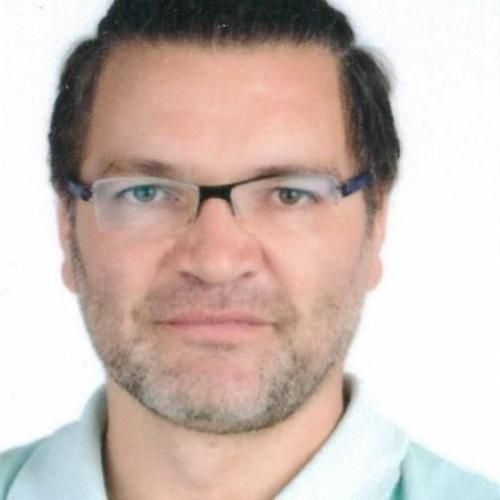
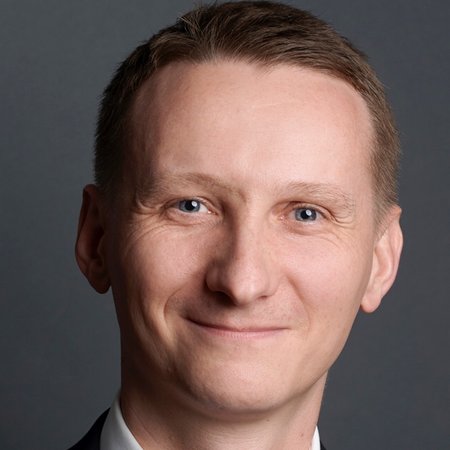
Prof. Dr. Ayikudi Ramachandrakumar Balasubramanian holds a Professorship in Formal Methods of Software Reliability at the Technical University of Munich (TUM) within the TUM School of Computation, Information and Technology . His work focuses on rigorous mathematical approaches to ensure software system dependability. Research interests include formal verification, software reliability engineering, and computational logic. Awarded as part of the TUM Senior Excellence Faculty and recognized as an Honorary Professor .
François Pessaux is a Professor and Teacher-researcher at ENSTA Paris, working within the Computer Science and Systems Engineering Unit (U2IS). His academic career spans several decades with significant contributions to programming language theory and formal methods. His research interests focus on Programming Languages , Formal Methods , Semantics of Programming Languages , Compilation , Proofs , and Hybrid Systems . Pessaux has developed extensive expertise in programming language semantics, particularly with functional languages like OCaml, and has made substantial contributions to formal verification techniques. His work bridges theoretical computer science with practical software development, especially for critical systems. His publication record shows a consistent focus on programming language design, semantics, and verification. Notable works include his comprehensive books on programming language concepts and his significant contributions to the FoCaLiZe environment, which supports formal integrated development for certified software. His research has evolved from foundational work on exception analysis in the 1990s to more recent comprehensive treatments of programming language semantics. Pessaux actively contributes to both research and education at ENSTA Paris, teaching foundational computer science courses including IN101 (Algorithms and Programming) and other advanced programming language courses. His teaching materials from recent academic years (2022-2023) demonstrate his ongoing commitment to computer science education. He is deeply involved with the FoCaLiZe project, which appears to be a formal integrated development environment for building certified software. This work connects programming language theory with practical software verification for critical systems, demonstrating his ability to bridge theoretical and applied computer science.
Laura Carnevali is an Associate Professor of Computer Science at the Department of Information Engineering, University of Florence, where she leads research in formal methods and performance evaluation as a member of the Software Technologies Lab. She teaches Software Engineering for Embedded Systems, Quantitative Evaluation of Stochastic Models, and Foundations of Computer Programming at the School of Engineering. Her research focuses on formal methods for real-time software development and performance evaluation of non-Markovian models, with significant contributions to the ORIS Tool for quantitative system analysis. Key areas include: Stochastic modeling of critical infrastructure Formal verification of real-time systems Reliability engineering methodologies Performance evaluation of cyber-physical systems Her publications show strong emphasis on applied formal methods, with recent work focusing on workflow analysis, infrastructure reliability, and transportation systems modeling. Research consistently integrates theoretical frameworks with practical applications in engineering domains. Awards include: Best Paper Award at ICPE 2021 She actively contributes to academic service as program committee member for leading conferences including FORMATS, QEST, and EPEW, and serves as reviewer for IEEE Transactions on Software Engineering, Reliability, and other prestigious journals.
Sundas Munir is a Lecturer at the School of Information Technology, Halmstad University. Her research focuses on blockchain technology, smart contract security, and renewable energy systems. University: Halmstad University School: School of Information Technology Rank: Lecturer Email: sundas.munir@hh.se Her recent publications highlight expertise in: Static analysis of smart contracts Transaction ordering dependencies in Ethereum Blockchain-based energy marketplaces Security validation frameworks Formal verification techniques Her work bridges theoretical research with practical applications in decentralized systems and cybersecurity. She is active in publishing conference papers and technical surveys related to blockchain integrity and energy innovation.
Hausi Müller is a Professor in the University of Victoria 's Department of Computer Science under the Faculty of Engineering & Computer Science . He serves as Chair of the IEEE Quantum Technical Community and co-founded the IEEE International Conference on Quantum Computing & Engineering . His academic journey began with a Ph.D. in Computer Science from Rice University (1986), followed by a Master's degree (1984) and a Dip.-Ing. from Swiss Federal Institute of Technology (1979). Research Interests: Dr. Müller's work spans quantum software engineering , self-adaptive systems , cyber-physical systems , and program understanding . He pioneered the Rigi reverse engineering tool and developed frameworks like SAVI for adaptive video analytics. Recent Publications: His 2025 articles focus on penalty-free quantum optimization and hybrid quantum software engineering , while 2024 contributions explore quantum cryptography education and notation translation tools . Earlier works address energy consumption modeling and cyber-physical system design . Awards: 2024 IEEE Computer Society Distinguished Leadership Award 2023 IEEE iCON Award for Quantum Week 2011 IBM Canada CAS Research Project of the Year for Personal Context Sphere 2012 CASCON Best Paper Award for SmarterDeals Fellow of the Canadian Academy of Engineering (FCAE) and Canadian Software Engineering Association (FCSSE) Grants & Projects: 2024-29 NSERC Quantum Software Consortium 2023-28 NSERC Discovery Grant for Hybrid Quantum Systems 2021-25 IBM CAS Cognitive Digital Twin Framework 2018-25 NSERC CREATE for Dependable IoT Applications Leadership: Dr. Müller has held multiple IEEE leadership roles since 2015, including Vice President of IEEE CS Technical & Conferences Board (2016-18), and active involvement in organizing international workshops in Shonan (Japan) and Dagstuhl (Germany).
Sergio Gabiel Petralia is an Assistant Professor in Economic Geography at the Faculty of Geosciences, Utrecht University. His research focuses on the spatial dimensions of economic development, technological change, and innovation systems. He teaches courses including Advanced Methods and Techniques, Advanced Methods in Economics and Geography, Economics of Cities, and Economics of Networks. His work examines how technological capabilities evolve across regions and how this affects economic disparities and spatial inequality. Dr. Petralia's research spans economic geography, technological change, and spatial inequality. He investigates how regions develop technological capabilities over time, examining patterns of innovation, patenting activity, and industrial evolution. His work often employs network analysis and historical datasets to understand long-term regional development trajectories and the factors that lead to economic divergence between places. He has developed expertise in analyzing complex economic activities, regional development traps, and the geography of innovation systems across different historical periods. His publication record reveals a progression from historical patent analysis to contemporary issues of economic complexity and disruptive innovation. Starting with studies of US patent geography from 1836-1975, his work evolved to examine technological ladders and complex economic activities in cities, culminating in recent research on disruptive innovation, spatial inequality, and future occupational geographies in Europe. His research consistently bridges economic geography with innovation studies, using sophisticated quantitative methods to explain spatial patterns of economic activity and technological development. Dr. Petralia has published in high-impact journals including Nature Human Behaviour, Research Policy, and Scientific Data. His 2020 paper in Nature Human Behaviour on complex economic activities in large cities has received significant attention with 296 citation indexes and 32 policy citations. His work demonstrates strong engagement with both academic and policy communities, with several publications referenced in policy sources and picked up by news outlets. As an educator, Dr. Petralia contributes to the Department of Economic Geography at Utrecht University, teaching advanced methods courses that likely incorporate his research expertise in economic networks and spatial analysis. His office is located in the Vening Meinesz Building on the Utrecht Science Park campus.
Pablo Vazquez Regueiro is a Professor at the Faculty of Physics, Department of Particle Physics, University of Santiago de Compostela. He is affiliated with the Galician Institute of High Energy Physics (IGFAE) and the GAES High Energy Physics Group. Education: Ph.D. from University of Santiago de Compostela (2000) - Thesis: Development and construction of electronics for microstrip detector readout Research Interests: His work focuses on experimental particle physics, including detector technology, microstrip electronics, and high-energy collision analysis. Key contributions involve CP violation studies, baryon spectroscopy, and trigger system development. Scientific Contributions: His publications highlight expertise in LHCb collaborations, detector simulation, and data analysis techniques. Research spans Higgs boson properties, dark matter searches, and hadronization mechanisms. Labs & Teams: Actively participates in IGFAE and GAES High Energy Physics Group activities, contributing to international collaborations like LHCb.
Petr Hnětynka serves as Associate Professor at the Department of Distributed and Reliable Systems within the Faculty of Mathematics and Physics at Charles University in Prague. He holds active roles in the Academic Senate and faculty management advisory bodies, with his workspace located in room S 212 at Malostranské náměstí 2/25 in Prague 1's Lesser Town district. His research centers on Distributed Systems and Reliable Systems , emphasizing Fault Tolerance and Dependable Computing to address critical challenges in system resilience and architectural robustness. These domains directly inform his teaching and supervision activities within the department's technical framework. Professor Hnětynka maintains active supervision of student works while contributing to institutional governance. His operational base in the historic Lesser Town campus facilitates collaboration within Charles University's computational research ecosystem, leveraging the department's focus on real-world system reliability.
Hsiang-Jen Hong is an Assistant Professor in the Department of Computer Science at Western Washington University, joining in September 2023. His research spans cybersecurity, blockchain technology, and computer networks, with a focus on algorithmic techniques and optimization problems in combinatorial optimization and game theory. Recently, he has explored critical Web3 technologies like Multi-Party Computation (MPC) and Zero-Knowledge Proofs (ZKPs). Prior to WWU, he worked as a postdoctoral associate at the University of Colorado at Colorado Springs, concentrating on cybersecurity and blockchain in distributed systems. He earned his Ph.D. in Computer Science and Information Engineering from National Taiwan University of Science and Technology in 2018. Research Interests : Blockchain Technology Network Security Computer Networking Combinatorial Optimization Game Theory Multi-Party Computation (MPC) Zero-Knowledge Proofs (ZKPs) Scientific Contributions : His work includes publications in prestigious journals like Elsevier Computer Networks and IEEE Transactions on Dependable and Secure Computing, as well as conferences such as IEEE ICDCS and IEEE IWQoS. His research on autonomous routing for payment channel networks was recognized by the Smart Contract Research Forum in Research Pulse Issue 81. Hobbies : Outside academia, he enjoys traveling, cooking, coffee, and independent music.
Paul Robinson is a Senior Postdoctoral Researcher at the University of Oxford's Radcliffe Department of Medicine (Cardiovascular Division), based at the British Heart Foundation Centre for Research Excellence Laboratories in the John Radcliffe Hospital. He operates within the Watkins Group (Inherited Heart Muscle Disease) and Redwood Group (Cardiac Contractility), focusing on translational cardiovascular research. His academic foundation includes a BSc (Hons) in Medical Biochemistry from Royal Holloway College London and a DPhil in Clinical Medicine from Exeter College, Oxford. With over 20 years of specialized research experience, he bridges molecular mechanisms with clinical manifestations of cardiac disease. Robinson's research centers on how genetic mutations in sarcomeric proteins cause hypertrophic (HCM) and dilated (DCM) cardiomyopathies. He employs recombinant protein systems, biophysical assays, and advanced cardiomyocyte models to investigate altered contractility, calcium handling dysregulation, and pathological signaling cascades. His work established critical links between myofilament calcium buffering defects and disease progression, revealing how thin filament mutations disrupt cellular homeostasis. Current efforts focus on developing genetically encoded calcium sensors and identifying therapeutic compounds to restore contractile balance. His publication record (2007-2023) demonstrates consistent focus on molecular cardiomyopathy mechanisms, with recent work emphasizing calcium imaging innovations and mutation-specific pathophysiological pathways. Key studies revealed opposing effects of HCM/DCM mutations on calcium affinity and identified NFAT/Akt signaling activation as a consequence of contractile dysfunction. As a core member of the CureHeart project—awarded the British Heart Foundation's £30 million Big Beat Challenge—Robinson contributes to developing gene-editing therapies for inherited cardiomyopathies. His laboratory work integrates with international collaborations featured in high-impact journals including Nature, Journal of Biological Chemistry, and American Journal of Physiology. His research groups utilize cutting-edge facilities for protein biochemistry, cellular electrophysiology, and stem cell-derived cardiomyocyte models. Recent initiatives include CalTrack software for automated calcium transient analysis and investigations into paracrine signaling pathways in cardiac fibrosis, positioning his work at the frontier of precision cardiovascular medicine.
Nalini Venkatasubramanian is a Professor at the University of California, Irvine with over three decades of research experience in Internet of Things, Cyber-Physical Systems, and Smart Spaces. Her work bridges theoretical foundations with practical applications in urban infrastructure, environmental monitoring, and healthcare systems, making significant contributions to both academic research and real-world implementations. Her research interests span privacy-preserving IoT systems, semantic modeling of smart environments, federated learning approaches, and resource-constrained computing. She has pioneered frameworks for human-in-the-loop IoT planning, verifiable data management, and context-aware monitoring systems that have been implemented in community-scale deployments. Her work consistently addresses the tension between functionality and privacy in connected environments. Analysis of her recent publications reveals a strong interdisciplinary trajectory, with increasing focus on environmental sustainability, equitable resource allocation, and socially responsible computing. Her research integrates techniques from machine learning, distributed systems, and human-computer interaction to solve complex problems in water infrastructure, power grid security, and community resilience. Dr. Venkatasubramanian has mentored numerous graduate students who have become leaders in their respective fields, and maintains extensive collaborations across computer science, civil engineering, and environmental science disciplines. Her laboratory has produced influential systems including SmartSPEC, REAM, CANOPY, and PrivacySphere, demonstrating her commitment to translating research into practical solutions.
Alexandros Kapravelos is an Associate Professor in the Department of Computer Science at North Carolina State University. His research focuses on web security, software supply chain security, and AI security, with a particular emphasis on browser security and the evolving threats in modern computing platforms. Education Ph.D. in Computer Science, University of California, Santa Barbara (2015) M.S. in Computer Science, University of Crete (2010) B.S. in Computer Science, University of Crete (2007) Research Interests Kapravelos's work spans several critical areas in cybersecurity: Web Security & Privacy : Investigating threats such as browser fingerprinting, malicious JavaScript, and tracking techniques. Software Supply Chain Security : Analyzing vulnerabilities in CI/CD workflows, open-source dependencies, and reproducible builds. AI Security : Exploring the implications of large language models (LLMs) on security and privacy. Scientific Awards NSF CAREER Award IEEE Symposium on Security and Privacy Best Paper Award (twice) Network and Distributed System Security Symposium (NDSS) Best Paper Award Grants & Funding Kapravelos has secured significant funding from agencies including the National Science Foundation (NSF), DARPA, and the US Navy. Notable grants include: Collaborative: SaTC: Frontiers : $5.7M for software supply chain security (2022–2027) CAREER: Web Evolution and Emerging Threats : $439K for browser security research (2021–2027) Collaborative: SaTC: CORE : $799K for defending against stateless web tracking (2022–2026) Labs & Teams He is a member of the Wolfpack Security and Privacy Research (WSPR) Lab and faculty mentor of HackPack , a student CTF team. He also co-organized the DEF CON CTF (2018–2021) as part of The Order of the Overflow .
Andrea Fioraldi is a Ph.D. student and researcher at EURECOM working under the supervision of Prof. Davide Balzarotti in the Software and Systems Security group. He specializes in improving security vulnerability discovery techniques, particularly through fuzz testing as part of the DARPA Chess project. His research has significant implications for software security and reliability. Andrea earned his BSc in Computer and Control Engineering from Sapienza, University of Rome in 2018, followed by an MSc in Engineering in Computer Science from the same institution in 2020. His master's thesis focused on "Program State Abstraction for Feedback-driven Fuzz Testing using Likely Invariants" developed during an internship at EURECOM. His research interests center on fuzz testing methodologies, memory safety analysis, binary format processing, and vulnerability discovery. He has made significant contributions to advancing fuzz testing capabilities, particularly through his work on AFL++ and LibAFL frameworks, which have become essential tools in the security research community. Analysis of his publication record shows a clear progression from foundational work on fuzz testing techniques to more sophisticated approaches integrating emulation, memory safety analysis, and structured data handling. His research consistently bridges theoretical advances with practical implementations that have been adopted by the security community. Italian CyberChallenge winner (Malware Analysis, 2017) Participant in ENISA's European CyberSecurity Challenge (first Italian team) Active competitor in DEFCON CTF and CCC CTF with team mHACKeroni PC member for IEEE Workshop on Offensive Technologies (WOOT 2021, 2022) External reviewer for International Symposium on Code Generation and Optimization (CGO 2024) Andrea serves as a maintainer for AFL++, one of the most advanced publicly available fuzzers, and has contributed significantly to the security research community through his open-source projects. He is actively involved in the DARPA Chess project, focusing on improving the effectiveness of security vulnerability discovery techniques. He is a member of the mHACKeroni CTF team and regularly participates in top international cybersecurity competitions. His work bridges academic research with practical security applications, making significant contributions to both domains.
Rabéa Ameur-Boulifa is an Associate Professor at Télécom Paris, affiliated with the Communications and Electronics (Comelec) Department. She is a member of the LabSoc research team within the Information Processing and Communication Laboratory (LTCI). Her work focuses on integrated and embedded systems, emphasizing design, modeling, verification, and security. LabSoc (System on Chip research team) LTCI (Information Processing and Communication Laboratory) Her research spans formal methods for system verification, security guidelines specification, and compositional analysis of distributed systems. Publications highlight applications in automotive software safety, asynchronous component modeling, and detection of vulnerabilities like integer overflow in embedded systems. The majority of her recent work (2022–2025) centers on open automata refinements, formal requirement validation, and compositional verification techniques. Keywords include formal methods, embedded systems, security guidelines, and distributed component modeling.
Robert Woroch is a research assistant at the Chair of Business Information Systems and Software Engineering at the University of Duisburg-Essen's Faculty of Computer Science. His work focuses on digital business models, platform ecosystems, and value creation analysis in fintech and e-commerce domains. Current affiliation: Universitaet Duisburg-Essen Academic rank: Researcher Research specializations: Ecosystems, Value Networks, Fintech, E-commerce, IoT-enabled business models. His studies explore digital transformation mechanisms and value flow analysis in platform economies. Publication trends: Recent work examines value creation frameworks in e-commerce ecosystems, sustainability-driven initiatives in retail, data monetization strategies, and fintech customer dynamics. Key methodologies include multi-case studies and systematic literature reviews. Academic engagement: Active in conference reviewing (Electronic Markets, WI, ECIS) and has contributed to several peer-reviewed publications on digital platforms.