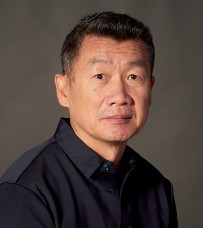
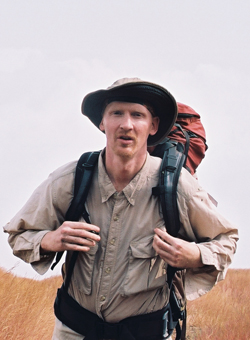
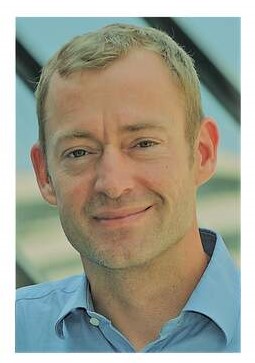
Shi Li is a Senior Lecturer in the School of Humanities, Arts, and Social Sciences at the University of New England, specializing in Chinese language instruction and cross-cultural studies. His research examines gratitude development in children towards parents and intercultural dynamics, with qualifications spanning English education, history, business administration, and a PhD. He teaches Chinese language courses at all levels, contemporary Chinese culture, and calligraphy. Research interests center on family education and cultural studies, particularly addressing issues of filial piety and entitlement in aging societies globally. Grants include a 2016 Visiting Research Fellowship at Sapienza University of Rome.
Jack Sutton is a Lecturer in Data Science at the University of Derby's College of Science and Engineering. His research focuses on urban scaling phenomena, epidemiological modeling, and spatial-statistical applications. Sutton's work bridges data science with public health and urban planning, analyzing how population density, city size, and inter-city networks influence disease spread and socio-economic patterns. Key research interests include: Urban-rural transitions and scaling laws Epidemiology of pandemics (especially SARS-CoV-2) Bayesian statistical modeling for scaling problems Geospatial analysis of demographic and health metrics His recent publications analyze urban density impacts on disease transmission, rural-urban demographic scaling anomalies, and heteroscedastic Bayesian models for complex systems. Sutton's work frequently combines computational methods with real-world data from England/Wales, Brazil, and other regions. No scientific awards or grants are explicitly listed in available materials. He has advised no formally listed students, though collaborative research teams are implied through co-authorships.
Marcel Zeelenberg is a Full Professor at Tilburg School of Social and Behavioral Sciences and Professor of Behavioral Research in Marketing at Vrije Universiteit Amsterdam. His work bridges economic psychology, behavioral economics, and consumer decision-making. Education : PhD in Social Psychology from University of Amsterdam, Postdoctoral Fellow at Eindhoven and Sussex Universities. Zeelenberg's research examines emotions like regret, disappointment, and greed in decision-making. He studies their applications in financial behavior, taxation, and behavioral interventions. Recent publications focus on tax morale morality, greed's role in relationships, gratitude from monetary gifts, and psychological harm in policy design. Scientific Awards : Van der Leeuw Professor (NWO-funded), TMR Marie Curie Fellowship. Zeelenberg advises students in projects on consumer behavior, emotional regulation, and economic psychology.
Sara Kalucza is a Research Fellow at the Department of Sociology and the Centre for Demographic and Aging Research (CEDAR) at Umeå University. She is affiliated with three research groups: Family Sociology, Sociology of health, well-being, and quality of life, and Sociology of work. Her research centers on life course sociology with emphasis on teenage parenthood, mental health consequences, and labor market trajectories. She investigates intergenerational transmission of family formation patterns, mental health effects of early parenthood, and social determinants of teenage parenthood using longitudinal register-based studies primarily in Sweden. Her work bridges demographic methods with sociological theory to examine how early life events shape long-term socioeconomic outcomes. Analysis of her 15 most recent publications (2015-2025) reveals consistent focus on demographic transitions, particularly teenage parenthood and its intergenerational consequences. Key thematic clusters include mental health trajectories (35% of publications), labor market outcomes (25%), intergenerational transmission (20%), and methodological innovations in life course research (15%), with emerging interest in technology-society interactions as evidenced by her 2025 AI perception study. Dr. Kalucza actively participates in major research initiatives including CRITICAL MICROBES (2024), Viral BRAIN (2022), a COPD stigma study (2021-2024), HEALFAM (2019-2025), and life course consequences of teenage parenthood research (2019-2021). These projects demonstrate her interdisciplinary approach integrating sociology, demography, and public health through large-scale register data and longitudinal analysis.
Alina Vereshchaka is an Assistant Professor of Teaching in the Department of Computer Science and Engineering at the University at Buffalo. She holds a PhD in Computer Science from the same institution (2021). Her research focuses on optimal control in complex systems, including social behavior modeling, deep reinforcement learning, multi-agent systems, adversarial machine learning, transportation dynamics, and large-scale social system dynamics. She leads projects involving epidemic modeling, smart city infrastructure optimization, and disinformation detection. Education: PhD in Computer Science, University at Buffalo, 2021 Her work bridges theoretical machine learning advancements with real-world applications in public health, transportation, and crisis management. Key research themes include: Optimizing epidemic intervention strategies using reinforcement learning Urban traffic prediction through vehicle trajectory analysis Automated disinformation detection systems Multi-agent resource allocation during disasters Dr. Vereshchaka's recent publications (2018-2024) emphasize data-driven decision-making frameworks across transportation networks, healthcare systems, and social media platforms. Though no specific grants or awards are listed, her work reflects interdisciplinary collaboration with engineering and public health domains. She currently advises no listed students and maintains an active research website and dblp profile for further details.
Patrick Button is an Associate Professor of Economics and Executive Director of the Connolly Alexander Institute for Data Science at Tulane University's School of Liberal Arts. They hold additional affiliations as Faculty Research Fellow at NBER and IZA Institute of Labor Economics. Their research focuses on discrimination measurement through audit field experiments and analysis of discrimination laws. Research interests span discrimination economics, field experiments, aging economics, disability policy, and LGBTQIA+ economics. Their work combines quantitative methods with policy analysis to examine labor market inequities. Recent publications demonstrate consistent focus on discrimination mechanisms across healthcare, hiring, and mortgage lending, using experimental designs to quantify biases. Notable awards include Tulane's Provost Award for EDI Research and the Schloss Economics Prize. Leads Discrimination, Disparities, and Data Lab (D3L) with 40+ research assistants Manages NSF CAREER grant on sexual orientation/gender identity discrimination Active in diversity initiatives including LGBTQ+ mentoring in economics
Mustafa Hussein is an Assistant Professor of Health Economics at the CUNY Graduate School of Public Health. He is affiliated with the CUNY Institute for Demographic Research (CIDR) and the University of Wisconsin-Madison’s Institute for Research on Poverty (IRP). His work focuses on health policy, labor markets, and the socio-biological mechanisms linking public policy to health outcomes. He employs advanced quantitative methods to study health inequalities in healthcare systems and labor markets. Education: Postdoctoral Fellowship in Epidemiology, Dornsife School of Public Health, Drexel University PhD in Health Policy, University of Tennessee Health Science Center MS in Chemistry, Washington State University BSc in Pharmacy (Distinction with Honors), Minia University, Egypt Research Interests: Policy drivers of health inequalities in healthcare and labor markets Economic risk from out-of-pocket medical expenses Psychosocial stress and cardiovascular disease/HIV/AIDS in marginalized populations Algorithmic management impacts on gig workers in NYC His research is funded by major organizations including the American Heart Association, Robert Wood Johnson Foundation, and NIH. He mentors students in health economics and teaches graduate courses on econometrics and healthcare systems.
Theodore Joyce is a Professor of Economics at Baruch College and the Graduate Center, City University of New York (CUNY), and a Research Associate at the National Bureau of Economic Research (NBER). His primary affiliations include the Zicklin School of Business and the Bert W. Wasserman Department of Economics and Finance. Joyce specializes in Health Economics, Policy Evaluation, and Economic Demography, with a focus on reproductive health policy, program effectiveness, and online learning formats. Education: Ph.D. in Economics from CUNY Graduate Center (1985), BA in Education from University of Massachusetts (1976). Research interests span abortion policy, public health interventions (e.g., WIC and SCHIP programs), and the impact of educational policies. Notable studies include evaluations of Arkansas’ abortion waiting periods, reality TV’s influence on teen fertility, and the efficacy of peer counseling for breastfeeding. Current projects include CUNY-wide evaluations of the SEEK program and honors college outcomes. Grants include NIH-funded studies on preterm births during the pandemic and the effects of peer counseling. Over 150+ publications in journals like *Journal of Political Economy* and *New England Journal of Medicine* highlight his contributions to health policy and econometrics. Awards include the 2011 Raymond Vernon Memorial Prize and multiple Presidential Excellence Awards. Joyce chairs the Zicklin Executive Committee and directs Baruch’s Online Learning and Evaluation program. His service roles include governance and pedagogical innovation at Baruch and CUNY.
D. Stephen Voss is an Associate Professor of Political Science at University of Kentucky with expertise in voting behavior, ethnic politics, and Kentucky government. He serves as Internship Director and received the 2017 William E. Lyons Award for public service. Education: PhD in Government (Harvard University), AM in Government (Harvard), BA in History/Journalism (Louisiana State University). Research Focus: Quantitative analysis of racial/ethnic voting patterns, migration politics, and Kentucky electoral trends. Conducted cross-cultural studies in the Balkans on ethnic divisions and death penalty attitudes. Publication Trends: Recent work examines Trump-era coalition shifts, pedagogical applications of survey research, and Democratic decline in Kentucky. Earlier scholarship analyzed redistricting effects, mental health in criminal justice systems, and Tea Party politics. Awards: William E. Lyons Award (2017) Pi Sigma Alpha Outstanding Professor Award (2022) UK Alumni Association Great Teacher Award Public Engagement: Provides nonpartisan election analysis for ABC-36 WTVQ and WVLK radio; consultant on voting behavior and Kentucky politics. Authored CliffsNotes guide to American government. Academic Service: Led curriculum reforms for UK's Political Science program and UKCore general education; chaired Educational Policy Committee; created teaching assistant award system.
Samar Safi-Harb is a Professor of Physics and Astronomy at the University of Manitoba, Canada, and holds the Canada Research Chair in Extreme Astrophysics. She is affiliated with the Faculty of Science and leads research in high-energy astrophysics, multi-messenger astronomy, and X-ray telescope development. Her work focuses on supernova remnants, pulsar wind nebulae, and particle acceleration mechanisms in extreme astrophysical environments. Her research interests include studying cosmic rays, magnetic fields in galaxies, and the physics of compact objects like black holes and neutron stars. She collaborates on major missions such as the Cherenkov Telescope Array (CTA), NuSTAR, and the upcoming CASTOR mission. Her recent work explores PeVatron candidates, galactic microquasars, and the interplay between stellar explosions and their environments. Education: PhD in Astrophysics (not explicitly stated in text; inferred from role and publications). Her articles (2023–2025) emphasize multi-messenger approaches, combining X-ray, radio, and gamma-ray observations to uncover mechanisms in pulsar wind nebulae, supernova remnants, and AGN. Key themes include particle acceleration, synchrotron emission, and the origins of cosmic rays. Scientific Awards: Canada Research Chair in Extreme Astrophysics Advising and grants: While student names are unspecified, her research involves international collaborations and leverages large facilities such as Chandra, XMM-Newton, and the Nobeyama radio telescope. Grants and funding sources are implied through mission involvements but not explicitly listed. Labs/Teams: Active in projects like the Cherenkov Telescope Array (CTA), CASSIOPE, and collaborations with NASA’s NuSTAR and ESA’s XMM-Newton missions. Her work bridges observational astrophysics and theoretical modeling of extreme environments.
Vanessa Graber is a UKRI Future Leaders Fellow and Senior Lecturer in Physics at Royal Holloway, University of London. Her research focuses on neutron stars, combining astrophysics with condensed-matter physics and machine learning. She holds a PhD in Applied Mathematics from the University of Southampton and a Diplom in Physics from Eberhard Karls University of Tübingen. Previously, she was a Senior Lecturer in Data Science at the University of Hertfordshire and held postdoctoral positions at McGill University and the Institute of Space Sciences in Barcelona. Research Interests : - Macroscopic quantum phases in neutron stars - Superfluid/superconducting dynamics in neutron star interiors - Simulation-based inference with neural networks - Laboratory analogues (e.g., superfluid helium, Bose-Einstein condensates) - Neutron star population synthesis using SKA data Awards : UKRI Future Leaders Fellowship (2024–2028) Juan de la Cierva Incorporación Fellowship (2022–2024) McGill Space Institute Fellow (2016–2019) First Prize, Nobel Laureate Meeting Poster Exhibition (2019) Grants & Projects : - Leading the UKRI-funded 'Revealing neutron-star interiors with AI and SKA' project (2024–2028) - Co-investigator on ERC MAGNESIA project (2020–2024) - Member of JINA-CEE and IReNA nuclear astrophysics networks Outreach : - Public lectures on neutron stars and pulsar glitches - Scientific advisor for short film 'Pulsars: A Tale of Cosmic Clocks' (2022) - Outreach activities with school students and the general public
Jeffrey G. Snodgrass is a Professor of Anthropology and Geography at Colorado State University (CSU), with additional appointments as Adjunct Professor at the Colorado School of Public Health and Advising Faculty Member in the Graduate Degree Program in Ecology. His research focuses on psychological and biocultural anthropology, examining the therapeutic dimensions of religion, play, and virtual worlds. He directs the Ethnographic Research and Teaching Laboratory (ERTL), emphasizing mixed-methods approaches to studying human flourishing, stress resilience, and cultural concepts of well-being. Snodgrass holds a Ph.D. in Anthropology from UC San Diego (1997), an M.A. from the same institution (1990), and a B.S. in Molecular Biology from Vanderbilt University (1988). His work bridges qualitative and quantitative methods, including biomarker analysis to study stress physiology. Key projects explore stress resilience in Indian spirit religions and global role-playing games, with implications for global mental health. His research interests span causal reasoning in ethnography, cultural consensus analysis, and the social genomics of gaming. Recent publications include The Avatar Faculty: Ecstatic Transformations in Religion and Video Games (2023) and (2021). He teaches courses on psychological anthropology, virtual worlds, and research design, emphasizing practical methodological training for students. Snodgrass has secured grants such as the NSF EAGER Award (2016) for biocultural studies of internet use. His work highlights the intersection of cultural practices, digital spaces, and mental health, advocating for innovative ethnographic techniques to address complex social and environmental challenges.
Gang Luo is an Assistant Professor in the Department of Biomedical Informatics at the University of Utah's School of Medicine. He holds a PhD in Computer Science from the University of Wisconsin-Madison with a minor in Mathematics. His research focuses on health informatics, machine learning, natural language processing, and database systems, with applications in clinical decision support, medical search engines, and healthcare data analytics. Dr. Luo has over 50 publications and 20+ patents, including inventions like the iMed intelligent medical search engine and systems for progress indication in database operations. His work integrates advanced computing techniques with healthcare challenges to improve patient care and public health outcomes. Education: PhD in Computer Science (University of Wisconsin-Madison), BS in Computer Science (Shanghai Jiaotong University). Research Interests : Health Informatics (software systems, data analytics) Machine Learning & AI for healthcare Data Mining and Databases Medical Search and Information Retrieval Decision Support Systems His patent portfolio includes innovations in database systems, real-time event detection, and medical search tools. Recent work explores computational approaches for asthma management, COPD phenotyping, and predictive modeling in clinical settings. His research emphasizes translating technical advancements into practical healthcare solutions.
Sara Sjöstedt de Luna is a Professor in Mathematical Statistics at Umeå University's Department of Mathematics and Mathematical Statistics. She is a board member of The Wallenberg AI, Autonomous Systems & Software Program (WASP) and holds the title of Docent. Her research spans functional data analysis, spatial statistics, and their applications in climatology, forestry, and human motor control. Affiliation : Umeå University Department : Mathematics and Mathematical Statistics Research Focus : Functional data analysis, spatial statistics, and interdisciplinary applications in environmental and biomedical domains Her recent work involves developing statistical tools like the fdaMocca and fiberLD R packages, advancing methodologies for clustering functional data with covariates, and refining kriging approaches for spatiotemporal predictions. She has contributed to climate reconstruction using varved lake sediment data and biomechanical analysis of knee kinematics post-injury. Applications of her research include: Climate modeling using historical sediment records Wood fiber length determination for forestry studies Biostatistical analysis of human motor control Sjöstedt de Luna employs both parametric and nonparametric statistical techniques, with a focus on handling dependent data structures, censoring challenges, and algorithm design for complex datasets.
Prof. Peter Selb is a Professor of Research Methodology at the Department of Politics and Public Administration, University of Konstanz. He leads the AG Selb research group focusing on survey methodology and chairs the interdisciplinary Master's program in Social and Economic Data Science (SEDS). Previously, he served as head of Swiss Electoral Studies (Selects) and was an assistant professor at the same department. He holds a PhD in Political Science from the University of Zurich and a Master's in Political Science, Media/Communication, and Economic History from the University of Mannheim. Affiliations: Center for Data and Methods (CDM), Konstanz Roles: Deputy Equal Opportunities Officer, Study Commission member for Politics-Law-Economics programs Teaching: Advanced survey methods, causal inference, statistical modeling His research focuses on political behavior, public opinion, and methodological innovations in survey research. Key areas include election polling accuracy, pandemic response behaviors, and graphical causal models for survey inference. He has led projects on polling errors, international redistribution preferences, and digital divide implications of AI adoption. Recent publications include work on: COVID-19 contact tracing app usage (Nature Human Behavior, 2021) Survey methods for measuring pandemic compliance (Survey Research Methods, 2020) Causal modeling frameworks for survey data analysis (Sociological Methods & Research, 2025) Ethnic minority parliamentary representation in Eastern Europe He advises on grants including EU-funded studies on redistribution preferences and online information inequities. His lab (AG Selb) explores cutting-edge methodological challenges in political science research.