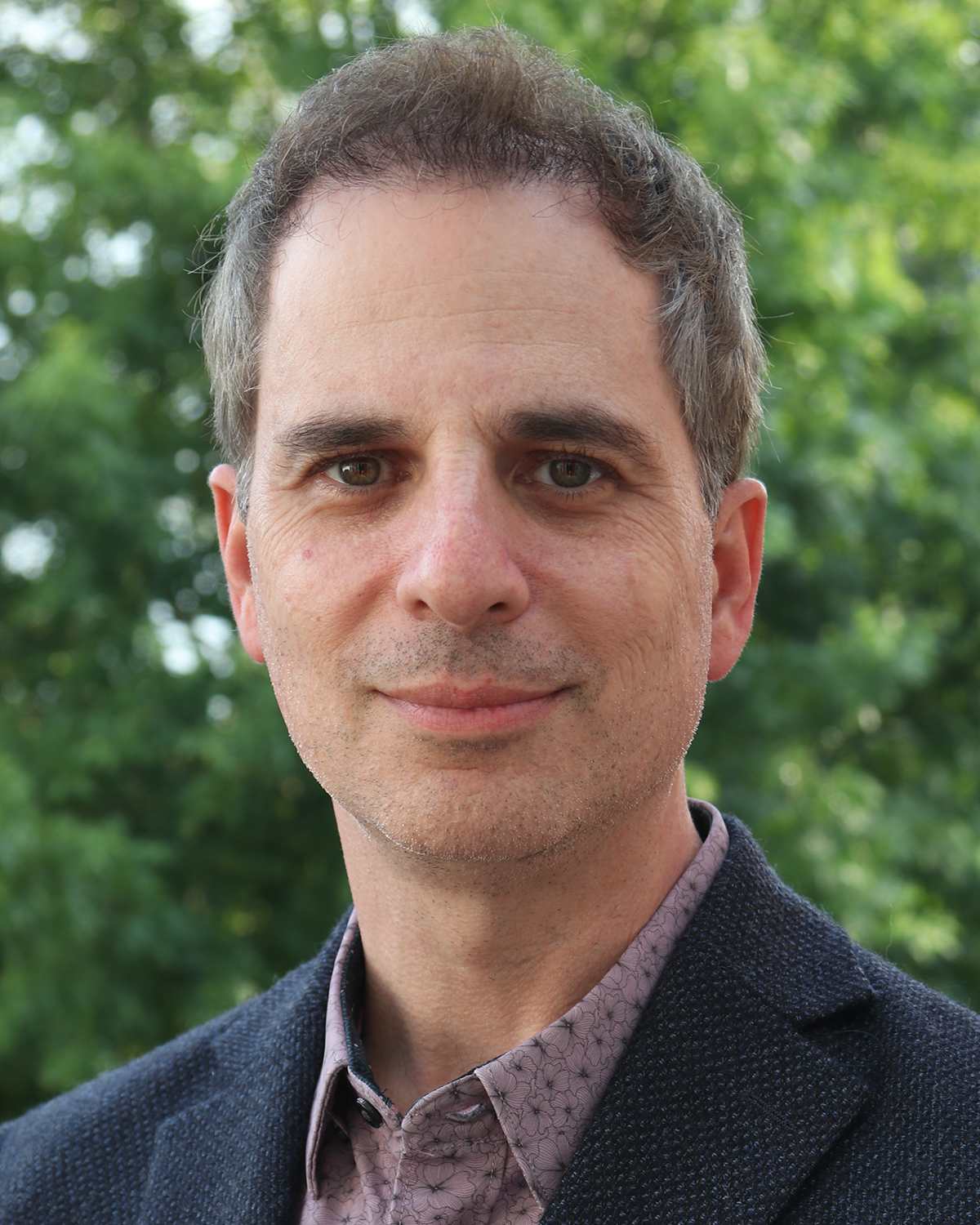
Dr. Kaiqun Fu is an Assistant Professor in the McComish Department of Electrical Engineering and Computer Science at South Dakota State University (SDSU). He holds a Ph.D. and M.S. in Computer Science from Virginia Tech (2021 and 2016). His research focuses on spatial data mining, spatiotemporal event analysis, graph neural networks, and urban computing applications such as traffic impact prediction and social media-driven insights. He also explores physics-informed machine learning for power systems and interdisciplinary topics like 'deaths of despair' in rural areas. Education: Ph.D. in Computer Science, Virginia Tech, 2021 M.S. in Computer Science, Virginia Tech, 2016 Research Interests: His work emphasizes machine learning and deep learning applications in spatial-temporal domains, including: Graph neural networks for traffic incident prediction Social media analysis for urban challenges Physics-informed models for power grid stability Citation forecasting in scientific publications Grants & Projects: NSF CRII ($174,734): Spatiotemporal impacts of traffic events via graph neural networks (2024–2026) NSF EAGER ($300,000): Socio-economic impacts of emerging technologies (2024–2026) SDSU RSCA ($10,118): Graph transformer-based location learning (2023–2024) Professional Involvement: He chairs ACM SIGSPATIAL's SRC committee, serves on SDSU's Computer Science curriculum committees, and is an IEEE member. He co-edits Frontiers in Big Data and advises on interdisciplinary projects like climate-impacted grid security (NSF RII Track-2, $750,000). Labs/Teams: Collaborates with interdisciplinary groups focusing on smart cities, data-driven infrastructure resilience, and GeoAI applications.
Anton Rozhkov is an Industry Assistant Professor and Director of the M.S. in Applied Urban Science and Informatics Program at the Center for Urban Science and Progress (CUSP) at New York University (NYU) Tandon School of Engineering. His work focuses on applying geospatial tools, modeling techniques, and data science to address complex challenges in urban environments, with particular emphasis on infrastructure planning and city design. Dr. Rozhkov earned his Ph.D. in Urban Planning and Policy from the University of Illinois Chicago, where his research centered on decentralized and renewable energy systems in urban contexts through a complex systems approach. Prior to his doctoral studies, he received an M.S./B.S. in Engineering in Land Cadaster from the State University of Land Use Planning in Moscow, Russia, and worked as a senior specialist in the Russian power grid sector with "Rosseti" Group of Companies. His research interests span the application of complex systems, data science, and spatial analytics to solve urban challenges, particularly focusing on how data-driven policies and new technologies can transform infrastructure planning and city design. Dr. Rozhkov employs methods including causal loop diagrams, system dynamics, and agent-based modeling to understand how decentralized energy systems interact with existing power grids and contribute to sustainable urban development. He has published extensively on urban transportation, energy systems, and census data analysis, with a notable focus on Chicago's urban landscape and Illinois state initiatives. Dr. Rozhkov has been actively involved in several significant research projects including an empirical investigation into affordable transit-oriented development in California sponsored by the California State University Transportation Consortium, the Sustainable Urban-Regional Modeling Network project funded by the Illinois Innovation Network, and the Census 2020 Map-The-Count project with the Illinois Department of Human Services which developed predictive models for census response rates and a GIS platform for reporting outreach activities. Ph.D. in Urban Planning and Policy, University of Illinois Chicago M.S./B.S. in Engineering in Land Cadaster, State University of Land Use Planning (Moscow, Russia) His teaching portfolio includes courses on geographic information systems (GIS), advanced spatial analysis, decision modeling, and machine learning for cities. Dr. Rozhkov emphasizes not just understanding urban trends but exploring the "why" behind these trends to develop sustainable solutions. His recent publications (2020-2025) demonstrate a consistent research trajectory examining the complex interrelationships between urban infrastructure systems, particularly focusing on energy, transportation, and spatial patterns through sophisticated analytical methods. Outside of his academic work, Dr. Rozhkov is passionate about urban and landscape photography, traveling, running, snowboarding, and playing guitar. He was born and raised in Balashikha, a city in the Moscow suburbs in Russia, and maintains a gallery of his photographic work from various global locations.
Laura Balzer, PhD, MPhil is an Associate Professor of Biostatistics at the University of California, Berkeley . Her research focuses on methodological and applied work in causal inference , machine learning , and messy real-world data , particularly in the context of HIV prevention and global health in East Africa. PhD – Biostatistics, University of California, Berkeley (2015) MPhil – Computational Biology, University of Cambridge (2009) BS – Applied Mathematics, University of Vermont (2008) Dr. Balzer specializes in the design and analysis of cluster randomized and pragmatic trials , addressing challenges like differential measurement , complex dependence , and missing data . Her work integrates epidemiologic methods with machine learning to enhance rigor in real-world studies. Recent publications emphasize community-based HIV interventions , dynamic choice models , and causal inference frameworks for global health applications in Kenya and Uganda. Her methodological contributions include Two-Stage TMLE for handling sub-sampling and non-independent units , while applied studies examine HIV-tuberculosis interactions , hypertension care models , and social network effects on health outcomes. Dr. Balzer’s role as a Primary Statistician for East African studies underscores her commitment to translating academic advances into public health impact .
Thomas S. Dee is the Barnett Family Professor at Stanford University's Graduate School of Education (GSE), a Research Associate at the National Bureau of Economic Research (NBER), a Senior Fellow at the Stanford Institute for Economic Policy Research (SIEPR), and a Senior Fellow (Joint) at the Hoover Institution. He serves as the Faculty Director of the John W. Gardner Center for Youth and Their Communities and holds multiple administrative appointments including Member of the Executive Committee of Stanford's Public Policy Program. Professor Dee's research focuses on the use of quantitative methods to inform contemporary issues of public policy and practice, with particular emphasis on education policy, economics of education, and program evaluation. His work spans critical areas including pandemic education effects, chronic absenteeism, school choice, educational equity, STEM education, and research methodology. He has made significant contributions to understanding how quantitative analysis can shape effective educational policy and practice. Dee's recent publications reveal a strong focus on pandemic-related educational disruptions, examining issues like chronic absenteeism, enrollment declines, and school reopening preferences. His research demonstrates expertise in quasi-experimental methods and has increasingly addressed questions of educational equity, particularly regarding underrepresented students in STEM fields. His 2025 work on Advanced Placement computer science shows how course design can broaden participation among female and minority students. Outstanding Public Communication of Education Research Award, American Educational Research Association (2024) Peter H. Rossi Award for Contributions to the Theory or Practice of Program Evaluation, Association for Public Policy Analysis and Management (2024) Research-Practice Partnership Award (co-recipient), California Educational Research Association (2023) Community Outcomes and Impact Award, International Association for Research on Service Learning and Community Engagement (2020) Raymond Vernon Memorial Award, Association for Public Policy Analysis and Management (2019) Raymond Vernon Memorial Award, Association for Public Policy Analysis and Management (2015) Professor Dee actively contributes to academic discourse through editorial roles on journals including the American Educational Research Journal and Education Finance and Policy. His teaching portfolio includes advanced courses in quantitative policy analysis and quasi-experimental research design, reflecting his methodological expertise. While specific grant information isn't detailed in the provided text, his extensive publication record and leadership roles suggest significant research funding support. As Faculty Director of the John W. Gardner Center for Youth and Their Communities, Dee leads initiatives connecting Stanford with community organizations to address youth development challenges. His work bridges academic research with practical community applications, emphasizing the importance of research-practice partnerships in creating meaningful educational change.
Chris Telmer is an Associate Professor of Financial Economics at Carnegie Mellon University's Tepper School of Business. He has held key academic positions since 1998 and served as Department Head for Economics from 2019 to 2021. His work bridges finance, macroeconomics, and international economics. PhD in Economics (Queen's University, 1992) BA Hons. in Economics (University of Western Ontario, 1986) His research focuses on: Government subsidies for renewable energy financing Consumption behavior and risk sharing Exchange rate dynamics and international finance Intergenerational mobility and surname-based economic inference Labor-market risk and financial markets Recent publications highlight trends in international finance , intergenerational mobility , and macroeconomic risk . Key topics include currency risk, asset pricing, and demographic analysis. Scientific recognition includes: Undergraduate Teaching Award (1995) George Leland Bach Award for MBA Teaching (2001) Telmer has advised numerous students, collaborated with global institutions, and held visiting roles in Canada, Chile, Japan, Spain, and Sweden. His work connects financial markets with macroeconomic policy challenges.
Bryan S. Graham is a Professor of Economics at the University of California, Berkeley. He specializes in econometrics, focusing on network formation, social interactions, and panel data analysis. His research explores topics such as peer effects, poverty traps, and small sample properties of econometric methods. Graham holds a Ph.D. from Harvard University (2005) and has held visiting positions at Harvard, CEMFI (Spain), and NYU. He is an elected Fellow of the International Association of Applied Econometrics. Education highlights include a Rhodes Scholarship (1997–2000) at Oxford University, a Fulbright Scholarship (1997–1998) at the Australian National University, and a B.A. in Quantitative Economics from Tufts University (1993–1997). His work has been published in top journals like Econometrica and the Review of Economic Studies . Key awards include NSF grants (multiple), the Review of Economics Studies Tour, and the Daniel Ounjian Prize. Graham’s research has practical applications in policy analysis, particularly in education and social spillover effects. He also actively contributes to academic service, including editorial roles at Review of Economics and Statistics and Journal of Econometrics .
Prof Andrea Manica is a Professor of Evolutionary Ecology and Deputy Head of Department (Research) at the University of Cambridge, Department of Zoology. Her research spans ecological and evolutionary time scales, integrating climate reconstructions, paleontological data, ecological datasets, and genetic information to understand species' responses to environmental change. Research Areas: Population Genetics, Species Distribution Models, Paleoclimate Reconstructions, Human Evolutionary Ecology Key Tools: Development of open-source R packages like tidypopgen and tidygenclust for population genetics and data analysis Focus Taxa: Seabirds (albatrosses, petrels), sharks, turtles, bears, and Homo sapiens Her work addresses questions such as: How do animals adapt movement strategies to changing environments using tracking data? What drives range changes and genetic differentiation in species like leopards and giraffes? How did climatic shifts influence human evolution, migration, and cultural innovations? What computational tools can interrogate large datasets across space and time? Her interdisciplinary approach combines computational models, fieldwork, and collaborations with institutions like the British Antarctic Survey.
Lauren Zalla, PhD, MS, is a Research Associate at the Bloomberg School of Public Health and School of Medicine at Johns Hopkins University. She holds a PhD in Epidemiology from UNC Chapel Hill (2022) and an MS in Public Health from Duke University (2015). Her work focuses on policy approaches to improve health outcomes and reduce inequities among people with HIV in the United States. PhD, University of North Carolina at Chapel Hill (2022) MS, Duke University (2015) Dr. Zalla examines social and structural determinants of health, racial disparities, and effectiveness of interventions like the Ending the HIV Epidemic Initiative and state AIDS Drug Assistance Programs. Her methodological contributions include improving disparity measurement, causal inference techniques, and sub-population estimation. Recent publications analyze spatio-temporal mortality patterns, antidepressant impacts on viral suppression, and integrase inhibitor associations with diabetes in HIV populations. Key awards include the 2025 Lilienfeld Postdoctoral Paper Prize Finalist and 2023 Delta Omega Honorary Society membership. 2025 Lilienfeld Postdoctoral Paper Prize Finalist 2023 Health Disparities Scholar 2023 Bernard G. Greenberg Award 2022 Tyroler Student Paper Prize Finalist Her research integrates spatial epidemiology, causal modeling, and policy evaluation to address systemic inequities in HIV care. Collaborations span clinical and population health domains with major journals including JAMA, American Journal of Epidemiology, and AIDS.
Till Marco von Wachter is a Professor of Economics at the University of California Los Angeles (UCLA) , where he serves as Faculty Director of the California Policy Lab’s UCLA site , Associate Dean for Research in the Social Sciences Division, and Director of the Federal Statistical Research Data Center . His interdisciplinary research bridges labor economics, macroeconomic policy, and public health. Research Focus: Labor market dynamics during recessions Impact of unemployment and disability insurance Socioeconomic determinants of mortality Globalization and wage inequality Policy evaluation using administrative data Publications: His work appears in top journals like the American Economic Review , Quarterly Journal of Economics , and JAMA , analyzing topics such as job displacement, UI reforms, and long-term recession effects. Recent articles emphasize health disparities, firm-level inequality, and pandemic labor market policies. Scientific Awards: Best Paper Award, American Economic Journal: Applied Economics (2012) Contact: Email: tvwachter@econ.ucla.edu Phone: 310-825-5665
Jon Wakefield is a Professor in the Department of Biostatistics at the University of Washington's School of Public Health, with additional appointments in the Department of Statistics. He maintains affiliations with the Fred Hutchinson Cancer Research Center, the Center for Statistics and the Social Sciences, and serves on technical advisory groups for the World Health Organization and United Nations on mortality assessment, child mortality estimation, stillbirths, and pre-term births. Wakefield's research focuses on spatial epidemiology, spatial demography, and small area estimation, with particular emphasis on estimating under-5 mortality in low and medium income countries. His work integrates hierarchical models for survey data, space-time models for infectious disease data, and ecological inference methods for both infectious and non-infectious disease contexts. He has made significant contributions to understanding the links between Bayesian and frequentist statistical procedures, developing innovative methods for spatial modeling and disease burden estimation. His publication record shows a strong focus on methodological development with practical applications in global health, particularly in mortality estimation, infectious disease modeling, and demographic analysis. Recent work has addressed critical issues in pandemic response, including excess mortality estimation during the COVID-19 pandemic and seroprevalence studies. His research increasingly incorporates advanced computational methods, including Template Model Builder and integrated nested Laplace approximations for spatial modeling. Fellow, American Statistical Association (2007) Guy Medal in Bronze, Royal Statistical Society (2000) Member of the National Academies of Sciences, Engineering and Medicine Wakefield leads significant research initiatives funded by NIH/NCI and NIH/NIAID, including projects on spatio-temporal epidemiology and statistical issues in AIDS research. He has developed influential software tools including SUMMER, surveyPrev, and SAE4Health, which enable sophisticated small area estimation and spatial analysis for public health applications. His work with WHO and UN technical advisory groups demonstrates the real-world impact of his methodological contributions to global health measurement.
Gabriella Casalino is an Assistant Professor at the University of Bari Aldo Moro, Department of Computer Science, and a key researcher at CILAB - Computational Intelligence Lab. Her work focuses on Computational Intelligence methods for interpretable data analysis, particularly in eHealth, Data Stream Mining, and eXplainable Artificial Intelligence (XAI) within medical and educational domains. She has contributed to innovative approaches in smartphone-based health monitoring, fuzzy logic applications, and remote vital sign detection via photoplethysmography. Education : Ph.D. in Computer Science, with advanced training at institutions like Universitat de Girona and Université de Mons. Research Trends : Recent publications highlight applications of evolving granular computing, neuro-fuzzy systems, and explainable AI in hypertension prediction, bipolar disorder monitoring, and educational data analysis. Key subfields include remote health monitoring, medical data streams, and hybrid AI models. Grants : Research funded by AIRC (Italian Cancer Research Foundation), focusing on computational methods for healthcare challenges. Labs & Collaborations : Active in CILAB, collaborating on projects involving mHealth solutions, cardiovascular risk assessment, and intelligent educational systems.
Anna Kuparinen is a Professor at the University of Jyväskylä's Faculty of Mathematics and Science, Department of Biological and Environmental Science. Her research group, EcoEvoAqua, focuses on aquatic species and their ecosystems, particularly eco-evolutionary dynamics. Key research areas include ecological modeling, fisheries-induced evolution, food web stability, and environmental impacts on species survival. Recent work examines predator reintroduction effects, climate-driven selection pressures, and parasite-host interactions in aquatic systems. Publications span theoretical ecology, conservation biology, and fisheries management. Her research emphasizes interdisciplinary approaches to address complex ecological challenges. Education details are not explicitly listed, but her academic career reflects extensive contributions to aquatic ecology and conservation. Awards are not mentioned in the text, though her prolific publication record indicates recognition in her field. She leads the EcoEvoAqua research team, which integrates computational models with empirical data to study ecosystem resilience and biodiversity. Ongoing projects include modeling Lake Oulujärvi dynamics and exploring manganese toxicity in fish populations.
Michael Markl is the Lester B. and Frances T. Knight Professor of Cardiac Imaging and Professor of Biomedical Engineering at Northwestern University's McCormick School of Engineering and Feinberg School of Medicine. His research focuses on developing multi-parametric imaging techniques, particularly 4D Flow MRI, to understand cardiovascular hemodynamics in diseases like heart failure, stroke, and aortic valve disorders. He leads the Markl Lab, advancing applications in clinical diagnostics and therapeutic assessment. Key areas include AI integration for automated analysis, environmental sustainability in MRI, and translational imaging for pediatric and adult cardiovascular conditions. Education: PhD from University of Freiburg (2000). Research emphasizes hemodynamic biomarkers for disease progression, surgical outcomes, and therapy efficacy. Notable contributions include establishing 4D Flow MRI as a standard for aortic valve and pulmonary hypertension evaluation. Scientific Awards: None explicitly listed. Grants and funding details are inferred through lab activities and collaborative initiatives like the Center for Translational Imaging. Advising and Grants: Oversees a multidisciplinary team in the Markl Lab, collaborating on NIH-funded projects and industry partnerships. Focus areas include AI-driven diagnostics, MRI efficiency, and cardiovascular disease modeling. Labs/Teams: Director of the Cardiovascular MRI Group and Co-Director of the Center for Translational Imaging. Active in professional societies like the Society for Cardiovascular Magnetic Resonance (SCMR).
Dr. James F. O'Brien is a Professor of Computer Science at the University of California, Berkeley, affiliated with research centers including the Berkeley Artificial Intelligence Research Lab (BAIR) and the Visual Computing Lab (VCL). His research focuses on computer graphics, animation, physical simulation, and image forensics, with applications in film, gaming, and virtual reality. O'Brien pioneered destruction modeling techniques used in over 200 films and games, earning an Academy Award in 2015. He holds leadership roles in tech companies like Juice Labs and Get Klothed, and has advised on patent litigation cases. Education: PhD in Computer Science (Georgia Tech, 2000), MS (Georgia Tech, 1997), BS (Florida International University, 1992). Research Interests: Computer Animation & Simulation Image/Video Forensics Human Perception of Motion VR/AR Privacy & Motion Data Machine Learning Applications Awards: Recipient of the 2015 Academy Award for Technical Achievement, ACM Distinguished Scientist (2009), and MIT TR-35 Innovator (2004). His work spans over 50,000+ VR user studies and groundbreaking contributions to cloth simulation and destruction modeling. Current Projects: Exploring ethical implications of extended reality (XR) motion data, developing privacy-preserving VR systems, and advancing AI-driven animation techniques.
Professor Joseph Wood is a Professor of Visual Analytics at City St George's, University of London, where he serves as a founding member of the giCentre. His academic career spans over three decades, with continuous contributions to Geographic Information Science and visualization since 1990. He previously served as Head of Department for Computer Science at City University between 2014 and 2017. Professor Wood's educational background includes a PhD in Geographical Information Science from the University of Leicester (1996), an MSc in the same field from the University of Leicester (1990), and a BSc in Physical Geography & Geology from the University of Sheffield (1989). His academic progression shows steady advancement from Research Scholar at the University of Leicester (1990-1992) through various lecturer and senior positions to his current professorship. His research interests center on visual analytics and data visualization, with particular expertise in geographic information science and terrain analysis. Professor Wood has developed innovative methods bridging GI Science, Data Visualization, and education domains. His specific interests include narrative of visual analytic design, computational thinking in pedagogy, and novel visualization design for geographic data. His work demonstrates a consistent focus on making complex spatial data understandable through innovative visualization techniques. Analysis of Professor Wood's recent publications reveals a strong emphasis on practical applications of visualization techniques across diverse domains including transportation, epidemiology, sports analytics, and historical migration patterns. His work shows an evolution from foundational geographic information science toward broader applications in visual analytics, with increasing focus on narrative structures, responsive design, and accessibility considerations in visualization. The interdisciplinary nature of his research is evident in collaborations spanning computer science, geography, urban planning, and public health domains. Professor Wood has been actively involved in the academic community, serving on organizing and program committees for major international conferences including IEEE Infovis and VAST, Eurovis, GIScience, Spatial Accuracy, and Geomorphometry. His contributions to the field have been recognized through invitations to deliver keynote talks at prestigious venues ranging from GeoComputation to TEDx, where he presented on topics such as visualizing movement behavior of cyclists. As an advisor, Professor Wood has supervised numerous PhD and Master's students, with current supervision of Julia Crossley (Student conceptualisation of abstraction in computer science) and Jude Nzemeke (Understanding student misconception in recursive algorithmic thinking). His extensive supervision history includes completed PhDs on topics ranging from cycling behavior to spatio-social relations in photographic archives. His academic leadership extends to software development, with contributions to tools like litvis, elm-vega/el-vegalite, giCentre Utils, handy, and LandSerf GIS. Professor Wood is an active member of professional organizations including IEEE (2007-present), Association of Computing Machinery (ACM) (2007-present), and Association of Geographic Information (AGI) (1997-present), demonstrating his commitment to interdisciplinary collaboration across computer science and geographic information domains.