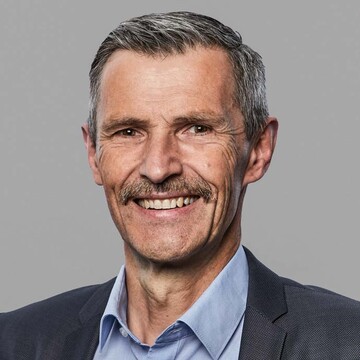
Prof. Roger Wattenhofer is a Full Professor at the Department of Information Technology and Electrical Engineering, ETH Zurich, Switzerland, and Deputy head of the Computer Engineering and Networks Lab. He holds a doctorate in Computer Science from ETH Zurich (1998) and has held positions at Brown University and Microsoft Research before returning to ETH. His research focuses on distributed computing, wireless networks, and algorithmic systems design, with contributions to Byzantine agreement protocols, blockchain technologies, and neural network architectures. He teaches courses such as Distributed Systems and Computational Thinking. Education: Ph.D. in Computer Science (ETH Zurich, 1998). Research interests include distributed systems, network algorithms, and the intersection of machine learning with distributed computing. His work spans both theoretical foundations and practical implementations, addressing challenges in fault tolerance, consensus mechanisms, and algorithmic efficiency. Recent publications explore topics like adversarial robustness in voting systems, privacy in reinforcement learning, and generative music models. He actively contributes to open-source frameworks and benchmarks for neural algorithmic reasoning.
Dr. Herb Lin is the Hank J. Holland Fellow in Cyber Policy and Security at the Hoover Institution and Senior Research Scholar for Cyber Policy and Security at the Center for International Security and Cooperation (CISAC), both at Stanford University. He also serves as Chief Scientist, Emeritus for the Computer Science and Telecommunications Board of the National Academies, where he worked from 1990 to 2014, and as Adjunct Senior Research Scholar and Senior Fellow in Cybersecurity at Columbia University's Saltzman Institute for War and Peace Studies. Dr. Lin received his doctorate in physics from MIT, providing him with a strong technical foundation that informs his policy work at the intersection of technology and national security. His academic background bridges the gap between deep technical understanding and policy application in the cybersecurity domain. Dr. Lin's research focuses on the policy dimensions of cybersecurity and cyberspace, with particular emphasis on offensive cyber operations as instruments of national policy, information warfare, and influence operations affecting national security. His work addresses critical challenges at the intersection of emerging technologies like artificial intelligence, quantum computing, and their implications for nuclear security, election integrity, and democratic processes. He has been instrumental in analyzing how cyber capabilities are transforming traditional security paradigms and how policy frameworks must adapt to these changes. His extensive publication record reveals a consistent focus on the evolving relationship between cyber capabilities and national security strategy. Lin's work demonstrates increasing attention to the implications of artificial intelligence for warfare, the vulnerabilities created by quantum computing for current cryptographic systems, and the growing threat of cyber-enabled information warfare to democratic institutions. His research trajectory shows a progression from traditional cybersecurity issues toward the broader implications of digital technologies for national and international security. Member of Science and Security Board of Bulletin of the Atomic Scientists Served on President Obama's Commission on Enhancing National Cybersecurity (2016) Regular congressional testimony on cybersecurity matters Contributor to Stanford Emerging Technology Review As a mentor and collaborator, Dr. Lin works extensively with policymakers, military officials, and technology experts to translate complex cybersecurity concepts into actionable policy recommendations. His approach emphasizes practical solutions to emerging threats while recognizing the technical limitations and policy constraints that shape real-world security outcomes. Dr. Lin is associated with multiple research initiatives including Stanford's Center for International Security and Cooperation and the Stanford Emerging Technology Review, which aim to connect technological advances with policy considerations for national security decision-makers.
Reşat Kasaba is a Professor at the Henry M. Jackson School of International Studies, University of Washington, where he has taught undergraduate and graduate courses for over 30 years. He currently directs the Interdisciplinary Ph.D. Program in Near and Middle Eastern Studies and served as the director of the Jackson School from 2010 to 2020. His expertise centers on the political and economic history of the Middle East, particularly Turkey. His educational qualifications include: Ph.D. in Sociology, State University of New York at Binghamton, 1986 M.A. in Sociology, State University of New York at Binghamton, 1978 B.S. in Economics and Statistics, Middle East Technical University, Ankara, Turkey, 1976 Professor Kasaba's research interests encompass political economy, economic history, state-society relations, migration and refugee studies, ethnicity and nationalism, urban history, and U.S. foreign policy in the Middle East. His work often focuses on modern Turkey, analyzing the rural-urban divide and the historical trajectory of state formation. His scholarly output features four influential books that explore the dynamics of empire, migration, modernity, and legal systems in the Ottoman and Turkish contexts. Collectively, these works contribute to understanding the complex interplay between social forces, national identity, and political economy in the region. He has been recognized with the UW Distinguished Teaching Award. Additionally, he has held leadership roles in prominent academic associations: President, Association of Professional Schools of International Affairs (2017-2019) Board Member, Middle East Studies Association of North America (2015-2018) Professor Kasaba is actively involved in graduate education, currently accepting new MA students for the 2026-2027 academic year and mentoring Ph.D. candidates through the Interdisciplinary Ph.D. Program. His teaching covers diverse topics including world cities, state-society relations, and the modern Middle East.
Jason Brownlee is a Professor in the College of Liberal Arts at the University of Texas at Austin. His research focuses on comparative politics, democracy, and authoritarianism, with a regional emphasis on the Middle East and Southeast Asia. Ph.D., Princeton University Contact: brownlee@austin.utexas.edu Research Interests : Brownlee investigates the persistence of authoritarian regimes, the political economy of repression, and the impact of foreign intervention on domestic politics. His work often analyzes Egypt, Iran, Malaysia, and the Philippines. Key Publications : Authoritarianism in an Age of Democratization (Cambridge, 2007) Democracy Prevention: The Politics of the U.S.-Egyptian Alliance (Cambridge, 2012) The Arab Spring: Pathways of Repression and Reform (Oxford, 2012, co-authored with Tarek Masoud and Andrew Reynolds) Teaching : Brownlee offers courses such as "War/Freedom in South Asia/Middle East" and "Issues & Policies in American Government," delivered both in-person and online.
Dr. Miemie Winn Byrd is an Adjunct Professor at the Daniel K. Inouye Asia-Pacific Center for Security Studies (DKI APCSS), where she researches, teaches, and publishes on security dynamics in Myanmar/Burma & Southeast Asia, economics & security linkages, and organizational development. A retired US Army Lieutenant Colonel with 28 years of distinguished service, she brings extensive experience from military, private sector, and nonprofit organizations to her academic work. Dr. Byrd earned her educational credentials from prestigious institutions: Bachelor of Arts in Economics and Accounting from Claremont McKenna College Master of Business Administration with emphasis in Asia-Pacific Economics and Business from University of Hawaii Doctorate in Education Leadership from the University of Southern California Her research focuses on the complex interplay between security, economics, and social development in Southeast Asia, with particular expertise in Myanmar's political and security landscape. Dr. Byrd examines how civil-military operations, women's roles, and educational approaches impact socioeconomic development and security outcomes in the region. She investigates the strategic implications of Myanmar's internal conflicts for broader Indo-Pacific security dynamics, and analyzes how private sector engagement can contribute to poverty alleviation and stability. Dr. Byrd serves on multiple advisory boards that extend her influence in policy and research: Board of Governors of the Keck Center for International and Strategic Studies at Claremont McKenna College Regional Advisory Committee for Knowledge for Democracy Myanmar Initiative of the Asia Regional Office, International Development Research Centre The Oxford-Thanakha International based in Chiang Mai, Thailand Myanmar Policy Institute based in Washington, D.C. Her military career included significant roles such as Deputy Economic Advisor and Civil-Military Operations Plans Officer at U.S. Pacific Command, where she supported Operations Enduring Freedom. She served as a linguist and cultural advisor for U.S. delegations at the Association of Southeast Asian Nations Regional Forum and during POW/MIA recovery negotiations in Myanmar. Her civilian career spans 16 years in auditing, accounting, and financial management with multinational corporations.
Dr. hab. Piotr Łukomski is an Associate Professor at the Department of Political Theory, Institute of Political Science, University of Wrocław. His academic career focuses on the intersection of political theory, philosophy, and cultural analysis, with notable contributions to Hannah Arendt's philosophy, game theory applications in politics, and the role of imagination in political thought. Department: Political Theory Email: piotr.lukomski@uwr.edu.pl ORCID: 0000-0002-5307-616X Research Interests: His work spans conceptual metaphors in political theory, decision-making under hazardous conditions, cultural evolution of tyranny, and the aestheticization of politics. He examines how digital technologies (like VR) reshape political identity and how Arendtian frameworks apply to modern governance. Teaching: Coordinates social consulting labs and teaches decision-making processes in political contexts, with a focus on practical applications in hazardous conditions. Publications: Recent articles analyze VR-era political identity, Hannah Arendt's relevance to modern democracy, and the integration of problem-solving strategies in political thought.
Sohl Lee serves as Associate Professor in the Department of Art History and Criticism at Stony Brook University, specializing in Contemporary East Asian Art and Visual Culture, Critical Theory and Globalization, and Curatorial Studies. Holding a Ph.D. from the University of Rochester since 2014, she contributes significantly to the academic community through teaching and research. Her educational background features: Ph.D. in Visual and Cultural Studies from the University of Rochester (2014) Professor Lee's research explores modern and contemporary East Asian art through interdisciplinary lenses including aesthetics of politics, activist art, vernacular modernism, postcolonial theory, and historiography. Her scholarship appears in prominent journals such as Yishu: Journal for Contemporary Chinese Art , Art Journal , and InVisible Culture , establishing her as a leading voice in global art discourse. Her publication trajectory reveals consistent engagement with democracy, ecological consciousness, and Cold War legacies across East Asian contexts. Key thematic threads include the intersection of art and political movements, ecological thinking in Korean contemporary art, and visual representations of national division—demonstrating how artistic practices navigate complex socio-political landscapes. Dr. Lee's scholarly contributions have been recognized through competitive fellowships: Social Sciences Research Council Fellowship Korea Foundation Fellowship Susan B. Anthony Institute of Gender and Women Studies Fellowship She actively shapes student learning through undergraduate courses including 'Art and the City,' 'Modern and Contemporary Korean Art,' and 'Social Engagement and Publicness in East Asia.' Her curatorial practice extends academic work into public spheres through exhibitions mounted in both the United States and South Korea, bridging theoretical frameworks with tangible cultural production.
Dr. Emilio Ferrara is a Professor of Computer Science & Communication at the University of Southern California, holding appointments in the Viterbi School of Engineering, Annenberg School for Communication and Journalism, and Keck School of Medicine. He serves as Associate Director of Applied Data Science at USC, Research Team Leader at the USC Information Sciences Institute, and Principal Investigator at the USC/ISI Machine Intelligence and Data Science (MINDS) group. His educational background includes a PhD in Machine Learning and BSc & MSc in Computer Science. Ferrara's research focuses on the intersection of artificial intelligence and computational social science, specifically using AI to model and predict human behavior in techno-social systems. His work spans social networks, machine learning, and network science with applications to understanding communication dynamics in digital environments. Ferrara has published over 150 articles in prestigious venues including Proceedings of the National Academy of Sciences, Communications of the ACM, and Physical Review Letters. His research has been widely featured in major news outlets and examines topics ranging from social media manipulation to AI ethics and online behavior. His scientific achievements have been recognized with numerous awards: 2019 Viterbi Scientific Award 2018 DARPA Director's Fellowship 2016 DARPA Young Faculty Award 2016 Complex Systems Society Junior Scientific Award 2015 IBM Watson Big Data Influencer Ferrara's research is supported by major funding agencies including DARPA, IARPA, Air Force, and Office of Naval Research. He leads the HUMANS LAB (Humans & Machines + Networks & Social Systems) which has trained numerous PhD students who have gone on to successful careers in academia and industry. His work on social bots, election integrity, and AI ethics continues to shape understanding of digital social dynamics.
Christine Mahoney is a Professor of Public Policy and Politics and Chief Innovation Officer at the Frank Batten School of Leadership and Public Policy at the University of Virginia. She also serves as Director of the Tadler Program in Impact Investing in Appalachia, the UVA Environmental Institute-funded Climate Collaborative on Appalachian Renewable Energy & Resilience, and the EPA-funded Community Change project for economic development in Appalachia. Previously, she was an Assistant Professor at the Maxwell School of Syracuse University and Director of the Center for European Studies and the Maxwell EU Center. Dr. Mahoney earned her Ph.D. in Political Science from Pennsylvania State University in 2006, with fields of study in American politics, Comparative politics, and Research Methods & Statistical Analysis. She also completed her M.A. (2003) and B.A. (2001) in Political Science and International Politics, respectively, at Pennsylvania State University. Professor Mahoney specializes in social justice advocacy, activism, and direct action through social entrepreneurship. Her research focuses on how advocates shape public policy, with particular attention to lobbying strategies in powerful political systems like the United States and the European Union. She has conducted extensive fieldwork in seven conflict zones across Asia, Africa, Eastern Europe, and Latin America, studying the rights of forcibly displaced people and proposing innovative solutions through social entrepreneurship. Her work bridges political science with practical applications in impact investing and refugee integration, creating tangible pathways for social change through entrepreneurial approaches. Professor Mahoney's scholarly output reveals an evolution from comparative studies of advocacy systems to practical applications of social entrepreneurship for forcibly displaced populations. Her early work established foundational knowledge about lobbying in transatlantic political systems, while her more recent research has shifted toward actionable solutions for global displacement crises and sustainable community development. This trajectory demonstrates her commitment to translating academic insights into real-world impact, particularly through the lens of social entrepreneurship and impact investing. Fulbright Fellow Visiting Scholar at Oxford National Science Foundation grant recipient Emerging Scholar award from the American Political Science Association UVA's Public Impact-Focused Research Award Through Social Entrepreneurship at UVA (SE@UVA), which she founded and led for a decade (2011-2021), Professor Mahoney has mentored over 80 student social enterprise teams and supported more than 100 social entrepreneurs with over 38,400 hours of pro-bono consulting. She has secured $37.7 million in funding for programs addressing social and environmental challenges, including the Tadler Program in Appalachia that has made significant strides in advancing rural policy and economic development. Her work demonstrates a consistent commitment to connecting academic research with practical applications that address pressing social problems. Professor Mahoney leads several significant initiatives including the Refugee Investment Network, where she serves as fellow and advisor, and multiple UVA-based programs focused on social entrepreneurship, impact investing, and community development. Her interdisciplinary approach brings together policy experts, social entrepreneurs, impact investors, and community stakeholders to develop innovative solutions to complex social problems, particularly in the areas of refugee integration and rural economic development in Appalachia.
Ibo van de Poel is a Full Professor at Delft University of Technology , within the Faculty of Technology, Policy and Management , specifically in the Section Philosophy . He holds the prestigious Antoni van Leeuwenhoek professorship , awarded to excellent young researchers, and is a leading figure in Design for Values , engineering ethics , and technology as social experimentation . Education: Van de Poel studied Philosophy of Science, Technology and Society at the University of Twente , with a propaedeutic exam in Mechanical Engineering . He earned his PhD in Science and Technology Studies (STS) in 1998 from the University of Twente , under the supervision of Prof. Dr. A. Rip. Research Interests: His research spans three major themes: Design for Values : Investigating how moral values can be integrated into engineering design, including empirical studies on how engineers handle value conflicts. Moral Responsibility in R&D Networks : Exploring the "problem of many hands" in large-scale research and development projects, developing formalizations and empirical methods. Ethics of Emerging Technologies : Examining ethical issues in new technologies like nanotechnology and synthetic biology , with a focus on technology as social experimentation . Publications and Impact: Van de Poel has authored over 25 international peer-reviewed articles and 15 book contributions . He is co-editor of major works including the Handbook of Philosophy of Technology and the Engineering Sciences (Elsevier, 2009), Philosophy and Engineering (Springer, 2010), and Ethics, Engineering and Technology (Wiley-Blackwell, 2011). His recent work includes leading the VICI project "New Technologies as Social Experiments" , funded by NWO. Scientific Awards: Antoni van Leeuwenhoek Professorship (TU Delft) VICI Grant for "New Technologies as Social Experiments: Conditions for Morally Responsible Experimentation" Advising and Grants: Van de Poel has led and contributed to multiple high-impact projects, including: NWO Project on "Moral Responsibility in R&D Networks" (2007–2012) EU Project on ethical issues in synthetic biology (2009–2011) VICI Project on "New Technologies as Social Experiments" (ongoing) He has also supervised PhD students and contributed to educational innovations, including the development of the AGORA web-based program and the first Dutch textbook on ethics and technology . Labs and Teams: Van de Poel is an active member of 4TU.Ethics & Technology , a federation of Dutch technical universities focused on ethics and technology. He contributes to the Simon Stevin Series in the Ethics of Technology and participates in various reading groups and PhD communities within the network.
Professor Lucy Kimbell is Professor of Contemporary Design Practices at Central Saint Martins, University of the Arts London, where she convenes the Policy Futures Studio. She is Co-Director of the Sustainable Transitions through Democratic Design Doctoral Network funded by the EU Marie Curie programme and serves as Visiting Professor at University of Ulster and Honorary Adjunct Professor at RMIT University. Her work bridges design practice, public policy, and social innovation across multiple international contexts. Professor Kimbell's educational background includes a PhD in Design from Lancaster University (2013), an MA in Computing in Art and Design from Middlesex University (1996), and a B. Engineering in Design and Appropriate Technology from the University of Warwick (1989). Her academic journey reflects a consistent integration of technical, creative, and social perspectives. Kimbell's research focuses on service design, social design, and design for policy, with increasing emphasis on sustainable transitions and democratic innovation. She explores how design methods can address complex societal challenges, particularly through transdisciplinary approaches that connect creative practice with public policy contexts. Her work examines the role of design in government, professional services, and community settings, with particular attention to AI readiness in professional service firms and antimicrobial resistance policy in India. She has pioneered frameworks for measuring design's social and environmental value, notably through the Design Value framework developed with the Design Council. Her recent publications demonstrate a clear trajectory toward understanding design's role in public policy, sustainable transitions, and democratic innovation. The research shows increasing integration of practice-based research methods with policy development, emphasizing transdisciplinary collaboration and the application of design thinking to complex societal challenges. There's a notable focus on developing frameworks for measuring design's social and environmental value and advancing democratic innovation through design practice. Notable recognitions include: AHRC Research Fellow in Policy Lab in the Cabinet Office (2014-15) Principal research fellow at University of Brighton (2013-15) Clark Fellow in Design Leadership at Said Business School, University of Oxford (2005-10) Professor Kimbell supervises transdisciplinary PhD research connecting design with public policy, with six completions to date including four UAL-KCL joint studentships. She examines PhDs internationally and serves on the supervisory board for the PhD in Service Design for Public Sector at Sapienza University, Rome. Her grant portfolio includes major projects funded by EU Marie Curie, AHRC, ESRC, and Creative Europe, totaling millions in research funding for design-led approaches to societal challenges, including the Sustainable Transitions through Democratic Design Doctoral Network (2024-28) and the AHRC Design & Policy Research Network (2022-23). She previously directed UAL's Social Design Institute (2019-2022), which brought together university expertise in design for society through capacity building, joint research, publications, and public events. Her collaborative work extends to knowledge exchange projects with Design Council, Department of Work and Pensions, Northern Ireland Social Care Council, and Bite Back 2030, demonstrating her commitment to applying design thinking to real-world policy and social challenges.
Stefan Schaltegger is Professor for Sustainability Management at the Centre for Sustainability Management (CSM) at Leuphana University Lüneburg. With over two decades of research experience, he is a globally recognized scholar in sustainability management, corporate sustainability, and environmental accounting. His work bridges academic research with practical business applications, influencing sustainability practices across multiple industries. Professor for Sustainability Management at Leuphana University Lüneburg Director of the Centre for Sustainability Management (CSM) Extensive publication record in top sustainability journals Regular contributor to policy discussions on sustainability Professor Schaltegger's research focuses on sustainability management systems, corporate sustainability strategy, environmental accounting, sustainable business models, and sustainability transitions. His work examines how organizations can effectively integrate sustainability into core operations, emphasizing stakeholder engagement, sustainability performance measurement, and the development of compelling business cases for sustainability. He has pioneered research on sustainability management accounting, rebound effects in sustainability initiatives, and the role of change agents in corporate sustainability transformations. His research spans both theoretical development and practical application, making significant contributions to how businesses understand and implement sustainability. His recent publications reveal an evolving research trajectory with increasing focus on systemic sustainability challenges. Schaltegger has shifted from foundational work on sustainability management accounting toward more complex issues like environmental rebound effects, sustainability transformations, and regenerative business practices. His 2023-2025 publications show growing attention to climate change responses, biodiversity conservation, and the role of service innovation in sustainability transformations. The interdisciplinary nature of his work is evident in publications spanning business strategy, environmental science, accounting, and policy journals. Ranked among the world's top 2% scientists in the Stanford study (2020) Best Young Researcher of the Year at Leuphana University Lüneburg (2010) IFAC PAIB Committee Research award for "article of merit" (2003) Professor Schaltegger actively mentors doctoral students and early-career researchers, though specific student names aren't listed in the provided materials. His research is supported by numerous projects including "TrICo Subproject: Community Sustainable Production," "Account4GreenEco," and "Hochschulen in Gesellschaft – Realexperimente transformativer Lern- und Forschungsprozesse für eine Kultur der Nachhaltigkeit an Hochschulen." His work demonstrates strong industry engagement through collaborations with businesses implementing sustainability practices. The Centre for Sustainability Management (CSM), which Schaltegger leads, serves as a hub for interdisciplinary sustainability research, education, and practice. The CSM coordinates multiple research projects including the Innovation Network aiming at Sustainable Smartphones (INaS) and works closely with industry partners to develop practical sustainability solutions. The center's activities span research, education, and transfer, reflecting Schaltegger's commitment to bridging the gap between academic theory and business practice in sustainability.
Carolina Matos is a Professor at City, University of London's School of Communication & Creativity, specializing in media studies, gender politics, and communications research with a particular focus on Brazil and Latin America. Her scholarly work bridges academic inquiry with practical advocacy, especially in the areas of sexual and reproductive health rights (SRHR), feminist media studies, and democratic processes in the Global South. Dr. Matos's research interests span several interconnected domains: Gender politics and feminist media studies, with particular attention to Brazilian and Latin American contexts Sexual and reproductive health and rights (SRHR) communications and advocacy across global contexts Media democratization and public service broadcasting in Brazil and Latin America Digital activism and online networks for social change and gender equality Health communication in the age of misinformation, particularly regarding women's health in politically polarized environments Journalism's role in democratic processes and political transitions Her recent publications (2021-2025) demonstrate a clear trajectory toward examining how marginalized communities, particularly women in the Global South, navigate complex media landscapes around reproductive health. Her methodology frequently employs focus group research designed to empower participants while gathering insights on media consumption and interpretation. She has conducted significant research in partnership with NGOs like Reprolatina in Brazil and Open Arms in Florida, examining how disadvantaged communities process health communications in contexts of political polarization and misinformation. Dr. Matos has made substantial theoretical contributions through both foundational and recent works: Her book "Globalization, gender politics and the media" (2016) examines changing media representations in relation to feminist movements globally Her seminal work "Journalism and Political Democracy in Brazil" (2009) analyzes media's critical role in Brazil's democratization process following the military dictatorship She has conducted extensive comparative research on how NGOs communicate about SRHR across the Global North and South Her research on "New Brazilian feminism and online networks" (2017) documents the emergence of digital feminist activism in Brazil Her methodological approach consistently combines rigorous academic frameworks with practical applications, often utilizing mixed methods including content analysis, discourse analysis, and participatory research techniques designed to center marginalized voices while advancing scholarly understanding of media, gender, and power dynamics.
Stephen Marshall is Professor of Urban Morphology and Urban Design at The Bartlett School of Planning, University College London. He also served as Visiting Professor at the Department of Architecture and Urban Studies, Politecnico di Milano, Italy from 2019 to 2021. With over twenty-five years of experience in the built environment fields, initially in consultancy and subsequently in academia, Professor Marshall has established himself as a leading expert in urban morphology and design. His educational background includes a Doctor of Philosophy from University College London (2001), a Postgraduate Diploma from Edinburgh College of Art (1995), a Master of Science from the University of Leeds (1989), and a Bachelor of Engineering from the University of Glasgow (1988). Professor Marshall's principal research focuses on urban morphology and street layout, examining their relationships with urban formative processes including urban design, coding and planning. His work bridges urban design theory with practical applications, exploring how cities evolve through complex interactions of physical form, social processes, and planning interventions. He has written or edited several influential books including 'Streets and Patterns' (2005), 'Cities, Design and Evolution' (2009), and 'Urban Coding and Planning' (2011). His recent publications reveal a growing interest in applying complexity science to urban morphology, with particular attention to biological analogies for understanding self-organizing cities. He has pioneered research on digital participation methods in urban planning, exploring how online platforms can enhance public engagement in urban space design. His work consistently bridges theoretical urban morphology with practical applications for contemporary urban challenges like pandemic adaptation and sustainable transport. Professor Marshall has served as Chair of the Editorial Board of Urban Design and Planning from its launch to 2012, and is now co-editor of Built Environment journal. His editorial work has significantly shaped scholarly discourse in urban planning and design. He leads several significant research initiatives including the Incubators of Public Spaces project, which explores digital platforms for co-creating urban spaces, and the Self-Organising Built Environment project, which investigates biological analogies in urbanism. These projects reflect his interdisciplinary approach to understanding and shaping urban environments, connecting with Sustainable Development Goal 11 (Sustainable Cities and Communities).
Naomi Murakawa is an Associate Professor in the Department of African American Studies at Princeton University, School of Arts and Sciences. Her research focuses on the reproduction of racial inequality in American politics, particularly in the realms of crime policy and the carceral state. Her scholarly work bridges political science, critical race theory, and legal studies. Key areas of interest include mass incarceration, racial liberalism, the historical development of crime control, and the paradoxes of reform within the criminal justice system. Her research, reflected in publications such as The First Civil Right: How Liberals Built Prison America and numerous journal articles, reveals how ostensibly progressive policies have contributed to the expansion of the prison system. Themes across her work include the racialized foundations of state power, the limitations of liberal reform, and the structural persistence of racial inequality in law and governance. Scientific Awards and Fellowships: Fellowship from Columbia Law School’s Center for the Study of Law and Culture Fellowship from Robert Wood Johnson Foundation’s Health Policy Research Program Professor Murakawa has advised graduate students and contributed to major scholarly and public conversations on race and justice. Her work has been supported by significant research grants and fellowships, enabling deep historical and theoretical analysis of the American carceral state. She is a leading voice in interdisciplinary debates on decarceration, abolition, and transformative justice. She is affiliated with research initiatives focused on race, law, and inequality, contributing to collaborative teams examining the intersections of policy, history, and social movements. Her ongoing scholarship continues to challenge conventional narratives about crime, punishment, and racial progress in the United States.