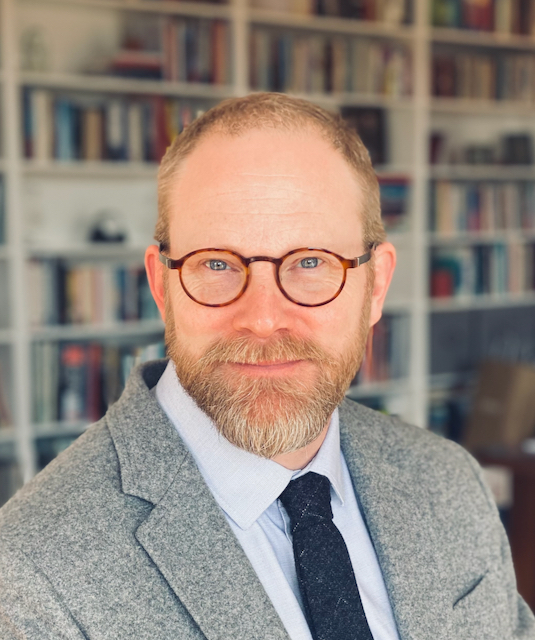
Dr. Jonathan Bright is a Senior Research Fellow and Associate Professor at the Oxford Internet Institute, University of Oxford , specializing in computational approaches to the social and political sciences. His research explores how digital technologies reshape political participation and how new data sources enhance governmental decision-making. Research Interests: Focused on social media, political behavior, computational social science, and big data , Bright’s work addresses digital governance, algorithmic bureaucracy, and the dynamics of political fragmentation online. His empirical studies span open government data usage, crowdsourced geographical information, and the impact of neighborhood effects on data completeness. Scientific Contributions: Leading studies on algorithmic governance in UK local authorities (2020) Investigating geodemographic biases in crowdsourced platforms like OpenStreetMap (2018) Mapping political fragmentation in social media ecosystems (2018) Grants & Collaborations: Funded by UK taxpayers, ESRC, and Google, his work intersects with projects on vaccine misinformation, hate speech monitoring, and digital economies. Formerly held positions as Research Fellow and Research Associate at OII from 2013 to present.
Anastasia Semykina is a Professor of Economics and Deputy Dean (Research and Innovation) at RMIT University's School of Economics, Finance & Marketing. She holds a PhD from Michigan State University (2006) and previously served as Charles and Joan Haworth Professor of Economics at Florida State University. Her expertise spans theoretical and applied econometrics, with a focus on panel data models, missing data estimation, and their application in labor economics, education economics, transition economies, and economic psychology. She teaches advanced econometrics and microeconomics courses at both undergraduate and graduate levels. Research Interests: Theoretical and Applied Econometrics Labor Economics Economics of Education Transition Economies Economics and Psychology Health Economics Her recent publications address topics such as panel data methodologies, healthcare cost-effectiveness analysis, and educational policy evaluation. She is actively involved in supervising PhD and Master's research students in econometrics and applied economics.
Professor Andrew Hudson-Smith is the Director of the Bartlett Centre for Advanced Spatial Analysis (CASA) at University College London (UCL), where he holds the title of Professor of Digital Urban Systems. He leads UCL's academic and applied research in smart cities, digital twins, and urban informatics. His roles include Editor-in-Chief of the Future Internet Journal and academic lead for the Smart Queen Elizabeth Park project. He contributes to strategic initiatives such as the Greater London Authority Smart London Board and EPSRC Digital Economy Programme Advisory Board. Education: PhD (2003), MSc (1996) from UCL; BSc in Geography from the University of Plymouth (1992). Research focuses on digital urban systems, IoT applications, sustainable urban planning, and cyberphysical systems. Notable projects include urban heat island monitoring, participatory planning platforms, and metaverse-driven urban design. His work bridges technology, art, and public engagement, exemplified by initiatives like Tales of Things and the Haggle-O-Tron. Recent publications emphasize digital twins, metaverse urbanism, and IoT integration in urban environments. Awards include a Fellowship of the Royal Society of Arts. His work addresses SDGs 3 (Good Health) and 11 (Sustainable Cities), with a focus on equitable smart city development and public space innovation.
Dr. Herb Lin is the Hank J. Holland Fellow in Cyber Policy and Security at the Hoover Institution and Senior Research Scholar for Cyber Policy and Security at the Center for International Security and Cooperation (CISAC), both at Stanford University. He also serves as Chief Scientist, Emeritus for the Computer Science and Telecommunications Board of the National Academies, where he worked from 1990 to 2014, and as Adjunct Senior Research Scholar and Senior Fellow in Cybersecurity at Columbia University's Saltzman Institute for War and Peace Studies. Dr. Lin received his doctorate in physics from MIT, providing him with a strong technical foundation that informs his policy work at the intersection of technology and national security. His academic background bridges the gap between deep technical understanding and policy application in the cybersecurity domain. Dr. Lin's research focuses on the policy dimensions of cybersecurity and cyberspace, with particular emphasis on offensive cyber operations as instruments of national policy, information warfare, and influence operations affecting national security. His work addresses critical challenges at the intersection of emerging technologies like artificial intelligence, quantum computing, and their implications for nuclear security, election integrity, and democratic processes. He has been instrumental in analyzing how cyber capabilities are transforming traditional security paradigms and how policy frameworks must adapt to these changes. His extensive publication record reveals a consistent focus on the evolving relationship between cyber capabilities and national security strategy. Lin's work demonstrates increasing attention to the implications of artificial intelligence for warfare, the vulnerabilities created by quantum computing for current cryptographic systems, and the growing threat of cyber-enabled information warfare to democratic institutions. His research trajectory shows a progression from traditional cybersecurity issues toward the broader implications of digital technologies for national and international security. Member of Science and Security Board of Bulletin of the Atomic Scientists Served on President Obama's Commission on Enhancing National Cybersecurity (2016) Regular congressional testimony on cybersecurity matters Contributor to Stanford Emerging Technology Review As a mentor and collaborator, Dr. Lin works extensively with policymakers, military officials, and technology experts to translate complex cybersecurity concepts into actionable policy recommendations. His approach emphasizes practical solutions to emerging threats while recognizing the technical limitations and policy constraints that shape real-world security outcomes. Dr. Lin is associated with multiple research initiatives including Stanford's Center for International Security and Cooperation and the Stanford Emerging Technology Review, which aim to connect technological advances with policy considerations for national security decision-makers.
Professor Marilyn Pittard is a leading academic in the Faculty of Law at Monash University, currently serving as Associate Dean Engagement. She has held numerous leadership roles including Interim Dean, LLM Director, and Associate Dean (Research), with a career spanning over two decades in academic administration and legal scholarship. Her research focuses on Labour Law, Employment Rights, and Human Rights, with significant contributions to understanding workplace relations, vulnerable workers, and the intersection of criminal records with employment access. She has secured grants from the Australian Research Council and other institutions for projects like The Other Side of Security and Living Down the Past . Recent publications highlight trends in employment law, including anti-slavery practices, redundancy frameworks, and digital-era workplace challenges. She chairs the Victorian Legal Admissions Board’s Academic Course Appraisal Committee and contributes to the Australian Labour Law Journal and Employment Law Bulletin .
Professor Christopher Carman is the Stevenson Professor of Citizenship at the University of Glasgow, holding a PhD from the University of Houston. He has served in leadership roles including Head of Subject (Politics & International Relations), Head of the School of Social and Political Sciences, and Deputy Head of the School. His research focuses on political representation, electoral processes, public opinion, and Scottish politics, with notable contributions to studies on the Scottish Parliament and rural-urban political divides. Carman has led the Scottish Election Study (SES) since 2011 and co-leads the NORFACE-funded RUDE project on European rural-urban dynamics. He also contributes to the Glasgow-Nankai Joint Graduate School and the Stevenson Trust, fostering citizenship education and democratic research. Education: PhD in Political Science, University of Houston (2000). Previous academic roles include professorships at the Universities of Strathclyde and Pittsburgh. Research Interests: Political representation alternatives (e.g., public petitions systems), electoral behavior, Scottish and UK politics, direct democracy, and comparative legislative politics. Recent work addresses rural-urban divides in Europe and political compromise in democratic systems. Key Projects: Scottish Election Study (SES), Rural and Urban Divide in Europe (RUDE), and studies on political scandals and multilevel governance. His publications span electoral studies, comparative politics, and political behavior, with a focus on institutional trust and democratic engagement. Grants and Funding: ESRC and NORFACE grants support his research. The Stevenson Trust supports his work on citizenship education and public lectures.
Deval Desai serves as Reader in International Economic Law at the University of Edinburgh's Edinburgh Law School, a position he has held since 2020 after serving as Lecturer from 2020-2023. His academic career includes research positions at Harvard Law School and the Geneva Graduate Institute. Dr. Desai also brings extensive practical experience from a decade working with the World Bank on rule of law and governance in sub-Saharan Africa, as well as advising the United Nations on rule of law issues. Dr. Desai's educational background includes an MA in History and French Literature from Oxford University, followed by legal training at City University/BPP Law School (PGDipL and PGDipLP), and advanced law degrees (LLM and SJD) from Harvard Law School. At Harvard, he held prestigious fellowships including the Byse Fellowship, Program on Negotiation Next Generation Fellowship, and Institute for Global Law and Policy Fellowship. MA (Oxon), History and French Literature PGDipL, PGDipLP, City University/BPP Law School LLM, Harvard Law School SJD, Harvard Law School Dr. Desai's research centers on law and development, administrative law and regulation, theories of the state, and patterns of knowledge and authority across the Global North and South. His work examines institutional reform processes, particularly how expertise and knowledge operate within rule of law initiatives. His interdisciplinary approach draws from legal and social theory, development studies, international relations, and performance studies, as evidenced in his monograph Expert Ignorance (Cambridge University Press). His recent work focuses on fiscal sociology, administrative law in the Global South, and the politics of social welfare provision. Dr. Desai's publications span leading journals in law, political science, and development studies, revealing a consistent focus on the intersections between legal institutions, governance, and development. His work demonstrates increasing engagement with comparative methodologies and critical perspectives on knowledge production in global governance. Recent articles show particular attention to fiscal policy, welfare systems, and responses to global crises like the Covid-19 pandemic, with comparative studies between India and European contexts. Dame Muriel Spark Medal (2024, Royal Society of Edinburgh) Chancellor's 'Rising Star' Award (2023, University of Edinburgh) Member of the Young Academy of Scotland Fellow of the Royal Society of Arts Fellow of the Young Academy of Europe Dr. Desai has secured significant research funding from diverse international sources, including a £2.1 million Swiss National Science Foundation Sinergia grant titled 'Reversing the Gaze: Towards Post-Comparative Area Studies' where he serves as PI. He also leads projects funded by the British Academy, University of Edinburgh's Big Ideas Accelerator, Scottish Funding Council, and Foreign, Commonwealth, and Development Office. His commitment to mentoring is evident through his recognition with the Susan Manning Award for Inspiring Mentor and his leadership in establishing programs like the Global Scholars' Academy at the Geneva Graduate Institute and the Global Justice summer school at CEU. As editor-in-chief of the Cambridge University Press book series 'Elements in Legal Theory and the Global South' and serving on multiple editorial boards, Dr. Desai plays a significant role in shaping scholarly discourse. His current research projects examine 'loss' in legal institutions guiding transitional processes, constitutional implications of fiscal arrangements in fragile contexts, and social welfare provision in India and Italy.
Rutgers, The State University of New JerseyUnited States
Nick Kapur is an Associate Professor in the Department of History at Rutgers University–Camden, within the School of Arts and Sciences. He specializes in modern Japan and East Asia, with a focus on transnational perspectives, US-Japan relations, environmental history, gender, and cultural studies including literature and film. His educational background includes a Ph.D. from Harvard University (2011), an M.A. from Stanford University (2003), and a B.A. from Stanford University (2002). Kapur's research examines the intersections of political economy, culture, and international relations in modern Japan, particularly in the postwar era. His acclaimed book, Japan at the Crossroads: Conflict and Compromise after Anpo (2018), analyzes the 1960 protests and their lasting impact on Japanese society and US-Japan relations. He has also published extensively on the Japanese student movement, environmental policy, and Meiji centennial celebrations. His recent and forthcoming articles reflect a sustained engagement with Cold War Japan, dissent, nationalism, and transnational history. Kapur is known for innovative teaching methods, including historical simulations on Pearl Harbor and samurai-era Japan. He is the founder of the Modern Japan History Association and has contributed significantly to digital humanities through projects like the Digital Archive of Japan’s 2011 Disasters and the development of educational apps. His publications from the past decade show a consistent focus on political protest, cultural memory, and international relations in 20th-century Japan. His scholarly contributions include numerous peer-reviewed articles, book chapters, translations, and book reviews in leading journals such as Diplomatic History , The Journal of Asian Studies , and The Asia-Pacific Journal . Kapur advises graduate students and teaches courses on Japanese, Chinese, and Korean history, World War II, and environmental history. He has played a leadership role in promoting Japanese studies globally and continues to be an active researcher with works forthcoming in 2025. His current projects include digital applications for historical education.
Giulio Jacucci is a Professor in the Department of Computer Science at the University of Helsinki, affiliated with the Helsinki Information Technology Research Institute. He serves as a Supervisor in the Doctoral Programme in Computer Science, mentoring PhD candidates in human-computer interaction and related fields. His academic career spans over two decades with continuous research productivity from 2006 through 2025. Professor Jacucci's research interests center on Human-Computer Interaction , particularly focusing on Virtual Reality , Brain-Computer Interfaces , and Neuroadaptive Systems . His work explores how technology can adapt to users' cognitive and physiological states, with significant contributions to social virtual reality environments, embodied agents, and information retrieval systems. He investigates how virtual representations affect social behavior, time perception, and communication in digital spaces. His publication record shows a clear evolution from foundational work in information retrieval toward increasingly sophisticated neuroadaptive systems. Recent publications (2024-2025) demonstrate his leadership in examining social dynamics within virtual reality platforms, including votekicking mechanisms, mirror watching behaviors, and communication tools like mutes. His work bridges technical innovation with deep understanding of human social behavior in digital environments. Professor Jacucci currently leads multiple research projects funded by the Academy of Finland, including DataLit: Datalukutaito ja vastuullinen päätöksenteko (2023-2026) and MyModel: Selitettävyys suositusten hallinnassa (2023-2027). These projects focus on data literacy, responsible decision-making, and explainability in recommendation systems, reflecting his commitment to ethical and user-centered technology development. His research has received media attention, particularly around brain-computer interfaces and virtual reality applications, with coverage in outlets discussing how deep learning transforms mobile applications and sensor landscapes. He has presented his work at major conferences including CHI 2017 and continues to be an active contributor to the international research community.
Archon Fung is the Winthrop Laflin McCormack Professor of Citizenship and Self-Government at the Harvard Kennedy School. His research focuses on policies and institutional designs that enhance democratic governance, particularly in areas of public participation, deliberation, and transparency. He co-directs the Transparency Policy Project and leads democratic governance programs at the Ash Center for Democratic Governance and Innovation. Fung has authored five books, including Full Disclosure: The Perils and Promise of Transparency and Empowered Participation: Reinventing Urban Democracy , and over fifty articles. He holds degrees from MIT: two S.B. degrees in philosophy and physics, and a Ph.D. in political science. Affiliations: Director of the Ash Center, Faculty Associate of the Ethics Center, Member of the Faculty Committee since 2009. Research Interests: Democratic innovation, participatory governance, transparency in public policy, and institutional design for equitable decision-making. His recent work explores democratic erosion, AI's impact on elections, and inclusive governance frameworks. Fung teaches courses on participation, ethics, and social innovation at the Harvard Kennedy School. He co-founded Participedia, a global platform documenting participatory governance practices. Sponsored projects include initiatives on institutional antiracism, transparent engagement, and sustainable governance reforms. His work emphasizes bridging theory and practice to strengthen democratic institutions globally.
Massachusetts Institute of TechnologyUnited States
Song Kim is an Associate Professor of Political Science at the Massachusetts Institute of Technology (MIT) and a Faculty Affiliate at the Institute for Data, Systems, and Society (IDSS). He holds a Ph.D. in Politics from Princeton University, where he was awarded the Harold W. Dodds Fellowship (2012-2013). His research focuses on International Political Economy, Formal and Quantitative Methodology, and Big Data analysis of international trade. He is particularly known for his work on firm-level political incentives in trade liberalization, which earned him the 2015 Mancur Olson Award and the 2018 Michael Wallerstein Award for best published article in political economy. Kim develops computational methods for analyzing trade data, including dimension reduction and visualization techniques. He maintains two key databases: LobbyView (tracking firm lobbying efforts) and TradeLab (for trade policy analysis). His research has been published in top journals such as the American Political Science Review, American Journal of Political Science, and International Organization. Educations : Ph.D. in Politics (Princeton University), B.A. not explicitly stated. His research interests include the dynamical evolution of lobbying networks, strategic links between political donations and lobbying, and the political origins of trade regulations. He also contributes methodological innovations, such as two-way fixed effects models and matching methods for causal inference with panel data. Awards : Mancur Olson Award (2015) Michael Wallerstein Award (2018) Harold W. Dodds Fellowship (2012-2013) Advising & Grants : No listed advisees. His work is supported by MIT’s IDSS and institutional funding. He collaborates on software tools like the 'wfe' and 'concordance' R packages, advancing computational social science. Labs/Teams : Associated with MIT’s Political Science Department and IDSS, focusing on interdisciplinary projects in trade, lobbying, and quantitative methods.
Margarita Boenig-Liptsin is a tenure-track Assistant Professor of Ethics, Technology and Society at ETH Zurich's Department of Humanities, Social and Political Sciences, a position she has held since September 2022. Trained in Science, Technology and Society with dual PhDs from Harvard University (History of Science) and Université Paris-Sorbonne (Philosophy), she brings interdisciplinary expertise to examining the relationship between technology, power, democracy, and ethics. Her research spans several interconnected areas focusing on transformations to human identity and citizenship in relation to information technologies across time and cultures. She investigates the social and political aspects of digital technologies, identity and selfhood in technological societies, ethics of technology, and comparative cultures of innovation. Her work uniquely bridges historical analysis with contemporary ethical concerns, examining how concepts like human dignity evolve alongside technological developments from punch cards to AI governance frameworks. Her recent publications (2023-2025) reveal a strong focus on AI ethics, data justice, and the philosophical implications of algorithmic systems. These works demonstrate her consistent interest in how technology shapes democratic processes, citizenship, and ethical frameworks. Her research shows progression from historical studies of computer literacy programs to contemporary analyses of generative AI's impact on knowledge production and everyday ethics. Her scientific recognition includes: NSF funding for her collaborative project on Silicon Valley's innovation imaginary Mozilla Foundation Responsible Computer Science Challenge grant (2018-2021) Academic Data Science Alliance support (2020-2022) Sorbonne Université's Paris IAS Chair on 'Major Changes' (2021-2022) At ETH Zurich, she leads research and teaching initiatives that build connections between engineering and social sciences. Previously at UC Berkeley, she directed the Human Contexts and Ethics Program, developing the Human Contexts and Ethics component for data science education. Her work consistently emphasizes translating social science theory for diverse audiences and connecting scholarly work to community needs in Zurich, Switzerland, and Europe. She teaches courses including 'Artificial Intelligence and Human Values' and 'Research in Ethics, Technology and Society' for the Fall 2025 semester.
Jan G. Voelkel is an Assistant Professor at the Jeb E. Brooks School of Public Policy and the Department of Sociology at Cornell University. His research explores how micro-level preferences for equality and unity translate into macro-level political decisions, focusing on democratic attitudes, partisan dynamics, and moral framing. Ph.D. and M.A. in Sociology, Stanford University M.S. in Social and Behavioral Sciences, Tilburg University B.S. in Social Sciences, University of Cologne Voelkel’s work spans political psychology, metascience, and social policy, with a focus on interventions to reduce anti-democratic attitudes, partisan animosity, and gender bias in political leadership. His recent articles emphasize large-scale collaborations, reproducibility, and cross-partisan empathy. Scientific awards include: New Investigator Award (Behavioral Science & Policy Association) Public Sociology Award (American Sociological Association) Open Science Innovator Award (Stanford) Centennial Teaching Assistant Award (Stanford)
Maria Eugenia Bartoloni is a Full Professor of European Union Law at Sapienza University of Rome, Department of Legal and Economic Studies. She is also a member of the doctoral program faculty for "Internationalization of Legal Systems and Fundamental Rights" at Università della Campania "L. Vanvitelli" and previously served as its Master's Degree Course President. She coordinates the journal Il Diritto dell’Unione europea and serves on editorial boards for multiple EU law publications. Education: PhD in International and EU Law from Macerata University (2004), Law Degree (1999) from Macerata University. Research Interests: Focus on EU constitutional law, international legal norms coordination, fundamental rights application, judicial protection limits, and EU foreign/security policy. Her recent work explores the EU's unique legal frameworks for maritime concessions, the Charter of Fundamental Rights' scope, and the evolving legal dimensions of EU international relations. She has participated in numerous national and international research projects. Scientific Awards Marie Curie Fellow (2015) Principal Investigator for SELECT Project – "StrEnghten Lay and honorary judges European CompeTencies" (JUST-AG-2020 / JUST-JTRA-EJTR-AG-2020)
Marc-Antoine Dilhac serves as Associate Professor in the Department of Philosophy at the University of Montreal's Faculty of Arts and Sciences, where he also directs governance and international collaboration initiatives. He holds leadership roles as Scientific Director of Algora Lab and leads the Ethics and Politics research axis at the Centre de recherche en éthique (CRÉ). His academic affiliations extend to the Centre d'études et de recherches internationales (CÉRIUM) and the Canada Research Chair in Public Ethics and Political Theory (2014-2019). Education: PhD in Philosophy and Political Science, University of Paris I: Panthéon-Sorbonne (2009) Master 2 in Philosophy and Political Science, University of Paris I: Panthéon-Sorbonne (2003) Agrégation in Philosophy, University of Paris I: Panthéon-Sorbonne (2002) Dilhac's research spans ethics, political philosophy, and AI governance, with particular focus on democratic tolerance, multiculturalism, and the ethical implications of artificial intelligence. His work bridges theoretical political philosophy with practical applications in AI policy development, sustainable finance, and democratic institutions. He has contributed significantly to UNESCO's Recommendation on the Ethics of Artificial Intelligence and leads initiatives examining AI's impact on French-speaking culture and democratic values. His recent publications reveal a clear trajectory from foundational work on tolerance and justice theory toward contemporary AI ethics challenges. The thematic evolution shows increasing engagement with practical governance frameworks, particularly in finance and education sectors, while maintaining strong philosophical grounding in democratic theory and institutional design. Key Awards and Recognition: Canada Research Chair in Public Ethics and Political Theory (2014-2019) Banting Postdoctoral Fellowship (2011) Contributor to UNESCO's Recommendation on AI Ethics (2021) Dilhac has supervised over 15 graduate students across philosophy, political science, and interdisciplinary AI ethics programs. His research is supported by multiple grants from FRQSC, FRQNT, SSHRC, and MITACS, totaling over $2 million CAD. Current projects include the Generative AI Ethics Framework for Educational Technology (2024-2025) and the Sustainable Finance AI Tools project examining ESG/DEI disclosure analysis. He co-founded and leads the CORDÉ research group on corruption and democracy, and directs Algora Lab's work on AI governance. His upcoming February 2025 panel at Université Laval will address AI and Francophone cultural perspectives ahead of the Paris AI Action Summit.