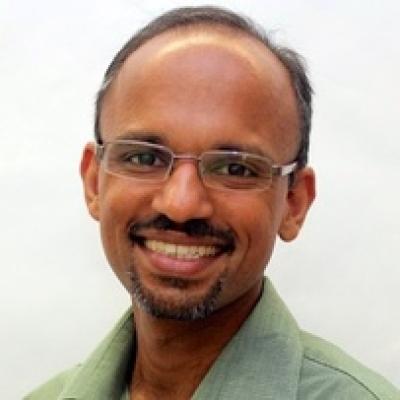
Dr. KN Sasidhar is a Researcher in the Department of Microstructure Physics and Alloy Design at Heinrich Heine University Düsseldorf. His work focuses on advanced materials science, particularly corrosion mechanisms, alloy design, and nanoscale structural analysis. He employs cutting-edge techniques like in situ synchrotron investigations and deep learning frameworks to study material behavior under extreme conditions. Current research emphasizes corrosion resistance in stainless steels, phase transformations during nitriding, and radiation effects on coatings. Key achievements include pioneering studies on nanoscale amorphization in metallic systems, data-centric approaches for materials discovery, and the development of predictive models for alloy performance. His work bridges experimental materials characterization with computational methods, addressing challenges in energy and aerospace applications. Publications span corrosion analysis, microstructural evolution under irradiation, and phase separation phenomena. Collaborative projects involve synchrotron facilities and interdisciplinary teams focusing on materials informatics. No formal awards or grants are explicitly listed in the provided texts, though his prolific publication record indicates active academic engagement.
Haruzo HIDA is a Distinguished Research Professor of Mathematics at the University of California, Los Angeles (UCLA). His work spans advanced topics in Number Theory, Modular Forms, Galois Representations, and Arithmetic Geometry. HIDA has held significant positions globally, including lectures and research visits at institutions in India, China, Japan, and Europe. University: University of California, Los Angeles Department: Mathematics Academic Rank: Research Professor Research Interests: HIDA’s research focuses on complex and p-adic Number Theory, Modular Forms, and their connections to Galois Representations, Iwasawa Theory, L-functions, and Automorphic Forms. His recent work addresses adjoint L-values, Selmer groups, and the interplay between arithmetic invariants and geometric structures. Publications: HIDA’s recent articles (2014-2025) explore themes like Hecke algebras, anticyclotomic Iwasawa theory, Tate-Shafarevich groups, and p-adic rigidity. His work often bridges modular forms with arithmetic geometry and automorphic representations. Students: He has supervised numerous PhD students, including Koji Kitagawa, Chandrashekhar Khare, Eknath Ghate, Ashay Burungale, and Jaclyn Lang, contributing to their research in topics like modular forms and arithmetic geometry. Grants: His research has been partially supported by NSF grants, documented across multiple publications and lecture notes.
Ana Caraiani is a Royal Society University Research Fellow and Professor in the Department of Mathematics at Imperial College London, specializing in Number Theory and Arithmetic Geometry. She is a member of the Number Theory group, focusing on the Langlands program, Shimura varieties, and p-adic Galois representations. Her work bridges arithmetic geometry and representation theory, with contributions to modularity lifting theorems, cohomology of Shimura varieties, and local-global compatibility in the Langlands program. Education: She earned a Ph.D. in Mathematics from Harvard University in 2012. She held positions as a Veblen Research Instructor (2013–2015) and Veblen Fellow (2015–2016) at the Institute for Advanced Study's School of Mathematics. Research Interests: Her research emphasizes the classical and p-adic Langlands programs, Shimura varieties, arithmetic geometry, and moduli stacks of Galois representations. Specific topics include vanishing theorems for cohomology, modularity of elliptic curves over CM fields, and applications of perfectoid spaces. Key Contributions: Caraiani has advanced the proof of modularity of elliptic curves over imaginary quadratic fields, established vanishing theorems for Shimura varieties with torsion coefficients, and contributed to the potential automorphy of Galois representations over CM fields. Her work links geometric approaches to arithmetic conjectures, such as the Sato-Tate and Ramanujan conjectures. Awards and Recognition: Royal Society University Research Fellowship (202?), Veblen Research Instructor/Fellowships (2013–2016), and contributions to major collaborative projects like the Potential Automorphy over CM Fields paper in the Annals of Mathematics.
Brett Sanders is a Professor in the Department of Civil and Environmental Engineering at the Samueli School of Engineering, University of California, Irvine. His research focuses on developing innovative algorithms for flow and transport in river and coastal systems and integrating information technologies to create more accurate and efficient simulation tools for flood hazard assessment. His primary research interests include: Flooding and erosion hazards, particularly coastal flooding and urban flooding Surface water quality Low impact development impacts on hydrology Dam-break flooding Aerial and terrestrial lidar scanning Geographical information systems High performance computing for simulation tools Social dimensions of flood risk and adaptation behaviors Dr. Sanders' recent publications (2024-2025) reveal a comprehensive research program addressing both technical and social aspects of flood risk. His work spans computational hydrodynamics, flood hazard mapping, infrastructure vulnerability assessment, and the socioeconomic dimensions of flood risk. He has made significant contributions to understanding multi-grid modeling of urban flooding, post-fire flood hazards, satellite-based monitoring of land motion, and social inequalities in flood exposure. His research demonstrates how flood dynamics are more complex than simple bath-tub filling models suggest, with important implications for urban planning and climate adaptation. Dr. Sanders has received recognition as a Chancellor's Professor at UC Irvine, indicating distinguished scholarly achievement. His educational background includes: Ph.D. in Civil Engineering from the University of Michigan (1997) M.S. in Civil Engineering from the University of Michigan (1994) B.S. in Civil Engineering from the University of California, Berkeley (1993)
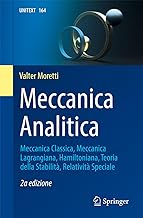
Valter Moretti is a Full Professor in the Department of Mathematics at the University of Trento. His academic career spans roles from Research Fellow to Full Professor, focusing on Mathematical Physics and Quantum Field Theory (QFT) in curved spacetime. He earned an MSc in Physics from Genova University and a PhD in Theoretical Physics from Trento University. Research Interests : Algebraic QFT, General Relativity, Quantum Mechanics, Operator Algebras, and Spectral Theory. His work bridges mathematical rigor with physical applications, particularly in quantum localization, entanglement, and curved spacetime phenomena. Publications : Authored 15+ recent papers on topics like quantum particle localization, entanglement certification, and QFT on curved backgrounds. Collaborated on a 2022 patent for generating entangled photon states. Awards : Holds a patent for a quantum-certified random number generator (2022). Supervision : Advised 8 PhD students, including N. Pinamonti, L. Franceschini, and C. van de Ven. Coordinated national and international research projects (e.g., H2020-MSCA-COFUND-2015). Labs & Collaborations : Affiliated with INFN, TIFPA-INFN, and Q@TN (Quantum@Trento). Organized conferences like Quantum Physics and Geometry (2014) and Quantum Machine Learning (2023). Teaching : Lectures on Analytical Mechanics, Quantum Relativistic Theories, and Special Relativity. Authored textbooks on Spectral Theory and Quantum Mechanics.
David Rohrlich is a Professor of Mathematics and Statistics at Boston University, serving as Director of Graduate Studies. His primary affiliation is with the Department of Mathematics and Statistics. He specializes in Number Theory, focusing on topics such as Artin representations, arithmetic statistics, and Galois theory. His research explores areas including algebraic number theory, arithmetic geometry, and representation theory. Notable contributions include studies on self-dual Artin representations, quaternionic structures in arithmetic statistics, and the interplay between Galois representations and L-functions. Rohrlich has published extensively on topics such as Mordell-Weil groups, average multiplicities, and dihedral Artin representations. His work often involves intricate connections between algebraic structures and number-theoretic phenomena. He holds a PhD and has advised numerous graduate students (though specific names are not listed here). His office is located in CDS 433, with regular in-person and virtual office hours.
Jun Liu is an Assistant Professor in the Department of Mechanical and Aerospace Engineering at the School of Engineering and Applied Sciences, University at Buffalo. His research focuses on advanced energy materials, nano/micro-mechanics, and self-powered systems, with applications in triboelectric energy harvesting and scanning probe microscopy. Education: PhD, Materials Engineering, University of Alberta (2018) MS, Materials Science, Shanghai University (2015) BE, Materials Science and Engineering, Nanchang University (2012) Research Interests: Development of tribovoltaic and triboelectric systems for self-powered electronics Mechanical energy harvesting via dynamic heterojunctions and Schottky contacts 3D-printed hydrogel structures for energy absorption and flexible electronics Nanoscale characterization using atomic force microscopy Design of nanocomposite sensors and catalytic materials Publication Trends: His work emphasizes triboelectricity, nanoscale energy conversion, and sustainable materials. Recent articles explore bionic tactile sensing, tunable hydrogels, and quantum dynamics in sliding interfaces. Awards: SONY Faculty Innovation Award (2021) Nature Springer MINE Young Scientist Award (2020) International Contest of Applications in Nano/Micro Technology Prize (2013) Laboratory: Advanced Energy Materials and Nanomechanics Lab at University at Buffalo.
David Savitt is a Professor and Chair of the Department of Mathematics at Johns Hopkins University, affiliated with the Krieger School of Arts & Sciences. His research focuses on algebraic number theory, with emphasis on Galois representations, modular forms, and p-adic Hodge theory. He holds a PhD from Harvard University and has served on the board of directors for Canada/USA Mathcamp, a summer program for high school students. His work spans theoretical contributions to arithmetic geometry, including studies on moduli stacks of Galois representations and geometric aspects of the p-adic Langlands program. Education: PhD in Mathematics from Harvard University. Research interests include the interplay between Galois representations and modular forms, p-adic Hodge theory, and moduli spaces. His recent work explores geometric structures in the Emerton-Gee stack and the Breuil-Mézard conjecture. Over 20 years of research has produced influential papers on topics like Serre weight conjectures and crystalline lifts of Galois representations. Professional contributions include editorial roles for journals and books, such as co-editing p-adic Geometry: Lectures from the 2007 Arizona Winter School . His involvement with Mathcamp highlights his dedication to nurturing young talent in mathematics.
Patrick Allen is an Associate Professor in the Department of Mathematics and Statistics at McGill University, where he contributes to research in number theory and related fields. He is affiliated with the Montreal Number Theory Group and the Centre Interuniversitaire en Calcul Mathématique Algébrique (CICMA), focusing on areas such as Galois representations, automorphic forms, and algebraic number theory. His work bridges algebraic geometry and arithmetic, with a particular emphasis on modularity lifting theorems and deformation theory. Allen's research interests include the study of CM fields, modular forms, and elliptic curves, alongside investigations into the Langlands program and p-adic methods. He has published extensively on topics such as potential automorphy, monodromy, and adjoint Selmer groups. His contributions address questions in arithmetic algebraic geometry and cohomological automorphic forms, often intersecting with representation theory. While his articles span over 20 years, recent work (2020–2023) emphasizes the modularity of Galois representations over CM fields and the application of automorphic techniques to solve problems in number theory. Allen’s research often involves collaboration with international experts in algebraic number theory and arithmetic geometry. Scientific Awards: None explicitly listed in the provided materials. Advising & Grants: No formal advisees or grant details are listed in the text. His affiliations with CICMA suggest participation in collaborative research initiatives, though specific grants are not mentioned. Labs/Teams: Active member of the Montreal Number Theory Group and CICMA, contributing to inter-university collaborative projects in algebraic number theory.
Timothy Bretl is a Professor of Aerospace Engineering at the University of Illinois at Urbana-Champaign, holding the Severns Faculty Scholar position since 2021. He also serves as Associate Head of the Aerospace Engineering department. His research focuses on robotics, control systems, rehabilitation robotics, and engineering education. Bretl earned his Ph.D. from Stanford University (2005), with prior degrees from Swarthmore College. He holds affiliate roles across multiple departments, including Neuroscience, Coordinated Science Laboratory, and Computer Science. Education: Ph.D. in Aeronautics and Astronautics, Stanford University (2005) B.A. in Mathematics and B.S. in Engineering, Swarthmore College (1999) His research spans engineering education innovations, robotic manipulation, and brain-machine interfaces. Notable awards include the NSF CAREER Award (2010), Best Manipulation Paper (2012), and multiple teaching honors like the Rose Award for Teaching Excellence (2016). Bretl’s work integrates theoretical foundations with practical applications in prosthetics, autonomous systems, and educational technology. He has advised numerous projects on robotics, control systems, and human-robot interaction. His lab explores advanced topics like elastic rod manipulation, magnetic positioning, and curriculum reform in STEM education. Collaborative projects include partnerships with industry and interdisciplinary teams at the Beckman Institute.
Konstantinos Karapiperis is a Tenure Track Assistant Professor at EPFL's Laboratory of Multiscale Modeling of Materials (LMD), within the School of Architecture, Civil and Environmental Engineering (ENAC). His research integrates mechanics , multiscale modeling , and data science to study geomaterials and structural materials. PhD in Applied Mechanics (minor in Applied Mathematics), Caltech Postdoctoral Researcher & Lecturer, ETH Zürich (Marie Skłodowska-Curie Fellowship) Research focuses on granular materials , architected materials , and nonlocal modeling using techniques like Level-Set Discrete Element Method (LS-DEM) and machine learning . Recent work explores fracture control via graph neural networks and thermodynamics-informed models. Selected scientific award: Marie Skłodowska-Curie Fellowship Teaches courses in Soil Mechanics and Multiscale Modeling . PhD students include Thomas Henzel and Hrishikesh Gopakumar Menon. His Data-Driven Mechanics Laboratory (LMD) develops predictive tools for granular and structured material behavior.
Dr. Arghya Das is an Associate Professor in the Department of Civil Engineering at the Indian Institute of Technology Kanpur (IIT Kanpur), where he has been serving since 2014. He previously held the position of Assistant Professor at IIT Kanpur from July 2014 to November 2020 before being promoted to Associate Professor in December 2020. Prior to joining IIT Kanpur, he completed his Post-Doctoral Research Fellowship at Northwestern University, USA, and served as a Research Associate at the University of Sydney, Australia. Dr. Das earned his educational qualifications from prestigious institutions: PhD in Geotechnical Engineering from the University of Sydney, Australia (2013), M.Tech from IIT Bombay, India (2009), and B.E. from Jadavpur University, India (2006). His research focuses on advanced aspects of soil mechanics and geotechnical engineering, with particular emphasis on constitutive modeling of geomaterials, micromechanics of granular materials, and flow through porous media. His work integrates numerical and physical modeling approaches to address complex geotechnical challenges including bifurcation and instability analysis in geomaterials. Dr. Das teaches several advanced courses including Constitutive Modeling of Frictional Materials, Advanced Geotechnical Engineering, Rock Mechanics, Computational Methods in Engineering, and Soil Mechanics. Dr. Das's publication record demonstrates a consistent focus on discrete element modeling (DEM) applications in geomechanics, particle crushing behavior, and constitutive modeling of soils. His recent work (2020-2022) has particularly emphasized unsaturated soil mechanics, chemomechanical effects on granular materials, and advanced computational approaches to soil behavior. These publications appear in high-impact journals such as Acta Geotechnica, Geomechanics for Energy and the Environment, and International Journal of Geomechanics. PK Kelkar Fellowship - IIT Kanpur (2022-2025) FEIT University of Melbourne Visiting Researcher Fellowship (2022-2023) YGE Award for Best Paper on Computational Geomechanics, Indian Geotechnical Society (2018) SERB - Early Career Research Award (2016-2019) Dr. Das has successfully secured multiple research grants including projects funded by ONGC, CSIR, and SERB focusing on micro-poro-mechanical modeling, experimental assessment of Indian crushable sands, and permeability evolution in deep-reservoir rocks. He serves as a corresponding member of the International Technical Committee TC-105 on 'Geo-Mechanics from Micro to Macro' of the International Society for Soil Mechanics and Geotechnical Engineering (ISSMGE) and is a member of the Indian Geotechnical Society.
Dr. Benjamin Busam is a Senior Research Scientist at the Technical University of Munich , affiliated with the Chair for Computer Science Applications in Medicine under Prof. Nassir Navab. Starting September 2025, he will hold the Professorship for Photogrammetry and Remote Sensing at TUM. His career includes leadership roles at FRAMOS Imaging Systems and Huawei Research in London. Education: Mathematics (TUM), Mathematics and Physics (ParisTech, University of Melbourne), PhD in Mathematics (TUM, 2014) His research focuses on 3D computer vision , multi-modal sensor fusion , and their applications in collaborative robotics and augmented reality . He specializes in projective geometry , 6D pose estimation , and neural radiance fields , with a particular emphasis on photometrically challenging environments. Recent publications highlight advancements in 3D scene understanding , neural rendering , and medical imaging , often leveraging machine learning and vision-language models . His work has been recognized through awards like the EMVA Young Professional Award (2015) and Innovation Pioneer of the Year (2019) , along with multiple Outstanding Reviewer distinctions at leading conferences. Dr. Busam has supervised numerous PhD and MSc students on topics including 6D pose estimation , medical augmented reality , and robotic ultrasound , collaborating with institutions like MIT , École Polytechnique , and University of Padova .
Deepak Ganesan is a Professor at the Manning College of Information and Computer Sciences (CICS) at the University of Massachusetts Amherst. His research focuses on low-power sensing and communication, networked systems, and machine learning applied to pervasive health monitoring and societal challenges. PhD, Computer Science, University of California, Los Angeles (2004) MS, Computer Science, University of California, Los Angeles (2000) BTech, Computer Science, Indian Institute of Technology, Madras (1998) Ganesan's work bridges wireless sensor networks, smart textiles, and healthcare applications. He designs ultra-low-power wearable devices for tracking health signals like drug use, smoking, and cognitive performance, often integrating machine learning for robust detection. His research emphasizes societal impact, particularly in aging and Alzheimer's care through the Massachusetts AI and Technology Center for Connected Care (MassAITC) and the Center for Personalized Health Monitoring (CPHM). Recent publications highlight innovations in edge-cloud collaboration, fabric-based sensors, and longitudinal health analytics. His NIH-funded MD2K Center for Excellence and affiliations with the Center for Data Science and Computational Social Science Institute further underscore his interdisciplinary approach. ACM Fellow NSF CAREER Award (2006) IBM Faculty Award (2008) UMass Junior Faculty Fellow (2008) UMass Lilly Teaching Fellow (2009) Best Paper at CHI 2013 Best Paper Runner-up at Mobicom 2014 Honorable Mentions at Ubicomp 2013 Ganesan leads the SENSORS: Wireless Sensor Networks Group and contributes to global initiatives like the Internet of Battlefield Things. His work spans academic research, industry partnerships, and policy development in AgeTech and digital health.
Dima Arinkin is a Professor in the Department of Mathematics at the University of Wisconsin–Madison, specializing in algebraic geometry with significant contributions to geometric representation theory and mathematical physics. His research focuses on: Geometric Langlands Program: Developing frameworks connecting automorphic forms and Galois representations through geometric methods Moduli Spaces: Analyzing spaces of algebraic connections, Higgs bundles, and their compactifications D-modules: Studying systems of linear differential equations via algebraic geometry Integrable Systems: Investigating geometric structures in soliton theory and Painlevé equations Irregular Singularities: Exploring connections with irregular behavior on algebraic curves Analysis of his publications (2008-2016) reveals consistent advancement in geometric Langlands through derived algebraic geometry techniques, particularly in relating singular support of sheaves to automorphic forms and establishing oper structures for connections. No scientific awards are documented in the provided materials. No information regarding student advisement or research grants appears in the source texts.