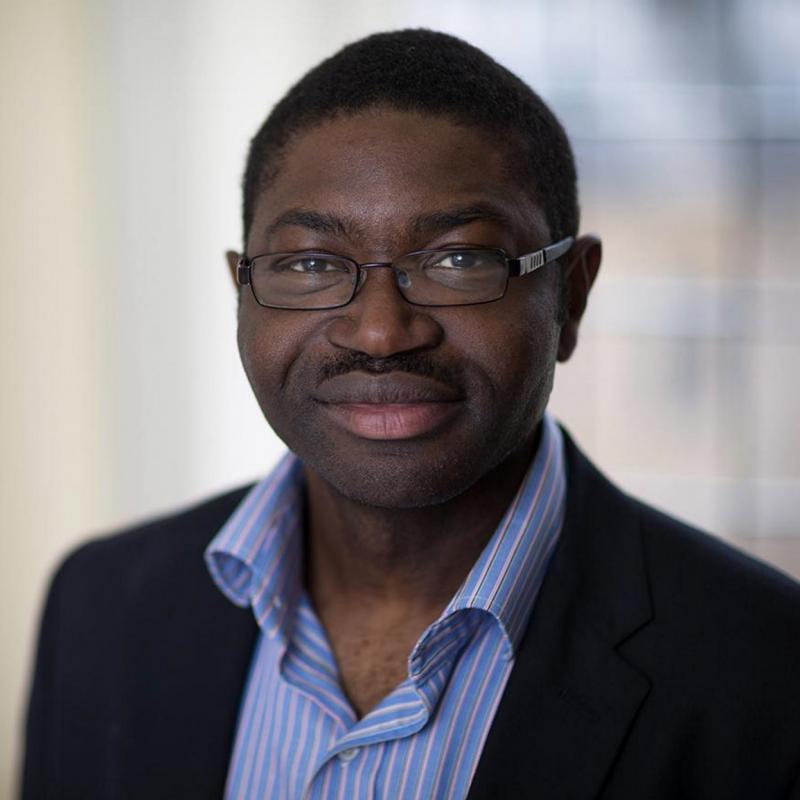
Navid Bayati is an Associate Professor at the University of Southern Denmark, affiliated with the Institute of Mechanical and Electrical Engineering and the Centre for Industrial Electronics. He leads the Control and Protection of Smart Grids (CAP-SG) group and focuses on renewable/hybrid power systems, microgrid protection, and grid code compliance. Education: Ph.D. in Power Systems & Microgrid Protection (2020, Aalborg University); M.Sc. in Power Systems (2017, Amirkabir University of Technology) His research spans renewable energy integration , transient analysis , grid interconnection , and digital twin applications . Recent work includes machine learning for carbon emission prediction, fault localization in DC microgrids, and supercapacitor resilience in hybrid systems. Collaborations include projects like IEA Wind Task 50 and RePoSys , addressing grid renovation, life cycle assessment, and digital twin resilience. His teaching portfolio covers power electronics , energy management , and microgrid control .
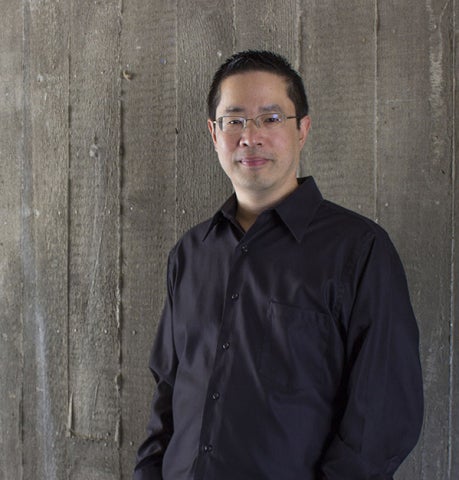
Tony Ingesson is a Senior Lecturer in the Department of Political Science at Lund University, specializing in intelligence analysis, counter-espionage, and military decision-making. With a background in the Swedish Armed Forces where he worked with technical data acquisition for airborne weapons systems and communications, he brings practical military experience to his academic work. His research interests span intelligence analysis methodologies, counterintelligence operations, deception and manipulation at tactical levels, clandestine communications, and industrial espionage. Ingesson has developed a particular expertise in how psychological mechanisms and biases influence intelligence analysis, as well as the historical connections between military conscription and democratization. His work bridges theoretical political science with practical security applications. Analysis of his recent publications reveals a strong focus on contemporary security challenges, particularly the intersection of traditional and emerging technologies in intelligence operations. His work examines how historical communication methods persist in modern conflicts, the evolving nature of espionage in high-trust societies like Sweden, and the application of intelligence analysis techniques to non-traditional fields such as precision oncology. Ingesson demonstrates consistent scholarly output across both academic journals and public-facing platforms like The Conversation, indicating his commitment to making complex security issues accessible to broader audiences. Ingesson actively participates in interdisciplinary research projects, including 'Clandestine Communications: Old Technologies, New Opportunities' and 'Greyzone genomics' at the Pufendorf IAS. His teaching portfolio encompasses political science methods, intelligence analysis techniques, counterterrorism, and deception studies, reflecting the breadth of his expertise. While specific details about student advising aren't provided in the available information, his role as Senior Lecturer indicates involvement in mentoring students through his teaching responsibilities. His research team involvement includes collaboration with researchers like Magnus Andersson on clandestine communications and David Gisselsson Nord on the intersection of genomics and security. These collaborations demonstrate his ability to bridge disciplinary boundaries while maintaining focus on core intelligence and security issues.
Edgar Weippl is a Professor at the Faculty of Computer Science, University of Vienna, where he serves as Vice Dean and Head of the Research Group Security and Privacy. His work spans cybersecurity, blockchain, and machine learning, with teaching roles in information security and software security courses. Current Positions: Vice Dean (Faculty of Computer Science), Head (Security and Privacy Research Group), Deputy Head (Neuroinformatics & Knowledge Engineering Groups) Research Interests: Cybersecurity, blockchain, IoT security, code obfuscation, privacy technologies, reinforcement learning, and socio-technical systems security Selected Publications: Focus on blockchain privacy, VoWiFi security, code obfuscation, and reinforcement learning applications
Jon Lindsay is an Associate Professor at the Sam Nunn School of International Affairs, part of the Ivan Allen College of Liberal Arts at Georgia Institute of Technology. His research focuses on cybersecurity, international relations, and military strategy, with an emphasis on cyber warfare, deterrence theory, and the impact of technological advancements like AI and quantum computing on global security. He explores topics such as cyber conflict dynamics, the role of deception in defense strategies, and the institutional challenges of military automation. His work often bridges theoretical frameworks from international relations with empirical analyses of modern cyber threats and geopolitical tensions. Notable contributions include studies on Stuxnet's implications for secret statecraft, the stability-instability paradox in cyberspace, and the strategic ambiguity of quantum computing. Lindsay has also engaged in policy debates on cross-domain deterrence and the evolving nature of intelligence operations in the digital age.
Nabil Aouf is a Professor of Robotics and Autonomous Systems in the Department of Electrical and Electronic Engineering at City, University of London, a position he has held since January 2019. Previously, from 2006 to 2018, he was Professor of Autonomous Systems at Cranfield University’s Defence and Security campus, where he also served as Head of the System and Autonomy Group and Research Lead of the Centre of Electronic Warfare, Information and Cyber. He earned his PhD in Electrical Engineering from McGill University Faculty of Engineering between 1999 and 2002. His research focuses on Robotics, Autonomous Systems, UAV Navigation, Computer Vision, and Fault-Tolerant Control . Key areas include visual odometry, sensor fusion (vision/IMU, RGBD, thermal-visible), robust control for UAVs, fault diagnosis in inertial systems, 3D perception, and autonomous landing. His work integrates theoretical control methods with real-time implementation in aerospace and defense contexts. His recent publications reflect a strong emphasis on robust optimization, multispectral vision, and real-time autonomous navigation. Trends indicate a focus on enhancing autonomy under uncertainty—through illumination-invariant stereo matching, L∞ optimization, and robust feature matching—particularly for UAVs operating in challenging environments. Nabil Aouf has collaborated extensively with researchers such as M. Richardson, O. Araar, T. Mouats, and M. Boulekchour across numerous projects in UAV control, sensor fusion, and autonomy. While no scientific awards are listed in the provided text, his leadership roles and sustained publication record in high-impact journals and conferences underscore his academic contributions. He has supervised or collaborated with several advisees including S.H. Almutairi, L. Chermak, I. Vitanov, and D. Nam, contributing to both theoretical developments and practical implementations in autonomous systems. His work has applications in aerospace, defense, planetary exploration, and critical infrastructure inspection.
Dapo Akande is the Chichele Professor of Public International Law at the University of Oxford’s Faculty of Law and a Fellow of All Souls College. He is Co-Director of the Oxford Institute for Ethics, Law and Armed Conflict (ELAC) at the Blavatnik School of Government and has held visiting positions at Yale, Melbourne, and other institutions. Since January 2023, he has served as a Member of the United Nations International Law Commission. His academic background and research span public international law, with a focus on the law of armed conflict, international criminal law, human rights, law of international organizations, and cyber operations. He is a generalist with deep expertise in the regulation of armed conflict, humanitarian access, and accountability mechanisms. His recent scholarship addresses critical issues such as the crime of aggression, immunity of state officials, targeted killings by drones, and humanitarian relief in conflict zones. His work on the Oxford Guidance on the Law Relating to Humanitarian Relief Operations , commissioned by UN OCHA, has shaped policy and legal understanding globally. He co-authored the authoritative Oppenheim’s International Law: The United Nations , which won the 2019 ASIL Certificate of Merit. The trends in his publications reveal a sustained engagement with the evolving legal frameworks governing war, accountability, and state responsibility. His work bridges doctrinal analysis with practical policy impact, particularly in the areas of drone warfare, ICC jurisdiction, and humanitarian law compliance. Scientific awards and recognition include: Certificate of Merit, American Society of International Law (2019) Akande has served as legal adviser to the UK Parliament’s All Party Parliamentary Group on Drones and to multiple international bodies, including the UN Security Council, Human Rights Council, and ICRC. He has advised national courts (including the UK Supreme Court) and acted in cases before the ICJ, ICC, and ECtHR. He is founding editor of EJIL:Talk! and has held editorial roles in leading journals such as the American Journal of International Law and European Journal of International Law . He leads several research initiatives, including the Oxford Process on International Law Protections in Cyberspace, and previously co-directed the Oxford Martin Programme on Human Rights for Future Generations and the ERC-funded project on the Individualisation of War. He is actively involved in global policy through advisory roles with the US State Department, UK Ministry of Defence AI Ethics Panel, and the Ukrainian Government Working Group on war damage compensation.
Hayretdin Bahsi is an Assistant Professor at the School of Informatics, Computing, and Cyber Systems at Northern Arizona University . His research focuses on cybersecurity, with expertise in malware detection, IoT security, and machine learning applications in defense mechanisms. He collaborates internationally on maritime cybersecurity, healthcare systems, and critical infrastructure protection. Research Interests include Android malware analysis, botnet detection, explainable AI in intrusion detection, and threat modeling for AI-driven systems. His work addresses challenges like concept drift in malware detection and privacy-preserving techniques for IoT networks. Publications span 66 scholarly works since 2009, emphasizing cybersecurity trends in AI, IoT, and healthcare. Recent contributions explore large language model (LLM) applications in vulnerability detection and cyber threat modeling for healthcare systems. Collaborations include projects on maritime cyber-insurance, cyber incident management in low-income countries, and datasets like MedBIoT for IoT botnet analysis. His work bridges theory and practice, addressing real-world cybersecurity challenges.
Dr. Ioanna Kantzavelou is an Associate Professor at the Department of Informatics and Computer Engineering, School of Engineering, University of West Attica. She leads the INSSec Research Group, focusing on Information, Networks, and Systems Security. Her expertise spans Cybersecurity, Game Theoretic approaches in Intrusion Detection, and Critical Infrastructure Protection. She holds a Ph.D. from the University of the Aegean (2011), an M.Sc. from University College Dublin (1994), and a B.Sc. from the Technological Educational Institution of Athens (1991). Education: Ph.D. in Intrusion Detection with Game Theoretic Approaches – University of the Aegean (2011) M.Sc. in Computer Security – University College Dublin (1994) B.Sc. in Informatics – TEI of Athens (1991) Research Interests: Intrusion Detection in IoT/Wireless Sensor Networks (WSN) and Cyber-Physical Systems Cyber Ranges for Education and Research Cybersecurity for Merchant Shipping and Critical Infrastructures Hybrid Threats, Cyberterrorism, and Cyberwarfare Digital Forensics and Blockchain-Based Authentication Systems Her work includes over 30 peer-reviewed publications, three books, and contributions to R&D projects funded by the Greek government, EU, and Irish government. She actively reviews for IEEE, Elsevier, and Springer journals, and is a member of ACM, IEEE Computer Society, and the Greek Computer Society. Grants & Collaborations: EU-funded projects on Cybersecurity and Critical Infrastructure Protection Greek government grants for Cyber Ranges and IoT Security Labs/Teams: Head of the INSSec Research Group, collaborating with industry partners on Cybersecurity solutions for maritime and industrial sectors.
Dr. Brett J. Borghetti is a Professor of Computer Science in the Department of Electrical and Computer Engineering at the Air Force Institute of Technology (AFIT), Graduate School of Engineering and Management, Wright-Patterson AFB, OH. He was promoted to Professor in July 2022, following prior appointments as Associate Professor (2017) and Assistant Professor (2008/2013). His expertise lies in artificial intelligence, machine learning, deep learning, cybersecurity, and human-machine teaming. Education: Ph.D. in Computer Science, University of Minnesota, Twin Cities (2008) M.S. in Computer Systems, Air Force Institute of Technology (1996) B.S. in Electrical Engineering, Worcester Polytechnic Institute (1992) Dr. Borghetti's research focuses on applying machine learning to physical science sensors (hyperspectral, seismic, RF), cybersecurity, and enhancing human-machine team performance. He teaches graduate courses in machine learning, AI, data security, and algorithm design, and advises numerous MS and PhD students in areas such as sensor exploitation, cognitive workload, and cyber situational awareness. His recent publications demonstrate strong trends in deep learning for multimodal sensor fusion, nuclear security, and neuroergonomics. Scientific Awards: AETC Educator of the Year (2021, Civilian) AFIT Ezra Kotcher Teaching Award (2021) AFIT Teaching Excellence Award (2019) AF STEM Outstanding Science and Educator Award (2015) Multiple Eta Kappa Nu Outstanding Instructor Awards Air Force Meritorious Service Medal and other military honors Dr. Borghetti has advised numerous graduate students and led research projects with significant funding and applications in defense and national security. He has directed research in AI-driven sensor analysis, cyber defense systems, and adaptive automation. His work often involves collaboration with national labs and DoD agencies. He has contributed to major research initiatives in human factors, cyber intruder detection, and machine learning for operational environments. Labs and Research Teams: His work is associated with AFIT's research in cyber security, sensor exploitation, and human-machine systems. He collaborates with teams working on the Cyber Intruder Alert Testbed (CIAT), neuroergonomic modeling, and machine learning for defense applications.
Joe Devanny is a Senior Lecturer in National Security Studies at the War Studies department of King's College London. His research focuses on cyber security, international cyber policy, and national defense strategies. He contributes to understanding the evolving role of cyber power in global politics, particularly in the UK, Brazil, India, and Mexico. His work spans cybersecurity policy analysis, AI implications in intelligence, and the intersection of cyber operations with traditional statecraft. Recent publications address the UK's Strategic Defence Review, India's cyber statecraft, and Brazil's cyber strategy under shifting political leadership. He has co-edited major works like the Research Handbook on Cyberwarfare and authored reports on Mexico's stalled cybersecurity progress and South Africa's limited cyber strategy under Ramaphosa. His research emphasizes ethical dimensions of cyber operations, the impact of AI on cyber power dynamics, and the need for responsible democratic cyber strategies. Collaboration with institutions like the Carnegie Endowment and NATO CCD COE highlights his international engagement in shaping cyber policy discourse.
Patrick Lin is a Professor in the Philosophy Department at California Polytechnic State University (Cal Poly), where he serves as Director of the Ethics + Emerging Sciences Group, a non-partisan organization established at Cal Poly in 2007 to focus on the risk, ethical, and social impact of emerging sciences and technologies. He is frequently quoted in national publications on topics including ethics of autonomous vehicles, artificial intelligence, robotics, outer space, Arctic frontiers, military and policing applications, virtual and augmented reality, and smart cities. Lin received his Ph.D. and M.A. from the University of California, Santa Barbara, and his B.A. from the University of California, Berkeley. His academic appointments include Affiliate Scholar at Stanford Law School's Center for Internet and Society, Fulbright Specialist at the University of Iceland's Centre for Arctic Policy Studies (2018), and Visiting Senior Research Fellow at the Centre for Applied Philosophy and Public Ethics in Australia (2010-2016). Lin's research spans technology ethics broadly, with specific expertise in AI ethics, robotics ethics, autonomous vehicle ethics, space ethics, cybersecurity ethics, and military ethics. His work bridges philosophical theory with practical application, examining how emerging technologies challenge traditional ethical frameworks. His research demonstrates consistent themes across different technological domains: examining risk assessment methodologies, developing ethical frameworks for emerging technologies, analyzing social and political implications of technological adoption, and providing practical guidance for developers, policymakers, and users. His publication record shows a progression from early work on nanotechnology ethics to current focus areas including space cybersecurity, AI kitchens, and ethical frameworks for autonomous systems. The articles reflect his interdisciplinary approach, combining insights from philosophy, law, engineering, and policy studies to address complex ethical challenges in emerging technologies. Cal Poly/Academic Senate, Distinguished Scholarship Award (2017) American Philosophical Association's Public Philosophy Op-Ed Award (2015) Cal Poly/College of Liberal Arts, Outstanding Scholarship Award (2009) Lin has secured significant grant funding from organizations including the National Science Foundation, US Department of Defense, and Canadian Institute for Advanced Research for research on military AI risk assessment, AI kitchens and robot cooks, outer space cybersecurity, and autonomous vehicles. He has advised numerous students through his teaching and research activities at Cal Poly, where he teaches courses including Philosophy of Technology, Ethics of Science and Technology, and Introduction to Philosophy. Lin directs the Ethics + Emerging Sciences Group at Cal Poly, which serves as a hub for interdisciplinary research on technology ethics. He also participates in several other research initiatives including his role as Research Director for the Consortium for Emerging Technologies, Military Operations, and National Security (CETMONS) and as a member of the Emerging Technologies of National Security and Intelligence initiative at the University of Notre Dame.
Yulia Gel is a Professor in the Department of Statistics at Virginia Tech and serves as a Part-Time Program Director-Expert at the National Science Foundation (NSF). She holds a MSc (summa cum laude) and PhD in Mathematics from Saint Petersburg State University (Russia) and completed a postdoc in Statistics at the University of Washington. Her research focuses on uncertainty quantification in AI, statistical foundations of data science, spatio-temporal processes, and applications in climate science, healthcare, and blockchain analytics. She has received prestigious awards including the NSF Director’s Award (2023), ASA Distinguished Achievement Medal (2018), and TIES Abdel El-Shaarawi Award (2014). Gel has led grants on wildfire prediction, climate informatics, and blockchain data science. She serves on editorial boards of Statistica Sinica, Electronic Journal of Statistics, and Technometrics, and organizes workshops on AI for climate sustainability and fragile Earth systems. Her research group develops topological and geometric methods for graph neural networks, with applications to digital twins, environmental justice, and public health. Education: MSc (1997), PhD (2000) in Mathematics from Saint Petersburg State University; Postdoc in Statistics at University of Washington (2001–2003). Past roles include Professor at University of Texas at Dallas (2015–2024) and Associate Professor at University of Waterloo (2004–2014). Selected visiting positions include NASA Jet Propulsion Lab (2016–2017) and Isaac Newton Institute (2016–2017). She has pioneered statistical software packages like snowboot and funtimes for network inference and time-series analysis. Awards highlight her contributions to environmetrics and statistical methodologies. Current projects include NSF-funded research on AI-driven wildfire prediction and blockchain analytics for climate resilience. Her lab’s recent work emphasizes topological methods (e.g., zigzag persistence) for graph-based forecasting and adversarial robustness.
Dr Richard O'Quinn is a Lecturer in Management & Leadership at the School of Business, University of Queensland. He holds qualifications including a PhD from UQ, an MBA, and military degrees from institutions like the US Army Command and General Staff College. With a 23-year career in the US Army Special Operations Forces, his expertise bridges military strategy and academic leadership studies. Research & Teaching: Richard focuses on leadership, strategic decision-making, and organization studies using practice and process perspectives. He teaches in graduate, MBA, and executive education programs, emphasizing practical applications of leadership theory. Recent Research Trends: His work increasingly addresses veterans’ mental health in workplaces, cybersecurity policy, and organizational improvement. Notable projects include seed-funded studies on cybersecurity decision-making and veteran PTSD disclosure challenges. Grants & Collaborations: Funded projects include a 2022-2024 study on veteran mental health disclosure (East Coast Apprenticeships) and a 2021 project developing strategic decision-making simulations (Practera). He also contributes to UQ Cyber initiatives and national cybersecurity strategy submissions. Awards: None explicitly listed, but his work garners attention for bridging military and civilian organizational challenges.
Eglė E. Murauskaitė is a Senior Faculty Specialist at the University of Maryland and a Senior Non-Resident Fellow with the Vilnius Institute for Policy Analysis. She lectures at Vilnius University and Kaunas University of Technology, focusing on international security, gray zone warfare, and unconventional threats. Her work spans academic research, government consulting, and crisis simulations design across Europe, the U.S., and MENA. Education: Master of International Relations (Security Studies, Summa Cum Laude, Sciences Po Paris 2012), Bachelor of Economics (SSE Riga 2008). Research Areas: Nuclear security, WMD proliferation, crisis communication, emotion studies, and interdisciplinary approaches to security challenges. Leadership: PI for DoD Minerva projects on Western assistance in Ukraine and emotions in adversarial campaigns; lead for ICONS Project simulations. Scientific Awards: Senior non-resident fellow at Vilnius Institute for Policy Analysis. Her recent publications analyze Ukrainian resilience, Russian nuclear rhetoric, and foreign fighter risks. She also contributes to public discourse via the NYLA Update podcast and National Drama Theatre discussions.
Kaushik Nagarajan Muthusamy Ragothaman is an Assistant Professor in the Department of Computer Science at the University of Wisconsin-Parkside. His teaching portfolio includes courses such as Operating Systems, Network Security, Cybersecurity Program Planning, and Offensive Security/Threat Management. His research focuses on cybersecurity, IoT security, access control systems, and trusted data processing within information systems. Ragothaman has published works addressing IoT access control dynamics, organizational vulnerability to advanced persistent threats (APTs), and systematic studies of IoT security frameworks. His recent publications emphasize future directions in IoT security policies and paradigm shifts for APT mitigation. He teaches both undergraduate and graduate courses related to computer architecture, programming languages, and security risk management. No scientific awards or grants are explicitly listed in the provided material. His academic contributions are primarily through教学 and research in cybersecurity domains without noted funded projects or lab affiliations mentioned.