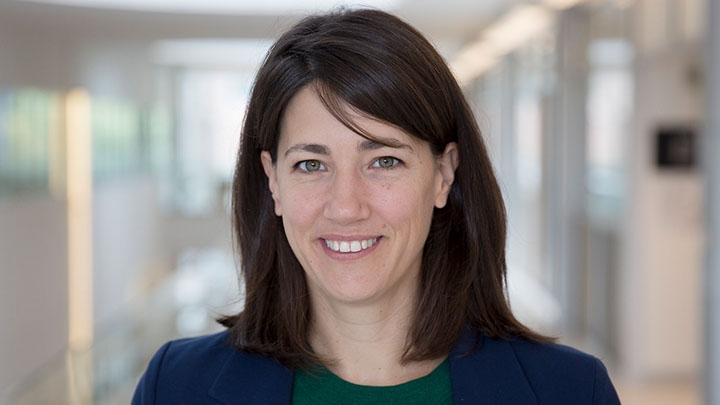
Fei Fang is an Associate Professor in the Software and Societal Systems Department at Carnegie Mellon University (CMU) , where she explores the intersection of artificial intelligence and multi-agent systems . Her work integrates machine learning with game theory to address challenges in security , sustainability , and mobility , aligning with the AI for Social Good mission. Ph.D. in Computer Science, University of Southern California (2016) B.Eng. in Electronic Engineering, Tsinghua University (2011) Recent research focuses on reinforcement learning , large language models (LLMs) , and human-AI collaboration . Her team’s work has been recognized with 15+ awards across prestigious venues like IAAI, AAAI, and IJCAI. Notable accolades include the 2023 Allen Newell Award , 2022 Sloan Fellowship , and NSF CAREER Award (2021) . She actively contributes to educational initiatives , including teaching "Demystifying AI for Everyone" at CMU, and has sought part-time teaching assistants for course development. Her research spans 15+ domains , including AI ethics , cyber defense , traffic optimization , and public health .
Alexander R. Pruss is a tenured Professor in the Department of Philosophy at Baylor University , within the College of Arts and Sciences . He holds a dual PhD in Philosophy (University of Pittsburgh, 2001) and Mathematics (University of British Columbia, 1996), and has held previous academic positions at Georgetown University. His work is deeply interdisciplinary, bridging metaphysics, philosophy of religion, formal epistemology, and ethics. Education: Ph.D. in Philosophy, University of Pittsburgh (2001) Ph.D. in Mathematics, University of British Columbia (1996) B.Sc. (Hon.) in Mathematics and Physics, University of Western Ontario (1991) Pruss’s research interests include metaphysics—particularly the Principle of Sufficient Reason , modality , and infinity —philosophy of religion, divine attributes , cosmological arguments , and sexual ethics . He is known for integrating rigorous formal methods with classical theistic metaphysics. His recent publications explore the intersection of probability theory, paradox, and theology, particularly in infinite domains. He has authored influential books such as The Principle of Sufficient Reason: A Reassessment (2006), Infinity, Causation and Paradox (2018), and One Body: An Essay in Christian Sexual Ethics (2012). The trends in his recent articles show a sustained focus on the philosophical implications of infinity, symmetry, and probability. He frequently investigates paradoxes in probability (e.g., infinite lotteries), challenges to modal realism, and the metaphysical coherence of divine attributes. His work combines analytic rigor with theological depth, often aiming to defend classical theism through logical and mathematical reasoning. Scientific awards and honors: Aquinas Medal, American Catholic Philosophical Association (2025) Wilde Lecturer, Oriel College, University of Oxford (2019) Outstanding Tenured Faculty Research Award, College of Arts and Sciences (2013) National Endowment for the Humanities Summer Stipend (2002) Social Sciences and Humanities Research Council of Canada Fellowship (1997–2000) Pruss has been actively involved in academic service, including serving on the Executive Council of the American Catholic Philosophical Association (2021–2024) and the Society of Christian Philosophers (2011–2013) . He has held editorial roles for journals such as American Philosophical Quarterly and Analysis and Existence . He has delivered numerous invited lectures globally, including at Oxford, Notre Dame, and MIT. There is no mention of formal PhD or Master’s students in the provided text, but he advises through graduate seminars and research supervision. He has not received specific grant mentions beyond fellowships and stipends. He is affiliated with research groups such as the Baylor Institute for Faith and Learning and the Thomistic Institute , and contributes to philosophy of science and theology dialogues. His work continues to shape contemporary debates in analytic philosophy of religion and metaphysics.
Todd Collins is a Professor of Political Science and Public Affairs at the University of Western Carolina’s College of Arts and Sciences. He holds a Ph.D. in Political Science from the University of Georgia, a JD from the University of North Carolina at Chapel Hill, and a BA from the same institution. His research focuses on judicial decision-making, legal system biases, and the intersection of religion, politics, and policy. Key research interests include racial and gender disparities in legal contexts, media’s role in shaping public perception of courts, and religious influences on legislative behavior. Collins has extensively studied Supreme Court dynamics, appellate processes, and the interplay between public opinion and judicial rulings. His work bridges empirical legal studies with sociological and political frameworks, addressing issues such as courtroom fairness, attorney collaboration barriers, and the impact of religious affiliations on policymaking. Notable projects include analyses of case salience metrics and the role of precedent in judicial reasoning.
Elisa Morgera is a Professor of Global Environmental Law at the University of Strathclyde and the UN Special Rapporteur on Climate Change and Human Rights (2024–present). She previously directed the UKRI GCRF One Ocean Hub (2019–2024), a transformative ocean governance initiative spanning 22 institutions globally. Her research focuses on international environmental law, human rights, equity, and oceans governance, with particular attention to Indigenous peoples, small-scale fishers, and climate justice. Education includes a PhD in International Law from the European University Institute and an LLM in Environmental Law from University College London. She also holds an adjunct professorship at the University of Eastern Finland. Research interests integrate environmental law with human rights, equity, and sustainability, addressing topics like benefit-sharing in natural resources, marine biodiversity, and corporate accountability. She has advised UN agencies, governments, and NGOs, and contributed to Scottish human rights frameworks, including recommendations for a legal right to a healthy environment. Key awards include election to the Royal Society of Edinburgh (2022). Her work spans over 180 publications, including articles on climate governance, ocean defenders' rights, and BBNJ Agreements. She leads interdisciplinary projects funded by UKRI, the EU, and global partnerships. Elisa has advised on over 30 international initiatives, including contributions to the UN Special Rapporteur on Human Rights and the Environment. Her advisory roles include the Scottish Government’s Human Rights Leadership Task Force (2018–2020), shaping national human rights legislation. Her One Ocean Hub and other collaborations emphasize equity and inclusion in ocean policy, involving communities in decision-making processes.
Maxwell Young is an Associate Professor in the Department of Computer Science and Engineering at Mississippi State University's College of Engineering. His office is located in 312 Butler Hall and he can be reached at myoung@cse.msstate.edu. Previously, he served as an Assistant Professor at Drexel University in Philadelphia, following postdoctoral positions at the University of Michigan (working with Seth Pettie) and the National University of Singapore (working with Seth Gilbert). Young earned his PhD from the University of Waterloo, Canada, under the supervision of Raouf Boutaba and Martin Karsten, his MS from the University of New Mexico under Jared Saia, and his BS in mathematics from Queen's University, Canada. His research focuses on the design and analysis of algorithms for decentralized networks that yield provable guarantees with respect to security, fault tolerance, and performance. His primary research areas include distributed computing, computer security, and theoretical algorithms, with specific emphasis on contention resolution protocols, Sybil attack defenses, and resource-competitive approaches to network security. His work bridges theoretical computer science with practical applications in wireless networks and distributed systems. Analysis of his recent publications reveals a consistent trajectory focused on making distributed systems more resilient against adversarial attacks while optimizing resource usage. His research demonstrates sophisticated application of probabilistic analysis and algorithmic game theory to security challenges, with particular innovation in creating asymmetric defenses where attackers must expend disproportionate resources compared to legitimate users. Best Paper Award at SIROCCO 2025 for 'Bankrupting DoS Attackers' Best Paper Award at SSS 2024 for 'Softening the Impact of Collisions in Contention Resolution' Best Paper Award at ICDCN 2024 for 'Defending Hash Tables from Subterfuge with Depth Charge' Young has received significant research funding through grants including 'Collaborative Research: SaTC: CORE: Small: Bankrupting Attackers in Dynamic Networks' and 'CAREER: Make Them Pay! Algorithms for Securing Wireless Systems.' His work on resource-competitive algorithms provides theoretical foundations for designing systems where adversaries must spend significantly more resources than legitimate users to mount successful attacks. His research group appears to focus on distributed algorithms and network security, with particular attention to practical implementations of theoretically sound approaches. Young has collaborated extensively with researchers including Jared Saia, Seth Gilbert, and Diksha Gupta on security-related algorithmic challenges.
Alicia Grandey is a Liberal Arts Professor in the Department of Psychology at Pennsylvania State University, specializing in Industrial-Organizational Psychology. She serves as the Area Coordinator and leads the Workplace Emotional Labor and Diversity (WELD) Lab. Education: Ph.D. in Industrial-Organizational Psychology from Colorado State University (1999) Interdisciplinary Initiatives: Founder of Penn State’s Healthy-Inclusive-Productive (HIP) Workplace Initiative Her research focuses on emotional labor, workforce diversity (gender, race, political/cultural), midlife women’s health in leadership roles, and the intersection of health, diversity, and productivity. She actively translates research into practice through executive education workshops and articles in Harvard Business Review and The Conversation . Recent publications and presentations highlight emotional labor dynamics, menopause in the workplace, and AI-driven accessibility for neurodiverse employees. Her work has been recognized with NSF grants, best paper awards, and Fellowships from SIOP and APS. Dr. Grandey advises doctoral students and postdoctoral scholars, including recent thesis defenders like Tayana Rich and Kayley Morris. She serves as Associate Editor for the Journal of Applied Psychology and engages with industry through advisory boards.
Theodore R. Essex is a Professorial Lecturer in Law at The George Washington University and currently serves as an Administrative Law Judge with the United States International Trade Commission, adjudicating international patent and trademark disputes. His professional trajectory includes: Current role as Administrative Law Judge at the United States International Trade Commission Prior service as Judge at the Office of Medicare Hearing and Appeals (OMHA) Attorney position at the Veterans Administration USAF JAG officer career culminating as Chief of General Tort Claims Division, including trial attorney duties and legal training Early career as public defender for Franklin County Ohio (until 1985) and private practice trial attorney in Ohio (1980-1982) His research focuses on Intellectual Property Law, International Trade Law, Administrative Law, and Litigation, directly informed by his adjudication of complex international intellectual property cases at the ITC. Education: BA, Miami University of Ohio JD, The Ohio State University
Talia Peleg is an Associate Professor of Law and Co-Director of the Immigrant & Non-Citizen Rights Clinic at CUNY School of Law. She is a dedicated legal scholar and practitioner whose work centers on protecting the rights of non-citizens, particularly those entangled in both the immigration and criminal legal systems. Her research interests include: Immigration Law and Policy Criminal-Immigration Law Intersection Humanitarian Relief and Deportation Defense Universal Representation for Detained Immigrants Government Surveillance and Control of Immigrants Reform of ICE and Detention Practices Her recent scholarly output reflects a strong commitment to transformative legal advocacy and systemic reform. Her publications focus on dismantling the deportation pipeline, challenging indefinite detention, and implementing public defender models in immigration courts. These works span law journals and public opinion platforms, demonstrating her dual role as scholar and public intellectual. Notable recognitions and awards were not mentioned in the provided text. Professor Peleg supervises law students in clinical practice, representing non-citizens in bond hearings, removal proceedings, and affirmative applications. She has been instrumental in shaping the New York Immigrant Family Unity Project (NYIFUP), a groundbreaking universal representation program. Her prior experience as a Supervising Attorney at Brooklyn Defender Services has deeply informed her teaching and scholarship. She is actively involved in federal litigation and policy advocacy. She is affiliated with the Immigrant & Non-Citizen Rights Clinic at CUNY School of Law, a leading center for public interest immigration law, where she trains the next generation of advocates in creative, client-centered legal defense.
Stephen Colman is an Associate Professor of Law and Course Leader for the LLM Law at the University of Suffolk within the School of Business, Arts, Social Sciences and Technology. A non-practising solicitor with over 12 years as a Senior Crown Prosecutor at the Crown Prosecution Service, he also serves as a link tutor for Rushmore Business School in Mauritius and represents the university on the Suffolk and North Essex Law Society Executive Committee. His research centers on prosecutorial discretion, victims' rights to challenge prosecution decisions, and intersections with administrative law and victimology. He is currently authoring 'Challenging Prosecutorial Decision-Making' for Bristol University Press, examining systemic issues in criminal justice decision-making processes and victims' legal pathways. His publications reveal consistent focus on criminal procedure reforms, victims' rights mechanisms, and evidentiary standards across UK jurisdictions. Key recurring themes include the Single Justice Procedure's implications, comparative analysis of victims' review schemes, and vulnerabilities within prosecution systems affecting both defendants and victims. Professional recognitions include: Fellowship of Advance HE Colman leads undergraduate modules in Criminal Law, Criminal Procedure, Criminal Evidence and Administrative Law, plus postgraduate modules in Contemporary Criminal Law and Criminal Evidence & Psychology. He has developed legal placements with local firms, delivered external training on criminal evidence, and was nominated for the University of Suffolk Staff Award 2022 for Outstanding Contribution to Learning.
Katherine Beckett is a Professor in the Department of Law, Societies & Justice and the Department of Sociology at the University of Washington. She co-directs the Rethinking Punishment project and chairs the Law, Societies & Justice Department. Her research focuses on criminal justice reform, social inequality, and urban social control. Education: Ph.D., University of California, Los Angeles (1994) M.A., University of California, Los Angeles (1989) B.A., University of California, San Diego (1986) Her work examines the intersection of law, race, and incarceration, particularly in drug enforcement, capital punishment, and sentencing disparities. Recent projects evaluate housing outcomes and sentencing reforms. Her research trends (2024-2011) emphasize criminal justice policy, race, and urban governance, with subfields including prosecutorial discretion, life sentences, and socio-cultural theories of punishment. Scientific Awards: University of Washington's Public Service Award Washington State Academy of Sciences member (2016) She has advised students including Kaitlyn Laibe (2023), E. J. Munizza (2021), and Andrew Choi (2020), focusing on issues like early release and housing crises. Her grants include support from the National Science Foundation, Ford Foundation, and Open Society Institute. Professor Beckett collaborates with civic organizations such as the Public Defender Association, Northwest Defender’s Association, and Columbia Legal Services. Her lab initiatives include the Rethinking Punishment project and partnerships with Seattle Clemency Project.
Dr. Roxanna Dehaghani is a Reader in Law at the School of Law and Politics, Cardiff University. A socio-legal researcher, she specializes in criminal justice, human rights, and legal psychology, focusing on the vulnerabilities of suspects and defendants during pre-trial processes. Her work bridges academic research with policy and practice to improve safeguards for neurodivergent and at-risk populations in legal systems. Ph.D. in Law, University of Leicester (2014-18) LL.M. in Forensics, Criminology & Administration of Justice, Maastricht University (2011-12) LL.B. (Hons.) in Law, Queen’s University Belfast (2007-10) Her research examines how criminal justice policies either advance or exacerbate the vulnerable position of the accused. Key areas include appropriate adult safeguards , neurodiversity in policing , and fair trial rights . She has conceptualized vulnerability theory and led initiatives like training videos for police and healthcare professionals. Recent publications highlight trends in multi-jurisdictional legal safeguards , pre-charge bail challenges , and neurodivergent defendant governance . Her work has influenced REF2021 impact case studies and policy revisions across English and Welsh police forces. Learned Society of Wales Dillwyn Medal (2024) University of Leicester Alumna of the Year (2025) Dr. Dehaghani supervises PhD candidates in vulnerable suspect rights and has secured significant funding from the British Academy, ESRC, and ERC. She co-chairs the Vulnerability Research Network and collaborates with the National Police Chief's Council to refine custody risk assessments. Her academic leadership includes editorial roles in the Howard Journal of Crime and Justice and the Journal of Adult Protection , alongside advisory positions for ESRC and Nuffield-funded projects.
Allison Sullivan is an Assistant Professor of Computer Science at the University of Texas at Arlington (UTA), where she also serves as the Undergraduate Software Engineering Program Director. She is a member of the Software Engineering Research Center (SERC) at UTA and serves as faculty advisor for UTA's Society of Women Engineers (SWE) club. Dr. Sullivan received her PhD in Software Verification, Validation and Testing (SVVAT) from the University of Texas at Austin in 2017 under Sarfraz Khurshid. Her educational background includes: PhD in Software Verification, Validation and Testing, University of Texas at Austin (2017) M.S. in Software Engineering, University of Texas at Austin (2014) B.S. in Software Engineering, University of Texas at Dallas (2012) Dr. Sullivan's research focuses on two primary areas: Automated Software Engineering : Test/Oracle Generation, Automated Bug Localization and Repair, Mutation Testing, and Regression Testing Formal Methods and Programming Languages : Abstractions, Finite Model Finders, Program Synthesis, and SAT/SMT Solvers She leads the SCOPE lab which focuses on 'showing the correctness of all program executions' and has published extensively on Alloy modeling language applications. Her recent publications demonstrate a strong focus on applying formal methods to software engineering problems, with a growing emphasis on the intersection of large language models and software development practices. Her work spans theoretical foundations, tool development, and empirical studies of how developers use modeling languages. Her scientific achievements have been recognized with: NSF CAREER Award (2024) UTA CSE department Rising Star Research Award (2024) UTA College of Engineering Outstanding Early Career Faculty Award (2025) NSF grant for building an educational tool for software modeling ($400k) Dr. Sullivan has successfully advised two PhD students to completion: Dr. Ana Jovanovic (defended November 2024) and Dr. Anahita Samadi (defended February 2025). She actively mentors undergraduate researchers and has secured significant research funding including the NSF CAREER grant. Her service includes committee roles for major conferences including ASE, ISSRE, and FormaliSE. She leads the SCOPE lab at UTA, which brings together graduate and undergraduate researchers to develop techniques for improving software verification and validation, with particular emphasis on making formal methods more accessible to practitioners.
Kathleen H. Sienko is the Arthur F. Thurnau Professor in the Department of Mechanical Engineering at the University of Michigan's College of Engineering. She directs the Sienko Research Group, a multidisciplinary lab focused on developing technological solutions at the intersection of healthcare and engineering. Her work spans medical device design, design science, and engineering education with a strong emphasis on global health contexts. Dr. Sienko earned her Ph.D. in Medical Engineering and Bioastronautics from the Harvard-MIT Division of Health Sciences and Technology (HST) program in 2007, an S.M. in Aeronautics & Astronautics from MIT in 2000, and a B.S. in Materials Engineering from the University of Kentucky in 1998. Ph.D., Medical Engineering and Bioastronautics, Harvard-MIT Division of Health Sciences and Technology, 2007 S.M., Aeronautics and Astronautics, Massachusetts Institute of Technology, 2000 B.S., Materials Engineering, University of Kentucky, 1998 Her research focuses on sensory augmentation, rehabilitation engineering, biomechanics, and medical device design with emphasis on global health contexts and task-shifting devices. She has pioneered efforts to incorporate global health technology constraints within engineering design education at undergraduate and graduate levels, establishing field sites in sub-Saharan Africa and Asia where numerous devices have been conceptualized and refined with local stakeholders. Her work in design science examines how and when designers use prototypes in development cycles and how prototypes assist during stakeholder interactions and user requirements identification. Her recent publications reveal a strong trend toward human-centered approaches in global health design, with increasing focus on stakeholder engagement, contextual factors in engineering design, and equity considerations in health technology development. Her work bridges biomechanics, rehabilitation engineering, and design methodology with applications in balance assessment, medical device development for low-resource settings, and engineering education. Dr. Sienko has received numerous prestigious awards including the NSF CAREER Award, University Undergraduate Teaching Award, Provost's Teaching Innovation Prize, and the Miller Faculty Scholar Endowed Award. Her recognition spans teaching excellence, research innovation, and outreach contributions. NSF CAREER Award, 2009 Provost's Teaching Innovation Prize, 2012 Miller Faculty Scholar Endowed Award, 2013 University Undergraduate Teaching Award, 2012 Raymond J. and Monica E. Schultz Outreach and Diversity Award, 2011 She has advised numerous graduate students including Nick Moses (who defended his dissertation in December 2023), Lucy Spicher, Marty Kilbane, and Ibrahim Mohedas. Her research has been supported by significant grants from the National Science Foundation, including the CAREER program, Research Initiation Grants in Engineering Education, and the Graduate Research Fellowship program, as well as funding from the University of Michigan's Rackham Merit Fellows program and Center for Research on Learning and Teaching. The Sienko Research Group operates as a talented multidisciplinary lab developing novel methodologies to create technological solutions addressing pressing societal needs at the healthcare-engineering intersection. Current research thrusts include Design Science, Autonomous Vehicles, Balance, Sensory Augmentation, and Wearable Devices, with particular emphasis on how design ethnography can inform medical device development and how engineering students develop ethnographic skills for global health contexts.
Catherine M. Brooks is a Professor at Creighton University School of Law, where she has served since joining the faculty in 1990 as an Associate Professor and earning tenure and promotion to full Professor by 1995. She designs and develops family law courses and innovative skills curricula for child advocacy, client counseling, and cultural competence, directing the certificate program in family law studies while coaching student teams to regional and national finalist positions in legal competitions. Her commitment extends beyond graduation as law alumni routinely consult her on complex family law matters including adoption, juvenile delinquency, and custody disputes. Her academic credentials include a BA ( in cursu honorum , summa cum laude ) and MA from Fordham University (1977), and a JD from the University of Virginia (1980). She holds membership in prestigious honor societies Phi Beta Kappa, Alpha Sigma Nu, and Phi Delta Phi, and is licensed by the American Bar Association, Pennsylvania Bar (state and federal), and Omaha Bar Association. Brooks' research centers on the legal treatment of vulnerable populations, with rigorous scholarship addressing justice rights of Native American children, equal access rights for children of LGBTQ+ parents, dignity rights of maltreated minors, and minors' refusal of medical treatment. She integrates social justice frameworks into legal pedagogy, emphasizing culturally competent lawyering and systemic reform for marginalized groups. Her work bridges theoretical analysis with practical application, notably through mediation advocacy and child welfare policy critiques. Publication trends reveal sustained focus on family law and children's rights since the 1990s, evolving from foundational juvenile court manuals to contemporary analyses of bankruptcy practice and bioethics. Recurring themes include inter-jurisdictional adoption conflicts, child sexual abuse in custody cases, and due process in institutional governance. Recent works prioritize skill-building resources for practitioners, reflecting her dedication to translating academic rigor into real-world legal solutions. Her accolades encompass professional recognition and academic honors: Ten Outstanding Young Omahans (1994) Phi Beta Kappa membership Alpha Sigma Nu membership Phi Delta Phi membership Brooks actively mentors students through skills competitions and alumnus consultations while securing nearly $500,000 in federal grants for a legal clinic and African American law student scholarships. She provides pro bono support to child welfare agencies and serves on the Creighton Inn of Court to guide new lawyers. Her grant work specifically targets equity in legal education and clinic-based child advocacy. She leads critical institutional initiatives as Chair of the University Committee on Rank & Tenure, creating comprehensive web resources (https://www.creighton.edu/provost/tenure-and-promotion), workshops for evaluators, and revisions to the Faculty Handbook. Previously, she created the Children's Rights Clinic at Seton Hall Law School and served as Assistant Deputy Public Defender in New Jersey, representing children in abuse cases for the Law Guardian Program.
Dr. Steffi Schadow is a Lecturer for special tasks at the Faculty of Philosophy, Heinrich Heine University Düsseldorf, where she has been employed since April 2022. Previously, she served as a Research Associate at the University of Regensburg (2021-2022), Research Assistant at the University of Bonn (2020-2021), and held various research and teaching positions at several German universities including Greifswald, Siegen, Bremen, and Frankfurt. Her educational background includes a Doctorate in Philosophy from the University of Frankfurt/M. (2004-2010) under the supervision of Professor Marcus Willaschek, and a Magistra Artium in Philosophy, Ancient History, German Language and Literature, and History of Art from the University of Jena and Humboldt-University Berlin (1997-2004). Dr. Schadow's research focuses on the intersection of historical and systematic approaches in moral philosophy. Her primary areas of interest include: Kant and Hume scholarship Moral philosophy and metaethics Moral psychology and action theory Contemporary virtue ethics The analytical discussion of the meaning of life Her recent publications demonstrate a consistent engagement with Kantian ethics, particularly focusing on concepts of moral obligation, maxims, and motivation. She has also made significant contributions to Hume scholarship, especially regarding his theory of obligation. Her work often bridges historical analysis with contemporary philosophical debates, showing how historical perspectives can inform current discussions in moral philosophy. Dr. Schadow has received several academic recognitions: Fellowship for female Postdocs in Arts and Humanities at the University of Bremen (2016-2017) International Scholarship from the German Academic Exchange Service (DAAD) (January-April 2007) Scholarship from the German Academic Scholarship Foundation (2001-2004) As an educator, Dr. Schadow teaches in her areas of expertise, particularly in propaedeutic courses on the history of philosophy and the foundations of academic work. Her habilitation project "Morality, Affect, and Convention: Hume's Theory of Obligation" defends an interpretation of Hume's conception of moral normativity that combines sentimentalist and objectivist elements, while her monograph project on "Moral Obligation" develops a Kantian approach to understanding moral obligation.





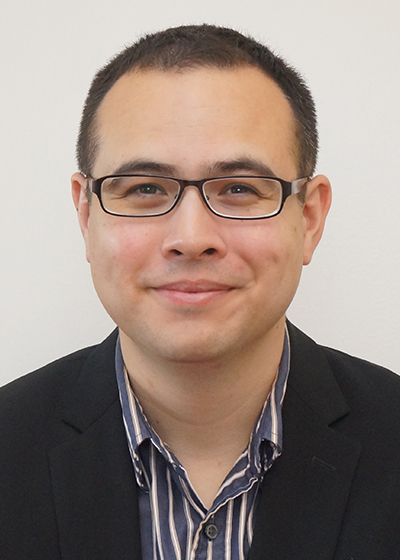

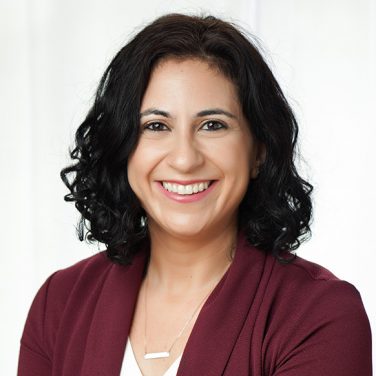
/prod01/channel_2/media/uniofsuffolk/website/content-assets/images/staff-profile-photos/ssh/Stephen-Coleman-1.jpg)