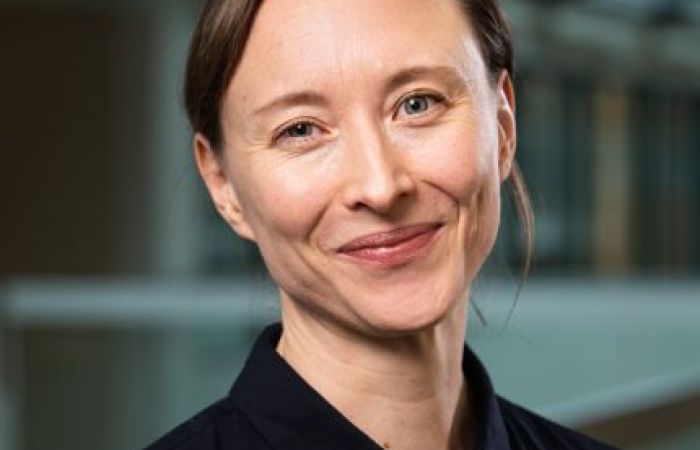
Maria Garcia is a Senior Lecturer in International Relations at the University of Bath, specializing in global trade dynamics and UK-EU relations. Her career includes prior roles as a Marie Curie International Fellow at the University of Canterbury and the University of Nottingham, and visiting fellowships at Australian National University, Monash University, University of Salzburg, and ULB Brussels. Current focus: Book project on free trade agreement strategies of global powers in the Asia-Pacific Research emphasizes societal impacts of trade agreements and EU-Asia/EU-USA economic negotiations Research Trends: Maria's recent articles analyze post-Brexit trade frameworks, including the UK-EU fisheries agreement, security partnerships, and implications for agrifood sectors. Her work highlights the interplay between geopolitical shifts, regulatory harmonization, and economic growth. Scientific Contributions: Recipient of Marie Curie International Fellowship Extensive commentary on TTIP, TPP, and Brexit scenarios Expertise Areas: International trade governance, EU economic diplomacy, geopolitical strategy, and regulatory policy impacts.
Ullrich Ecker is a Professor in the School of Psychological Science at The University of Western Australia (UWA). He holds roles such as Associate Editor for the Journal of Applied Research in Memory and Cognition and Experimental Psychology , and serves on the ARC College of Experts (2023-2025). His academic background includes a PhD from Saarland University (Germany) and a Dipl.Psych. from the same institution. Ecker’s research focuses on misinformation, memory, and decision-making, with a particular emphasis on designing interventions to counter false information. Education: PhD, Saarland University, Germany (2007) Dipl.Psych., Saarland University, Germany (2003) Research Interests: Ecker’s work addresses the psychological mechanisms underlying misinformation, memory updating, and belief change. He explores how people process and retain false information, particularly in the context of social media and public health. Key areas include the effectiveness of debunking strategies, the cognitive underpinnings of belief persistence, and the design of interventions to enhance truth discernment. His research also intersects with societal challenges like climate change communication and public health misinformation. Awards and Recognition: Best Publication Award from the Institute for Information Literacy at Purdue University (2023) Australian Research Awards – Research Field Leader in Cognitive Science (2023) UWA Vice-Chancellor's Award for HDR Supervision (Special Commendation, 2023) School of Psychological Science Award for Research Impact and Innovation (2022) School of Psychological Science Mid-Career Research Award (2022) Grants and Projects: Ecker leads and collaborates on numerous grants, including an ARC Discovery Project (2024–2027) addressing emerging misinformation threats, and the NHMRC Special Initiative HEAL Grant (2022–2027) focusing on health and environmental change. He has also secured funding from the WA Defence Science Centre, DSTG, and the Worldwide Universities Network. Notable projects include developing AI-driven tools to combat disinformation and studying misinformation’s behavioral consequences. He actively supervises PhD students in misinformation research and is open to new candidates. Teaching and Engagement: Ecker teaches Cognitive Psychology and Psychological Research Communication Skills at UWA. He is involved in community engagement, including chairing events on memory and fact-finding. His industrial collaborations focus on designing communication strategies to counter misinformation in public health and defense sectors.
Maria Garcia holds the position of Senior Lecturer at the University of Bath, affiliated with the Politics, Languages & International Studies school. Her work focuses on the intersection of trade policy, economic governance, and geopolitical strategies, particularly in the context of the European Union’s evolving international engagements. Her research interests include the politics of trade agreements, Brexit’s impact on UK-EU relations, and the EU’s strategic partnerships with Latin America, Asia, and Australasia. She also explores new trade frameworks like TTIP, TPP, and RCEP, emphasizing how values and sustainability intersect with trade policy. Dr. Garcia has led three significant research projects: EUinLAC: A Jean Monnet Project exploring the EU’s reconfiguration in Latin America (led by Nuremberg University, status: Not started). GW4 AF10-005: Wales and South West responses and preparations for Brexit and UK trade policy (March 2019 – November 2019). Transformations in Global Economic Governance: Integration via Free Trade Agreements (Economic and Social Research Council, December 2014 – December 2016). Her recent collaborations span geopolitical analyses of trade patterns in the USA, Asia, and Latin America. She actively contributes to understanding post-Brexit trade dynamics and global governance challenges.
Meighen McCrae is Associate Professor in the Strategic & Defence Studies Centre at Australian National University and Deputy Director (Higher Degree Research) in the Coral Bell School of Asia Pacific Affairs. Her research examines coalition warfare, concepts of victory in military conflicts, and how individuals conceptualize future war during periods of international tension. Professor McCrae's award-winning book 'Coalition Strategy and the End of the First World War' analyzes how Britain, France, Italy and the United States coordinated war planning through the Supreme War Council during 1917-1918. Her current research includes projects on British sea power and naval coalitions during 1914-1919, and the real estate consequences of historical repatriation policies. She teaches courses on defence issues and military history, and has previously lectured at the UK Joint Services Command and Staff College. Professor McCrae is currently writing a monograph on British naval strategy during World War I.
Dr Thomas Paul Colley holds dual roles as Senior Lecturer in Defence and International Affairs at the Royal Military Academy Sandhurst and Senior Visiting Research Fellow in the Department of War Studies at King’s College London. His work bridges academic research and strategic policy application across multiple domains. Research Expertise Propaganda and strategic communication in conflict Strategic narratives in international relations Military strategy communication dynamics Insurgency and counterinsurgency frameworks Climate change strategic communication Social media analysis for defense applications Disinformation impact assessment Scientific Contributions 2022 : News Wars (book, with Martin Moore) 2021 : Book chapter on diplomatic engagement 2020 : Multiple high-impact articles on disinformation and insurgency Awards & Recognition Recipient of King’s College London’s Rising Star Teaching Excellence Award Featured expert in major UK media (BBC, The Times, The Independent) Consulting for UK government agencies (Home Office, Cabinet Office, DSTL) Teaching & Supervision Co-convenor of MA War Studies flagship modules PhD supervision on UK combatant memory of Afghanistan Global defense engagement training for international officers
Malcolm H. Murfett is a Visiting Professor in the Department of War Studies at King's College London, specializing in naval history, Cold War studies, and British foreign policy. He holds a doctorate from New College, Oxford (1980), and is a Fellow of the Royal Historical Society since 1990. His career spans over four decades with affiliations at institutions including the National University of Singapore, York University, and the Australian Defence Force Academy (ADFA). He has authored or edited over a dozen books on naval warfare, decolonization, and Anglo-American relations. Research focuses include Cold War Southeast Asia, British naval strategy in the 20th century, and the intersection of political leadership with military policy. Notable works include European Navies and the Conduct of War (2018), Cold War Southeast Asia (2012), and Political Leadership in an Era of Decolonisation (2024). He serves as associate editor of the Oxford Dictionary of National Biography and series editor for Cold War in Asia . Teaching spans undergraduate to honours levels, covering topics like 20th-century European history, Cold War dynamics, and naval history. He has won multiple teaching excellence awards at the National University of Singapore. Public engagement includes media consulting for networks like The History Channel, TV/radio scriptwriting, and crisis management training for multinational corporations. Key awards include the Royal Historical Society Fellowship. Ongoing projects involve analyzing decolonization's global impact and British political leadership's evolution through the 20th century. He has organized public lecture series on military history topics and remains active in media-historical collaborations.
Benjamin Day is a Senior Lecturer in the Department of International Relations at the Coral Bell School of Asia Pacific Affairs, Australian National University (ANU). His research focuses on leaders' roles in foreign policy decision-making, particularly how leaders drive policy change. He co-authored *Foreign Policy Analysis: Classic and Contemporary Theory* (3rd ed., 2019), a leading textbook in the field. His recent work explores leaders' 'thinking practices' about global order, informed by elite interviews with over 100 politicians and policymakers. Education: BA (University of Queensland) BEcon (University of Queensland) MIS (University of Queensland) PhD (ANU, 2018) Research Interests: Political Decision Making and Foreign Aid Leaders and World Order Aid Policy Dynamics Elite Influence in Policymaking Academia-Policymaker Bridging Affiliations and Fellowships: Partners around the Globe Fellow, NATO Defence College (2025) Visiting Fellow, University of Edinburgh (2023) Australian National Fellow, King’s College London (2019) Centre Associate, ANU Development Policy Centre (since 2016) Contributions: Regularly publishes in platforms like *The Strategist*, *Devpolicy Blog*, and *The Conversation*. Designs courses for diplomats and public servants via the ANU Diplomacy Forum. Previously worked in international development for a decade, including health sector reform in Papua New Guinea. Labs/Teams: Active in the ANU’s Development Policy Centre and collaborates with institutions globally to advance policy-relevant research on foreign aid and leadership.
Professor Ashley Jackson is a leading scholar in Imperial and Military History at King’s College London and a Visiting Fellow at Kellogg College, Oxford. His career spans academic roles including Director of Research, Vice Dean (Research), and external examiner for multiple universities. Jackson holds fellowships from the Royal Historical Society and Higher Education Academy. He specializes in British imperial history with a focus on wartime contexts, particularly in Africa, the Indian Ocean, and the Middle East. His research emphasizes colonial contributions to global conflicts and their underappreciated roles in World Wars. Educated at New College, Oxford, Jackson has authored over 15 books including The British Empire and the Second World War and Ceylon at War, 1939–1945 . Current projects explore the war’s impact on the British Empire and comparative global wartime experiences. He teaches at the Joint Services Command and Staff College and has lectured widely at military institutions and international forums like the Chalke Valley History Festival. Administratively, Jackson has led research strategy groups, managed doctoral fellowships, and served on peer review panels. His editorial roles include the Journal of African Military History and the Helion book series on South Asian military culture. He co-founded the British Empire at War Research Group and contributes to institutions like the Bodleian Library and the Soldiers of Oxfordshire Museum. His awards include British Academy grants and AHRC funding for collaborative projects. Jackson’s work bridges academia and practice, addressing contemporary security issues in post-conflict regions like Afghanistan and the Sahel. He regularly engages with policymakers on counterinsurgency, humanitarian engagement with armed groups, and climate adaptation in conflict zones.
Dr. Natasha Kuhrt is a Senior Lecturer in International Peace and Security at King's College London's Department of War Studies, housed within the School of Security Studies. Her academic affiliations include membership in BISA, Chatham House, ISA, ASEN, and BASEES. She holds a PhD from UCL and has taught extensively on international law, intervention, and security studies. Her research focuses on Russian foreign policy in Asia, regionalism in Eurasia/Asia-Pacific, nationalism, and the Responsibility to Protect (R2P). Education: BA (Hons) in Russian & German from School of Slavonic and East European Studies (UoL), MA in Soviet Studies (SoSlavonic), PhD (UCL) on Russian policy toward China/Japan. Research interests span Russian security policy, international law applications in conflict zones, and the nexus between memory discourse and foreign policy. She co-leads the BISA Working Group on Russian & Eurasian Security and collaborates on ESRC UK-Japan projects on populism. Current book projects include co-authored volumes on Russian foreign policy and Russia-China relations. Her work appears in outlets like Journal of Global Faultlines , Asian Survey , and Australian Journal of Defence and Strategic Studies . She advises multiple PhD students and engages in public commentary via BBC, Al Jazeera, and academic conferences on Ukraine-Russia dynamics, China-Russia relations, and UN peacekeeping. Labs/Teams: Co-director of War Crimes Research Group and Centre for Grand Strategy, focusing on historical conflict analysis and strategic diplomacy.
Nicola Nymalm is a Lecturer in International Relations of East Asia at the University of Edinburgh's School of Social and Political Science. Previously, she served as an Associate Senior Lecturer/Assistant Professor in War Studies at the Swedish Defence University. Her research focuses on relations between established and emerging global powers, employing critical approaches to International Relations (IR), International Political Economy (IPE), security studies, and military strategy. Key publications include From 'Japan Problem' to 'China Threat'? (2020) and co-editing The Routledge Handbook of US Foreign Policy in the Indo-Pacific (2023). Dr Nymalm holds a PhD in Political Science/International Relations from Kiel University (2015), funded by the Finnish Cultural Foundation. She earned an M.A. in Contemporary History, Chinese Studies, and European Law from Humboldt University and Free University of Berlin, and a Master of Peace and Security Studies from the University of Hamburg. Her work explores themes such as narrative analysis in military doctrine, ontological security, and geopolitical discourse. Recent studies include examining Swedish military strategy narratives and US-China economic tensions. She has contributed to journals like International Political Sociology and Review of International Studies . Notably absent from her profile are formal academic awards or listed advisees. Her research aligns with the International Relations Research Group and emphasizes Indo-Pacific dynamics, US foreign policy, and critical perspectives on global power shifts.
Joe Devanny is a Senior Lecturer in National Security Studies at the War Studies department of King's College London. His research focuses on cyber security, international cyber policy, and national defense strategies. He contributes to understanding the evolving role of cyber power in global politics, particularly in the UK, Brazil, India, and Mexico. His work spans cybersecurity policy analysis, AI implications in intelligence, and the intersection of cyber operations with traditional statecraft. Recent publications address the UK's Strategic Defence Review, India's cyber statecraft, and Brazil's cyber strategy under shifting political leadership. He has co-edited major works like the Research Handbook on Cyberwarfare and authored reports on Mexico's stalled cybersecurity progress and South Africa's limited cyber strategy under Ramaphosa. His research emphasizes ethical dimensions of cyber operations, the impact of AI on cyber power dynamics, and the need for responsible democratic cyber strategies. Collaboration with institutions like the Carnegie Endowment and NATO CCD COE highlights his international engagement in shaping cyber policy discourse.
Sophia Besch serves as a Senior Fellow in the Europe Program at the Carnegie Endowment for International Peace and teaches as an adjunct lecturer at Johns Hopkins School of Advanced International Studies (SAIS). Her expertise centers on European defense policy, with particular focus on transatlantic relations, German defense policy, and the EU's role in European security architecture. She frequently contributes to major policy discussions on European strategic autonomy and defense integration. Dr. Besch holds a doctorate in European Studies from King's College London, and additional degrees from Sciences Po Paris and the London School of Economics. Her academic background provides a strong foundation for her work analyzing European security challenges and transatlantic relations. Her research interests span European defense policy, international security, transatlantic relations, German foreign policy, and subsea infrastructure security. She has published extensively on European defense integration, the geopolitical implications of subsea cable infrastructure, and the evolving transatlantic security relationship. Her work often examines how European nations can enhance their defense capabilities while navigating complex relationships with the United States. Dr. Besch's recent publications reveal a strong focus on European strategic autonomy, particularly in the context of changing US commitments under potential Trump administration policies. She has produced significant work on subsea cable security, European conscription models, and German defense policy shifts following Russia's invasion of Ukraine. Her research consistently addresses how European nations can strengthen their defense capabilities while maintaining transatlantic cooperation. As a regular commentator in major media outlets including Foreign Affairs, Foreign Policy, and Politico, Dr. Besch has established herself as a leading voice on European security issues. She has served as an expert witness for the UK House of Commons Defence Select Committee, the German Bundestag EU Committee, and the European Parliament Subcommittee for Security and Defence. Dr. Besch has been affiliated with several prominent research institutions, including the Centre for European Reform (CER) in London and Berlin, the American Institute for Contemporary German Studies, and the Atlantic Council's Europe Centre. She is also a member of the Atlantik Brücke Young Leaders program, which fosters transatlantic dialogue and cooperation.
Professor Wasiu O Popoola is a Professor of Communications Engineering and Director of Electronics and Electrical Engineering at the School of Engineering, University of Edinburgh . With over 150 publications and a RAEng/Leverhulme Trust Research Fellowship (2022), his work focuses on optical wireless communication systems including VLC/LiFi, FSO, and underwater optical communications. BSc (First Class Hons), MSc (Distinction), PhD in optical communications (Northumbria University) Professional memberships: Fellow of Higher Education Academy (FHEA), Fellow of IET (FIET), Senior Member IEEE Research Interests span Indoor/Outdoor/Underwater Optical Wireless Communication , Modulation Techniques , and LiFi Applications . His 2025 articles explore underwater turbulence mitigation and hybrid RF-water communication systems . Earlier works include Best Poster Award at IEEE ICSAE 2016 and top-downloaded IEEE Xplore article (2008). Scientific Awards include: 2022 RAEng/Leverhulme Trust Research Fellowship 2016 IEEE ICSAE Best Poster Award 2009 'Xcel Best Engineering and Technology Student' (PhD) He contributes to editorial work as Associate Editor (IEEE Access) , Guest Editor (Optik Journal) , and peer reviewer for Physics World . Recent projects involve BOLD (Defence Science and Technology Laboratory) and TITAN Extension (University of Strathclyde) focusing on diffuse optical wireless systems and UAV swarm networks .
Chiara Ruffa is a University Professor at the Centre for International Studies (CERI) , Sciences Po, Paris. Previously, she served as a Senior Lecturer at the Swedish Defence University and an Academy Fellow at Uppsala University's Department of Peace and Conflict Research. Her research focuses on multilateralism, peacekeeping operations, military cultures, and civil-military relations, with a micro-level analysis of field dynamics in conflict zones like Lebanon, Mali, and Afghanistan. Current affiliation: CERI, Sciences Po Prior roles: Swedish Defence University, Uppsala University Research themes: Peacekeeping, Multilateralism, Social Science Methodologies Her methodological expertise spans comparative qualitative methods, ethnography, and reflexivity in fieldwork. She has published extensively in journals such as European Journal of International Relations , Security Studies , and International Peacekeeping , co-authoring a critically acclaimed book shortlisted for the Conflict Research Society Best Book Award (2020). Scientific Awards & Grants: Fulbright Commission funding European Commission grants Swedish Research Council support Royal Swedish Academy funding 3rd ERGOMAS Prize (2018) Chiara Ruffa's work bridges empirical field studies with theoretical analyses of international security norms and their implementation in multilateral contexts.
Professor Andrzej Aksamitowski serves at the Institute of Political and Security Sciences within the Faculty of Humanities at the University of Szczecin, where he maintains active research and academic duties. His distinguished career spans decades of scholarly contribution to military history and security studies, including prior leadership roles as Head of the Department of Conflict and Peace Studies (2012-2019) and significant positions at Poland's National Defence University and Military Historical Institute in Warsaw. Aksamitowski's research program centers on national security frameworks, historical military operations, and the specialized field of military cartography. His expertise in fortification systems and armed conflict analysis bridges historical scholarship with contemporary security applications, particularly through his innovative integration of geographic information into military history. This interdisciplinary approach has established him as a leading authority on 20th-century Polish military engagements and cartographic documentation of warfare. His publication trajectory from 1992-2014 reveals a sustained focus on World War II military campaigns, with particular emphasis on Polish defensive operations and North African theaters. Aksamitowski's signature contribution lies in historical atlases that combine rigorous archival research with precise cartographic representation, creating indispensable reference works for understanding battle dynamics and strategic decision-making. These publications consistently demonstrate his methodological innovation in visualizing complex military operations through specialized mapping techniques. Professional recognition includes: Silver Cross of Merit (1992) Gold Cross of Merit (2000) Medal of the National Education Commission (2005) Honorable Mention for Historical Book of the Year (2019) While specific graduate student mentorship details remain undocumented in public sources, Aksamitowski's institutional leadership roles—including departmental head positions and editorial responsibilities for major reference works—demonstrate substantial academic supervision capacity. His current work at the University of Szczecin continues to advance security studies through the Institute of Political and Security Sciences, where he contributes to both teaching and research infrastructure development in national security disciplines.