Dr. Xianghai An is a Senior Lecturer and Robinson Fellow at the School of Aerospace, Mechanical, and Mechatronic Engineering at The University of Sydney. He holds the position of Associate Head of School (Research Education). His research focuses on nanostructure design, nanomechanics, and advanced materials processing. Dr. An received his PhD from the Institute of Metal Research, Chinese Academy of Sciences in 2012 and has held prestigious fellowships, including the DECRA and Alexander von Humboldt awards. Education: PhD in Materials Science, Shenyang National Laboratory for Materials Sciences, 2012 Research Interests: Design of light, strong, and damage-tolerant materials Nanomechanics and nanoplasticity Mechanical behavior under extreme conditions Additive manufacturing of metallic materials Awards and Grants: Robinson Fellow and DECRA Fellowships Australian Research Council grants (LIEF, DP, etc.) Recognition for outstanding reviewer contributions Advising: Supervises students in projects related to high-entropy alloys, additive manufacturing, and microstructural engineering. Active in collaborative grants with institutions like Sydney Nano Institute. Labs: Member of The University of Sydney Nano Institute, focusing on advanced materials research.
Iva Filipovic serves as a Research Specialist in the Department of Laboratory Medicine, Division of Clinical Microbiology at Karolinska Institutet since 2025, following her Postdoctoral Research Fellowship (2019-2025) at the Department of Medicine Huddinge, Center for Infectious Medicine. She contributes to The Systems Virology Lab under Ujjwal Neogi, focusing on translational immunology in medical contexts. Her educational background includes: PhD in Physiology, Development and Neuroscience (Reproductive Immunology), University of Cambridge (2019) MSc in Immunology, Imperial College London (2015) BSc in Molecular Biology with Physiology, University of Belgrade (2014) Her research integrates tissue-resident immunology with systems approaches, examining innate lymphocytes in reproductive health, infectious diseases, and cancer. She employs advanced methodologies including RNA-Seq, single-cell analysis, and 29-color flow cytometry to investigate immune mechanisms in endometrial tissue, liver fibrosis, and viral pathogenesis. Current work emphasizes translational applications in sepsis, cholangiocarcinoma, and SARS-CoV-2 immunity. Analysis of her 15 most recent publications (2018-2025) reveals dominant themes in mucosal immunology, with significant contributions to understanding MAIT cells in sepsis, NK cell dynamics in reproduction, and immune biomarkers in cancer. Her work consistently bridges basic immunology with clinical applications through multi-omics approaches and large-scale collaborative studies like the Karolinska KI/K COVID-19 immune atlas. She actively participates in The Systems Virology Lab, contributing to Karolinska's infectious disease research infrastructure. Her technical expertise in high-dimensional immune profiling supports collaborative projects across virology, hepatology, and oncology research groups at Karolinska Institutet.
Richard King is a Professor at Arizona State University's School of Electrical, Computer and Energy Engineering and a Senior Global Futures Scientist. He holds a Ph.D. (1990), M.S. (1987), and B.S. (1985) in Physics from Stanford University. His research focuses on high-efficiency photovoltaics, semiconductor defects, and multijunction solar cell technologies. Key contributions include achieving over 40% solar cell efficiency in 2006. He leads the King Lab, exploring photovoltaic materials, deployment strategies, and societal integration of solar energy. Research interests span defect-tolerant materials (e.g., perovskites, CIGS), recombination phenomena, and low-cost thin-film solar cells. Awards include the 2010 William R. Cherry Award and R&D 100 recognition. He has led NSF-funded projects like the Quantum Energy and Sustainable Solar Technologies (QESST) Engineering Research Center. Education: Ph.D./M.S. Electrical Engineering, Stanford University (1990/1987); B.S. Physics, Stanford (1985) Grants: NSF QESST ERC (2011–2017) and Boeing/Spectrolab collaborations Labs/Teams: King Lab at ASU, focusing on photovoltaic science, deployment, and education
Prof. Dr. Regina Dittmann is the Director of the Electronic Materials division (PGI-7) at the Peter Grünberg Institute (PGI), part of the Research Center Jülich. Her research focuses on memristive systems, resistive switching phenomena, and neuromorphic computing architectures. She leads a team exploring novel oxide materials and their applications in advanced electronics, including memristive heterostructures, nanoelectronics, and energy-efficient computing systems. Her work integrates materials science, device physics, and computational modeling to develop next-generation memory and neuromorphic hardware. Key research areas include the design and characterization of memristive devices, understanding ion migration in perovskite materials, and optimizing thermal and electronic stability in nanoscale systems. Recent studies emphasize the role of space charge effects in metal exsolution, the development of fault-tolerant neuromorphic architectures, and the application of synchrotron-based techniques for in-situ material analysis. Her contributions have advanced the theoretical and practical foundations of resistive switching mechanisms and their implementation in energy-efficient computing systems.
Michael Sangid is the Reilly Professor of Aeronautics and Astronautics and Professor of Materials Engineering at Purdue University. His academic roles include being a University Faculty Scholar (2022–2027) and Executive Director of the Hypersonics Advanced Manufacturing Technology Center. He holds dual appointments as a Professor in the School of Aeronautics and Astronautics and a courtesy Professor in the School of Materials Engineering. Dr. Sangid earned his B.S., M.S., and Ph.D. in Mechanical Engineering from the University of Illinois, Urbana-Champaign (2002–2010). His research integrates materials science, solid mechanics, and advanced manufacturing to develop physics-based models for structural materials, including high-temperature alloys, composites, and additive manufacturing processes. His ACME Laboratory focuses on microstructure-sensitive modeling, defect analysis, and experimental validation using advanced techniques like synchrotron X-ray diffraction and in-situ imaging. Key research interests include fatigue crack propagation, microstructural defect characterization, and computational tools for material lifing. He leads projects on rotating detonation rocket engines, ceramic matrix composites, and damage tolerance in aerospace materials. Notable awards include the NSF CAREER Award (2017) and DARPA Director’s Award (2016). Education: B.S. Mechanical Engineering, UIUC, 2002 M.S. Mechanical Engineering, UIUC, 2005 Ph.D. Mechanical Engineering, UIUC, 2010 Lab & Teams: Advanced Computational Materials and Experimental Evaluation (ACME) Lab, focusing on integrated computational and experimental approaches. Awards: NSF CAREER, DARPA Director’s Award, TMS Early Career Fellow, ASME Orr Award, and Purdue University Faculty Scholar.
Christopher Paul Anderson is an Assistant Professor affiliated with the University of Illinois at Urbana-Champaign, holding joint appointments in the Departments of Materials Science and Engineering, Physics, and Electrical and Computer Engineering. He is also associated with the Micro and Nanotechnology Lab and the Materials Research Lab. His research focuses on quantum systems, semiconductor materials, and spintronics, particularly exploring defect qubits in materials like silicon carbide and diamond. Anderson leads a team advancing quantum coherence times and applications in quantum computing/sensing. Research Interests : Quantum Coherence and Control Defect-Based Qubits (e.g., Spin Qubits in Diamond, Silicon Carbide) Electro-Optic and Piezoelectric Materials for Quantum Technologies Photoluminescence and Magnetic Materials Key Achievements : Recipient of the NSF CAREER Award (2025) Author of over 36 peer-reviewed publications, including work on tin-vacancy qubits, microwave spin control, and quantum critical materials. Labs/Teams : Anderson’s work is conducted in the Micro and Nanotechnology Lab and Materials Research Lab, focusing on experimental and theoretical advancements in quantum materials.
Hanna Boström is an Assistant Professor at the Department of Chemistry, Stockholm University , leading a research group focused on crystal engineering and structure-property relationships in coordination polymers, particularly Prussian blue analogues and Hofmann complexes . Her work bridges fundamental crystallography with application-driven materials science, emphasizing switchable properties under variable conditions like temperature and pressure. She employs techniques such as X-ray crystallography and magnetic measurements to explore materials for environmental and sustainable chemistry applications. Research Focus : Spin crossover, polar materials, synthesis-structure correlations, Jahn-Teller distortions Group Members : PhD students Lara Janus and Elina Elvelo Key Projects : "Tilt engineering of Prussian blue analogues towards multiferroic materials" Publications highlight her contributions to understanding negative thermal expansion, X-ray/radiation effects, and defect-driven properties in molecular frameworks. While no specific awards are listed, her work has attracted attention in sustainable material synthesis and environmental applications.
Cristian Ciobanu serves as Professor in the Department of Mechanical Engineering at Colorado School of Mines, where he has maintained continuous faculty appointment since 2004. His academic journey includes postdoctoral research at Brown University prior to joining Mines, with progressive promotions from Assistant to Associate to full Professor by 2014. Educational background: PhD in Physics, The Ohio State University (2001) MS in Physics, The Ohio State University (1998) BS in Physics, University of Bucharest (1995) His research program integrates computational and experimental approaches to address fundamental challenges in nanoscale surface physics and two-dimensional materials . Specialized expertise includes evolutionary algorithms for atomic structure optimization, development of materials for renewable energy applications, and investigation of self-organized nanostructures on crystal surfaces. Current work emphasizes machine learning applications in high-entropy alloy design and piezoelectric property engineering of layered systems. Publication trends reveal sustained focus on transition metal dichalcogenides, computational materials discovery, and piezoelectric response enhancement through alloying. Recent work increasingly incorporates machine learning for materials design while maintaining strong experimental validation through advanced microscopy and spectroscopy techniques. Key recognitions include: NSF Career Award (2009-2014) Research Excellence Award at Colorado School of Mines (2013) Fellow of the Institute of Physics (elected 2014) Ohio State Presidential Fellowship (2000-2001) Research funding has been secured through competitive mechanisms including the NSF Career Award, supporting his authorship of over 60 technical publications and a coauthored book on atomic structure determination. He actively advises graduate students in computational materials science and nanotechnology research within the Mechanical Engineering department. His scholarly activities are complemented by professional memberships in the Materials Research Society, American Physical Society, and American Vacuum Society. While specific laboratory facilities aren't detailed in source materials, his publication record indicates capabilities in computational modeling, scanning probe microscopy, and thin film characterization relevant to nanoscale materials research.
Lorenzo Strigini is a Professor of Systems Engineering at City St George's, University of London , where he has been affiliated since 1995 and served as Director of the Centre for Software Reliability from 2012–2024. His research focuses on dependability assessment , fault tolerance , and defense in depth for safety, security, and reliability in computer-based and socio-technical systems. He has also explored high-speed networking during his earlier career at the Italian National Research Council (IEI-CNR) and as a visiting scientist at UCLA and Bell Communications Research.
Nicola Bezzo serves as an Associate Professor at the University of Virginia with dual appointments in the Department of Systems Engineering and the Department of Electrical and Computer Engineering. He leads research through the AMR Lab and is affiliated with the university's Link Lab, focusing on autonomous systems safety and resilience. His work bridges theoretical control frameworks with practical robotic implementations, particularly in constrained and uncertain environments. Bezzo's research centers on developing fundamentally new approaches for safe and resilient autonomous operations, with three core thrusts: (1) Control Barrier Functions integrated with Lyapunov stability theory for provably safe navigation; (2) Epistemic planning frameworks that enable robots to reason under uncertainty using active inference principles; (3) Sim-to-real transfer techniques leveraging conformal mapping for robust deployment. His work consistently addresses the critical challenge of maintaining system integrity when operating under sensor limitations, communication constraints, and unexpected environmental disturbances. Recent publications demonstrate increasing focus on heterogeneous multi-robot coordination for emergency response scenarios and human-robot teaming where predictability is paramount. Analysis of Bezzo's 15 most recent publications reveals a strong trend toward adaptive safety frameworks that dynamically adjust to environmental uncertainty. Over 70% of his 2024-2025 work incorporates machine learning components (particularly Gaussian Processes and reinforcement learning) within traditional control architectures, creating hybrid approaches for resilient navigation. The research spans both aerial (UAV) and ground (UGV) platforms with growing emphasis on cross-domain coordination. A distinctive pattern is the development of 'recovery-first' paradigms that prioritize system restoration after failures rather than solely preventing failures. Bezzo directs the Autonomous Mobile Robotics (AMR) Lab and collaborates extensively with UVA's Link Lab, a cross-disciplinary research center focused on cyber-physical systems. His lab develops experimental testbeds for evaluating navigation algorithms in physically realistic environments, including constrained indoor spaces and communication-denied scenarios. Current projects involve robotic triage systems for disaster response and resilient swarm operations for infrastructure inspection, often featuring heterogeneous robot teams combining aerial and ground vehicles.
Mehdi Sadi is an Assistant Professor of Electrical and Computer Engineering at Auburn University's College of Engineering. He holds a Ph.D. from the University of Florida, an M.S. from the University of California-Riverside, and a B.S. from Bangladesh University of Engineering and Technology. His research focuses on secure and reliable system-on-chip design, AI/ML-driven VLSI CAD/EDA, neuromorphic hardware, and emerging post-CMOS computing technologies. Notable achievements include earning the NSF CAREER Award for chiplet-based design optimization and a $175k NSF grant for magnetic RAM research. His work integrates machine learning with hardware co-design to enhance AI accelerators' performance, energy efficiency, and security. Recent projects include adversarial attack mitigation on AI hardware and reliability analysis of neuromorphic systems. Dr. Sadi's contributions span chiplet architecture, memory systems (e.g., STT-MRAM/SOT-MRAM), and fault-tolerant computing. He actively publishes on topics like skyrmion logic gates and TRNG implementations using MRAM. His work bridges theoretical machine learning advancements with practical hardware implementations, addressing critical challenges in next-generation computing systems.
Professor Stewart Williams is a leading academic at Cranfield University's Welding and Additive Manufacturing Centre, specializing in advanced manufacturing technologies. His research focuses on additive manufacturing, particularly wire arc additive manufacturing (WAAM), laser processing, and materials science. He previously worked at BAE Systems, contributing to aerospace manufacturing innovation. Williams' work bridges academia and industry, addressing challenges in large-scale engineering structures, residual stress mitigation, and material optimization. Education: PhD in Laser Physics (Royal Holloway College, University of London). Research Interests: His studies emphasize WAAM for titanium and aluminum alloys, hybrid laser-arc processes, and microstructure refinement through techniques like ultrasonic peening. He also investigates in-process monitoring and non-destructive evaluation for AM components. Grants & Partnerships: Leads the WAAMMat multi-client program and collaborates with industry leaders such as Airbus, Rolls-Royce, and Lockheed Martin. His projects address automation, mechanical properties, and industrial scalability of additive technologies. Labs/Teams: Heads Cranfield's Welding and Additive Manufacturing Centre, fostering interdisciplinary research in advanced manufacturing and materials engineering.
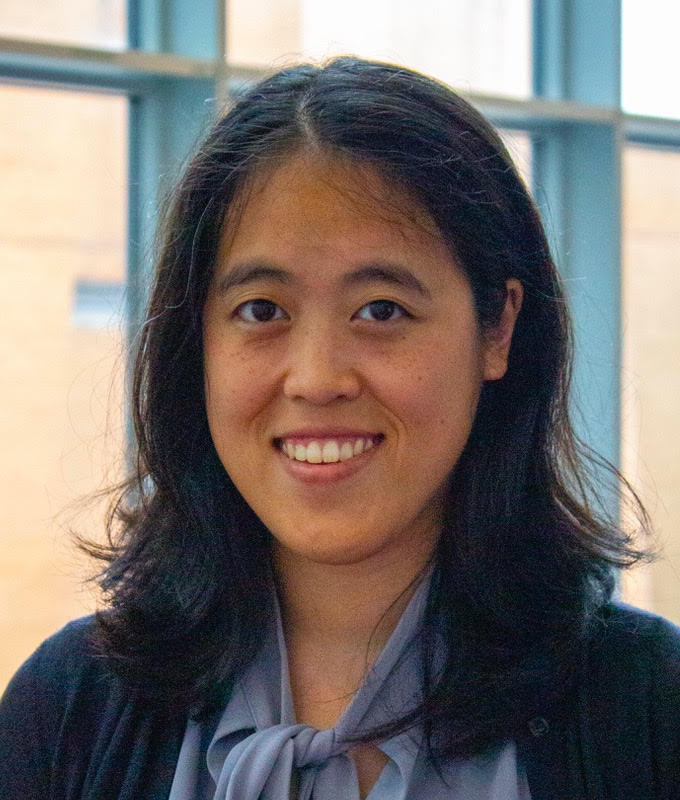
Jennifer Tang is a Postdoctoral Associate at the Massachusetts Institute of Technology (MIT), holding dual appointments in the Institute for Data, Systems, and Society (IDSS) and the Laboratory for Information and Decision Systems (LIDS). She conducts her research under Professor Ali Jadbabaie, focusing on interdisciplinary problems at the intersection of information theory, network science, and social dynamics. Her position is temporary as she actively seeks a permanent academic role through the 2025 job market. Her academic credentials include: Ph.D. in Electrical Engineering and Computer Science from MIT, advised by Professor Yury Polyanskiy Bachelor of Science in Engineering (B.S.E.) in Electrical Engineering from Princeton University, with independent work supervised by Paul Cuff Dr. Tang's research program centers on theoretical and applied aspects of information theory, including channel capacity, quantization, and data compression. She investigates prediction and estimation in high-dimensional settings, data analytics for complex systems, and mathematical modeling of social dynamics and inference in multi-agent networks. Her work employs tools from statistics, optimization, and network theory to address challenges in communication, decision-making, and societal systems, with particular emphasis on opinion dynamics under social pressure and efficient representation of probability distributions. Analysis of her publication record reveals consistent contributions to information-theoretic limits, social network modeling, and compression techniques. Her works frequently appear in top venues like IEEE Transactions on Information Theory and major conferences (ISIT, CDC, ACC), demonstrating expertise in bridging theoretical foundations with real-world applications in networked systems and societal challenges. Her scientific achievements have been recognized with: Best Student Paper Award at IEEE International Symposium on Information Theory (ISIT) 2022 Best Student Paper Award at IEEE Machine Learning for Signal Processing (MLSP) 2022 Student Competition Winner at the Shannon Centennial Celebration Dr. Tang maintains an active teaching portfolio, having served as instructor for MIT 1.022: Introduction to Network Models (Spring 2025) and teaching assistant for multiple core courses including 6.008 (Introduction to Inference), 6.041/6.431 (Probabilistic Systems Analysis), 6.437 (Inference and Information), and 6.439 (Statistics, Computation and Applications). She also contributed to the MIT Women's Technology Program as a Mathematics Instructor during summer 2017. Her research is embedded within MIT's Laboratory for Information and Decision Systems (LIDS) and Institute for Data, Systems, and Society (IDSS), two premier interdisciplinary laboratories fostering collaboration on data-driven decision-making, societal challenges, and foundational theory in information and systems.
Andrea Carpinteri is a Full Professor of Structural Mechanics in the Department of Engineering and Architecture at the University of Parma, Italy. He has been a leading figure in the fields of fracture mechanics, fatigue of materials, and structural integrity for over three decades. He previously served as an Associate Professor at the University of Parma (1994–2000) and the University of Padua (1988–1994). He earned his degree in Civil Engineering from the University of Bologna in 1980 with top honors (110/110 cum laude). His academic journey reflects a strong foundation in structural engineering, which evolved into a research career focused on material failure mechanisms. His research interests include fracture mechanics , multiaxial fatigue , size effects in structures , fatigue crack propagation , and constitutive modeling of traditional and advanced materials . He has developed influential fatigue criteria, such as the Carpinteri-Spagnoli (C-S) criterion, and applied fractal theories to model fatigue behavior. His work bridges theoretical modeling, numerical simulation, and experimental validation. The 15 most recent publications highlight a consistent focus on multiaxial fatigue , fretting fatigue , crack path modeling , and energy-based life assessment . His research spans metallic alloys (e.g., Inconel 718, Al 7075), composites, and natural fiber-reinforced materials, often using critical plane and damage mechanics approaches. Recent works emphasize random loading, spectral analysis, and innovative modeling of crack morphology. ESIS Fellow (2012) IGF Honorary Member (2017) Publons Reviewer Award (Top 1% in Engineering, 2018) Multiple 'Most Active Reviewer Awards' (2013–2018) Winner of the BANDO OPEN-UP Prize (2018) International Prize on Renewable Energy Projects (2011) He has supervised numerous PhD students and collaborated with researchers globally. He has been the Principal Investigator or Local Coordinator of multiple national and EU-funded research projects, including H2020 and MIUR grants. His editorial leadership includes serving as Guest Editor for 26 special issues and as a board member of 10 international journals. He chairs TC3 (Fatigue) of ESIS and has organized over a dozen international conferences on fatigue and fracture. He leads research in structural integrity, particularly through his involvement in the Laboratory of Materials and Structures Testing at the University of Parma. His team focuses on both theoretical advancements and practical applications in civil, mechanical, and aerospace engineering.
Adam Hecht is a Professor in the Department of Nuclear Engineering at the University of New Mexico since 2008. He holds a Ph.D. in Physics (Yale University, 2004) and has led multidisciplinary research in radiation detection, nuclear nonproliferation, and detector development. His educational background includes Ph.D., M.Phil., and M.S. in Physics from Yale University (2001-2004) and a B.S. in Physics from the University of California, Irvine (1997). Ph.D. in Physics (Yale, 2004) M.Phil. in Physics (Yale, 2001) M.S. in Physics (Yale, 1999) B.S. in Physics (UC Irvine, 1997) His research focuses on Radiation Detection for nuclear nonproliferation, Fission Fragment Measurement via spectrometers at LANSCE, Muon Imaging for spent fuel casks, and Novel Detector Development (perovskites, AlSb semiconductors). He directs the Radiation Research and Detector Development (R2D2) Laboratory , collaborates with LANL/INL, and advises UNM's Institute of Nuclear Materials Management (INMM) student group. Key article trends show expertise in Muon Tomography (2025), Neuromorphic Computing for radiation detection (2024), AlSb Semiconductor Detectors (2016), and Fission Data Analysis (2015-2022). His work spans Physics of Atomic Nuclei , Nuclear Instruments and Methods , and Environmental Geochemistry . Awards include the J.W. Gibbs Fellowship (Yale, 1997-1998). Students advised include Daniel Poulson (Muon Imaging), Richard Blakeley (Fission Spectrometer), Erin Vaughan (AlSb Detectors), and Joseph Morris (Refractive Index Analysis). Collaborations with electrical engineering, Portland State University, and LANL/INL are frequent.