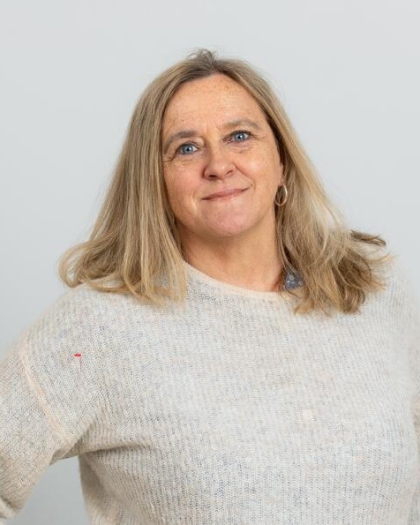
Inês Castro is an Assistant Professor in Biology and Associate Director for Global Experience within the CoMEMS faculty at Northeastern University London. She holds a PhD in Biosciences from the University of Exeter (2016), an MSc in Molecular and Cellular Biology from the University of Coimbra (2011), and a BSc in Applied Biology from the University of Minho (2009). Her research focuses on organelle function and interactions, particularly in peroxisomes and membrane contact sites across diverse model organisms. Her academic journey includes postdoctoral work at the Weizmann Institute of Science, where she studied contact site proteins in yeast using high-throughput techniques and microscopy. Key contributions include identifying molecular links between peroxisomes and kinesin motors, ER-peroxisome contact sites, and lipid transport mechanisms. She has established Biology courses for Mobility students and teaches General Biology I and II. Inês’ research spans cellular lipid distribution, organelle motility, and disease relevance of organelle dysfunction. Her work integrates in silico , in vivo , and microscopy approaches. Awards include the Fellowship of the Higher Education Academy (FHEA, 2023). Teaching and administrative roles include course leadership for General Biology I and contributions to other Biology courses. Her work supports Northeastern’s global academic network, emphasizing interdisciplinary collaboration and student mobility programs.
Haibin Ning is an Associate Professor and Undergraduate Program Director in the Department of Materials Engineering at the University of Alabama at Birmingham (UAB). His research focuses on high-performance lightweight composite materials, particularly thermoplastic matrix composites and environmentally friendly natural fiber composites. He has pioneered methods for fiber content measurement, developed advanced manufacturing processes, and holds patents in composite materials innovation. Education: Ph.D. in Materials Engineering from UAB. Research Interests: Dr. Ning’s work spans additive manufacturing of composites, recycled material utilization, and bio-inspired damage-tolerant materials. His studies address mechanical properties, flammability, and environmental impact, with applications in aerospace, automotive, and biomedical fields. Awards & Recognition: ASTM International Professor of The Year (2013) UAB President's Award for Excellence in Teaching (2014) Teaching & Advising: Courses include metallic materials, composite materials, and automotive materials frontiers. While no specific advisees are listed, his research group actively explores industrial and academic collaborations. Labs & Teams: Engages in interdisciplinary projects at UAB’s Center for Composites Manufacturing, focusing on structural composites for mass transit, aerospace, and biomedical applications.
Johann Kastner is a Professor at Upper Austria University of Applied Sciences, leading the Research Center Wels Computed Tomography R&D-Headquarters. He is affiliated with Centers of Excellence in Automotive/Mobility, Energy, and Smart Production. His research focuses on advanced materials characterization using X-ray computed tomography (X-CT), with applications in non-destructive testing, composite materials, and biomedical engineering. Key research areas include porosity analysis in carbon fiber reinforced polymers, phase contrast imaging, and additive manufacturing. He has led over 10 projects, including the EU-funded xCTing initiative (2021–2025) and the X-PRO project (2020–2024), emphasizing industrial CT applications and cross-virtuality data analysis. His work spans 335+ publications, with notable contributions to XCT-based defect detection, material microstructure analysis, and AI-driven image segmentation. Collaborations include COMET K Projects and FTI-Structurförderung grants. He has advised 2 PhD students and actively participates in international conferences and workshops. Laboratory facilities include state-of-the-art XCT systems for 3D microstructural analysis, Talbot-Lau grating interferometry, and augmented reality visualization tools for industrial applications.
Huaxia Wang is an Assistant Professor in the Department of Electrical & Computer Engineering at Rowan University, part of the Henry M. Rowan College of Engineering. He holds a Ph.D. in Electrical Engineering from Stevens Institute of Technology (2018) and previously served as an Assistant Professor at Oklahoma State University (2020–2023). His research focuses on deep reinforcement learning, adversarial networks, meta-learning, graph neural networks, robotic control, and wireless communications. Education: Ph.D., Electrical Engineering, Stevens Institute of Technology (2018) M.S., Electrical Engineering, Stevens Institute of Technology (2014) B.S., Information Engineering, Southeast University, China (2012) Research interests include distributed control in wireless communications, robotic arm control in virtual environments, and multimodal learning for visual inspection. Recent work emphasizes applications in healthcare (e.g., lung ultrasound scoring) and infrastructure monitoring (e.g., concrete defect classification). Scientific Awards: Charles Kao Best Paper Award (2024) Grants/Projects: $100K from AeroDefense (2025–2026) $500K from the Department of Energy (2023–2025) $250K from the Institute for Advanced Engineering, Korea (2022–2027) His work integrates AI-driven solutions for robotics, communications, and healthcare, with a focus on practical applications such as remote robotic control and robust signal processing.
Sridip Pal is a Sherman Fairchild Postdoctoral Scholar Research Associate in Theoretical Physics, focusing on foundational questions in quantum field theory, conformal field theory, and holography. His research explores the interplay between mathematical structures and physical phenomena, with particular emphasis on entanglement entropy, spectral properties of quantum systems, and the application of modular bootstrap techniques. Key research areas include universality in entropy calculations, spectral bounds in hyperbolic manifolds, symmetry defects in boundary CFTs, and the interplay between holography and Weyl anomalies in string theory. Recent work addresses the fine-grained asymptotics of quantum field theories, automorphic spectra in bootstrap frameworks, and the behavior of wormholes under quantum deformations. Published articles span topics from thermal QFT fractals to nonrelativistic CFTs at large charge, reflecting a broad engagement with high-energy physics and mathematical physics. His studies often utilize advanced analytic methods such as Tauberian theory, Beurling-Selberg extremization, and geometric analysis to derive universal results in quantum systems.
Leonid V. Zhigilei is a Professor of Materials Science and Engineering at the University of Virginia's School of Engineering and Applied Science. He serves as an academic advisor for MSE and is involved in Virginia Engineering Online Program. His research focuses on multiscale modeling of materials behavior, nanomaterials, laser-materials interactions, and surface science. He holds a B.S. from St. Petersburg State Technical University (1987), a Ph.D. from St. Petersburg State University and Tomsk State University (1991), and completed a postdoc at Penn State University (1995-2000). Research interests include computational materials science, catalysis, and nanomanufacturing. His work combines atomistic simulations with experimental insights to explore phenomena like phase explosions, nanoparticle formation, and thermal transport in advanced materials. Key grants include NSF-funded studies on laser-induced phase transitions and nanoparticle processing. Awards: Humboldt Research Award (2021), Fojtik-Henglein Prize (2021), NSF CAREER Award (2004) Courses Taught: MSE 3050, MSE 4592/6270, MSE 6020 Labs/Teams: Computational Materials Group Recent publications (2021–2025) investigate laser-driven material transformations, thermal conductivity in carbon nanotubes, and nanofiber mechanics. His work bridges computational modeling with practical applications in energy-efficient nanoparticle synthesis and advanced manufacturing.
Terence Ozolins is an Associate Professor in the Department of Biomedical and Molecular Sciences at Queen's University's Faculty of Health Sciences. He holds cross-appointments with the Translational Institute of Medicine (TIME) and teaches courses in pharmacology and toxicology, including PHAR 480: Drug Discovery and Development. His research focuses on the etiology of ventricular septation defects (VSD) using rat models to understand how environmental influences during gestation cause structural heart defects and long-term postnatal cardiac dysfunction even after spontaneous repair. The lab investigates molecular mechanisms underlying teratogen-induced cardiac malformations and persistent physiological abnormalities. Publications demonstrate expertise in high-resolution fetal ultrasound imaging, molecular pathways of teratogenesis, and transgenerational effects of chemical exposures. Recent work explores AP-1 transcription factor regulation in embryotoxicity. Scientific Awards: Safety Sciences Award for Scientific Excellence (2003) Dr. Ozolins maintains collaborations with clinical researchers and previously spent 11 years in pharmaceutical industry research. Current projects examine epigenetic mechanisms in congenital heart defects and developmental origins of adult cardiovascular disease.
Helwig Hauser is a Professor in the Department of Computer Graphics within the Faculty of Informatics at Vienna University of Technology (TU Wien). His research focuses on advancing visualization techniques across multiple scientific domains. With a career spanning over two decades, he has established himself as a leading expert in visualization research. His primary research interests encompass Computer Graphics, Visualization, Data Visualization, Visual Analytics, Scientific Visualization, Information Visualization, Set Visualization, and Molecular Visualization. Dr. Hauser's work bridges theoretical foundations with practical applications, developing innovative techniques for visual data exploration and analysis across diverse fields from medical imaging to molecular biology. Analysis of his publication record reveals a consistent research trajectory focused on developing novel visualization methodologies. His work demonstrates strong emphasis on interactive visual analytics, set visualization techniques, and domain-specific applications in medical and molecular visualization. Notably, he has made significant contributions to set visualization (Radial Sets), molecular visualization (Watergate), and medical visualization (Aortic Dissection Maps). Best paper award (one out of three) at EuroVis 2007 Heinz Zemanek Preis (2006) Best paper award at SimVis 2005 Dr. Hauser has supervised numerous doctoral and master's students, with a particular focus on visual analytics of complex data types. His research has been supported by various projects including the Punkt-basierte Volumen-Graphik project (2006-2009). He has contributed significantly to the visualization community through his editorial work and service as a journal reviewer, though specific details on current grants were not provided in the source text.
Lise Rakner is a Professor of political science at the University of Bergen's Department of Government , with an adjunct position at the Chr. Michelsen Institute (CMI). Her research focuses on democratization, autocratization, human rights, electoral politics, and political economy in Africa. She leads major projects like Breaking BAD: Understanding Backlash Against Democracy in Africa (RCN-funded) and Autocratization Dynamics: Innovations in Research-Embedded Learning (INPART). She also heads the Zambia study in the Political determinants of sexual and reproductive health in Africa (Globvac-funded). Education & Teaching: She teaches courses on elections, comparative politics, and African governance at the University of Bergen. Notable courses include Sampol 315: Elections and Representation and Understanding Backlash Against Democracy . Research Interests: Her work addresses democratic backsliding, legal autocratization, taxation policy, and LGBT rights activism. Key projects include analyzing Zimbabwe's civil society resistance and Zambia's electoral legal reforms. Publications & Grants: Over 100 publications since 2003, including books like Democratic Backsliding in Africa? (Oxford UP, 2023). She has secured significant grants from RCN, GLOBVAC, and international agencies. Her research spans empirical studies on African governance, tax reforms, and contentious politics. Labs/Teams: Collaborates with the Teaching and Learning in Higher Education (TeLEd) research group and contributes to initiatives like Decolonizing Epistemologies under NORHED II. Her work bridges academia and policy, influencing governance assessments for international donors.
Assoc. Prof. Dr. Onur Behzat Tokdemir is an Associate Professor in the Civil Engineering Department at Istanbul Technical University (ITU), with prior affiliation at Middle East Technical University (METU). His expertise spans Construction Technologies, Project Management, and Construction Management, with a focus on integrating Artificial Intelligence (AI) and Machine Learning (ML) into infrastructure development. He holds a Ph.D. from Illinois Institute of Technology and has extensive industry experience in project management roles with firms like Renaissance Holding and Qatar Project Management. Education: B.Sc. from METU (1990-1995), M.Sc. from Illinois Tech (1995-1997), Ph.D. from Illinois Tech (1997-2003). His research emphasizes AI-driven solutions for construction safety, cost prediction, and digital twin applications. Notable projects include the EU-funded 'DIGITWINS4CIUE' and the strategic tender decision support system leveraging ML. Awards include the ITU Academic Performance Publication Award (2022-2024) and METU's Prof. Dr. Mustafa N. Parlar Award (2019). He has advised over 15 theses on topics like AI in safety assessment, labor efficiency prediction, and post-disaster housing frameworks. Active memberships include the American Society of Civil Engineers (ASCE) and the Chamber of Civil Engineers.
Andrea Mocci is a Lecturer at the Faculty of Informatics of the Università della Svizzera italiana (USI). His work focuses on software engineering methodologies, developer productivity, and IDE interaction analysis. He is affiliated with the Software Institute and actively contributes to academic events such as the IEEE International Workshop on Mining and Analyzing Interaction Histories (MAINT). His research explores empirical software engineering techniques, including developer behavior analysis, code documentation improvement, and the application of natural language processing to software artifacts. Key areas of investigation include: IDE interaction and navigation efficiency Code redundancy and quality metrics Video tutorial analysis for educational content Runtime systems and annotation APIs Defect prediction and software maintenance Publications from 2016-2020 highlight trends in developer-centric tools, holistic recommender systems, and visualization techniques for software evolution. His work often bridges theoretical formal methods with practical developer workflows, aiming to improve both software quality and developer productivity through empirical studies and tool development.
Leeor Kronik is a Chaired Full Professor at the Weizmann Institute of Science in Israel, where he serves as Director of the Tom and Mary Beck Center for Advanced and Intelligent Materials (since 2019). He has been a faculty member at the Weizmann Institute since 2012 and previously served as Chair of the Department of Materials and Interfaces from 2012 to 2021. Professor Kronik received his B.Sc. in Electrical Engineering, Summa Cum Laude, from Tel Aviv University in 1991 and his Ph.D. in Physical Electronics, with distinction, from the same institution in 1996. Following mandatory military service, he completed postdoctoral research as a Rothschild and Fulbright Fellow at the University of Minnesota (1999-2002). Dr. Kronik's research focuses on understanding the unique properties and behavior of materials and interfaces through first-principles quantum mechanical calculations. His work spans several key areas including halide perovskites , molecular crystals , 2D materials , and electronic structure theory . A significant portion of his research involves developing and applying density functional theory and many-body perturbation theory to predict and interpret novel experimental findings. His group has made notable contributions to optimally-tuned functionals , ensemble methods , and real-space calculations , with applications ranging from spintronic materials to biogenic structures. Analysis of Professor Kronik's recent publications reveals a strong focus on advanced materials with applications in electronics and energy. His work spans theoretical developments in computational methods, particularly in density functional theory, and their application to cutting-edge materials like halide perovskites and 2D systems. A notable trend is the integration of computational predictions with experimental validation across diverse material systems, from inorganic crystals to biological structures. His research demonstrates increasing interdisciplinary reach, connecting physics, chemistry, materials science, and biology. Professor Kronik has received numerous prestigious awards for his scientific contributions: 2021: Outstanding Scientist Award of the Israel Chemical Society 2021: Helen and Martin Kimmel award for innovative investigation 2018: Israel Vacuum Society Excellence Award for Research 2015: Inaugural UK-Israel Science Lectureship 2013: Fellow of the American Physical Society 2012: Member of the Young Israel Academy 2011: ERC Consolidator Grant 2010: Outstanding Young Scientist Award of the Israel Chemical Society 2006: Krill Prize of the Wolf Foundation Professor Kronik currently advises a research group of approximately 10 graduate students and post-doctoral researchers at the Weizmann Institute. His research has been supported by significant funding including an ERC Consolidator Grant. With over 250 peer-reviewed publications cited more than 28,000 times and an h-index of 86, his work has had substantial impact across multiple disciplines. He has presented more than 290 invited lectures worldwide, demonstrating the international recognition of his research. As Director of the Tom and Mary Beck Center for Advanced and Intelligent Materials, Professor Kronik leads a multidisciplinary team focused on developing and understanding novel materials with advanced functionalities. His research group works at the intersection of theoretical physics, materials science, and chemistry, employing computational approaches to address fundamental questions about material properties while maintaining strong connections to experimental work.
Luis M. Liz-Marzán is an Ikerbasque Professor and Scientific Director at CIC biomaGUNE in San Sebastián, Spain. He was previously a Full Professor at the University of Vigo and has held visiting positions at institutions such as Tohoku University, University of Michigan, and Max-Planck Institute of Colloids and Interfaces. Education: He studied Chemistry at the University of Santiago de Compostela (1983–1988) and earned his PhD in 1992 with a thesis on microemulsions and magnetic nanoparticles. Research Interests: His work focuses on nanoplasmonics , colloid science , and nanoparticle self-assembly . He has pioneered the use of colloidal methods for controlling nanoparticle shape, optical properties, and biomedical applications such as biosensing and early disease diagnostics . His publications span a broad range of topics including plasmonic tuning, nanowire growth, biofilm imaging, and surface-enhanced Raman scattering. The trend in his work shows a strong integration of synthesis, characterization, and application of nanomaterials, particularly gold and silver-based systems, with a growing emphasis on biomedical interfaces. Awards and Honors: Blaise Pascal Medal in Materials Science (2017) ERC Advanced Grants (2011 & 2018) Highly Cited Researcher (2014–2018) Fellow of EURASC, OSA, and RSC Grants and Collaborations: He has led major international projects, including two ERC Advanced Grants, and has collaborated with institutions across Europe, Asia, and the Americas. His group, the Bionanoplasmonics Laboratory , has reshaped CIC biomaGUNE into a globally recognized center.
Dr. Zihan Song is a Postdoctoral Researcher at the University of Oxford's Department of Engineering Science, collaborating with Prof. Paul Shearing. His research focuses on electrochemistry and materials science for energy storage, particularly high-energy anode materials and multiscale characterizations (e.g., X-ray imaging) in solid-state batteries. He holds a BEng in chemical engineering from Tianjin University (2015) and a PhD from the University of Chinese Academy of Sciences (2020), specializing in anode materials for lithium-ion batteries. From 2021 to 2023, he researched carbon nitride and carbonaceous materials for rechargeable batteries at the Max Planck Institute of Colloids and Interfaces under Prof. Markus Antonietti. His current projects include multiscale characterizations for solid-state batteries. He is affiliated with the ZERO Institute and contributes to the field of sustainable energy storage.
Mustafa Khokha, MD, is an Adjunct Professor in the Department of Pediatrics at Yale School of Medicine. His research focuses on understanding the molecular mechanisms underlying congenital malformations and critical illnesses in infants using genetic sequencing and Xenopus tropicalis as a model system. He directs the Pediatric Genomics Discovery Program (PGDP), which identifies genetic causes of undiagnosed diseases in children. Khokha’s work bridges clinical care and research, aiming to translate genetic discoveries into improved patient outcomes. Education: MD from Northwestern University Medical School (1995), BS from Northwestern University (1991), Residency in Pediatrics at St. Louis Children's Hospital (1995–98), Fellowship in Pediatric Critical Care at University of California, San Francisco (2002), and Fellowship in Molecular & Cell Biology at University of California, Berkeley (2006). His research integrates developmental biology and genetics to study embryonic patterning defects, particularly in congenital heart disease and facial malformations. Using high-throughput screens in Xenopus, he identifies genes responsible for birth defects and elucidates their functional roles. Key achievements include discovering the role of GALNT11 in laterality and cilia function, and linking CACNA1G to left-right patterning. His work on β-catenin nuclear transport and Wnt signaling has advanced understanding of developmental pathways. Awards: Mallinckrodt Scholar (2014), Mae Gailani Junior Faculty Teaching Award (2010), Harvey Colten Award (2009). Labs/Teams: Khokha Lab, part of the Program in Translational Biomedicine and the Yale Center for Genomic Health. Collaborations include the Pediatric Critical Care Transport Program and the Yale Medicine team.