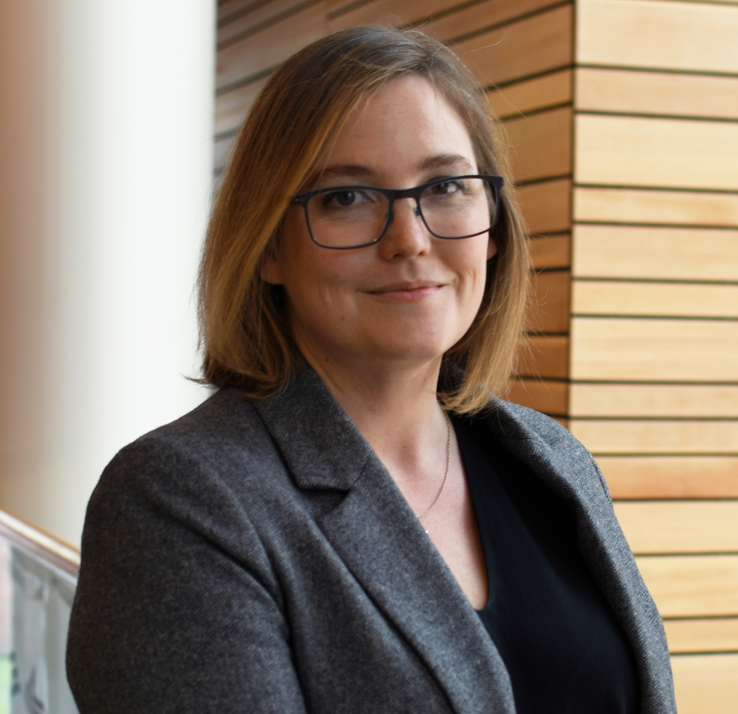
Mollie E. Wood, PhD, MPH is an Assistant Professor in the Department of Epidemiology at the University of North Carolina's Gillings School of Global Public Health. Her research focuses on medication safety during pregnancy, particularly for chronic conditions like depression, migraine, and diabetes. She holds a PhD in Clinical and Population Health from the University of Massachusetts Medical School (2015), an MPH in Epidemiology from Boston University (2009), and a BA in Zoology/Psychology from Miami University (2004). Dr. Wood's work bridges reproductive/perinatal epidemiology, pharmacoepidemiology, and epidemiologic methods. She examines how healthcare policies and practices influence maternal and child health outcomes, with recent studies addressing midwifery access, contraceptive use trends, and neurodevelopmental effects of prenatal drug exposures. Her methodological innovations include improving pregnancy cohort identification in insurance claims and addressing structural racism in health intervention evaluations. Her research has been published in high-impact journals, emphasizing rigorous epidemiologic methods and real-world data applications. She collaborates across disciplines to advance evidence-based practices in perinatal health and reduce healthcare disparities.
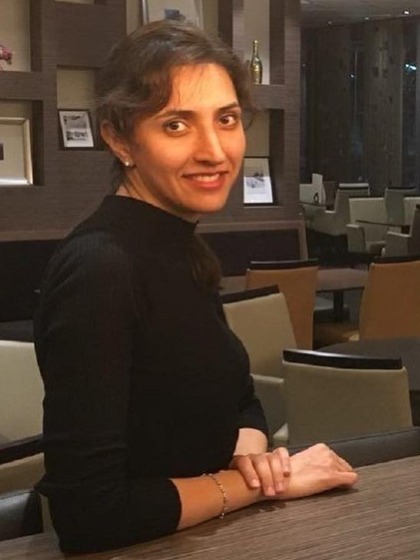
Bahar Haghighat is a Tenure Track Assistant Professor in Robotics and Automation at the Faculty of Science and Engineering, University of Groningen. She leads the Distributed Autonomous Intelligent Systems (DAISY) Lab as Principal Investigator and contributes to academic governance as a Member of the Faculty Council. Her professional affiliations include the Royal Netherlands Institute of Engineers (KIVI), the Institute of Electrical and Electronics Engineers (IEEE), and editorial roles with Nature Portfolio Journal Robotics and Springer Nature Journal Autonomous Robots. Her educational background includes: PhD in Robotics, Control, and Intelligent Systems from the Swiss Federal Institute of Technology in Lausanne (EPFL), Switzerland (2018) Master's degree in Electrical Engineering/Digital Electronics from Sharif University of Technology (SUT), Tehran, Iran Bachelor's degree in Electrical Engineering/Physics (double major) from Sharif University of Technology (SUT), Tehran, Iran Dr. Haghighat's research focuses on building novel miniaturized robotic swarms and algorithmic frameworks for sensing, surveying, and inspection applications. Her work spans mechatronics, electronics, embedded systems, embedded artificial intelligence and machine learning, and distributed systems. She envisions developing surface, aquatic, and aerial miniaturized robot swarms and small-scale intelligent devices for basic research and commercial applications including inspection of complex structures, environmental monitoring, space exploration, and search-and-rescue operations. Her recent publications demonstrate a strong focus on swarm robotics, particularly using particle swarm optimization techniques for multi-robot coordination, surface inspection tasks, and spacecraft hull inspection. Her research shows an interdisciplinary approach combining mechatronic design with advanced algorithms for self-assembly and collective decision-making in resource-constrained robotic systems. Her notable scientific achievements include: EPFL's PhD research award of Gilbert Hausmann for the best PhD thesis in mechanical engineering, electricity, and physics (2019) EPFL distinction of excellence for a PhD thesis in Robotics, Control, and Intelligent Systems (2018) Swiss National Science Foundation Postdoc Mobility Fellowship (2019) Swiss National Science Foundation Early Postdoc Mobility Fellowship (2017) Third place in EPFL's "My Thesis in 180 Seconds" competition (2017) EECS Rising Star recognition (2021 at MIT and 2019 at UIUC) Dr. Haghighat has served as Program Co-Chair for The International Symposium on Distributed Autonomous Robotic Systems (DARS) and has held visiting scholar positions at MIT and Harvard University. Her research has received media attention for applications in Mars rover technology and drone swarms for defect detection. She leads the DAISY Lab, which focuses on distributed autonomous intelligent systems for various inspection and monitoring applications.
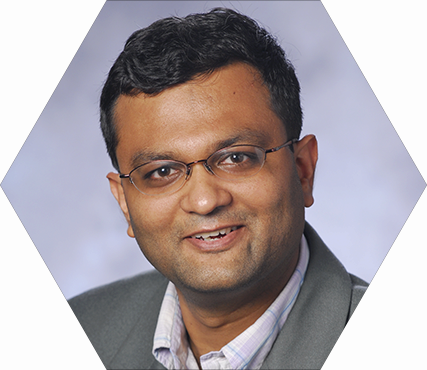
Brian J. Song, MD, MPH, FACS is an Assistant Professor of Clinical Ophthalmology at the Keck School of Medicine of the University of Southern California (USC). He serves as the Director of Education and Residency Program Director in the Department of Ophthalmology at USC, as well as the Glaucoma Fellowship Director. Dr. Song is also the telehealth champion and physician quality champion for the USC Roski Eye Institute. Dr. Song specializes in the medical and surgical management of glaucoma, including advanced laser treatments, minimally invasive glaucoma surgery, and cataract surgery. His research interests focus on evaluating new methods to improve glaucoma detection, particularly through telemedicine applications. He is actively working with collaborators to investigate novel approaches for evaluating optic nerve and blood flow abnormalities in glaucoma using advanced ultrasound and vascular imaging techniques. His extensive publication record demonstrates a strong focus on glaucoma diagnostics, imaging technologies, healthcare disparities, and innovative treatment approaches. Recent work has explored AI applications in glaucoma education, ultrasound stimulation of the visual cortex, and teleretinal screening programs for glaucoma detection. Dr. Song has conducted National Institutes of Health-sponsored research evaluating glaucoma detection methods for diabetes patients and has presented his findings nationally and internationally. His scientific contributions include coauthoring the American Glaucoma Society Position Paper on Microinvasive Glaucoma Surgery. Emerging Vision Scientist Award from the National Alliance for Eye and Vision Research Coauthor of American Glaucoma Society Position Paper: Microinvasive Glaucoma Surgery As Director of Education and Residency Program Director, Dr. Song plays a key role in training the next generation of ophthalmologists at USC. His work with telehealth initiatives demonstrates a commitment to expanding access to quality eye care. Dr. Song joined the USC Roski Eye Institute in 2019 after growing up in Houston, TX, and previously working in New Jersey.
Sergey Samarin is a Senior Honorary Research Fellow at The University of Western Australia's School of Physics, Maths and Computing. His academic roles include teaching undergraduate courses on Solid State Physics and supervising postgraduate and honours students. He holds a Doctor Habil. Science from St. Petersburg State University, with thesis work on electron spectroscopy of surfaces. His research focuses on surface science, electron scattering dynamics, and quantum entanglement in electron pairs generated at solid surfaces. Key experimental techniques include spin-polarized two-electron spectroscopy and positron annihilation studies. Research interests span surface electronic structure, magnetic nanostructures, plasmon excitation, and spintronics. He has secured multiple ARC grants, including leadership roles in the ARC Centre of Excellence for Antimatter-Matter Studies ($7M). Notable achievements include first observations of radiative electron capture by surfaces (1992), plasmon-assisted inverse photoemission (1996), and spin-resolved (e,2e) experiments on ferromagnetic surfaces (1998). Current projects aim to explore electron entanglement via complete scattering experiments. Education: M.Sc. (1972), PhD (1976), Doctor Habil. (1995) - all from St. Petersburg State University Grants: Over $9M in ARC funding since 2001, including leadership roles in 6 major projects Supervision: Guided 17+ students through PhD, Master's, and undergraduate research projects Labs/Teams: CAMSP (Centre for Atomic, Molecular and Surface Physics) collaborator. Instrumentation expertise includes design of spin-polarized (e,2e) spectrometers and UHV systems. Languages: English, French, Russian (native).
Daniel S. Oh, MD is a Clinical Associate Professor of Surgery (Practitioner) at the Keck School of Medicine of the University of Southern California, specializing in general thoracic surgery with a focus on minimally invasive and robotic techniques. He serves as the medical director at the USC-St. Jude Center for Thoracic and Esophageal Diseases in Fullerton, where he sees patients exclusively. Dr. Oh has extensive experience in robotic-assisted thoracic procedures, with approximately 90 percent of his major operations performed using robotic assistance since 2011. Medical Degree: Not specified in text Surgical Training: USC and Harvard Medical School (Brigham and Women's Hospital) Dr. Oh's research interests center on advancing robotic surgical techniques, particularly in thoracic and esophageal procedures. He actively collaborates with Intuitive Surgical to improve robotic technology, surgical training methods, and develop new procedures that enhance patient outcomes. His work emphasizes a disease-specific rather than technology-specific approach, making him unique among thoracic surgeons as he also performs advanced endoscopic and bronchoscopic procedures. Analysis of Dr. Oh's recent publications reveals a strong focus on objective performance metrics in robotic surgery, surgical education methodologies, and optimizing robotic-assisted thoracic procedures. His research spans both clinical outcomes and technological innovations, with particular attention to quantifying surgical skill, workflow efficiency, and the learning curve associated with robotic techniques. The publications demonstrate a consistent trajectory toward establishing evidence-based standards for robotic surgical training and performance assessment. Dr. Oh is a strong advocate for multidisciplinary care, working closely with colleagues in gastroenterology, pulmonology, medical oncology, radiation oncology, radiology, and pathology to provide comprehensive, patient-tailored treatment. His clinical philosophy emphasizes a team-based approach to achieve optimal outcomes for patients with complex thoracic conditions.
Rajan Jagpal is a Researcher in the Department of Chemical Engineering at the University of Bath, affiliated with the Centre for Integrated Materials, Processes & Structures (IMPS), The Foundry Centre for Digital Manufacturing & Design, and the Centre for Sustainable Energy Systems (SES). He holds a PhD in Automated Composite Manufacturing (2022) supervised by Prof. Evangelou, Prof. Loukaides, and Dr. Butler. His research focuses on composite materials processing, hydrogen storage technologies, UAV photogrammetry applications, and sustainable manufacturing systems. Key research contributions include optimizing non-crimp fabric preforming via magnetic clamping and Bayesian algorithms, developing freeze-cast porous composites for hydrogen storage, and advancing UAV-based manufacturing quality control. He collaborates on projects like the High Speed Microtomography initiative (2022–present) investigating carbon fabric deformation mechanisms. His work addresses UN Sustainable Development Goals related to affordable clean energy and industry innovation. He actively engages in public outreach, contributing to school engagement activities from 2018–2019. Jagpal is currently accepting doctoral students for research aligned with his expertise in advanced manufacturing and materials science.
Professor Ningqun Guo holds the dual roles of Professor in Mechanical Engineering and Head of School for both the Malaysia School of Engineering and School of Information Technology at Monash University Malaysia. He previously served at Nanyang Technological University, Singapore. His academic journey includes a B.Eng from Nanjing University of Aeronautics and Astronautics (China) and a PhD from Imperial College London (UK). His research focuses on stress wave propagation, ultrasound applications, smart materials, nondestructive testing, and civil infrastructure analysis. He has published over 130 papers, secured S$2 million in research grants, and supervised over 10 PhD students. Key research areas include ultrasonic technology for material characterization, smart material systems, and image processing for infrastructure monitoring. His work aligns with UN Sustainable Development Goals, emphasizing sustainable infrastructure and innovation. Notable collaborations span global institutions, with recent projects exploring AI-driven pavement crack detection, transparent object reconstruction, and 3D imaging systems. His contributions to magnetorheological fluid applications and nanofluidics further underscore his interdisciplinary impact. Grants and funding have supported projects in sensor development, structural health monitoring, and advanced imaging technologies. His advisory work has produced impactful PhD graduates in mechanical engineering and materials science. Prof. Guo leads research teams focused on smart materials, nondestructive evaluation, and computational imaging. His lab integrates experimental and theoretical approaches to solve challenges in infrastructure, photonics, and nanotechnology.
Yingtao Liu is an Associate Professor and holds the Benjamin H. Perkinson Chair & William H. Barkow Presidential Professor at the University of Oklahoma's Aerospace & Mechanical Engineering Department. He specializes in advanced composites, multifunctional materials, intelligent sensors, structural health monitoring, and biomedical applications of shape memory polymers. His research integrates additive manufacturing, nanotechnology, and material science to develop innovative materials and devices. Education: Ph.D., Mechanical Engineering, Arizona State University (2012) M.S., Mechatronics Engineering, Harbin Institute of Technology (2006) B.S., Mechanical Engineering, Harbin Institute of Technology (2004) Research Interests: Development of smart materials with sensing and adaptive capabilities Nondestructive testing and structural health monitoring 3D printing of advanced composites and polymers Biomedical devices for intracranial aneurysm treatment Defect analysis in additive manufacturing processes Recent Contributions: Recent publications focus on shape memory polymers, defect analysis in metal additive manufacturing, and advanced composites for biomedical and structural applications. His work bridges materials science, mechanical engineering, and AI-driven characterization techniques. Awards: Best Paper Award, ASME IMECE 2018 OU VPR Faculty Investment Program Award (2015) Journal of Aerospace Engineering Best Paper Award (2012) Teaching & Outreach: Teaches courses in statics, solid mechanics, and structural health monitoring. Engages in educational initiatives integrating 3D printing and advanced materials into undergraduate curricula.
Associate Professor Gwenaelle Proust is an academic in the School of Civil Engineering at The University of Sydney. She holds a Diplôme d'ingénieur (eq.BE) from ISITEM (France), a Master's degree from Drexel University (USA), and a PhD in Materials Science and Engineering from Drexel University (2005). Her research focuses on improving the mechanical properties of metals (aluminum, steel, titanium, magnesium) for automotive/aerospace applications through microstructural analysis and additive manufacturing innovations. Her work emphasizes materials optimization for energy efficiency and structural performance, including projects like Microtimber (3D-printed composite panels from waste wood) and collaborations with industry partners. She leads the Sydney Manufacturing Hub and is a member of the University of Sydney Nano Institute. Research interests include twinning in magnesium alloys, modeling material behavior under complex loads, and bio-inspired composite design. She teaches courses such as CIVL2110 Materials and supervises PhD projects on topics like post-treatment routes for architectural materials and interpenetrating phase composites.
Dr. Xiaohui Chen is a Senior Lecturer in Biomaterials Science at the University of Manchester's Division of Dentistry within the School of Medical Sciences. Her research focuses on advanced dental materials including bioactive glasses, resin composites, and glass-ceramics, with applications in oral health, erosion prevention, and dental restorations. Chen's patented leucite glass-ceramic technology led to the development of Lumineers 2, a minimally invasive cosmetic dentistry solution. Her investigations span: Structure-property relationships in enamel and dentine 3D printing applications for dental replicas Implant surface modifications Oral health solutions for motor neuron disease patients Chen actively supervises doctoral candidates including Tina Mehrabi (MRC DTP) and Aboli Lakhe (A*STAR), and maintains collaborations with Peking University School of Stomatology.
Domenico Mucci is an Associate Professor at the Department of Mathematics, University of Parma. His research focuses on calculus of variations, geometric analysis, and partial differential equations with applications to material science and continuum mechanics. Key areas of investigation include energy relaxation in constrained mappings, geometric curvatures of irregular curves, and fracture mechanics in elastic materials. Education details are not explicitly provided, but his extensive publication record indicates advanced expertise in mathematical analysis and applied mathematics. His work often involves collaborations with leading researchers such as P.M. Mariano and L. Nicolodi, addressing topics like BV spaces, Sobolev maps, and the mathematical foundations of non-smooth geometric structures. Research interests prominently feature relaxed energies in constrained systems , nonlinear elasticity models , and geometric singularities . Recent articles explore generalized Varga materials, minimal hyperfurfaces, and crack nucleation in shells. His contributions bridge pure mathematical analysis with applied mechanics, addressing problems in materials science and engineering. No scientific awards are explicitly mentioned, but his prolific publication history (64 papers listed) reflects sustained academic impact. Ongoing work includes studies on fractional Sobolev spaces, weak curvatures, and variational problems in high-dimensional settings. Collaborations often involve theoretical frameworks for continuum kinematics and incompatible strain decompositions.
Virginie Ehrlacher Galland is a Professor at CERMICS (Centre d'Enseignement et de Recherche en Mathématiques et Calcul Scientifique) within École des Ponts ParisTech. Her expertise lies in applied mathematics, numerical analysis, and computational physics, with a focus on multiscale problems, quantum chemistry, and uncertainty quantification. She holds a PhD from CERMICS (2012) and a Habilitation (2020) from Université Paris-Dauphine. Her research interests include cross-diffusion systems, reduced basis methods, and optimal transport applications. Key contributions involve numerical methods for electronic structure calculations, homogenization techniques, and adaptive algorithms. She leads the ERC Starting Grant HighLEAP (2023-2028) and contributes to major projects like the ERC Synergy project EMC². Awards: Irène Joliot-Curie Prize (2023), Chevalier de l’Ordre National du Mérite (2025). Grants/Projects: ERC Starting Grant HighLEAP (PI), ERC Synergy EMC² (Member), ANR JCJC COMODO (PI). Her work bridges theoretical analysis and computational methods, addressing challenges in materials science, fluid dynamics, and machine learning applications.
Chaitanya S. Deo is a Professor in the Department of Nuclear and Radiological Engineering at Georgia Tech. He holds the Southern Nuclear Termed Professorship and specializes in computational materials science, focusing on radiation effects in nuclear materials. His research integrates statistical mechanics and solid mechanics to study structure-property relationships in materials for advanced nuclear systems. Dr. Deo earned his Ph.D. (2003) and M.S. (2000) in Nuclear Engineering from the University of Michigan, followed by a B.E. (1997) from the University of Pune, India. His career includes postdoctoral research at Los Alamos National Laboratory and collaborations with institutions like Princeton University and Sandia National Laboratories. His research emphasizes atomistic simulations (Monte Carlo, molecular dynamics) to address challenges in nuclear fuels and structural materials under irradiation. Current projects explore uranium-based fuel matrices, irradiation-induced defects in U-20%Zr, and high-temperature deformation mechanisms in irradiated materials. His work has been recognized through awards like the National Regulation Commission Faculty Development Grant (2008-2011). Graduate students collaborate with national labs such as Los Alamos and Idaho National Laboratory via internships. Research outcomes focus on advancing computational tools for predictive modeling in nuclear energy systems.
Dr. Peter Brommer is an Associate Professor in the School of Engineering at the University of Warwick. He holds a Dipl.-Phys. and Dr. rer. nat. (PhD) and is a Fellow of the Higher Education Academy (FHEA). His research focuses on computational materials science, particularly nano-confined phase change materials, molecular dynamics simulations, and the development of interatomic potential tools like potfit . He leads an EPSRC-funded project on modeling nano-confined materials and collaborates with the University of Cambridge. His work integrates ab initio methods with scalable simulations for oxides and complex metallic alloys. Dr. Brommer’s teaching includes modules on dynamics of vibrating systems, planar structures, and MSc project supervision. He is affiliated with the University of Warwick’s School of Engineering, with previous roles at the Institute for Theoretical Atomic and Molecular Physics (ITAP) in Stuttgart and the Université de Montréal’s Physics department. His office is located in D208, and he is reachable via p.brommer@warwick.ac.uk . Research highlights include advancements in kinetic Monte Carlo methods ( k-ART ), graphene functionalization studies, and scalable MD techniques for long-range interactions. His tools, such as the bs_sc2pc band structure tool for CASTEP, enhance defect analysis in materials. He actively contributes to OpenKIM’s interatomic model infrastructure. Dr. Brommer’s work bridges computational methods with experimental insights, aiming to improve material design for nanoelectronics and energy applications. His research has been published in journals like Phys. Rev. B , J. Chem. Phys. , and Modell. Simul. Mater. Sci. Eng. .
Rohit Bhagat is a Professor and Centre Director at the Centre for E-Mobility and Clean Growth. His research focuses on advancing energy storage technologies, particularly lithium-ion batteries, through material science innovations and real-time monitoring systems. Key areas of interest include battery degradation mechanisms, sensor integration for diagnostics, and environmental impact assessments of battery production. Research highlights include developing predictive models for lithium plating detection using machine learning, investigating electrolyte degradation under elevated temperatures, and optimizing cathode materials for zinc-ion batteries. He has led projects such as the British Council MRes scholars initiative in STEM, emphasizing interdisciplinary collaboration. Bhagat’s work spans experimental design methodologies for battery modeling, thermal management strategies, and life cycle assessments. His contributions address critical challenges in battery safety, longevity, and sustainability, with applications in electric vehicles and renewable energy systems.